2025-12-16 06:13
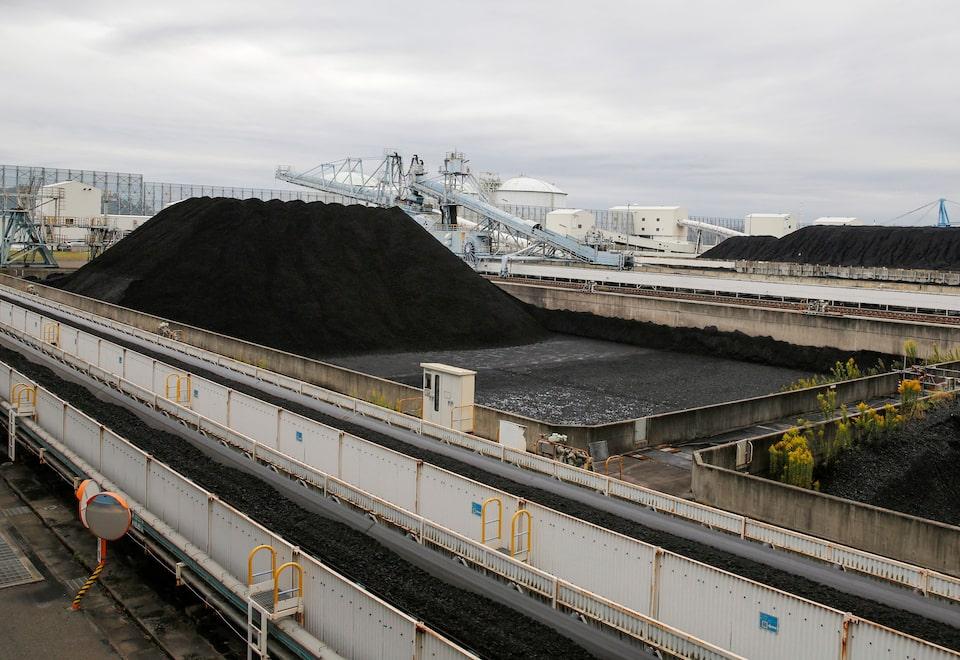
LITTLETON, Colorado, Dec 16 (Reuters) - Global shipments of thermal coal - burned in power stations - have posted their first annual decline since 2020 on the back of lower coal-fired power generation in key Asian markets. Total seaborne exports of so-called steam coal are set to come in at about 945 million metric tons in 2025, marking a 5% or roughly 50 million ton drop from 2024, data from commodities intelligence firm Kpler shows. Sign up here. A 7% drop in imports by countries in Asia - the top coal consuming region - was the main driver of the decline, and raises the possibility that global coal export volumes have peaked and may continue to contract going forward. ASIAN DOMINANCE Countries in Asia accounted for 89% of all thermal coal imports for the year to date, which underscores how concentrated coal shipments have become. They imported 841 million tons of thermal coal, marking a 7% or 60 million ton drop from 2024's totals. China was the top overall coal importer this year, with roughly 305 million tons of imports, followed by India (157 million tons), Japan (100 million tons), South Korea (76 million tons) and Vietnam (45 million tons). However, only two of the five largest coal import markets - South Korea and Vietnam - posted annual rises in imports this year, which highlights the downbeat tone of coal demand even in the top coal consuming region. And while other importers including Malaysia, Thailand and Turkey also posted year-over-year growth, their collective imports remain dwarfed by both China's and India's, which remain the main driving forces behind global coal import trends. CHINA AND INDIA IN FOCUS The two largest coal importers - China and India - accounted for 48% of all thermal coal imports, and both registered import contractions this year due to a combination of higher domestic coal production and greater power supplies from other sources. China registered a 12% or nearly 43 million ton drop in thermal imports in 2025 from the year before, to 305 million tons. India's imports dropped by 3% or by 4.3 million tons to around 157 million tons. Both China and India have government policies that support domestic coal production, which generates jobs, but both countries also face the threat of overproduction of low-grade coal supplies that raise pollution levels when burned. China's ongoing campaign against overcapacity is likely to lead to some shrinkage in domestic coal production volumes in the years ahead, and in turn may limit any further drops in coal import demand over the near to medium term. However, China's rapid rollout of clean energy supplies - including record deployment of solar and wind power and rising generation from nuclear reactors - is expected to continue shrinking coal's share of the domestic power generation mix. Indeed, coal's share of electricity production in China has fallen to a record low of 55.3% so far in 2025, which is down from nearly 59% in 2024, data from energy think tank Ember shows. In India, a combination of record domestic coal mine production and declining coal use in electricity generation have resulted in the rare issuance of coal export permits. Those export permits look set to heighten competition among exporters from early 2026, and could become a regular occurrence if the mine output increases can be sustained while domestic use of coal for electricity generation continues to contract. Coal has generated just under 70% of India's electricity so far in 2025, which compares to a more than 77% share during the past two years. Coal's loss of India's generation share has come as a direct result of a record-fast rollout of power supplies from solar and wind farms, as well as the highest generation from hydro dams in more than six years. With clean generation from all sources expected to keep climbing on the back of an ongoing push to expand India's clean power capacity, further cuts to both coal's share of the generation mix and total coal use in India could emerge. That in turn may lead to even higher coal exports from India over the near term, which may eat into the profit margins of other coal exporters such as Indonesia and Australia. But over time any sustained declines in coal use in China, India and other formerly major coal consumers will likely trigger steady shrinkage in coal export volumes as well, and result in a broader contraction of the overall coal industry. The opinions expressed here are those of the author, a columnist for Reuters. Enjoying this column? Check out Reuters Open Interest (ROI), your essential new source for global financial commentary. ROI delivers thought-provoking, data-driven analysis of everything from swap rates to soybeans. Markets are moving faster than ever. ROI can help you keep up. Follow ROI on LinkedIn , opens new tab and X , opens new tab. https://www.reuters.com/markets/commodities/global-coal-exports-post-rare-decline-2025-china-cuts-2025-12-16/
2025-12-16 06:04
A look at the day ahead in European and global markets from Ankur Banerjee Investors have hunkered down, unwilling to take on risky bets, ahead of a clutch of economic data from across the globe and central bank meetings in what is shaping up to be an eventful last full week of the year. Sign up here. The focus of the European session will be trained on UK wage data that comes days ahead of a knife-edge vote on interest rates on Thursday, where Bank of England Governor Andrew Bailey is expected to shift his stance and tip the balance for a cut. Manufacturing data for December across Europe, also on the agenda, will provide more insight into the economic picture heading into next year. After the Federal Reserve cut interest rates last week as expected, market focus has swiftly moved on to its monetary policy path in 2026. While the Fed projects a single rate cut, traders are pricing in at least two rounds of easing. That divergence will probably be settled by incoming U.S. economic data, including the much-awaited, always important jobs report. In fact, there will be a combined October and November report, long delayed due to a 43-day government shutdown. The absence of key metrics, such as the unemployment rate, could make interpreting the data more tricky as the shutdown prevented the collection of data from households. With so much volatility expected later this week, it's no wonder that markets have been completely risk-off during Asian hours, with tech stocks taking a beating. Tech-heavy South Korea (.KS11) , opens new tab and Taiwan stocks (.TWII) , opens new tab fell more than 1% and European equity futures pointed to a lower open. Bitcoin , often the risk barometer, is hovering near two-week lows and remains under pressure. The yen caught a whiff of a safe-haven bid and firmed to 154.80 per dollar ahead of the Bank of Japan's policy meeting on Friday. Markets broadly expect a rate hike, and further down the road, the spotlight is on the timing of subsequent increases. Key developments that could influence markets on Tuesday: Economic events: UK wage data for October, December flash PMI data for France, Germany, UK and euro zone; December economic sentiment for Germany https://www.reuters.com/world/china/global-markets-view-europe-2025-12-16/

2025-12-16 05:48
MSCI's global index falls 0.5%, S&P 500 ends down slightly after US jobs data US adds jobs in November while unemployment rate rises BoE, ECB and BoJ meet later in the week Brent falls under $60 first time since May, nearly 5-year settlement low NEW YORK/ PARIS, Dec 16 (Reuters) - MSCI's global equities gauge fell on Tuesday and 10-year U.S. Treasury yields were lower for a second day as investors assessed some mixed signals from the latest U.S. jobs report, while oil prices sagged on oversupply worries as hopes increased for a Russia-Ukraine peace deal. The U.S. Labor Department reported a nonfarm payroll increase of 64,000 jobs last month and that the unemployment rate rose to 4.6%. November represented a bounce-back from October's 105,000 jobs decline, which included the departure of more than 150,000 federal employees who took deferred buyouts as part of the Trump administration's push to shrink the government's footprint. Sign up here. However, the clouding of the data from the 43-day U.S. government shutdown through October and into mid-November created some uncertainty about what the report really means for the economy and the Federal Reserve's outlook for interest rate policy after its 25-basis-point cut last week. JOBS DATA 'NOT TOO BAD, NOT TOO GOOD' While relatively low wage growth and anaemic November job creation provided hope for more Fed rate cuts, David Wagner, portfolio manager at Aptus Capital Advisors, said the return to job increases in November could also support more hawkish views that rates should hold steady. "Investors are still trying to digest this data. The jobs report was somewhat Goldilocks - not too bad and not too good. Both hawkish and dovish investors have enough data to prove their current thesis," Wagner said while also pointing to "the noise in the data given that the shutdown continued into the middle of November." While the Fed's estimate last week was for one rate cut for 2026, traders have been betting on two or more cuts, according to CME Group'sFedWatch , opens new tab tool. While bets were little changed after Tuesday's data, Adam Rich, deputy CIO and portfolio manager at Vaughan Nelson, said that the stock market's decline suggests concern about the interest rate outlook. "The market is having a really hard time figuring out how many interest rate cuts we're going to get from the Fed," Rich said. "The jobs data is looking a little stronger than what people were expecting, but it's also low enough that we could probably get more cuts in the near future than what the market is expecting. But maybe investors were hoping that it would be weaker than expected so that cuts would be coming more aggressively," he added. On Wall Street stock indexes ended mixed. The Dow Jones Industrial Average (.DJI) , opens new tab fell 302.30 points, or 0.62%, to 48,114.26, the S&P 500 (.SPX) , opens new tab fell 16.25 points, or 0.24%, to 6,800.26 and the Nasdaq Composite (.IXIC) , opens new tab rose 54.05 points, or 0.23%, to 23,111.46. MSCI's gauge of stocks across the globe (.MIWD00000PUS) , opens new tab fell 5.04 points, or 0.50%, to 1,002.72, while earlier, the pan-European STOXX 600 (.STOXX) , opens new tab index finished down 0.47%. Earlier, stocks had declined during Asian trading, with MSCI's broadest index of Asia-Pacific shares outside Japan (.MIAPJ0000PUS) , opens new tab dropping 1.3% and touching its lowest in three weeks. CENTRAL BANK MEETINGS, MORE DATA Investors are still waiting for U.S. inflation data due out on Thursday and central bank rate policy decisions from the Bank of England, the European Central Bank and the Bank of Japan this week. U.S. Treasury yields fell on Tuesday on the unexpected increase in the unemployment rate last month, though analysts also noted that the data is less reliable than usual due to government shutdown-related distortions. The yield on benchmark U.S. 10-year notes fell 3.5 basis points to 4.147%, from 4.182% late on Monday while the 30-year bond yield fell 3.5 basis points to 4.8171%. The 2-year note yield, which typically moves in step with interest rate expectations for the Federal Reserve, fell 2.1 basis points to 3.487%, from 3.508% late on Monday. In currencies, the U.S. dollar edged lower following the jobs report's mixed messages. The dollar index , which measures the greenback against a basket of currencies including the yen and the euro, fell 0.04% to 98.22. The euro was down 0.04% at $1.1747 while against the Japanese yen , the dollar weakened 0.3% to 154.75. Sterling strengthened 0.33% to $1.3417 although unemployment in Britain hit its highest since the start of 2021 and wage growth in the private sector was the weakest in nearly five years last month, according to the latest data. In cryptocurrencies, bitcoin gained 1.74% to $87,731.12, erasing some of Monday's losses. Oil prices fell, with Brent futures trading below $60 a barrel for the first time since May and settling at their lowest level since February 2021, amid ongoing jitters about the prospect of an oversupply as traders considered a Russia-Ukraine peace deal as more likely, raising expectations that sanctions could be eased. U.S. crude settled down 2.73%, or $1.55, at $55.27 a barrel while Brent ended at $58.92 per barrel, down 2.71%, or $1.64. In precious metal markets, gold prices were virtually unchanged as the dollar pared its losses while some traders bet that a rising U.S. unemployment rate would boost the chances for more Fed rate cuts. Spot gold rose 0.01% to $4,302.08 an ounce. https://www.reuters.com/world/china/global-markets-wrapup-1-2025-12-16/

2025-12-16 05:47
Dec 16 (Reuters) - Russia and Pakistan are in talks on a potential oil-sector agreement, Pakistan’s Finance Minister Muhammad Aurangzeb told RIA news agency in remarks published on Tuesday. "All of these areas are Russia’s strengths. And we would be very happy if Russia agreed on an agreement in this sector with Pakistan," Aurangzeb told RIA in an interview when asked about wider cooperation in exploration, production and refining between the two countries. Sign up here. "At present, the issue is being discussed by the energy ministries of both sides." Russia also discussed upgrading a refinery in Pakistan with Russian companies involved, Russian Energy Minister Sergei Tsivilev had said in November. Pakistan has stepped up engagement with Russia in recent years as Moscow sought new energy markets after Western sanctions over Ukraine, and Islamabad looked to lower import costs. Pakistan began buying Russian crude in 2023. Aurangzeb also said Russia and Pakistan are looking into building another steel plant in Pakistan, RIA reported. https://www.reuters.com/business/energy/pakistan-seeks-oil-deal-with-russia-energy-ministries-hold-talks-ria-reports-2025-12-16/

2025-12-16 05:42
Reuters Open Interest (ROI) is your essential source for global financial commentary. LAUNCESTON, Australia, Dec 16 (Reuters) - China's flows of crude oil into storage probably jumped in November to the highest in six months, as a surge in imports overwhelmed steady refinery processing rates. China's surplus of crude was about 1.88 million barrels per day (bpd) in November, almost three times the 690,000 bpd in October and the most since April's 1.89 million bpd, according to calculations based on official data. Sign up here. The rate at which China has been adding to inventories is increasingly being seen as a key factor in crude oil demand in the world's biggest importer, as well as adding a layer of uncertainty into price forecasts. China's refineries processed 14.86 million bpd in November, largely steady with October's 14.94 million bpd and up 3.9% from November last, according to data released on Monday by the statistics bureau. Crude imports were 12.43 million bpd in November, a 27-month high and up 8.7% from October's 11.39 million bpd. Domestic oil production was 4.31 million bpd in November, up slightly from 4.24 million bpd in October. This means that a total of 16.74 million bpd was available to refiners in November from imports and domestic output. Subtracting the volume of crude processed from the total available leaves a surplus of 1.88 million bpd. China does not disclose the volumes of crude flowing into or out of its strategic and commercial stockpiles, but an estimate can be made by deducting the amount of oil processed from the total crude available from imports and domestic output. It is worth noting that not all the surplus crude was likely to have been added to storage, with some being processed in plants not captured by the official data. But even allowing for those gaps, it is clear that from March onwards, China was importing crude at a far higher rate than necessary to meet domestic fuel demand. For the first 11 months of the year, the surplus crude amounts to 980,000 bpd, given combined imports and domestic production of 15.80 million bpd and refinery throughput of 14.82 million bpd. The surplus has been built up since March and came after refiners made a rare draw on inventories in January and February, when processing rates exceeded available crude by about 30,000 bpd. This was the first time since September 2023 that throughput exceeded the amount of crude from imports and domestic output. PRICE EFFECT The draw on inventories at the start of 2025 came amid rising oil prices, with benchmark Brent futures reaching their highest this year, at $82.63 a barrel, on January 15, having risen steadily from early December levels around $70. Since then crude prices have trended lower, with occasional spikes higher due to geopolitical tension, such as the brief conflict between Israel and Iran in June. Brent dropped as low as $60.15 a barrel on Tuesday during Asian trade, its weakest since October 20, amid hopes that a peace deal between Russia and Ukraine may be reached. That would add to an expected supply surplus if any pact allowed Russian oil and refined products to return to the global market. The lower trend in oil prices is encouraging China's refiners to increase imports and boost flows into inventories. December's crude surplus is likely to be even bigger than that of November, with commodity analysts Kpler estimating China's seaborne imports will rise to 12.59 million bpd, a figure that does not include pipeline imports from Russia of almost 1 million bpd. Higher crude import quotas and likely steeper discounts on Russian crude are also boosting China's oil imports. With China believed to still be some way off its intended level for its strategic reserves, it is reasonable to expect that if crude prices remain biased softer Beijing will continue to lift imports in order to build inventories. Enjoying this column? Check out Reuters Open Interest (ROI), your essential new source for global financial commentary. ROI delivers thought-provoking, data-driven analysis of everything from swap rates to soybeans. Markets are moving faster than ever. ROI can help you keep up. Follow ROI on LinkedIn , opens new tab and X , opens new tab. The views expressed here are those of the author, a columnist for Reuters. https://www.reuters.com/markets/commodities/china-accelerates-crude-stockpiling-amid-weaker-oil-price-trend-2025-12-16/

2025-12-16 05:36
Panel to recommend in early 2026 to ease rules on commodities derivatives Panel's report to cite data before and after ban on derivatives trading Panel will recommend colocation for derivatives trading in metal and energy MUMBAI, Dec 16 (Reuters) - A panel set up by India's market regulator will recommend easing curbs on commodity derivatives and suggest steps to make it more attractive to institutional investors in a final report to be submitted early next year, three sources with direct knowledge of the matter said. The Securities and Exchange Board of India (SEBI), which saw a change of guard in March with former bureaucrat Tuhin Kanta Pandey taking over as chief, set up the panel earlier this year. Sign up here. Under Pandey, SEBI had liberalised rules for equity markets this year and is expected to introduce reforms for commodity derivative markets. "Strengthening India’s commodity markets is high on SEBI’s regulatory agenda and it aims to deepen and widen participation," Pandey had said previously. The sources declined to be identified as they are not authorised to speak to the media. An email query sent to SEBI seeking comments on Monday was not answered. LOOSENING HOLD ON AGRICULTURAL COMMODITIES The panel will recommend lifting a ban on derivatives trading in seven agricultural commodities including paddy, wheat, crude palm oil. Derivatives trading in these commodities has been repeatedly banned since 2021 due to concerns over speculative activity spilling over into on-ground prices of these widely consumed commodities. The panel will present data that show price trends of these key commodities have not changed significantly before or after the ban, they said. The panel members suggested that derivatives trading has little impact on agricultural prices and therefore say the ban is not warranted, two sources said. The SEBI management concurred with this opinion, the sources added. The panel is also recommending a change to the tax law to clearly define the tax rate of commodity derivatives under Goods and Services Tax (GST). "Once the panel submits its report SEBI will request the government for changes," said one of the sources. BOOSTING INSTITUTIONAL TRADING The SEBI panel will also recommend that trading firms be allowed to colocate on exchange premises for trading commodity derivatives, the source said. Colocation allows faster access to data and trading is currently permitted for equities but not for commodities. "Most of the global firms trade via colocation so the panel and SEBI are inclined to allow it in metals and energy. On agri-commodities there have been historic inflationary concerns," so this segment may be excluded from colocation, said one of the two sources. In addition the panel would also recommend margin reduction for agricultural commodities to boost trading, the source said. Reuters had reported in September that SEBI was in discussion with the government and central bank to enable banks and pension funds to trade commodities. "SEBI is waiting for the panel's report before it approaches Reserve Bank of India (RBI) and government with a formal proposal for bank, pension fund and insurance companies to trade in commodities," said the first of the three sources. https://www.reuters.com/sustainability/boards-policy-regulation/india-market-regulator-panel-recommend-easing-rules-commodity-derivatives-2025-12-16/