2025-12-16 04:35
SEOUL, Dec 16 (Reuters) - South Korea's central bank said on Tuesday it would be an "overstatement" to blame ample liquidity conditions in the domestic market for a weaker won currency and price upswings in the residential property market. "Looking at exchange rates, it appears that factors such as increased overseas securities investment by residents and the tendency of export companies to hold foreign currency are having a greater impact than liquidity conditions," the Bank of Korea said in a report. Sign up here. The BOK also said an accumulation of liquidity from the past has been flowing into the local property market and boosting prices, rather than fresh money supply. Tuesday's report comes as the bank kept interest rates unchanged for a fourth straight meeting in late November as a tumbling won reduced the scope for further easing, amid rising financial stability risks from persistent housing price gains in Seoul. According to the BOK, domestic liquidity conditions do not warrant the alarm raised by some commentators who consider that excessive liquidity is to blame for a weaker won and asset price inflation. The BOK has been taking measures to curb the decline in the won, which is currently hovering at a 16-year low, by extending a currency swap agreement with the National Pension Service for another year, a measure aimed at stabilising the dollar-won rate by easing selling pressure on the currency. https://www.reuters.com/world/asia-pacific/bank-korea-says-excessive-liquidity-alone-not-behind-fx-property-market-2025-12-16/
2025-12-16 02:57
MUMBAI, Dec 16 (Reuters) - The Indian rupee fell to a lifetime low on Tuesday as weak risk appetite amplified lingering pressure from hedging demand and portfolio outflows amid continued uncertainty over a U.S. trade deal. The rupee fell to 91.0750 per dollar before ending 0.3% lower at 91.0275. It has declined over 6% against the greenback this year and is among the worst performing emerging market currencies in 2025. Sign up here. The South Asian unit hit an all-time low for the fourth consecutive session, with traders anticipating that the central bank may step in more aggressively to avoid a speculative build-up against the currency. A rebound in the rupee is considered unlikely without a breakthrough in U.S.-India trade negotiations. India's exports leapt in November in defiance of steep U.S. tariffs, providing fresh leverage in ongoing trade talks with Washington and easing pressure on New Delhi to strike a quick deal. "Looking ahead, the base case is for 'mild, not wild' depreciation of the INR against the USD. The INR is projected at 90/USD by June 2026 and 92/USD by June 2027, with the pace of depreciation dependent on evolution of capital flows and global risk appetite," Axis Bank said in a note on Tuesday. Foreign investors have net sold over $18 billion of local stocks so far in 2025. The a risk-off mood in global markets also singed Indian stocks on Tuesday, dragging down the benchmark Nifty 50 (.NSEI) , opens new tab by 0.6%. Investors are treading lightly ahead of a slate of U.S. data later in the day that will help gauge the U.S. rate trajectory next year. MSCI's gauge of Asian equities outside of Japan fell over 1%, while regional currencies were mixed and the dollar was steady against a basket of major peers. https://www.reuters.com/world/india/rupee-may-open-fresh-record-low-with-risk-off-tone-compounding-flow-mismatch-2025-12-16/

2025-12-16 02:31
Rate decision due 0330-0500 GMT December 19 BOJ set to raise short-term policy rate to 0.75% from 0.5% BOJ to pledge further rate hikes, without committing to pace Move would reflect BOJ's conviction on wage-inflation cycle Governor Ueda to brief media 0630 GMT TOKYO, Dec 16 (Reuters) - The Bank of Japan is set to raise interest rates on Friday to a three-decade high and pledge to keep hiking borrowing costs, closing the year with two rate hikes despite headwinds from U.S. tariffs and the inauguration of a dovish prime minister. While a hike still keeps its policy rate low by global standards, it would be another landmark step in Governor Kazuo Ueda's efforts to normalise monetary policy in a country long accustomed to unconventional easing and near-zero rates. Sign up here. With stubbornly high food costs keeping inflation above its 2% target for nearly four years, the BOJ is widely expected to raise short-term interest rates to 0.75% from 0.5% at a two-day policy meeting ending on Friday. The central bank will also stress its resolve to continue raising interest rates, though at a pace dependent on how the economy reacts to each increase, sources have told Reuters. "There's no gap in the view on the economy" between the government and BOJ, Finance Minister Satsuki Katayama told reporters on Tuesday, signaling the administration's tolerance for a hike to 0.75%. Any such move would underscore the BOJ's growing conviction that Japan was making progress in sustaining a cycle of rising inflation accompanied by solid wage gains - a prerequisite it set for pushing up borrowing costs. In a rare, ad hoc poll released on Monday, the BOJ said most of its branch offices expect firms to continue bumper wage hikes next year due to intensifying labour shortages. With Ueda having essentially pre-committed to a December hike in a speech earlier this month, markets are focusing on what signals the governor will drop on the future rate-hike path at his post-meeting news conference. BOJ policymakers have signaled their intent to tread cautiously as they push rates closer to levels deemed neutral to the economy, which the central bank estimates as in a range of 1% to 2.5%. But Ueda also faces pressure to drop hawkish signs to avoid triggering a fresh bout of yen declines that push up import costs and broader inflation, analysts say. While a weak yen boosts exporters' profits, it could prod retailers to pass on costs and raise prices - adding strains to households already suffering from sliding real wages. The number of food and beverage items that saw prices rise exceeded 20,000 this year, up 64.6% from 2024, though it is likely to fall to just over 1,000 in 2026, according to a survey by private think-tank Teikoku Databank released last month. But the number of price hikes could spike if yen declines speed up, heightening inflationary risks and complicating the BOJ's rate-hike decisions next year, analysts say. Japan stands ready to intervene in the currency market to prevent abrupt, sharp yen falls out of sync with fundamentals, government officials say, a sign the administration and BOJ share their aversion to excessive yen declines. Kei Fujimoto, senior economist at SuMi TRUST, does not expect the yen to appreciate much with a December rate hike already priced in by markets, and recent yen weakness driven largely by concerns over Japan's fiscal deterioration. "Both a weak yen and higher interest rates may push up consumer prices, corporate production costs and funding costs, potentially weighing on business sentiment," he said. https://www.reuters.com/world/asia-pacific/bank-japan-take-interest-rates-30-year-high-2025-12-16/
2025-12-16 00:40
US economy adds 64,000 jobs Dollar index on track for second consecutive loss Euro gains, pound advances Japanese yen rises ahead of BoJ decision Bitcoin gains, snapping losing streak NEW YORK, Dec 16 (Reuters) - The U.S. dollar eased against major peers on Tuesday after the release of delayed economic data showing stronger-than-expected jobs growth, signalling that the Federal Reserve might be cautious in continuing to cut interest rates in the near term. The U.S. economy added 64,000 jobs in November, surpassing an estimate from economists polled by Reuters. That came after the economy shed 105,000 jobs in October, according to Labor Department data. Sign up here. The employment report was delayed because of the 43-day U.S. federal government shutdown. The greenback eased against its peers following the data. It was last down 0.18% to 0.79475 against the Swiss franc . "The data was mixed, there were some good signs in hiring and a little better than expected, but not massively so," said John Velis, Americas FX and macro strategist at BNY. "I think the downside is that the unemployment number increased from 4.4% to 4.6%, which could get the Fed's eyebrows raised in January," Velis said. Fed funds futures are pricing an implied 75.6% probability of a hold in rates at the U.S. central bank's next meeting on January 28, up from nearly 70% a week ago, according to the CME Group's FedWatch tool. "The fact that most of the jobs that were created were in non-cyclical sectors such as healthcare suggests there's not a lot of cyclical activity picking up. The headline numbers were goodish but the guts of the data were not so great. So the market called it a punt, or kind of even," Velis added. The dollar index , which measures the greenback against a basket of currencies including the yen and the euro, fell 0.11% to 98.15. It is on track for the second straight session of losses. "This report hasn’t really changed the story, particularly given the BLS (Bureau of Labor Statistics) health warning that the latest data points are (even) less reliable than usual," TS Lombard analyst Dario Perkins wrote in an investor note. "The central bank still believes monetary policy is v slightly restrictive, and that gives it an option to cut rates again in the coming months – possibly even in January. But the situation doesn’t seem particularly urgent," Perkins added. CENTRAL BANK DECISIONS IN FOCUS Central bank decisions are in focus this week. The European Central Bank is widely expected to hold interest rates on Thursday. Economic data out of the euro zone was mixed but supported the ECB's higher-for-longer policy rate stance and bolstered the euro. Data showed German investor morale rising , opens new tab more than expected in December and euro zone business activity growth slowing , opens new tab at the end of 2025. The euro was up last 0.05% to $1.1788 against the greenback in choppy trading, touching its highest level since September and on track for the fifth consecutive session of gains. The Bank of England, on the other hand, looks set for a knife-edge vote on interest rates this week with Governor Andrew Bailey expected to change his view and tip the balance for a cut. Sterling strengthened 0.39% to $1.34305, hitting its highest level in two months ahead of the BoE's decision on Thursday. A rate hike from the Bank of Japan is largely baked in, although any signal that policymakers could tighten again before spring wage talks would mark a hawkish shift. Big Japanese manufacturers' business sentiment reached a four-year high , opens new tab in the three months to December, supporting expectations for additional tightening. But analysts said the BoJ's policy update might fail to support the yen as fiscal concerns weigh. The dollar dropped 0.36% to 154.65 against the yen ahead of the BoJ's decision on Friday. Sweden's Riksbank and Norway's Norges Bank are expected to leave interest rates unchanged after their policy meetings this week. The Swedish crown strengthened 0.09% versus the dollar to 9.286. Against the Norwegian krone, , the dollar strengthened 0.39% to 10.174. In cryptocurrencies, bitcoin gained 1.62% to $87,629.19, on track to snap four straight sessions of losses. Ether rose 0.05% to $2,947.45. https://www.reuters.com/world/africa/dollar-defensive-traders-eye-delayed-us-jobs-data-2025-12-16/
2025-12-16 00:30
ORLANDO, Florida, Dec 15 (Reuters) - The final full trading week of 2025 is underway, but investors can't start winding down for the holiday season just yet, with artificial intelligence jitters and fiscal woes threatening to spoil the festive cheer. Wall Street, stung last week by gloomy warnings from tech giants Oracle (ORCL.N) , opens new tab and Broadcom (AVGO.O) , opens new tab , remains on edge about the profit-generating capabilities of AI. Sign up here. And even though the Federal Reserve cut interest rates last week and unveiled a program of large-scale T-bill purchases, long-term bond yields are rising and yield curves are steepening – both inside and outside the United States. Does that mean investors should give up hopes for a "Santa rally?" Below are five charts that should give investors a flavor of what this week may have in store. 1. 30-YEAR BOND YIELDS' RAPID RISE Yields on long-dated bonds around the world are popping higher. The 30-year U.S. yield last week reached 4.8670%, its highest since early September, as it broke convincingly above the 2025 average of 4.77%. Long bonds now have to contend with the prospect of having both a White House seeking to run the economy hot with loose fiscal policy and a dovish-leaning Fed. Rising long-term yields are not just a U.S. phenomenon. Japan, Britain and Australia have been in the spotlight recently too, with the 30-year German yield last week leaping to its highest point since 2011. 2. YIELD CURVES' STEEP CLIMB U.S. fiscal concerns and inflation fears – partly reflecting President Donald Trump's trade and tax policy as well as the politicization of the Fed – are resulting in steeper yield curves overall. The two-year/30-year spread is close to reaching its widest level in four years. Steeper curves are typically seen as a reflection of "normal" economic and financial conditions. But that's not the case when the back end of the bond market is getting crushed by fears that the central bank has taken its eye off the inflation ball. 3. SILVER'S SPECULATIVE SPURT If you want evidence of a year-end speculative boom, look no further than silver. It's up 30% in the last three weeks. That is remarkable enough, but what this chart from Brent Donnelly at Spectra Markets shows is even more astonishing: an ounce of silver is now worth more than a barrel of U.S. crude oil for the first time ever, apart from when the price of oil futures briefly dropped below zero in April 2020. 4. ORACLE'S BLURRED VISION In recent months, Oracle has traded more like a "meme" stock than one of the world's biggest companies. Shares rose 36% in a single day in September and last week slid 15% in two days, a magnitude of decline only seen during the pandemic, 2008 and the dot-com crises. Oracle is increasingly becoming a bellwether of investors' broader sentiment about AI – and the current signals aren't looking good. 5. YUAN'S GROWING STRENGTH The U.S. dollar has held up well in the second half of the year, with the dollar index up nearly 2% in that period. But it has been on a steady downward path against the Chinese yuan . Going into the last full week of the year, this cross rate is at a 14-month low, with the 7.00-yuan barrier in sight. Given that China's trade surplus just topped $1 trillion for the first time, pressure is mounting on Beijing to allow the yuan to rise further – much further. (The opinions expressed here are those of the author, a columnist for Reuters) Enjoying this column? Check out Reuters Open Interest (ROI), your essential source for global financial commentary. ROI delivers thought-provoking, data-driven analysis of everything from swap rates to soybeans. Markets are moving faster than ever. ROI can help you keep up. Follow ROI on LinkedIn , opens new tab and X , opens new tab. https://www.reuters.com/markets/us/global-markets-charts-roi-column-graphics-2025-12-15/
2025-12-16 00:22
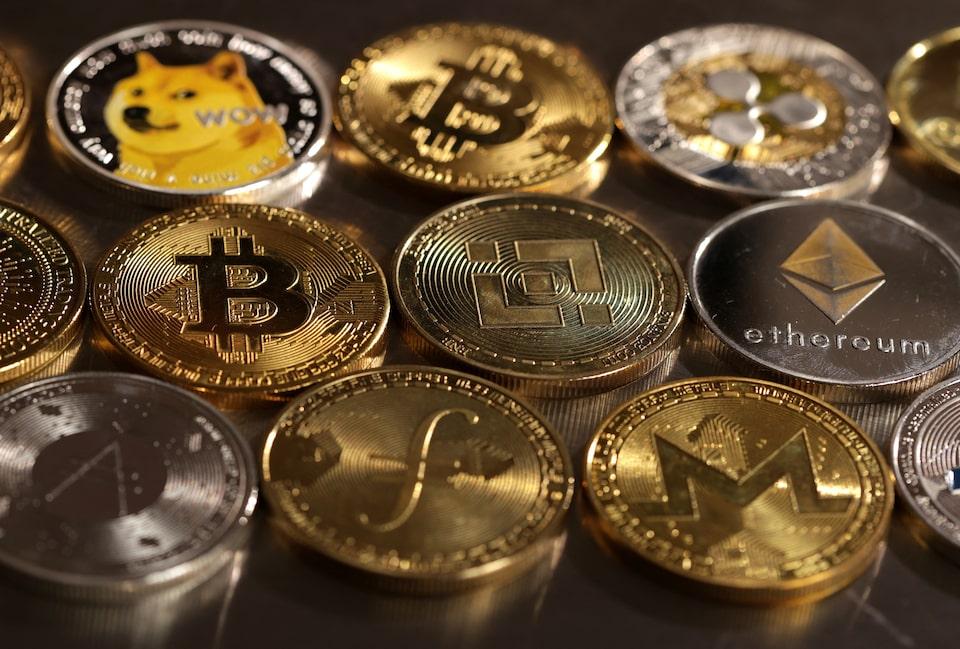
LONDON, Dec 16 (Reuters) - British regulator the Financial Conduct Authority (FCA) launched a wide-ranging consultation on a range of proposed rules for the crypto industry on Tuesday, a day after the government said the industry would be regulated from October 2027. The FCA set out its proposals alongside research that shows that the proportion of UK adults holding crypto has fallen by a third, from 12% to 8% in the past year. Sign up here. Watchdogs globally are playing catch-up on rules for the crypto industry, with Britain seeking to align its regulation with the U.S. rather than the European Union. The FCA said on Tuesday that its rules would cover listings for crypto assets, measures to stop insider trading and manipulation, standards for crypto trading platforms and rules for brokers. It is also consulting on prudential requirements, regulations to make the risks clearer on crypto staking, better protections for crypto lenders and borrowers and potential financial safeguards for crypto firms to manage risks. "Regulation is coming – and we want to get it right. We’ve listened to feedback, and now we’re setting out our proposals for the UK’s crypto regime," said David Geale, executive director for payments and digital finance at the FCA. "Our goal is to have a regime that protects consumers, supports innovation and promotes trust. We welcome feedback to help us finalise these rules." The FCA is seeking feedback on its proposals before a February 12, 2026, deadline. The regulator has promised to finalise the regime by the end of next year. https://www.reuters.com/sustainability/boards-policy-regulation/british-regulator-kicks-off-consultation-new-crypto-rules-2025-12-16/