2025-12-16 00:18
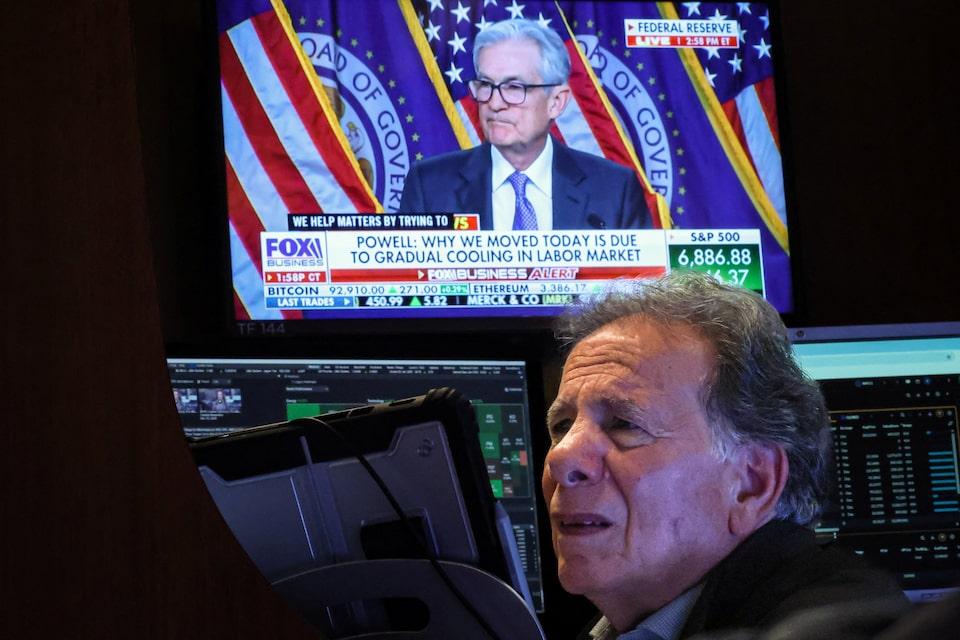
Dec 18 (Reuters) - U.S. President Donald Trump signed an executive order recommending the loosening of federal regulations on marijuana to reclassify it as a less dangerous drug. Trump's order directs his attorney general to quickly move ahead with reclassifying marijuana, according to senior administration officials, a process that could lead to the psychoactive plant being listed alongside common painkillers, ketamine and testosterone as a less dangerous drug. Sign up here. A reclassification, possibly the biggest policy shift in marijuana regulation since 1970, would likely reshape the pot industry by lowering tax burdens and making it easier for firms to secure funding, as well as help accelerate clinical research. Cannabis-linked companies such as Canopy Growth (WEED.TO) , opens new tab, , Organigram Global (OGI.TO) , opens new tab, SNDL (SNDL.CD) , opens new tab, Aurora Cannabis , Trulieve Cannabis (TRUL.CD) , opens new tab and Tilray Brands are likely to benefit from this move. Here is what such a move could mean for companies. WHAT DOES RECLASSIFYING ENTAIL? Under the U.S. Controlled Substances Act, marijuana is listed as a Schedule I substance, such as heroin, meaning it has a high potential for abuse and no current accepted medical use. Last year, the Biden administration asked the Department of Health and Human Services to review marijuana's classification, and the agency recommended moving it to Schedule III, a category for substances with a moderate to low risk of physical or psychological dependence, such as steroids. The Drug Enforcement Administration must review the recommendation and decide on the reclassification. WHAT WOULD BE THE TAX IMPLICATIONS? One of the biggest benefits of a reclassification would be that cannabis firms would no longer be subject to Section 280E of the U.S. federal tax code. That provision prevents businesses dealing in Schedule I and II controlled substances from claiming tax credits and deductions for business expenses. WHAT HAPPENS TO THE INDUSTRY? A Class III classification could unlock banking access for pot producers, attract institutional investors, reduce taxes and spur mergers and acquisitions. Securing funding remains one of the biggest challenges for cannabis producers, as federal restrictions keep most banks and institutional investors out of the sector, forcing pot producers to turn to costly loans or alternative lenders. "It removes the stigma and regulatory red tape ... which completely hampered our research ... that stigma sort of kept the bigger pharma companies from looking at us as a legitimate pharmaceutical company," said Ram Mukunda, CEO of IGC Pharma (IGC.A) , opens new tab, which is developing cannabinoid-based treatments, including one for Alzheimer's. "It also kept the investors, the institutional investors, from looking at us as a legitimate biotech company ... it (the reclassification) moves us from this area of restricted research to pharmaceutical mainstream," Mukunda added. Congress has also been debating further action for some time. The Secure and Fair Enforcement Regulation Banking Act (SAFER) bill, introduced in 2023, would ensure that all businesses, including state-sanctioned cannabis businesses, have access to deposit accounts, insurance, and other financial services. WHAT COMES NEXT? Critical questions such as the size of the addressable market, number of players, scientific validation, regulatory impact, and whether profits will be sustainable will determine the long-term outlook for cannabis stocks, said Art Hogan, chief market strategist at B. Riley Wealth. Hogan sees the order as a step toward nationwide legalization and opening of banking access, and resolving some of those questions. The executive order "opens the door for incremental change to allow for banking & uplisting, as we view rescheduling as the first notable domino in terms of cannabis federal reform– with future actions including an AG Memo & potential SAFER banking," said Alliance Global Partners analyst Aaron Grey. https://www.reuters.com/world/us/how-us-marijuana-reclassification-could-help-cannabis-companies-2025-08-12/
2025-12-16 00:02
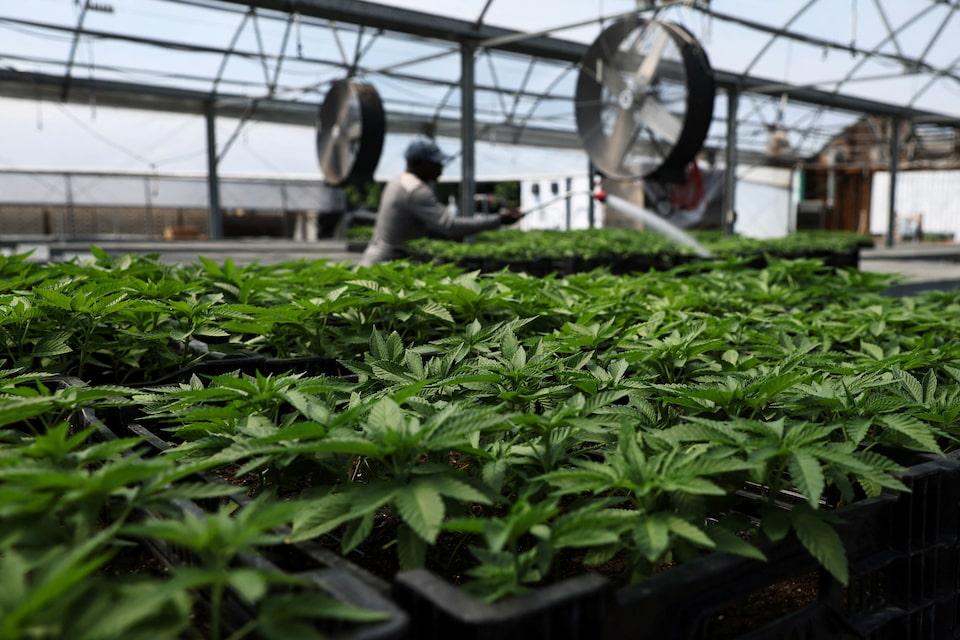
South Africa September-November coal exports to Israel doubled Colombia stopped shipments in August after ban over Gaza deaths South Africa is now Israel's top coal supplier SINGAPORE/CAPE TOWN/JERUSALEM, Dec 16 (Reuters) - South African miners are boosting thermal coal exports to Israel after top supplier Colombia in August ordered a total ban on shipments of the power-generation fuel to Israel, data from Kpler, LSEG and DBX Commodities showed. Colombia and South Africa are among Israel's most vociferous critics, with the South American nation's presidential decree enacting the export ban after accusing Israel of killing tens of thousands in Gaza including children. South Africa has accused Israel of genocide at the International Court of Justice, a claim Israel's Prime Minister Benjamin Netanyahu has rejected. Sign up here. Colombian coal exports to Israel dropped to zero in the three months ended November, data from analytics firm Kpler showed, after Bogota doubled down on an earlier ban and blocked supplies under long-term deals. Meanwhile, South Africa boosted exports by 87% to 474,000 metric tons in the three months to November on an annual basis, and is set to ship nearly 170,000 tons this month, the data showed. Coal exports to Israel rose 20% to 667,442 tons in the three months to October - the highest for a three-month period since February 2017, latest official data from the South African Revenue Service showed. "Four words explain this profound hypocrisy: talk left, walk right," said Patrick Bond, director at the University of Johannesburg's Centre for Social Change, who tracks coal exports from South Africa to Israel. More than a dozen South Africa-based coal exporters have been shipping electricity-grade coal to Israel since 2023, Bond said, with Kpler data showing that all cargoes imported by Israel since September came from South Africa. South Africa's mines ministry did not respond to requests seeking comment. Trade Minister Parks Tau said last year that sanctions against Israel would expose the country to a legal challenge under World Trade Organization rules. Colombia, also a WTO member, has not been challenged following its implementation of the ban. SOUTH AFRICAN EXPORTS SURGE South Africa has boosted shipments to Israel over the last four years and its 2025 coal exports will be the highest since 2017, with its share in Israel's seaborne coal market set to more than triple from 2024 levels to 55%, Kpler data showed. Still, Colombia would account for 42% of Israel's 2 million tons of coal imports this year, according to the data. Exports by Russia, which accounted for nearly a quarter of Israel-bound coal shipments in 2024, amounted to just one cargo of 55,000 tons, making up less than 3% of the market. "I would expect the trend of Colombian exports to Israel to remain close to zero in the short to mid-term," said Alexandre Claude, CEO of London-based DBX Commodities. "Colombia will redirect slightly more of its coal to other buyers. The country already has a highly diversified portfolio," he said. Israel's economy and energy ministries did not respond to requests seeking comment. A senior official at state-run Israel Electric Co said the country would stop using coal as a major power source by 2027. "The era of coal is finished in Israel. We will stop importing coal and use natural gas as a main source of energy and coal will be a backup in case of emergency," the official said. https://www.reuters.com/world/africa/south-africa-boosts-coal-exports-israel-after-colombia-ban-2025-12-16/
2025-12-15 23:57
Dec 15 (Reuters) - A levee breach in Washington state following days of heavy rain led to a flash flood warning and evacuation orders, but authorities said on Monday that repairs were underway. King County's director of emergency management Brendan McCluskey told the Seattle Times that repairs could take several hours and that officials were closely monitoring the Desimone Levee in Tukwila along the Green River, about five miles south of downtown Seattle, where a car-sized chunk of the levee was washed away by floodwaters. Sign up here. Images showed workers using heavy equipment to drop large sandbags into the hole, working to keep it from growing. Calls to McCluskey's office, along with that of the state Emergency Management Division, were not immediately returned. The National Weather Service said its flood warning related to the levee failure would remain in effect until at least 9 p.m. (0500 GMT Tuesday). The Washington National Guard said that it was sending Guard members to King County. The Guard has already been helping flood-impacted residents in the western part of the state over the weekend. Authorities have been concerned about levee breaches for days around Washington state, as torrential downpours hit a wide swath of the Pacific Northwest. The rains were spawned by a string of atmospheric river storms, vast airborne currents of dense moisture siphoned from the ocean, that swept inland over the Pacific Northwest, including parts of northern Idaho and western Montana, with upward of 20 inches of rain falling in some areas over the course of a week. https://www.reuters.com/sustainability/climate-energy/flash-flood-warnings-follow-levee-breach-washington-state-2025-12-15/

2025-12-15 23:06
Judge rules USDA wrong on when compliance grace period ends States had also challenged USDA guidance on immigration-related SNAP restrictions USDA revised guidance last week Dec 15 (Reuters) - A federal judge on Monday ordered U.S. President Donald Trump's administration to extend a deadline for states to implement new immigration-related eligibility restrictions on food aid benefits, allowing them to avoid potentially severe financial penalties for failing to do so in time. U.S. District Judge Mustafa Kasubhai in Eugene, Oregon, at the behest of a group of Democratic-led states, issued an injunction requiring the U.S. Department of Agriculture to extend the expiration date of a grace period for the states to comply with the new restrictions on Supplemental Nutrition Assistance Program benefits from November 1 to April 9. Sign up here. The judge, who was appointed by Democratic President Joe Biden, said guidance USDA issued on October 31 concerning who is eligible for the SNAP benefits, or food stamps, contributed to "confusion" that impeded states' ability to implement the new restrictions. The guidance interpreted a provision in Trump's tax cuts and domestic policy law that restricts SNAP benefits to U.S. citizens and lawful permanent residents, also known as green card holders, aligning with the president's hardline immigration stance. GUIDANCE SPARKS LEGAL CHALLENGE Attorneys general from 21 states and the District of Columbia in a lawsuit filed last month had said the guidance unlawfully deemed permanent residents who were initially granted asylum or admitted as refugees to the United States as ineligible for SNAP benefits. USDA contended it never intended for its guidance to go beyond the new immigration-related eligibility restrictions set forth in the law, and a lawyer for the Justice Department on Monday said that reflected a "misunderstanding" by the states. USDA revised its guidance last week, which Kasubhai said corrected what he said had been a policy on ineligibility that was contrary to the One Big Beautiful Bill Act, which Trump signed into law in July. But USDA continued to stand firm on a related issue raised by the states, which administer the benefits on a day-to-day basis, of when a 120-day grace period for them to comply with the law's provisions was to expire, saying it ended November 1, the day after it issued the initial guidance. Kasubhai at the close of a nearly four-hour hearing agreed, saying USDA's position was unlawful, contrary to past practice, and would expose the states' budgets to irreparable harm if the grace period was not extended. "The inability to provide compliance in the time period in which they were forced to by virtue of the guidance contributed to an erosion of trust," Kasubhai said. (This story has been refiled to say Monday, not Tuesday, in paragraph 1) https://www.reuters.com/legal/government/usda-must-give-states-more-time-implement-new-food-aid-restrictions-judge-rules-2025-12-15/

2025-12-15 22:47
Dec 15 (Reuters) - The Trump administration plans more "historic deals" with the U.S. mining sector to boost production of critical minerals for the national defense and high-tech sectors, a senior official said on Monday. Earlier this year, the administration took equity stakes in MP Materials (MP.N) , opens new tab, Lithium Americas , opens new tab(LAC.TO) , opens new tab and Trilogy Metals (TMQ.TO) , opens new tab. The transactions were part of President Donald Trump's push to increase domestic production of lithium, rare earths and other minerals used for the national defense and rely less on China, which has used its minerals prowess as leverage in trade negotiations. Sign up here. "What we want to see is the ability for the U.S. to not be reliant on any adversary out there or any other foreign entity, that we control our own destiny when it comes to our supply chain and our critical minerals," Jarrod Agen, executive director of the White House's National Energy Dominance Council, said on Monday. "We've set a good pace so far, but this is just the first year." On Monday, Korea Zinc (010130.KS) , opens new tab said it would build the first U.S. minerals refinery in decades with Washington's financial support. "You're going to see throughout this administration historic deals when it comes to critical minerals, historic partnerships with the private sector, and then really a revitalization of mining in this country," Agen told a critical minerals conference hosted by the Center for Strategic and International Studies in Washington, D.C. The remarks were webcast. Agen, who previously held roles at defense contractor Lockheed Martin (LMT.N) , opens new tab, said Trump aims to "jumpstart" mining projects in Alaska and also in Arizona, where Rio Tinto (RIO.AX) , opens new tab and BHP (BHP.AX) , opens new tab aim to build one of the world's largest copper mines. https://www.reuters.com/world/asia-pacific/white-house-plans-more-historic-deals-with-mining-sector-official-says-2025-12-15/
2025-12-15 22:08
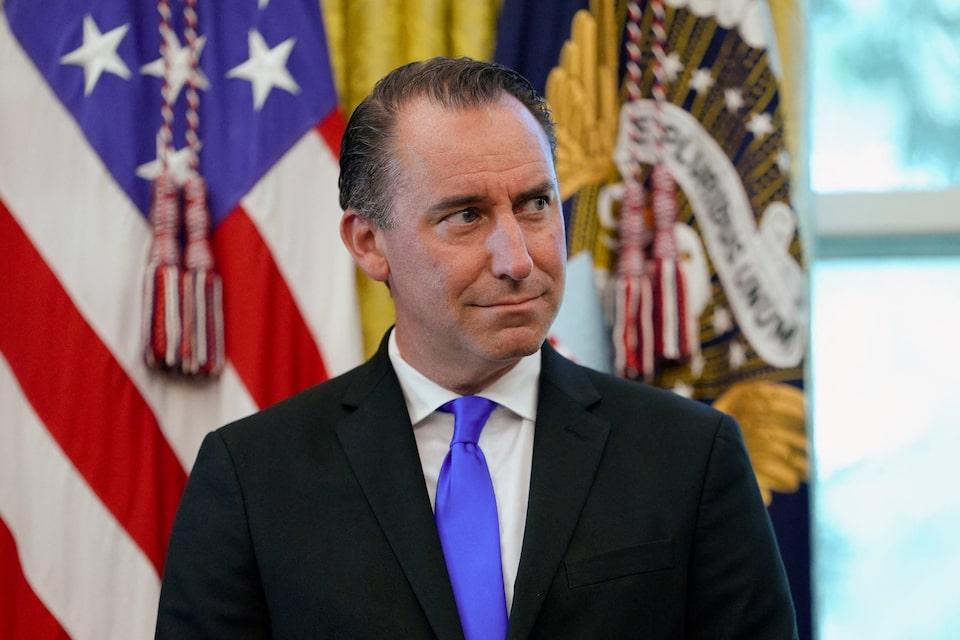
ORLANDO, Florida, Dec 15 (Reuters) - Caution weighed on Wall Street on Monday as investors awaited Tuesday's U.S. jobs report, while underlying selling pressure and uncertainty over who will be nominated to replace Federal Reserve Chair Jerome Powell eroded earlier gains in Treasuries. More on that below. In my chart-based column today, I look at how markets are shaping up as the last full trading week of the year gets underway. Worries over AI and long-term yields dominate the equity and bond landscape, while in FX, China's yuan goes from strength to strength. Sign up here. If you have more time to read, here are a few articles I recommend to help you make sense of what happened in markets today. Today's Key Market Moves Today's Talking Points * Belated U.S. payrolls release Official U.S. labor market figures for November will be released on Tuesday, later than scheduled due to the government shutdown, and coming less than a week after the Fed cut rates again but signaled it could be on hold for a while. As usual, attention will be focused on the two main numbers, but getting a clear read through the jobs market fog will not be easy. The unemployment rate continues to be distorted by unique labor demand and supply issues; and Fed Chair Jerome Powell said last week that average payrolls growth of around 40,000 a month could be overestimated by 60,000. That's to say, the economy may actually be shedding jobs outright. * China alarm bells still ringing The readout from China's latest monthly 'data dump' is pretty clear - the world's second-largest economy performed worse in November than expected, upping the ante on authorities to do more to boost domestic demand and growth. But does Beijing have the appetite? Last week's Central Economic Work Conference, a key gathering of the Communist Party to set the 2026 policy agenda, said the global environment is no longer "unfavorable" and indicated budget deficits next year will be kept at "necessary" levels, suggesting little desire for big stimulus. Economists warn more support will be needed. * Year ends with a central bank bang The final full trading week of the year will be a choppy one for FX, rates and bond traders, as five G10 central banks announce their last policy decisions of 2025 - the monetary authorities of Norway, Sweden, Britain, the euro zone and Japan. The Bank of England on Thursday and Bank of Japan on Friday could be the highlights. The BoE is set to cut rates by the narrowest of margins - a 5-4 vote, with Governor Andrew Bailey swinging the balance. The BOJ is set to raise rates, with all eyes on the signals Governor Kazuo Ueda sends for next year. Charting the last full market trading week of 2025 The final full trading week of 2025 is underway, but investors can't start winding down for the holiday season just yet, with artificial intelligence jitters and fiscal woes threatening to spoil the festive cheer. Wall Street, stung last week by gloomy warnings from tech giants Oracle (ORCL.N) , opens new tab and Broadcom (AVGO.O) , opens new tab, remains on edge about the profit-generating capabilities of AI. And even though the Federal Reserve cut interest rates last week and unveiled a program of large-scale T-bill purchases, long-term bond yields are rising and yield curves are steepening – both inside and outside the United States. Does that mean investors should give up hopes for a "Santa rally?" Below are five charts that should give investors a flavor of what this week may have in store. 1. 30-YEAR BOND YIELDS' RAPID RISE Yields on long-dated bonds around the world are popping higher. The 30-year U.S. yield last week reached 4.8670%, its highest since early September, as it broke convincingly above the 2025 average of 4.77%. Long bonds now have to contend with the prospect of having both a White House seeking to run the economy hot with loose fiscal policy and a dovish-leaning Fed. Rising long-term yields are not just a U.S. phenomenon. Japan, Britain and Australia have been in the spotlight recently too, with the 30-year German yield last week leaping to its highest point since 2011. 2. YIELD CURVES' STEEP CLIMB U.S. fiscal concerns and inflation fears – partly reflecting President Donald Trump's trade and tax policy as well as the politicization of the Fed – are resulting in steeper yield curves overall. The two-year/30-year spread is close to reaching its widest level in four years. Steeper curves are typically seen as a reflection of "normal" economic and financial conditions. But that's not the case when the back end of the bond market is getting crushed by fears that the central bank has taken its eye off the inflation ball. 3. SILVER'S SPECULATIVE SPURT If you want evidence of a year-end speculative boom, look no further than silver. It's up 30% in the last three weeks. That is remarkable enough, but what this chart from Brent Donnelly at Spectra Markets shows is even more astonishing: an ounce of silver is now worth more than a barrel of U.S. crude oil for the first time ever, apart from when the price of oil futures briefly dropped below zero in April 2020. 4. ORACLE'S BLURRED VISION In recent months, Oracle has traded more like a "meme" stock than one of the world's biggest companies. Shares rose 36% in a single day in September and last week slid 15% in two days, a magnitude of decline only seen during the pandemic, 2008 and the dot-com crises. Oracle is increasingly becoming a bellwether of investors' broader sentiment about AI – and the current signals aren't looking good. 5. YUAN'S GROWING STRENGTH The U.S. dollar has held up well in the second half of the year, with the dollar index up nearly 2% in that period. But it has been on a steady downward path against the Chinese yuan. Going into the last full week of the year, this cross rate is at a 14-month low, with the 7.00-yuan barrier in sight. Given that China's trade surplus just topped $1 trillion for the first time, pressure is mounting on Beijing to allow the yuan to rise further – much further. What could move markets tomorrow? Want to receive Trading Day in your inbox every weekday morning? Sign up for my newsletter here. Opinions expressed are those of the author. They do not reflect the views of Reuters News, which, under the Trust Principles , opens new tab, is committed to integrity, independence, and freedom from bias. https://www.reuters.com/world/china/global-markets-trading-day-graphic-2025-12-15/