2026-02-06 22:35
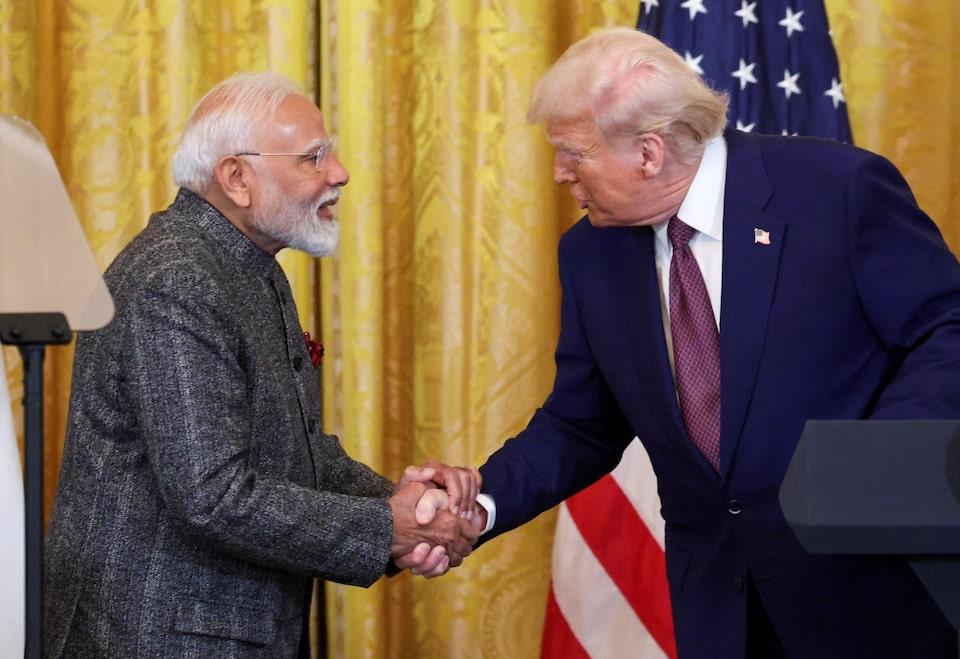
US, India unveil interim trade framework, formal deal expected by March US tariffs cut to 18%, India shifts from Russian oil to US energy India to buy $500 bln in U.S. energy, aircraft, tech over 5 years Government says farmers protected; opposition calls deal one-sided WASHINGTON/NEW DELHI, Feb 6 (Reuters) - The United States and India moved closer to a trade pact on Friday, releasing an interim framework that would lower tariffs, reshape energy ties and deepen economic cooperation as both countries seek to realign global supply chains. The framework reaffirms a commitment to negotiations toward a broader bilateral trade agreement, the two governments said in a joint statement, while noting that further negotiations were needed to complete the pact. Sign up here. Separately, U.S. President Donald Trump in an executive order removed the additional 25% tariff imposed on Indian goods for Russian oil purchases as New Delhi "committed to stop directly or indirectly importing" Russian oil. However, U.S. officials will monitor and recommend reinstating the tariff if India resumes oil procurement from Russia, the order said, as Washington maintains pressure on India to restrict energy ties with Moscow. The India-U.S. joint statement did not mention India’s Russian oil purchases or a formal pledge from India to confirm the move. Trump announced a deal with India on Monday to cut U.S. tariffs on Indian goods to 18% from 50% in exchange for India halting purchases of Russian oil and lowering trade barriers. Half of the 50% rate had been imposed separately by Trump as punishment for India's purchases of Russian oil, which he said were fuelling Moscow's war effort in Ukraine. Trump signed an executive order on Friday rescinding that 25% portion after India agreed this week to shift its oil buying to the U.S. and Venezuela. However, the statement indicated that New Delhi resisted Washington’s push to broadly open its agricultural market. Trade Minister Piyush Goyal said in a social media post on X the agreement safeguards farmers’ interests and rural livelihoods by "completely protecting sensitive agricultural and dairy products". India’s opposition Congress party, however, said the trade deal was concluded largely on U.S. terms and hurt farmers and traders, calling it a pact that compromised national interests. NEW DETAILS ON TARIFF REDUCTIONS Friday's joint statement , opens new tab provides additional details compared with initial outlines of the trade deal revealed by Trump on Monday. It confirms that India will purchase $500 billion in U.S. goods over a five-year period, including oil, gas, coking coal, aircraft and aircraft parts, precious metals, and technology products. The last category includes graphics processing units, typically used for AI applications, and other goods used in data centers. It said India would eliminate or reduce tariffs on all U.S. industrial goods and a wide range of U.S. food and agricultural products, including dried distillers' grains and red sorghum for animal feed, tree nuts, fresh and processed fruit, soybean oil, wine and spirits. U.S. TO KEEP 18% TARIFF But the deal will apply an 18% tariff rate on most imports to the U.S. from India, including textiles and apparel, leather and footwear, plastic and rubber, organic chemicals, home decor, artisanal products and certain machinery. India will get the same tariff relief granted to other allied countries that have signed trade deals with the United States on certain aircraft and aircraft parts, and will receive a quota for auto parts imports that will be subject to a lower tariff rate, according to the statement. Depending on the results of the Trump administration's tariff investigation into pharmaceuticals and their ingredients, "India will receive negotiated outcomes with respect to generic pharmaceuticals and ingredients," the statement said. Goyal hailed the framework agreement as opening a market worth $30 trillion - the U.S. annual GDP - to Indian exporters, especially farmers, fishermen, and micro and small-to-medium enterprises. Goyal had said on Thursday that Washington and New Delhi aimed to sign a formal trade agreement in March, after which India's tariff cuts on U.S. exports would go into effect. ACCEPTING U.S. STANDARDS India also agreed to address longstanding non-tariff barriers on imports of agricultural products, medical devices and communications gear, with negotiations to be completed within six months on an agreement to accept U.S. or international safety and licensing standards for product imports. The U.S. affirmed that it intends to consider India's requests for lower tariffs on Indian goods during further negotiations of the bilateral trade agreement. The two sides also agreed to cooperate on enforcement of export controls on sensitive technologies and take actions to address "non-market policies of third parties," a reference to China. The United States and India have struggled for years to conclude a full trade deal, with disputes spanning agriculture, digital trade, medical devices and market access. But strategic concerns — including competition with China, supply-chain diversification and energy security — have injected new urgency into talks, officials in both countries say. https://www.reuters.com/world/india/us-india-release-framework-an-interim-trade-deal-2026-02-06/
2026-02-06 22:31
NEW YORK, Feb 6 (Reuters) - The union representing hundreds of workers at BP's Whiting refinery, the largest refinery in the Midwest, said on Friday the British oil major does not intend to honor the national oil bargaining agreement. This comes after the United Steelworkers union adopted a national agreement negotiated with Marathon Petroleum (MPC.N) , opens new tab for use in contracts between 30,000 oil industry workers and their refineries and chemical plants. Sign up here. The Steelworkers union represents about 800 workers at the Whiting refinery that produces key transportation fuels including gasoline, diesel fuel and jet fuel. “BP maintains they have no plans to honor the National Oil Bargaining Program – the first time that has happened," Eric Schultz, president of USW 7-1, said in an emailed statement. "We’ve spent most of our negotiations discussing BP’s concessionary proposals that would eliminate local jobs, reduce pay across the board and strip us of bargaining rights,” Schultz said. "We will continue to negotiate in good faith." Local Steelworkers leadership asked workers at BP's Whiting refinery to prepare for a strike or lockout on Thursday after weeks of negotiations with the British oil major that did not yield results. The previous three-year collective bargaining agreement expired on January 31. "Regardless of what was agreed upon at the national level between Marathon and the international USW, the Whiting Refinery is, in no way, obligated to follow the 'pattern,'" a BP spokesperson said. "We will continue to bargain in the best interests of our employees, our company, and the community." https://www.reuters.com/legal/litigation/bp-has-no-plans-honor-national-oil-bargaining-agreement-union-says-2026-02-06/

2026-02-06 21:29
Tesla hiring to pursue Musk plan for 100 GW of US solar manufacturing Goal far exceeds current US solar manufacturing capacity Job post says plan is to meet solar manufacturing goal by end of 2028 Feb 6 (Reuters) - Tesla (TSLA.O) , opens new tab is hiring to support founder Elon Musk's recently announced plan to become the biggest U.S. manufacturer of solar energy components, according to online posts by senior executives at the company. The posts show the company is acting on Musk's new vision of setting up 100 gigawatts of domestic solar production, a target he announced last month. Sign up here. "This is an audacious, ambitious project," Seth Winger, Tesla senior manager for solar products engineering, wrote in one of several posts by company executives on LinkedIn. "We need audacious, ambitious engineers and scientists to help us grow to massive scale. If you want to solve tough manufacturing problems at breakneck speed and help the U.S. break through on renewable energy generation, come join us." A job posting on the Tesla website for a solar manufacturing development engineer said the company's goal is to "deploy 100GW of solar manufacturing from raw materials on American soil before the end of 2028." Musk had not previously given a timeline for the goal or announced plans to ramp up hiring for it. Tesla officials and Musk did not immediately respond to requests for comment. Tesla Director of Engineering Ralf Gomm and Bonne Eggleston, a vice president overseeing battery cell manufacturing, also posted this week about the company's hiring plans in solar. Tesla is turning its ambitions to solar manufacturing at a time when its EV sales are flagging. The company last week unveiled a new solar panel it is producing at its factory in Buffalo, New York. Local media in China reported this week that delegations sent by Musk had visited various Chinese solar companies. It was not clear where the 100 GW of production would be located. "We have not yet engaged with Tesla," Pamm Lent, a spokesperson for Empire State Development, a New York state economic development agency, said in an emailed statement. Musk himself has said that solar and batteries are the best way to add large amounts of electricity to the power grid at a time of soaring demand from data centers linked to the expansion of artificial intelligence. Those views clash with those of U.S. President Donald Trump, whose administration Musk previously served as head of the Department of Government Efficiency. Trump has called renewable energy expensive and inefficient, and has signed legislation slashing clean energy subsidies. SOLAR IN SPACE Musk has also raised the possibility of putting solar panels in space, suggesting potential synergies with his SpaceX business. Setting up 100 GW of solar manufacturing in the U.S. in a couple of years would be a staggering feat. The U.S. currently boasts 65 GW of solar module capacity and just 3.2 GW of solar cell capacity, according to the Solar Energy Industries Association. Cells are the crucial components that transform sunlight into energy and are substantially more complex and expensive to manufacture. China currently dominates their production. U.S. solar production capacity has grown dramatically thanks to a law passed under former President Joe Biden, creating tax incentives for clean energy manufacturing. Still, many announced factories never materialized and existing producers have struggled to compete with cheap imports from Asia. Musk is known for making big promises on ambitious timelines that often do not pan out. "While Musk’s long-term forecasts are often directionally accurate, near-term timelines have been missed frequently, especially for projects involving new manufacturing ecosystems," TD Cowen analyst Jeff Osborne said in a client note. "We consider these targets aspirational rather than likely for the U.S. solar supply chain in the midterm." Separately, Musk promised every year since 2016 that driverless Teslas would arrive no later than the following year. Last July he predicted that Tesla robotaxis would serve "half the population of the U.S." by the end of the year. Tesla is operating a limited robotaxi service in one market, Austin, and only recently removed human safety monitors from some of the vehicles. The "Full Self Driving (FSD)" service Tesla offers to vehicle owners requires an attentive human driver. Tesla has also struggled with solar manufacturing in the past. The company acquired a Buffalo, New York factory through its 2016 acquisition of installer SolarCity and said at the time that it aimed to ramp up to 1 GW of solar production. But its manufacturing partner, Panasonic, left the project in 2020 and Tesla has used the facility to produce superchargers in addition to its premium solar roof tiles, which make up a small part of its business. https://www.reuters.com/sustainability/climate-energy/tesla-executives-say-hiring-is-ramping-up-support-musks-expanded-solar-strategy-2026-02-06/
2026-02-06 21:26
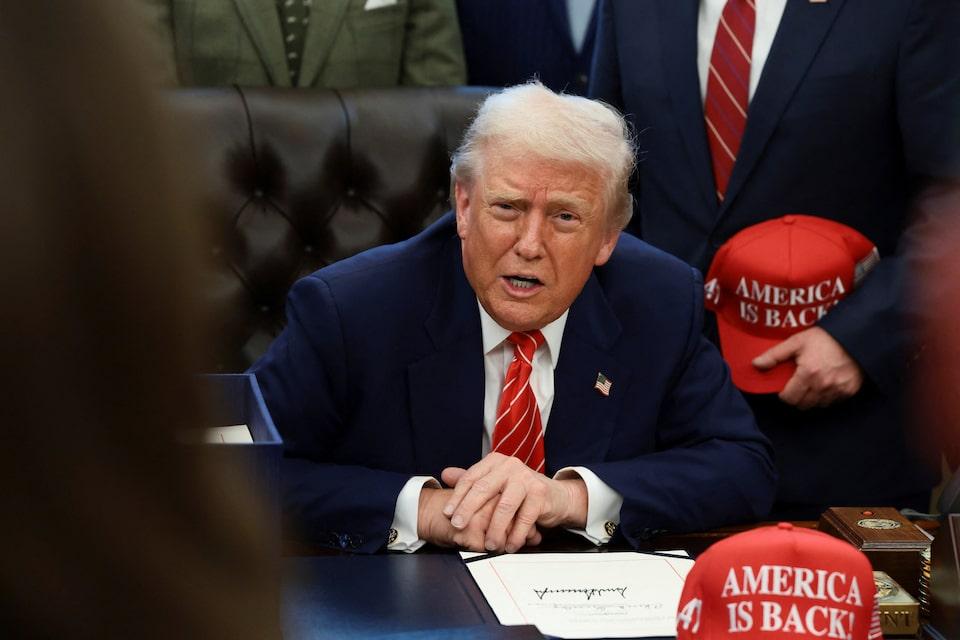
Feb 6 (Reuters) - U.S. President Donald Trump on Friday signed a proclamation to hike the country's low-tariff imports of Argentine beef, though economists have said the attempt to lower costs for American consumers will likely have little impact on prices. A White House official said in October that Trump would make such a move, evoking fury from the nation's cattle ranchers. Sign up here. Trump has faced pressure to address the issue of affordability, which helped propel Democratic candidates to several electoral victories in 2025. U.S. beef prices set record highs last year, benefiting ranchers who largely supported Trump, due to strong consumer demand and declining cattle supplies. Ranchers slashed the herd to its lowest level in 75 years as of January 1 following a persistent drought that burned up pastures used for grazing and hiked feeding costs, according to U.S. data. Trump's decision to raise the tariff rate quota on Argentine beef by 80,000 metric tons will let Argentina ship more of its beef to the U.S. at a lower rate of duty. The increase will apply only to lean beef trimmings, which are blended with domestic supplies to make hamburger meat, according to the proclamation. "Instead of imports that sideline American ranchers, we should be focused on solutions that cut red tape, lower production costs, and support growing our cattle herd," said Republican U.S. Senator Deb Fischer of Nebraska, a major cattle-producing state. Washington and Buenos Aires signed a broader new trade and investment agreement that will give preferential market access to U.S. goods in Argentina. Economists have said increased U.S. imports of Argentine beef will likely be too small to significantly lower costs for grocery store shoppers, but the shipments could help improve margins for food companies. The U.S. imported about 33,000 metric tons of Argentine beef in 2024, representing 2% of total imports, according to government data. https://www.reuters.com/world/us/trump-signs-proclamation-increasing-certain-types-beef-imports-white-house-says-2026-02-06/
2026-02-06 20:20
Four-year deal includes 15% pay raise, $2,500 signing bonus USW sought 16% raise, Marathon firm on final offer Contract replaces current one, which was extended before February 1 expiration HOUSTON, Feb 6 (Reuters) - The United Steelworkers union adopted on Friday a national agreement negotiated with Marathon Petroleum (MPC.N) , opens new tab for use in contracts between 30,000 oil industry workers and refineries and chemical plants, the union said in a statement. The four-year agreement will lift pay for hourly workers by 15%. It also provides a $2,500 signing bonus for USW-represented employees. Sign up here. It was approved by the USW National Oil Bargaining Program policy committee that represents oil workers from around the U.S., the union said. The agreement - which provides a 4% pay increase in the first and fourth years and a 3.5% increase in the second and third years - was proposed on February 1. Previous offers since negotiations began in late January had been rejected. Marathon was the lead negotiator for 26 U.S. refiners and chemical companies, including Exxon Mobil (XOM.N) , opens new tab, Chevron (CVX.N) , opens new tab and Valero Energy (VLO.N) , opens new tab. The USW represents workers at plants that account for two-thirds of U.S. crude oil refining capacity. Union officials held meetings with local unions to gauge their willingness to accept what became Marathon's last, best and final offer, said sources familiar with the negotiations. The USW had hoped to gain a 16% overall increase during the week, but Marathon stood firm on its final proposal, the sources said. Union leaders had to contend with the expectations of rank-and-file members who were hoping the USW would achieve a 25% increase over the course of the new contract, with cost-of-living adjustments if inflation exceeded the annual pay increase. The average inside operator at a refinery makes about $50 an hour. The new contract will begin replacing the current one as it is adopted at each plant. The current agreement was extended on a rolling, 24-hour basis just hours before it was due to expire at 12:01 a.m. on February 1. https://www.reuters.com/business/world-at-work/union-approves-national-agreement-negotiated-with-marathon-30000-oil-industry-2026-02-06/

2026-02-06 19:53
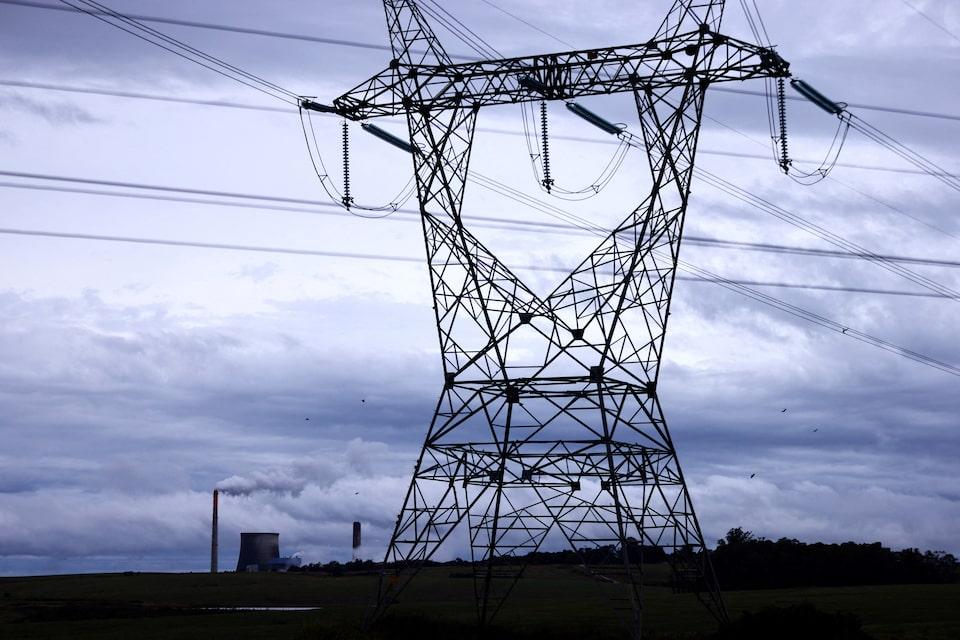
Major generators CPFL and CTG Brasil exit directional trading Companies focus on selling electricity from generation assets to reduce risk SAO PAULO, Feb 6 (Reuters) - Some Brazilian power companies are pulling back from energy trading amid rising credit risks, greater price volatility, shrinking sales from generators and reduced liquidity in the market, company executives and sources said. CPFL (CPFE3.SA) , opens new tab and CTG Brasil, two major generators controlled by Chinese groups, are among the firms that have quit "directional trading," in which firms take long or short positions to profit from price swings. Sign up here. Local groups such as Capitale, Urca and Trinity have also sharply cut or nearly halted trading operations. Brazil's power-trading market, which moves billions of dollars annually, operates through bilateral deals without a central counterparty monitoring leverage. That makes reputation crucial, especially for independent traders that do not own power generation assets. "At some point, you simply don't know who still has good credit," said one sector executive who asked not to be named to discuss the matter freely. The trading retreat follows a series of failures in the sector in recent years, most notably Gold Energia, whose billion-real default in 2024 shocked the market and reshaped how participants assess risk. Lower market liquidity also reflects a more cautious stance by major generators such as Copel and Axia (AXIA5.SA) , opens new tab, formerly Eletrobras, which have been keeping more of their energy uncontracted to benefit from higher spot prices. A second industry executive suggested that liquidity constraints mainly affect smaller firms with weaker credit profiles. "For large generators and banks, the market is normal. This is a natural shakeout," the source said. CHINESE MAJORS RETREAT CPFL told Reuters in a statement it is focused on selling electricity from its generation assets, reducing exposure to risks in Brazilian trading. CTG said it closed its dedicated trading subsidiary in the second half of 2024 in a "strategic" decision aligned with its market positioning, while adding that commercial activities are expanding as new wind and solar projects come online. Capitale has operated "consciously smaller" since 2024 and expects to cut its traded volume by 30% in 2026, CEO Daniel Rossi said. "With the current restrictive price model and volatility at these levels, it's impossible to operate the way we used to. We would be taking on far too much risk," Rossi said, adding the company has been focusing only on "small opportunities." Trinity Energia, which once traded an average of two gigawatts per month, now handles roughly 10% of that, according to CEO Joao Sanches. Urca Trading similarly decided to reduce exposure in 2025 to avoid "systemic risks," it said. https://www.reuters.com/business/energy/brazil-power-firms-retreat-trading-risks-rise-2026-02-06/