2025-12-09 11:39
Dec 9 - What matters in U.S. and global markets today By Mike Dolan , opens new tab, Editor-At-Large, Finance and Markets Sign up here. Fed week got off to a rocky start in global markets, courtesy of bond market hits across the world, but government debt yields stabilized , opens new tab on Tuesday as the Federal Reserve , opens new tab started its two-day meeting. A sharp jump in yields on U.S. Treasuries, German bunds and Japanese government bonds on Monday was fueled by a slew of factors - some hawkish policy noises from several regions, another heavy week of year-end U.S. debt sales and a likely Bank of Japan interest rate rise next week. The jolt knocked stock markets back and the S&P 500 ended in the red on Monday. Stock index futures held steady on Tuesday. But as a widely expected Fed cut is expected on Wednesday, the picture calmed a bit overnight. The release of October data on U.S. job openings later is likely the last significant labor market update before the central bank decides, with some $39 billion of 10-year Treasury notes under the hammer today too. The latest shakeout in global bonds on Monday was worldwide. European Central Bank board hawk Isabel Schnabel helped push long-dated German yields to 14-year highs by saying the next move in ECB rate will eventually be higher, Fed Chair hopeful Kevin Hassett pointedly did not call for sharp interest rate cuts as he has done previously and the Reserve Bank of Australia overnight ruled out further rate cuts there. Currencies remained relatively steady, however. The dollar was a touch firmer against the yen and euro overnight, but softer against China's yuan and the Aussie dollar. Back on Wall Street, the focus was on the bidding war for Warner Bros. Discovery, with Paramount Skydance launching a hostile move worth $108 billion in a last-ditch effort to outbid Netflix. Shares of Paramount were up 7.3% on Monday, Warner Bros Discovery rose 5.3% and Netflix fell 4%. In an interesting week for Big Tech, with Oracle and Broadcom results due, AI chip giant Nvidia rose 2% out of hours after President Donald Trump said the United States will allow its H200 processors, its second-best AI chips, to be exported to China and collect a 25% fee on such sales. But the European Commission said on Tuesday that Alphabet's Google faces an EU antitrust investigation into its use of web publishers' online content and YouTube videos to train its AI models. In today's column, I take a look at how hawks within the European Central Bank , opens new tab are pointing to a new threat: passive easing.And listen to the latest episode of the new Morning Bid , opens new tab daily podcast. Subscribe to hear Mike and other Reuters journalists discuss the biggest news in markets and finance seven days a week. Today's Market Minute Chart of the day Chinese exports to the United States dropped 29% year-on-year in November, while exports to the European Union grew an annual 14.8%. Shipments to Australia surged 35.8%, and the fast-growing Southeast Asian economies took in 8.2% more goods over the same period. Tumbling exports to the U.S. came despite news that the world's two biggest economies had agreed to scale back some of their tariffs after U.S. President Trump and Chinese President Xi Jinping met in South Korea in late October. The average U.S. tariff on Chinese goods stands at 47.5%, well above the 40% threshold that economists say erodes Chinese exporters' profit margins. Today's events to watch * U.S. NFIB November small business survey (06:00 EDT), US October JOLTS job openings data (10:00 EDT); Mexico November inflation (07:00 EDT) * U.S. Federal Reserve's Federal Open Market Committee starts two-day meeting, decision Wednesday * Bank of England policymakers Clare Lombardelli, Dave Ramsden, Swati Dhingra and Catherine Mann speaking in parliament * U.S. Treasury sells $39 billion of 10-year notes * U.S. corporate earnings: AutoZone, Campbell's Want to receive the Morning Bid in your inbox every weekday morning? Sign up for the newsletter here. You can find ROI on the Reuters website , opens new tab, and you can follow us on LinkedIn , opens new tab and X. , opens new tab Opinions expressed are those of the author. They do not reflect the views of Reuters News, which, under the Trust Principles , opens new tab, is committed to integrity, independence, and freedom from bias. https://www.reuters.com/business/finance/global-markets-view-usa-2025-12-09/
2025-12-09 11:34
Farmers face $698.6 million shortfall due to corruption scandal Government open to discussions, promises more aid this month Protests disrupt transport, airports and border crossings ATHENS, Dec 9 (Reuters) - Greek farmers continued their nationwide blockades on Tuesday, disrupting traffic along major motorways and intermittently closing border crossings to protest delays in farm aid payments. Farmers have deployed thousands of tractors and trucks in dozens of blockades as they face a shortfall of more than 600 million euros ($698.6 million) in European Union aid and other payments. Sign up here. The delays were prompted by investigations into a corruption scandal in which some farmers, aided by state employees, allegedly faked land ownership to qualify for payouts. Ongoing audits have slowed subsequent disbursements. The delays to funding come just as farmers and stock breeders struggle with an outbreak of sheep pox that has led to hundreds of thousands of sheep and goats being culled. The nationwide demonstration on Tuesday disrupted traffic at several junctures along two highways linking Athens to the northern city of Thessaloniki and the western port of Igoumenitsa to the Turkish border in the east, both key transport routes for trade directed to the Balkan countries. "It's a matter of survival," Yiannis Koukoutsis, a farmer from the central agricultural region of Larissa, told public broadcaster ERT. "We're looking for moves of good faith from the government, including freezing tax debt." The centre-right government of Kyriakos Mitsotakis, under criticism over the scandal, has said it was open to discussions and urged farmers to terminate the blockades. It has acknowledged delays in payments and said farmers will be getting more aid this month before they finally receive a total of 3.7 billion euros this year. But protests continue. In the north, farmers intermittently restricted traffic through the Promachonas and Kipi border crossings with Bulgaria and Turkey and said they aimed to block the port and airport in Thessaloniki this week. On the island of Crete, three flights were cancelled and several others delayed after a group of farmers threw stones at police and stormed onto the runway at the Heraklion airport on Monday. Airport operations resumed around 0800 GMT on Tuesday, Greek aviation officials told Reuters, after farmers left. ($1 = 0.8589 euros) https://www.reuters.com/business/retail-consumer/greeces-heraklion-airport-resumes-flights-after-farmers-end-protest-2025-12-09/

2025-12-09 11:33
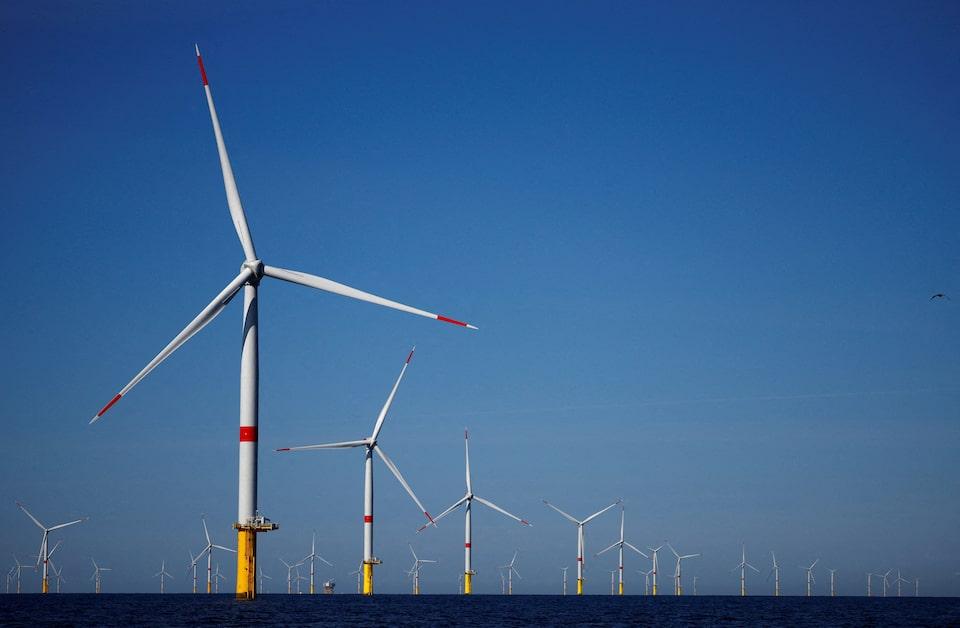
PARIS, Dec 9 (Reuters) - France has entered a period of electricity overcapacity due to flagging industrial use and growing renewable and nuclear output, grid operator RTE said on Tuesday, calling for Europe-level action to boost electrification. Power prices in France have fallen to their lowest since mid 2018 after rocketing during the 2022 energy crisis, which caused traditional industry to shutter factories and cut power consumption. Sign up here. RTE said electricity demand growth had followed the slower scenario laid out in its 2023 analysis as weaker economic expansion has led to less power demand compared to the pre-COVID average and a slow rollout of electrification projects. To overcome this overcapacity, decarbonisation and electrification projects like the electric vehicle rollout and hydrogen production need to be implemented more quickly, which will require action on the European level, RTE said in a report. The supply-demand imbalance led to record power exports in 2024, and France is on track to break that record in 2025 after reaching 82 terawatt hours of exports by November, just 7 TWh short of last year's total with a month to go, RTE said. However export capacity is limited by infrastructure constraints, and RTE said overcapacity is likely to require more modulation capacity - the ability to reduce power supply at periods of low demand - at nuclear and renewable plants. Lowering power supply over increased periods means that power producers like nuclear operator EDF would see a hit to their profits as they curtail production, and could also lead to extended maintenance delays during less profitable months. RTE currently has 30 gigawatt hours of grid access rights signed and contracted for heavy industry, including hydrogen, mobility and data centres, which can help mitigate some of the oversupply, the report said. Compared to other countries, France could see greater demand growth by the end of the decade and higher electricity grid utilisation rates, RTE said. https://www.reuters.com/sustainability/climate-energy/french-power-supply-outpacing-demand-electrification-lags-grid-operator-says-2025-12-09/
2025-12-09 11:27
TSX ends up 0.2% at 31,244.37 Materials group rises 2% as silver hits record high Anglo American and Teck Resources approve merger Energy falls 1.1% as oil settles lower Dec 9 (Reuters) - Canada's main stock index advanced on Tuesday, led by metal mining shares, but the move was limited ahead of interest rate decisions by the Bank of Canada and the Federal Reserve. The S&P/TSX Composite Index (.GSPTSE) , opens new tab ended up 74.40 points, or 0.2%, at 31,244.37, edging closer to the record closing high it posted on Thursday. Sign up here. The Bank of Canada is expected to leave its benchmark interest rate on hold at a three-year low of 2.25% on Wednesday, while the Fed is expected to continue its easing campaign. The prospect of further central bank easing and recent increases in precious metal prices are "pretty constructive" for the market, said Stan Wong, portfolio manager at Scotia Wealth Management. Possible shifts next year in central bank policy as well as U.S. midterm elections and a joint review of the United States-Mexico-Canada Agreement on trade could lead to pockets of increased market volatility, Wong said, adding that such bouts of uncertainty could present buying opportunities for investors. The materials group, which includes metal mining shares, rose 2% as the price of silver climbed 4.5% to a record high. Shareholders of Anglo American (AAL.L) , opens new tab and Teck Resources (TECKb.TO) , opens new tab approved a previously announced merger, paving the way for the creation of a copper heavyweight and leaving regulatory approvals as the final hurdle. Teck's shares were up 0.8%. Technology rose 0.3% and heavily weighted financials ended 0.4% higher. Brookfield (BN.TO) , opens new tab and Qai, an artificial intelligence company owned by Qatar's sovereign wealth fund, have formed a $20 billion joint venture to develop artificial intelligence infrastructure in Qatar and select international markets, the two groups said. Shares of Brookfield added 0.5%. Energy was a drag, falling 1.1%, as the price of oil settled 1.1% lower at $58.25 a barrel. Investors were keeping a close eye on peace talks to end Russia's war in Ukraine. Industrials also lost ground, falling 0.9%, and consumer discretionary stocks ended 0.8% lower. https://www.reuters.com/business/tsx-futures-steady-ahead-expected-fed-rate-cut-2025-12-09/
2025-12-09 11:20
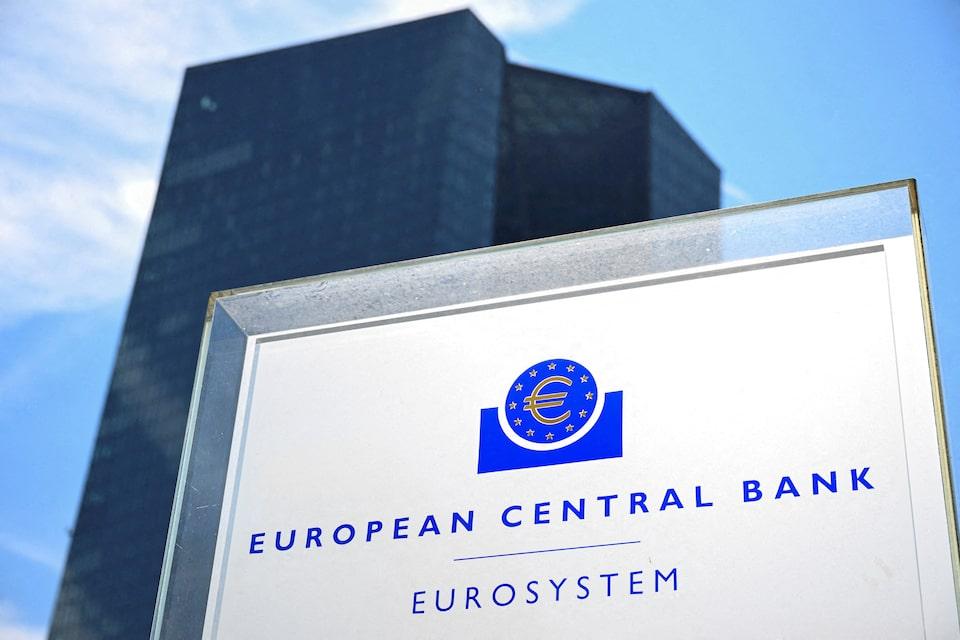
ECB backs merging buffers set by national regulators Proposals will be sent to European Commission US, Britain have been more aggressive in deregulation FRANKFURT, Dec 9 (Reuters) - The European Central Bank will propose simplifying rules on capital buffers required of banks, pruning some of the complex regulation put in place after the global financial crisis, two sources familiar with the proposals told Reuters. The list of measures that ECB Vice-President Luis de Guindos will present to reporters on Thursday aims for fewer, rather than lower, requirements for the amount of capital lenders must hold to cushion themselves against potential shocks. Sign up here. That is a more conservative approach than regulators in Britain and the United States have taken recently and may disappoint bankers who had been hoping for more respite. The recommendations, the result of a compromise between different European Union countries, would merge the systemic risk buffer (SyRB) and countercyclical capital buffer (CCyB), two separate capital requirements set by national supervisors, said the two sources. They spoke on condition of anonymity because the matter is still confidential. A spokesperson for the ECB declined to comment. STRONG REGULATION SUPPORTS RATINGS Financial experts said simplification was more than welcome as the current system has become too complex but this should not lead to banks having to hold less capital. "The strong regulation is a key factor supporting the ratings of European banks," said Marco Troiano, a director at Scope Ratings. "The messaging from the ECB has been very consistent so far, that there is room to simplify the framework, but that this should not lead to less capital at a system level. I welcome this approach," he said. The ECB recommendations will next go to the executive European Commission, which shares the power to propose changes to EU legislation with the European Parliament and Council, on which member states sit. Such changes would take years and could reopen long-standing debates over how far Europe should go in loosening regulations designed to shield taxpayers from having to bail out ailing banks. BANKERS ARGUED THE RULES WERE TOO COMPLEX The SyRB and CCyB buffers were introduced by the 27-nation EU as part of a post-crisis overhaul aimed at preventing another banking sector meltdown like that seen in 2007-2008. Bankers complain these rules are too complex and put them at a disadvantage to U.S. peers, particularly at a time when Donald Trump's U.S. administration is leading a drive to deregulate. U.S. regulators on Friday scrapped guidance aimed at curbing leveraged lending, which has helped shift business to lightly regulated private-credit funds. The Bank of England last week cut its estimate of how much capital lenders need to hold – its first reduction since the crisis – in a bid to boost credit and support growth, although it left its countercyclical capital buffer unchanged. The ECB report, capping months of work by a task force on simplifying regulation, will back the idea of cutting down requirements to just two types - those that can be released at times of stress and those that banks must keep at all times. The task force will also propose reviewing rules for small lenders and harmonising the data banks report to supervisors, resolution authorities and statistical offices, aiming to lower compliance costs. NO APPETITE FOR REDUCING OVERALL REQUIREMENTS The SyRB allows national regulators to demand extra capital where they see risks not covered by other requirements. Merging it with the CCyB – which is designed to curb credit booms – would cut the number of requirements without necessarily reducing overall demands. How much capital banks will need under the combined buffer will still depend on national supervisors. A third source familiar with the ECB's thinking said the simplification effort was focused on removing the duplication of rules but there was very limited appetite for reducing overall capital requirements. The SyRB currently ranges from just 0.5% in countries like the Czech Republic and Italy to 7% in Denmark, and can be applied across the board or just to some types of loans, such as real estate. The ECB recommendations reflect a compromise among euro zone authorities but show the lack of consensus in other areas, the sources added. France had pushed for simplifying requirements governing how much capital Europe's seven biggest lenders - four of which are French - must have to absorb losses if they fail. Germany, where regional and smaller lenders still make up nearly half of the total, wanted lighter treatment for those banks and stricter reliance on equity, rather than convertible bonds, for fulfilling some requirements. Neither idea won enough support and will appear only as options in the report. https://www.reuters.com/sustainability/boards-policy-regulation/ecb-backs-simpler-not-looser-bank-rules-sources-say-2025-12-09/
2025-12-09 10:59
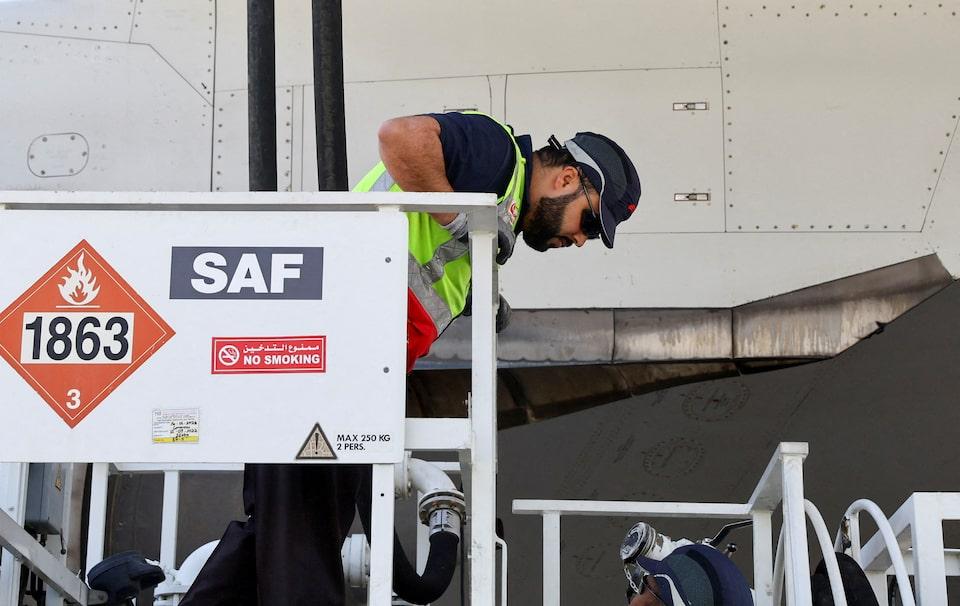
SAF production not meeting expected volumes, says IATA's Willie Walsh SAF currently 0.3% of global jet fuel usage, projected 0.7% by 2025 Airlines blame producers for high SAF prices, insufficient production GENEVA, Dec 9 (Reuters) - The global airline industry is likely to miss its targets for green jet fuel use in the coming years, the International Air Transport Association said on Tuesday, blaming fuel producers and regulators for the "disappointing" progress. Sustainable aviation fuel (SAF), made largely from waste or used cooking oil, can cut emissions significantly compared with traditional jet fuel. However, it remains two to five times more expensive than conventional fuel. Sign up here. IATA expects 2.4 million metric tons of SAF to be available in 2026, covering just 0.8% of total fuel consumption. That means the growth of the SAF sector has slowed - production growth doubled between 2024 and 2025, but will likely only grew by 0.5 million metric tons between 2025 and 2026, IATA said. The wider aviation sector committed in 2021 to achieving net-zero emissions by 2050, relying heavily on a gradual switch to SAF. "We're not seeing SAF produced in the volumes we had hoped for and had expected. That is disappointing," the trade group's director general Willie Walsh told journalists. He had previously warned that the 2050 net zero goal could be at risk. Sustainable aviation fuel accounts for about 0.3% of the world's jet fuel use and was projected to reach only 0.7% by 2025, according to IATA data. Experts say production needs to grow quickly for the sector to meet its emissions goals. Airlines have long said that they are willing to buy all of the SAF available, but accuse jet fuel producers of artificially inflating prices and failing to produce enough of the greener fuel. "It's not an issue of price, it's an issue of availability, and they're just not able to get their hands on the SAF that they require to fulfil the ambition that they expressed," Walsh said. IATA's Chief Economist Marie Owens Thomsen added that regulatory mandates introduced by the European Union and Britain have encouraged fuel producers to raise prices on SAF even further, with Walsh adding that the practice is synonymous with price gouging. https://www.reuters.com/sustainability/climate-energy/airlines-warn-green-fuel-goals-risk-supply-falls-short-2025-12-09/