2025-12-08 04:26
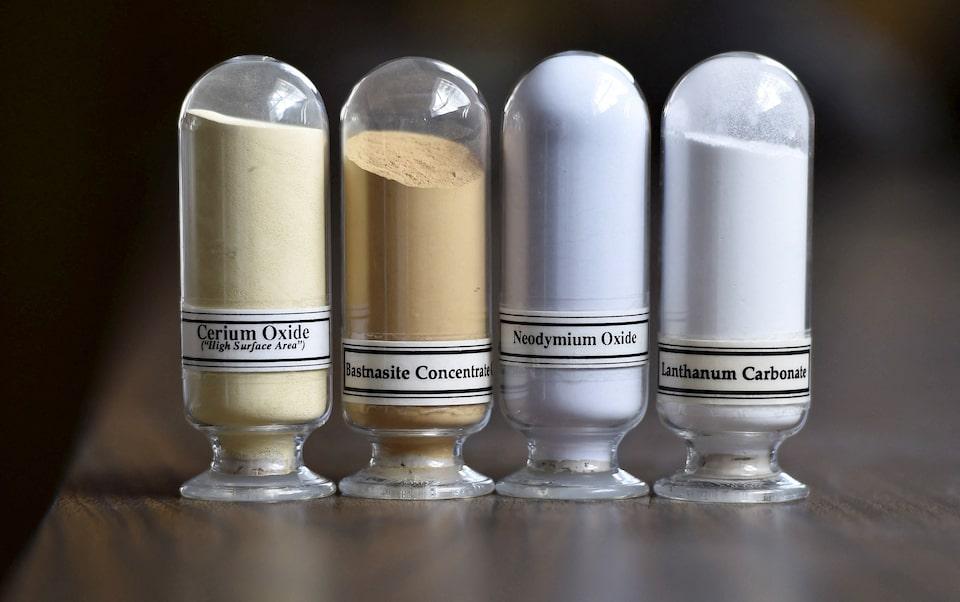
Dec 8 (Reuters) - China's rare earth exports jumped in November, the first full month since President Xi Jinping and U.S. President Donald Trump agreed to speed up shipment of the critical minerals from the world's largest refiner. Exports in November jumped for a second consecutive month, by 26.5% from October to 5,493.9 metric tons, showed figures from the General Administration of Customs of China. Sign up here. Whether increased shipments to the U.S. or Europe powered that jump will only be revealed when the customs office releases a country breakdown on December 20. Export controls over the 17 minerals used in areas as varied as autos, consumer electronics and defence have caused months of disruption since their April introduction. A requirement for licences for each export has created shortages that brought parts of the auto supply chain to a halt and handed China enormous leverage in trade talks with the U.S. Reuters reported last week that China issued its first "general licences" - year-long permits aimed at speeding up exports following the Xi-Trump meeting. Those licences are likely to start impacting trade data next year. Year-to-date, rare earth exports totalled 58,193.1 tons, an annual increase of 11.6%. https://www.reuters.com/world/asia-pacific/chinas-rare-earth-exports-jump-november-after-xi-trump-meeting-2025-12-08/
2025-12-08 01:02
Dec 7 (Reuters) - Robinhood Markets (HOOD.O) , opens new tab will acquire Indonesian brokerage firm Buana Capital Sekuritas and licensed digital asset trader Pedagang Aset Kripto, marking the retail trading platform's entry into one of Southeast Asia's major crypto hubs, the company said in a blog post on Sunday. Indonesia is among the world's leading adopters of cryptocurrency, backed by supportive regulation and a tech-savvy young population, making it a prime target for U.S. firms seeking growth in Asia. Sign up here. The country has more than 19 million capital market investors and 17 million cryptocurrency traders, underscoring its appeal for both stock and digital asset trading. "Indonesia represents a fast-growing market for trading, making it an exciting place to further Robinhood’s mission to democratize finance for all," said Patrick Chan, Head of Asia at Robinhood. Acquiring a brokerage eases a company's entry into new markets by helping meet regulatory requirements and build presence, while buying a licensed digital asset trader speeds access to crypto products. Robinhood did not disclose financial terms of the deal, which is expected to close in the first half of 2026. Pieter Tanuri, majority owner of both Indonesian firms, will stay on as a strategic adviser to Robinhood, the company said. Robinhood's commission‑free, app‑based platform is widely credited with disrupting U.S. retail trading by drawing in a new generation of investors and changing how Americans engage with stock markets. The deal signals a new phase for the retail trading platform, which has gained broader market recognition this year after joining the benchmark S&P 500 index (.SPX) , opens new tab. The company also announced its entry into prediction markets in March. Shares of the company, which went public in New York in 2021, have gained nearly 268% so far in 2025 - as of December 4 close. https://www.reuters.com/world/asia-pacific/robinhood-enter-indonesia-with-brokerage-crypto-trader-acquisition-2025-12-08/
2025-12-08 00:46
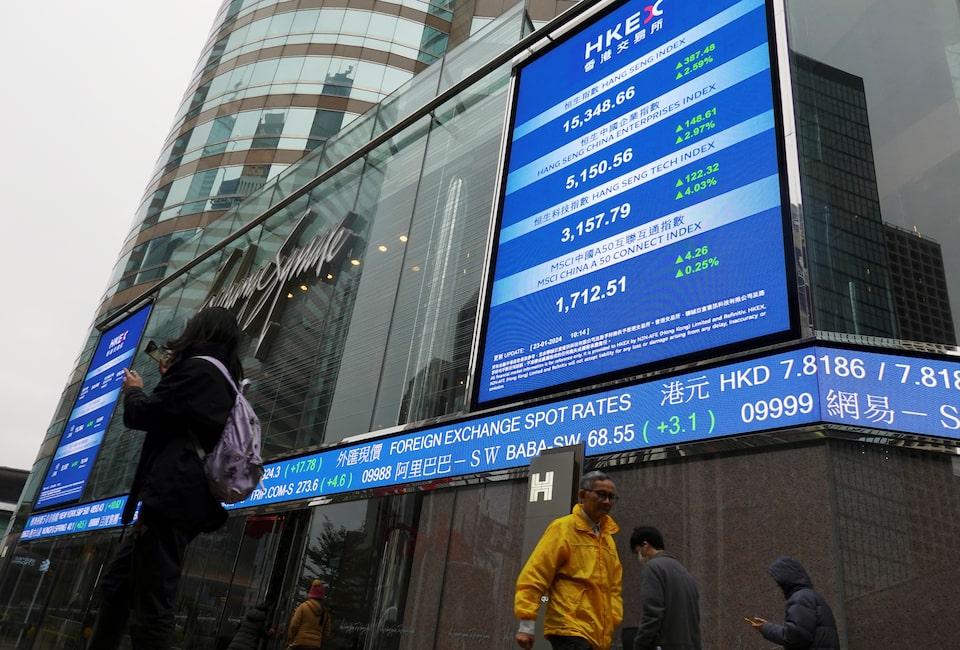
US stocks drop as investors wait for Fed rate decision Fed expected to deliver rate cut on Wednesday Rates set to stay on hold in Canada, Switzerland, Australia NEW YORK, Dec 8 (Reuters) - U.S. Treasury yields and the dollar gained on Monday as investors prepared for this week's Federal Reserve meeting, with investors widely expecting an interest rate cut, while major stock indexes were lower. Investors also assessed the potential impact of a powerful magnitude 7.6 earthquake that shook Japan's northeast region. It prompted orders for about 90,000 residents to evacuate and tsunami warnings that hours later were downgraded to advisories. Sign up here. The iShares MSCI Japan exchange-traded fund (EWJ.P) , opens new tab fell 0.6%. The dollar rose 0.3% against the yen . Key this week will be the Fed's announcement on Wednesday. While a rate cut is expected, some strategists think the Fed's policy committee could be sharply divided. Some investors speculated that the meeting could be one of the most fractious in recent memory. The Federal Open Market Committee has not had three or more dissents at a meeting since 2019, and it has happened just nine times since 1990. Investors braced for signals of a milder easing cycle than expected. Expectations that the Fed will cut its policy rate by 25 basis points stand at 87.4%, according to CME Group's FedWatch Tool. Markets had been pricing in less than a 30% chance of a cut until comments from Fed officials in recent weeks spurred a reversal in expectations. "The market might be anticipating the Fed may indicate that after this rate cut there might be a pause in the first quarter of 2026, although I don't subscribe to that," said Peter Cardillo, chief market economist at Spartan Capital Securities in New York. JAPAN RATE DECISION DELAY? The dollar rose against the yen after news of the earthquake in Japan. Depending on the extent of the earthquake's damage, the Bank of Japan could delay an expected rate hike next week, analysts said. The U.S. dollar index also was higher. The next BOJ monetary policy meeting is scheduled for December 18-19, 2025, with the policy decision and statement expected on the second day. Japan's economy than initially estimated in the three months through September, the Cabinet Office said on Monday, primarily due to new data dragging down capital spending figures, though economists said the change is not enough to sway the central bank. U.S. Treasury yields also rose on the earthquake news. The yield on the benchmark U.S. 10-year Treasury note was last up 3.1 basis points at 4.17% after reaching 4.192%, its highest level since September 26, and was on track for a third straight session of gains. On Wall Street, all major S&P 500 sectors were lower except for technology (.SPLRCT) , opens new tab. "The market really sold off in basically the second half of November, and since then, we've just seen a very strong rally," said Tim Ghriskey, senior portfolio strategist at Ingalls & Snyder in New York. "Today we've come off a little, but I don't see anything out there that is going to really derail this market." The Dow Jones Industrial Average (.DJI) , opens new tab fell 215.67 points, or 0.45%, to 47,739.32, the S&P 500 (.SPX) , opens new tab fell 23.89 points, or 0.35%, to 6,846.51 and the Nasdaq Composite (.IXIC) , opens new tab fell 32.22 points, or 0.14%, to 23,545.90. The S&P 500 (.SPX) , opens new tab remains up about 16% for the year to date. Paramount Skydance's (PSKY.O) , opens new tab hostile bid to buy Warner Bros Discovery (WBD.O) , opens new tab grabbed some investor attention as it aimed to outbid Netflix (NFLX.O) , opens new tab. Netflix shares were down 3.4%. MSCI's gauge of stocks across the globe (.MIWD00000PUS) , opens new tab fell 2.69 points, or 0.27%, to 1,008.04. The pan-European STOXX 600 (.STOXX) , opens new tab index fell 0.07%. Central banks in Canada, Switzerland and Australia also meet this week and all are poised to hold rates steady. The Swiss National Bank might like to ease again to offset the strength of its franc, but it is already at 0% and reluctant to go negative. A run of hot economic data has led investors to abandon any hope of another easing from the Reserve Bank of Australia and even to price in a rate hike for late 2026. In energy, U.S. crude oil fell $1.20 to settle at $58.88 a barrel, after Iraq restored production at one of its oil fields that accounts for 0.5% of world oil supply. Brent futures fell $1.26 to settle at $62.49. https://www.reuters.com/world/china/global-markets-global-markets-2025-12-08/
2025-12-08 00:37
Iraq restores production at West Qurna 2 oilfield Progress on Ukraine peace talks remains slow 84% chance of a quarter-point Fed cut, LSEG data shows G7, EU mull Russian oil maritime services ban, sources say HOUSTON, Dec 8 (Reuters) - Oil prices slipped 2% on Monday after Iraq restored production at one of its oilfields which accounts for 0.5% of world oil supply, while investors weighed ongoing talks to end the war in Ukraine. Brent crude futures were down $1.26, or 1.98%, at $62.49 a barrel, while U.S. West Texas Intermediate crude was at $58.88, down $1.20, or 2%. Sign up here. Iraq restored production at Lukoil's (LKOH.MM) , opens new tab West Qurna 2 oilfield, one of the world's largest, after a leak on an export pipeline slashed its output, two Iraqi energy officials told Reuters on Monday. Prices had marginally pared losses earlier after sources told Reuters that Iraq had shut down production at the field, which produces around 460,000 barrels per day. Both contracts closed Friday's trading session at their highest levels since November 18. "If there's any kind of agreement reached in the near future on Ukraine, then Russian oil exports should increase and put downward pressure on oil prices," said Tamas Varga, oil market analyst at PVM. Markets are meanwhile pricing in an 84% chance of a quarter-point cut at the Fed meeting on Tuesday and Wednesday, LSEG data showed. However, board member comments indicate the meeting is likely to be one of the most divisive in years, intensifying investor focus on the bank's policy direction and internal dynamics. SLOW PROGRESS ON UKRAINE Progress on Ukraine peace talks remains slow, with disputes over security guarantees for Kyiv and the status of Russian-occupied territory still unresolved even as U.S. President Donald Trump presses for a deal. Ukrainian President Volodymyr Zelenskiy was meeting European leaders in London on Monday. "The various potential outcomes from Trump's latest push to end the war could release a swing in oil supply of more than 2 million barrels per day," ANZ analysts said in a client note. Any geopolitical risk premium will be weighed against signs of a growing global surplus, with rising OPEC+ and non-OPEC supply outpacing modest demand growth, Aegis Hedging analysts said in a note on Monday. Commonwealth Bank of Australia analyst Vivek Dhar said a ceasefire is the main downside risk to the outlook for oil prices, while sustained damage to Russia's oil infrastructure is a significant upside risk. NEW CURBS ON RUSSIAN EXPORTS? In the meantime, Group of Seven countries and the European Union are in talks to replace a price cap on Russian oil exports with a full maritime services ban, people familiar with the matter told Reuters. That would likely further curb supply from the world's second-largest oil producer. The U.S. has also ramped up pressure on OPEC member Venezuela, including strikes against boats it said were attempting to smuggle illegal drugs, and talk of military action to overthrow President Nicolas Maduro. Elsewhere, Chinese independent refiners have stepped up purchases of sanctioned Iranian oil from onshore storage tanks using newly issued import quotas, trade sources and analysts said, easing a supply glut. Meanwhile, U.S. crude oil stockpiles were expected to have fallen last week, while distillate and gasoline inventories likely rose, a preliminary Reuters poll showed on Monday. https://www.reuters.com/business/energy/oil-holds-two-week-highs-expected-us-rate-cut-geopolitical-risks-2025-12-08/

2025-12-07 22:34
Dec 8 (Reuters) - Australia's Anson Resources (ASN.AX) , opens new tab said on Monday it signed a non-binding memorandum of understanding with Utah-based firm Nusano to supply lithium chloride for use in nuclear and advanced manufacturing applications. Under the MoU, Anson will supply lithium chloride samples from its Green River project in Utah for qualification testing, with talks aimed at a definitive five-year deal covering at least 300 tonnes of lithium carbonate equivalent annually. Sign up here. Nusano, a privately held company, plans to use Anson's lithium chloride as feedstock to produce lithium-6 and lithium-7 isotopes using proprietary separation technologies for nuclear sector applications. "The company continues to be in discussions with other off-take partners, particularly for the electric vehicle supply chain, which remains its focus," said CEO Bruce Richardson, adding that diversification into the nuclear industry represents "an important strategic step." Lithium raw material spodumene prices surged to their highest since June 2024 in late November, rebounding nearly half from June's four-year lows, though still far off late-2022 peaks above $6,000. The company in September had signed a similar deal with South Korea's LG Energy Solution (373220.KS) , opens new tab for the supply of battery-grade lithium carbonate from its Paradox Basin project. https://www.reuters.com/business/australias-anson-inks-lithium-supply-mou-with-uss-nusano-nuclear-use-2025-12-07/

2025-12-07 20:20
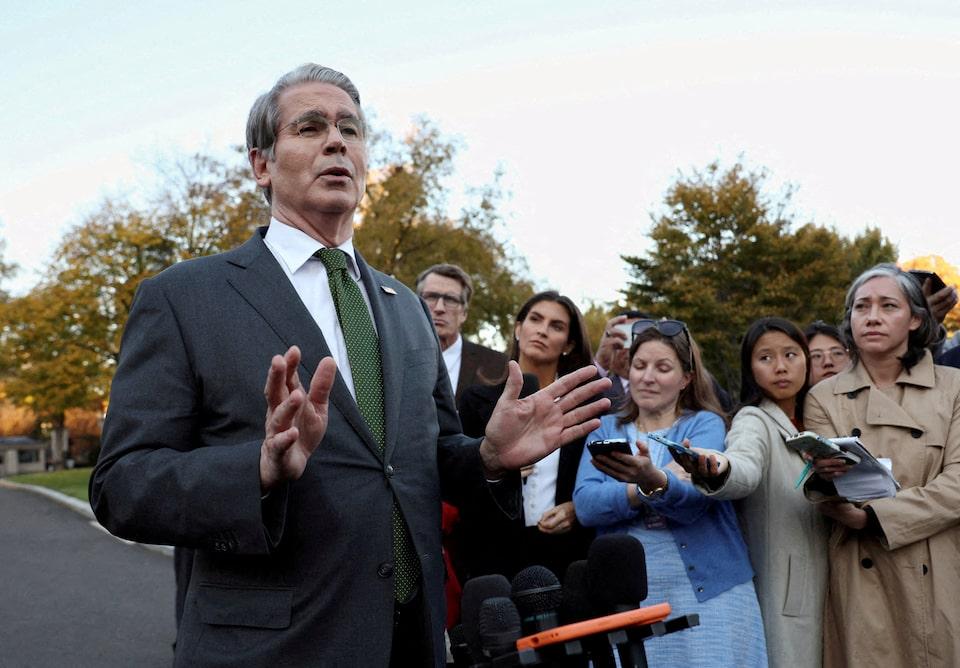
WASHINGTON, Dec 7 (Reuters) - U.S. Treasury Secretary Scott Bessent, a key figure in implementing President Donald Trump's economic agenda including tariffs, disclosed on Sunday that he has recently divested his interests in a soybean farm to comply with the ethics agreement he signed last January when he joined the administration. The divestiture comes four months after the U.S. Office of Government Ethics informed the Senate Finance Committee in an August 11 letter that Bessent had failed to comply with certain terms of the agreement aimed at avoiding any potential conflict of interest. Sign up here. "I'm involved in the agricultural industry. I run a soybean farm," Bessent initially told CBS' "Face the Nation" program while discussing the U.S. trade situation for U.S. farmers. He quickly added: "I actually just divested it this week as part of my ethics agreement. So I'm out of that business." The New York Times has reported that Bessent owned as much as $25 million of soybean and corn farmland in North Dakota, including thousands of acres that earned him as much as $1 million a year in rental income. As part of his ethics agreement, Bessent pledged to divest his Key Square Group hedge fund and other assets to avoid conflicts of interest. Many of the divestitures were to be completed by April 28, 2025. In an August statement issued by the Treasury Department, Bessent said he had completed all but 4% of the asset divestitures required by his ethics agreement and intended to divest the remaining assets by the end of the year. https://www.reuters.com/world/us/treasury-secretary-bessent-says-he-has-divested-his-soybean-farm-2025-12-07/