2026-02-06 12:27
Atlantic Sea LNG Trade seeks 15 bcm/year US LNG for 20 years Talks with US suppliers and Vertical Gas Corridor buyers ongoing Greece aims to be key gas transit route for Europe LONDON, Feb 6 (Reuters) - Atlantic Sea LNG Trade, a joint venture between Greece's gas supplier DEPA and construction group Aktor, is in talks to secure up to 15 billion cubic meters (bcm) of U.S. liquefied natural gas (LNG) annually for 20 years to supply southern Europe, its CEO told Reuters. The talks come as Greece seeks to bolster its role as a transit route for gas into Europe and as the continent prepares to halt Russian gas imports by late 2027, intensifying competition for long‑term LNG supply and increasing pressure on governments to avoid being caught short. Sign up here. "If Europe doesn't want to be again hostage to gas, they need to secure long-term agreements with the United States... to secure balance in the future and availability of gas at reasonable prices," CEO Alexandros Exarchou told Reuters in an interview. Atlantic Sea LNG Trade, which imports LNG into Greece and sells it on to central Europe and Ukraine, aims to firm up an agreement during a meeting in Washington on February 24, he said. "Now (is) the best possible time to negotiate prices for the future," Exarchou said, arguing that prices might be "significantly higher" in future due to tighter markets after 2030 when available supply may not meet demand. The company is negotiating long-term deals with U.S. suppliers and is holding parallel discussions with potential buyers across the Vertical Gas Corridor - a route to transport gas from Greece through central Europe and Ukraine. Those potential buyers are in Albania, North Macedonia, Bulgaria, Romania, Hungary, Moldova, Austria and potentially Ukraine, he said. "We see serious demand in consumer consumption in the North (of the corridor). For instance, in Romania, Hungary and Moldova the consumer consumption of gas is very high, whereas industrial is more as you go towards the South," Exarchou said. On Monday, Atlantic Sea LNG Trade signed its first U.S. LNG contract with Ukraine, with a cargo scheduled for delivery in March via Greece’s Revithoussa terminal and onward to Ukraine's energy company Naftogaz through Bulgaria, Romania and Moldova. https://www.reuters.com/business/energy/greek-joint-venture-seeks-20-year-us-lng-deal-strengthen-southern-europes-gas-2026-02-06/
2026-02-06 12:23
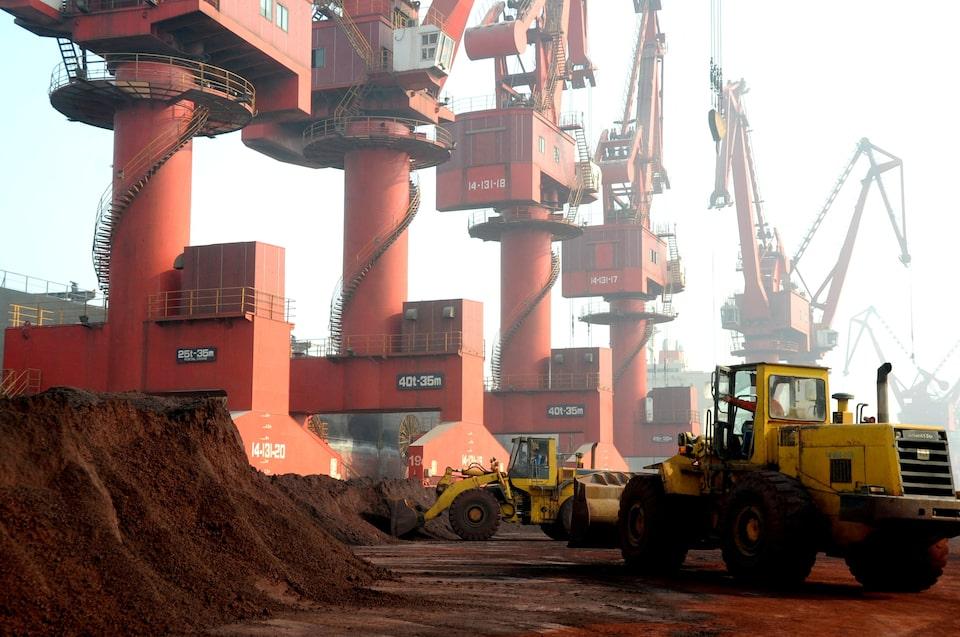
Feb 6 (Reuters) - China approved some rare earth exports to Japan under tightened controls, Japan's Kyodo News reported on Friday citing a source. Reuters could not immediately verify the report. Sign up here. https://www.reuters.com/world/asia-pacific/china-approves-some-rare-earth-exports-japan-under-tightened-controls-kyodo-2026-02-06/
2026-02-06 12:06
Feb 6 (Reuters) - Tata Steel (TISC.NS) , opens new tab, India's second-largest maker of steel by market capitalisation, reported a bigger-than-expected third-quarter profit on Friday as higher sales volumes helped cushion the impact from weak steel prices. Consolidated net profit jumped to 26.89 billion rupees ($296.66 million) in the quarter ended December 31, from 3.27 billion rupees a year earlier. Sign up here. Analysts' on average had expected profit of 24.26 billion rupees, according to data compiled by LSEG. Jefferies analysts had expected Indian steel companies to report stronger volume growth in the October–December period, driven by capacity expansions, while Systematix Institutional Equities said that higher volumes would help offset pricing pressures for Tata Steel. Its domestic production volumes for the quarter increased by 11.4%, while delivery volumes grew 14% year-on-year, driven by capacity utilisation at its plants at Kalinganagar and Jamshedpur. This lifted the Tata Group company's total revenue from operations by around 6% to 570.02 billion rupees. Steel prices, however, stayed under pressure for most of the third quarter as supply outpaced demand, dragging down flat product prices, analysts at Elara Capital said. Prices have rebounded since December, helped by the government's safeguard anti-dumping duty, which is expected to support the sector in the near term. Last month, India imposed a three-year import tariff on select steel products to curb Chinese imports, replacing a 12% duty introduced in April for 200 days. The longer duration is seen as offering greater certainty and protection for domestic producers, according to Sunny Agrawal, head of fundamental equity research at SBICAPS Securities. Core profit, or earnings before interest, taxes, depreciation, and amortization (EBITDA) for Tata Steel's India operations grew nearly 5% to 82.91 billion rupees. Rival steelmaker JSW Steel (JSTL.NS) , opens new tab in January beat third-quarter profit estimates on higher sales volumes. ($1 = 90.6430 Indian rupees) https://www.reuters.com/world/india/indias-tata-steel-beats-profit-view-higher-volumes-outweigh-weak-prices-2026-02-06/
2026-02-06 11:49
Feb 6 - Everything Mike Dolan and the ROI team are excited to read, watch and listen to over the weekend. From the Editor Sign up here. Hello Morning Bid readers! The week began with a selloff in some of the world’s oldest sources of value, gold and silver, and has ended with investors reevaluating what businesses will have any value at all in the AI-driven future. This week’s so-called 'software-mageddon' is on track to erase roughly $1 trillion of market capitalization from the S&P 500 software and services index. The catalyst for this plunge was ostensibly a new tool from Anthropic that could potentially automate a lot of legal work and, eventually, other sales, marketing, and data analysis services. But this rout is obviously not explained by a new, mostly unproven, plug-in. It's a signal that the technological revolution is entering a new phase where the AI tide will no longer lift all boats. Instead investors will increasingly seek to discriminate between disruptors and casualties. In theory, this type of dispersion should be great news for active managers. But the problem with a ‘stock picker’s market’ is that you actually need to pick the right stocks, something that may be infinitely more difficult now that past correlations and trends might no longer hold. Perhaps oddly, investors who are worried that AI will dominate everything are also edgy about how much the ‘Magnificent 7’ mega-caps are spending to dominate AI. Amazon shares plunged 11.5% in after-hours trading on Thursday after it projected a 50% jump in capital expenditures for 2026. Alphabet’s announcement the previous day that it would target capex of $175 billion to $185 billion this year was lauded by many analysts, but its shares still took a hit. Reflecting the risk-off mood, bitcoin touched a 16-month low early on Friday, testing the key $60,000 level, before rebounding slightly. Moving from digital gold to actual gold, the yellow metal is off about 10% from its recent peak. It recorded its biggest one-day bounce since 2008 on Tuesday after its massive plunge on Friday and Monday. While gold is still up significantly over the past two years, this level of volatility is likely not what many investors, including central banks, signed up for when they increased their allocations to bullion. Meanwhile, silver is currently trading under $75 per ounce, more than 35% below its high last week, after posting its biggest one-day drop on record last Friday. What was the initial cause of the metals rout? In case you have forgotten, President Donald Trump announced last Friday that Kevin Warsh – a previous inflation hawk – was his pick for the new Federal Reserve chair. The announcement of a more-orthodox-than-anticipated nominee supposedly upended the ‘dollar debasement’ narrative, reducing the attractiveness of previous metals. There is likely some truth to that explanation, but the type of large moves we’ve seen in precious metals – particularly in silver – are likely indicative more of speculation and technical issues rather than any true revaluation of an investment thesis. Over in energy, oil prices – like everything else – were volatile this week, as tensions between the U.S. and Iran see-sawed. Crude now looks set to record its first weekly drop in seven weeks. It’s notable that the two things most important for oil prices right now – the potential conflict in Iran and China’s oil purchases – are completely outside of OPEC’s hands. On Tuesday, there was the announcement of a trade deal between the U.S. and India that has potential implications for oil markets. President Trump said that India had agreed to stop buying Russian oil and would buy “much more” oil from the U.S. and potentially Venezuela. But it’s unclear if any of that will actually happen, as the economics may simply not make sense. Amid the week’s market ructions, investors would be forgiven for missing the central bank announcements. Both the Bank of England and the European Central Bank kept their policy rates unchanged, though the BoE’s meeting was notable for the unexpectedly narrow 5-4 vote. Finally, the Reserve Bank of Australia bucked the global easing – or pausing – trend, delivering its first interest rate rise in more than two years. This move could herald a broader shift in global credit policy. Indeed, there are nascent signs that upward pressures on U.S. inflation are increasing. And given all the projected AI capex, that heat may rise. For more commodities and markets news, check out Reuters Open Interest , opens new tab. Learn why the U.S. push for gas power could inadvertently speed up the global move toward clean power, the big question Europe needs to start asking, and the reason Trump may soon be complaining about “clueless Kevin Warsh”. As we head into the weekend, check out the ROI team’s recommendations for what you should read, listen to, and watch to stay informed and ready for the week ahead. I’d love to hear from you, so please reach out to me at [email protected] , opens new tab. This weekend, we're reading... JAMIE MCGEEVER, ROI Markets Columnist: Our very own Mike Dolan shrewdly observes that U.S. President Donald Trump has a ready-made scapegoat in his new Fed Chair nominee Kevin Warsh if interest rates are not cut as much as he wants. ANDY HOME, ROI Metals Columnist: My Reuters colleagues Manya Saini, Niket Nishant and Ashitha Shivaprasad take a fascinating deep-dive into the fast-growing gold token market, where real and virtual worlds collide. MIKE DOLAN, ROI Finance & Markets Columnist: A recent BIS working paper details what it calls "the perils of narrowing fiscal spaces" , opens new tab. The gist is that central banks face mounting pressure to ease monetary policy to avoid constraining fiscal capacity. The authors attempt to identify a fiscal "tipping point" beyond which further rate rises would generate severe macroeconomic and political consequences. CLYDE RUSSELL, ROI Asia Commodities Columnist: My recommendation this week is shameless self-promotion. I was recently interviewed by , opens new tab Informa , opens new tab about the outlook for China’s steel and iron ore sectors. I explain why declining Chinese steel production is less alarming than it sounds. GAVIN MAGUIRE, ROI Global Energy Transition Columnist: This analysis by Cleanview , opens new tab discusses how U.S. data centers are bypassing the grid and building their own power plants to ensure they have enough electricity to keep up with rising demand. We're listening to... ANNA SZYMANSKI, ROI Editor in Charge: In a recent episode of Reuters Econ World, senior correspondent Ernest Scheyder speaks with host Carmel Crimmins about the high‑stakes scramble for critical minerals and what it means for the global economy. And we're watching... RON BOUSSO, ROI Energy Columnist: In the latest episode , opens new tab of The Great Simplification, Nate Hagens reflects - and builds upon - Anthropic CEO Dario Amodei’s recent essay on the role of AI as a civilizational force in the long arch of human development. Want to receive the Morning Bid in your inbox every weekday morning? Sign up for the newsletter here. You can find ROI on the Reuters website , opens new tab, and you can follow us on LinkedIn , opens new tab and X. , opens new tab Opinions expressed are those of the authors. They do not reflect the views of Reuters News, which, under the Trust Principles , opens new tab, is committed to integrity, independence, and freedom from bias. https://www.reuters.com/business/finance/global-markets-view-usa-2026-02-06/
2026-02-06 11:39
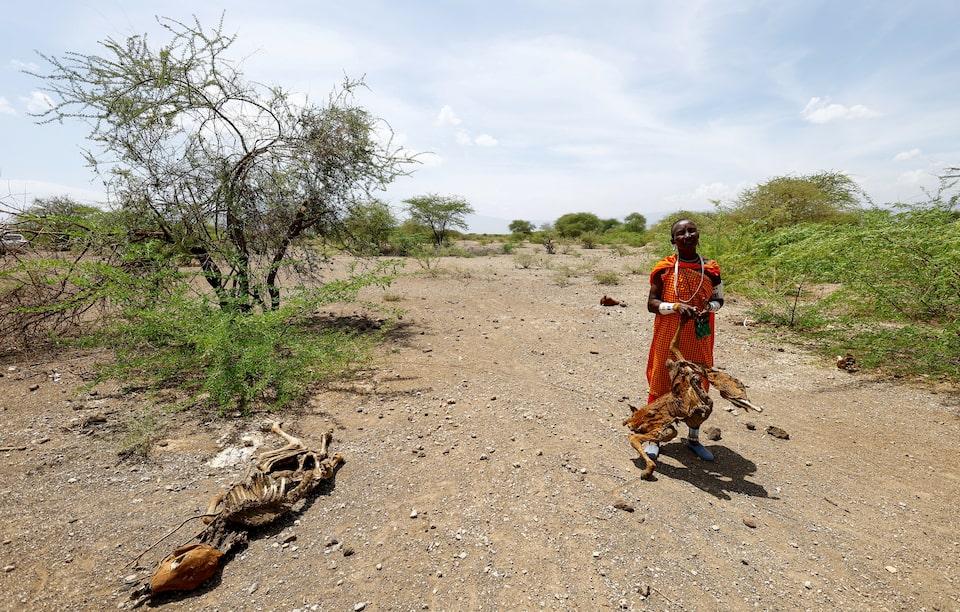
Kenya and Somalia declare drought emergency Livestock value plummets, forcing distress sales Increased competition for resources raises conflict risk SHOMPOLE, Kenya, Feb 6 (Reuters) - The dozens of cow and goat carcasses scattered around Maria Katanga's family compound testify to the grinding impact of an ongoing drought on Kenya's pastoralist communities who rely on livestock for survival. Since August, the 24-year-old Maasai herder has lost more than 100 cattle and 300 goats to drought - and the animals still in her care are too emaciated to produce milk. Sign up here. Kenya has been here before, most recently in 2022 when a record drought decimated livestock populations and plunged pastoralists in the East African country's arid north and northeast into a hunger crisis. But now, as such climate disasters become more frequent, their impact is also spreading to areas that have traditionally not been deeply affected by drought such as Kajiado county, which borders the capital Nairobi and where Katanga lives. As the animals have grown weaker, their value has also shrivelled, Katanga's stepson Emmanuel Loshipae told Reuters. "A cow that was being sold for 60,000 or 70,000 Kenyan shillings (before the drought)... is being sold for 5,000 shillings," Loshipae, 19, said. He added that the family had been forced into distress sales to pay for animal feed in the absence of grazing land. Local administrator Lemaiyan Samuel Kureko said groups of herders were moving further afield, even crossing the border into Tanzania, in search of pasture and water. "There have been droughts before in the region but this one is the worst," he told Reuters. Kenya's National Drought Management Authority (NDMA) warned last month that recurrent droughts were increasing competition for scarce resources and raising the risk of violent conflict. SOMALIA ALSO IN THE GRIP OF DROUGHT The crisis has also hit countries in the Horn of Africa, with Somalia declaring a national drought emergency in November after recurrent seasons of poor rainfall. The United Nations World Food Programme warned last month that millions of Somalis were grappling with severe hunger, even as foreign aid cuts have hamstrung NGOs' capacity to respond to skyrocketing needs. "Malnutrition is also alarmingly high with almost half of all children malnourished and in need of urgent treatment," WFP said in a statement. On Wednesday, the Kenya Meteorological Department released its forecast for the March-May monsoon, with Kajiado expected to receive near-average to below-average rainfall. Last month the NDMA said it had distributed cash aid to over 130,000 households in historically arid counties - mainly in the north - to help them cope with rising hunger due to the drought. But the relief measures did not extend to Kajiado. "No people have died yet, but the livestock are gone and the sun is getting hotter every day," administration official Kureko said. "We have been weakened to such a level that we can only pray for God’s help." https://www.reuters.com/business/environment/drought-spreads-beyond-kenyas-arid-north-plunging-herders-into-crisis-2026-02-06/
2026-02-06 11:36
RWE to explore LNG deliveries with ADNOC for up to 10 years Partnership with Masdar to invest in 2 GW battery storage in Germany Gulf region seen as key partner for Germany's energy transition BERLIN, Feb 6 (Reuters) - German utility RWE (RWEG.DE) , opens new tab signed agreements with Abu Dhabi National Oil Company (ADNOC) and renewable energy firm Masdar on Friday to boost liquefied natural gas supplies and expand battery storage, as Chancellor Friedrich Merz continued his Gulf tour aimed at securing new energy partners. The deals reflect Germany's shift away from Russian gas and its effort to reduce reliance on U.S. and Chinese suppliers. The partnerships will help secure energy supplies and support Germany's transition to renewables, RWE said in a statement. Sign up here. The German company signed a framework agreement with ADNOC to explore deliveries of up to 1 million tonnes of liquefied natural gas per year for up to ten years. It reached a separate deal with Abu Dhabi Future Energy Company (Masdar) to jointly invest in up to 2 gigawatts of battery storage projects in Germany. Merz, who led talks in the United Arab Emirates after visiting Qatar on Thursday, is leading a push to deepen ties with Gulf states, aiming for long-term cooperation in energy and technology. Germany needs "such partnerships more than ever" as global politics shift, the chancellor said this week and highlighted the importance of trust and mutual respect in international agreements. Germany's efforts come as Europe scrambles to secure alternative energy sources following the Ukraine conflict and mounting global competition. The Gulf region, with its vast resources and investment capacity, has become an increasingly important partner for Berlin. https://www.reuters.com/business/energy/rwe-agrees-projects-with-adnoc-masdar-lng-batteries-2026-02-06/