2025-12-04 18:58
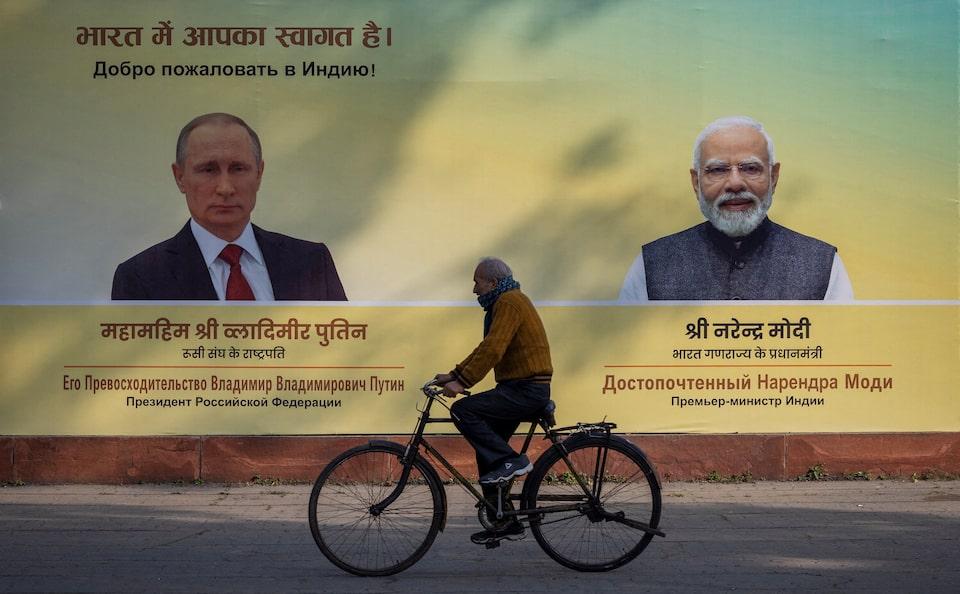
NEW DELHI, Dec 4 (Reuters) - Russian President Vladimir Putin landed in New Delhi on Thursday, where he was received by Indian Prime Minister Narendra Modi at the airport, beginning the Russian leader's first visit to old friend India since the start of the war in Ukraine nearly four years back. Putin is accompanied by senior ministers and a large Russian business delegation on the two-day trip as Moscow and New Delhi seek to expand their economic ties beyond energy and defence. Sign up here. Modi is hosting Putin for a private dinner on Thursday and the two leaders will hold summit talks on Friday. Modi's presence to greet Putin on arrival at the airport is a rare gesture, as visiting foreign leaders are usually received by senior Indian ministers. The two leaders embraced each other on the red carpet after Putin walked down from the aircraft. Most recently, Modi received Qatar's Emir Sheikh Tamim bin Hamad al-Thani in February. He also went to the airport to receive U.S. President Donald Trump when he visited India in 2020. https://www.reuters.com/world/india/russias-putin-arrives-india-summit-talks-with-pm-modi-2025-12-04/
2025-12-04 18:47
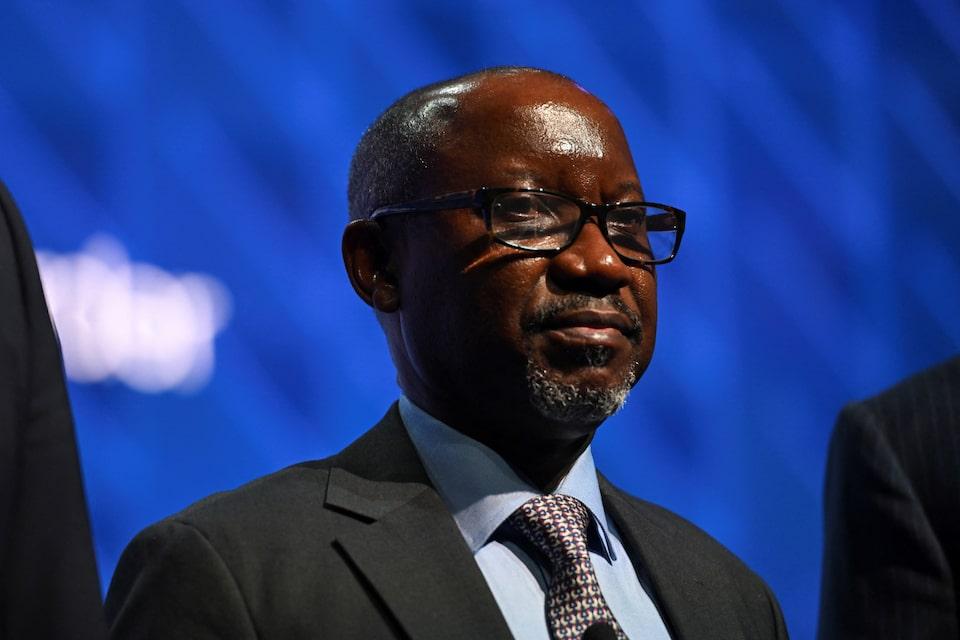
ABUJA, Dec 4 (Reuters) - Nigeria has approved the payment of 185 billion naira ($128 million) in longstanding debts owed to gas producers for supplies to power generators, aiming to restore confidence in the energy market and improve electricity supply. The National Economic Council, chaired by the vice president, approved the decision following President Bola Tinubu's directive to clear arrears that have discouraged investments, strained cash flows, and curtailed gas supply for power generation, the minister of state for petroleum said. Sign up here. Ekperikpe Ekpo said the settlement, to be implemented through a so-called "royalty-offset arrangement", was a "decisive step" towards revamping Nigeria's gas sector and stabilising electricity output, adding that the move aligned with a government initiative to almost double gas output to 12 billion cubic feet per day by 2030. Nigeria, Africa's most populous country, continues to face persistent electricity shortages, which have hindered business operations and economic growth for decades. ($1 = 1,447.3300 naira) https://www.reuters.com/sustainability/boards-policy-regulation/nigeria-approves-128-million-payment-gas-debts-bid-boost-power-supply-2025-12-04/
2025-12-04 18:25
Serra Verde renegotiates 10-year Chinese deals, to now conclude end-2026 Serra Verde's mine rich in heavy rare earths, unlike many Western deposits Price floors by Western governments seen crucial for rare earths sector growth LONDON, Dec 4 (Reuters) - Brazilian rare earths miner Serra Verde has slashed the contract periods of its Chinese processing deals, opening up the potential to supply Western companies when their separation capacity becomes available in coming years, its CEO said. The West has been racing to develop alternative sources of rare earths, vital for defence, electronics, electric vehicles and wind turbines, since China controls 90% of processed global supply. Sign up here. When Serra Verde's mine was being developed, it agreed 10-year offtake deals with Chinese companies to buy its concentrate for processing since no other options were available. The Serra Verde mine is rich in heavy rare earths, unlike many other Western deposits, but only now are plants gearing up in the West to process them. "In a couple of years we'll have some options to separate the heavies outside of China," CEO Thras Moraitis told Reuters. Privately-held Serra Verde renegotiated the Chinese deals and now they conclude at the end of next year, giving the company multiple options to diversify its customer base, Moraitis said. "The Chinese, the Americans, the Japanese, the Europeans, the Canadians all have approached us, given that we are the only supplier of heavy rare earths, at least for the foreseeable future." Forecast shortages of heavy rare earths dysprosium and terbium could be a stumbling block in the West's drive to create domestic supply chains of rare earths and permanent magnets. PRICE FLOOR ESSENTIAL Moraitis, formerly an executive of Xstrata, which was acquired by commodity group Glencore, said a price floor guaranteed by governments was key for the development of the rare earths sector outside of China. The U.S. provided a guaranteed minimum price to rare earths group MP Materials (MP.N) , opens new tab in July as part of a multibillion-dollar investment by the Pentagon and sources told Reuters the mechanism would likely be extended to other firms. Group of Seven members and the European Union are also considering price floors , opens new tab to promote rare earth production. Serra Verde's Brazilian mine is an ionic clay mine deposit. The standard extraction technique for such deposits in China and Myanmar has involved flushing the deposit with chemicals, which has caused contamination of water supplies and deforestation. Serra Verde has spent several hundred million dollars building a plant that does not discharge toxic waste. The company launched commercial production in early 2024, but has been optimising output so it has not yet hit full output, which is expected to be about 6,500 metric tons of total rare earth oxides a year by 2027. The U.S. Development Finance Corporation approved a $465 million loan earlier this year. Serra Verde is owned by private equity groups Denham Capital, Energy and Minerals Group and Vision Blue, which is led by the former head of Xstrata, Mick Davis. https://www.reuters.com/world/asia-pacific/serra-verde-cuts-short-china-offtake-deals-approached-by-western-firms-2025-12-04/

2025-12-04 17:02
Dec 4 (Reuters) - Argentina's monetary and foreign exchange policies will need to support a stronger accumulation of reserves to facilitate the country's access to international capital markets, the International Monetary Fund said on Thursday. "Monetary and FX policies will need to support a more ambitious reserve accumulation path to build adequate buffers in Argentina," IMF spokesperson Julie Kozack said in a scheduled press briefing, adding that a "concerted effort" in that sense from President Javier Milei's government is essential. Sign up here. "This will help Argentina better address shocks, and it will also help facilitate a timely re-access to international capital markets." Argentina has signalled it is looking to issue international bonds under specific scenarios, while local governments and corporations have already begun to tap the market. Kozack said the IMF will assess the details of the announced $20 billion swap line extended by the U.S. to Argentina to determine whether it can be treated as part of the South American country's reserves, and in what manner. The result of this assessment will be included in the global lender's next staff report, she said. The IMF said it will measure the next set of targets included in its Argentina program at the end of December, after which a new review could be scheduled. There is no date set yet for the next country mission, Kozack said. https://www.reuters.com/world/americas/imf-says-argentina-needs-more-ambitious-reserve-accumulation-policies-2025-12-04/

2025-12-04 16:30
WARSAW, Dec 4 (Reuters) - Poland's central bank will probably move to a wait-and-see mode for a while now before making any further rate reductions, its governor Adam Glapinski said on Thursday, a day after cutting its main interest rate. The reduction (PLINTR=ECI) , opens new tab by another 25 basis points to 4.00%, in line with most analysts' expectations, came after a lower-than-expected November inflation reading. Sign up here. The National Bank of Poland has now cut rates six times this year, by a total of 175 basis points. "The outlook is good... I think the (Monetary Policy) Council will want to move to a wait-and-see approach to see how all the cuts we've made are working, and then proceed with further cuts," he said during a press conference. "The current rate of 4.0% is perfect at this point. Whether we can go down to 3.75 or 3.50 depends on other council members... There definitely won't be any sudden moves." He added that the bank needed to act with caution and that a high budget deficit limited the scope for further rate cuts. Following the comments, the zloty briefly returned to Wednesday's closing levels at 4.226 against the euro, before backtracking to trade 0.15% lower at 4.2315 by 1557 GMT. "(Glapinski's) comment that the Council could enter a wait-and-see mode before engaging in further rate cuts might have caught some investors off guard," Roman Ziruk, senior market analyst at Ebury, said. "This should not come as a major shock, however. Most of the easing in this 'adjustment process' is now behind us, and we seem to be entering the fine-tuning phase, where the MPC moves with added caution and the importance of data is paramount." The central bank targets inflation of 2.5% plus or minus one percentage point, and Glapinski said he expects CPI to stay in that range "in coming years". A flash estimate from the statistics office showed inflation fell to 2.4% in November year-on-year, down from 2.8% in October and below the 2.6% expected by analysts. https://www.reuters.com/business/polish-central-bank-could-go-into-wait-and-see-mode-governor-says-2025-12-04/

2025-12-04 15:29
TORONTO, Dec 4 (Reuters) - Canadian economic activity contracted in November for the first time in six months as a measure of employment declined, Ivey Purchasing Managers Index (PMI) data showed on Thursday. The seasonally adjusted index fell to 48.4 last month from 52.4 in October, marking the first move below the 50 threshold since May. Sign up here. The Ivey PMI measures the month to month variation in economic activity as indicated by a panel of purchasing managers from across Canada. A reading below 50 indicates a decrease in activity. The gauge of employment declined to an adjusted 48.0 from 51.8 in October, while the prices index was at 66.1, up from 64.3. The unadjusted PMI fell to 44.5 from 51.7. https://www.reuters.com/world/americas/canadas-ivey-pmi-shows-activity-contracting-november-employment-falls-2025-12-04/




