2025-12-04 08:45
TOKYO, Dec 4 (Reuters) - The European Central Bank will stick to the G7 communique's language on exchange rates, Piero Cipollone, a member of its executive board, told the Nikkei newspaper when asked whether it would accept any decision by Japan to conduct currency intervention. "The G7 communique on exchange rates uses very clear language. It says, among other things, that we are committed to 'market-determined exchange rates,' to 'consult closely in regard to actions in foreign exchange markets' and that 'we will not target exchange rates for competitive purposes. We will stick to that," Cipollone said in the interview published on Thursday. Sign up here. He made the remark when asked whether the ECB would accept Tokyo's intervention in the currency market to prop up the weak yen. Asked about the euro zone's economy, Cipollone said it had been resilient and the ECB's "central scenario" for inflation, under which it will dip in 2026 and head back to its 2% target by the end of 2027, seemed "more and more credible". Still, he cautioned the ECB might still need to cut interest rates if its expectations for a boost from German fiscal spending and greater consumption by households fail to come true. "We are assuming that the savings rate will go down, but this assumption has yet to be tested," Cipollone said. "If it doesn’t materialise, we will need to act." https://www.reuters.com/business/ecb-will-stick-g7-stance-fx-cipollone-says-chance-japan-intervention-2025-12-04/
2025-12-04 07:45
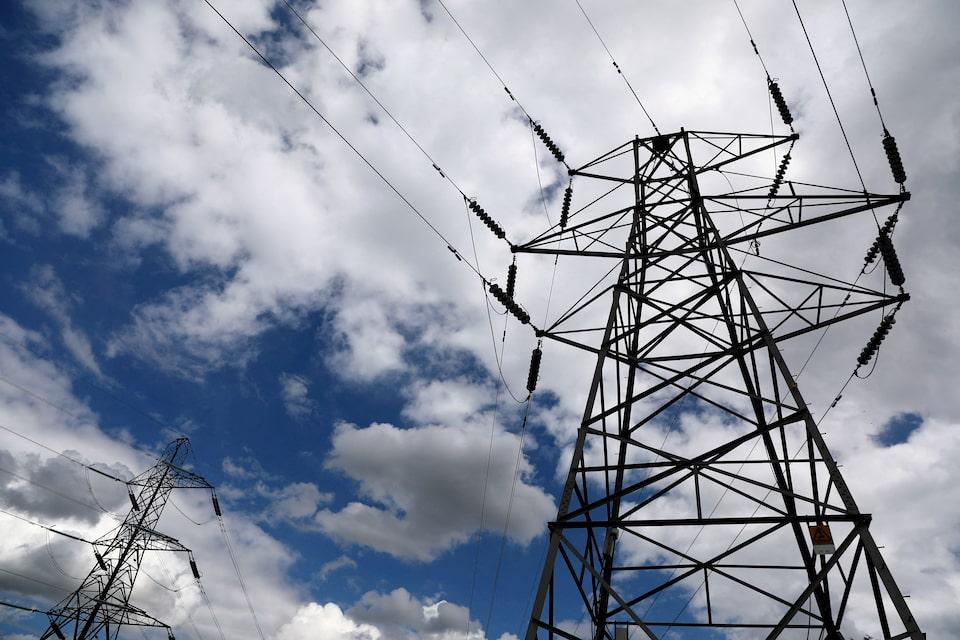
Dec 4 (Reuters) - British energy regulator Ofgem said on Thursday it has approved a 28 billion-pound ($37.33 billion) investment to upgrade the country's grid capacity, a move that would push up network charges on household bills by about 108 pounds by 2031. Ofgem's final approval on the day came in above the 24 billion pounds it had provisionally cleared in July. Sign up here. At the time, the regulator had estimated the upgrades would raise the average household bill by 104 pounds by 2031, before accounting for savings from the projects. However, the regulator said it was targeting around 80 pounds in savings annually from expanding the grid, bringing the net increase in bills by 2031 to about 30 pounds or less than 3 pounds per month. Costs are expected to fall further over time, it added. ($1 = 0.7500 pounds) https://www.reuters.com/business/energy/ofgem-approves-37-billion-boost-uks-energy-grid-2025-12-04/
2025-12-04 07:38
JAKARTA, Dec 4 (Reuters) - Indonesia will revoke mining permits if companies are found to have violated rules on flood-ravaged Sumatra island, the energy minister said as questions intensified about the role of deforestation in worsening the deadly disaster. Cyclone-induced floods and landslides have left about 800 dead and 564 missing across the three provinces of West Sumatra, North Sumatra and Aceh, according to government data. Sign up here. The cyclone systems have also killed almost 200 people in Malaysia and Thailand, and followed months of deadly weather in Southeast Asia, including deadly typhoons in the Philippines and Vietnam. In Indonesia, landslides have cut power and blocked roads, hampering rescuers and aid getting to isolated villages. On Thursday, Environment Minister Hanif Faisol Nurofiq said on Instagram that the disaster was caused by a changing climate intensifying bad weather events and environmental damage, pointing to shrinking forest cover across the three worst-affected provinces. Green groups said deforestation linked to mining and illegal logging exacerbated the disasters, where landslides left ruins and pools of mud where homes used to be. Images of logs washing ashore on Sumatra after the floods have sparked outrage among social media users. Energy Minister Bahlil Lahadalia told evacuated residents in West Sumatra on Wednesday that he would look at revoking mining permits of companies if they were found to have violated rules. "If in our evaluations they have proven to have violated or are not adherent, then we will do our job without any hesitation according to the rules in place," he said on Wednesday's visit. Environment-focused group JATAM said legal permits to convert forests into extraction zones covered about 54,000 hectares (133,000 acres), the majority of them for mining. Among the permit holders is PT Agincourt Resources, which operates the Martabe gold mine in the Batang Toru ecosystem. In a statement to Reuters this week it said making a direct link between the floods and the mine's operations was "a premature and inaccurate conclusion". Between 2001 and 2024, Sumatra as a whole lost 4.4 million hectares (11 million acres) of forest, an area bigger than Switzerland, said David Gaveau, founder of deforestation monitor Nusantara Atlas. https://www.reuters.com/sustainability/climate-energy/indonesia-promises-action-any-mining-permit-violations-sumatra-floods-toll-about-2025-12-04/

2025-12-04 07:36
PARIS, Dec 4 (Reuters) - Eramet (ERMT.PA) , opens new tab aims to deliver more manganese from Gabon and lithium from Argentina as part of efforts to strengthen its finances, which have been hit by falling profits and rising debt, the French mining group said on Thursday. The company, pressured by weak metal prices, production setbacks and the buyout of its lithium partner in Argentina, had pledged additional measures in early December after trimming capital expenditure. Sign up here. Eramet aims to generate a boost to core EBITDA (earnings before interest, tax, depreciation and amortisation) of between 130 million euros and 170 million euros ($151.52 million to $198.14 million) within two years, supported by rail infrastructure improvements in Gabon to expand volumes of transported ore, it said in a statement. On top of the EBITDA target, the firm may also get a profit boost from the ramp-up of its lithium production in Argentina, with capacity expected to be reached by the end of 2026, it said. Eramet has obtained a waiver on a December 2025 debt ratio covenant from its lending group, ensuring availability of its currently undrawn credit facility of 935 million euros, it said. Efficiency steps including on capex should boost free cashflow by 60 million to 70 million euros by year-end, Eramet said, adding it was evaluating all strategic and financial options to accelerate its performance and deleveraging efforts. Eramet, which confirmed 2025 volume targets, said it expected its markets to remain pressured by slowing Chinese industrial demand and global economic uncertainty, though conditions should show signs of stabilising in 2026 as supply and demand gradually rebalance. ($1 = 0.8580 euros) https://www.reuters.com/business/eramet-eyes-manganese-lithium-growth-turnaround-plan-2025-12-04/

2025-12-04 07:34
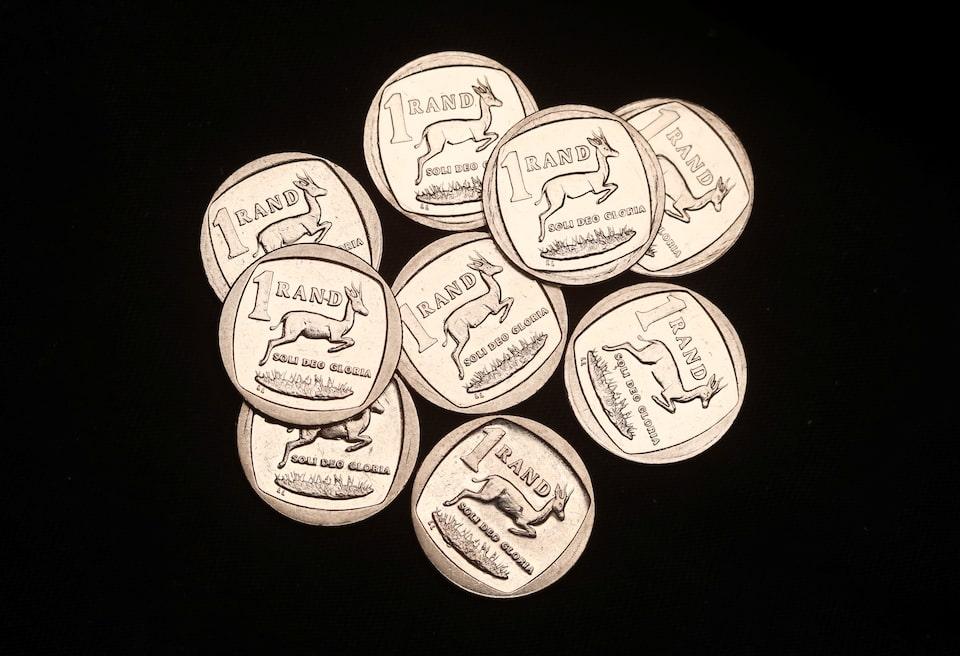
JOHANNESBURG, Dec 4 (Reuters) - The South African rand was steady in early trade on Thursday, ahead of the release of current account data by the central bank while global investors await data for clearer cues on the Federal Reserve's interest rate outlook. At 0724 GMT the rand traded at 17.0550 against the dollar , little changed from its Wednesday close of 17.0450. Sign up here. The South African Reserve Bank will publish third-quarter current account data (ZACACT=ECI) , opens new tab at 0900 GMT, with analysts polled by Reuters expecting a deficit of 1.3%, wider than the 1.1% deficit reported in the previous quarter. "Locally, we are expecting a smaller current account deficit of -R32 billion, but there is little coming out of the U.S. to cause major movement. A slightly lower gold price might cause the ZAR to pause over the next couple of days," said Adam Phillips, treasury specialist at Umkhulu Treasury. The dollar last traded flat against a basket of currencies as global investors remain cautious ahead of next week's U.S. Federal Reserve meeting. South Africa's benchmark 2035 government bond was also broadly steady in early deals, with its yield down 3 basis points at 8.32%. https://www.reuters.com/world/africa/south-african-rand-steady-before-current-account-data-release-2025-12-04/
2025-12-04 07:12
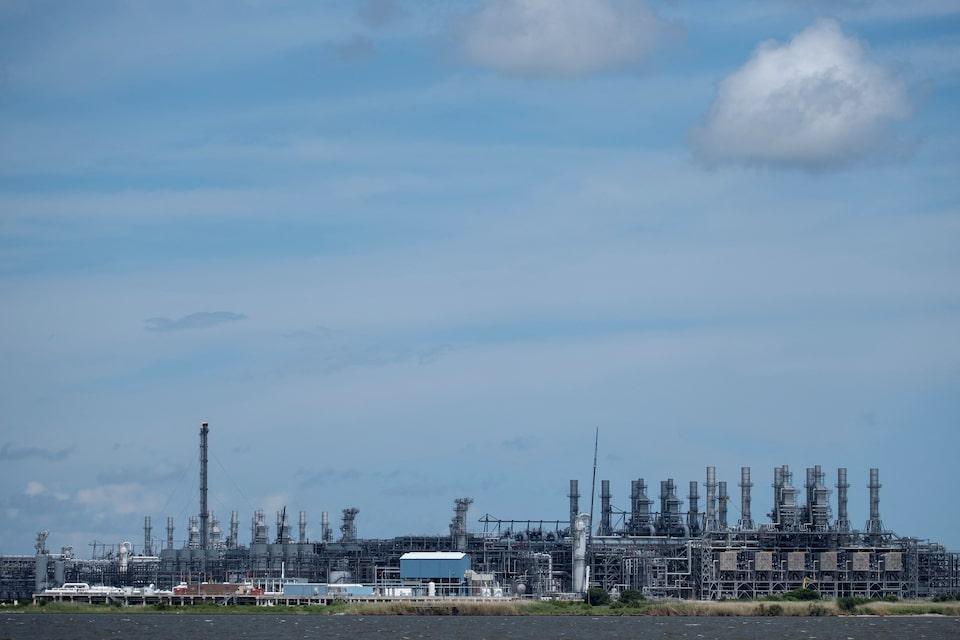
LONDON, Dec 4 (Reuters) - Soaring U.S. natural gas prices are eroding profit margins for the nation's LNG producers, a trend that could deepen in the coming years, forcing exports to drop as global competition heats up. U.S. benchmark Henry Hub gas prices spiked on Wednesday to their highest level in three years at over $5 per million British thermal units (mmbtu) for January delivery thanks to the combination of cold weather across the U.S. Northeast and a sharp rise in feedstock demand from liquefied natural gas (LNG) plants. Sign up here. At the same time, an abundance of global LNG, mostly due to new U.S. supply additions, has pushed prices lower in big demand centers in Asia and Europe. The U.S. became the world's biggest LNG exporter in 2023, surpassing Australia and Qatar. Exports from its eight main LNG terminals hit a record 12 billion cubic meters (bcm) in November, a 20% rise from a year earlier, according to LSEG data. Europe felt the biggest price impact, as it absorbs 65% of U.S. exports. Benchmark European TTF gas prices fell below 30 euros per megawatt hour in recent days, hitting their lowest since April 2024. The effect was magnified by weaker Chinese imports, which are set to fall to around 65 million metric tons this year, their lowest since 2022, according to data from commodity analysts Kpler. As a result of the dynamics on both sides of the Atlantic, the spread between Henry Hub and TTF prices has shrunk to around $4.70 per mmbtu, the slimmest since April 2021, according to LSEG data. This is squeezing the profit margins for U.S. LNG exporters. "U.S. LNG has made outstanding margins since late 2021, but those margins have come back to more normal levels now as the market has stabilised and new LNG capacity starts coming online," said Saul Kavonic, head of energy research at MST Marquee. These margins now risk dropping below normal levels. Many U.S. LNG export contracts will be out of the money if the Henry Hub-TTF spread drops below $4 per mmbtu. And if margins fall below $2, representing LNG production costs, operators will almost certainly have to reduce production, according to Kavonic. NO LNG OUTPUT CUTS … FOR NOW On the one hand, this suggests that production is unlikely to be curtailed next year as spreads are very unlikely to breach the $2 level. But that could change in 2027 and 2028 when more global supply comes onstream, mostly from the U.S. and Qatar. Between 2025 and 2030, new LNG export capacity is expected to grow by 300 bcm per year, up 50% from 2025 levels, according to the International Energy Agency. Around 45% of the capacity will come from the U.S., which has accounted for more than half of total additions of 390 bcm per year of capacity since 2019, according to the IEA. Capacity is poised to grow further in the coming months with the Golden Pass terminal, owned by Exxon Mobil (XOM.N) , opens new tab and QatarEnergy, and Cheniere's (LNG.N) , opens new tab Corpus Christi expansion. And this exceptional growth is not slowing down. A total of 83 bcm per year of new U.S. LNG projects got the green light for development between January and October 2025, making it a record year for final investment decisions, according to the IEA. RISING POLITICAL RISK U.S. gas production is set to increase from around 39 trillion cubic feet in 2025 to 42 tcf in 2030, according to the Energy Information Administration. However, over the same period, the share of gas demand from LNG producers is set to rise from around 13% to 20%. That is a recipe for a tighter domestic U.S. gas market. Indeed, the combination of higher gas demand for LNG exports and increased domestic consumption due to energy-hungry data centres should put sustained upward pressure on U.S. prices in the coming years, particularly during winter. That could be exacerbated by the reduction in renewables generation expected following the Trump administration’s row-back of clean-energy support. This market dynamic may eventually become a political liability, however, as President Donald Trump has vowed to lower energy prices for U.S. consumers. That pledge – and Trump’s goal of exporting more LNG – could be further complicated if U.S. producers see profit margins erode further and begin to trim operations. As things currently stand, it seems only a matter of time until that is the case. Want to receive my column in your inbox every Monday and Thursday, along with additional energy insights and links to trending stories? Sign up for my Power Up newsletter here. Enjoying this column? Check out Reuters Open Interest (ROI), , opens new tabyour essential new source for global financial commentary. ROI delivers thought-provoking, data-driven analysis. Markets are moving faster than ever. ROI , opens new tab can help you keep up. Follow ROI on LinkedIn , opens new tab and X. , opens new tab https://www.reuters.com/markets/commodities/us-lng-exports-will-shrink-if-margin-squeeze-intensifies-2025-12-04/