2025-12-03 19:09
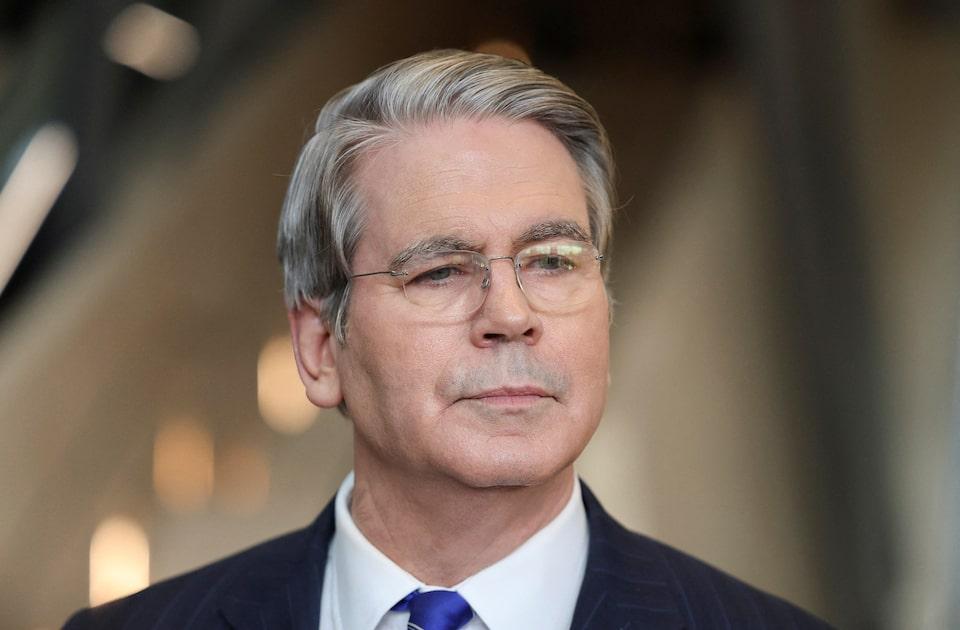
Bessent advocates for residency requirement for Fed bank presidents Current Fed leaders often hired from outside their districts Fed Act lacks residency rules; merit cited in leadership selection Dec 3 (Reuters) - U.S. Treasury Secretary Scott Bessent on Wednesday said he plans to advocate for a requirement that the 12 regional Federal Reserve bank presidents reside in their districts for at least three years before being appointed to those positions. Bessent, speaking at the New York Times DealBook Summit, said going forward he would press that appointments of candidates who have not satisfied that threshold be vetoed by the Fed's Board of Governors in Washington. "The chair and the board have the final say on who ... the regional bank boards can select," Bessent said. "So I believe that ... unless someone's lived in the district for three years, we're going to veto them." Sign up here. Bessent, who is in the process of selecting a candidate to recommend to President Donald Trump as the successor for Fed Chair Jerome Powell, said the fact that many of the current regional bank presidents were hired from outside their districts is at odds with the spirit of how the U.S. central bank's system was designed. The leaders of that system include seven Fed board members based in Washington and appointed by the president and subject to Senate confirmation. The 12 heads of quasi-private regional reserve banks are hired by their own local boards of directors, although the Fed in Washington can weigh in on the process. The system, set out in the Federal Reserve Act, was designed to ensure that U.S. central bank policy reflected input from officials from around the country, not just political appointees based in Washington. The Treasury secretary, who like Trump wants interest rates set by the Fed to be lower, has repeatedly complained that several regional bank presidents are not from the districts they were hired to represent. "I do believe that there is now a disconnect from the original framing," Bessent said. "Now there's this idea of importing a bright, shiny object," Bessent said, referring to some of the current bank presidents who have worked previously at the New York Fed. "So do they represent their district? So I am going to start advocating, going forward, not retroactively, that regional Fed presidents must have lived in their district for at least three years." A strong majority of current regional Federal Reserve bank presidents have been drawn from outside their districts. The current presidents of the Cleveland and Dallas Fed banks, for example, came from New York, with the Texas central bank now helmed by Lorie Logan, who led monetary policy implementation for the New York Fed. The current leader of the New York Fed, John Williams, was formerly the leader of the San Francisco Fed. St. Louis Fed leader Alberto Musalem is also an alumnus of the New York Fed. Neel Kashkari, leader of the Minneapolis Fed, ran for governor of California before being tapped to lead his bank, while the new Philadelphia Fed chief was previously research director at the Chicago Fed. The Federal Reserve Act does not impose any residency requirements on regional bank presidents. Regional Fed banks have repeatedly argued that in selecting new leaders merit and ability have driven their decision-making, and they've noted a desire to cast a broad net when searching for a new chief. That said, the opaque process through which new leaders are selected with limited public input has been a long-running matter of concern for some. The Atlanta Fed noted in a press release last month announcing the retirement of bank leader Raphael Bostic that it would conduct a "nationwide" search for a new president "who will continue to advance the critical work of the central bank and is committed to strengthening the economy and our communities by fostering the stability, integrity, and efficiency of our nation's monetary, financial, and payments systems." Bessent's residency push could create other challenges for the Fed. Over the years some observers have lamented an overrepresentation of academics in the ranks of central bank leaders. Many of the current Fed leaders have market experience, which gives them greater insight into the interaction of Fed policy and the financial conditions monetary policy affects to achieve the central bank's inflation and job mandates. LEGAL PATH QUESTIONED Although Bessent has been a consistent critic of the Fed on many fronts, Fed watchers are not totally discounting his regional Fed leadership proposal. "I am broadly sympathetic with the idea that we should seek diversity of inputs into monetary policymaking," said Peter Conti-Brown, a Fed historian at the University of Pennsylvania's Wharton School. "Geographical diversity is at the heart of the current structure of the Federal Reserve System, a fact undermined by the selection of Reserve Bank presidents with no obvious connection to their districts." But Conti-Brown warned there could be legal issues and Fed independence concerns with what Bessent wants to do. "I do not see the legal path" for any formal rule creating a residency requirement, and what the Treasury secretary wants could be "an opening gambit in a series of loyalty tests that the administration will impose on the incoming Fed chair." The ranks of regional Fed leadership have represented a particular challenge to the Trump administration's desire for the Fed to slash interest rates. Many of these officials have been hesitant about or outright opposed to rate cuts due to concerns about still-high inflation. The hawkishness of many of these officials has added considerable uncertainty over whether the Fed will cut rates at its Federal Open Market Committee meeting next week, although financial markets currently expect central bankers to deliver a quarter percentage point easing in what is now a 3.75% to 4% federal funds rate target range. The fate of regional Fed leaders has loomed large in Trump administration attempts to bring the central bank to heel. Current officials are going through a renomination process that happens every five years and has historically resulted in essentially all of them holding their jobs. https://www.reuters.com/world/us/bessent-plans-press-fed-bank-president-district-residency-requirement-2025-12-03/
2025-12-03 19:04
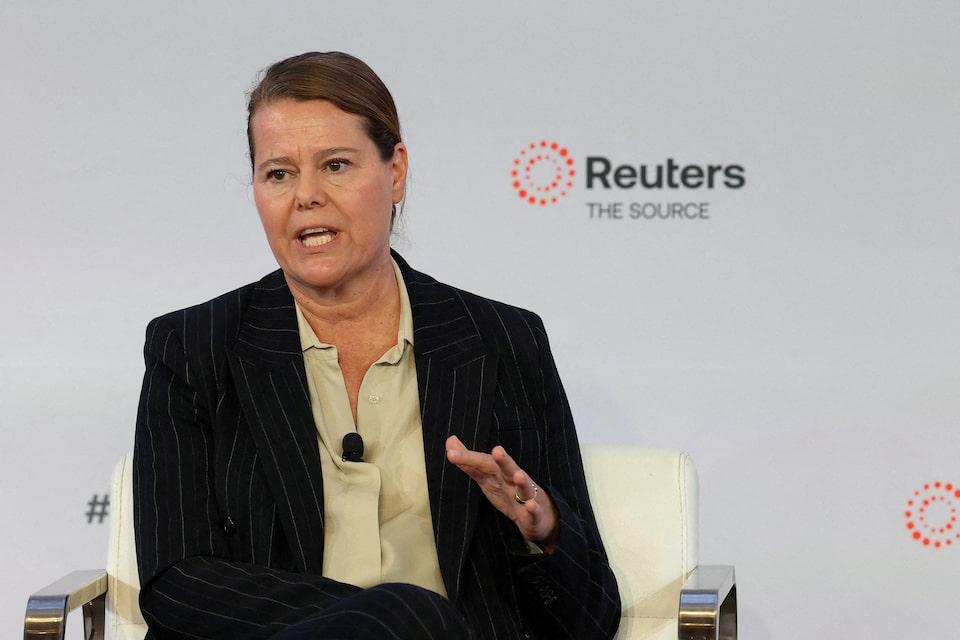
NEW YORK, Dec 3 (Reuters) - Climate and energy remain top of mind for long-term investors looking to ensure robust portfolios, panelists at the Reuters Next conference in New York said on Wednesday. Investors cannot avoid climate in building resilient portfolios, Temasek's head of North America, Jane Atherton, said. Sign up here. Atherton said she expects to see more focus on energy as a security issue. Builders Vision Chief Investment Officer Noelle Laing noted that 2025 has been a strong year for clean energy, helped by rising energy demand. Despite the Trump administration's push to promote fossil fuels and roll back some climate policies, climate and energy investing have held their own this year. The S&P Global Clean Energy Transition Index (.SPGTCLTR) , opens new tab has risen about 48% this year, compared with a 16.5% rise for the S&P 500 index (.SPX) , opens new tab. The Smithsonian Institution, which receives most of its budget from the U.S. Congress and has come under fire from the Trump administration for promoting what it called "divisive" ideologies, still has levers to pull to ensure the endowment's health, Chief Investment Officer Amy Chen said. View the live broadcast of the World Stage here and read full coverage here. https://www.reuters.com/sustainability/cop/climate-energy-top-mind-long-term-investors-panelists-say-2025-12-03/
2025-12-03 16:01
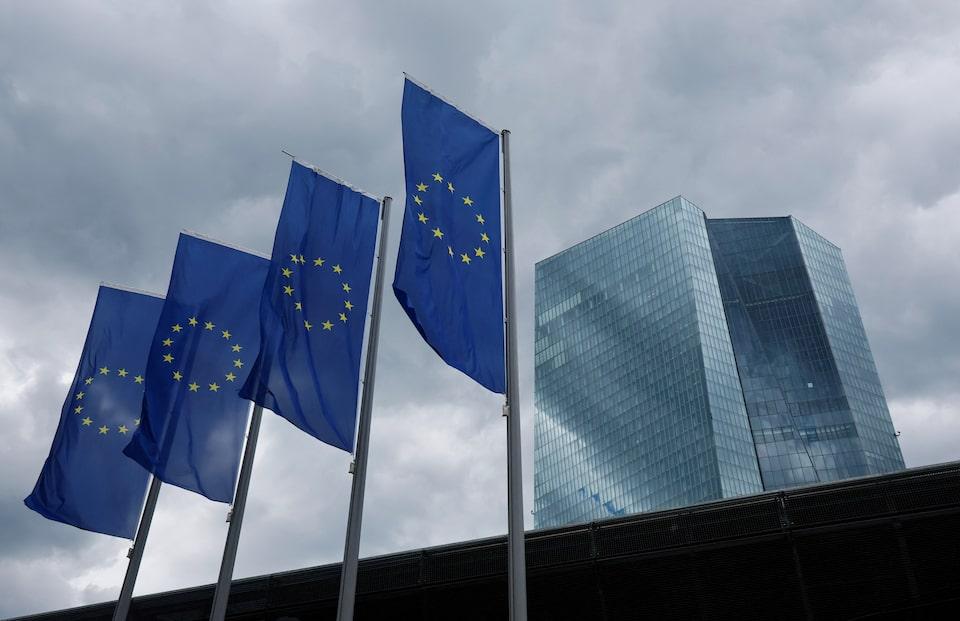
FRANKFURT, Dec 3 (Reuters) - The European Commission's proposal to use Russian central bank assets to extend reparations loans to Ukraine is a stretch from a legal and financial point of view, European Central Bank President Christine Lagarde said on Wednesday. The European Commission presented EU member states with two options to give Ukraine 90 billion euros ($105 billion) for the next two years - use Russian frozen assets or borrow money on international markets. Sign up here. Lagarde said the former option was "something that is stretched" and that "hopefully is in compliance with international law (and)...financial stability". She said it was the ECB's job to flag these risks because a key cog in the European financial system, the clearing house Euroclear where the Russian assets are parked, and the region's very reputation were at stake. https://www.reuters.com/business/finance/ecb-says-eu-use-russian-assets-ukraine-loans-is-stretch-2025-12-03/
2025-12-03 15:34
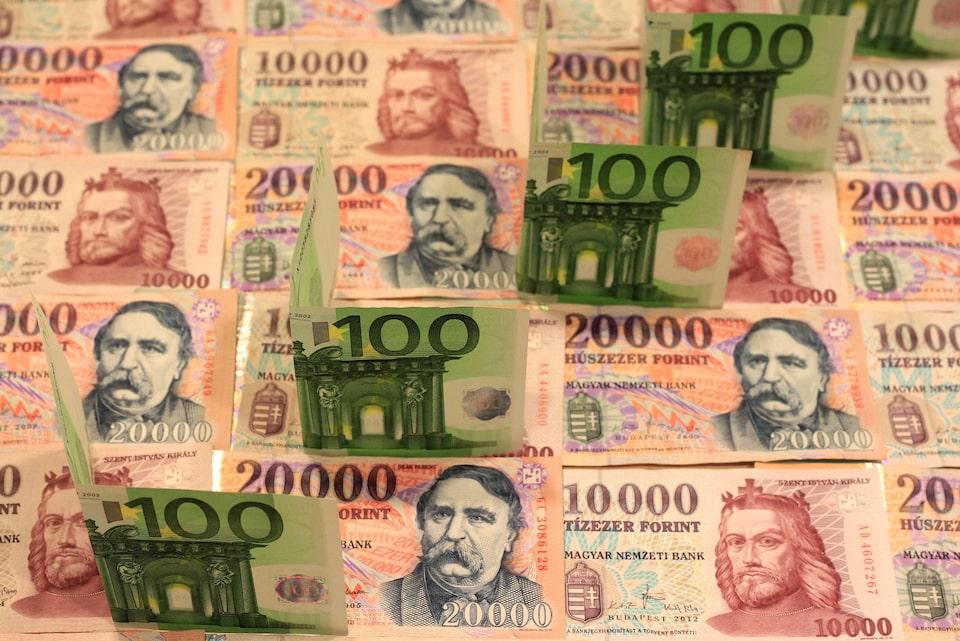
PRAGUE, Dec 3 (Reuters) - Central Europe's main currencies may be close to a ceiling after hitting fresh multi-month highs in the past month, a Reuters poll of economic analysts showed on Wednesday. In the poll, the Hungarian forint - the region's top performer in 2025 with an 8% gain since January - was expected to fall 2.3% from Tuesday's closing levels to 390.00 to the euro in the next 12 months. Sign up here. The forint reached a fresh 22-month peak on Wednesday at 380.35 to the euro, although analysts see the currency falling around 1% already by the end of 2025, back to the 385 area, according to the poll's median 1-month forecast. Some analysts see potential progress in talks to end the war in Ukraine, following Russia's 2022 invasion, opening room for gains in the forint and other central European currencies. But others see limited scope for the Hungarian currency itself as the economy stagnates and it faces fiscal challenges before a parliamentary election in the first half of 2026. "We stick to our view that the Hungarian currency is overvalued given the weak economic performance," analysts at bank Santander's Polish unit said in the poll. INTEREST RATES ON HOLD The forint and the Czech crown have been central Europe's biggest gainers this year, with the latter rising more than 4%, as their respective central banks enforce a hawkish pause on interest rates, putting easing policies started in 2023 on hold. In the poll, the crown was seen as the region's likely best-performing currency over the next 12 months, holding onto its gains to finish the period at 24.1 per the euro, around the 26-month high of 24.106 reached on Wednesday. Besides strict monetary policy, the currencies have found support from U.S. dollar weakness and - in the Czech case - accelerating economic growth. A better economy has also supported the Polish zloty during a series of interest rate cuts this year. ZLOTY, LEU LAG Overall, the zloty is up 1.1% year-to-date. The zloty touched a seven-month high of 4.218 per euro last month. Analysts in the poll forecast a slight retreat back to 4.25 per euro in 12 months, which has been the centre of the currency's range trading this year. Romania's leu , which the central bank keeps in a managed float, was forecast to fall 1.1% in the next 12 months, reaching 5.1442 to the euro, close to an all-time low of 5.152 hit in May when investors worried a presidential election might derail efforts to cut the EU's biggest budget deficit. Jakub Kratky from Generali Investments CEE said Romania's central bank had sought to keep the leu strong amid inflation pressures from the government's ongoing fiscal consolidation. "After the inflation shock abates, the central bank may be willing to let the leu depreciate a bit," he said. (Other stories from the Reuters December foreign exchange polls) https://www.reuters.com/business/central-europes-currencies-back-off-highs-2026-2025-12-03/
2025-12-03 15:32
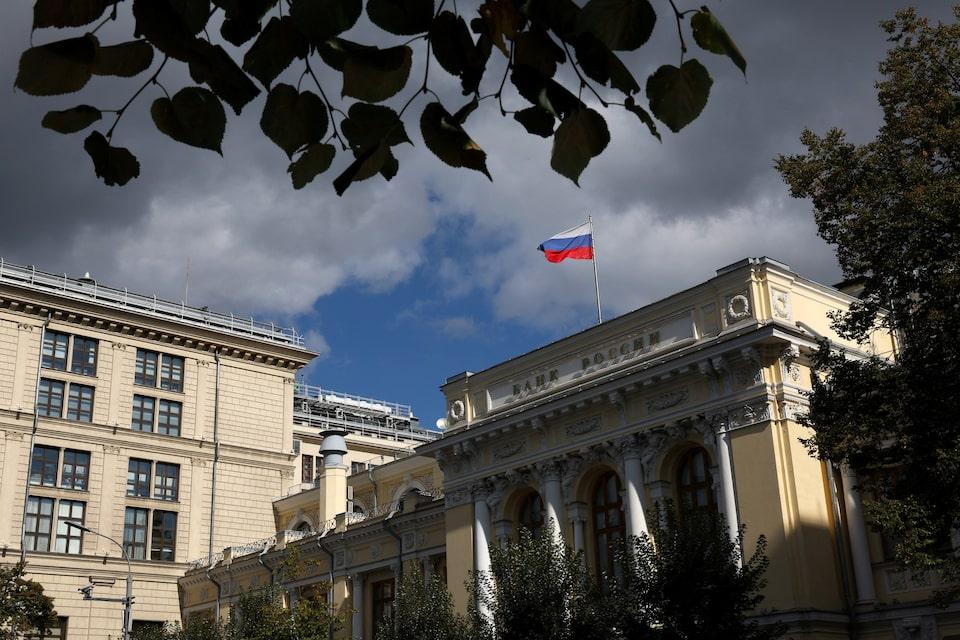
Median inflation forecast is 6.5% for 2025 GDP growth seen at 0.8% in 2025 Rouble seen at 95.75 vs dollar in 12 months MOSCOW, Dec 3 (Reuters) - The Russian central bank is seen cutting its key interest rate by 50 basis points at a meeting on December 19 as inflation is slowing faster than expected, a Reuters poll of 15 analysts showed on Wednesday. Analysts also cut their full-year inflation estimates to 6.5% from 6.9% in the previous monthly poll, and their GDP growth estimates to 0.8% from 1% in the previous poll. The central bank forecasts inflation at between 6.5% and 7%. Sign up here. The Russian economy is slowing down sharply from robust growth of 4.3% in 2024 as a result of the central bank's tight monetary policy to fight inflation and Western sanctions. The central bank started cutting its key rate in June. "The central bank's baseline inflation forecast has been met a month ahead of schedule. Moreover, the likelihood of further reduction in the inflation rate in December is very high," PSB Bank analysts said. Putin said on December 2 that inflation was now expected to fall to around 6% by the end of December, calling it "an important achievement of this year." However, inflation is expected to spike at the start of the year due to a value-added tax hike. "The regulator is likely to remain cautious," Raiffeisenbank analysts wrote. INFLATION EASING ON TIGHT MONETARY POLICY Annual consumer inflation dropped to 6.92% as of November 27, the economy ministry said last week. Inflation has been gradually decreasing, after hitting 10.3% in March, as a result of the central bank's tight monetary policy. A Reuters poll indicated that by the end of 2026, the central bank will cut the key interest rate to 13%, the level seen by many analysts as necessary for economic growth to resume. "Next year, we expect the rate to be around 13%, and this will allow the central bank, like a pilot in an airplane, to add a bit of thrust and help us avoid a recession," said VTB investment strategist Alexei Kornilov. However, the analysts did not expect economic growth to accelerate significantly, with Russia's GDP projected to grow by only 1.2% in 2026 compared to 0.8% this year. Putin said that he was concerned about a fall in output in some sectors. The rouble, which has been hovering around its two-year high in recent months due to high interest rates, shrinking imports and central bank foreign currency interventions, is expected to weaken to 95.75 to the U.S. dollar in 12 months. https://www.reuters.com/business/russian-central-bank-seen-cutting-key-rate-by-50-bps-16-december-meeting-2025-12-03/
2025-12-03 15:09
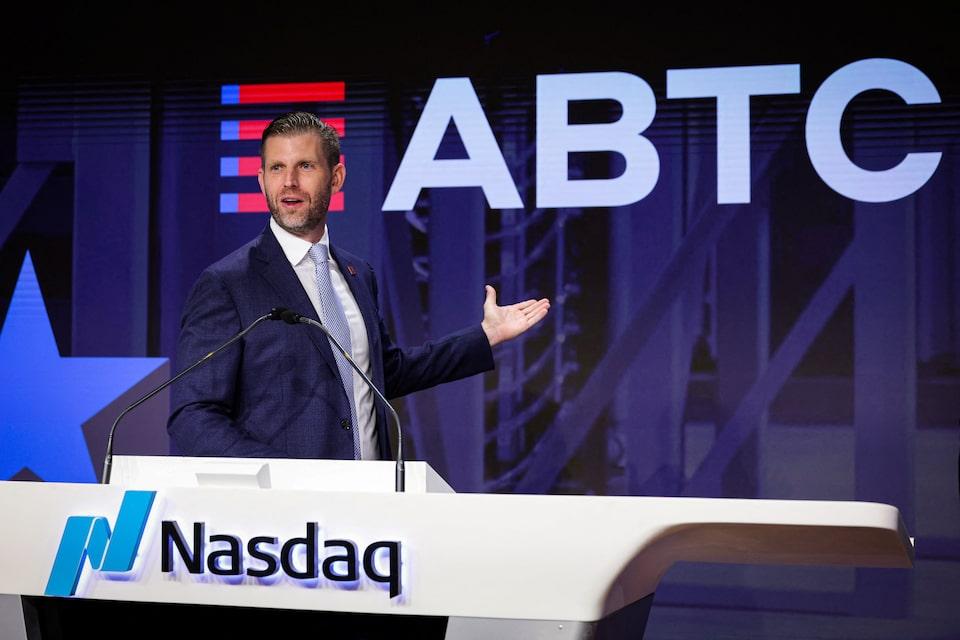
Dec 3 (Reuters) - Shares of American Bitcoin (ABTC.O) , opens new tab, a bitcoin miner backed by two of U.S. President Donald Trump's sons, steadied on Wednesday, a day after slumping nearly 40% following the expiry of a share lock-up. The stock rose 11.2% to $2.44 after the first unlock of pre-merger shares unleashed a wave of selling on Tuesday, the company said , opens new tab on X.com. Sign up here. American Bitcoin, a majority-owned subsidiary of Hut 8 Corp (HUT.O) , opens new tab, is one of the several crypto ventures linked to the Trump family that began trading on the Nasdaq in September following a reverse merger with Gryphon Digital Mining . Eric Trump serves as the company's co-founder and chief strategy officer, while Donald Trump Jr. is a shareholder. "We expected next few days to be choppy as those shares find new homes," American Bitcoin President Matt Prusak wrote on X.com. Hut 8 CEO and American Bitcoin's Executive Chairman Asher Genoot said , opens new tab in a separate post on X.com that Hut 8, along with Eric and Donald Trump Jr. and other founding partners, did not participate in the unlock and continue to hold their shares. American Bitcoin did not immediately respond to a Reuters request for a comment. The selloff comes as global risk aversion heavily pressures digital assets, impacting crypto ventures associated with the Trump family. The memecoins $TRUMP and $MELANIA, launched earlier this year, have plunged 92% and 99%, respectively, from their peaks. Trump Media & Technology Group (DJT.O) , opens new tab, which has raised billions of dollars to buy bitcoin, is down 67% year to date. Shares in Alt5 Sigma (ALTS.O) , opens new tab, which has bought tokens in Trump's World Liberty Financial crypto venture, has lost two-thirds of its value in 2025. https://www.reuters.com/business/american-bitcoin-steadies-after-share-lock-up-expiry-sparks-near-40-plunge-2025-12-03/