2025-12-03 11:06
ZURICH, Dec 3 (Reuters) - The Swiss National Bank will stick to its 0% interest policy next week and well into 2026 rather than opting for negative rates, economists said on Wednesday, despite inflation slipping below expectations to the bottom end of the SNB's target range. Switzerland's annual inflation rate unexpectedly slowed by a 10th of a percentage point in November to zero, slightly undershooting expectations, official data showed. Sign up here. The consensus forecast of a Reuters poll of analysts was that inflation would remain unchanged at 0.1% last month. The 0% reading was at the bottom end of the SNB's price stability target for inflation between 0% and 2%, and the lowest figure since May. DATA IS LAST INFLATION READING BEFORE RATES DECISION The central bank declined to comment on the figures, which were the last inflation data before it announces its next interest rate decision on December 11. Still, despite the downturn economists reckon the SNB will keep its benchmark interest rate unchanged at 0% and well into 2026. "There is no need for policy changes," said Karsten Junius, an economist at J.Safra Sarasin, who also expects no change in 2026. Rudolf Minsch, chief economist at economiesuisse, also expects the central bank to keep interest rates at zero next week and throughout 2026, while Swiss inflation would increase to around 0.4% next year. "Negative interest rates also have undesirable effects, and are only used when there is an urgent necessity, which we don’t see," he said. SNB HAS HIGH THRESHOLD TO CUT RATES Likewise, UBS economist Alessandro Bee said he expected the SNB to keep rates at 0% into 2026, when he expected a slight acceleration in Swiss inflation due to higher wages next year. Market expectations are presently that the bank will leave the benchmark rate unchanged next week. SNB officials have also previously said they expect inflation to rise in future, while they also said they would tolerate inflation falling below 0% temporarily. https://www.reuters.com/business/snb-expected-avoid-negative-rates-despite-inflation-downturn-2025-12-03/
2025-12-03 11:02
BEIJING, Dec 3 (Reuters) - Australia's Fortescue (FMG.AX) , opens new tab said on Wednesday that it would cooperate with a subsidiary of China Baowu, the world's largest steelmaker, to explore new green technology for accelerating decarbonisation in the hard-to-abate steel industry. Fortescue, the world's fourth-largest iron ore supplier, signed an agreement with China's Taiyuan Iron and Steel Group (TISCO) in late November on a trial project on hydrogen-based plasma-enhanced iron and steel metallurgical technology, the company said in a statement on its WeChat account. Sign up here. The project aims to develop a new technology that will remove the process of pre-treating raw materials such as iron ore sintering, pelletizing and coking, typically a large contributor to carbon dioxide emissions in steelmaking. The cooperation involves designing, building and operating an industrial trial line with the technology that could produce 5,000 metric tons of hot metal, a blast furnace product. "We are exploring the technology for green smelting using Fortescue's Pilbara iron ore," said Agustin Gus Pichot, Fortescue's chief executive officer for growth and energy. Steel decarbonisation will generate growing needs for higher grade iron ore, posing challenges for Australian miners, which mainly supply low-to-medium grade iron ore. Fortescue will provide capital for the project, it said. Earlier in the year, Fortescue partnered with another subsidiary of China Baowu for green iron technology. https://www.reuters.com/sustainability/climate-energy/fortescue-works-with-chinese-steelmaker-new-green-iron-technology-2025-12-03/
2025-12-03 09:28
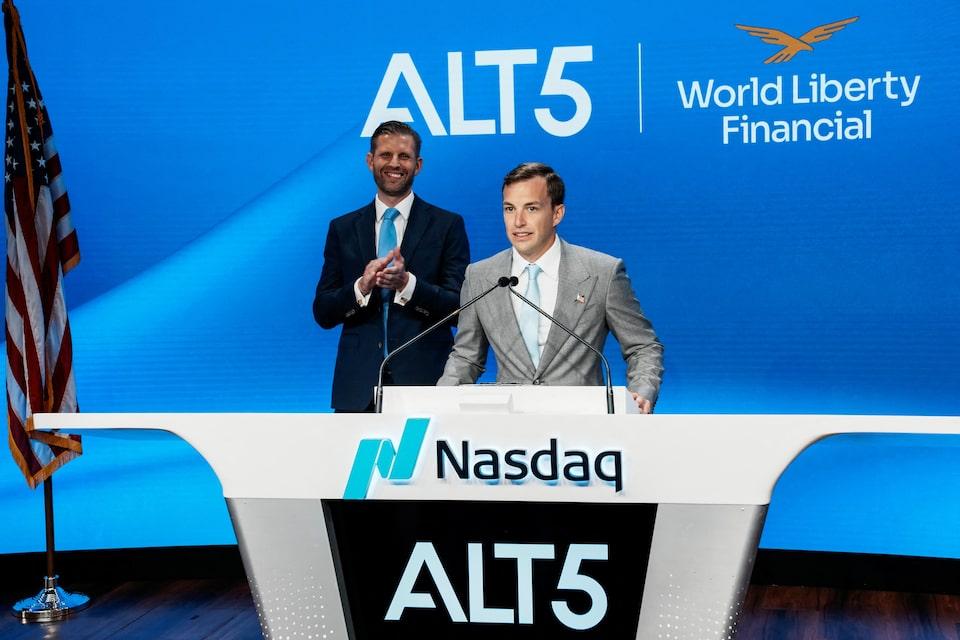
DUBAI, Dec 3 (Reuters) - World Liberty Financial, a crypto venture backed by U.S. President Donald Trump's family, will launch its suite of real-world asset products at the beginning of the first quarter in January, co-founder Zach Witkoff announced on Wednesday during an event in Dubai. USD1, WLF's stablecoin, was used by an Abu Dhabi-backed MGX firm to pay for their investment in Binance this year. Sign up here. The announcement came during a two-day event organized by Binance, the world's largest cryptocurrency exchange two-day event in Dubai featuring senior company and industry executives. https://www.reuters.com/business/wlf-launch-real-world-asset-products-january-co-founder-says-2025-12-03/
2025-12-03 09:25
Index provider to take decision on exclusion by January 15 Removing Strategy could lead to large outflows, JPMorgan says Saylor chairman says MSCI exclusion 'won't make any difference' DUBAI, Dec 3 (Reuters) - Michael Saylor, chairman of Strategy (MSTR.O) , opens new tab, the world's biggest corporate bitcoin stockpiler, told Reuters on Wednesday that his company is engaging with MSCI over an upcoming decision on whether to exclude it from the index provider's indices. MSCI (MSCI.N) , opens new tab has said it plans to decide by January 15 if it will remove companies whose business model is to buy cryptocurrencies amid concerns they resemble investment funds, which are currently not eligible for index inclusion. Sign up here. Strategy's shares are down over 37% this year, outpacing bitcoin's 0.6% fall on the year , suggesting its game plan of selling stock and racking up debt to buy more of the crypto asset may be losing its charm with investors. MSCI's possible shake-up could lead to outflows of as much as $8.8 billion from its stock if other index providers follow suit, according to a JPMorgan estimate. 'IT WON'T MAKE ANY DIFFERENCE,' SAYS STRATEGY'S SAYLOR Strategy is currently part of the MSCI USA and MSCI World indices, which draw investors that track benchmarks through passive vehicles such as ETFs, boosting demand for the stock and its valuation. JPMorgan said in a note last month that an exclusion would cast doubt on the company's costs and ability to raise equity and debt in the future. Asked in an interview on the sidelines of a Binance event in Dubai whether the company was in conversations with MSCI, Saylor said: "We're engaging in that process," adding he was not sure that JP Morgan's numbers on the outflows were correct. "It won't make any difference, in my opinion," he said of a potential exclusion from MSCI's indices. BITCOIN'S DECLINE HITS STRATEGY HARD A fall in the price of bitcoin, which had its biggest monthly drop since mid-2021 in November, has hit Strategy hard. It slashed its full-year earnings forecast on Monday, flagging up to $5.5 billion in losses, compared to an expected profit of $24 billion a month earlier. Strategy operates as a digital asset treasury, a vehicle that uses a listed company to stockpile cryptocurrencies in a bid to capitalise on spikes and enable more cautious investors to gain exposure to the riskier assets via equities. Strategy shares rose 2.1% in premarket trading on Wednesday, as market sentiment recovered slightly. "The equity is going to be volatile, because the company is built on amplified bitcoin. If bitcoin falls ... 30%, 40% then the equity is going to fall more, because the equity is built to fall," Saylor told Reuters. Strategy is currently leveraged by a multiple of 1.11, and could survive a 95% drop in the price of bitcoin, Saylor said. Its meteoric success has inspired a rise in the number of publicly traded firms following its playbook. But the recent slump could force those companies to sell their holdings, adding downward pressure on prices. MSCI is proposing potentially excluding any companies whose digital asset holdings are more than half of their total assets. https://www.reuters.com/business/saylors-strategy-engaging-with-msci-potential-index-exclusion-2025-12-03/
2025-12-03 07:52
BERLIN, Dec 3 (Reuters) - Thyssenkrupp's (TKAG.DE) , opens new tab steel division head, Marie Jaroni, estimates a restructuring deal that will cut or outsource about 11,000 jobs will cost the company a three-digit million-euro amount, she told the Frankfurter Allgemeine Zeitung newspaper. Thyssenkrupp Steel Europe (TKSE) said earlier this week that it had agreed with the IG Metall union to cut or outsource 40% of its workforce and reduce production capacity to a shipping level of 8.7 million to 9 million tons, from 11.5 million at present. Sign up here. "The restructuring is costing us a mid-three-figure million euro sum. The exact amount depends on how many employees accept which offer," Jaroni said in an interview published on Wednesday. This will pay off, she added, because the company will have permanently lower personnel costs, "a low three-digit million amount less annually than today," she told the newspaper. Thyssenkrupp, which has for years tried to dispose of its steel business, in September received an indicative bid for from India's Jindal Steel International for TKSE. Jindal Steel is currently carrying out detailed due diligence to assess whether to launch a formal binding offer for TKSE, Germany's largest steelmaker with sales of 10.7 billion euros ($12.46 billion) last year. ($1 = 0.8587 euros) https://www.reuters.com/sustainability/sustainable-finance-reporting/thyssenkrupp-steel-head-puts-restructuring-costs-several-hundred-million-euros-2025-12-03/
2025-12-03 06:11
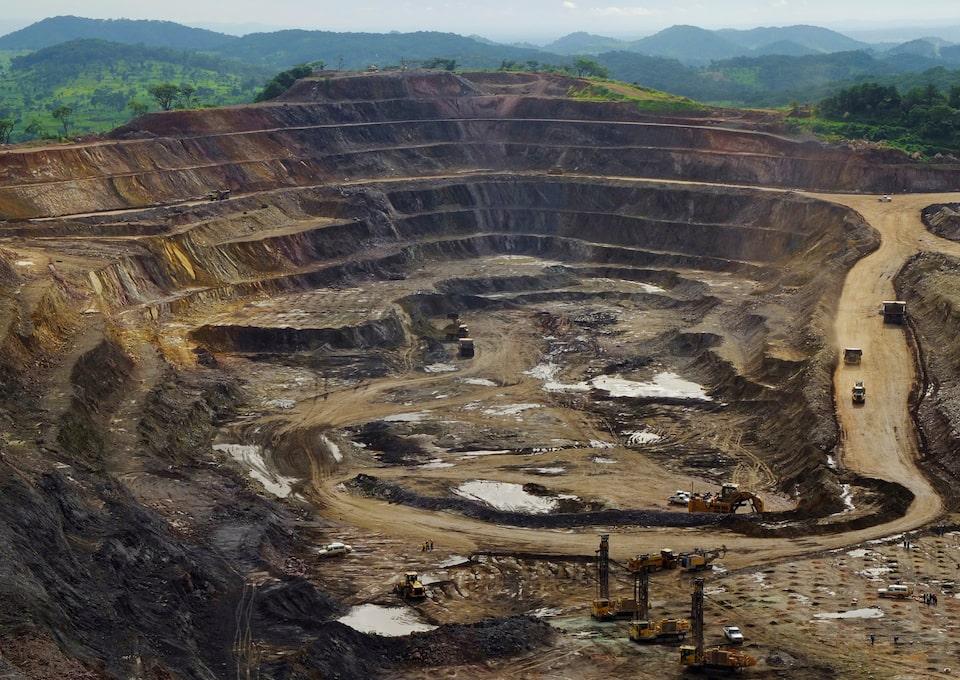
LONDON, Dec 3 (Reuters) - It's been almost 10 months since the Democratic Republic of Congo, the world's dominant cobalt supplier, halted exports of the battery metal. February's export ban was replaced with a quota system in October but the country's producers are still awaiting the green shipping light from Congo's minerals authority ARECOMS. Sign up here. The withdrawal of supply from the country that accounted for 70% of global mine production last year has been a booster for the bombed-out cobalt price. The CME spot cobalt metal has risen from $10 to $26 per lb since February. Cobalt hydroxide , the form of the metal exported by Congo, has surged from $6 to $23 per lb over the same time-frame. Higher pricing is of course one of the core goals of Congo's new export quota scheme but a sustained supply shock isn't going to help a metal that is already facing challenges in the electric vehicle battery market. EXPORT BAN HITS CHINA It takes around three to four months to ship cobalt hydroxide from the Congo to China, where it is processed into cobalt sulphate for battery manufacturers. The long supply chain is why Chinese imports of cobalt intermediaries from the Congo initially held up well in the months after the February suspension of shipments. But imports have fallen sharply since May. Volumes of 50,000 metric tons over June-September were less than what previously passed through Chinese customs every month. As the supply hiatus lengthens, the impact on the cobalt processing chain grows. Even if Congo's exports resumed tomorrow, the material would only arrive in China towards the end of the first quarter of next year. A drawdown of Chinese cobalt hydroxide stocks was always anticipated, given Congo's allocated export quotas for the next two years are around half the country's previous shipping levels. But the seven-week delay since the quota announcement will serve only to accentuate the inventory depletion. There is an option of converting cobalt metal to sulphate, if the price differential covers the reverse-smelting costs. But, according to analysts at BNP Paribas, "only very few plants" have the environmental permits to process cobalt in that way. The best-case scenario, one where exports resume in the next few days, is a severe but short supply squeeze in the early months of 2026 before deliveries to China arrive. But there is also the growing risk of a more profound supply crunch, generating another swing of cobalt's boom-and-bust pricing cycle. DEMAND CHALLENGES That is the last thing cobalt needs when it comes to holding its place in a fast-changing EV battery materials market. As Chinese battery manufacturers such as CATL (300750.SZ) , opens new tab seek to produce ever more efficient, cheaper products, the chemistry of what is used to power an EV is constantly shifting. The Chinese EV market, the world's largest, has already pivoted to lithium-iron-phosphate (LFP) batteries, which need neither cobalt nor nickel. They are cheaper and safer and the performance gap with cobalt-nickel-manganese (NCM) chemistries is closing. Macquarie Bank now thinks that LFP's share of the vehicle battery market will rise from 48% in 2024 to 65% in 2029, a significant rethink from a previous forecast that LFP would flatten out around 49%. Moreover, cobalt is also vulnerable to ratio shifts in nickel-intensive batteries. The EV revolution isn't looking as positive for cobalt as it was a couple of years ago. Cobalt use in EV batteries rose by a marginal 2,300 tons last year, less than the extra 2,700 tons used in the portable electronics sector, according to Benchmark Mineral Intelligence's quarterly report , opens new tab for the Cobalt Institute. EV battery demand is forecast to grow by a more robust 6,800 tons this year due to rising Western sales of electric and hybrid vehicles. But cobalt's share of the battery metals market is declining. The average amount of cobalt deployed in new passenger vehicle sales in September was down 6% year-on-year at 2.2 kg, according to consultancy Adamas Intelligence. MORE CONTROL, LESS VOLATILITY Cobalt's challenges in the EV battery sector are compounded by automakers' concerns about human rights in Congo's artisanal mines and the metal's history of volatile pricing. Congo's grand vision is to use its control over global cobalt production to manage the market in a way that benefits both its own people and the broader cobalt user base. Key to that ambition is learning how to apply supply leverage without adding to the price volatility that has plagued buyers in the past. It's understandable that ARECOMS is taking its time to introduce a completely new export regime but in terms of the impact on the country's biggest cobalt buyer, time is running out. Andy Home is a Reuters columnist. The opinions expressed are his own Enjoying this column? Check out Reuters Open Interest (ROI) for thought-provoking, data-driven commentary on markets and finance. Follow ROI on LinkedIn , opens new tab, opens new tab and X , opens new tab, opens new tab. https://www.reuters.com/markets/commodities/congos-attempt-control-cobalt-market-risks-becoming-supply-shock-2025-12-03/