2025-12-02 22:23
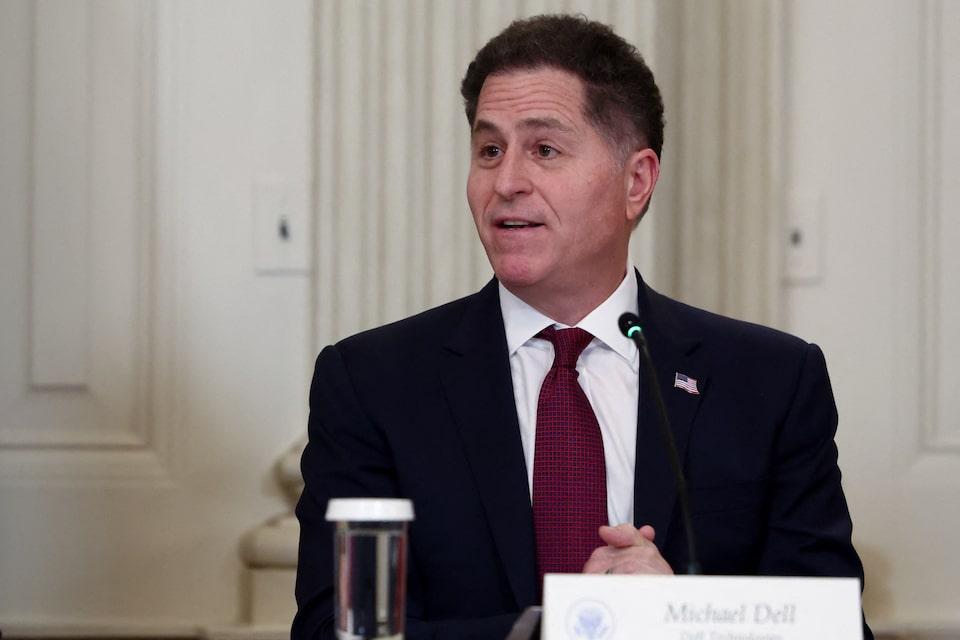
WASHINGTON, Dec 2 (Reuters) - Entrepreneur Michael Dell and his wife, Susan, will deposit $250 in the individual investment accounts of 25 million American children in a $6.25 billion philanthropic pledge as part of the Trump administration's Invest America initiative. The initiative, known as "Trump accounts", was created this year under President Donald Trump's One Big Beautiful Bill Act and has sparked a scramble by financial firms looking to participate. The U.S. Treasury will deposit $1,000 into investment accounts for all children born between 2025 and 2028. Sign up here. The Invest America accounts are expected to open on July 4 next year, but details about how they will work are still unknown. The funds - required to be invested in an index fund that mirrors the performance of the broader stock market - become available at the age of 18 for education, job training, a first home or starting a business. "We believe the smartest investment that we can make is an investment in children," Michael Dell said at a White House event announcing the donation. Shares of Dell (DELL.N) , opens new tab - which is not affiliated with the couple's foundation - were up more than 3%. Michael Dell founded the technology company in 1984 and serves as its chairman and chief executive officer. Trump said at the White House that the gift would give middle-class children a stake in American economic and stock market growth. "It really gives them a shot at the American dream," he said. He added that he would make a personal contribution towards the effort. The Dells said the funds are mainly aimed at children up to age 10, but kids who are older may benefit if the funds remain available after initial sign-ups. They will put money into the accounts of children who live in ZIP codes where the median family's income is $150,000 or less, according to a spokesperson for the Dells. Since its creation in 1999, the Michael & Susan Dell Foundation has given about $2.9 billion for charitable works, mainly focused on education. The couple's $6.25 billion commitment for Invest America comes from other charitable funds and not their foundation. Michael Dell, who started the company with $1,000 in his freshman dorm room at the University of Texas, is worth nearly $150 billion, according to the Forbes real-time billionaire list. LOBBYING SCRAMBLE Financial firms have been scrambling to grab a piece of the program, according to public lobbying records. The Investment Company Institute, a Washington trade group representing the world's largest asset managers, on October 29 wrote to the Treasury , opens new tab urging it to create a "robust and competitive marketplace for account trustees and custodians," rather than picking a single provider for the program. A competitive marketplace is key to the program's long-term success by incentivizing providers to promote the accounts and provide important educational information, the group said. In a Tuesday statement, ICI reiterated that position and also called for "flexibility in the eligible investments." Several other industry groups and asset managers, including BlackRock, Franklin Templeton, and Ameriprise Financial, have also been lobbying on Trump accounts, public records show. The companies did not immediately respond to requests for comment. https://www.reuters.com/technology/michael-susan-dell-pledge-625-billion-investment-accounts-us-children-2025-12-02/
2025-12-02 22:03
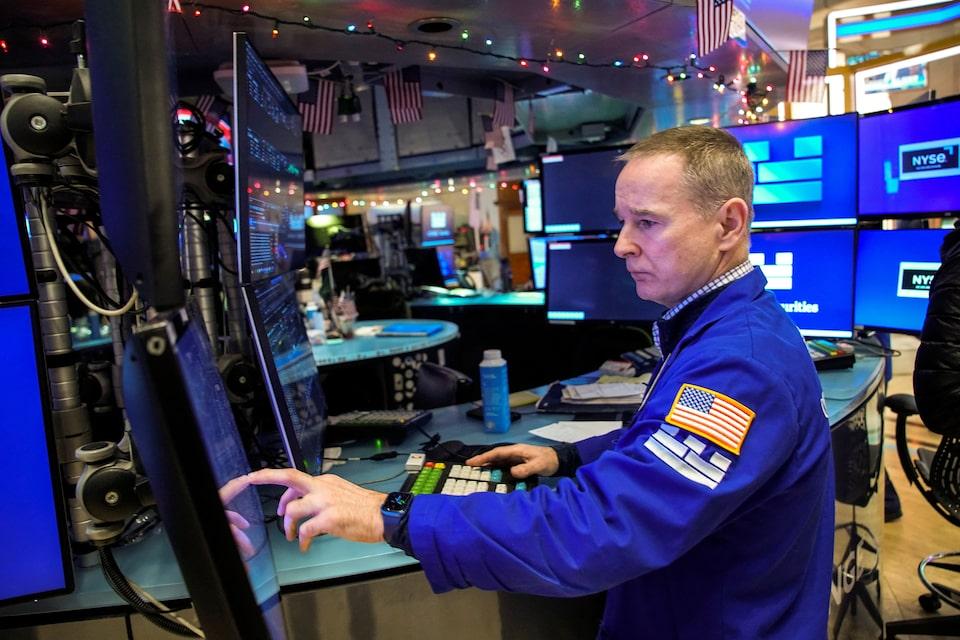
ORLANDO, Florida, Dec 2 (Reuters) - World stocks rose on Tuesday, regaining their poise after wobbling the previous day and lifted by an extended upswing in tech and AI sentiment as investors also continued to wager the Federal Reserve will lower U.S. interest rates next week. More on that below. In my column today, I look at how overseas demand for U.S. equities has re-accelerated in recent months and is running at its fastest pace on record. The big question, of course, is can this continue into next year? Sign up here. If you have more time to read, here are a few articles I recommend to help you make sense of what happened in markets today. Today's Key Market Moves Today's Talking Points * Could Fed back away from rate cut? When the Fed entered the 'blackout period' last week ahead of its Dec 9-10 policy meeting, rates markets were pricing a near 100% chance of a rate cut. That fell to as low as 80% after manufacturing ISM data showed prices rising in October even though activity contracted again. An 80% probability is still overwhelmingly strong odds for a cut. But what if Friday's PCE inflation is higher than expected? Will traders reduce their rate cut bets further? The Fed would be loath to surprise markets, so Chair Powell will no doubt be hoping the PCE report is broadly in line with forecasts. * Yield curves steepen as inflation percolates If global signals are worth anything, the U.S. PCE inflation report on Friday may indeed offer an upside surprise. Last week figures showed Tokyo inflation slightly stronger than expected, supporting BOJ rate hike bets; on Tuesday, flash euro zone inflation estimates were also slightly higher than forecast, cooling any outside bets on ECB easing next year. From a bond market perspective, the upshot is long yields creeping higher and curves steepening. Long-dated JGB yields are at record highs and the 2s/10s curve is the steepest since 2012; benchmark U.S. and euro zone curves are not far from their steepest levels since 2022-23. * U.S. tech finds its Mojo Although Wall Street hasn't revisited its peaks from late October, AI sentiment is driving a wider recovery that has delivered six 'up' days in the last seven. Tech is up around 8% in that time, and the Philadelphia Fed semiconductor index's gains are double that. The latest 'Big Tech' tie-up will see Amazon's AWS cloud computing unit adopt key Nvidia technology in future generations of AI computing chips, while Amazon also introduced new versions of its AI models known as Nova. Announcements like these are becoming more frequent, and sometimes they are treated with caution. Not today. Global demand for US stocks isn't waning. It's increasing Given the outperformance of many major European and Asian equity markets over Wall Street this year, it might appear that foreign investors are turning sour on U.S. equities. But that's not the case. Not only are overseas private sector inflows into U.S. stocks running at record levels, they have re-accelerated in recent months. The big question now is whether this can be sustained next year. The latest official Treasury International Capital data - which comes with a lag but is the gold standard for measuring overseas appetite for U.S. assets - shows that net purchases of U.S. stocks from foreign private sector investors in the 12 months through September totaled $646.7 billion. Indeed, TIC data shows that inflows from abroad have been breaking records by this measure almost every month this year, having smashed through the previous peak of $392 billion, from 2021, in January. RE-ACCELERATING INFLOWS That rolling 12-month figure is partially boosted by strong inflows around the 2024 U.S. Presidential election. Monthly net purchases of U.S. stocks from foreign private sector investors rarely exceed $100 billion, but they did in September and November last year as investors hoovered up stocks in the belief that an incoming Trump administration would pursue an unabashedly pro-growth, "market-friendly" agenda of slashing taxes and regulation. That initial wave of bullish optimism faded early this year, however, and was quickly replaced by unease surrounding Trump's tariffs and protectionist trade policy. But overseas demand for U.S. stocks didn't cool for long before the artificial intelligence frenzy brought it roaring back. Net foreign purchases have topped $100 billion in three of the past five months, and exceeded $90 billion in another. The near $650 billion that overseas investors poured into Wall Street on a net basis in the year to September is around 40% of the net $1.59 trillion that flooded into U.S. assets in that time. It is the biggest foreign flow into any single U.S. asset class over the period - Treasuries drew in $493 billion, corporate bonds $319 billion, and agency debt $127.5 billion. WEAK DOLLAR BOOSTS NON-U.S. RETURNS In some ways, these inflows from abroad are unsurprising. The whole world has wanted in on the U.S.-led AI boom this year. Yet other slices of capital flows paint a different picture, and many key stock markets around the world have matched or bettered Wall Street this year, especially since the post-"Liberation Day" lows in early April. The S&P 500 may be up 15% in 2025 thus far, but the MSCI Asia ex-Japan index has increased nearly 25%, while both Germany's DAX and Britain's FTSE 100 are up almost 20%. Importantly, gains in non-U.S. markets are in local currency, meaning in dollar terms they can be boosted even further thanks to the greenback's decline. Brazil's Bovespa is up 30% year-to-date, and up a further 20 percentage points in dollar terms. All told, analysts at JP Morgan Asset Management estimated that international equities were outperforming their U.S. counterparts by 1,520 basis points in the year through mid-November, the biggest outperformance since 1993. They estimate that the dollar is still 10% too expensive relative to "fair value" and reckon the U.S. equity premium over international stocks is 34%, substantially higher than the long-run average of 19%. What's more, the U.S. share of global equity market cap has risen to as much as 65% by some measures. So foreign allocation to U.S. stocks is still extreme, even if more of the dollar exposure is now hedged. CAN IT CONTINUE? Where non-U.S. investors put their next marginal dollar could depend largely on the answers to three market-specific questions for 2026: Are U.S. stocks too expensive? Can U.S. earnings remain so robust? And is AI a bubble? There are three months of 2025 TIC flows still to be released, and it remains to be seen how investors' sentiment has been affected by year-end profit-taking or the record-long U.S. government shutdown. It's plausible that the all-too familiar fears over U.S. valuations, market concentration, and future returns on AI spending could force overseas investors to slow their purchases of U.S. equities. Wall Street would be vulnerable to outright correction, relative underperformance, or both. But the available evidence shows that, despite all the U.S. economic, political and policy turbulence in 2025, foreign appetite for U.S. stocks has never been stronger. What could move markets tomorrow? Want to receive Trading Day in your inbox every weekday morning? Sign up for my newsletter here. Opinions expressed are those of the author. They do not reflect the views of Reuters News, which, under the Trust Principles , opens new tab, is committed to integrity, independence, and freedom from bias. https://www.reuters.com/world/china/global-markets-trading-day-graphic-2025-12-02/
2025-12-02 22:01
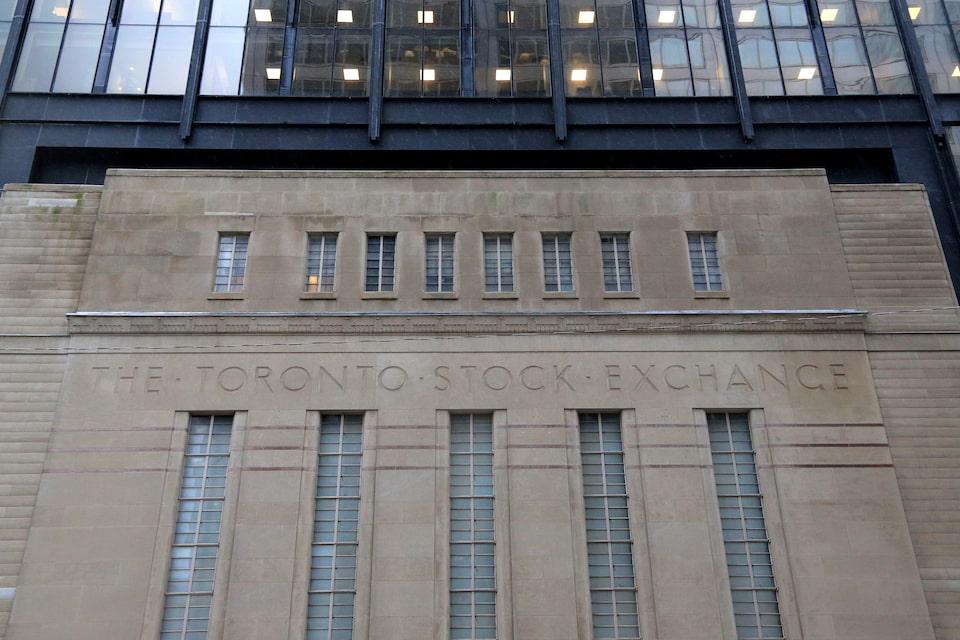
TSX ends up 0.2% at 31,049.28 Bank of Nova Scotia beats Q4 profit estimates Laurentian Bank jumps after acquisition by Fairstone Bank Shopify shares climb after record holiday weekend sales Dec 2 (Reuters) - Canada's main stock index edged down on Tuesday as declines for resource shares outweighed Bank of Nova Scotia earnings beating expectations and optimism around expected U.S. interest rate cuts. Toronto's main stock index (.GSPTSE) , opens new tab ended down 52.50 points, or 0.2%, at 31,049.28, extending its pullback from a record closing high on Friday. Sign up here. "I think that a correction was required and is healthy and may not be complete," said Joseph Abramson, co-chief investment officer at Northland Wealth Management. "The real point is we remain constructive on risk assets. Growth remains positive, liquidity is being added and there might be a substantial amount of liquidity added." The Bank of Canada has signaled that its easing campaign is on hold but the Federal Reserve has left the door open to additional interest rate cuts. Investors expect about 90 basis points of easing from the U.S. central bank by the end of next year. "Within that world, the U.S. dollar goes down which could pressure the Canadian dollar up, and gold would do well as well as some other commodities," said Abramson. Resource shares account for 34% of the Toronto market's weighting. The materials group (.GSPTTMT) , opens new tab, which includes metal mining shares, fell 1.8% on Tuesday as gold and copper prices declined. Oil prices also fell, settling 1.15% lower at $58.64 a barrel, which weighed on energy (.SPTTEN) , opens new tab. The sector was down 1.6%. Financials (.SPTTFS) , opens new tab were a bright spot, rising 0.7%, as Bank of Nova Scotia (BNS.TO) , opens new tab kicked off bank earnings season on a positive note. Shares of Scotiabank were up 2.8%, notching a record high. Laurentian Bank (LB.TO) , opens new tab shares jumped 18.4% after Fairstone Bank said it would buy the lender. Technology added 0.3%, with e-commerce company Shopify Inc (SHOP.TO) , opens new tab up 4.9% after the company said merchants achieved record sales over the Black Friday to Cyber Monday weekend, jumping 27% from last year. https://www.reuters.com/business/tsx-futures-steady-bank-earnings-loom-2025-12-02/
2025-12-02 21:16
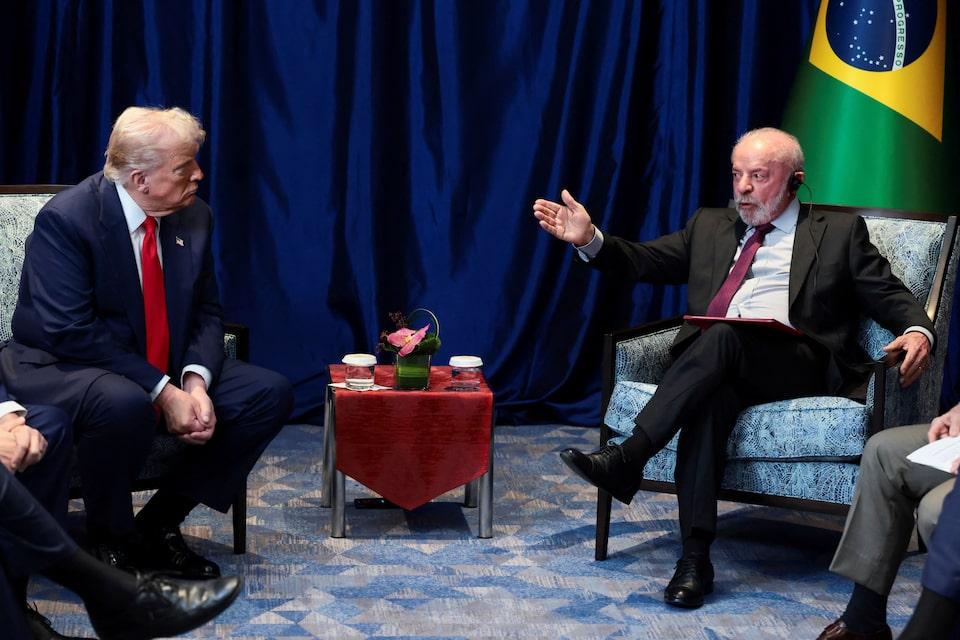
WASHINGTON/BRASILIA, Dec 2 (Reuters) - U.S. President Donald Trump and Brazilian President Luiz Inacio Lula da Silva discussed trade, the economy and fighting organized crime in a phone call on Tuesday, both sides said. Speaking to reporters at the White House, Trump said the two men also discussed sanctions - an apparent reference to his administration's targeting of Brazil's judiciary over the criminal case of right-wing former President Jair Bolsonaro. Sign up here. Trump said he and Lula "had a great talk. We talked about trade. We talked about sanctions, because, as you know, I sanctioned them having to do with certain things that took place." In a later social media post, Trump said he looked forward to seeing and speaking with Lula soon, adding that "much good will come out of this newly formed partnership!" Brazil's presidential palace said in a statement that Lula thanked Trump for his decision to remove additional tariffs on U.S. imports of Brazilian goods including coffee and beef, and added that Brazil seeks to progress on talks about products still affected by the levies. Trump last month removed the 40% tariffs on several Brazilian food products, which also included cocoa and fruits, that he had announced in July to punish Brazil over the prosecution of Bolsonaro, a Trump ally. During the 40-minute call on Tuesday, which the Brazilian presidential palace called "very productive," Lula also stressed the urgency of strengthening cooperation with the United States to fight international organized crime, according to its statement. The two leaders spoke amid recent U.S. actions in the region, including a massive military buildup in the Caribbean and three months of U.S. strikes on suspected drug boats off Venezuela's coast. https://www.reuters.com/world/americas/lula-trump-discussed-tariffs-fighting-organized-crime-phone-call-brazil-says-2025-12-02/
2025-12-02 21:02
Dec 2 (Reuters) - With bitcoin trading well below its recent highs, hedge fund manager and activist investor Eric Jackson is betting that investors will still want exposure to crypto — just with less pain on the way down. Jackson's firm EMJ Capital is preparing to launch EMJX, a crypto-focused treasury company that will invest in bitcoin, ethereum and a selection of smaller cryptocurrencies. Sign up here. While EMJX will buy and hold these assets, it plans to distinguish itself from other crypto treasury companies such as Michael Saylor's Strategy Inc (MSTR.O) , opens new tab by being multi-asset and through active hedging, aiming to limit large drawdowns while still participating when prices rise. Crypto treasury companies allocate their cash reserves to holding bitcoin or other cryptocurrencies as a strategic asset. "We think the next frontier is risk-managed digital treasuries," Jackson said in an interview. "It still allows us to hopefully capture the upside when bitcoin is doing well but helps insulate us from these massive drawdowns during these winter crypto markets." Backtests of EMJX's strategy show that the treasury company's investments would be up 31% this year, even as bitcoin and ethereum have fallen 3% and 10%, respectively, while Strategy's shares are down 41%. EMJ's strategy relies on proprietary artificial intelligence models to guide hedging. Jackson says the models have become more robust by incorporating signals from both bitcoin and ethereum, rather than focusing on just one of the two. He also argues that crypto markets offer a richer data set than traditional assets, because blockchains record money flows in and out of specific tokens in real time. That transparency allows firms like EMJ to study the behavior of large market participants, or "whales," and track how they perform. When it comes to smaller cryptocurrencies, EMJ will draw on the stock-picking experience Jackson's hedge fund has built. He cites used-car retailer Carvana (CVNA.N) , opens new tab as an example: after the stock fell as low as $3.50, his models tagged it as a "buy" at $11. It was at $378 on Tuesday. “We only have to be right on a handful and it could have a very significant impact on the value of the overall treasury as it plays out,” he said. https://www.reuters.com/sustainability/sustainable-finance-reporting/emjs-jackson-aims-take-volatility-out-crypto-2025-12-02/

2025-12-02 20:40
Dec 2 (Reuters) - The U.S. Department of Energy said on Tuesday it will provide up to $800 million to support development of small modular reactors by the Tennessee Valley Authority and private company Holtec. The Trump administration and nuclear companies believe SMRs will help supply electricity to the U.S. where power demand is rising for the first time in two decades on artificial intelligence, cryptocurrency mining and electric vehicles. Sign up here. Backers say SMRs could save costs because they are expected to be built in factories. But no such reactors are under construction in the United States and questions exist about whether they can provide power as cheaply as today's larger reactors. Nuclear power also creates long-lasting radioactive waste for which there is no permanent repository. TVA, a U.S.-owned power utility, will receive up to $400 million in federal cost-shared funding for development of a GE Vernova Hitachi BWRX-300 at the Clinch River site in Tennessee and other projects, the Energy Department said. Holtec, which will also receive up to $400 million, plans to build two SMRs at its Palisades, Michigan, site. Holtec is hoping to reopen the 800-megawatt Palisades conventional reactor this year, which shut in 2022 after operating for more than 50 years. The plant secured a $1.52 billion loan guarantee during former President Joe Biden's administration, and so far the Energy Department's loan office has disbursed more than $490 million of the financing. The Energy Department expects the SMRs to be developed by the early 2030s. "These awards ensure we can deploy these reactors as soon as possible," Energy Secretary Chris Wright said in a press release. https://www.reuters.com/business/energy/us-energy-dept-provide-up-800-million-support-two-small-modular-reactor-projects-2025-12-02/