2025-12-02 11:03
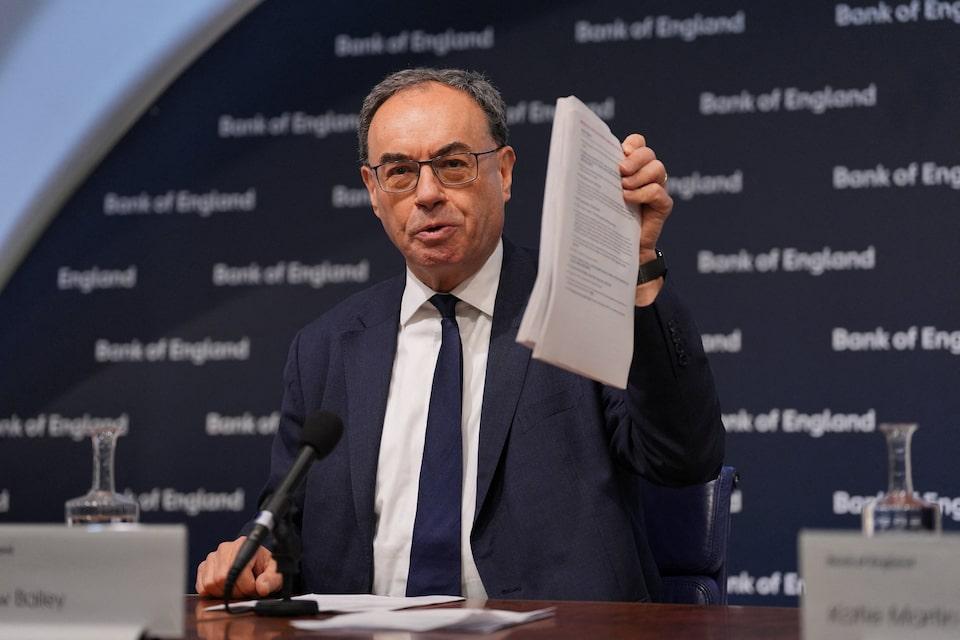
NEW DELHI, Dec 2 (Reuters) - Russian President Vladimir Putin will visit India this week for a summit with Prime Minister Narendra Modi aimed at boosting energy, defence and economic ties, as Moscow seeks to secure oil sales amid tightening Western sanctions. Moscow's energy exports are a key revenue source but international sanctions imposed after its 2022 invasion of Ukraine have begun to weigh on its oil sales. Sign up here. Here is some issues India and Russia likely to figure in talks: OIL PURCHASES Moscow wants India, its top client for seaborne oil, to maintain higher purchases after some Indian refiners stopped imports under sanctions pressure. Russia is the top oil supplier to India, the world's third biggest oil importer and consumer. However, India's crude imports are set to hit at least a three-year low this month as Washington tightened sanctions targeting Russia's top two oil producers, Rosneft (ROSN.MM) , opens new tab and Lukoil . Among state refiners, Indian Oil Corp (IOC.NS) , opens new tab is buying Russian oil from non-sanctioned entities, while Bharat Petroleum Corp is in advanced negotiations for orders. Russia-backed Indian refiner Nayara Energy, partly owned by Rosneft, is running exclusively on Russian oil after other suppliers pulled back. Russia wants India's support to boost Nayara's local fuel sales and capacity use. Russia's top Indian oil client, Reliance Industries Ltd (RELI.NS) , opens new tab, has said it will process Russian oil arriving after November 22 at its domestic-focused plant. UPSTREAM ASSETS India's Oil and Natural Gas Corp (ONGC.NS) , opens new tab seeks to retain its 20% stake in Russia's Sakhalin-1 oil and gas project in its far east. Indian companies - Oil India Ltd (OILI.NS) , opens new tab, Indian Oil Corp (IOC.NS) , opens new tab and Bharat PetroResources (BPCL.NS) , opens new tab, hold a 23.9% interest in JSC Vankorneft and a 29.9% stake in Tass Yuryakh Neftegazodobycha. ONGC Videsh, the overseas investment arm of ONGC, holds a 26% stake in JSC Vankorneft. Millions of dollars in dividends owed to Indian companies from these assets remain stuck in Russian banks. Oil India also holds a 50% stake in a block License 61 of Russia. NUCLEAR ASSETS India and Russia have a civil nuclear partnership to build six reactors, each of capacity 1,000 megawatts at Kudankulam in the southern state of Tamil Nadu. Two units of the project are operational, while four are being built. Russia will also supply fuel for the project. both countries have been discussing new sites to set up more Russian large reactors, as well as small modular reactors. DEFENCE TALKS Russian Sukhoi-30 jets make up the majority of India's 29 fighter squadrons and Moscow has also offered its most advanced fighter, the Su-57, which is likely to figure in this week's talks, two Indian officials familiar with the matter said. India is also likely to discuss buying more units of the Russian S-400 air defence system, Defence Secretary Rajesh Kumar Singh said last week. It now has three units, with delivery of two more pending under a 2018 deal. TRADE AND ECONOMIC LINKS India and Russia aim to boost two-way trade to $100-billion by 2030, after it rose more than five-fold from about $13 billion in 2021 to over $68 billion in 2024–25, driven by India's energy imports. It fell to to $28.25 billion in the period from April to August, because of lower oil prices, commerce ministry data showed. Both are working on an India–Eurasian Economic Union Free Trade Agreement to cut tariffs, ease non-tariff barriers and expand market access. RUPEE-ROUBLE TRADE & PAYMENT MECHANISMS India and Russia have expanded rupee-rouble settlements to shield trade from sanctions and cut reliance on third-party currencies. The Indian government and the Reserve Bank of India have eased these payments, and allowed investment of surplus rupee balances in assets including government securities. DIVERSIFICATION BEYOND TRADITIONAL SECTORS An industrial cooperation pact signed this year broadens India-Russia ties into areas such as aluminum, fertilisers, railways, mining technologies and rare earths. Both are working to boost connectivity through projects such as the International North–South Transport Corridor and the proposed Chennai–Vladivostok Sea route to speed trade with Central Asia and Europe. https://www.reuters.com/business/energy/india-russia-oil-defence-ties-2025-12-02/
2025-12-02 11:00
LONDON, Dec 2 (Reuters) - Changes OPEC+ is making to its oil production quota system will likely spark a wave of upstream investments among members, particularly in low-cost Gulf producers, diminishing concerns of long-term supply shortages. The Organization of the Petroleum Exporting Countries and other major producing nations, including Russia and Kazakhstan, collectively known as OPEC+, approved on Sunday a new mechanism to assess members' maximum production capacity, which will be used to set output baselines from 2027. Sign up here. This may seem a highly technical matter. But it could, in theory, mark a welcome change from recent years' turmoil that saw some members flagrantly exceed production quotas as OPEC de facto leader Saudi Arabia struggled to impose discipline, confounding the oil market. Saudi Energy Minister Prince Abdulaziz bin Salman said on Monday the new mechanism will help to stabilise markets and reward those who invest in production. OPEC+ accounts for nearly half of the world's oil supply of 106 million barrels per day in 2025, according to the International Energy Agency. First, it is important to understand the new Maximum Sustainable Capacity (MSC) mechanism. The capacity assessment will be done between January and September using a reputable U.S. auditor for 19 out of the 22 group members. It will involve a review of each country's oilfields and infrastructure to assess how much oil it can bring on stream within 90 days and maintain for one year. Among the three countries facing U.S. sanctions, Russia and Venezuela will use a non-U.S. auditor while Iran opted to set its baseline using an average production over the three months to October. Members' capacities will be approved in a November meeting, where OPEC+ will also agree on its 2027 output quotas, which will represent an equal percentage of capacity for each member. The MSC will be reviewed on an annual basis going forward. A WAVE OF GULF INVESTMENTS The system appears primed to spark a wave of investments among members wanting to increase their own production and revenue. It nevertheless favours wealthy members that have low development and production costs such as Saudi Arabia, the United Arab Emirates and Kuwait. Indeed, Gulf producers are already looking beyond near-term oversupply concerns and downplaying questions about future oil demand as the world shifts away from fossil fuels. The UAE targets growing its production capacity to 5 million bpd by 2027 from 4.85 million bpd today, though there is speculation it could increase its capacity to as much as 6 million bpd. Its investments suggest that may well be the case. Abu Dhabi's national oil company ADNOC said on November 24 it plans to invest $150 billion over the next five years to expand operations. It also increased the UAE’s conventional oil reserve base by 6% to 120 billion barrels following new discoveries. ADNOC further seeks to unlock so-called unconventional shale reserves, which it estimates contain 22 billion barrels of oil. Saudi Arabia, the world's top oil exporter, has a production capacity of 12 million bpd and by far the group’s largest spare capacity, which reached 2.2 million bpd in October, 60% of total OPEC+ spare capacity, according to the IEA. The country's national oil company Aramco (2222.SE) , opens new tab extracts oil at $2 per barrel, its CEO Amin Nasser recently said, among the lowest in the world. Aramco, whose capital expenditure is set to reach $52 billion to $55 billion this year, will bring two new fields on stream by year-end, adding 550,000 bpd of production capacity, it said in its third-quarter results. Kuwait and Iraq could also now seek to accelerate investment plans. Kuwait aims to increase capacity to 4 million bpd by 2035 from 2.9 million bpd today, based on IEA figures. Iraq is trying to attract foreign investors, including BP (BP.L) , opens new tab and Exxon Mobil (XOM.N) , opens new tab, to boost its production capacity by around 1 million bpd to 6 million bpd by 2028. SOME OPEC+ MEMBERS TO STRUGGLE The new system, however, puts members whose production is concentrated in more expensive geological structures or offshore, such as Nigeria and Kazakhstan, at a disadvantage as they will require more time and money in order to grow capacity. Russia, Venezuela and Iran may also struggle to increase investments and production capacity due to international sanctions that severely restrict supplies of vital drilling equipment and access to Western technologies. The new investments will nevertheless serve OPEC's intrinsic goal of growing its market share, in particular after losing ground in recent years as production in the U.S., Brazil, Canada and elsewhere soared. The spending will also ease growing concerns that the oil industry could face a supply crunch towards the end of the decade and beyond due to lower global spending and the slowdown in production in U.S. shale basins and elsewhere. THE SYSTEM STILL HAS WEAKNESSES The new capacity measurement system appears more equitable and transparent, offering members and external market participants a better understanding of OPEC+ policies. Yet it still has weak spots. For one thing, members will likely still be able to produce and export more than their stated quota, as some, including Kazakhstan and the UAE, appear to have done in recent years. Furthermore, some members will struggle to grow capacity and production due to sanctions and conflict, creating tensions with other countries that will be able to gain market share. But overall, OPEC+’s drive will encourage further investments in the oil market that could lead to increased supplies and keep prices relatively low. Want to receive my column in your inbox every Monday and Thursday, along with additional energy insights and links to trending stories? Sign up for my Power Up newsletter here. Enjoying this column? Check out Reuters Open Interest (ROI), , opens new tabyour essential new source for global financial commentary. ROI delivers thought-provoking, data-driven analysis. Markets are moving faster than ever. ROI , opens new tab can help you keep up. Follow ROI on LinkedIn , opens new tab and X. , opens new tab https://www.reuters.com/markets/commodities/energy/opec-spark-spending-race-with-new-oil-quota-system-2025-12-02/
2025-12-02 10:54
Amsterdam-based firm expects to launch in second half of 2026 BNP Paribas joins consortium with nine other banks Former NatWest chair Howard Davies to be chair PARIS/MADRID, Dec 2 (Reuters) - A group of 10 European banks, including ING (INGA.AS) , opens new tab, UniCredit (CRDI.MI) , opens new tab and BNP Paribas (BNPP.PA) , opens new tab, have formed a company to launch a euro-pegged stablecoin in the second half of 2026, in a move they hope will counter U.S. dominance in digital payments. The CEO of the Amsterdam-based company, named Qivalis, will be Jan-Oliver Sell, who was previously the CEO of crypto exchange Coinbase's German business, and has also worked for Binance. Former NatWest chair Howard Davies will be chair, the group said at a press conference in Amsterdam on Tuesday. Sign up here. The new company, which will have headquarters in Amsterdam, plans to hire 45 to 50 people in the next 18 to 24 months, Sell said, adding that they have a third of this number already. Banks are grappling with the fast-growing stablecoin industry and the wider growth of cryptocurrencies, which are seen by some lenders as potential direct competitors. That growth has put traditional lenders under pressure to find uses for blockchain technology within their own businesses. A host of top U.S. financial firms have been preparing to launch their own dollar-backed stablecoins after U.S. President Donald Trump signed a law establishing rules for stablecoins. DOLLAR-PEGGED STABLECOINS HAVE SURGED Stablecoins – a type of cryptocurrency designed to maintain a constant value and backed by traditional currencies - have grown sharply in recent years, driven by El Salvador-based company Tether, which has around $185 billion worth of its dollar-based token in circulation. There are few signs of demand for euro-pegged stablecoins. Societe Generale's crypto arm, SG-FORGE - which is not part of Qivalis - launched a euro-pegged stablecoin in 2023, but it has just 64 million euros ($74.27 million) worth of tokens in circulation. Qivalis said in a statement that the token will provide "near-instant, low-cost payments and settlements", although Davies said that the initial use-case will be in crypto trading. Sell said the name was chosen to convey trust, quality, and values, which were essential in finance and that it was easy to pronounce across languages. The company expects to launch its stablecoin at the beginning of the second half of 2026, with the licencing process taking six to nine months, Sell said. It is applying for an Electronic Money Institution (EMI) licence from the Dutch central bank. REGULATORY WORRIES Regulators worry that stablecoins could suck money flows out of the regulated banking system. ECB President Christine Lagarde has told European policymakers that privately issued stablecoins posed risks for monetary policy and financial stability. The ECB is also working on a digital euro of its own as a strategic alternative to private, U.S.-dominated means of payment such as credit cards and stablecoins. Floris Lugt, ING’s digital assets lead, who will become Qivalis’s CFO, said the group was in touch with the ECB, which was “very supportive” of the plan. “Our impression from them is that they are very supportive and that’s because one important policy objective is to achieve strategic autonomy in European payments and they are quite concerned about stablecoins, in particular U.S. dollar fintech-issued stablecoins and they prefer to have – is our impression – the European champions that they can support.” The banks involved in the project, first announced in September, were originally ING, UniCredit, Banca Sella (BSEL.HT) , opens new tab, KBC (KBC.BR) , opens new tab, DekaBank, Danske Bank (DANSKE.CO) , opens new tab, SEB (SEBa.ST) , opens new tab, Caixabank (CABK.MC) , opens new tab and Raiffeisen Bank International (RBIV.VI) , opens new tab. BNP Paribas has since joined the group, Lugt said on Tuesday. A separate group of ten banks, including Bank of America (BAC.N) , opens new tab, Deutsche Bank (DBKGn.DE) , opens new tab, Goldman Sachs (GS.N) , opens new tab and UBS (UBSG.S) , opens new tab, have also said that they are jointly exploring issuing a stablecoin. BNP Paribas is part of both groups. ($1 = 0.8617 euros) https://www.reuters.com/business/finance/group-european-banks-announce-euro-stablecoin-plans-2025-12-02/
2025-12-02 10:53
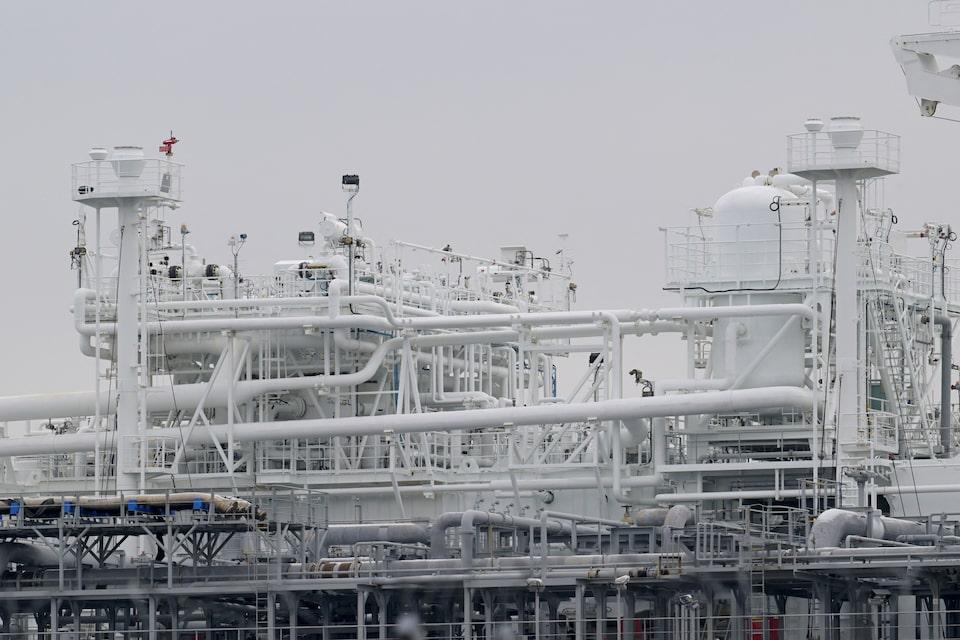
FRANKFURT, Dec 2 (Reuters) - Germany has been putting import terminals for liquefied natural gas into operation as part of its efforts to replace piped Russian gas following Moscow's invasion of Ukraine in 2022. The Brunsbuettel terminal received its floating storage regasification unit, the Hoegh Gannet, back on November 24 after upgrades, and Wilhelmshaven 2 has restarted its FSRU Excelsior ready for the coming winter months, state-appointed terminal company Deutsche Energy Terminal said. Sign up here. DET, which is in charge of three terminal locations, has said it will rerun auctions for LNG landing capacity at Wilhelmshaven 1 and 2 in December, having so far failed to place a variety of slots. It has fed 59 terawatt hours into German grids so far this year. Here are the details of developments at the sites: MUKRAN The terminal on Ruegen island in the Baltic Sea operated by private firm Deutsche ReGas supplies onshore grids with LNG from pipeline firm Gascade's OAL link, in cooperation with Norway's Hoegh Evi's FSRU Neptune. It wants to restart a second FSRU eventually and restore full capacity of 13.5 billion cubic metres by 2027. ReGas has launched a bidding round to expand Mukran's capacity by offering an additional 5 billion cubic metres per year from 2027 to 2043. In September, it signed long-term agreements with chemicals producer BASF (BASFn.DE) , opens new tab and Norwegian incumbent Equinor (EQNR.OL) , opens new tab for non-specified regas capacity. The company said it regasified 8.35 TWh of LNG in October and November, holding first place ahead of each of the other three working LNG terminals. LUBMIN ReGas and Hoegh plan to develop the Baltic Sea port, a forerunner of Mukran, into a green ammonia and hydrogen production and import terminal, which Gascade will link up with customers. WILHELMSHAVEN Utility Uniper launched Germany's first FSRU operation, Wilhelmshaven 1, on the North Sea in 2022. Uniper plans to add a land-based ammonia import reception terminal and cracker in the second half of this decade to make green hydrogen, and build a 200 MW electrolyser to be fed with local wind power. DET officially started commercial operations at Wilhelmshaven 2 on August 29 via the Excelerate Energy-operated FSRU Excelsior. Maintenance also took place in October. In auctions on November 25-26, DET failed to place some available regasification slots in 2025, 2026 and 2027 with gas market players, and will repeat them on December 9 and 10. STADE DET has agreed with the Hanseatic Energy Hub to take on the job of erecting an FSRU superstructure at the Elbe River onshore terminal. DET said it would start on the inspection, planning and execution of the job, but added that the terminal would not be ready to go into operation before the second quarter of 2026. The FSRU Energos Force would return to the site, where Uniper and sector peer EnBW (EBKG.DE) , opens new tab will be the main customers. Prior to the latest developments, DET and HEH had temporarily cancelled contracts with each other over unresolved disputes related to construction schedules and payments. HEH plans to start a shore-based terminal for LNG, bio-LNG and synthetic natural gas at Stade in 2027. BRUNSBUETTEL The Hoegh Gannet was removed temporarily in September for upgrades. These were completed and the ship returned on November 24 to the North Sea port. It went into operation in 2023 in Brunsbuettel, initially chartered by the trading arm of utility RWE (RWEG.DE) , opens new tab, before being handed over to DET. It is the forerunner of a land-based LNG facility, cleared to receive 40 million euros ($46.4 million) of state support. This could start operations at the end of 2026, when a newly inaugurated, adjacent ammonia terminal could also start up. ($1 = 0.8618 euros) https://www.reuters.com/business/energy/how-germany-is-building-up-lng-import-terminals-2025-12-02/
2025-12-02 10:51
OBR's Miles says Reeves November 4 speech "not misleading" Reeves in spotlight over presentation of pre-budget OBR views Miles questions government briefings around tax policy OBR sought to correct misconceptions in letter last week - Miles LONDON, Dec 2 (Reuters) - British finance minister Rachel Reeves was not misleading in comments she made about the tough budget situation she faced which have been attacked by opposition lawmakers, an official from Britain's fiscal watchdog said on Tuesday. In a speech on November 4, Reeves appeared to lay the groundwork to raise income tax rates which would have broken the Labour Party's promise to voters before the 2024 election. Sign up here. She cited a "weaker than previously thought" productivity forecast by the Office for Budget Responsibility - whose projections underpin government budgets - but did not mention higher OBR tax revenue forecasts which offset it. Political opponents have accused Reeves of misleading the public in the run-up to the budget and seeking to find a reason to raise taxes to justify an increase in welfare spending, a charge she denies. 'NOT MISLEADING' TO CALL FISCAL SITUATION VERY CHALLENGING Reeves last week announced 26 billion pounds ($34.3 billion)in tax increases to remain on track to meet her fiscal targets and fund an increase in welfare for families with children. David Miles, a member of the OBR's Budget Responsibility Committee, said the forecasts shared with Reeves before her speech on November 4 showed she had a "wafer thin" buffer for meeting her fiscal targets and the costs of a u-turn on welfare savings had not been included at that stage. "I don't think it was misleading for the chancellor to say that the fiscal position was very challenging at the beginning of that week," Miles told lawmakers on parliament's Treasury Committee. However, Miles questioned briefings given to media later in November in which unnamed government sources said the government could avoid raising income tax rates in the budget thanks to improvements to the OBR's economic forecasts. British government borrowing costs fell sharply in the bond market after those briefings. "It certainly didn't reflect anything that was news from the OBR being fed into the government," Miles said, saying the changes in the watchdog's forecast rounds were small. ROW OVER FORECASTS The OBR last week took the unusual step of publishing a letter setting out how those forecasts had evolved. Miles said the agency felt it had to explain the process and show it was not behind the sharp changes in expectations about the budget. "The letter really was to try and remove misconceptions about the OBR being either the patsy that was doing what the government wanted, or that through its own fickle behaviour changing from one day to the next... that was making it virtually impossible for the government," he said. The Treasury responded frostily to the letter last week, saying it welcomed the OBR's confirmation that such explanations would not become usual practice. The chair of the Treasury Committee, Meg Hillier, said lawmakers would discuss the early release of the OBR's economic and fiscal outlook report - which included all the key details of Reeves' budget - at a future date. The OBR's chair, Richard Hughes, resigned on Monday after an investigation by the agency into the lapse found fault with the leadership of the watchdog. ($1 = 0.7583 pounds) https://www.reuters.com/world/uk/uk-fiscal-watchdog-official-says-reeves-pre-budget-speech-was-not-misleading-2025-12-02/
2025-12-02 10:38
LONDON, Dec 2 (Reuters) - Banks should increase their lending to boost the economy following a reduction in the amount of capital they need to set aside, the Bank of England Governor Andrew Bailey said on Tuesday. Bailey told a press conference that while it was not for the BoE to dictate how banks run their businesses, they stand to gain from boosting credit to companies and households, as stronger growth would improve their own performance and returns. Sign up here. “There is a two-way relationship here,” he said when asked how the BoE could ensure banks lent the money rather than returned excess capital to shareholders. “If the banks support the economy by lending, that will strengthen the economy and the banks will benefit from that … I would expect that they will have that very much in mind when they think about the consequences of this.” https://www.reuters.com/sustainability/boards-policy-regulation/bank-englands-bailey-urges-banks-boost-lending-after-capital-change-2025-12-02/