2026-02-06 07:39
India premiums halve from a more than a decade high Local India prices fall from a record 180,779 rupees per 10g China premiums up slightly at $35 above global benchmark rates China's 2025 gold consumption slips for second year in a row Feb 6 (Reuters) - Gold premiums in India more than halved from decadal highs this week as price volatility deterred buyers, while a pullback from record prices lifted demand in China ahead of the Lunar New Year. Bullion dealers this week charged a premium of up to $70 per ounce over official domestic gold prices, inclusive of 6% import and 3% sales levies, down from last week's $153 premium, the highest since December 2013. Sign up here. "Buyers were confused by the price swings this week and had trouble figuring out the bigger price trend," a Mumbai-based jeweller said. Expectations of an import duty hike in the budget lifted gold premiums last week, but they fell as demand slumped, said a Mumbai-based dealer with a bullion importing bank. India's Finance Minister presented the 2026/27 Union Budget on February 1, leaving the duty structure unchanged. Domestic gold prices were trading around 150,000 rupees per 10 grams on Friday, after hitting a record high of 180,779 rupees last week before sliding to as low as 133,687 rupees this week. In China, bullion traded at a premium of $35 an ounce above the global benchmark spot price this week, up from last week's $32 premium. "So we can see that consumers still have interest in buying jewellery on the downside while physical investment demand is (also) very good," said Peter Fung, head of dealing at Wing Fung Precious Metals. Spot gold prices are down more than 13.5% since hitting a record high of $5,594.82 on January 29. "The correction in gold and silver prices came at the right time, just before the Chinese New Year," said ANZ analyst Soni Kumari. China's gold consumption dropped for a second consecutive year in 2025, but sales of bars and coins, fuelled by growing safe-haven demand, overtook jewellery purchases for the first time, the China Gold Association said. In Hong Kong, gold traded at par to premiums of $1.70, while in Japan, bullion was sold at discounts of $7 to a $1 premium. In Singapore , gold was sold at a discount of $0.50 to premiums of up to $3. https://www.reuters.com/world/china/asia-gold-india-gold-premiums-more-than-halve-china-demand-up-ahead-lunar-new-2026-02-06/

2026-02-06 07:33
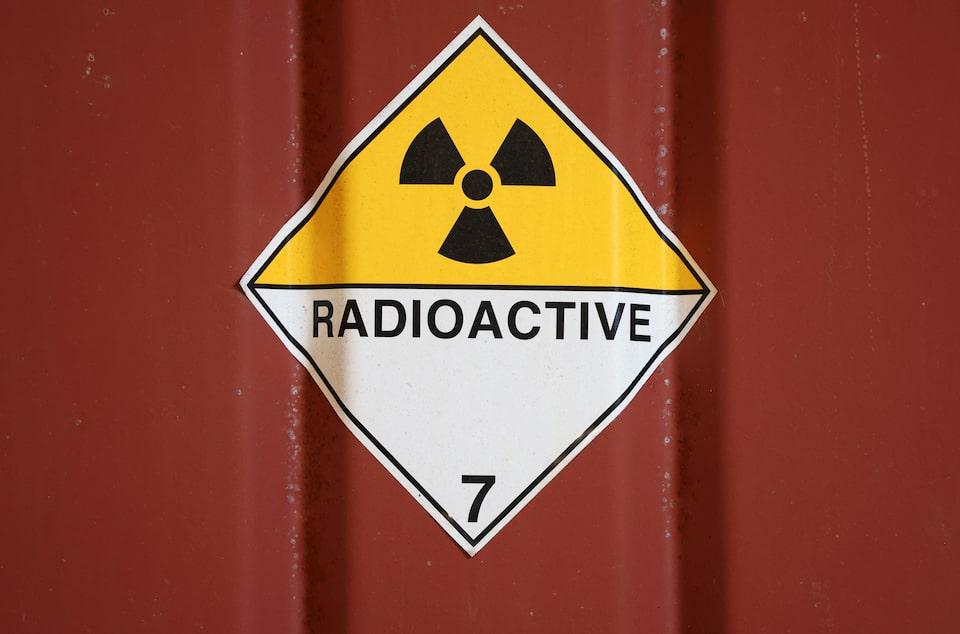
U.S. wants campuses to host nuclear facilities and data centers Asks states to volunteer, permanent waste disposal a must-have No deep geological waste facility yet in operation worldwide LONDON/WASHINGTON, Feb 6 (Reuters) - The Trump administration's plan to unleash a wave of small futuristic nuclear reactors to power the AI era is falling back on an age-old strategy to dispose of the highly toxic waste: bury it at the bottom of a very deep hole. But there's a problem. There is no very deep hole, and the stockpile of some 100,000 tons of radioactive waste being stored temporarily at nuclear plants and other sites across the United States keeps getting bigger. Sign up here. To resolve this quandary, the U.S. administration is now dangling a radioactive carrot. States are being asked to volunteer to host a permanent geological repository for spent fuel as part of a campus of facilities including new nuclear reactors, waste reprocessing, uranium enrichment and data centers, according to a proposal published by the Department of Energy (DOE) last week. Its request for information (RFI) marks a big shift in policy. The plan to boost nuclear energy is now combined with a requirement to find a permanent home for waste and puts decisions in the hands of local communities - decisions worth tens of billions of dollars in investment and thousands of jobs, according to a spokesperson for the DOE's Office of Nuclear Energy. "By combining this all together in a package, it's a matter of big carrots being placed alongside a waste facility which is less desirable," said Lake Barrett, a former official at the U.S. Nuclear Regulatory Commission (NRC) and the DOE. States including Utah and Tennessee have already expressed interest in nuclear energy investments, he said. The nuclear office said the request had generated interest but did not comment on individual states, which have 60 days to respond. Officials in Utah and Tennessee did not respond to requests for comment. President Donald Trump wants to quadruple U.S. nuclear power capacity , opens new tab to 400 gigawatts by 2050 as electricity demand surges for the first time in decades thanks to the boom in data centers driving artificial intelligence and the electrification of transport. In 2025, the DOE picked 11 new advanced nuclear test reactor designs for fast-track licensing and aims to have three pilots built by July 4 this year. However, public acceptance of nuclear energy hinges partly on the promise of burying nuclear waste deep underground, according to studies by the U.S. and British governments as well as the European Commission. "A complete nuclear strategy must include safe, durable pathways for final disposition, and that remains a required element of the RFI," the Office of Nuclear Energy spokesperson said. Previous efforts to find a solution have run into strong local opposition. The DOE started looking for a permanent waste facility in 1983 and settled on Nevada's Yucca Mountain in 1987. But former President Barack Obama halted funding in 2010 due to opposition from Nevada lawmakers worried about safety and the effect on casinos and hotels - with nearly $15 billion already spent. NEW REACTOR DESIGNS To accelerate the deployment of nuclear power, countries including the United States, Britain, Canada, China and Sweden are championing so-called small modular reactors (SMRs). The appeal of SMRs lies in the idea they can be mostly prefabricated in factories, making them faster and cheaper to assemble than the larger reactors already in use. But none of the new SMR designs are expected to solve the waste problem. Experts say designers are not compelled to consider waste at inception, beyond a plan for how it will be managed. "This rush to create new designs without thinking about the full system bodes really poorly for effective regulatory oversight and having a well-run, safe, and reliable waste management program over the long term," said Seth Tuler, associate professor at the Worcester Polytechnic Institute and previously on the U.S. Nuclear Waste Technical Review Board. Most of the new SMRs are expected to produce similar volumes of waste, or even more, per unit of electricity than today's large reactors, according to a study published in the Proceedings of the National Academy of Sciences in 2022. SMRs can also be sited in areas lacking the infrastructure needed for larger plants, raising the prospect of many more nuclear sites which could become interim waste dumps too. And in the United States, "interim" can mean more than century after a reactor closes, according to the U.S. nuclear power regulator. Reuters contacted the nine companies behind the 11 SMR designs backed by the DOE's fast-track programme. Some said nuclear waste was an issue for the operators of the reactors, and the government. Others said they hoped technological advances in the coming decades would improve prospects for reprocessing fuel, although they agreed a permanent repository was still needed. The prospect of a new wave of nuclear reactors, has rekindled interest in reprocessing spent fuel whereby uranium and plutonium are separated out and, in some instances, reused. "Modern technologies, particularly advanced recycling and reprocessing, can dramatically shrink the volume of nuclear material requiring disposal," the spokesperson for the nuclear energy office said. "At the same time, reprocessing does not eliminate the requirement for permanent disposal." Nuclear security experts, however, questioned whether reprocessing would be included in any of the new campuses. "Every time it's been attempted, it's failed, it creates security and proliferation risks, the costs are enormous, and it complicates waste management," said former DOE official Ross Matzkin-Bridger. He said the few countries reprocessing fuel were recycling between zero to 2%, far below the 90% promised. A PERMANENT PROBLEM For now, most waste in the United States, Canada, Europe, and Britain is stored on site indefinitely, first in spent fuel pools to cool and then in concrete and steel casks. France sends spent fuel to La Hague in Normandy for reprocessing. The more than 90 nuclear reactors operating in the United States - the world's biggest nuclear power producer ahead of China and France - add about 2,000 tons of waste a year to existing stockpiles, according to the DOE. Office of Nuclear Energy data shows that as of the end of 2024, U.S. taxpayers have paid utility companies $11.1 billion to compensate them for storing spent fuel, some of which can remain harmful to humans for hundreds of thousands of years. Scotland's Dounreay site, where the last reactor closed in 1994, has repeatedly extended its decommissioning period and budget due to complications handling waste, according to the British government, in an early sign of the issues the industry faces as older plants shut down. Vast vaults are being stocked with low-level radioactive waste in large metal containers as Dounreay, once at the cutting edge of Britain's nuclear industry, is dismantled. Ever since the first commercial nuclear plant went online 70 years ago in England, the consensus has been that burying the most toxic waste deep underground is the safest option but there is still no repository in operation anywhere in the world. Getting a repository up and running is a slow process. Governments need community buy-in and geological studies are required to determine the flow of groundwater and the stability of the rock up to 1,000 metres (1,090 yards) underground. Finland has made the most progress and is close to opening the world's first permanent nuclear repository in Olkiluoto - having also kicked off the process way back in 1983. Posiva, the Finnish company behind the project, began transferring test canisters more than four hundred meters below ground in 2024. It told Reuters its goal is to start commercial operations this year, though it is waiting for the Finnish Radiation and Nuclear Safety Authority to approve the operating licence, which will be followed by technical checks. Once up and running, separate underground tunnels will be filled with canisters made of copper and iron housing the waste, and then sealed forever. Sweden began constructing its permanent repository in January 2025, aiming to have it running by the late 2030s. Canada has agreed a site in Ontario which it aims to be operational by the late 2040s. Switzerland and France have chosen sites too and hope to have their repositories open from about 2050. Britain is shooting for the late 2050s, but has yet to settle on a location. Pending the construction of a permanent repository somewhere in the country, high-level waste from nuclear sites such as Dounreay is sent for storage at Sellafield in England. Some decommissioned nuclear sites, including Dounreay, are also being promoted as locations for data centers, as they're hooked up to the power grid already and won't need to wait for a connection. But the clean-up there has a way to go. Irradiated nuclear fuel was flushed into the sea decades ago and a "minor" radioactive fragment was found on a local beach as recently as January. The last "significant" particle was found in April and fishing is banned within a 2 kilometer (1.25 mile) radius of Dounreay's outlet pipe because of radioactive particles on the seabed. Last year, Britain extended the time frame for the Dounreay clean-up from 2033 to the 2070s. https://www.reuters.com/sustainability/land-use-biodiversity/wanted-volunteers-host-nuclear-waste-forever-2026-02-06/
2026-02-06 07:06
COPENHAGEN, Feb 6 (Reuters) - Denmark's Orsted (ORSTED.CO) , opens new tab reported on Friday a fourth-quarter profit before depreciation, amortisation, excluding new partnerships and cancellation fees slightly below estimates and said it expected core profit for 2026 above 28 billion Danish crowns ($4.42 billion), matching a target shared in January. "We're focusing on offshore wind in Europe and select markets in APAC (Asia-Pacific) where we'll continue to build on our position as the global leader in offshore wind," the company said in a statement. Sign up here. Operating profit before interest, tax, depreciation and amortisation (EBITDA), excluding new partnerships and cancellation fees rose to 8.10 billion Danish crowns from a year-earlier 7.55 billion, just below an average forecast of 8.24 billion in a company provided poll. ($1 = 6.3294 Danish crowns) https://www.reuters.com/sustainability/climate-energy/orsted-q4-core-profit-slightly-lags-forecast-2026-02-06/
2026-02-06 06:54
BUDAPEST, Feb 6 (Reuters) - Hungary's budget deficit could stay around 5% of output for the fourth successive year in 2027, Prime Minister Viktor Orban said on Friday, amid heavy pre-election spending and the lack of a clear strategy on how to curb the shortfall in a weak economy. In power since 2010, Orban faces what could be the toughest challenge to his rule at an April election from a centre-right rival following three years of near-stagnation and the European Union's worst price surge after Russia's invasion of Ukraine. Sign up here. Orban has launched a string of voter-pleasing measures, which will cost 2.1% of economic output this year based on an estimate from Fitch Ratings, which cut Hungary's credit rating outlook to 'negative' last year on Orban's spending moves. "Fiscal planning is sound," Orban told public radio. "The Hungarian economy can expect a budget deficit of some 5% last year, this year and I think next year as well." Orban last week denied the need for spending cuts after the April 12 ballot and said Hungary's deficit, which has exceeded government forecasts in recent years, would have to be lowered "calmly, slowly and gradually" as economic prospects improve. Fitch Ratings has said a sustained rise in Hungary's debt, the EU's largest outside the euro zone, or the lack of a credible deficit reduction strategy could lead to a ratings downgrade. S&P Global, which also has a negative outlook on Hungary's credit rating, on Thursday said potentially slower fiscal consolidation was a key risk for several central European countries -- projecting Hungary's deficit at 4% next year. "Our baseline assumption is that financial markets, EU fiscal rules, and recovering GDP growth will likely support fiscal consolidation in the medium term," it said. "However, the negative rating outlooks for Romania, Hungary, and Slovakia signal that risks to this assumption are particularly high for these countries." https://www.reuters.com/business/hungarys-deficit-be-around-5-gdp-this-year-next-orban-says-2026-02-06/

2026-02-06 06:31
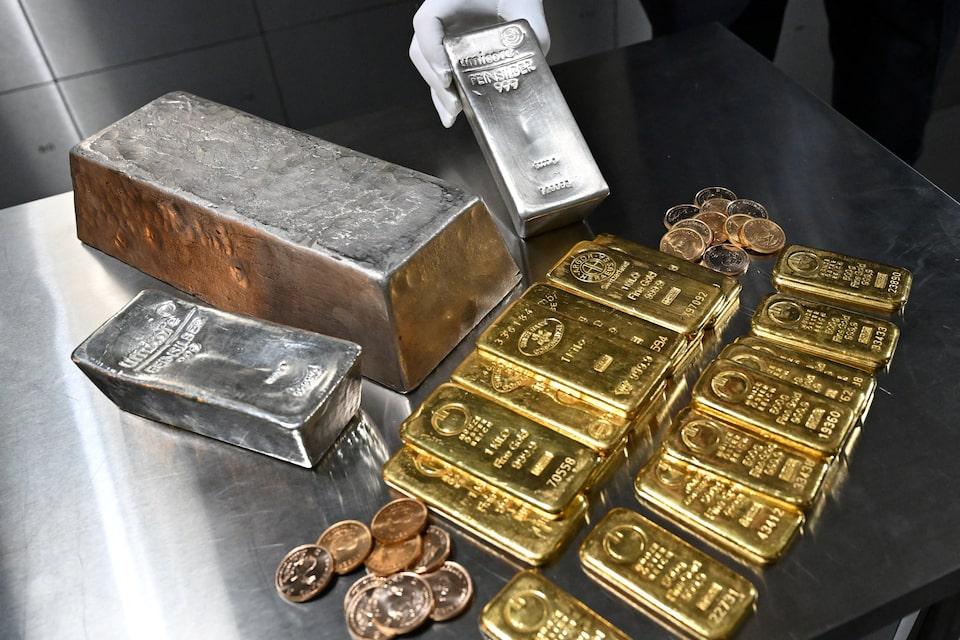
Feb 6 (Reuters) - CME Group (CME.O) , opens new tab has again raised margin requirements for gold and silver futures contracts as the world's largest commodities exchange seeks to mitigate risks associated with heightened volatility in the precious metals market. Margins are deposits that investors in futures markets pay to an exchange or clearing house to cover the risk of a default. Exchanges typically raise margins to mitigate risks when price volatility in the market increases. Sign up here. Both initial and maintenance margins for COMEX 100 Gold Futures have been increased to 9% from 8% for Non-Heightened Risk Profile (Non-HRP) accounts, CME Group said on Thursday. Initial and maintenance margins for COMEX 5000 Silver Futures have been hiked to 18% from 15%. The rates will be effective after the close of business on Friday, February 6. Effective January 13, the U.S. exchange operator has been setting margins for gold, silver, platinum and palladium based on a percentage of contract value. The margins were previously based on dollar amounts. Since the change in margin-setting methodology, CME has so far increased margins three times - on January 30, February 2, and the latest one. Precious metals have seen wild swings over the last few sessions, with gold and silver posting their steepest losses in decades last Friday after hitting record highs earlier that week. Spot gold gained 2.6% to $4,894.99 per ounce by 0601 GMT, after falling to a session low of $4,654.29 earlier on Friday, while silver was 5.5% higher at $75.15, having slumped to a near two-month low of $63.99 earlier. U.S. gold futures for April delivery gained 0.4% to $4,905.8 per ounce, while silver futures slipped 3% to $74.46. https://www.reuters.com/world/india/cme-group-hikes-gold-silver-margins-again-volatility-grips-markets-2026-02-06/
2026-02-06 06:21
FRANKFURT, Feb 6 (Reuters) - Berlin airport will stay closed on Friday because of black ice and it is unclear when take-offs and landings will resume, German news agency DPA cited an airport spokesperson as saying. Airlines had to delay or cancel departing flights after snow and freezing rain hit the airport on Thursday. Sign up here. "Due to weather conditions, no take-offs or landings are currently possible," the airport said on its website , opens new tab. https://www.reuters.com/business/environment/berlin-airport-stay-shut-friday-because-black-ice-dpa-says-2026-02-06/