2025-12-01 18:42
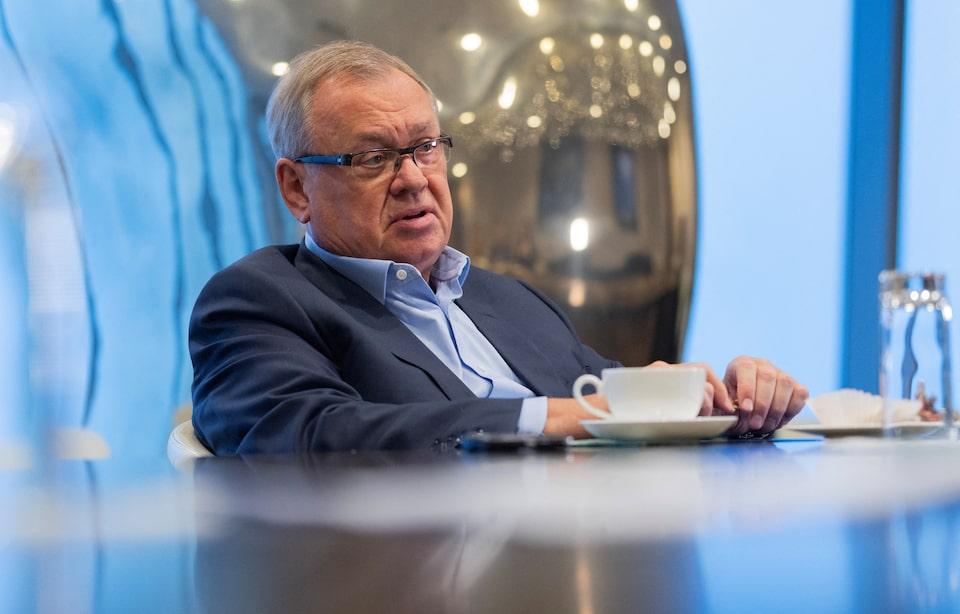
Strategy slashes 2025 earnings forecast due to bitcoin slump Bitcoin falls below $90,000 Strategy sets $1.44 billion reserve for dividends amid market volatility Dec 1 (Reuters) - Strategy (MSTR.O) , opens new tab slashed its earnings forecast for 2025 on Monday, citing a weak run in bitcoin, the world's largest cryptocurrency, and announced plans to create a reserve to support dividend payments. Shares of the largest corporate holder of bitcoin slumped about 8% in afternoon trade. Sign up here. Bitcoin dropped below $90,000 on Monday as a selloff deepened. The cryptocurrency had shed more than $18,000 in November, marking its steepest monthly fall since mid-2021 amid renewed risk aversion. "Bitcoin's ongoing slump has been a disaster for Strategy, as the stock hits fresh one-year lows," said Chris Beauchamp, chief market analyst at IG Group. "Many had hoped that the lows last week in bitcoin would mark a recovery for the stock, but while the cryptocurrency is still above the November low, the selling appears to be intensifying as the afternoon goes on." Shares of firms holding bitcoin and other tokens on their balance sheets have been under pressure following the latest volatility in the crypto market. Strategy said it now expected between a profit of $6.3 billion and a loss of $5.5 billion for the full year, compared to its previous forecast of a net profit of $24 billion. The prior estimate, published on October 30, assumed a bitcoin price of $150,000 as of December 31, the company said. Separately, Strategy said it had set up a $1.44 billion reserve to fund dividends on preferred stock and interest on outstanding debt. "I think that the idea of establishing a USD reserve is prudent and also helps to address some of the questions that had been out there about how the company would ultimately make these [dividend] payments," said Mark Palmer, an analyst at Benchmark. The reserve, which is set to ultimately cover dividend payments for two years, will position the company better to "navigate short-term market volatility", Michael Saylor, founder and executive chairman, said in a statement. Strategy said it held 650,000 bitcoins, equal to about 3.1% of the total 21 million that will ever exist. https://www.reuters.com/business/strategy-sharply-cuts-annual-earnings-forecast-bitcoin-tumbles-2025-12-01/

2025-12-01 18:26
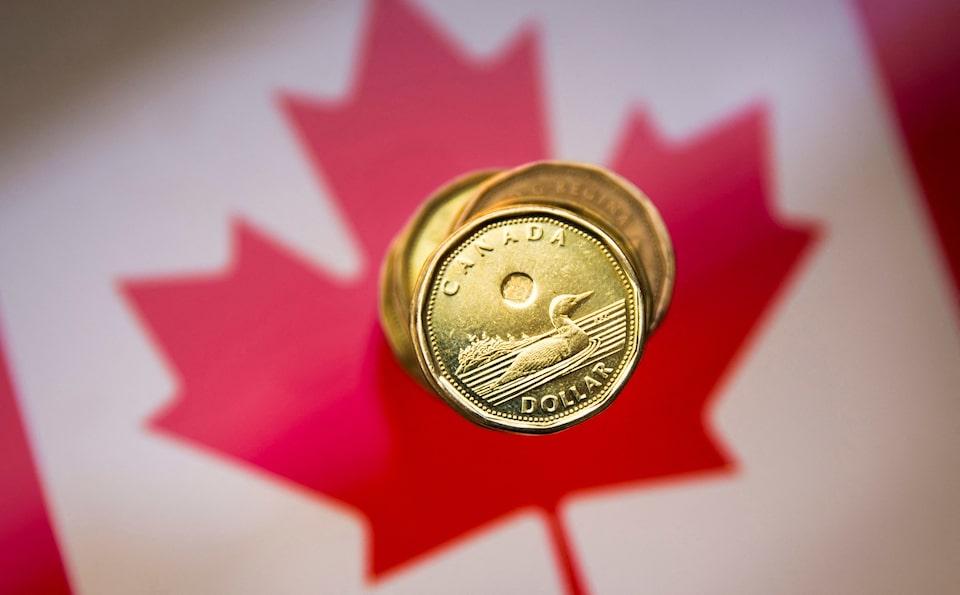
Canadian dollar falls 0.1% against the greenback Trades in a range of 1.3956 to 1.3991 Manufacturing PMI falls to 48.4 in November Bond yields rise across the curve TORONTO, Dec 1 (Reuters) - The Canadian dollar edged lower against its U.S. counterpart on Monday, giving back some recent gains, as domestic data showed the manufacturing sector contracted at a steeper pace in November. The loonie was trading 0.1% lower at 1.3980 per U.S. dollar, or 71.53 U.S. cents, after moving in a range of 1.3956 to 1.3991. Sign up here. On Friday, the currency touched its strongest intraday level in four weeks at 1.3935 as Canadian third-quarter GDP growth surpassed forecasts. "The CAD is retaining a good deal of the advance seen last week around the stronger than expected GDP report," Shaun Osborne and Eric Theoret, strategists at Scotiabank, said in a note. "The data will reinforce the outlook for steady BoC policy for the foreseeable future and bolster the narrowing trend in short-term U.S./Canada yield spreads." Investors see a roughly 90% chance the Bank of Canada will leave its benchmark interest rate on hold at a three-year low of 2.25% next week. Data on Monday was less upbeat. The S&P Global Canada Manufacturing Purchasing Managers' Index fell to 48.4 last month from 49.6 in October as trade uncertainty continued to hold back output and new orders. It marked the 10th straight month the index was below the 50.0 no-change mark. The price of oil , one of Canada's major exports, was trading 1.2% higher at $59.26 a barrel following OPEC's decision to leave output levels unchanged in the first quarter of 2026. Canadian government bond yields moved higher across the curve, tracking moves in U.S. Treasuries. The 10-year was up 8 basis points at 3.232%, after earlier touching its highest level since November 20 at 3.237%. https://www.reuters.com/business/canadian-dollar-edges-lower-factory-downturn-lengthens-2025-12-01/
2025-12-01 18:17
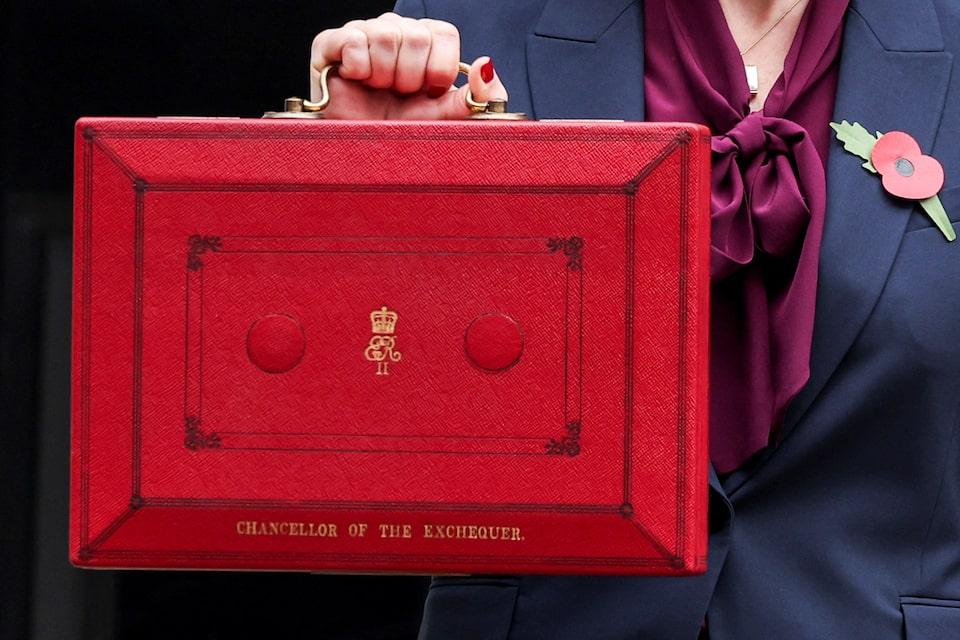
LONDON, Dec 1 (Reuters) - Britain's Treasury Committee said Richard Hughes, who resigned as the head of the fiscal watchdog, would no longer appear to discuss the work of the agency on Tuesday after he quit over the organisation's early release of key parts of the budget. The session will continue as scheduled on Tuesday with the remaining members of the OBR's Budget Responsibility Committee, Tom Josephs and David Miles, the cross-party committee said in a statement. Sign up here. The committee, which examines the expenditure, administration and policy of the finance ministry, the Bank of England, and other finance bodies, thanked Hughes for his service. "I want to thank Richard Hughes for approaching his work with dedication throughout his time as Chair of the Office for Budget Responsibility – often in trying circumstances," said Meg Hillier, chair of the committee. "I commend his decision to take full responsibility for the incident." https://www.reuters.com/world/uk/uk-treasury-committee-drops-obrs-hughes-tuesdays-hearing-2025-12-01/

2025-12-01 17:45
Tesla registrations fall more than 50% in France, Sweden Also down more than 40% in Denmark, Netherlands, Portugal Registrations jumped by 175% in Norway, 58% in Italy Brand is rolling out cheaper version of its Model Y Competition from China is growing Dec 1 (Reuters) - Tesla (TSLA.O) , opens new tab registrations in several key European markets plunged in November from a year earlier as the U.S. EV maker continued to struggle to stem market share losses despite rolling out new versions of its best-selling Model Y. Elon Musk's brand however sold more cars in Norway and Italy than in November last year, partly offsetting losses elsewhere. Sign up here. Monthly registrations, a proxy for sales, slumped by 58% in France to 1,593 vehicles sold, by 59% to 1,466 cars in Sweden, by 49% to 534 cars in Denmark, by 44% in the Netherlands to 1,627, by 47% in Portugal to 425, and by 9% in Spain to 1,523, official data showed. However in Norway, they almost trebled to 6,215 cars, beating the country's annual sales record with one month to spare. Registrations in Italy jumped by 58% to 1,281, but remain down 28% year-to-date. Tesla's overall market share in Europe dipped to 1.6% in January-October from 2.4% a year earlier, highlighting a downward trend for the brand whose signature Model Y SUV was Europe's and the world's best-selling model as recently as 2023. SLOWDOWN FOLLOWS MUSK BRUSH WITH POLITICS The company's slowdown in Europe began late last year after its CEO Musk publicly praised right-wing political figures, setting off protests , opens new tab across the region. In November, a large fire at a Tesla dealership in Southern France prompted investigators to launch a criminal probe, local media reported. Musk has toned down political commentary since stepping down from the U.S. Department of Government Efficiency, but Tesla’s European business has not recovered. TESLA NOVELTY FADES AMID GROWING COMPETITION Analysts pointed to growing competition in a crowded European market, especially from new entrants from China, and Tesla's aging lineup. Consumer sentiment has weakened. Data analytics and advisory firm Escalent said in a study seen by Reuters that 38% of respondents to a survey in Europe's five largest car markets feel the brand's novelty has worn off, and it trails competitors on design, quality and emotional appeal. Many European buyers are also increasingly choosing hybrid cars over fully electric models, French car body PFA said. November sales at Chinese EV maker BYD (002594.SZ) , opens new tab, which unlike Tesla also sells hybrids and plug-in hybrids, spiked to 3,526 vehicles in Italy, jumped 268% to 2,934 in Spain and 65% to 570 in the Netherlands, their best month on record in the country. A NEW, CHEAPER MODEL Y Musk spent much of this year focused on Tesla's robotics pursuits and winning shareholder approval for his $1 trillion pay package, but his brand also tried to win back buyers by launching a refreshed Model Y earlier this year. Only a handful of cheaper Model Ys, priced at 40,000 euros ($46,468) in Germany, had reached European markets at the end of November, however. Sales of the Model Y dropped by 67% in Sweden, 62% in the Netherlands, 55% in Portugal, 44% in Italy and 74% in Denmark. They jumped 19% to 3,648 cars in Norway. ($1 = 0.8608 euros) https://www.reuters.com/business/retail-consumer/tesla-november-car-registrations-drop-58-france-49-denmark-data-shows-2025-12-01/

2025-12-01 16:40
LONDON, Dec 1 (Reuters) - The head of Britain's fiscal watchdog, Richard Hughes, submitted his resignation on Monday after his agency inadvertently released the details of Rachel Reeves' budget early, according to a letter published on its website. Sign up here. https://www.reuters.com/world/uk/head-uks-obr-quits-over-early-release-budget-report-2025-12-01/
2025-12-01 16:05
MOSCOW, Dec 1 (Reuters) - Top Russian banker Andrei Kostin said that Moscow would retaliate if the European Union used frozen Russian sovereign assets for a loan to Ukraine, and said Moscow could unleash half a century of litigation over the money. At a summit in October, EU leaders tried to agree on a plan to use 140 billion euros ($162 billion) in frozen Russian sovereign assets in Europe as a loan for Kyiv, but failed to secure Belgium's backing. Sign up here. Under the EU plan the frozen Russian central bank assets in Europe would be lent to Ukraine for Kyiv to use for defence and regular budget needs. "As for the seizure of our money, in the end, we can manage without it. The only problem is that this money might be used for war, not peace," Kostin said, speaking ahead of U.S. special envoy Steve Witkoff's visit to Moscow. "It's convenient to wage war not only with others' hands but also with others' money - this is the ultimate finesse for Europe. But there can be no justification for this." Kostin said that Russia would retaliate to the seizure by seizing assets owned by European investors in Russia and added that "50 years of litigation" could follow even after the peace in Ukraine is achieved. He said that Russia should be more active in suing the EU, Belgium and Euroclear over the assets in Russian and international courts, and suggested a law suit in the United Nations' court. Kostin, one of Russia's most powerful bankers, was more open to the idea to split up Russia's sovereign assets as part of a broader agreement to achieve peace in Ukraine. An early version of the U.S.-backed peace plan, published in the media, suggested that $100 billion of the frozen funds will be invested in reconstruction of Ukraine with some of the rest of the funds invested in joint US-Russia fund. "If Russia agrees and is ready, by all means. It's a matter of agreements," Kostin said. He said that Witkoff's visit to Moscow was important and Russia was ready to make concessions in the negotiations but reaching an agreement will take time. "Sooner or later, we will reach an agreement. Life shows that compromises need to be sought. Russia is also ready for them, as there is no such thing as one-way movement in negotiations," Kostin said. https://www.reuters.com/business/finance/top-russian-banker-says-eu-faces-50-years-litigation-if-it-takes-russias-frozen-2025-12-01/