2025-12-01 15:58
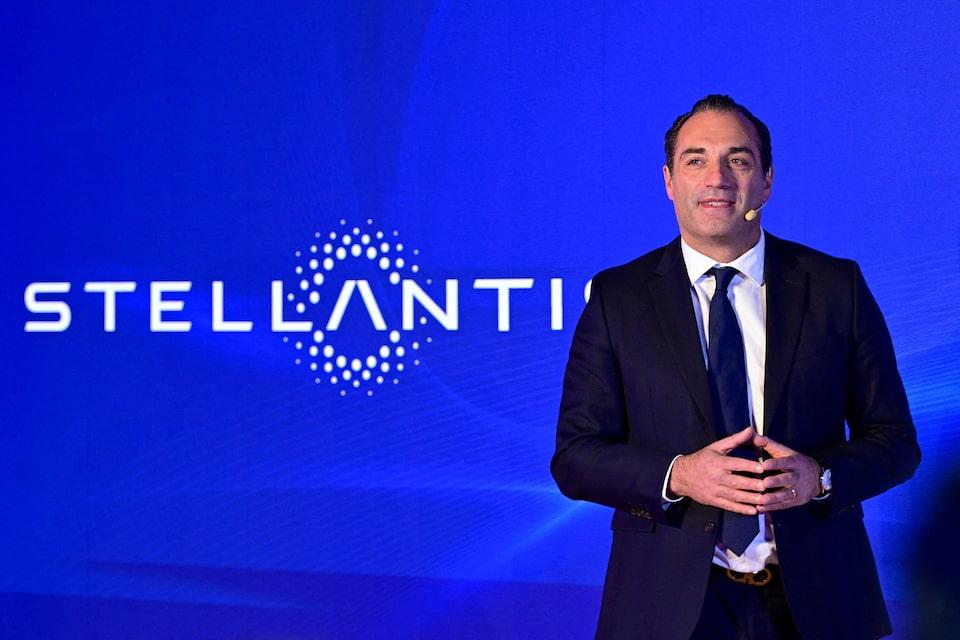
MEXICO CITY, Dec 1 (Reuters) - Remittances to Mexico declined 1.7% from a year earlier in October, the nation's central bank said on Monday, totaling $5.64 billion. October marked the seventh straight month of year-on-year declines in the remittances the country receives, contrasting with sharp increases reported for Central American countries in 2025. Sign up here. The total number of remittances in the month declined 5.4%, while the average value of each payment sent edged up 4.0% compared to the same month last year, the central bank added in a report. The amount for October resulted from the accumulation of some 14 million transactions averaging $403 each. Accumulated remittances to Mexico through October 2025 totaled $51.34 billion, 5.1% lower than the amount received during the same period last year. (This story has been corrected to change the month from September to October, in paragraph 4) https://www.reuters.com/world/americas/remittances-mexico-register-seventh-consecutive-dip-down-17-october-2025-12-01/
2025-12-01 13:52
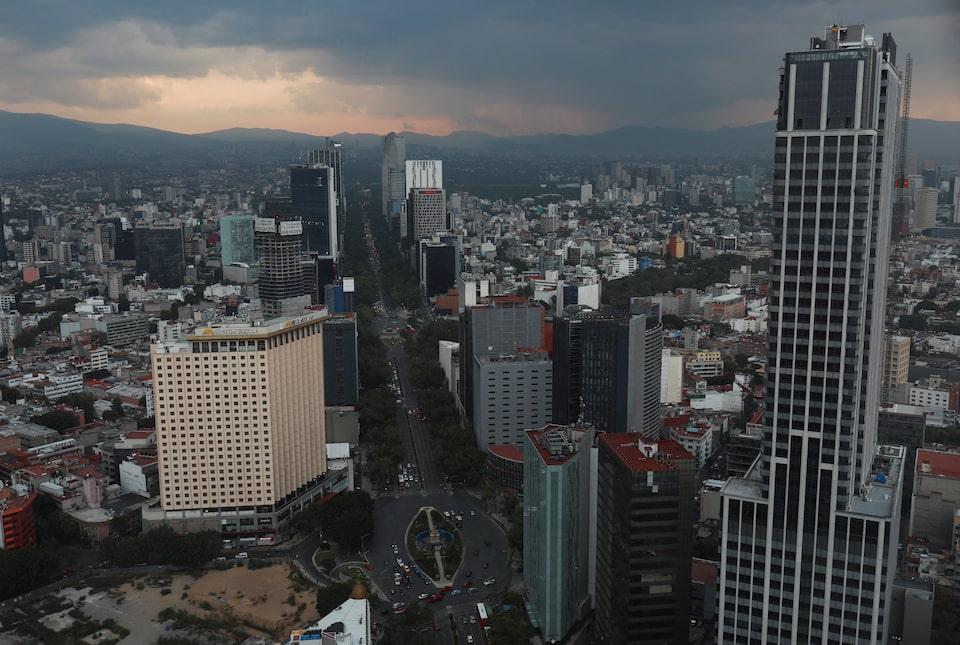
Dec 1 (Reuters) - BofA Global Research on Monday said it now expects the U.S. Federal Reserve to cut interest rates by 25 basis points at its December meeting, citing weak labor market conditions and recent comments from policymakers hinting at an early cut. The Wall Street brokerage had previously expected borrowing costs to remain unchanged at the Fed's December meeting. It now sees two additional quarter-point cuts in 2026, in June and July, bringing the terminal rate to 3.00%-3.25%. "Our forecast of additional cuts next year is due to the change in leadership, not our read on the economy," analysts at BofA said in a note. White House economic adviser Kevin Hassett has emerged as the frontrunner to be the next U.S. Federal Reserve chair, according to reports last week. BofA's shift follows dovish signals from key officials, including New York Fed President and FOMC Vice Chair John Williams, which have fueled bets on an earlier cut. "By cutting rates next week, we think the Fed would increase the risk of pushing policy into accommodative territory, just as fiscal stimulus kicks in," BofA added. Traders are pricing in an 87.6% chance of a 25-basis-point interest rate cut in December, according to CME Group's FedWatch Tool. Most major global brokerages expect the Fed to cut rates by 25 basis points next week, with Morgan Stanley and Standard Chartered among the few expecting a hold. The Fed's upcoming policy meeting is scheduled for December 9 and 10. Sign up here. https://www.reuters.com/business/bofa-expects-december-fed-cut-two-more-2026-2025-12-01/
2025-12-01 12:49
UK ends $1.15 billion support due to increased risks Dutch minister says Total cancelled request for $1.1 billion insurance UK, Dutch had commissioned human rights probes into project LONDON, Dec 1 (Reuters) - Britain and the Netherlands are withdrawing a combined $2.2 billion in support for the TotalEnergies-led Mozambique LNG project, they said separately on Monday, after both hired firms to probe human rights concerns surrounding the development. Britain's government said it was rescinding its $1.15 billion backing for project after promising in 2020 a $300 million loan and insurance worth about $700 million for the $20 billion project via UK Export Finance. Sign up here. The Dutch government also said on Monday Total had withdrawn a $1.1 billion export insurance request for the project. Atradius Dutch State Business authorised $1.3 billion in export insurance via two policies, the larger of which has been rescinded at the company's request, the Dutch finance ministry said on Monday. TotalEnergies declined to comment. Mozambique's government did not respond to a request for comment. CONSTRUCTION HALTED IN 2021, BUT DUE TO RESTART Mozambique LNG's construction was halted in 2021 due to an Islamist insurgency. Total lifted force majeure on its development in November, but made restarting conditional on the Mozambican government's approval of a new budget, which the president said he may dispute. "In preparation to restart the project, UKEF was presented with a proposal to amend the financing terms it had agreed originally," British business minister Peter Kyle said in a statement. "My officials have evaluated the risks around the project, and it is the view of His Majesty’s Government that these risks have increased since 2020." The interests of UK taxpayers "are best served by ending our participation in the project at this time," he added. Jihadist attacks have been back on the rise in Mozambique, with Total bringing in workers and equipment this year by air and sea for security reasons. PROJECT CAN PROCEED WITHOUT UK, DUTCH FINANCING, TOTAL HAS SAID In April TotalEnergies CEO Patrick Pouyanne told investors that project partners could move forward without UK and Dutch financing, using equity. More than 70% of the project's financing is secured, and about 90% of the future gas production is commercialized via contracts with buyers. Kyle said UKEF would pay back the project for any premium paid. A UKEF spokesperson declined to name the amount. The Dutch finance minister on Monday said TotalEnergies had asked to cancel part of its insurance via a letter dated November 24, just as an independent human rights review ordered by the ministry was being finalised. "This means that the Netherlands will no longer be involved in financing the project," the statement reads. A $213 million policy insuring Dutch contractor Van Oord remains in place, a ministry spokesperson said. TotalEnergies holds a 26.5% operating stake in Mozambique LNG. Japan's Mitsui (8031.T) , opens new tab owns 20% in the project and Mozambique state firm ENH 15%, alongside smaller stakeholders including India's ONGS and Oil India. In March, the U.S. Export-Import Bank approved a nearly $5 billion loan for the project. CRITICISM FROM ENVIRONMENTAL, HUMAN RIGHTS GROUPS Human rights nonprofit ECCHR last month filed a criminal complaint against TotalEnergies, alleging it was complicit in torture and enforced disappearances allegedly carried out by government soldiers in Mozambique. In April, UKEF hired law firm Beyond Human Rights Compliance LLP to investigate risks around Mozambique LNG following initial media reports of the alleged torture, three people interviewed by the firm told Reuters. TotalEnergies has said those claims lack evidence. The Dutch government said on Monday the two firms it hired to investigate — Clingendael and Pangea Risk — found the torture allegations credible, though they could not ascertain Total's knowledge or role, if any. A London court in 2023 dismissed a court challenge by environmental group Friends of the Earth against the British government's funding for the project. https://www.reuters.com/business/energy/britain-withdraws-115-billion-backing-totalenergies-led-mozambique-lng-2025-12-01/

2025-12-01 12:49
Dec 1 (Reuters) - Barrick Mining (ABX.TO) , opens new tab said on Monday it was exploring an initial public offering of a subsidiary that would hold its North American gold assets amid a record rally in bullion prices. U.S.-listed shares of the Canadian miner rose nearly 4% in premarket trading. Sign up here. A split would reverse Barrick's 2019 merger with Randgold Resources, and comes as investors pressure the miner to use a historic rally in gold prices to boost returns, while shedding riskier assets in Africa, Papa New Guinea and Pakistan's Reko Diq. Gold prices have hit record highs this year on expectations of lower interest rates and its rising appeal as a safe-haven asset. Reuters had reported in November Barrick was considering splitting into Africa- and North America-focused entities, citing sources. The new entity, which is headed for the IPO, would comprise of Barrick's joint venture interests in Nevada Gold Mines, and Pueblo Viejo in Dominican Republic, as well as the Fourmile gold discovery. Barrick jointly owns Nevada Gold Mines, the world's largest gold-producing complex, with rival Newmont (NEM.N) , opens new tab and is also looking to develop the Fourmile gold mine in the U.S. state. Fourmile mine test production is not due to start until 2029. The Canadian miner plans to offer a small minority interest, while retaining a significant controlling majority interest, it said. The miner said it would provide an update on the IPO evaluation process in February. "We are singularly focused on driving improved performance and shareholder value with the right teams now in place to deliver on our commitments," said interim CEO Mark Hill. Barrick has had a volatile year, marked by a long-drawn dispute over its gold mine in Mali, which led to a $1 billion write-off of the asset, and the sudden exit of Mark Bristow as its CEO. Besides Nevada and Mali, Barrick's working facilities include copper mines in the Democratic Republic of Congo, gold in Tanzania, the Dominican Republic, and Papua New Guinea. https://www.reuters.com/business/barrick-mining-evaluating-ipo-north-american-assets-2025-12-01/

2025-12-01 12:47
Two wild boar found dead tested positive for African swine fever Spain to resume pork exports to China from unaffected regions Military personnel join police in containment effort Outbreak threatens Spain's multi-billion-euro pork industry BELLATERRA, Spain, Dec 1 (Reuters) - Spain, which is mobilising to contain an outbreak of African swine fever in Barcelona, received confirmation from major pork importer China on Monday that it can resume pork exports to the country from all other regions, its agriculture minister said. Spain halted all pork shipments to China on Friday as a precaution until Beijing confirmed it had implemented a protocol signed earlier this year which meant it would only ban imports from regions affected by the virus. Sign up here. China accounts for 42% of Spain's pork exports outside the European Union. Spain is the EU's leading pork producer, accounting for roughly a quarter of the bloc's output, ahead of Germany, with annual pork exports of about 3.5 billion euros ($4.05 billion). Authorities confirmed on Friday that two wild boar found dead had tested positive for African swine fever, last recorded in Spain in 1994. A 6-km exclusion zone was set up around the affected area in Bellaterra, on the far side of the Collserola mountain range from the coastal city. Four hundred Catalan police and rural wardens were deployed to the area in northeastern Spain at the weekend, followed by 117 members of Spain's military emergency unit on Monday, who will use drones to locate and remove potential infected animals. "Our objective is to limit the zone and avoid contagion to other regions," Agriculture Minister Luis Planas told reporters late on Monday after a meeting with sector representatives. RISK TO SPAIN'S PORK INDUSTRY African swine fever, while harmless to humans, spreads rapidly among pigs and wild boar, posing a significant economic risk to Spain, one of the world's largest pork exporters. Officials suspect the virus may have spread after a wild boar ate contaminated food, possibly a sandwich brought from outside Spain. "The most likely option ... is that cold cuts, a sandwich, contaminated food, could end up in a bin ... and then that a wild boar would have eaten it and become infected," Catalonia's agriculture minister Oscar Ordeig told local radio on Monday. The infected area is close to the AP-7 highway, a major transport route linking Spain and France. Eight more suspected cases were being investigated and more cases expected, regional authorities said. As officials await final test results, Ordeig later told a briefing it was likely that human activity brought the virus to Spain from other parts of Europe, since no infected boars had been found elsewhere in Catalonia or neighbouring France. A European Commission spokesperson said it would not comment on the source of the outbreak until results of sequencing tests were known. A team of EU veterinarians will visit the area this week to survey, provide advice and prepare a report with recommendations, the spokesperson said. Spain's agriculture minister Luis Planas said Saturday that about one-third of the country's pork export certificates have been blocked as a result of the outbreak, though no farms have tested positive so far. Pork farms within a 20-km radius of the initial infection site are facing operating and sales restrictions. https://www.reuters.com/business/healthcare-pharmaceuticals/spain-mobilises-military-against-swine-fever-says-contaminated-sandwich-could-be-2025-12-01/

2025-12-01 12:34
MILAN, Dec 1 (Reuters) - Stellantis (STLAM.MI) , opens new tab Chief Executive Antonio Filosa on Monday welcomed Berlin's call to soften European Union car emissions rules, saying Germany's proposals aligned with industry demands to revive growth in the struggling sector. The European Commission is due to unveil proposals for a package to support the auto sector on December 10, including for a review of carbon-emission targets amid mounting pressure from governments and manufacturers to be more flexible and allow plug-in hybrids and new fuel-powered cars beyond 2035. Sign up here. "We welcome the German government's support for revisions to the European regulations," Filosa said in a statement, adding it built on auto lobby ACEA's package of proposals, "all of which are urgently needed to return the European auto industry to growth". German Chancellor Friedrich Merz last week urged Brussels to allow exemptions for plug-in hybrids and highly efficient combustion engines, arguing that automakers need more flexibility as they battle slow electric-vehicle uptake and fierce competition from China. Since it ousted its former CEO Carlos Tavares a year ago, Stellantis - which was formed from the merger of Fiat Chrysler and PSA in 2021 - has become a vocal advocate for changes to the EU's auto regulation. The automaker's Chairman John Elkann last week warned that the European car industry risked "irreversible decline" without softer rules, while Filosa said the sector needed "urgent and definitive action" to restore growth. While such fears are widely shared by unions, industry proposals also include new goals for light commercial vehicle emissions, changes to regulation aimed at supporting production of small cars and measures to accelerate fleet renewal – all aimed at reconciling decarbonisation with jobs and affordability. https://www.reuters.com/sustainability/climate-energy/stellantis-ceo-backs-german-push-ease-eu-car-emissions-rules-ahead-key-review-2025-12-01/