2025-12-01 11:26
LONDON, Dec 1 (Reuters) - The pound edged lower on Monday, as investors took some profits on November's modest gains ahead of a widely expected interest rate cut later this month. Sterling gained more than 1% last week, marking its largest weekly gain since early August, lifted by a relief rally after finance minister Rachel Reeves' long-awaited budget soothed some concern about Britain's long-term finances. Sign up here. The pound was last down 0.13% against the dollar at $1.3226, while dropping against the euro, which rose 0.3% to 87.89 pence . Seasonally, December tends to be a stronger month for sterling. On average, over the last 25 years, December tends to be the second-strongest month of the year for the pound, with a gain of 0.28%, behind top month April, when the pound has, on average gained 1%, according to LSEG data. Money markets show traders are placing a 90% chance of a cut from the Bank of England later in December that would take the base rate to 3.75%, where they expect it to remain for the coming few months. This erodes some of the pound's appeal for overseas investors, but by the end of the year, the UK would still boast some of the highest interest rates within the Group of 10 wealthiest nations, which offers sterling some support. "The removal of some policy and political uncertainty removes some of the headwinds to the UK pound. It has strengthened a little since Reeves’s speech. But we think it is likely to weaken a little over the coming months — especially against the euro — as policy rates and bond yields come lower," Graham Hook, head of EMEA government relations and public policy, and Benjamin Jones, global head of research at Invesco, said in a note late last week. Anecdotally, Simon Phillips, managing director of travel currency specialist No1 Currency, said the pound's performance in November had offered a boon to British consumers looking to go abroad, as what he called the "Rachel rally" lifted sterling last month against most of the currencies of popular tourist destinations, such as the Turkish lira and Icelandic crown. https://www.reuters.com/world/uk/sterling-dips-investors-take-profit-rachel-rally-2025-12-01/

2025-12-01 11:13
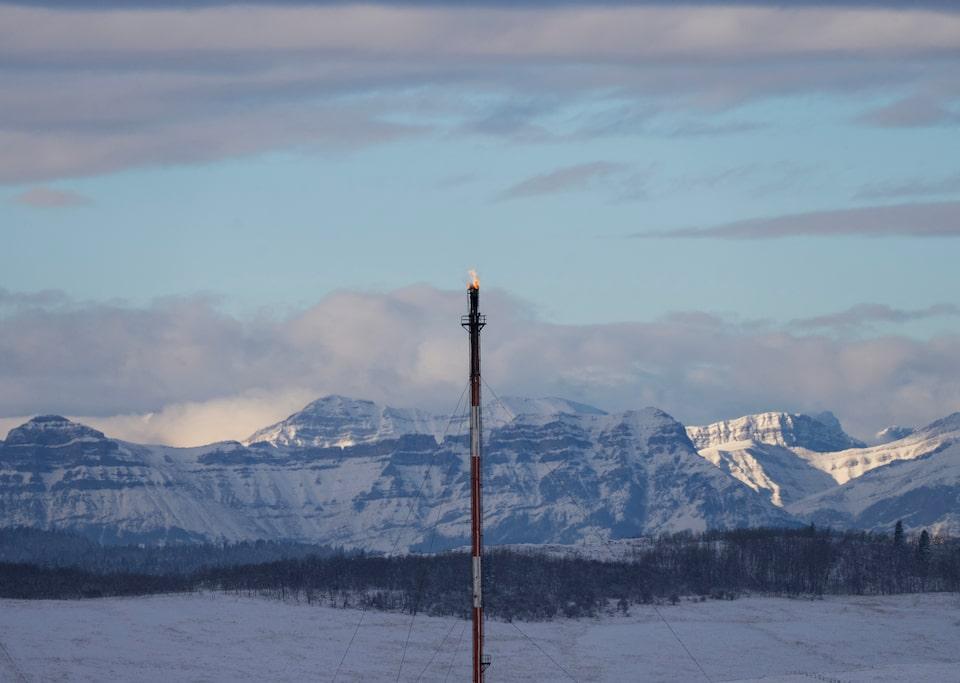
Alberta Energy Regulator did not enforce flaring limit exceedance Flaring limit removal highlights Canada's economic vs. environmental challenge Canada aims to end routine flaring by 2030, despite rising flaring in Alberta CALGARY, Dec 1 (Reuters) - The regulator in charge of environmental enforcement in Canada's main oil-producing province bent to pressure from the provincial government and oil companies to eliminate a limit on natural gas flaring as Canadian oil production increased, according to documents seen by Reuters. Alberta's dismantling of its 20-year-old flaring limit after companies blew through the limit two years in a row, with no objections from the federal government, is an example of the challenges Canada faces in reconciling its environmental commitments with a renewed focus on economic growth. Sign up here. The documents, obtained through access to information laws, show the Alberta Energy Regulator sent letters to 20 companies in the spring of 2024 threatening to enforce flaring limits — which could have resulted in curtailed oil production — if the operators did not prepare and implement plans for lowering their flaring volumes. But the plans that operators, including U.S.-based Murphy Oil (MUR.N) , opens new tab and Canada's Tamarack Valley Energy (TVE.TO) , opens new tab, submitted were unenforced. By June 2025, as first reported by Reuters, the regulator quietly did away with flaring limits in response to directives from Alberta government officials. 'HUMBLE AND COLLABORATIVE' APPROACH In the lead-up to that decision, the government urged the regulator to take a "softer" tone in its communication with offending companies, taking a "humble and collaborative" approach, previously unreported email records show. “It is desirable to work with our industry partners to address this issue," an Alberta Environment Department official wrote to the regulator. The regulator, described by the Alberta government as an arm's-length independent body, was urged to implement the change with "no proactive communications or announcements." The AER said in an email it did not follow through with enforcement because the flaring policy was under review and it had disclosed the end of the flaring limit in a regulatory filing on its website. Regulator and government staff gathered industry feedback together on the flaring policy's effectiveness, said Alberta Environment spokesperson Tom McMillan. "The comments in question were from staff-to-staff discussions about the tone of communication and engagement approach — not any compliance or enforcement action," McMillan said. FLARING LIMIT SEEN AS PRODUCTION CAP Flaring is the practice of burning off excess natural gas associated with oil production. Canada, the world's fourth-largest oil producer, achieved record-high oil production last year. Prime Minister Mark Carney, a former UN special envoy on climate action who is seeking to diversify the economy away from the U.S. and the uncertainties of U.S. President Donald Trump's tariffs, has said he wants Canada to become an "energy superpower." But Canada's energy sector has said many of the country's environmental rules get in the way of expanding oil output. The documents show the regulator faced pushback from companies about the flaring limit, which one industry group said could serve as a de facto production cap. Carney signed an agreement with Alberta on Thursday to drop its planned emissions cap on the oil and gas sector. CLIMATE IMPLICATIONS Companies sometimes flare gas when there are no pipelines nearby to transport the gas. From a climate change perspective, flaring can be preferable to venting, or releasing the excess gas directly into the atmosphere without burning it first. Venting produces large amounts of methane, an extremely potent greenhouse gas. Alberta has cut its methane emissions from the oil and gas sector in half over the past decade. A spokesperson for Canada's Environment Department said flaring can be a short-term solution for reducing methane emissions if companies that vent natural gas switch to flaring. However, she said Canada recognizes that flaring contributes to climate change by emitting carbon dioxide and other pollutants. INTERNATIONAL COMMITMENTS Canada is a signatory to a World Bank initiative that commits countries to ending routine flaring by 2030. Along with 10 other countries, Canada endorsed a statement at the recent COP30 summit recognizing the importance of ending routine venting and flaring by 2030. Other major oil producers such as the United States, Russia and Iran flare more gas than Canada. The European Union has stronger regulations than Canada, including an outright ban on routine flaring, which is done for reasons other than emergencies or safety. But regulatory data shows flaring has been rising in Alberta. Oil and gas producers in the province flared approximately 912.7 million cubic metres of natural gas in 2024, exceeding the annual provincial limit by 36%. AER data for the first nine months of 2025, first tallied by Reuters, show Alberta's oil producers are on track this year to again exceed the now-cancelled flaring limit. "There's a clear gap here between commitments and policy," said Amanda Bryant, senior analyst with the Pembina Institute, a clean energy think-tank. "Especially when there are plenty of viable alternatives to flaring." https://www.reuters.com/world/alberta-oil-regulator-stopped-enforcing-gas-flaring-limits-after-government-2025-12-01/
2025-12-01 11:09
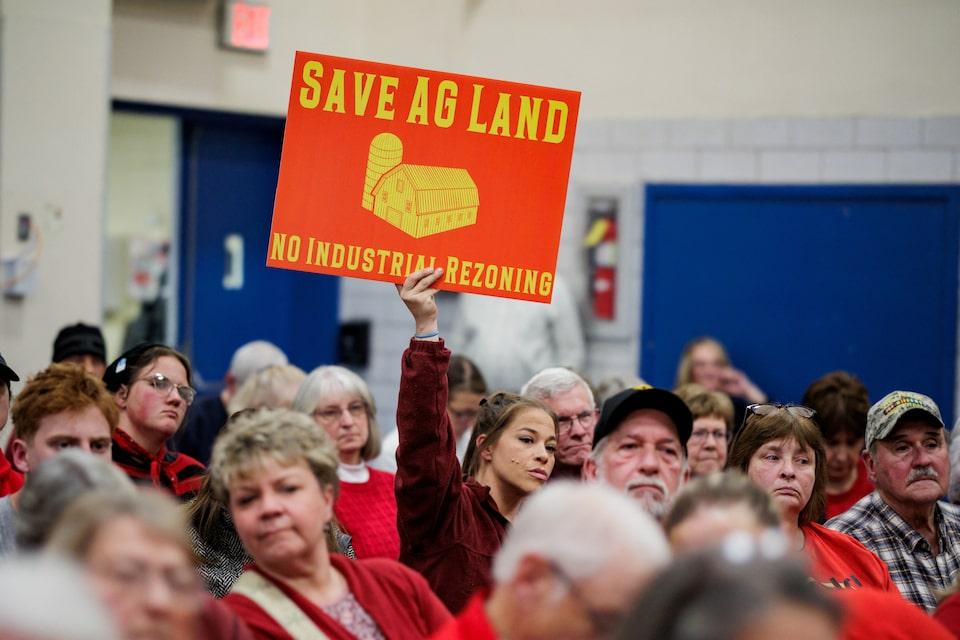
Residents fear data centers will raise utility bills and strain resources Local opposition unites farmers, environmentalists and homeowners across party lines Pennsylvania utilities project sharp rise in electricity demand from data centers by decade's end DANVILLE, Pennsylvania, Dec 1 (Reuters) - The residents came in camouflage hats and red shirts signaling unity, more than 300 of them packing into a rural Pennsylvania planning commission meeting to protest a proposed data center they feared would carve up their farmland and upend the quiet rhythms of their valley. Most were loyal supporters of President Donald Trump, who carried their home of Montour County by 20 percentage points in the 2024 election. But they bristled at Washington’s push to fast-track artificial intelligence infrastructure, which has driven data-center growth in rural areas around the U.S. where land is cheap. Sign up here. On a recent November evening, residents in this county of 18,000 people stepped to the microphone, questioning Talen Energy (TLN.O) , opens new tab officials about how their planned data center might raise residents' utility bills, reduce working farmland, and strain local water and natural resources. "Say no to rezoning, so water keeps flowing and crops keep growing," two women sang in a riff on Woody Guthrie's folk song "This Land Is Your Land." Political leaders across the U.S. are urging a rapid expansion of data-center capacity and new power production to keep the country competitive in AI. Trump, a Republican, is promoting the build-out as an economic and national security priority and has directed his administration to bypass environmental rules and permitting that give local communities a voice. In Pennsylvania, Democratic Governor Josh Shapiro and Republican Senator Dave McCormick are courting developers with incentives and infrastructure upgrades to attract investment in the fast-growing industry. Some communities welcome the economic boost. But the backlash in Montour County, nestled in central Pennsylvania, reflects a growing coalition of farmers, environmentalists and homeowners who have united across partisan lines to resist data-center expansion. A report by Data Center Watch earlier this year found that about $64 billion worth of data center projects have been blocked or delayed amid local pushback in states including Texas, Oregon and Tennessee. Critics in Pennsylvania worry that their region could turn into northern Virginia’s “data center alley,” with its vast, sprawling complexes. If successful, the pushback threatens to slow efforts by the administration and the tech industry to build AI infrastructure fast enough to keep pace with global rivals. Political strategists say anger over the projects also could add to the problems Republicans face as they grapple with affordability worries going into the 2026 midterm elections. “It’s an issue that can be exploited by whoever’s out of power,” said Chris Borick, a political science professor at Muhlenberg College in Allentown, Pennsylvania. The politics of AI infrastructure, he added, remain unsettled: “The industry’s still evolving, and politicians are figuring out where to stand. It’s like social media — everyone rushed in before understanding the consequences.” PRESERVING CULTURE Talen Energy is requesting to rezone roughly 1,300 acres in Montour County from agricultural to industrial use, the first step toward building a large data center that would include 12 to 15 buildings. The site would sit in the shadow of the company's 1,528-megawatt natural-gas-fired power plant, tucked among farmland and dirt roads used heavily by the region’s Amish community. Talen Energy has said the project would take 350 acres of farmland supporting soybeans, corn and livestock. Residents worry that losing this land would weaken the local farm economy, including a nearby plant that processes soybeans for regional food and feed. Montour County Commissioner Rebecca Dressler, a Republican, said the concerns are rooted less in ideology than in preserving the region’s character. “Small-town character defines our community,” Dressler said. “People aren’t anti-development - they just want growth that fits who we are.” At its recent November meeting, the county planning commission recommended against approving the rezoning by a 6-1 vote - a decision that drew thunderous applause. The issue now goes to Dressler and the other two county commissioners for a final decision in mid-December. Rather than blaming Trump, residents are pointing their fingers at the billion-dollar companies behind the data-center boom - firms they say have the money to snap up farmland, reshape rural landscapes and leave locals to absorb the higher utility costs. “I think it’s a society that has forgotten about the small person - the people who live here, the farmers who are struggling with the economy,” said Theresa McCollum, a 70-year-old Trump supporter. In a place that prides itself on local control, the shift in power to Washington does not sit well. “Stay out. We wouldn’t even be having this conversation without federal involvement,” said Craig High, 39, also a Trump supporter. “Both (political) parties are pushing data centers and giving regulatory relief — water permits, permitting, all of it.” PENNSYLVANIA BOOM Pennsylvania’s abundant, stable electricity has made it a hot spot for data centers, attracting tens of billions in investments from Amazon.com (AMZN.O) , opens new tab, Alphabet's (GOOGL.O) , opens new tab Google, and Microsoft (MSFT.O) , opens new tab, with Constellation Energy (CEG.O) , opens new tab even eying the old Three Mile Island nuclear power plant to power new server farms. But residents fear they may end up paying for it. Pennsylvania utilities project a sharp rise in electricity demand from data centers by the end of the decade - enough to power several million additional homes, according to data from PJM Interconnection, the region’s grid operator. Electricity prices in Pennsylvania increased by about 15% in the past year - roughly double the national average, according to federal data. That surge is already rippling through the regional grid. Capacity prices, which help determine what power plants are paid to ensure supply during peak demand, have spiked in recent auctions, and utilities have begun raising rates to cover growing infrastructure needs. Analysts warn that customers' bills could climb significantly in the years ahead. For many families, the strain is already visible. Overdue utility balances have risen far faster than inflation since 2022, and Pennsylvania ranks among the states with the highest levels of household energy debt, according to the Century Foundation, a progressive research organization. Those pocketbook pressures are starting to reshape politics in some parts of the United States. Earlier this year, Alicia Johnson became one of two Democrats elected to Georgia’s utility board since 2007 after her campaign highlighted frustration over rising power bills and unchecked growth of data centers. She said the issues in her campaign were a preview of what states like Pennsylvania may face in next year's U.S. midterm elections. Power prices have surged in Georgia in recent years, in large part because of massive cost overruns at the new Vogtle nuclear plant. “Data centers and utility costs were the top two issues on the ballot, and people are angry,” Johnson said. “They don’t want data centers without guardrails, and they don’t want to be the ones paying for them. This is going to be part of the national affordability debate in 2026." Ginny Marcille-Kerslake, an organizer with Food and Water Watch, an environmental nonprofit group, has spent months mobilizing opposition to data centers in places like Montour County. She predicted a political reckoning next year. "Communities - red, blue, and everything in between - are united in opposition," she said, referring to so-called red areas dominated by Republicans and blue areas controlled by Democrats. "At a time when we’re so divided, this issue is bringing people together." https://www.reuters.com/business/retail-consumer/trumps-push-more-ai-data-centers-faces-backlash-his-own-voters-2025-12-01/
2025-12-01 11:08
VTB will need 1.7 trln roubles in capital in next 5 years VTB expects 500 bln roubles in profit in 2025 VTB expects to pay up to 50% of 2025 net profit in dividends VTB CEO says economy is holding up MOSCOW, Dec 1 (Reuters) - Finding sources of new capital will be the main challenge for Russian banks in 2026 due to the central bank tightening capital requirement rules, the CEO of Russia's second largest lender VTB Andrei Kostin told Reuters. The Russian banking sector, led by VTB and its rival Sberbank, performed relatively well despite Western sanctions during almost four years of the conflict in Ukraine, with banks posting record profits last year. Sign up here. However, as economic growth is set to slow to about 1% in 2025 from 4.3% last year, and with interest rates staying high, the banks' loan portfolio is starting to deteriorate while the central bank is tightening regulation. "We have a number of changes planned by the central bank aimed at strengthening regulation and calculating capital for non-core assets. Further raising of capital will be a challenging task," Kostin said. The central bank is gradually restoring the international Basel rules which it had softened in 2022. It has also been raising capital requirements for "systemically important" banks such as VTB. Kostin estimated that in order to meet the central bank's regulatory requirements VTB alone will need 1.7 trillion roubles ($22 billion) over the next five years. He said the Russian equity market in the absence of Western funds was too shallow for raising capital. Despite the economic downturn, VTB plans to post 500 billion roubles in net profit this year and pay between 25% and 50% of 2025 net profit in dividends. Some critics have lambasted the banks for making hefty profits amid the economic downturn. "This (VTB profits) provokes a mixed reaction in many, even envy among some in the oil industry, although their situation isn't that bad," Kostin said. He added that the bank's retail business was underperforming due to the loss-making home loans segment. Kostin said that he expected the central bank to cut the key interest rate by 50 basis points to 16% at the next board meeting in December and to bring it to 12% or 13% by the end of next year. He said that tax hikes in 2026, in addition to high interest rates, will have a negative impact on economic activity, ultimately leading to lower tax revenues, but the bank did not sense an upcoming crisis. "So far, the economy is holding up; we do not feel a crisis in the real sector," Kostin said. ($1 = 77.6000 roubles) https://www.reuters.com/sustainability/boards-policy-regulation/russian-banks-main-challenge-2026-will-be-raising-capital-vtb-ceo-says-2025-12-01/

2025-12-01 11:04
At least 176 people killed in southern Thailand PM Anutin's popularity down by half, poll shows Government response 'flawed', says Anutin Thailand expected to hold snap polls in March BANGKOK, Dec 1 (Reuters) - Thailand’s Prime Minister Anutin Charnvirakul is facing mounting criticism over his government’s slow response to deadly floods in the south, threatening to derail his party’s ambitions ahead of a snap election. At least 176 people have been killed by some of the heaviest flooding in decades that swept through eight provinces in southern Thailand last month, with most of the fatalities in and around the regional commercial hub of Hat Yai. Sign up here. The disaster, triggered by the heaviest day of rains to hit Hat Yai in three centuries, was the first major test for the 59-year-old power broker who took office in September, after his predecessor was removed by a court order. Voters in flood-hit provinces and analysts are now questioning whether his Bhumjaithai Party can deliver on promises as the country heads toward elections expected in March or April. "This flood has greatly affected the popularity of Anutin and the government because it appears that, in emergencies, Anutin is relatively unsystematic in his management," Sukhum Nuansakul, a political analyst told Reuters. "His popularity has dropped." Floods and landslides across Southeast Asia have killed close to 700 people, most of them in Indonesia, where over 500 people are still missing. POLLS SHOW SUPPORT SLIPPING Speaking to reporters on Monday, Anutin said he wasn't thinking about losing support in the south, adding: "I am only thinking about how to help the people." A poll by Suan Dusit University conducted last week, during the peak of the flooding, found that Anutin's standing had slipped from 48% of respondents backing him down to 23%. "The flooding not only caused damage to the people but also significantly impacted the government's popularity," said the survey, which polled 2,208 respondents, released on Sunday. Three days of heavy downpours, starting on November 19, dumped 630 mm (25 inches) of rain onto Hat Yai and the surrounding area, but the government's response was initially slow, with relief efforts accelerating after the military was put in charge nearly a week later. Another poll by the National Institute of Development Administration released on Sunday, which surveyed 2,000 people in 14 southern provinces before the flooding, showed Anutin stood only third in the list of leading prime ministerial choices, with 15.4% of the support. PRIME MINISTER'S PARTY SOUTHERN OBJECTIVES Anutin's Bhumjaithai Party, which currently holds only 70 seats in the 493-member lower house of parliament, has its stronghold in the country's lower-northeast, but has set its sights on winning at least 30 seats in the southern provinces. The prime minister, as part of a deal with the opposition to take power, has vowed to dissolve parliament by the end of January, with a general election expected to follow in late March. In Hat Yai, Thailand's fifth-largest city, residents said they had not received clear warnings from local authorities as the incessant rains swelled water levels, trapping many inside their homes for days. "There is a tremendous amount of anger," said Kiranee Tammapiban-udom, a voter from Hat Yai who works in the capital Bangkok. "It will very hard for Bhumjaithai to get the 30 seats they are targeting." After a visit to the Hat Yai area, Anutin on Saturday apologised for his government's performance and promised to speed up the recovery process. "The government is flawed, I accept it," he said. "When there is death, when there are losses, when people cannot live in their homes... it is only the prime minister's fault." Bhumjaithai's strength will also depend on how its regional ally, the Klatham Party led by Deputy Prime Minister Thammanat Prompao, performs in the next polls. "Thammanat's visits to the affected areas did not help improve the government's popularity," Sukhum said. "If the government introduces relief and compensation measures that satisfy the people, their popularity may improve somewhat." https://www.reuters.com/business/environment/thailand-floods-hit-pm-anutins-popularity-ahead-snap-polls-2025-12-01/

2025-12-01 10:13
LONDON, Dec 1 (Reuters) - British lenders approved more mortgages than expected in October, despite concerns about finance minister Rachel Reeves' budget, and consumer credit grew at a slower pace than in September, Bank of England data showed on Monday. The BoE said 65,018 mortgages were approved in October, down from 65,647 in September and the lowest since May. Economists polled by Reuters had pointed to 64,200 approvals during the month. Sign up here. Reeves raised taxes in last week's budget with higher levies on expensive homes among the measures announced last week. The BoE's data showed approvals for people looking to re-mortgage fell by the most in October since February. Net mortgage lending - which reflects completed house purchases - fell to a net 4.273 billion pounds compared with a rise of 5.223 billion pounds in September. Simon Gammon, managing partner at Knight Frank Finance, said uncertainty about tax rises and a "steady drip of policy leaks" hit sentiment in the housing market. "That said, the fall in approvals was small. Monthly transaction activity has been broadly in-line with pre-pandemic levels since the summer, which is a display of resilience given the weakening economy and the uncertain fiscal outlook. Aspects of that uncertainty have now passed and the Bank of England looks on course to cut the base rate in December." The BoE's data also showed consumers borrowed at a slower rate ahead of Reeves' tax and spending plan. Net consumer borrowing rose by 1.1 billion pounds ($1.45 billion) in October, less than the 1.35 billion-pound forecast in the Reuters poll of economists. The increase was below September's 1.398 billion pound rise, leaving the annual rate of consumer credit growth unchanged at 7.2%, joint-highest since October 2024. Official data published ahead of the budget showed a drop in retail sales and consumer confidence in October. ($1 = 0.7561 pounds) https://www.reuters.com/world/uk/uk-lenders-approve-more-mortgages-than-expected-october-2025-12-01/




