2025-11-27 11:08
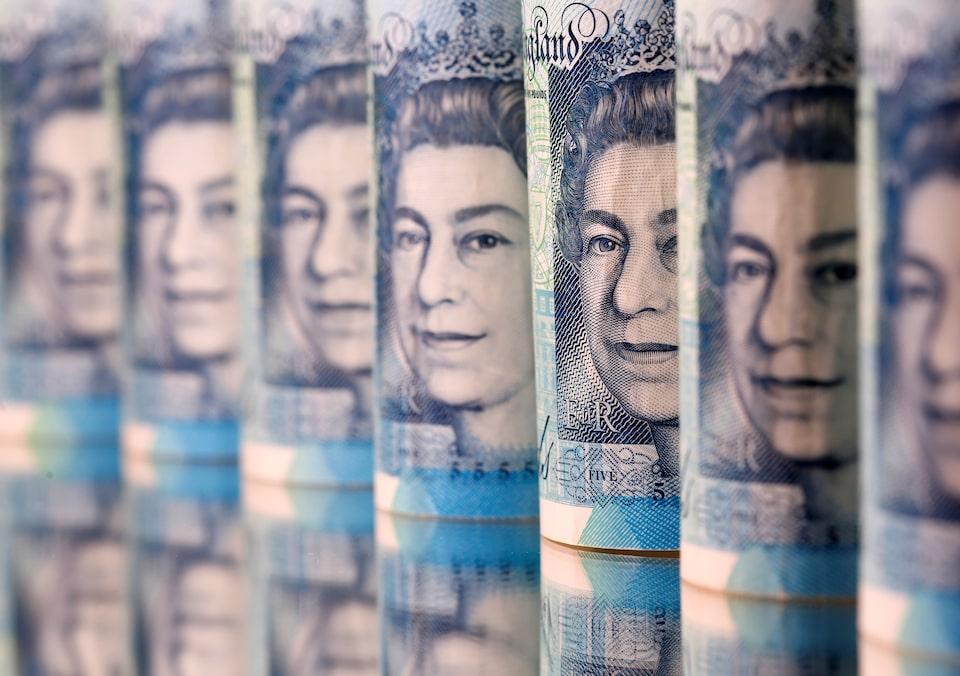
Nov 27 (Reuters) - Sterling snapped a five-day rally on Thursday as investor focus shifted back to economic fundamentals, with analysts questioning whether the fiscal tightening announced in the budget on Wednesday will actually be implemented. The greenback edged up against its major peers on Thursday, pausing in what is set to be its biggest weekly decline since July. Sign up here. The pound was down 0.15% at $1.3219, after hitting a new one-month high earlier in the session at $1.3269. Analysts said lingering concerns over growth and the Bank of England’s easing path were likely to keep the pound under pressure. "Fears about slow growth, weak productivity and sticky inflation are not reflective of an attractive investment backdrop," said Jane Foley, senior forex strategist at Rabobank, confirming the view that the euro will creep higher versus the British currency into 2026. The single currency hit a fresh one-month high at 87.46 pence and was last roughly unchanged at 87.59 pence. Sterling and UK bond prices edged up in volatile trade on Wednesday after British finance minister Rachel Reeves delivered a larger fiscal buffer than previously expected in a closely anticipated budget. GILTS MARKET TAKES COMFORT However, the gilts market took comfort from Reeves’ reassurances that she would keep a tight grip on public finances, and from the news of an increase in fiscal headroom. Yields on 30-year gilts , more sensitive to long-term fiscal concerns, dropped more than 10 basis points on Wednesday and were last up 2 bps at 5.228% on Thursday. However, analysts are still worried about the UK fiscal trajectory. "Sterling is not out of the woods yet," said Dominic Bunning, head of G10 forex strategy at Nomura International. "Backloading the tightening, until largely the next election, still risks credibility and cyclical momentum is soft but we will look for better levels to re-engage with the British pound underperformance trades," he added. Under current law, a nationwide vote is due by August 2029, though the prime minister can call an early election at any time. "Most of the planned tax rises do not kick in until 2029 and beyond," said David Zahn, Head of European Fixed Income at Franklin Templeton. "This approach effectively kicks the can down the road until the next parliamentary election to deal with the spending gap," he added. https://www.reuters.com/world/uk/sterling-snaps-five-day-rally-versus-dollar-caution-uk-budget-2025-11-27/
2025-11-27 11:03
FRANKFURT, Nov 27 (Reuters) - A Ukrainian man suspected of coordinating the sabotage of the Nord Stream gas pipeline in 2022 will be flown to Germany on Thursday after Italy's top court approved his extradition last week, a spokesperson for Germany's federal prosecutors said. Described by both Moscow and the West as an act of sabotage, explosions in the Baltic Sea three years ago largely severed Russian gas transit to Europe, squeezing energy supplies on the continent, although Russia had already largely stopped deliveries. Sign up here. Investigators spent years piecing together the mystery of who was behind them. SUSPECT DENIES ROLE IN ATTACKS The suspect, identified as Serhii K. under German privacy laws, denies any role in the attacks. His lawyer Nicola Canestrini has said he is confident that his client will be acquitted after a trial in Germany. German prosecutors accuse him of belonging to a group of people who planted devices on the pipelines near the Danish island of Bornholm in the Baltic. He faces charges of collusion to cause an explosion, anti-constitutional sabotage and destruction of important structures. The suspect was detained on a European arrest warrant in the Italian town of Rimini in August but fought attempts to transfer him to Germany. Last month, a court in Poland ruled against handing over another Ukrainian suspect wanted by Germany in connection with the explosions and ordered his immediate release from detention. https://www.reuters.com/world/europe/ukrainian-nord-stream-suspect-be-extradited-germany-italy-thursday-say-2025-11-27/

2025-11-27 10:39
SINGAPORE, Nov 27 (Reuters) - Independent refiners in China have received their first batch of crude oil import quotas for 2026 that can be used for cargoes arriving by the end of the year, trade sources said on Thursday. The release of the fresh quotas is expected to boost crude imports by the world's largest oil importer and ease a supply glut. Sign up here. Among the refiners, Hengli Petrochemical received a quota to import 2 million metric tons (40,000 barrels per day) of crude, said two of the sources with knowledge of the matter. Rongsheng Petrochemical was permitted to import 750,000 tons, while Shenghong Petrochemical and Hongrun Petrochemical received quotas of 120,000 tons and 530,000 tons, respectively, three sources with knowledge of the matter said. A source at another independent refiner said the company expected to receive official notification later on Thursday. Tallies from trade sources showed that quotas of about 8 million tons have been issued to 21 refiners so far, up from 6.04 million tons issued in November 2024. China's commerce ministry, which regulates crude oil import quotas, did not immediately respond to a Reuters fax message to seek comment. Last month, the ministry set the crude import quota for non-state trade at 257 million tons for 2026, unchanged from 2025. Beijing is expected to dispatch the remaining quota for 2026 early next year, one of the sources said. "The new issuances are expected to lift prices for prompt Iranian, Venezuelan, and Russian cargoes and help clear part of the floating storage," Kpler's senior analyst Xu Muyu wrote in a report on Thursday. "The broader oil market is also set to find some support, although growing scepticism over US sanctions and lingering oversupply concerns are likely to keep persistent downward pressure on Dubai prices," she added, referring to the Middle East crude price benchmark. In October, the shortage of import quotas and tightening Western sanctions curbed China's imports, leading to deeper discounts for sanctioned oil and a surge in the volume of oil stored on board ships in Asian waters. https://www.reuters.com/business/energy/china-issues-first-batch-2026-crude-oil-import-quotas-independent-refiners-2025-11-27/

2025-11-27 10:09
ANKARA, Nov 27 (Reuters) - A maritime demarcation deal signed between Lebanon and Cyprus violates the rights of Turkish Cypriots on the island and is therefore unacceptable, Turkey said on Thursday. Lebanon and Cyprus on Wednesday signed the long-awaited deal, which aims to pave the way for potential exploration of offshore gas fields and deepen energy cooperation in the Mediterranean. Sign up here. Turkey, a NATO member, does not recognise the Greek Cypriot government on the ethnically-split island of Cyprus, and is the only country to recognise the breakaway Turkish Republic of Northern Cyprus. It has repeatedly complained that Greek Cypriots were disregarding and usurping Turkish Cypriot rights. 'NOT POSSIBLE FOR US TO ACCEPT' "It is not possible for us to accept any agreement in which the rights of the TRNC are disregarded," the Turkish Defence Ministry said at its weekly press briefing, using an acronym for the Turkish Cypriot government. "We evaluate that this accord, which disregards the TRNC's rights, is also in violation of the interests of the Lebanese people, and tell our Lebanese counterparts that we are ready for cooperation on maritime issues," it added. Turkish Foreign Ministry Spokesman Oncu Keceli said the deal was another example of Greek Cypriots disregarding the rights of Turkish Cypriots, and said the Greek Cypriot administration was not the sole representative of the island and therefore did not have the authority to take decisions concerning the whole island. "We call on the international community, namely countries of the region, not to support these unilateral steps by the Greek Cypriot Administration and not to become instruments in attempts to usurp the legitimate rights and interests of the Turkish Cypriots, who are sovereign and equal elements of the island," Keceli said on X. Cyprus was split in a Turkish invasion in 1974 after a brief Greek-inspired coup. The last round of peace talks between the two sides collapsed in 2017, with efforts to revive them at a stalemate since. https://www.reuters.com/world/middle-east/turkey-says-lebanon-cyprus-maritime-deal-violates-turkish-cypriots-rights-is-2025-11-27/

2025-11-27 08:00
LONDON, Nov 27 (Reuters) - The head of Britain's fiscal watchdog said on Thursday he would resign if finance minister Rachel Reeves and lawmakers demanded it, after his agency published details of the government's budget early, moving markets and sparking anger in parliament. Reeves, speaking earlier, described the incident on Wednesday as a serious breach by the Office for Budget Responsibility but she told Sky News that she had confidence in OBR Chair Richard Hughes. Sign up here. The early release of the OBR's economic and fiscal outlook, first reported by Reuters, meant the budget's key announcements on taxes, growth and individual policy changes became public an hour before Reeves stood up to deliver her budget to parliament. "Personally, I serve day to day, subject to the confidence of the chancellor and the Treasury Committee," Hughes said at an event hosted by the Resolution Foundation think tank, referring to Reeves and an influential panel of lawmakers in parliament. "If they both conclude from the investigation they no longer have confidence in me, then of course, I will resign, which is what you do when you're the chair of something called the Office for Budget Responsibility." HUGHES SAYS HE WAS 'MORTIFIED' BY WHAT HAPPENED Earlier, Hughes apologised and said he was "personally mortified" by what had happened and an investigation into the incident was now underway. "It will be overseen by the chair of our oversight board and include expert input from Professor Ciaran Martin, former head of the National Cyber Security Centre," he told BBC Radio. "It will...identify the actions we need to take to make sure it will never happen again." The OBR said on Wednesday that a link to its November 2025 Economic and Fiscal Outlook had gone live on its website early. The document, which is usually published after the finance minister's speech has ended, was uploaded to the OBR website and available to download on an unprotected link. The link was not advertised on the website but the OBR has used the same web address, or URL, for previous budget documents, changing only the date. A Reuters reporter, in preparation for covering the budget, went to the publicly available URL shortly after 1130 GMT on Wednesday. In a letter to Reeves that the OBR published on Thursday, Hughes said the OBR had inadvertently made it possible to access its report. https://www.reuters.com/world/uk/uks-reeves-backs-fiscal-watchdog-chief-after-early-budget-release-error-2025-11-27/

2025-11-27 07:39
Budget on Wednesday forecast to raise taxes by 26 billion pounds Increase follows 40 billion pound tax hike last year Opposition accuses Reeves of hitting workers to fund welfare Analysts see spending rises now, tax hikes later LONDON, Nov 27 (Reuters) - British finance minister Rachel Reeves fought back on Thursday against criticism that she was raising the tax burden to a post-World War Two high to fund extra welfare spending and returning the Labour Party to its high-tax, high-spend past. A day after announcing plans to raise taxes by 26 billion pounds ($34 billion) on top of 40 billion pounds in her first budget last year, Reeves faced questions about her decision to end restrictions on child benefits for low-income families with more than two children. Sign up here. The change is supported by most Labour lawmakers but finds more limited support among voters, according to opinion polls. "I don't think children should be punished by this pernicious policy any longer, and the cost to society of this is huge," Reeves told LBC Radio. The Resolution Foundation think tank said the "double-whammy" of Reeves' budget measures in 2024 and 2025 represented the biggest back-to-back tax increases by a newly elected government on record. OPPOSITION ATTACKS TAX RISES TO FUND WELFARE The higher welfare spending was attacked by the opposition Conservative Party which accused Reeves of taking money from workers to appease her party's restive lawmakers, opening up fresh political dividing lines. Reeves hit back, saying 60% of families that will benefit had at least one parent in work but could not afford the basics. Her policy change presents a challenge to Reform UK, Nigel Farage's populist party which has held a commanding lead in the opinion polls for months and backed the lifting of the two-child cap. Many of the British newspapers attacked the move, with the Metro newspaper popular with commuters saying "You're Paying!". Reeves denied the charge, pointing instead to a downgrade in Britain's productivity outlook by the country's budget watchdog - based on years of past underperformance - for the range of tax hikes she announced on Wednesday. "I have to operate within the forecasts that I'm presented with," Reeves told the BBC. "Of course I could have made different decisions, but I believe those are the right decisions." The government estimated that scrapping the two-child benefit cap would eventually take 450,000 children out of poverty at a cost of 3 billion pounds a year. REEVES MAKES HISTORY WITH SCALE OF TAX HIKES The Office for Budget Responsibility, which assesses government fiscal plans, said annual welfare spending was expected to be higher by 16 billion pounds at the end of the decade than it would have been under Reeves' previous plans. That included the 7 billion pound cost of a government U-turn in July when a rebellion among Labour lawmakers forced Prime Minister Keir Starmer to drop plans to make it harder for people with health conditions to claim a benefit. The OBR downgrade to productivity forecasts lowered projected tax revenues by 16 billion pounds but this was partly offset by a forecast 10 billion pound tax boost from faster wage growth and related forecast changes. Analysts who pored over the budget overnight highlighted how much of the higher public spending will kick in quickly while the bulk of the tax increases will come in later years. That raised questions about the willingness of Starmer and his government to stick to the tax hikes ahead of an election due in 2029. "It was a borrow-to-spend budget in the short term, and a combination of a tax-and-spend and tax-and-bank-it budget in the medium term," said Helen Miller, director of the Institute for Fiscal Studies, a think-tank. The OBR said on Wednesday that Reeves now has a buffer of 22 billion pounds for meeting her fiscal targets at the end of the decade, more than double her previous amount. Asked about a reduction in growth forecasts for the coming years, Reeves said she intended to take further measures to speed up the economy and the projections did not factor in new trade deals and plans to boost infrastructure investment. "There's plenty more that I'm going to do to grow our economy and make working people better off," she told Times Radio. As well as the higher welfare spending, Reeves' budget plan sought to reassure bond investors that she can meet her borrowing targets. Long-term British government borrowing costs in financial markets rose on Thursday, but reversed only part of their sharp fall on Wednesday. The yield on 30-year gilts was up by about 2 basis points at around 5.23% at 1205 GMT having dropped by 12 basis points after the budget announcement. ($1 = 0.7560 pounds) https://www.reuters.com/world/uk/uks-reeves-rejects-criticism-that-she-raised-taxes-fund-welfare-2025-11-27/