2026-02-06 02:11
SHANGHAI/HONG KONG Feb 6 (Reuters) - China's sole silver futures fund slumped by its 10% daily limit on Friday, its fifth straight session of decline, after a global selloff in precious metals wiped out significant investor gains. The fund tumble followed a one-hour trading halt at the open designed "to protect investors" in a product that was trading at a huge premium to net asset value. Sign up here. The UBS SDIC Silver Futures fund , China's only exchange-listed pure-silver product, is now down more than 40% from its January 26 peak. But the fund, at 3.099 yuan ($0.4465) per unit on Friday, still trades at a 29% premium over its net asset value of 2.4073 yuan. The rich premium reflects both investors' feverish bets on silver when the metal was soaring, and China's daily trading limit that prevents prompt valuation adjustment. "Investors could suffer severe losses if they blindly invest in fund units trading at a high premium," the UBS SDIC Fund Management, which manages the silver fund, cautioned in a statement on Friday announcing the trading suspension. The Chinese fund venture of UBS said it reserves the right to apply for intraday trading halts or extend the suspension if the premium does not decrease effectively after trading resumes. "The episode highlights how the fund's structure, combined with daily price limits in Chinese markets, allowed its secondary-market price to detach materially from underlying value during the rally," Ole Hansen, head of commodity strategy at SAXO wrote. He said the fund's performance has dented investor sentiment and that "until volatility subsides and price discovery improves, gold, and especially silver, is likely to trade violently in both directions." UBS SDIC Fund Management did not immediately reply to a request for comment. ($1 = 6.9403 Chinese yuan) (This story has been corrected to say fifth, not sixth, in paragraph 1) https://www.reuters.com/world/asia-pacific/chinas-slumping-silver-futures-fund-suspends-trading-protect-investors-2026-02-06/

2026-02-06 02:09
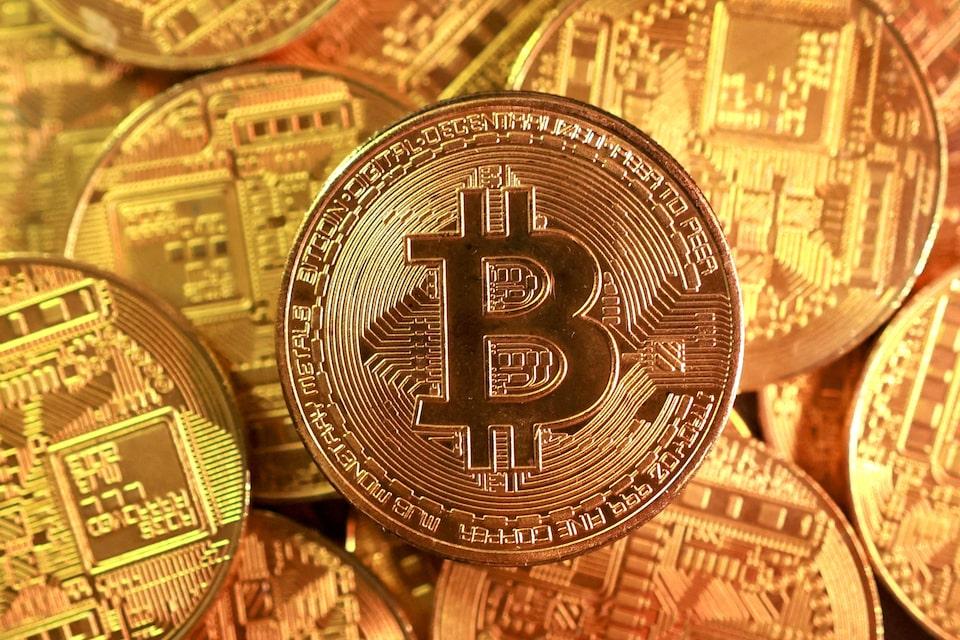
SINGAPORE, Feb 6 (Reuters) - Bitcoin bounced from a 16-month low on Friday after testing the key $60,000 level, as a global rout in technology stocks that washed out risky bets across asset classes showed tentative signs of easing. The world's largest cryptocurrency was last up 3.3% to $65,198.20, clawing back its losses after having slid 5% to hit a low of $60,008.52 earlier in the session. Sign up here. Still, bitcoin remains pinned near its weakest level since October 2024, a month before Donald Trump won the U.S. presidential election, having signalled his intention to support crypto on the campaign trail. "Bitcoin's been going down since October (2025), maybe you could ask if it was the canary in the coalmine, or a coincidence," said Chris Weston, head of research at brokerage Pepperstone in Melbourne. "A lot of these big crowded positions are being unwound very, very quickly." Ether was last up nearly 4% at $1,919.37, having similarly slid close to a 10-month low of $1,751.94 earlier in the session. The global crypto market has lost some $2 trillion in value since hitting a peak of $4.379 trillion in early October, CoinGecko data showed, with more than $1 trillion wiped out over the past month alone. Bitcoin was on track to shed 15% for the week, taking its losses for the year so far to 26%. Meanwhile, ether was headed for a weekly decline of 16%, with losses of nearly 36% so far this year. Sentiment on crypto had been affected by the latest selling in precious metals and stocks. Gold and silver, for instance, have become more volatile as a result of leveraged buying and speculative flows. But some of those moves retraced on Friday as selling pressure abated. Bitcoin's fortunes have been tied to the broader tech sector for some time. The price tended to rise, particularly on the back of investor enthusiasm over artificial intelligence. "Bitcoin drifting back toward $60,000 is not crypto dying, it is the bill coming due for Treasuries and funds that treated bitcoin as a one-way asset without real risk controls, just as we have seen sharp corrections in self-proclaimed safe-haven assets like gold and silver when leverage and narrative ran ahead of reality," said Joshua Chu, co-chair of the Hong Kong Web3 Association. "Those who bet too big, borrowed too much or assumed prices only go up are now finding out the hard way what real market volatility and risk management look like." To be sure, cryptocurrencies have struggled for months since a record crash last October sent bitcoin tumbling from a peak. That has resulted in investor sentiment cooling off on digital assets. Analysts from Deutsche Bank said in a note that U.S. spot bitcoin ETFs witnessed outflows of more than $3 billion in January, following outflows of about $2 billion and $7 billion in December and November, respectively. https://www.reuters.com/business/finance/bitcoin-cusp-60000-investors-flee-risky-bets-2026-02-06/
2026-02-06 01:57
Markets selloff in reaction, with stocks and rupiah dropping Government says ratings agencies need to understand its growth strategy Indonesian response to be closely watched, analyst says Authorities urged to ensure credible policy to avoid pressure on rating JAKARTA/SINGAPORE, Feb 6 (Reuters) - Indonesian stocks and currency skidded on Friday after Moody's lowered the country's credit rating outlook, the latest jolt in a turbulent start to the year for Southeast Asia's largest economy after an $80 billion rout of its equity market last week. International investors have reacted nervously to President Prabowo Subianto's attempt to ramp up Indonesia's growth to 8%, with sentiment due to concerns over policy uncertainty, including a widening fiscal deficit and central bank independence. Sign up here. The benchmark Jakarta Composite Index (.JKSE) , opens new tab tumbled more nearly 3% while the rupiah dropped as much as 0.36% to 16,885 a dollar, its lowest since January 22 and down 1% for the year. Stocks have fallen 4.7% for the week thus far, on top of last week's 6.9% decline. Moody's move to cut the outlook for Indonesia's $1.4 trillion G20 economy to negative from stable, citing reduced predictability in policymaking, came days after MSCI flagged transparency issues that triggered the market rout. 'FUNDAMENTALS REMAIN SOLID' On Friday, Indonesia's financial regulator said it believed Moody's affirmation of its Baa2 rating shows the country's economic fundamentals remain solid and supported by its financial sector resilience and strong economic growth. Sovereign wealth fund Danantara Indonesia, which is the main vehicle for Prabowo's growth push, also said the rating affirmation showed confidence in long-term prospects, even as the outlook downgrade highlighted the need for institutional reform and policy consistency. The global ratings agency cited concerns about policy effectiveness and signs of weakening governance, trends that it said could erode Indonesia's long-established policy credibility if they persisted. Indonesia's chief economic minister Airlangga Hartarto late Thursday downplayed the step, saying ratings agencies and global financial markets were "yet to understand" the country's new growth strategy. 'WARNING SHOT' "The Moody's outlook downgrade is a warning shot, which could trigger other ratings agencies to follow suit, particularly if the nature of policymaking remains subject to a heightened degree of uncertainty," said economists at OCBC in a note. "The responses of the authorities will be watched even more closely, as credible policy choices remain a necessity to avert a credit ratings downgrade over the course of the next twelve to eighteen months." Indonesia's international bonds slipped on Thursday following the Moody's announcement. Longer dated dollar-denominated bonds eased between 0.3-0.5 cents, with many trading at their weakest level in five months, Tradeweb data showed "The main potential impact on Indonesian markets is a higher risk premium across asset classes, with particular pressure on long-term government bonds, state-owned enterprises’ and major banks’ stocks, as well as sentiment toward the rupiah and capital flows," said Rully Arya Wisnubroto, a market analyst at Mirae Asset Sekuritas Indonesia. 'MITIGATE THE IMPACT' Other global ratings agencies are yet to release reviews this year. "Recent volatility in Indonesian stock prices have not materially affected our views on the sovereign ratings," said Rain Yin, a sovereign analyst at S&P Global Ratings, which currently has a stable outlook on Indonesia. "We do not expect the Indonesian economy and fiscal performance to be negatively and significantly affected if the government responds to mitigate the impact on investor confidence," she said in an emailed statement. All the same, Yin cautioned that fiscal deterioration could exert more downward pressure on S&P's rating unless there are offsetting improvements elsewhere. Rating agency Fitch did not immediately respond to a request for comment. Vows from officials to make changes and the resignations of five top officials from the financial regulator and stock exchange have failed to stabilise the market. Foreigners have already dumped a net of around $860 million worth of shares since last Wednesday, exchange data showed, compared with sales of $1 billion for the whole of 2025. https://www.reuters.com/sustainability/boards-policy-regulation/indonesian-markets-face-more-pressure-after-moodys-cuts-outlook-2026-02-06/

2026-02-06 00:45
SINGAPORE, Feb 6 (Reuters) - Asian stocks extended losses into a second day in early trading on Friday as a selloff on Wall Street intensified, with precious metals and cryptocurrencies gripped by wrenching volatility. MSCI's broadest index of Asia-Pacific shares outside Japan (.MIAPJ0000PUS) , opens new tab fell 0.9%, led by a 5% dive in South Korea's Kospi (.KS11) , opens new tab which triggered a brief trading halt shortly after the open. Japan's Nikkei 225 (.N225) , opens new tab shed 0.7%, while S&P 500 e-mini futures slid 0.6% as Nasdaq e-mini futures tumbled 1.1%. Sign up here. "Investors are questioning their commitment to the pillars that have underpinned markets over the past six months: AI, crypto, and precious metals," said Tony Sycamore, market analyst at IG in Sydney. "This raises the odds of a deeper unwind." Stocks sold off overnight on fears that new AI models may start to eat into the profits of software firms, with the S&P 500 (.SPX) , opens new tab turning negative for the year as fears around the labour market grew. Layoffs announced by U.S. employers surged in January to the highest level for the month in 17 years, a survey from global outplacement firm Challenger, Gray & Christmas showed on Thursday. Precious metals saw little respite, with gold falling 1.6% to $4,691.76, and silver plunging another 8.9% to $64.912. Cryptocurrency markets extended also losses after breaching several milestones in a $2 trillion wipeout on Thursday, with bitcoin tumbling 3% to $61,238.64 and ether down 1.8% at $1,813.77. https://www.reuters.com/world/china/global-markets-wrapup-1pix-2026-02-06/

2026-02-06 00:40
SINGAPORE, Feb 6 (Reuters) - U.S. crude futures extended their decline on Friday, on track for their first weekly drop in weeks, as concerns of supply disruption in the Middle East eased with investors focusing on the outcome of U.S.-Iran nuclear talks in Oman later in the day. U.S. West Texas Intermediate crude was at $62.47 a barrel by 0013 GMT, down 82 cents or 1.3%, after closing 2.84% lower on Thursday. Sign up here. The U.S. and Iran have agreed to hold talks in Oman on Friday amid heightened tensions as the U.S. builds up forces in the Middle East and regional players seek to avoid a military confrontation that many fear could escalate into a wider war. About a fifth of the world's total oil consumption passes through the Strait of Hormuz between Oman and Iran. Other OPEC members, Saudi Arabia, the United Arab Emirates, Kuwait and Iraq, export most of their crude via the strait, as does Iran. "Escalating geopolitical tensions between the U.S. and Iran have contributed to higher oil prices," Capital Economics analysts said in a note. "But we think that geopolitical fears will give way to weak fundamentals," they said, pointing to a recovery in Kazakhstan's oil output which will help push oil prices lower towards $50 per barrel by end-2026. https://www.reuters.com/business/energy/oil-extends-decline-ahead-us-iran-talks-2026-02-06/

2026-02-06 00:26
Feb 6 (Reuters) - Canada's Capstone Copper (CS.TO) , opens new tab said on Friday that the largest union at its Mantoverde copper‑gold mine in Chile had approved a new three‑year labour contract, ending a strike that started on January 2 and paving the way for production to return to normal. Shares of the miner's Australia-listed depositary receipts fell as much as 3.9% to A$15.430, their lowest since January 23. Sign up here. The agreement brings an end to a labour strike that had reduced production at the mine to about 55% of normal levels. Capstone said it had now negotiated new contracts with all the four unions at the site, allowing the company to resume full operations. Union No. 2, representing around 645 workers or roughly 50% of Mantoverde's direct workforce, had led the strike after rejecting a payment offer as labour negotiations broke down. The company did not disclose details of the new payment offer or any further terms of the agreement. In 2025, Mantoverde produced 62,308 metric tons of copper concentrate and 32,807 tons of copper cathodes, accounting or about 0.4% of global production. Capstone owns a 70% stake in Mantoverde, while Japan's Mitsubishi Materials (5711.T) , opens new tab holds the remaining 30%. https://www.reuters.com/sustainability/sustainable-finance-reporting/capstone-copper-resume-full-production-chiles-mantoverde-mine-strike-ends-2026-02-06/