2025-11-26 11:38
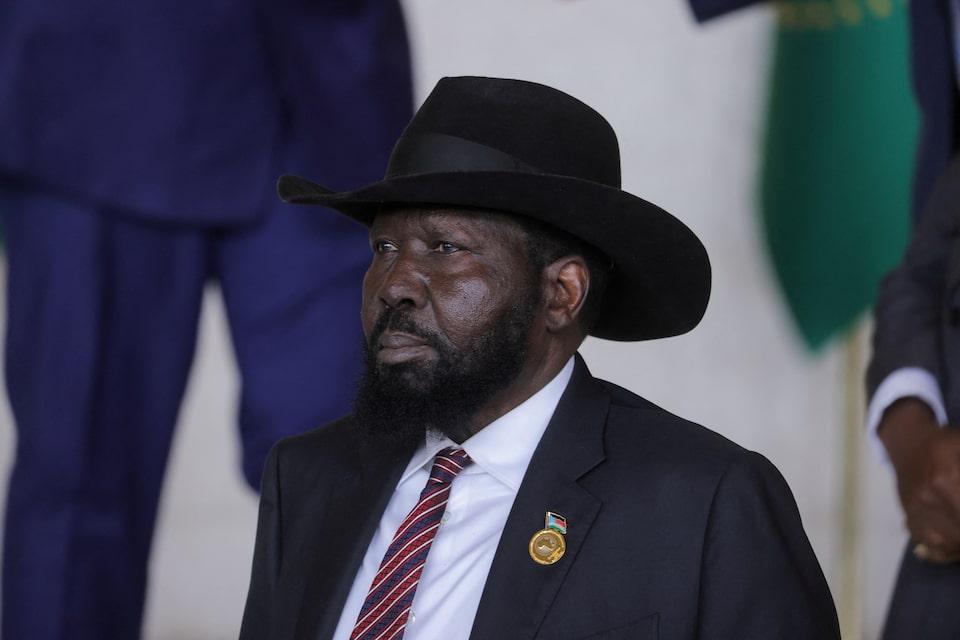
Kiir has repeatedly fired and reinstated senior officials Oil sector is South Sudan's main source of revenues JUBA, Nov 26 (Reuters) - South Sudan President Salva Kiir has sacked Deng Lual Wol as the petroleum ministry's undersecretary and replaced him with Chol Thon Abel, the fourth time he has transferred the post from one of the men to the other in less than two months. Kiir has repeatedly sacked and then reinstated - and sometimes sacked again - senior officials without explanation. Analysts say the tactic is aimed at maintaining control and rewarding loyalists in the face of increasing armed conflict this year between government forces and various militia, and amid speculation about his eventual succession. Sign up here. The state broadcaster announced the shake-up at the petroleum ministry on Tuesday evening, without giving any explanation, as is usual with such personnel changes. It was not immediately possible to contact a government spokesperson for comment. Crude oil sales account for the vast majority of South Sudan's revenues but exports have plunged due to damage to pipelines caused by the civil war in neighbouring Sudan. Kiir first sacked Thon as undersecretary, which is the number two position at the ministry and is responsible for financial transactions, and replaced him with Lual in October. He then reinstated Thon on November 3 before again replacing him with Lual a week later. Kiir also dismissed Ayuel Ngor Kacgor on Tuesday as managing director of the state-owned oil firm Nilepet. Gizam Moses, an independent policy analyst in governance and natural resources, said the constant turnover within government ministries encouraged corruption as officials would seek personal gain if they felt their tenure in posts was limited. U.N. investigators said in September that political elites have engaged in "systematic looting of the nation's wealth for private gain", with little of the government's revenues going to health, education or food security. The government said the report was based on faulty data and denied some of the specific corruption allegations. Earlier this month, Kiir sacked Vice President Benjamin Bol Mel, who had been widely rumoured to be his preferred successor, after nine months in the role and reappointed his immediate predecessor. https://www.reuters.com/world/africa/south-sudan-again-shakes-up-petroleum-ministry-adding-constant-government-churn-2025-11-26/
2025-11-26 11:36
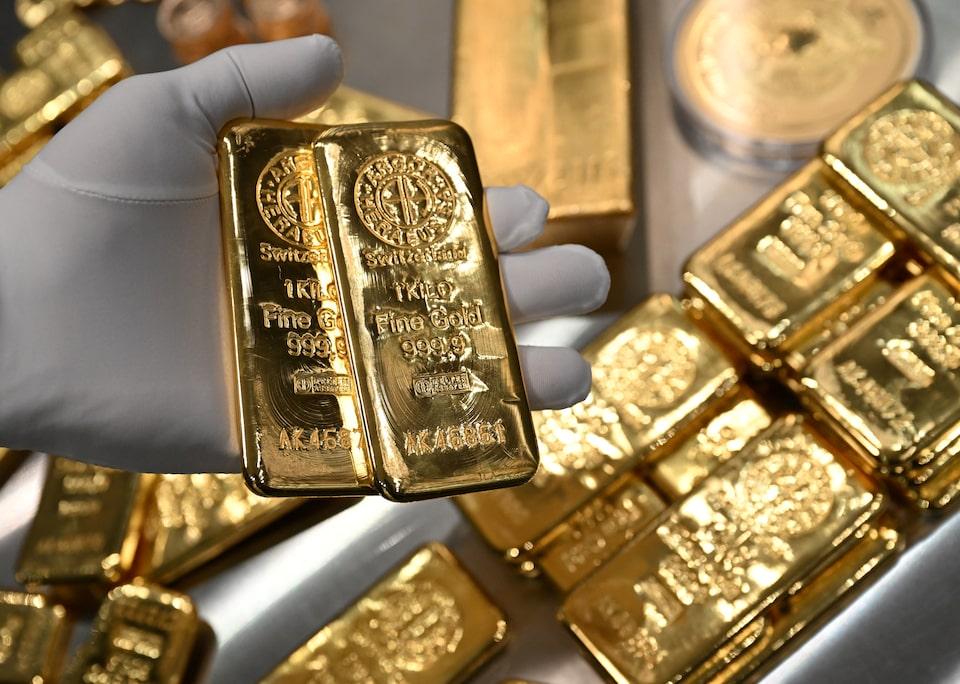
Nov 26 (Reuters) - Deutsche Bank (DBKGn.DE) , opens new tab raised its 2026 gold price forecast to $4,450 an ounce from $4,000 on Wednesday, citing stabilising investor flows and persistent central bank demand. The bank now expects a $3,950–$4,950 range next year, with the top end about 14% above the current price of the December 2026 COMEX gold futures contract. Sign up here. Deutsche Bank highlighted what it called a "positive structural picture," noting that central-bank buying and exchange-traded-fund (ETF) investment were absorbing a significant portion of supply, leaving less for the jewellery market, while total demand continues to outpace supply. The bank also projected that ETF flows would help maintain a price floor next year, saying they "suggest $3,900/oz support will hold". It added that years of undersupply in silver, platinum and palladium would improve their sensitivity to gold's strength, with elevated lease rates signalling ongoing tightness in the physical market. The bank maintained its 2027 gold price forecast at $5,150, saying it "straddles the uncertainty" between business as usual and elevated official demand scenarios. Key risks include gold's positive correlation with risk assets, the possibility of less U.S. Federal Reserve policy easing than markets expect in 2026 and the chance that reserve managers could slow their buying, Deutsche Bank warned. Spot gold prices are up 59% this year, heading for their biggest annual gain since 1979. Bullion hit a record high of $4,381.21 per troy ounce on October 20. https://www.reuters.com/business/deutsche-bank-raises-2026-gold-price-forecast-4450oz-2025-11-26/
2025-11-26 11:34
Nov 26 - What matters in U.S. and global markets today Weaker-than-expected U.S. economic data has upped bets for a Federal Reserve interest rate cut next month, giving global equities a boost as we move into the Thanksgiving holiday. And while Americans are prepping turkeys or heading to the airport, Britain will be chewing over the details of its much-debated budget, which Rachel Reeves, the UK's finance minister, is releasing today. Sign up here. For more on the UK budget, check out ROI editor-at-large Mike Dolan's latest column on why a rallying U.S. bond market may soften any negative market reaction over in gilts. Also, check out Mike on the latest episode of the new Morning Bid daily podcast. Subscribe to hear Reuters journalists discuss the biggest news in markets and finance seven days a week. We'll be off for the Thanksgiving holiday, so look out for the next edition of Morning Bid on Monday. Today's Market Minute * The U.S.-backed 28-point peace plan to end the war in Ukraine, which became public last week, drew from a Russian-authored paper submitted to the Trump administration in October, according to three sources familiar with the matter. * British finance minister Rachel Reeves is likely to announce tens of billions of pounds of new tax increases on Wednesday in a budget that puts her credibility on the line both with bond investors and with lawmakers demanding more welfare spending. * U.S. tech companies' share of S&P 500 earnings has been slipping even as their contribution to the index's market value remains near multi-decade highs, raising concerns that their prices are further removed from underlying profit trends. * Europe’s gas market is far calmer today after years of turmoil that saw the region swap Russian supplies for liquefied natural gas imports, a strategy that is unlikely to change even if President Donald Trump brokers a peace deal in Ukraine, writes ROI Energy Columnist Ron Bousso. * Reeves, who faces a make-or-break budget, should view her Labour government’s deep unpopularity as a gift, writes Mike Peacock in his new column for ROI. Giving thanks for bad news U.S. stocks rose for the third consecutive day on Tuesday after data showed softer-than-expected retail sales and weakening consumer confidence. Retail sales increased by 0.2% in September after an unrevised 0.6% gain in August. Economists polled by Reuters had forecast retail sales would increase by 0.4%. The data was a bit stale, as the report was delayed by the 43-day U.S. government shutdown. But negative vibes were also evident in the Conference Board's consumer confidence index, which dropped to 88.7, the lowest level since April. Take these soft economic data points, combine them with the recent rise in the unemployment rate to 4.4%, add dovish statements from multiple Fed officials, and you appear to have the makings of a December rate cut. Fed funds futures are pricing in a roughly 80% probability of a 25-basis-point cut at the meeting on December 10, compared to essentially a coin flip one week ago. Over in the UK, Rachel Reeves is set to release the long-awaited autumn budget, which is expected to include new tax increases, as the ruling Labour government attempts to stay within its own fiscal rules and maintain the confidence of financial markets. Sterling was fairly steady early on Wednesday, after four days of gains ahead of the big budget reveal. In Japan, the yen initially rallied against the U.S. dollar as sources told Reuters that the Bank of Japan is preparing markets for a possible interest rate hike as soon as next month. But it has since pared back those gains. Finally, oil prices hovered in a narrow range early on Wednesday. Both Brent crude and WTI settled 89 cents down on Tuesday after Ukrainian President Volodymyr Zelenskiy told European leaders that he was ready to advance a U.S.-backed framework for ending the war with Russia, with only a few points of disagreement remaining. Ultimately, an expected supply glut will likely keep a lid on prices in the oil market, while the potential ceasefire deal could see the floor drop lower. Chart of the day Alphabet's shares rose about 1% on Tuesday after the Information reported Facebook-parent Meta was in discussions to use Google's AI chips in its data centers from 2027 and rent chips from Google Cloud by next year. The news sent the share price of Nvidia, currently the dominant AI chip firm, down more than 2% to a two-month low - a sign of growing competition and rivalry among the sector's megacaps who had previously all risen in tandem on the AI buzz. Today's events to watch * UK autumn budget 2025 * U.S. durable goods orders Opinions expressed are those of the author. They do not reflect the views of Reuters News, which, under the Trust Principles , opens new tab, is committed to integrity, independence, and freedom from bias. Want to receive the Morning Bid in your inbox every weekday morning? Sign up for the newsletter here. ReutersNext is coming up next week in New York. From market volatility to long-term strategies, the future of finance takes center stage at our flagship live journalism summit ReutersNEXT on Dec. 3. See the full speaker list , opens new tab and register here , opens new tab for the livestream of World Stage interviews and panel discussions. https://www.reuters.com/business/finance/global-markets-view-usa-2025-11-26/
2025-11-26 11:27
FTSE 100 up 0.2%, FTSE 250 up 0.3% UK budget announcement at 12:30 GMT Financials and materials lead gains Nov 26 (Reuters) - UK stocks advanced on Wednesday, led by gains in financials and mining stocks, while investors braced for a potentially tax-heavy budget. The blue-chip FTSE 100 (.FTSE) , opens new tab rose 0.2% by 10:55 GMT, while the domestically focused FTSE 250 (.FTMC) , opens new tab added 0.3%. Sign up here. Precious metal miners (.FTNMX551030) , opens new tab climbed 3.8% to lead the sectoral gains as gold prices hit to a near two-week high after benign U.S. economic data reinforced expectations of a Federal Reserve interest rate cut next month. Fresnillo (FRES.L) , opens new tab rose 3.9%, Endeavour Mining (EDV.L) , opens new tab added 3.6%, while Hochschild (HOCM.L) , opens new tab gained 4.4%. Industrial miners (.FTNMX551020) , opens new tab added about 1% as copper prices also advanced. Anglo American (AAL.L) , opens new tab and Antofagasta (ANTO.L) , opens new tab rose 1.4% and 1.8%, respectively. Banks (.FTNMX301010) , opens new tab advanced 0.5%, extending gains from previous session after media reports of relief from tax hike in budget. Standard Chartered (STAN.L) , opens new tab gained 1.6%, while Barclays (BARC.L) , opens new tab rose 0.8%. Investors now await the autumn budget, where Finance Minister Rachel Reeves is expected to outline tens of billions of pounds in tax increases. “Any sizable spending hikes, potentially to welfare, combined with increases to borrowing, would be a big red flag to markets, and sterling and gilts would probably sell-off hard,” said Matthew Ryan, head of market strategy at global financial services firm Ebury in a note. On Tuesday, UK government approved 4.1% rise in minimum wage for 2026, despite complaints from some employers that this will push up prices. Meanwhile, a survey showed the British public's expectations for inflation over the next 12 months fell, with U.S. bank Citi saying the reading could boost the chances of a December rate cut by the Bank of England. Also in focus was a Russia-Ukraine peace deal after Ukrainian President Volodymyr Zelenskiy signalled readiness to push forward a U.S.-backed framework to end the war. However, some uncertainty remained as Trump retracted the deadline for the deal. Aerospace and defence (.FTNMX502010) , opens new tab gained 0.7%, with BAE Systems (BAES.L) , opens new tab up 1%. On the flip side, Beverages (.FTNMX451010) , opens new tab dropped the most, falling 0.9%, with spirits maker Diageo (DGE.L) , opens new tab losing 1.4%. https://www.reuters.com/business/aerospace-defense/uk-shares-edge-higher-miners-banks-gain-ahead-budget-2025-11-26/
2025-11-26 11:09
Nov 26 (Reuters) - India's benchmark Nifty 50 index (.NSEI) , opens new tab could climb to 30,000 by end-2026, implying an upside of about 15% from current levels, supported by steady fiscal and monetary policy that are expected to fuel demand, J.P. Morgan said on Wednesday. The Nifty and its peer Sensex (.BSESN) , opens new tab are now at 26,205.3 and 85,609.51, just shy of record highs touched in September 2024, as earnings improve against a backdrop of steady growth, benign inflation and robust domestic flows. Sign up here. A Reuters poll of economists expect the Nifty to hit 28,500 by the end of 2026 and 28,850 by mid-2027. The Nifty has gained nearly 11% this year but still lags Asian and emerging market peers, a soft patch for India after more than a year of weak earnings and sustained foreign outflows. While market valuations are still at a premium to other emerging markets, they have eased below their long-term average after 14 months of underperformance, according to analysts Rajiv Batra and Rushit Mehta. The recent tax cut-led drop in inflation and steep rate cuts by the central bank are likely to boost domestic demand, they said. The brokerage expects the Reserve Bank of India to reduce rates by another 25 basis points in December, amplifying the impact of tax reductions that are already lifting consumption, credit growth and auto sales. J.P. Morgan maintained its preference for domestic-facing sectors over exporters, adding that a U.S.-India trade deal could spark a near-term re-rating. With India ramping up petroleum imports from the U.S. and scaling back crude purchases from Russia, the analysts see "the probability of resolution of penal U.S. tariffs of India" as very high, with the additional 25% levy likely to be removed. That would bolster investor confidence, attract foreign inflows, firm up the rupee and aid a rebound in IT and pharma stocks, they said. The brokerage remains "overweight" on materials, financials, consumer sectors, hospitals, real estate, defence and power, and "underweight" on IT and pharma. https://www.reuters.com/world/india/rate-cuts-tax-breaks-could-lift-indias-nifty-50-30000-by-end-2026-jp-morgan-says-2025-11-26/
2025-11-26 11:00
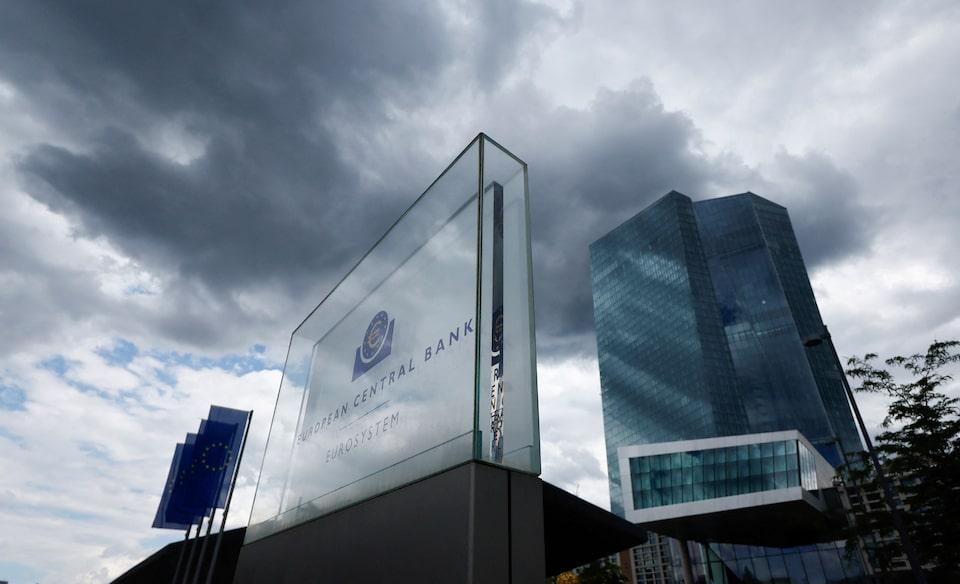
ECB warns of risks from Trump's tariffs on dollar stability De Guindos downplays risk of Fed shutting emergency liquidity line ECB highlights reliance on repos and FX swaps for dollar liquidity Euro zone banks hold 681 billion euros in dollar securities FRANKFURT, Nov 26 (Reuters) - Euro zone lenders with big dollar businesses should bulk up their liquidity and capital cushions to withstand any squeeze in a U.S. currency made more volatile by President Donald Trump's actions, the European Central Bank said on Wednesday. The ECB has been telling banks to watch their dollar exposure since Trump's tariffs and his pressure on the Federal Reserve rattled confidence in the world’s reserve currency in the spring. Sign up here. In the ECB's latest Financial Stability Review, the message sharpened: the handful of large euro zone banks active in dollars need to prepare. "Capital headroom could be needed to absorb ... higher currency volatility and counterparty credit risk," the ECB said in the twice-yearly report. "Banks should hold liquid U.S. dollar assets to counterbalance outflows and act as a stabilising intermediary." The report repeated warnings about stretched stock market valuations, high debt, trade tariffs and the rise of stablecoins as factors that could endanger financial system stability. Compiled by economists, the FSR does not amount to binding recommendations for the banks under its supervision. However, it underscored the depth of policymakers' concern over dollar liquidity, which euro zone banks normally source via repurchase agreements (repos) and foreign exchange (FX) swaps. "Dollar outflows in an extreme scenario could exhaust their capacity to raise cash through repos, FX swaps and the sale of such assets," the ECB said, without spelling out what one such scenario would look like. One nightmare scenario — not spelled out in the review — would be the Fed shutting its emergency liquidity line to the ECB, removing a backstop banks have relied on since the financial crisis. ECB VP PLAYS DOWN RISK Sources have told Reuters some central bank officials had even been thinking about pooling dollar and gold reserves outside of the United States to prepare for such an event. ECB Vice President Luis de Guindos played down this risk, emphasising that those swap lines are key to keeping markets calm both in the United States and Europe. "We do not have any sort of information with respect to the modification of the present situation, with respect to swap lines," he told a press conference as he presented the FSR. "These bilateral swap lines...are very important factors to keep financial stability in place on both sides of the Atlantic." New York Fed President John Williams also said this month the swap lines were good for both the U.S. and its counterparts. The ECB said dollar operations are concentrated among the bloc’s heavyweights. These are BNP Paribas (BNPP.PA) , opens new tab, Deutsche Bank (DBKGn.DE) , opens new tab, Credit Agricole (CAGR.PA) , opens new tab, Groupe BPCE, ING (INGA.AS) , opens new tab, Banco Santander (SAN.MC) , opens new tab and Societe Generale (SOGN.PA) , opens new tab. The business typically includes borrowing on U.S. money markets to finance hedge funds or selling foreign exchange swaps to European insurers, funds and corporates hedging their dollar exposure. To offset their own currency risk, these banks often take the opposite side with global lenders via swaps that rarely show up on balance sheets. "Rolling over these positions can become challenging during periods of stress in FX swap markets," the ECB said. For now the ECB sees only a "limited" mismatch between dollar assets and liabilities, with some banks using repos to align maturities. But it warned these strategies "do not fully eliminate liquidity risk". Euro zone banks held 681 billion euros ($788.33 billion) in dollar securities and lent the equivalent of 712 billion euros in the U.S. currency as of the end of last year, ECB data shows. ($1 = 0.8639 euros) https://www.reuters.com/business/finance/euro-zone-banks-with-dollar-exposure-need-more-buffers-ecb-says-2025-11-26/