2026-02-06 00:16
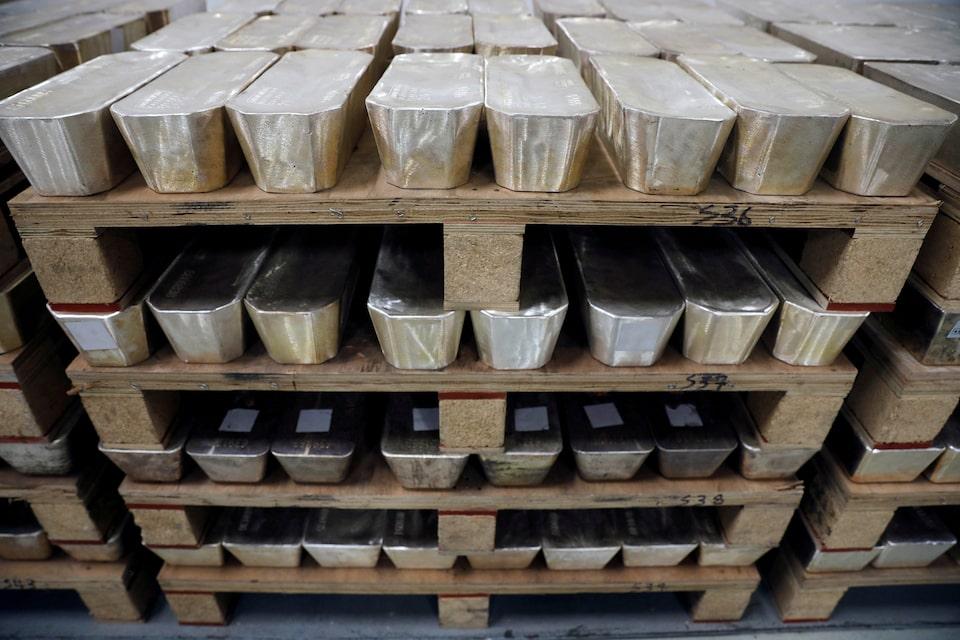
Feb 6 (Reuters) - Gold and silver extended losses on Friday as a global rout in tech equities and a stronger U.S. dollar wiped out most gains made by the metals during a brief rebound earlier this week. FUNDAMENTALS * Spot gold was down 0.7% at $4,735.99 per ounce, as of 0037 GMT, after a near 4% drop on Thursday. U.S. gold futures for April delivery fell 2.8% to $4,752.40 per ounce. Sign up here. * Spot silver was down 3.2% at $68.97 an ounce after a 19.1% drop in the previous session. Earlier in the day, it fell as much as 10% to trade below the $65 level and hit a more than 1-1/2 month low. * MSCI's global equities gauge slumped more than 1% on Thursday as worries deepened about the enormous cost of the artificial intelligence boom, while U.S. Treasuries were in demand after weak labour market data and, in commodities, silver took another hammering. * The U.S. dollar hit a two-week high on Thursday as fresh volatility gripped stocks. * Job openings, a measure of labour demand, fell by 386,000 to 6.542 million by the last day of December, the lowest level since September 2020, the Labor Department's Bureau of Labor Statistics said in its Job Openings and Labor Turnover Survey, or JOLTS report, on Thursday. * Labour market weakness typically strengthens the case for interest rate cuts aimed at supporting job creation. * Investors expect at least two 25-basis-point rate cuts in 2026, with the first one expected in June. Non-yielding bullion tends to do well in low-interest-rate environments. FEDWATCH * In geopolitical news, the White House said that diplomacy is President Donald Trump's first choice for dealing with Iran and he will wait to see whether a deal can be struck at high-stakes talks, but also warned that he has military options at his disposal. * Spot platinum fell 3.6% to $1,916.45 per ounce after hitting an all-time high of $2,918.80 on January 26, while palladium gained 1.3% to $1,638.25. https://www.reuters.com/world/india/spot-silver-falls-nearly-9-2026-02-06/
2026-02-05 23:05
Canada to introduce stronger emissions standards for 2027-2032 Carney says move avoids burdens on Canadian auto industry Environmental group calls new EV strategy a setback OTTAWA/WASHINGTON, Feb 5 (Reuters) - Canadian Prime Minister Mark Carney said on Wednesday his government was scrapping a national electric-vehicle sales mandate, while boosting incentives for EV purchases and charging. Carney said Canada will provide C$2.3 billion ($1.68 billion) to fund incentives of up to C$5,000 on EV purchases or leases by individuals and businesses, while also earmarking C$1.5 billion for EV charging. Canada will also provide up to C$3.1 billion for Canada's auto-manufacturing sector to help it make the costly transition to electric cars. Sign up here. The measures follow the European Commission’s recent decision to dial back rules that would have effectively phased out sales of gas- and diesel-engine cars, due to the slower-than-expected pace of EV adoption by consumers. But Canada's fresh incentives offer far more support for EVs than the United States, which recently scrapped key tax breaks for battery-powered cars. Automakers praised Carney’s announcement, which drew condemnation from some environmental groups. Canada said it will introduce stronger emissions standards for the 2027-2032 model years, which it says will help achieve a goal of 75% EV sales by 2035 and 90% EV sales by 2040. By contrast, the United States in September ended its longstanding $7,500 EV tax credit. Since President Donald Trump took office last year, the U.S. has taken a series of steps to make it easier for automakers to sell gas-powered vehicles. CHANGES AVOID BURDENS ON AUTO SECTOR: PM Replacing Canada's EV sales mandate with stronger vehicle emissions standards "focuses on the results that matter to Canadians, while avoiding undue burdens on the Canadian auto industry," Carney said at a press briefing. In 2023, under then-Prime Minister Justin Trudeau, Ottawa mandated that 20% of all vehicles sold in 2026 be emissions-free. The push was unpopular with vehicle manufacturers, who said it imposed unsustainable costs. Carney said he still considered Canada to be "a leader on climate change," noting the country would release its climate-competitiveness strategy in the coming weeks. Sam Hersh of the advocacy group Environmental Defence called the new EV strategy “a huge setback.” "This may be framed as short-term relief for automakers, but it will lead to long-term pain and put the industry on an inevitable path to decline," Hersh said. The Canadian Vehicle Manufacturers’ Association praised Carney's action, saying "funding to support renewed purchase incentives and a robust charging infrastructure strategy will help continue to drive EV adoption." Ontario Premier Doug Ford called the new strategy a "pivotal" moment as the country's economy and sovereignty are under attack by U.S. President Donald Trump. The advocacy group Consumer Choice Center also applauded Carney's EV announcement, saying "it was always wrong for the government to try to dictate to Canadians what type of car they ought to buy." CANADA FOLLOWS EUROPE The 27-member European Commission in December agreed to drop its ban on new combustion-engine cars from 2035. Carney, citing the damage U.S. tariffs have done to the highly integrated North American auto sector, is pressing the country to diversify its trade and boost domestic manufacturing. Last November, the federal government scrapped a planned emissions cap on the oil and gas sector and dropped rules on clean electricity, moves designed to spur investment in energy production. Canada will maintain counter-tariffs on auto imports from the United States and is looking at ways to encourage Canada-based manufacturers to boost production and investment. Last month, Carney struck an initial trade deal with China to slash tariffs on EVs. Canada will allow up to 49,000 Chinese EVs at a tariff of 6.1% on most-favored-nation terms, with the quota set to gradually increase to about 70,000 in five years. Carney said Chinese EVs would not be eligible for government incentives. ($1 = 1.3679 Canadian dollars) https://www.reuters.com/legal/litigation/canada-rolls-back-ev-regulations-boosts-incentives-2026-02-05/

2026-02-05 22:16
Jury finds Uber liable for driver's actions, awards $8.5 million to plaintiff Uber faces over 3,000 similar lawsuits in federal court Uber has argued drivers are independent contractors, company not liable for criminal conduct Feb 5 (Reuters) - A federal jury in Phoenix ordered Uber (UBER.N) , opens new tab on Thursday to pay $8.5 million after finding it liable in a lawsuit brought by a woman who said she was sexually assaulted by a driver, a verdict that could influence thousands of similar cases against the ride-hailing company. The case, brought by plaintiff Jaylynn Dean, was the first trial – known as a "bellwether" – of more than 3,000 similar lawsuits against Uber that have been consolidated in U.S. federal court. Bellwether trials are used to test legal theories and help gauge the value of claims for possible settlements. Sign up here. The jury found that the driver was an agent of Uber, so the company was responsible for his actions. They awarded Dean $8.5 million in compensatory damages but declined to award punitive damages. Attorneys for Dean had sought more than $140 million in damages. In a statement, an Uber spokesperson noted that the jury rejected Dean's other claims, that the company was negligent or that its safety systems were defective, adding that the company plans to appeal. “This verdict affirms that Uber acted responsibly and has invested meaningfully in rider safety,” the spokesperson said. Sarah London, an attorney for Dean, said the verdict "validates the thousands of survivors who have come forward at great personal risk to demand accountability against Uber for its focus on profit over passenger safety." Uber shares fell 0.5% in extended trading following announcement of the verdict. Dean, an Oklahoma resident, sued Uber in 2023, one month after her alleged assault in Arizona. She said Uber was aware of a wave of sexual assaults committed by its drivers, but had failed to take basic actions to improve the safety of its riders. Such assertions have long dogged the company, drawing headlines and congressional scrutiny. Alexandra Walsh, an attorney for Dean, said during the trial's closing arguments that Uber had marketed itself as a safe option for women traveling at night, particularly if they had been drinking. “Women know it's a dangerous world. We know about the risk of sexual assault," Walsh said. "They made us believe that this was a place that was safe from that.” UBER SAYS NOT RESPONSIBLE FOR DRIVER ACTIONS Uber, which has faced numerous safety controversies, including allegations of lax driver vetting and a culture critics said prioritized growth over passenger protection, has argued that it should not be held liable for criminal conduct by drivers who use its platform, saying that its background checks and disclosures about assaults are sufficient. The company maintains that its drivers are independent contractors rather than employees, and that regardless of their classification it cannot be responsible for actions that fall outside the scope of what could reasonably be considered their duties. "He had no criminal history. None," Kim Bueno, an attorney for Uber, said of the driver during closing arguments, noting that he had 10,000 trips on the app and a nearly perfect rating from riders. "Was this foreseeable to Uber? And the answer to that has to be no." Dean's lawsuit said she was intoxicated when she hired an Uber driver to take her from her boyfriend's home to her hotel. The driver asked her harassing questions on the ride before stopping the car and raping her, Dean alleged in the lawsuit. U.S. District Judge Charles Breyer, who normally sits on the bench in San Francisco, oversaw Dean's case in Phoenix. Breyer is managing all of the similar federal cases against Uber, which have been centralized in his court in San Francisco. The company is also facing more than 500 cases in California state court. In the only one of those cases to go to trial so far, a jury in September sided with Uber , opens new tab. The jury found that while the company had been negligent with its safety measures, that negligence was not a substantial factor in causing the woman's harm. Uber rival Lyft (LYFT.O) , opens new tab is facing similar lawsuits in both state and federal court, although there is no coordinated federal litigation for those claims. Shares of Lyft were down 1% after the verdict. https://www.reuters.com/legal/government/uber-ordered-pay-85-million-key-trial-over-driver-sex-assault-claims-2026-02-05/

2026-02-05 22:03
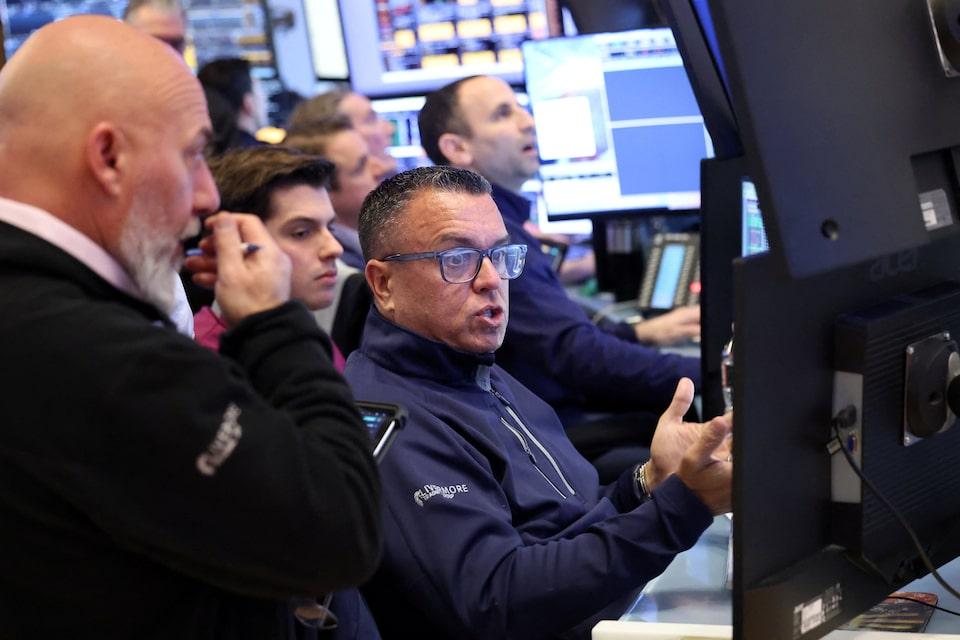
ORLANDO, Florida, Feb 5 (Reuters) - The tech-fueled stock market selloff snowballed on Thursday and slammed the Nasdaq to its lowest since November, while precious metals prices and bitcoin tanked, as worries over companies' massive AI capex spending and the U.S. job market deepened. In my column today, I dig into the "tech wreck" and explain why the AI tide no longer lifts all boats. Buying an index fund and watching the "Mag 7" drive it higher is not a strategy any more - investors must turn to stock picking and active management strategies. Sign up here. If you have more time to read, here are a few articles I recommend to help you make sense of what happened in markets today. Today's Key Market Moves Today's Talking Points * And it sure been a cold, crypto winter The selloff in bitcoin and cryptocurrencies is turning into a rout, making this year's "crypto winter" perhaps the coldest ever. Bitcoin fell 12% on Thursday for its worst day in nearly four years, and has lost half of its value in just four months. Momentum and technicals are clearly bearish, but at a time of growing dollar debasement fears, shouldn't bitcoin be rising? Obviously not, and the long-term bull cases put forward by crypto enthusiasts are now coming under greater scrutiny too. * JOLTS shock backs Fed in a corner Just what the Fed didn't want. After signaling in December that rate cuts are on hold because the labor market appears to be steadying and inflation is more of a concern, figures on Thursday showed a sharp rise in layoffs and a collapse in job openings. With inflation around 3% and showing few signs of cooling - economic activity is accelerating - strains are intensifying at both ends of the Fed's dual mandate. Presumptive Fed Chair Kevin Warsh has his work cut out. * U.S. yield curve steepest in four years The gap between two- and 10-year U.S. yields is more than 70 basis points, the widest in four years. Weak economic data enhances rate cut expectations, strong data points to inflation-boosting growth - we have had both recently, and both steepen the curve. Of course, a steep curve is consistent with a normal, healthy economy. And it's great for banks. But it can also reflect growing worries over inflation expectations becoming unanchored or other risks that inflate the term premium. Of the two scenarios, that's probably where we are right now. What could move markets tomorrow? Want to receive Trading Day in your inbox every weekday morning? Sign up for my newsletter here. Opinions expressed are those of the author. They do not reflect the views of Reuters News, which, under the Trust Principles , opens new tab, is committed to integrity, independence, and freedom from bias. https://www.reuters.com/world/asia-pacific/global-markets-trading-day-graphic-2026-02-05/
2026-02-05 21:46
Feb 6 (Reuters) - Australia's Berkeley Energia (BKY.AX) , opens new tab said on Friday it had filed a memorial of claim for about $1.25 billion against Spain at the World Bank's arbitration tribunal, up from a previous request, over the blocked Salamanca uranium project. The mining group said its unit, Berkeley Exploration, filed the claim with the International Centre for Settlement of Investment Disputes and has included factual background on the project and the dispute, key witness statements, an assessment of damages, and other reports. Sign up here. The company initially filed a request for arbitration in May 2024 to seek $1 billion in damages from the Spanish government after it refused to grant final approval for its uranium mine project. The project, located near Salamanca, received preliminary approval in 2013, but Spain's Energy Ministry refused final approval in 2021 and again in 2023. Berkeley had accused the government in 2024 of infringing on its rights under the Energy Charter Treaty, an international agreement designed to promote energy security through a more open and competitive energy market. Spain has until July 2026 to respond to the memorial of claim, the company said in a statement on Friday. Shares of the company fell as much as 8.8% to A$0.52, in tandem with the broader mining sub-index (.AXMM) , opens new tab, which was down 2.8%, as of 0030 GMT. https://www.reuters.com/sustainability/australias-berkeley-energia-files-125-billion-claim-spain-over-uranium-project-2026-02-05/

2026-02-05 21:18
Feb 5 (Reuters) - Strategy (MSTR.O) , opens new tab reported a wider fourth-quarter loss on Thursday, as a turbulent period for digital assets caused the world's largest hoarder of bitcoin to record losses on its holdings. Shares of the Michael Saylor-led company fell 1.5% in after-hours trading, extending heavy selling from earlier in the day. They are down nearly 30% this year. Sign up here. In December, Strategy had slashed its 2025 earnings forecast, citing a weak run in bitcoin, and announced plans to create a reserve to support dividend payments. Its earlier estimate assumed bitcoin would hit $150,000 by the end of the year. Cryptocurrencies, led by bitcoin, enjoyed regulatory embrace and healthy institutional inflows through much of 2025. However, the volatile sector has now struggled for months since a record crash last October sent bitcoin nearly halving from its October 6 peak as leveraged positions were washed out. Bitcoin is currently trading at $63,140. Strategy logged a loss of $12.4 billion, or $42.93 per share, for the three months ended December 31, compared with a loss of $670.8 million, or $3.03 per share, in the fourth quarter of 2024. It held 713,502 bitcoins as of February 1, at a total cost of $54.26 billion, or $76,052 per bitcoin. Still, Saylor, who serves as Strategy's executive chairman, expressed confidence in regulatory tailwinds and corporate adoption of cryptocurrencies. "The actions by big finance, the actions by the big banks and the actions by the financial regulators are the fundamentals," Saylor told investors on the post-earnings call. U.S. spot bitcoin ETFs witnessed outflows of about $2 billion in December and $7 billion in November, Deutsche Bank analysts said in a note to clients. Selling pressure intensified after Trump nominated Kevin Warsh as the next Federal Reserve chair, which analysts have said could lead to a smaller Fed balance sheet — a negative for risk assets like cryptocurrencies. "It's above our pay grade to set financial policy. It's even above our pay grade to interpret the financial policy," Saylor said, when asked about Warsh's nomination. Shares of the company fell about 47.5% in 2025, while bitcoin prices fell 6.4%, reflecting the leveraged exposure the stock provides to the cryptocurrency. https://www.reuters.com/business/saylor-led-strategys-quarterly-losses-widen-bitcoin-faces-another-reckoning-2026-02-05/