2025-11-25 06:36
Fed rate cut expectations rise after comments from Fed officials Alphabet nears $4 trillion market cap amid Meta chip talks U.S. retail sales fall short of expectations NEW YORK, Nov 25 (Reuters) - Global stocks climbed on Tuesday and were set for a third straight session of gains, as investors remained optimistic the Federal Reserve would cut U.S. interest rates at its December meeting, while U.S. Treasury yields declined. On Wall Street, U.S. stocks closed higher, boosted by gains in Alphabet (GOOGL.O) , opens new tab and Meta Platforms (META.O) , opens new tab. The Google parent ended up 1.53% at a record close of $323.44 as it neared $4 trillion in market capitalization, which would make it only the fourth company to reach that mark. Sign up here. The Information reported that Meta Platforms (META.O) , opens new tab, which advanced 3.78% as the biggest lift to the S&P 500, was in talks with Google to spend billions of dollars on the Alphabet unit's chips for use in its data centers starting in 2027. Investors also parsed a flurry of economic data, some of which was delayed due to the 43-day U.S. government shutdown. Retail sales rose 0.2% in September after an unrevised 0.6% gain in August, the Commerce Department said, short of the 0.4% rise expected by economists polled by Reuters. The Labor Department reported that the Producer Price Index for final demand 0.3% after an unrevised 0.1% drop in August, which matched expectations, as the cost of energy goods surged and producers passed on some tariff costs. More recent data on Tuesday from ADP said , opens new tab U.S. private employers shed an average of 13,500 jobs during the four weeks ending Nov. 8. The Dow Jones Industrial Average (.DJI) , opens new tab rose 664.18 points, or 1.43%, to 47,112.45, the S&P 500 (.SPX) , opens new tab advanced 60.76 points, or 0.91%, to 6,765.88 and the Nasdaq Composite (.IXIC) , opens new tab climbed 153.59 points, or 0.67%, to 23,025.59. Equities have been rallying since Friday after New York Fed President John Williams said interest rates can fall in the near term even as other policymakers insisted borrowing costs should remain steady for now, which boosted market bets on a rate cut. Those expectations were further juiced on Monday after comments by San Francisco Federal Reserve Bank President Mary Daly and Fed Governor Christopher Waller in support of a December cut. "We've had more coalescing just in the last couple of days around rate cut odds, that's fluctuated dramatically in the last week," said Bill Merz, head of capital market research at U.S. Bank Wealth Management in Minneapolis. "And we have data this morning, again, with slightly softer labor markets, that should be a key consideration for Fed voting members, and I think it is. So those slightly soft labor markets corroborate that it wasn't just a blip, but that's persisting." The increased rate-cut expectations also boosted small-cap stocks, with the Russell 2000 (.RUT) , opens new tab closing up 2.14%, its third straight session of gains. Trading volume is likely to shrink as the U.S. Thanksgiving holiday approaches on Thursday, when markets will be closed, followed by an abbreviated session on Friday. MSCI's gauge of stocks across the globe (.MIWD00000PUS) , opens new tab rose 9 points, or 0.92%, to 991.31 and was on track for its biggest three-day percentage gain in more than six months. The pan-European STOXX 600 (.STOXX) , opens new tab index closed up 0.91%, lifted by the prospect of a Fed rate cut and optimism over a potential ceasefire in Ukraine. U.S. yields fell after the glut of data. The benchmark U.S. 10-year note yield was down 3.4 basis points at 4.002% after dropping to 3.988%, its first break below 4% since October 29. Markets are pricing in an 82.7% chance for a 25 basis-point cut from the Fed at its December meeting, well above the 50.1% from a week ago, according to CME's FedWatch Tool , opens new tab. Fed Governor Stephen Miran said in a television interview that the job market was deteriorating because of where the central bank has set its short-term interest rate target. The dollar index , which measures the greenback against a basket of currencies, declined 0.37% to 99.83, with the euro up 0.4% at $1.15667. Sterling strengthened 0.47% to $1.3164 ahead of Britain's upcoming budget announcement on Wednesday, while traders piled into the options market seeking protection against heightened volatility. Traders have been closely watching for signs of possible Japanese intervention in the yen , which strengthened 0.53% against the greenback to 156.09 per dollar but is down 1.3% for the month. U.S. crude settled down 1.11% to $57.95 a barrel and Brent settled at $62.48 per barrel, down 1.4% after Ukraine signaled support for a U.S.-backed framework for ending the war with Russia. https://www.reuters.com/world/china/global-markets-global-markets-2025-11-25/

2025-11-25 06:06
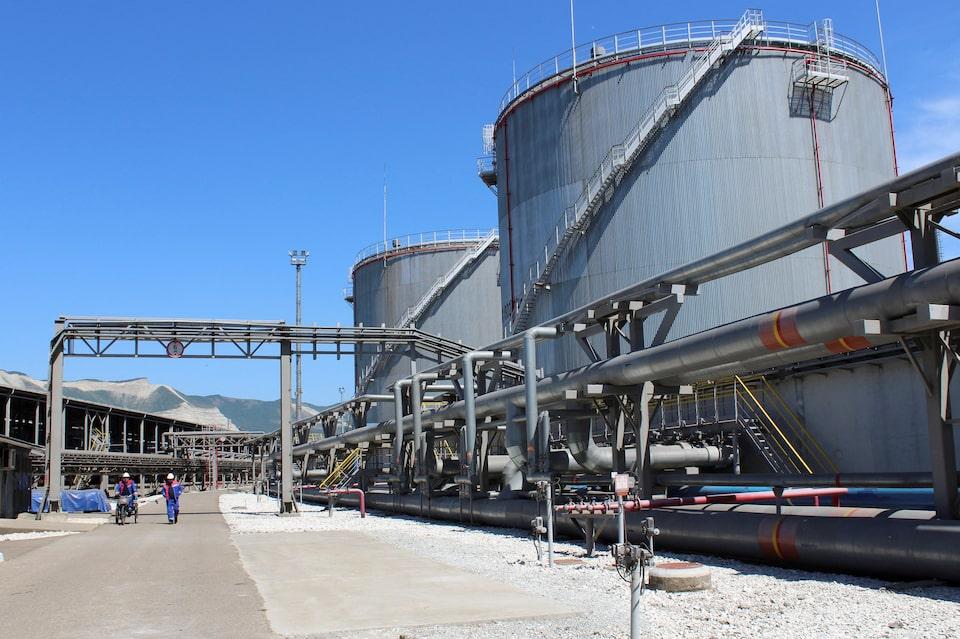
MOSCOW, Nov 25 (Reuters) - Three people were killed and at least 16 injured in a major Ukrainian drone attack on southern Russia with residential buildings damaged in the Black Sea port of Novorossiysk and the cities of Rostov-on-Don and Krasnodar, Russian officials said. The Russian Defence Ministry said that 249 Ukrainian drones were downed over Russian regions overnight, including 116 over the Black Sea, 92 over the southern regions of Krasnodar and Rostov. Sign up here. Rostov Governor Yuri Slyusar said that a paint shop, a warehouse, four apartment buildings and 12 houses were damaged in the attack, which left at least three dead. Unverified video footage on Telegram showed what sounded like a drone flying directly into a large residential apartment block in Novorossiysk - home to a major oil port - and exploding in a ball of flame. "Overnight the Krasnodar region was subjected to one of the longest major attacks by the Kyiv regime," Krasnodar Governor Veniamin Kondratyev said, adding that an apartment building at Tuapse, a town beside an oil export terminal, had been damaged. He said that seven apartment buildings had been hit in Novorossiysk. Russian forces attacked Kyiv early on Tuesday, triggering fires in at least two residential buildings and killing one person, a senior Ukrainian official said. https://www.reuters.com/world/europe/three-people-killed-16-injured-major-ukrainian-drone-attack-southern-russia-2025-11-25/

2025-11-25 05:58
LAUNCESTON, Australia, Nov 25 (Reuters) - China may ride to the rescue of tightening diesel markets in Asia by ramping up exports in December to compensate for lower shipments from Indian refiners caught up in sanctions against Russian crude oil. China's exports of diesel may rise to about 4.5 million barrels in December, according to trading sources, as refiners take advantage of strong margins for producing the transport fuel. Sign up here. If December-loading cargoes do rise to the expected level, it would be the strongest month since August and a significant jump from the forecast by commodity analysts Kpler for exports of 2.76 million barrels for November. China boasts the second-largest oil refining capacity in the world but typically uses less than 80% of capacity at major state-owned plants, and even less at smaller, independent processors. Exports are also controlled by government quotas, which are driven more by ensuring domestic fuel security than by market forces that allow refiners to capture profits when margins are elevated. However, China's refiners probably still have sufficient quotas available to lift December exports of diesel and fellow middle-distillate jet fuel, as well as gasoline. In the last round of quotas, China issued permits for 8.395 million metric tons for diesel, jet fuel and gasoline, taking the total for the year to 40.195 million tons, about the same as the 41.0 million tons for 2024. Refiners exported 29.91 million tons of the three fuels in the first 10 months of the year, according to official data released on November 18. This means that there are quotas available for about 10.29 million tons of exports of the three fuels for November and December. November exports of the three are forecast by Kpler to be around 1.58 million tons, and while this figure may rise as more cargoes are assessed by the end of the month, it is also clear that refiners will have more than enough remaining quotas to boost exports in December. ROBUST FUEL MARGINS There is a strong profit motivation for them to do so, with the refining margins for diesel and gasoline near two-year highs. The profit for making a barrel of gasoil, the building block for diesel, in Singapore ended at $24.37 on Monday, down from $25.97 at the prior close, largely as traders priced in the possibility of higher Chinese exports next month. The margin reached $31.25 a barrel on November 19, the highest since September 23 and up 140% since the low so far in 2025 of $13.05 on March 25. The profit margin on making a barrel of gasoline was $14.54 on Monday, up from $14.42 previously. It had reached $17.71 a barrel on November 14, which was the highest since August 29, 2023, and the margin is almost five times the low so far in 2025 of $3.68 on January 21. Part of the recent strength in refining margins has come amid weaker exports from India, with Kpler data showing shipments of diesel, jet fuel and gasoline from the South Asian nation are expected to drop to 4.34 million tons in November, the lowest since April and down from a high so far in 2025 of 5.54 million tons in September. Several Indian refiners are having to seek alternative crudes to replace Russian oil, which they had been buying at discounts prior to the latest U.S. sanctions on Russian oil companies. It is likely that India's refiners will be able to source alternative crude supplies, meaning that the drop in exports of refined products is likely to be temporary. But while there is a gap in the market, it appears that China is best placed to profit from supplying additional diesel and gasoline. Enjoying this column? Check out Reuters Open Interest (ROI), your essential new source for global financial commentary. ROI delivers thought-provoking, data-driven analysis of everything from swap rates to soybeans. Markets are moving faster than ever. ROI can help you keep up. Follow ROI on LinkedIn , opens new tab and X , opens new tab. The views expressed here are those of the author, a columnist for Reuters. https://www.reuters.com/markets/commodities/china-can-ride-rescue-asias-tight-diesel-market-2025-11-25/
2025-11-25 05:43
A look at the day ahead in European and global markets from Ankur Banerjee A risk-on rally spurred by the sudden shift in U.S. rate-cut wagers after dovish comments from policymakers may falter in Europe while currency markets remain wary that Tokyo could intervene to support the yen. Sign up here. Phone-call diplomacy was also in the spotlight. U.S. President Donald Trump touted relations with China as "extremely strong" on Monday following a call with Chinese counterpart Xi Jinping. Trump also told Japanese Prime Minister Sanae Takaichi "call me anytime" in their first phone call since Tokyo's leader sparked a major diplomatic bust-up with China. Markets though, are laser-focused on U.S. rate developments after Federal Reserve Governor Christopher Waller reiterated the labor market's weakness could justify a further quarter-point rate cut in December. His comments were the latest to help raise investor expectations of a rate cut next month. Traders are now pricing in an 81% chance of a cut next month versus 42% a week earlier, CME FedWatch showed. That huge swing underscores the challenge the market faces in pricing in near-term rates in the absence of economic data due to the longest U.S. government shutdown that ended on November 14. Despite the sharp rise in rate-cut wagers, the U.S. dollar has remained stable. And so, that leaves the yen languishing near its 10-month lows and perilously close to 160/dollar, with no respite as chatter about intervention from Tokyo officials rages on. In short, the yen vigil is here to stay. A holiday-curtailed week may provide Tokyo with the perfect opportunity to directly engage with some yen buying, traders say, but ultimately it may have limited impact. Meanwhile, shares of Novo Nordisk (NOVOb.CO) , opens new tab slumped on Monday after the obesity drugmaker announced its Alzheimer's trials for an older oral version of its semaglutide drug failed to help slow the progression of the brain-wasting disease. Market reaction may extend into Tuesday unless dip buyers intervene, although analysts noted investors had low expectations for the trial's success. European futures point to a lower opening as the momentum in Asian equities slows. Perhaps last week's worries about AI valuations remain on investor minds. Key developments that could influence markets on Tuesday: Germany Q3 GDP data, French consumer confidence data for November, Easyjet earnings https://www.reuters.com/world/china/global-markets-view-europe-2025-11-25/

2025-11-25 05:32
PERTH, Nov 25 (Reuters) - Australia's Woodside Energy (WDS.AX) , opens new tab and East Timor have agreed to study sending gas from the large, undeveloped Greater Sunrise fields to a new liquefied natural gas plant in the Southeast Asian nation that could start exporting in the next seven years. The agreement calls for the two sides to study the commercial and technical viability of a 5-million-metric-ton project, with a high-level plan to start producing LNG as early as 2032-2035, Woodside and East Timor's petroleum and mineral resources ministry said in a joint statement on Tuesday. Sign up here. That marks the first time the two sides, long at loggerheads over development of the fields which lie between East Timor and Australia, have outlined a potential start-up date. "The TLNG project presents the best economic, social, and strategic benefits for the people of Timor-Leste, and we are committed to working constructively with Woodside, the Greater Sunrise joint venture and other parties,” East Timor's petroleum and mineral resources minister, Francisco da Costa Monteiro, said. The project would include a domestic gas plant and a helium extraction plant. Helium commands a high premium owing to its scarcity and use in the semiconductor industry. Woodside CEO Meg O’Neill said the agreement would address remaining issues such as a downstream commercial structure to attract financing and to better understand "the preferred route of the gas export pipeline". The deep Timor Trough is seen as one of the hurdles for a gas pipeline from the Greater Sunrise fields to East Timor. Dili has long pressed for Sunrise gas to be sent to a new LNG export plant in East Timor and not to Darwin in northern Australia. Woodside has long resisted, arguing it is not cost effective, although O’Neill had suggested smaller "modular" LNG processing units could be built in East Timor to cut costs. Alongside the study, fiscal, regulatory and legal frameworks to support the upstream development of the fields need to be negotiated between the Sunrise Joint Venture, East Timor and Australian governments, the statement said. A maritime boundary was agreed by the two nations in 2018. https://www.reuters.com/business/energy/woodside-east-timor-aim-first-lng-greater-sunrise-2032-2025-11-25/

2025-11-25 05:02
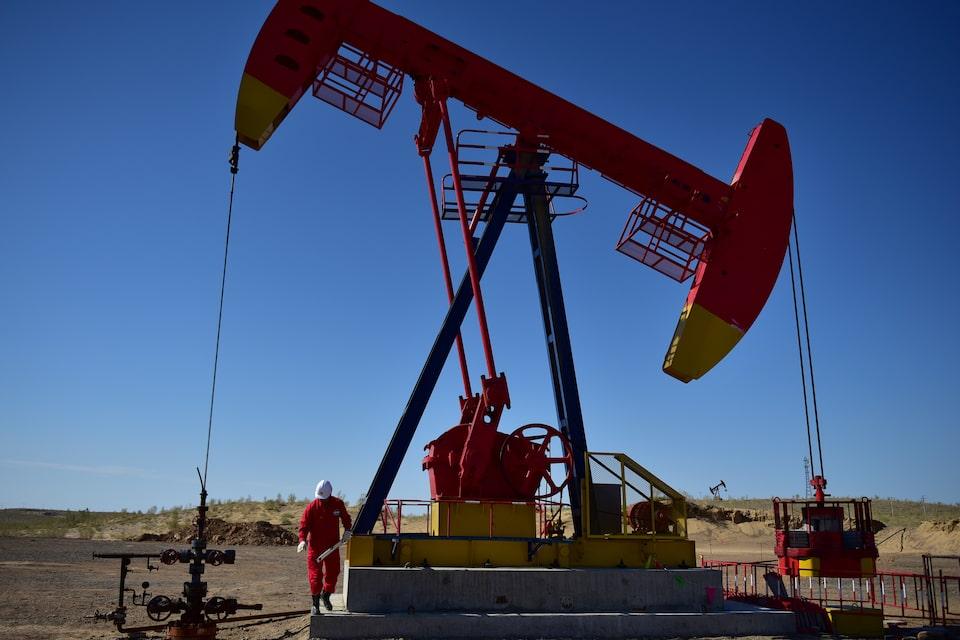
'Tremendous progress' toward Ukraine-Russia peace deal, White House says Zelenskiy could visit the US in next few days Russia stresses deal cannot stray too far from its objectives NEW YORK, Nov 25 (Reuters) - Oil prices settled over 1% lower on Tuesday after Ukraine hinted that an intense diplomatic push by the U.S. administration to end Russia's war against it could be yielding fruit. An end to the war in Ukraine could pave the way for the unwinding of Western sanctions against Moscow's energy trade, potentially adding more supply at a time when commodity prices have been battered by expectations of a glut next year. Sign up here. Brent crude futures fell 89 cents, or 1.4%, to $62.48 a barrel, while U.S. West Texas Intermediate crude futures also fell 89 cents, or 1.5%, to $57.95 a barrel. Both benchmarks hit their lowest levels since October 22 during intraday trading. Ukrainian President Volodymyr Zelenskiy could visit the U.S. in the next few days to finalise a deal with U.S. President Donald Trump to end the war, Kyiv's national security chief Rustem Umerov said. Still, Russia stressed it would not let any deal stray too far from its objectives, which helped keep oil's losses in check as Russia's position raises doubts about whether a formal agreement will be reached, said Ed Hayden-Briffett, oil analyst at Onyx Capital Group. The uncertainty was underscored by Russia's barrage of missiles on the Ukrainian capital Kyiv on Tuesday, which killed six people, wounded 13, and disrupted electricity and heating systems. "It needs two to tango, and it remains unclear if Russia agrees as well," UBS analyst Giovanni Staunovo said. The difficult part of negotiations to end the war is yet to come, with major gaps between the parties needing to be filled, analysts at oil trading advisory firm Ritterbusch and Associates cautioned. WORSENING GLUT A growing consensus of experts forecasts that crude oil supply growth in 2026 will exceed gains in demand. Deutsche Bank sees a surplus of at least 2 million barrels per day next year and no clear path back to deficits even by 2027, it said in a note on Monday. A peace deal could help Russia raise oil production to its agreed OPEC+ volume, Commerzbank Research analysts said. Sanctions on Russian oil majors Rosneft and Lukoil and rules against selling oil products refined from Russian crude to Europe have pushed some Indian refiners to cut back their purchases of Russian oil. That has caused a decline in Russian oil exports and an increase in crude oil from Russia stored in tankers at sea, which would become available if a peace deal leads to lifting sanctions against Rosneft and Lukoil, Commerzbank noted. Russia has also been discussing ways to expand exports to China, Russian Deputy Prime Minister Alexander Novak said on Tuesday. U.S. crude stocks fell last week while fuel inventories rose, market sources said on Tuesday, citing American Petroleum Institute figures. U.S. crude stocks were previously estimated in a Reuters poll to have risen by 1.86 million barrels in the week ended November 21. Official stockpile data from the Energy Information Administration is due on Wednesday at 10:30 a.m. ET (1530 GMT). https://www.reuters.com/business/energy/oil-steadies-oversupply-concerns-vie-with-ukraine-talks-investor-focus-2025-11-25/