2025-11-24 20:53
Nov 24 (Reuters) - Canadian miner Barrick Mining (ABX.TO) , opens new tab has reached an agreement with Mali's government to resolve all their disputes over the Loulo-Gounkoto gold mining complex since 2023. The dispute was over the implementation of a new Mali mining code that raises taxes and gives the government a greater share of gold mines. Sign up here. The miner, formerly called Barrick Gold, said it will drop its arbitration case against Mali at the World Bank dispute tribunal. In return, Mali will drop all charges against Barrick and its affiliates, release the employees and give back operational control to the Canadian miner. Following is the timeline of the events: July 14, 2023: Mali's military-led government proposes changes to its mining law that would increase state and local interest in projects by 35%. September 27, 2024: Mali's military-led authorities arrest four employees of the miner for alleged financial crimes. October 8, 2024: Mali government seeks about 300 billion CFA ($512 million) from Barrick as unpaid dues. December 5, 2024: Mali issues an arrest warrant for Barrick's former CEO Mark Bristow, accusing him of money laundering and violating financial regulations. December 16, 2024: Barrick threatens to suspend its operations in Mali. December 18, 2024: Barrick launches arbitration against Mali at the International Centre for Settlement of Investment Disputes January 13, 2025: Mali's military-led government seizes 3 metric ton of gold from Barrick's mine January 14, 2025: Barrick suspends operations in Mali February 19, 2025: Barrick signs a new agreement with the Mali government to end an almost two-year-old dispute over its mining assets in the West African country. Deal falls through. 15 April 2025: Malian authorities shut Barrick's Bamako office over alleged unpaid taxes, and the government threatens to place the suspended Loulo-Gounkoto mine under provisional administration unless it reopens and tax payments are made. May 7, 2025: Barrick CEO Mark Bristow says it is spending $15 million a month to keep its Mali mine running and does not know where Mali's government is keeping the gold seized from the Canadian company. 11 June, 2025: Barrick removes Mali gold complex from its 2025 output forecast. 16 June, 2025: Loulo-Gounkoto mine in Mali placed under state control by a court 23 June, 2025: Malian tax officials reopen Barrick's Bamako office under a court-appointed administrator 8 July, 2025: The administrator of Loulo-Gounkoto complex plans to sell one metric ton of gold from the storeroom as operations resume after nearly six months of suspension. 22 July, 2025: A court in Mali rejects Barrick's appeal to release four employees arrested last November, calling the request unfounded. Barrick says the allegations against the employees as baseless. September 29, 2025: Barrick appoints veteran executive Mark Hill as interim president and CEO following the sudden resignation of Mark Bristow. Bristow's handling of Barrick's flagship asset in Mali proved to be the last straw for the board to initiate a change in leadership, four people familiar with the development tell Reuters. October 10, 2025: Operations at Barrick's Loulo underground gold mine in Mali are scheduled to begin on October 15, four months after a court-appointed provisional administration took control of the site, two sources tell Reuters. October 31, 2025: World Bank arbitration body rejects a request by Barrick to expedite its international arbitration case against Mali. November 21, 2025: Barrick Mining and Mali's government reach a verbal agreement to resolve their dispute over the mining complex, two sources familiar with the situation tell Reuters. November 24, 2025: Barrick Mining reaches agreement with Mali's government to resolve all their disputes over the mining complex. https://www.reuters.com/sustainability/sustainable-finance-reporting/barrick-resolves-dispute-with-mali-government-over-loulo-gounkoto-mining-complex-2025-11-24/

2025-11-24 20:36
BB Energy shifts administrative functions to Europe for efficiency, sources say Several traders, including George and Laurin, leave BB Energy Plath, Donahue and Rios Requena also depart amid restructuring, sources say NEW YORK, Nov 24 (Reuters) - Commodities trader BB Energy has laid off over a dozen people from its Houston office, and parted with some oil traders in a major restructuring of its operations, sources familiar with the matter said. A BB Energy spokesperson confirmed it had made changes to sharpen its focus on the most profitable areas of its core business, while diversifying into high-potential new markets. The company did not say how many employees were impacted by the changes. Sign up here. "To strengthen our position in the U.S., we have begun implementing a comprehensive reorganisation designed to enhance financial resilience and improve commercial and operational efficiency," the spokesperson said. BB Energy, which also has trading offices in UAE, UK, Singapore, Switzerland and Belgium, plans to shift some administrative functions away from the U.S. and move oversight of those responsibilities to Europe, two sources told Reuters. The company declined to comment on how it carries out administrative functions across the group. TRADERS LEAVE FIRM Among the traders to depart as part of the reorganization were Alexander George and Dylan Laurin, the spokesperson said. Both George and Laurin were on the crude oil desk, sources said. George is joining U.S. refiner Phillips 66 (PSX.N) , opens new tab to trade crude, a company spokesperson confirmed. Laurin has also accepted a role at another oil trading company, sources told Reuters. Trevor Plath, who focused on renewable fuels and carbon markets, also left BB Energy, three sources said. Two distillate fuel traders, Brendan Donahue and Nelson Rios Requena, had also left the firm in recent weeks, two sources told Reuters. Bloomberg earlier reported BB Energy had lost half of its Houston traders amid a tough oil market. BB Energy ranks among the top global commodities trading houses, with revenue of about $23 billion last year and trading volumes of about 33 million tons of crude and petroleum products, according to its website. https://www.reuters.com/business/world-at-work/commodities-trader-bb-energy-lays-off-some-houston-traders-major-reorganization-2025-11-24/

2025-11-24 20:22
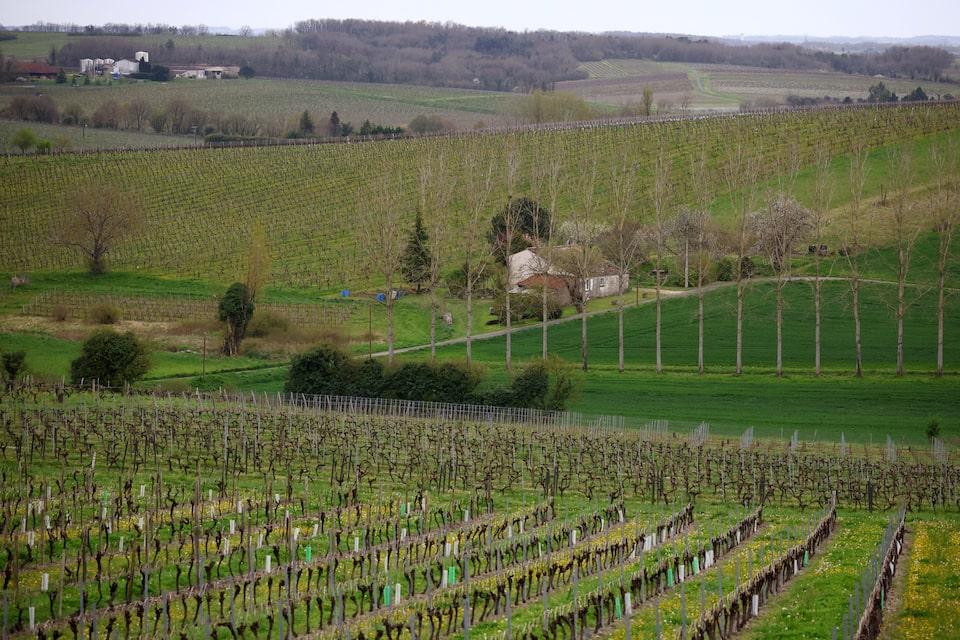
PARIS, Nov 24 (Reuters) - The French Agriculture Ministry said on Monday it would give the wine industry additional support of 130 million euros ($149.80 million) for the further uprooting of vines, to guard against excessive output, adding it would also ask the European Union to chip in. "The sector is suffering from a deteriorating situation, marked by the effects of climate change, which have repeatedly affected harvests for several years, the continuing decline in wine consumption – particularly red wines – and major geopolitical tensions," the ministry said in a statement. Sign up here. France has subsidised the removal of vines to counter oversupply in the face of falling wine consumption, an approach criticised by some producers for making southern areas more vulnerable to wildfires. French wine production is expected to rise 3% from last year's rain-hit season but fall 13% from the five-year average as a heatwave and drought in August and smaller vine area cut output in some key regions, the farm ministry said in September. "This new and very significant financial effort, despite a particularly difficult budgetary context and subject to the adoption of a finance bill, demonstrates the government's determination to save our wine industry in the long term and enable it to bounce back," Agriculture Minister Annie Genevard said in the statement. ($1 = 0.8678 euro) https://www.reuters.com/sustainability/climate-energy/france-help-wine-industry-with-150-million-aid-vines-uprooting-2025-11-24/
2025-11-24 20:08
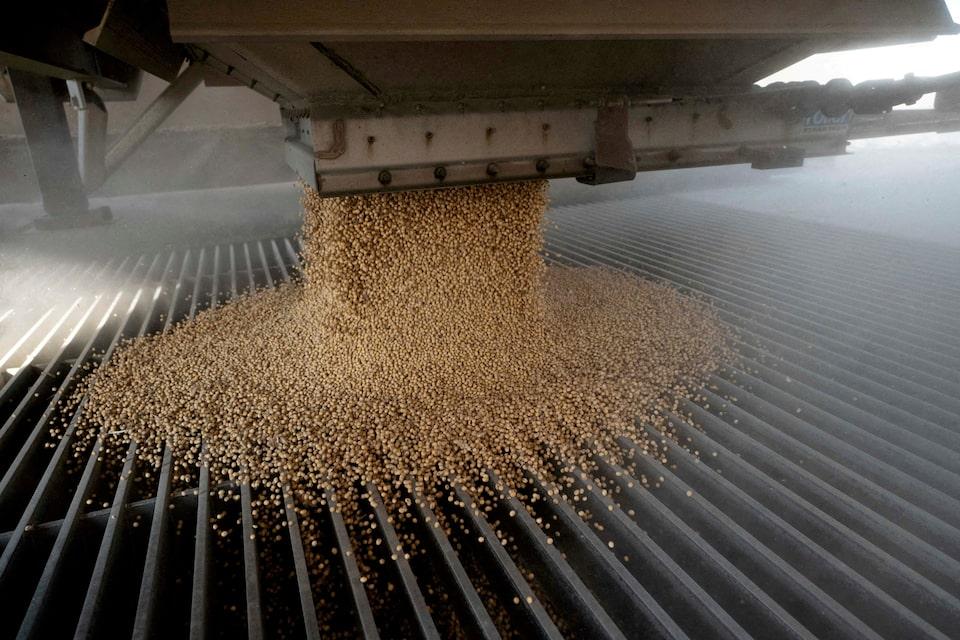
CHICAGO, Nov 24 (Reuters) - Two cargo vessels were headed for grain port terminals near New Orleans on Monday to load with the first U.S. soybean shipments to China since May, according to a shipping schedule seen by Reuters. A third vessel was en route to a Texas Gulf Coast grain terminal to be loaded with China-bound U.S. sorghum in the coming days in what will be the first American shipment of the feed grain to China since mid-March, the shipping schedule showed. Sign up here. U.S. farmers and grain traders have been awaiting shipments to China to resume after Beijing shunned U.S. crops for months due to a trade war with Washington, costing U.S. farmers billions on lost trade. China has booked nearly 2 million metric tons of U.S. soybeans and a smaller volume of wheat since a meeting between presidents Donald Trump and Xi Jinping in South Korea in late October, when the White House said Beijing agreed to buy 12 million tons of soybeans by the end of the year. China has not confirmed the deal and questions about the agreement or when any sales would ship have fueled uncertainty in grain markets. U.S. Agriculture Secretary Brooke Rollins said Monday that the Trump Administration expects to sign a deal within two weeks. The vessel Ocean Harvest is due to arrive at Cargill's Reserve, Louisiana, terminal and the vessel Tokugawa is scheduled to arrive at a Convent, Louisiana, terminal owned by Zen-Noh Grain this week, both to be loaded with U.S. soybeans, the shipping schedule showed. A third vessel, Bungo Queen, is due to arrive for loading with U.S. sorghum at the Archer-Daniels-Midland terminal in Corpus Christi, Texas, in the next week. Cargill, ADM and Zen-Noh did not immediately respond to requests for comment. https://www.reuters.com/world/china/three-vessels-bound-us-gulf-coast-terminals-load-soybeans-sorghum-china-2025-11-24/
2025-11-24 19:42
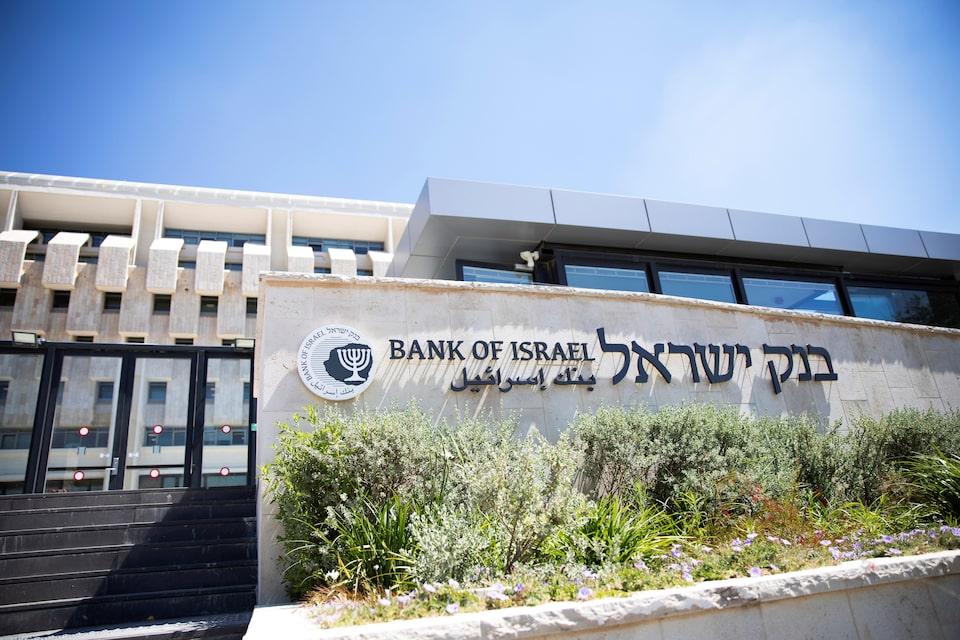
Benchmark rate cut to 4.25% from 4.5% Rate cut follows global trend and U.S.-brokered Gaza ceasefire Inflation steady at 2.5%, within target range Governor: Future cuts will be very gradual due to economic risks JERUSALEM, Nov 24 (Reuters) - The Bank of Israel cut interest rates by a quarter-point on Monday, its first reduction in nearly two years, citing a moderation in inflation leading up to the ceasefire in Gaza and said cuts will be very gradual over the next year. The cut in the benchmark rate (ILINR=ECI) , opens new tab to 4.25% from 4.5%, widely expected by analysts and financial markets, came after other global central banks had already begun to ease monetary policy and last month's U.S.-brokered truce between Israel and Palestinian militant group Hamas took hold. Sign up here. Bank of Israel Governor Amir Yaron told Reuters that economic conditions - mainly improved inflation data - had allowed for a rate reduction but cautioned that geopolitical risks remained, the labour market is tight, wages are rising and consumer demand is strong. Israel, and the world as a whole, is not going back to a zero rates environment, he said, pointing to the central bank's own forecast that the key rate would reach 3.75% by September 2026. "That is a still reasonable rate environment for the way we are seeing ... the ability of the economy right now to operate," Yaron said, adding that moving gradually would give policymakers the ability to monitor demand "in a way that won't require us to change course." He said that historically, countries face high inflation during wartime, hence the need to be cautious. The committee lowered the key rate by a quarter-point in January 2024 at the outset of the Gaza war but has taken a conservative stance since then, opting for caution during the two-year conflict while price pressures rose, largely due to supply constraints. But Israel's inflation rate has eased, and held steady at 2.5% in October to stay within an official 1-3% annual target range. The central bank acknowledged inflation has moderated in the past two months but that "forecasters project that there will be some increase in inflation at the end of the year, and that it will then decline and stabilize around the midpoint of the target range." At the same time, the Bank of Israel pointed to a sharp rebound in economic activity in the third quarter, gaining an annualised 12.4%, but that "its level remains lower than its long-term trend." Since the prior rates decision in late September, the shekel also has appreciated versus the dollar, euro and other trading partners, it said. "The data from recent months have... created a clear need for a cut," said Ron Tomer, president of the Manufacturers' Association. "The Bank of Israel’s decision to lower the interest rate is a responsible step that helps curb the appreciation and restore competitiveness to the economy," said Tomer, who called for a cut again before its next meeting in early January. The October 10 ceasefire in the two-year Gaza war has eased the conflict and, although looking increasingly fragile, has for now reduced geopolitical risk and eased price pressures. "Today’s interest rate cut joins a series of steps and clear signs — Israel is on the path to tremendous economic growth," said Finance Minister Bezalel Smotrich. https://www.reuters.com/world/middle-east/bank-israel-cuts-key-rate-by-25-bps-after-gaza-ceasefire-2025-11-24/
2025-11-24 19:14
Barrick shares surge 8.5% to end at record high Barrick agreed to drop World Bank arbitration, Mali to release jailed employees Barrick's Loulo-Gounkoto mine generated $900 million in 2024 Nov 24 (Reuters) - Barrick Mining (ABX.TO) , opens new tab said on Monday it had reached an agreement with Mali's government to resolve all their disputes over the Loulo-Gounkoto gold mining complex after two years of negotiations, sending shares in the Toronto-listed company to a record high. Reuters reported on Friday that the parties had an agreement in principle. Sign up here. The Canadian miner said in a statement it will drop the arbitration case against Mali at the World Bank dispute tribunal, and in return, Mali will drop all charges against Barrick and its affiliates, release four employees from jail, and give operational control back to Barrick. Mali has also agreed to extend Barrick's mine permit for an additional 10 years, and Barrick has agreed to sign the 2023 mining code, according to two people aware of the development. Barrick is aiming to restart operations by January 1, said Mamadou Samake, Barrick's director of West Africa, in a video interview distributed by the government. Mali and Barrick began a fresh round of talks after the miner's interim CEO Mark Hill wrote a letter to the government seeking a resolution, according to a person aware of the development. Mali's Mining Ministry said in a statement Barrick would soon be allowed to resume normal operations at Loulo-Gounkoto. Shares of Barrick jumped 8.5% to close at an all-time high of C$55.93 in Toronto. The two sides had been in a standoff for two years over the implementation of the West African country's new mining code that gives Mali a bigger share of revenue from gold miners as gold prices surged to a record high. "The logical thing after this for Barrick would be to get out (of Mali)," said Martin Pradier, an analyst covering Barrick for Veritas Investment Research. This will be the likely outcome, he said, since the new mining code is no better than the previous one, and a company like Barrick cannot operate in a place with "flimsy regulations." Mali's military-led government seized 3 metric tons of gold from Barrick's mine earlier this year and appointed a provisional administrator to take charge of the mine. This led Barrick to write off $1 billion in revenue from the mine and also saw the departure of its former CEO Mark Bristow. Loulo-Gounkoto was one of Barrick's most profitable mines when it was under its control, generating almost $900 million in revenue in 2024. https://www.reuters.com/sustainability/sustainable-finance-reporting/barrick-mali-government-agree-resolve-gold-mine-dispute-2025-11-24/