2026-02-05 21:12
Mexico in talks with US to avoid tariff reprisals, sources say Cuba faces fuel shortages, relies on Mexican supplies Mexico considers humanitarian aid to Cuba amid tariff threats MEXICO CITY, Feb 5 (Reuters) - Mexican officials are evaluating how to send fuel to Cuba to help meet basic needs such as electricity and transportation without triggering reprisals from Washington, which has threatened tariffs against countries supplying fuel to the Caribbean island, four sources familiar with the matter said. The sources said high-level Mexican officials have been talking to U.S. counterparts in order to gain clarity on the scope of the tariff threat outlined by President Donald Trump in an executive order and see whether there was a way to deliver the much-needed fuel. It remains uncertain whether Mexico will find a solution. Sign up here. The White House referred Reuters to previous comments by Trump, who on Monday told reporters Mexico would stop sending oil to Cuba, without elaborating on why he believed that to be the case. The U.S. State Department and the Mexican presidency did not immediately respond to requests for comment. Mexico's Foreign Ministry said it had no information on the matter. Cuba needs to import fuel for two-thirds of its energy needs, and is struggling with worsening power outages and long lines at gas stations. Shipments of Venezuelan oil to the island ceased following a U.S. blockade of Venezuelan tankers in December and the capture of President Nicolas Maduro in early January, leaving Mexico as Cuba's largest supplier. However, in mid-January, the Mexican government halted shipments of crude and refined products amid pressure from the Trump administration. Washington subsequently threatened tariffs on countries that supply oil to the communist-ruled island, saying that Cuba poses an "extraordinary threat" to U.S. national security - a claim Havana denies. "There are talks happening almost every other day," said one of the sources, who requested anonymity to discuss private matters. "Mexico doesn't want tariffs imposed, but it is also firm in its policy of helping the Cuban people," the source added. The Cuban government said on Thursday it was preparing a plan for "acute fuel shortages" and would release details over the next week. This week, U.N. Secretary-General António Guterres warned that Cuba risks a humanitarian "collapse" if it does not receive oil to meet its needs. Mexico, and in particular the ruling Morena party, has long maintained ideological and historical ties with Cuba, and President Claudia Sheinbaum is under pressure from within her coalition to not abandon Havana. Three of the four sources said talks are progressing and they were hopeful a solution could be reached. Mexico could dispatch a tanker with gasoline to the island, as well as food and other supplies all classified as humanitarian aid within days if an agreement is reached, two of the sources said. "Imposing tariffs on countries that supply oil to Cuba could trigger a far-reaching humanitarian crisis, directly affecting hospitals, food, and other basic services for the Cuban people, a situation that must be avoided through respect for international law and dialogue," Sheinbaum said last Friday. https://www.reuters.com/business/energy/mexico-seeking-way-to-send-fuel-cuba-without-being-hit-by-us-tariffs-sources-say-2026-02-05/

2026-02-05 20:38
Government payments to make up nearly 29% of farm income in 2026 Production expenses to steady; fuel and pesticide costs to decline Lawmakers warns of economic stress in farm sector CHICAGO, Feb 5 (Reuters) - In a sign of growing stress for U.S. farmers, the Agriculture Department forecast on Thursday that U.S. net farm income would fall 0.7% this year, despite near-record government payments that are expected to account for nearly 29% of producers’ bottom line. Net farm income, a broad measure of profitability in the agricultural economy, is forecast to drop 0.7% to $153.4 billion in 2026 from the year before, USDA said. When adjusted for inflation, net farm income is projected to decrease by $4.1 billion or 2.6%. Sign up here. Without government payments, net farm income this year would fall nearly 12% to $109.1 billion, according to agency data. "Government payments are doing a lot of the work in supporting crop producers," said Wesley Davis, a partner at Meridian Agribusiness Advisors, an agricultural economics consultancy in New York City. But farmers, economists and lawmakers warn that even more government support may be needed to offset the impact of low crop prices, a global grain glut, rising operational costs and lost export sales due to Trump-era trade and economic policy changes. Many farmers are increasingly dependent on federal support to pay their bills - while also taking on record levels of debt - even as government payments near record levels, economists said. USDA forecast that producers will receive $30.5 billion in direct payment support in 2025 and $44.3 billion in 2026, excluding additional payouts from federal crop insurance indemnities. Such levels have not been seen since 2020 and 2021 amid COVID-19 pandemic upheaval and trade disruptions during President Donald Trump’s first term. On Thursday, USDA said the higher support figures reflect payments from Farm Bill programs triggered by falling crop prices, along with continued high levels of supplemental and disaster assistance. The data, which is published three times a year, was not released in December due to an earlier federal government shutdown and those findings were incorporated into the regular February report. Agricultural economists said that delay has made it harder to assess stress in the sector. USDA forecast that farmers' cash receipts - what they get paid for their crops - would rise this year for corn, hold generally steady for soybeans and fall for wheat. Livestock receipts are expected to drop due mainly to lower egg and milk prices, while cattle receipts will continue to increase. The chair of the U.S. Senate’s agriculture committee said on Tuesday that many farmers were suffering heavy losses, while more than two dozen former USDA officials and industry leaders cautioned lawmakers that U.S. agriculture faced the risk of a “widespread collapse” in part because of the Trump administration's policies. https://www.reuters.com/business/finance/us-farm-income-set-fall-2026-despite-surge-government-payments-2026-02-05/

2026-02-05 20:25
NEW YORK, Feb 5 (Reuters) - United Steelworkers is asking workers at BP's (BP.L) , opens new tab 440,000-barrel-per-day refinery in Whiting, Indiana, to prepare for a strike or lockout, the union said on Thursday after weeks of negotiations with the British oil major that did not yield results. The comments come after 98% of the 800 workers the local USW union represents at the Whiting refinery voted to authorize a strike. Sign up here. “BP has rejected almost all of our proposals with very little discussion,” said Eric Schultz, president of USW 7-1. "We will continue to bargain in good faith and stand united in demanding a fair contract for all of our local union members." The union had said BP proposed workplace changes, including cutting more than 200 union jobs in operations, maintenance and environmental safety as well as stripping away some workplace protections. "Allegations that there has been little dialogue between BP and the union are inaccurate," a BP spokesperson said, adding the company remains focused on reaching an agreement with the union and avoiding work stoppage. The previous three-year collective bargaining agreement expired on January 31. The Whiting refinery, the largest refinery in the U.S. Midwest, produces key transportation fuels including gasoline, diesel fuel and jet fuel. https://www.reuters.com/business/world-at-work/union-asks-workers-bps-whiting-indiana-oil-refinery-prepare-strike-or-lockout-2026-02-05/

2026-02-05 18:55
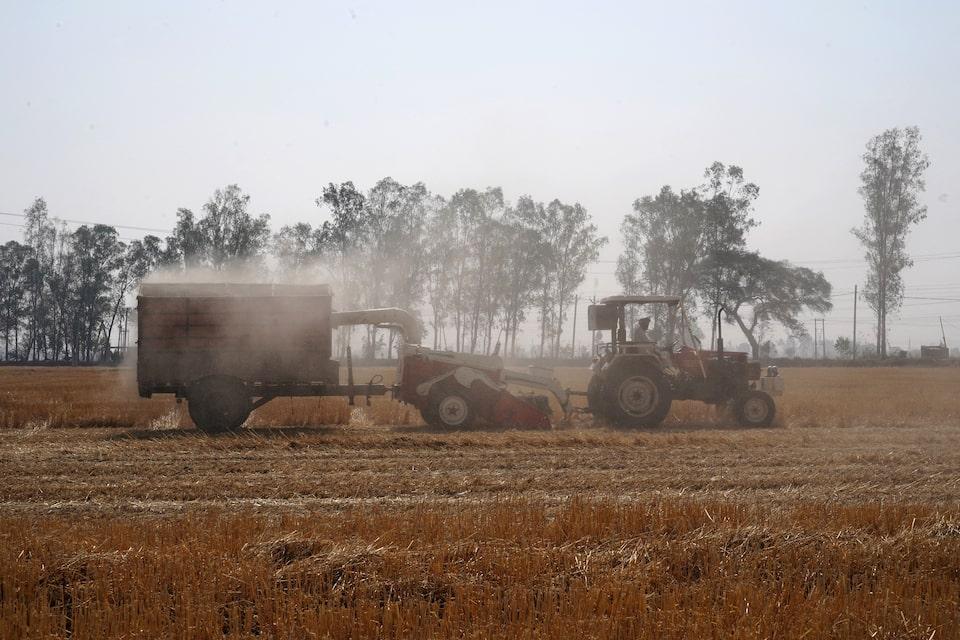
NEW DELHI, Feb 5 (Reuters) - India has lifted limits on the amount of wheat stocks that traders, wholesalers and retailers can hold, the government said in a statement on Thursday, citing comfortable domestic supplies and easing prices. The world's second largest wheat producer imposed limits on the amount of wheat that traders, wholesalers and retailers could hold in May 2025 as part of efforts to curb hoarding and rein in rising prices. Sign up here. Wheat inventories are higher than last year, indicating comfortable supplies, the statement said. Traders, wholesalers and retailers will, however, be required to declare their stock positions every week, it added. Last month, New Delhi allowed the export of 500,000 metric tons of wheat flour and related products, easing curbs imposed in 2022. https://www.reuters.com/world/india/india-lifts-wheat-stock-limits-supplies-rise-2026-02-05/
2026-02-05 18:53
HOUSTON/MADRID, Feb 5 (Reuters) - About 2 million barrels of Venezuelan heavy crude are being sent to refineries owned by oil producer Repsol (REP.MC) , opens new tab in Spain, following purchases the company negotiated with trading house Trafigura, according to shipping schedules seen by Reuters. Trafigura and Vitol were granted U.S. licenses last month to export millions of barrels of Venezuelan oil to the U.S. and other destinations, following the U.S. capture of President Nicolas Maduro. The companies have since been storing the oil in Caribbean terminals and marketing cargoes to refiners in the U.S. and Europe. Sign up here. Spain had not imported Venezuelan crude since the first quarter of last year before U.S. President Donald Trump revoked all authorizations for foreign companies to receive and carry oil from the U.S.-sanctioned country. On Friday, the U.S. Treasury Department issued a broad license for U.S. companies to load, transport, store, sell and refine Venezuelan oil. Some Venezuelan heavy crude grades are a good fit for Repsol's refineries, including Cartagena, the company has said, showing interest in stable supplies from the South American country. Venezuela's interim president, Delcy Rodriguez, on Wednesday met executives from Repsol and French company Maurel & Prom (MAUP.PA) , opens new tab in Caracas, following the approval of a sweeping reform of the country's main oil law last month. The reform gave six months to the government and joint-venture partners of state company PDVSA to negotiate and update the terms of their partnerships. Repsol and Trafigura declined to comment. One of two cargoes of Merey heavy crude for Repsol, on board Suezmax tankers, departed in early February from the Jose port, operated by PDVSA. The second one is about to finish loading this week, the schedule showed. https://www.reuters.com/business/energy/about-2-million-barrels-venezuelan-oil-being-shipped-spains-repsol-shipping-2026-02-05/

2026-02-05 18:21
Trump's policies initially boosted crypto investments, now facing pressure from Fed changes Strategy's shares plummet, impacting earnings forecast for 2025 Smarter Web Company shares fall nearly 18%, joining other struggling crypto firms Feb 5 (Reuters) - Turbulence in the cryptocurrency market is dragging down shares of companies that hold bitcoin and other digital assets on their balance sheets, sparking concerns over potential broader strains in the sector. The number of publicly traded companies investing in cryptocurrencies in the hope they would appreciate boomed last year. Sign up here. Many were buoyed by U.S. President Donald Trump's crypto-friendly stance and inspired by the meteoric success of billionaire Michael Saylor's Strategy (MSTR.O) , opens new tab, which started out as software company MicroStrategy and began buying and holding bitcoin in 2020. However, concerns over the valuations of artificial intelligence companies and uncertainty over the path of U.S. Federal Reserve rate cuts are weighing on risk assets, pushing bitcoin to its lowest level since November 2024 and sending many "digital asset treasury" or DAT companies wobbling. Shares in Strategy, the best known of these bitcoin buyers, have fallen from $457 in July to as low as $111.27 on Thursday, the lowest since August 2024. Strategy was last trading down more than 11% on the day. Strategy did not immediately respond to a request for comment. In December, Strategy slashed its 2025 earnings forecast, citing a weak run in bitcoin, and announced plans to create a reserve to support dividend payments. The company said it expected to report earnings between a $6.3 billion profit and $5.5 billion loss for the full year, compared to its previous forecast of a net profit of $24 billion. Shares of the UK's Smarter Web Company (SWC.L) , opens new tab, another bitcoin buyer, were also hard-hit on Thursday, down nearly 18%. Rival bitcoin buyers Nakamoto Inc (NAKA.O) , opens new tab and Japan's Metaplanet (3350.T) , opens new tab fell almost 9% and more than 7%, respectively. Bitcoin is down nearly 20% since the start of the year, with selling pressure intensifying after Trump nominated Kevin Warsh as the next Fed chair, which analysts have said could lead to a smaller Fed balance sheet - a negative for risk assets like cryptocurrencies. Bitcoin has wiped out all of its gains since the election of Trump, who pledged on the campaign trail to overhaul policies toward digital assets. The world's biggest cryptocurrency was last trading at $67,651. “As Bitcoin continues its slide below the psychological barrier of $70,000, it’s clear the crypto market is now in full capitulation mode," said Nic Puckrin, investment analyst and co-founder of crypto analysis platform Coin Bureau. "If previous cycles are anything to go by, this is no longer a short-term correction, but rather a transition... and these typically take months, not weeks." COMPANIES STOCKPILING OTHER TOKENS ALSO SLIDE While institutional investors can buy tokens directly, DATs offer the chance to leverage returns and let more cautious investors gain crypto exposure through regulated public firms. Still, sustained pressure on the shares of crypto treasury companies could complicate the ability of these firms to raise additional capital to buy more crypto tokens, the crux of their business model. Many executives at such firms say their success will be rooted in their ability to make smart investing decisions and are looking for new ways to boost shareholder value, Reuters previously reported. Companies stockpiling other crypto tokens were also trading lower on Thursday. Alt5 Sigma, a company that announced last year it would stockpile the Trump family's WLFI token, was down 8.4%. SharpLink Gaming, which holds ether, was down 8%, while Forward Industries, which holds solana, was down nearly 6%. https://www.reuters.com/markets/wealth/bitcoin-slump-shakes-companies-that-jumped-crypto-hoarding-bandwagon-2026-02-05/