2025-11-24 13:06
Deutsche Bank expects 21% rise HSBC targets 7,500 Both brokerages bet on AI momentum Nov 24 (Reuters) - Deutsche Bank on Monday projected the S&P 500 (.SPX) , opens new tab index to climb to 8,000 by the end of next year, citing strong corporate earnings and artificial intelligence-driven gains, making it the most bullish among major global brokerages. The European brokerage's target implies a massive 21% upside to the index's last close of 6,602.99. It also forecasts S&P 500 earnings-per-share to hit $320. Sign up here. In a separate note on Monday, Britain's HSBC set its 2026 year-end target at 7,500, also betting on AI strength. The benchmark index has gained about 12.3% this year, spurred broadly by investor optimism around AI, robust corporate profits and expectations of falling interest rates, despite fears of a market bubble and high tech valuations. "Bubble or not – history shows that rallies can last for quite some time (3-5 years in the dot-com/housing boom), so we see more to come and recommend a broadening of the AI trade," HSBC analysts said. Mega-cap tech names such as Nvidia (NVDA.O) , opens new tab, Microsoft (MSFT.O) , opens new tab and Alphabet (GOOGL.O) , opens new tab remain the main engines of the rally, as AI-driven spending underpins record levels of capital expenditure. "Rapid AI investment and adoption will continue to dominate market sentiment," Deutsche Bank strategists said in their 2026 global outlook note. "We see (U.S.) discretionary investor positioning as a source of potential market upside." Earlier this month, Morgan Stanley forecast U.S. stocks to outperform peers next year and estimated the index to hit 7,800 by end of 2026. https://www.reuters.com/business/deutsche-bank-sees-sp-500-rising-8000-by-end-2026-2025-11-24/
2025-11-24 12:50
Gupta accuses Trafigura staff of devising fraudulent scheme Former Trafigura trader denies involvement in alleged $600 million fraud Trafigura admits oversight in verifying nickel authenticity LONDON, Nov 24 (Reuters) - Trafigura's former head nickel trader denied allegations by Indian businessman Prateek Gupta on Monday in a London trial that he helped devise a $600 million fraud to swap expensive metals for cheap or worthless ones. Geneva-based Trafigura sued Gupta over two years ago, alleging he was the mastermind of a fraud in which he and his companies agreed to provide high-quality 99.8% pure nickel but delivered steel or scrap instead. Sign up here. Gupta, based in Dubai, has retorted that Trafigura staff devised the scheme, coming up with a complex merry-go-round of transactions that would appear to inflate its standing in nickel trading. "I did not devise, know of, or participate in any such arrangement," Sokratis Oikonomou, who became head of nickel trading at Trafigura in 2017, told a London High Court trial in a written witness statement. "I am insulted by the suggestion that I would sacrifice my integrity and jeopardise my career to devise and propose such a plan." Trafigura terminated his employment in January 2023 after around 16 years with the company. EVIDENCE AND INTERNAL PROBE In December 2023, Gupta and his lawyers produced chat exchanges and emails with Trafigura staff that he alleges are proof that he was not alone in the operation. Trafigura has previously said it looked into whether staff colluded with Gupta, but was satisfied by their denials. Gupta said Oikonomou proposed in May 2019 to boost nickel trading between Trafigura and Gupta's firms to 50,000 metric tons a year, but Gupta said he replied that there was not enough high-grade nickel and proposed to include scrap and alloys. Oikonomou rejected trading low-grade nickel in the open, because Trafigura's bank Citi would only finance high-grade nickel, Gupta said. Citi has declined to comment on the fraud case. Gupta alleged that Oikonomou proposed a "transit financing" operation, in which some Gupta-owned or linked companies would sell nickel to Trafigura and other Gupta-associated firms would buy them back when they arrived at ports to ensure others did not discover the substitution. Trafigura has acknowledged that the two parties operated a transit financing operation, but denies it was devised to surreptitiously trade low-grade nickel or cheap metals. Trafigura has also acknowledged it paid for what it thought was pure nickel without verifying its authenticity, but said the lack of valid documents, commodity codes and testing was an oversight. Gupta remains subject to a freezing order on his assets, which Gupta unsuccessfully sought to lift in December 2023. https://www.reuters.com/sustainability/trafiguras-former-top-nickel-trader-denies-he-colluded-600-million-fraud-2025-11-24/
2025-11-24 12:39
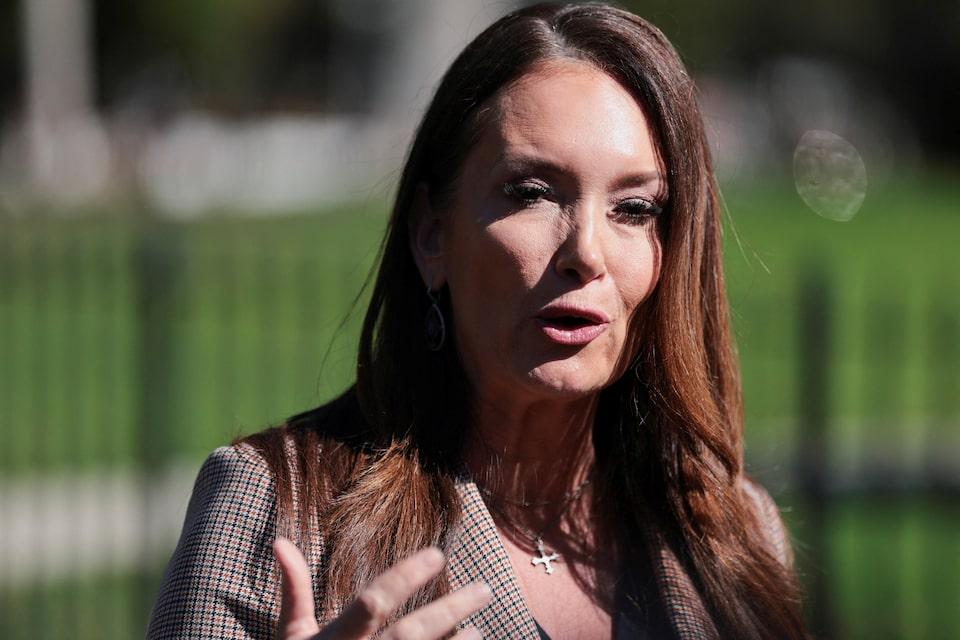
USDA head Rollins expects farmer aid package announcement within two weeks American Farm Bureau Federation says aid 'urgently needed' Rollins confident in China's commitment to soybean purchases WASHINGTON, Nov 24 (Reuters) - The Trump administration expects to announce an aid package for U.S. farmers within two weeks and a deal on Chinese soybean purchases, U.S. Agriculture Secretary Brooke Rollins said on Monday without providing further details. The administration of President Donald Trump has said for months that it would issue aid for farmers hit by low crop prices and trade disputes, but has not yet issued any plan or amount for the aid. U.S. farmers lost billions in soybean sales this year as top buyer China turned to Brazil and Argentina amid tense trade talks with Washington. Sign up here. "We'll have an announcement probably in the next week or two on what that's going to look like," Rollins, the head of the U.S. Department of Agriculture, told CNBC of the farmer aid. The American Farm Bureau Federation said on Monday that the aid is "urgently needed" as farmers face the compounding pressures of higher input costs and lower crop prices. In October, after Trump met with Chinese President Xi Jinping in South Korea, China agreed to buy 12 million metric tons of American soybeans through January, according to the Trump administration. China purchased nearly 1.6 million metric tons of soybeans over three days last week, its largest single-week tally in two years, buoying crop prices. Two cargo vessels were en route to grain terminals near New Orleans on Monday to load with China's first U.S. soybean shipments since May, according to a shipping schedule seen by Reuters. Asked about China's commitments to buy U.S. soybeans, Rollins said: "We've got a significant way to go." "I know they are inking the deal this week or next week," Rollins said, adding that she was confident China would honor its purchase commitments. "Every sign is their commitment remains true that they will indeed buy, or purchase, 12 million metric tons or put the order in," she said. "Even if the purchase order comes in before the end of December, those will move early next year," she added. Trump said in a Monday post on Truth Social that he and Xi had discussed soybeans and other farm products in a phone call and that they had "done a good, and very important, deal for our Great Farmers." The Chinese embassy did not immediately respond to a request for comment. https://www.reuters.com/world/china/deals-farmer-aid-chinese-soybean-purchases-coming-within-weeks-usda-chief-says-2025-11-24/
2025-11-24 12:08
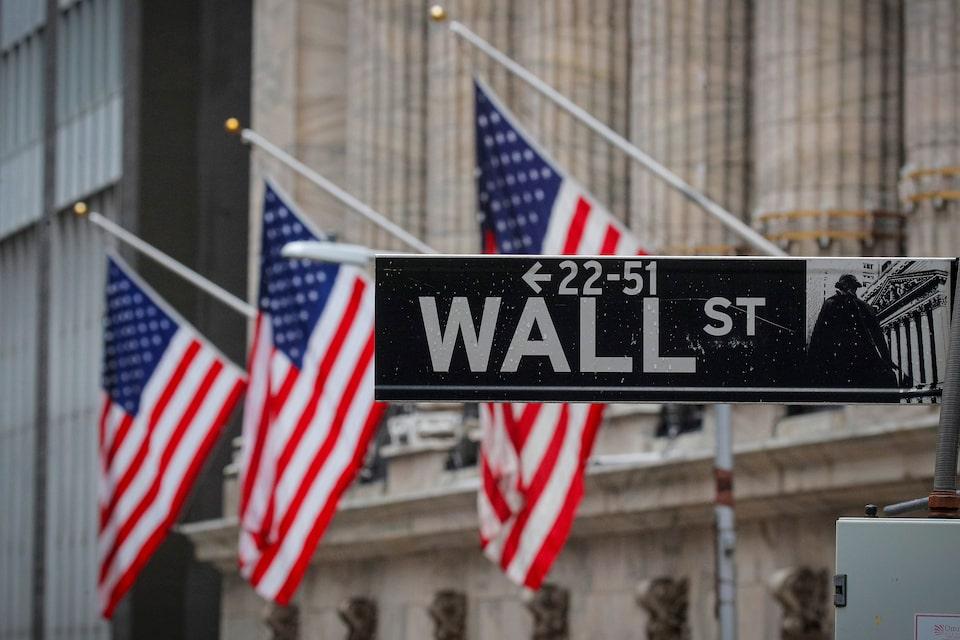
Nov 24 (Reuters) - Financial services firm SWB will go public in the U.S. through a merger with Soulpower Acquisition Corp (SOUL.N) , opens new tab in a $8.1 billion deal, the special purpose acquisition company said on Monday. Blank-check deals have made a strong comeback on Wall Street in 2025 after a years-long slump, with seasoned SPAC sponsors turning back to the alternative to traditional initial public offerings. Sign up here. SWB is a newly formed vehicle established to launch Soul World Bank, which intends to offer a suite of financial services, including stablecoins and banking services. The company plans to acquire a banking license from the Bank of Asia, which is currently in liquidation in the British Virgin Islands. Separately, SWB will partner with blockchain developer Animoca Brands to develop and issue a cross-border stablecoin. A SPAC is a shell company that raises money through an IPO to merge with a private business, allowing it to go public without a traditional IPO. SWB has secured an equity facility of up to $5 billion with CREO Investments. The combined company will trade on the New York Stock Exchange under the ticker symbol "SOUL". SWB founder Justin Lafazan will become the chairman of the combined company following the closing of the deal, which is expected to happen in the first quarter of 2026. https://www.reuters.com/legal/transactional/financial-services-firm-swb-list-nyse-81-billion-spac-deal-2025-11-24/
2025-11-24 12:07
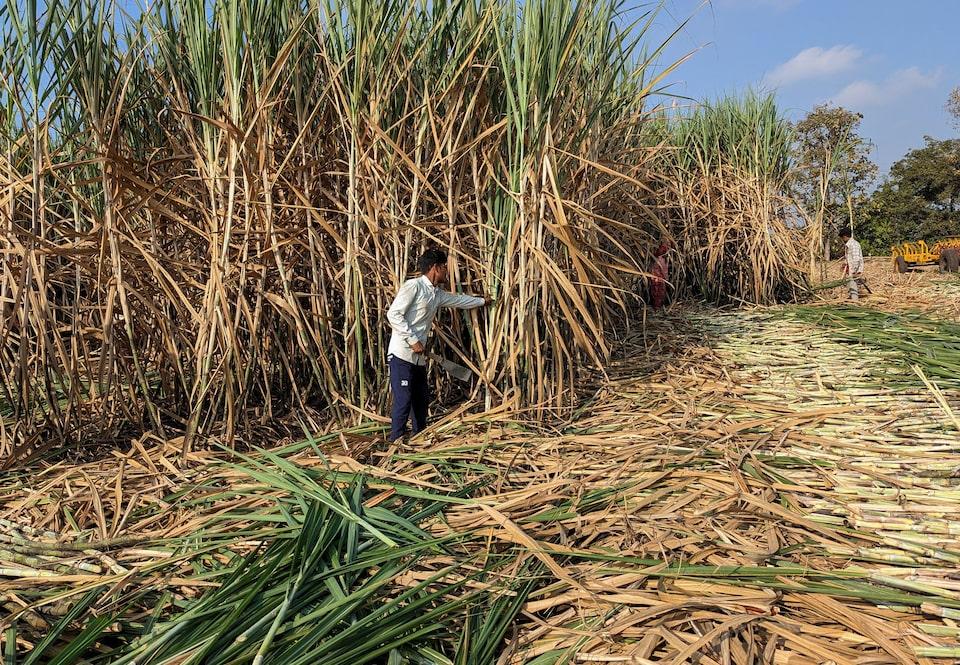
Exporters unlikely to fulfil full 1.5 million ton quota Lower export volume could help support global prices MUMBAI, Nov 24 (Reuters) - Indian sugar mills are struggling to secure export deals as global prices remain below domestic rates, discouraging new contracts and making it unlikely they will ship the entire 1.5-million-metric-ton export quota, trade officials told Reuters. A smaller export volume from India, the world's second-largest sugar producer, could help support global prices , , which are trading near their lowest level in five years. Sign up here. New Delhi earlier this month allowed exports of 1.5 million metric tons in the current season, which started on Oct. 1, as a decline in the diversion of sugar for ethanol production is expected to leave a larger domestic surplus. NO INCENTIVE FOR EXPORTS "Mills aren't interested in exporting right now because global prices are lower than domestic prices. There's no incentive for exports," said Rahil Shaikh, managing director of MEIR Commodities India. "They'll return to the export market only if global prices rise or if local prices fall closer to global levels." Indian sugar is offered around $450 per ton on a free-on-board (FOB) basis, or nearly $25 per ton above benchmark London futures, four dealers with trade houses said. Mills have so far contracted around 10,000 tons of sugar for shipments to Afghanistan and East African countries, said a New Delhi-based dealer with a global trade house. Higher-quality sugar is now cheaper on the world market than Indian supplies, but in the first quarter of 2026 buyers will still depend on India as Brazil, the top producer, will be off the market, the dealer said. Sugar-cane crushing in Brazil usually runs between April to November. ASIA, AFRICA DEMAND LIKELY TO GROW IN NEW YEAR Sugar demand is likely to jump from Asian and African countries in January and February ahead of Muslim fasting month of Ramadan, said a Mumbai-based dealer with a global trade house. Communal feasting during Ramadan, which will begin in mid-February and run through mid-March, typically drives an uptick in sugar consumption. "We're probably not going to ship out the full quota this year. Unless global prices suddenly jump, which doesn't look likely, exports will likely end up around 800,000 tons," said Shaikh of MEIR Commodities. In the last marketing year India had allowed exports of 1 million tons but mills managed to export around 775,000 tons. https://www.reuters.com/world/india/indias-sugar-export-quota-risk-mills-avoid-low-priced-global-market-2025-11-24/
2025-11-24 11:39
BELGRADE, Nov 24 (Reuters) - Serbia has sufficient fuel reserves to supply the domestic market, the government said on Monday, as the country's crucial NIS (NIIS.BEL) , opens new tab oil refinery faces possible shutdown over U.S. sanctions on its Russian owners. NIS, which covers most of the country's needs, last week requested a licence from the U.S. Treasury Department’s Office of Foreign Assets Control (OFAC) to continue operating as its majority Russian owners seek a buyer for their stake. Sign up here. The Serbian government said in a statement that it had discussed the energy situation in the country and how to maintain a stable supply of petroleum products to the market. 'NO REASON FOR CONCERN' "The economy and citizens have no reason for concern, as there are sufficient quantities of all petroleum derivatives," the government statement said. Gazprom Neft (SIBN.MM) , opens new tab controls 44.9% of NIS and Gazprom (GAZP.MM) , opens new tab 11.3%. Serbia owns 29.9%, with the rest held by small shareholders. Washington is seeking complete Russian divestment from NIS and has given the company's owners three months to find a buyer. OFAC placed sanctions on Russia's oil sector in January, but their implementation in relation to NIS was postponed repeatedly before finally taking effect on October 8. Banks have stopped processing NIS payments and Croatia's JANAF (JANF.ZA) , opens new tab pipeline has stopped delivering crude oil to the refinery. On Oct 29, Serbia's energy minister Dubravka Djedovic Handanovic said that the NIS refinery, located just outside capital Belgrade, will not be able to operate beyond November 25 without new crude supplies. NIS operational reserves and all other reserves stored with NIS totalled 89,825 tons of diesel and 53,648 tons of gasoline, Djedovic Handanovic said on Sunday. Last week, she said the government had approved the import of 38,000 metric tons of petrol and 66,000 tons of diesel for state reserves. https://www.reuters.com/business/energy/serbia-says-it-has-sufficient-fuel-reserves-key-refinery-faces-sanctions-2025-11-24/