2025-11-23 00:48
SYDNEY, Nov 23 (Reuters) - Thousands of people in Australia's Northern Territory were without power on Sunday after a tropical cyclone brought destructive winds to the region, including capital Darwin, overnight. Fina, a category three cyclone, was on Sunday clocking wind gusts of up to 205 kph (127 mph) as it moved away from Darwin after passing the city late on Saturday as a "severe tropical cyclone", the nation's Bureau of Meteorology said. Sign up here. For residents of Darwin, population of around 140,000, Fina conjured painful memories of Cyclone Tracy, which wiped out much of the city on Christmas Day 1974, killing 66 people, in what was one of Australia's worst natural disasters. Chief Minister Lia Finocchiaro said about 19,000 people had lost power due to Fina, which had also caused property damage and submerged roads, but resulted in no injuries to residents. "This cyclone saw a territory that was united and prepared for what was to come," Finocchiaro said in a media conference televised from Darwin. Authorities urged residents of Darwin, a northern garrison city, to stay clear of downed power lines, as crews started damage assessments. Darwin International Airport, which closed on Saturday as a precaution over Fina, said on Sunday it was "working to re-establish operations as soon as it is safe to do so". Category three tropical cyclones, two levels below the highest danger rating, typically damage structures, crops and trees and cause power failures, according to the weather bureau. In March, ex-tropical cyclone Alfred hit neighbouring Queensland, closing schools and leaving hundreds of thousands of people without power. https://www.reuters.com/business/environment/tropical-cyclone-fina-strikes-australias-northern-territory-shuts-airport-2025-11-23/

2025-11-23 00:33
Nov 22 (Reuters) - Britain on Saturday rolled out a critical minerals strategy designed to reduce dependence on foreign suppliers by 2035, with targets to source 10% of domestic demand from UK production and 20% from recycling, the government said, as global competition for these essential resources intensifies. Backed by up to 50 million pounds in new funding, the strategy seeks to ensure no more than 60% of the UK's supply of any one critical mineral comes from a single country by 2035, according to a statement. Sign up here. British Prime Minister Keir Starmer said in the statement critical minerals "are the backbone of modern life and our national security," arguing that boosting domestic production and recycling would help shield the economy and support efforts to lower living costs. The government said the UK currently produces 6% of its critical mineral needs domestically. Under the plan, it wants to expand domestic extraction and processing, with a particular focus on lithium, nickel, tungsten and rare earths. It aims to produce at least 50,000 tonnes of lithium in the UK by 2035. Britain faces an urgent need for a secure, long-term supply of critical minerals, including copper, lithium and nickel, which are essential for smartphones and electric vehicles and increasingly crucial for building data centers that power artificial intelligence. British demand for essential materials is climbing sharply, with copper consumption projected to nearly double and lithium demand expected to surge by 1,100% by 2035, Britain's government said. The strategy underscores China’s grip on critical mineral supplies , opens new tab, leaving the sector exposed to price swings, geopolitical strains and sudden disruptions. Britain noted China accounts for about 70% of rare earth mining and 90% of refining, a dominance that puts countries such as the UK at risk. Earlier this year, Britain struck a minerals cooperation deal with Saudi Arabia aimed at bolstering supply chains, opening doors for British firms, and drawing fresh investment into the UK. https://www.reuters.com/world/uk/britain-unveils-critical-minerals-strategy-cut-reliance-foreign-supply-2025-11-23/

2025-11-23 00:04
SEOUL, Nov 23 (Reuters) - South Korea issued Level 1 forest fire response alert early on Sunday, as a wildfire erupted in the forests of Yangyang in Gangwon Province in the northeast part of the country, forcing the evacuation of hundreds of people. The Korea Forest Service activated Level 1 alerts as firefighting efforts continued in the popular camping and beach town, which is now estimated to cover between 10 and 50 hectares. Sign up here. Forest authorities deployed 101 fire suppression vehicles and 326 personnel to contain the blaze and 25 helicopters are on their way to be deployed on Sunday. https://www.reuters.com/business/environment/firefighters-battle-blaze-south-koreas-gangwon-province-2025-11-23/

2025-11-22 23:17
Country's emissions and some power bills are down Electric utilities struggle with weak demand, high debt Climate ministry says Lahore could see negative power demand BELEM, Brazil, Nov 22 (Reuters) - Pakistan's rooftop solar generation will for the first time exceed power demand on the country's electrical grid during daytime hours in some major industrial regions next year, a senior government official told Reuters. The outlook reflects a record boom in the country's solar panel installations in recent years that has delivered lower emissions and reduced power bills for some, but also disrupted the finances of debt-laden utilities due to a protracted decline in demand for grid-based electricity. Sign up here. "Pakistan will experience negative grid-linked demand during certain daytime hours because behind-the-meter solar is offsetting grid consumption completely," Aisha Moriani, secretary of Pakistan's climate change ministry told Reuters on the sidelines of the COP30 climate conference in Brazil. While regions in Europe and Australia sometimes experience negative electricity prices due to solar oversupply and low demand, Pakistan would be among the first major emerging markets where rooftop generation could exceed grid-linked demand in major areas entirely for lengthy periods. "Negative demand" is likely in the northwestern city of Lahore, which has some of the country's highest solar penetration, followed by Faisalabad and Sialkot, where industrial areas are driving solar adoption, she said. Power cuts and tariff hikes have pushed Pakistan's 250 million people to accelerate solar adoption and made it the world's third-largest panel importer, with solar's share in generation exceeding its neighbour China. The south Asian nation will see more frequent negative-demand events, especially during bright summer afternoons, industrial holidays and moderate temperature days with high solar output, said Moriani, Pakistan's lead negotiator at COP30. "Pakistan's challenge is not whether renewable energy will grow, it is how fast the grid, regulation, and market design can evolve to keep pace," she said. The south Asian nation is planning to introduce new tariffs for large solar users, as well as changes to fee structures to ensure businesses with panels share equally in the costs of grid upkeep, she said. Pakistan's grid-linked power demand is expected to grow 3-4% this year, slower than historical averages. Next year, consumption is expected to rise more steeply but could be impacted more by higher solar use, Moriani said. The surge in solar use has also pushed Pakistan to renegotiate its LNG contracts with top supplier Qatar and cancel cargoes supplied by Italy's Eni, Moriani said. Pakistan is looking for lower prices, flexible delivery schedules and potentially fewer cargoes, she said. While there were no formal negotiations with Qatar at COP30, the event provided "diplomatic space for engagement with energy ministers and commercial representatives," she said. "The key aim is to align Pakistan's gas import strategy with fiscal space, demand outlook, and seasonal patterns. Pakistan seeks stability and affordability, not expansion of LNG dependency." https://www.reuters.com/sustainability/boards-policy-regulation/pakistan-says-rooftop-solar-output-exceed-grid-demand-some-hubs-next-year-2025-11-22/

2025-11-22 21:33
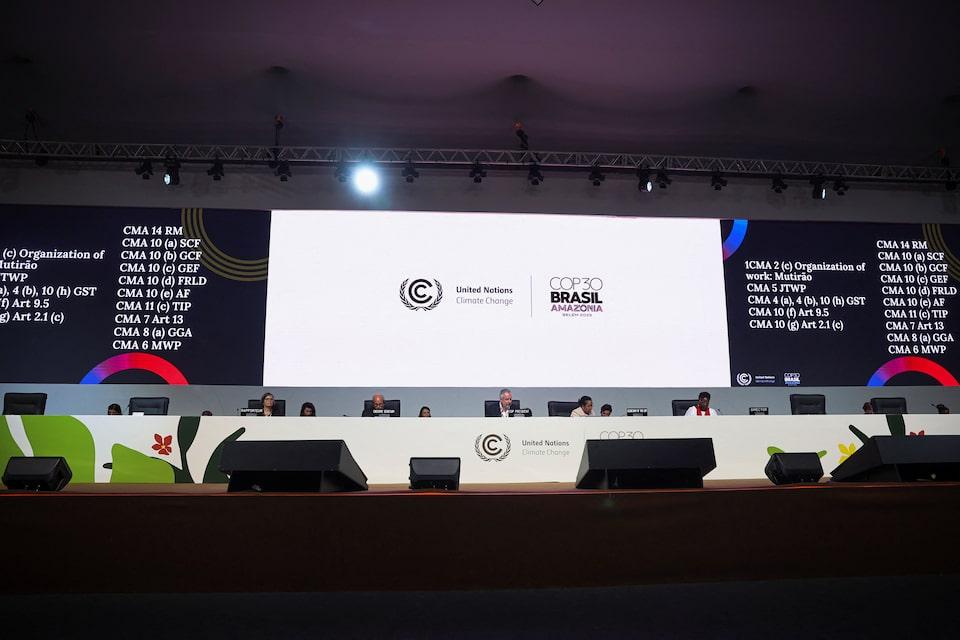
Countries unlocked billions in new funds for forests Nations failed to agree on a deforestation plan Brazil announces demarcation of 10 new Indigenous lands Record Indigenous presence at COP30 with 3,000 leaders attending Massive fires and farmland expansion threaten tropical forests BELEM, Brazil, Nov 22 (Reuters) - Brazil insisted on hosting this year's COP30 climate summit in the Amazonian city of Belem to put rainforests at the heart of negotiations on how to curb global warming. But as delegates from almost every country concluded tense talks under the rainforest's humid heat, the outcome for trees and their guardians, though unprecedented, was bittersweet. Sign up here. Countries unlocked billions in new funds for forests, and a record number of Indigenous delegates took part in the conference. Still, even as the final agreement acknowledged that leaders were gathered at the heart of the rainforest, nations failed to agree on a plan to keep trees standing as they have repeatedly promised to do in recent summits, relying instead on a voluntary roadmap. "There was enormous expectation that we could leave with something more concrete," said Carlos Rittl, director of public policy at the nonprofit Wildlife Conservation Society. But, he added, the final agreement didn't provide the answers "that the Amazon asked for, and that the world expected." The week in Belem opened with optimism. Germany pledged 1 billion euro to Brazil's flagship Tropical Forests Forever Facility, the TFFF, which will support global conservation of endangered forests, boosting total contributions to nearly $7 billion. But it closed on a sour note, with negotiators dropping a proposed roadmap to end deforestation from the final agreement, which would have required countries to show how they intend to meet the 2030 zero-deforestation pledge made two years ago at the Dubai climate summit. "This was supposed to be the Forest COP. I'm not sure if it is the Forest COP today," said Juan Carlos Monterrey Gomez, the head of the Panamanian delegation, hours after he learned the roadmap had been dropped. Tropical forests, which hold huge amounts of planet-warming carbon, have never been in higher danger of disappearing along with the thousands of communities and animal and plant species that inhabit them. Massive fires fueled by climate change led global forest loss to smash records last year, even as farmland continued to expand over trees in developing countries that hold the biggest areas of pristine forests. Though global commitments on conservation have generally been left to the global biodiversity summit, historically a much less consequential forum, nature has been increasingly present in climate negotiations. "Climate change and the loss of biodiversity are two sides of the same coin," said María Heloísa Rojas Corradi, Chile's minister of environment. RECORD INDIGENOUS PRESENCE Tropical forests got more money in Belem than at any other climate summit. The Brazilian government still expects other countries, such as China and the United Arab Emirates, to announce contributions to the TFFF so it can reach $10 billion by the end of the year. European countries also announced they were backing a $2.5 billion initiative to help protect the Congo Basin rainforest. Having failed to get countries to agree on a roadmap to halt and reverse deforestation, Brazil's COP30 presidency also put forward a voluntary roadmap, along with another one to transition away from fossil fuels, COP30 president Andre Correa do Lago said in the final plenary. On the sidelines of the conference, different governments and companies also announced millions of dollars in new programs to make more forest-friendly beef, strengthen the supply chain of forest products, and more. "For all those reasons, I would call COP30 a success for forests," said Frances Seymour, a senior policy advisor at Woodwell Climate Research Center. The so-called forest COP, she said, was also seen as a huge opportunity for Indigenous people to get a bigger seat at the table, partly because of their role in protecting threatened ecosystems like the Amazon. No climate summit had ever hosted so many Indigenous peoples. Some 3,000 leaders from countries around the world were present, said Toya Manchineri, who heads the Coordination of the Indigenous Organizations of the Brazilian Amazon. They had some victories that may also help keep forests standing. Brazil announced the demarcation of 10 new Indigenous lands, covering almost 1,000 square miles, at COP30. And about a fifth of the TFFF forest fund is set to go to Indigenous peoples protecting forests. Manchineri said he was disappointed that a proposal to include an item in the agenda to discuss formal recognition that the demarcation of Indigenous lands is a climate policy failed. "But the fact is that we get out of here, as an Indigenous movement from the Amazon, a lot stronger," he said. https://www.reuters.com/sustainability/cop/what-cop30-climate-summit-amazon-delivered-forests-indigenous-people-2025-11-22/
2025-11-22 21:22
AMSTERDAM, Nov 22 (Reuters) - Air traffic at Eindhoven airport in the south of the Netherlands was suspended for several hours on Saturday evening due to multiple drone sightings, Dutch defence minister Ruben Brekelmans said in a post on X. Traffic resumed around 11 p.m. (2200 GMT), Brekelmans said, two hours after he had first reported the disruption. Sign up here. "Defence has taken measures," the minister said. "Out of security considerations no further information can be shared." The Dutch military on Friday evening had used weapons against drones sighted above the air force base in Volkel, some 40 kilometres (25 miles) northeast of Eindhoven, the defence ministry had said earlier on Saturday. Eindhoven serves both as a civilian and as a military airport. All types of air traffic were suspended, Brekelmans said. Asked if it was clear where the drones had come from, the defence ministry had no additional comment. Drones and other airspace incursions have caused considerable disruption across Europe in recent months. In September, more than 20 Russian drones entered Polish airspace and three Russian military jets violated Estonia's airspace for 12 minutes. Since then, many drone flights, the origins of which are mostly unknown, have disrupted airspace operations in Europe. European Commission President Ursula von der Leyen has called the incursions "hybrid warfare." https://www.reuters.com/business/aerospace-defense/eindhoven-airport-closed-after-drone-sightings-defence-minister-says-2025-11-22/