2026-02-05 18:05
LISBON, Feb 5 (Reuters) - Environmental groups filed a lawsuit on Thursday against the European Commission over its decision to grant preferential "strategic" status to Portugal's Barroso lithium mine project, developed by London-listed Savannah Resources (SAVS.L) , opens new tab. Local residents' association United in Defence of Covas do Barroso and ClientEarth group said they filed the lawsuit with the EU's Court of Justice after Brussels refused to reconsider its 2025 decision under the Critical Raw Materials Act. Sign up here. That was "despite detailed evidence showing the project poses serious environmental, social and safety risks", they said in a statement. Projects like Savannah's in Portugal are seen as a key test of Europe's ability to produce lithium and other materials seen as essential to the energy transition, but they often face opposition from environmental groups. Barroso has been a World Heritage site for agriculture since 2018. The groups said that securing access to critical raw materials "cannot come at the expense of environmental protection, public participation or community rights." "The energy transition must be based on law, science and justice – not political shortcuts that turn rural regions into sacrifice zones," they said. Savannah is developing the mining project in northern Barroso, which has estimated resources of the spodumene deposit — one of the lithium-bearing minerals — exceeding 39 million metric tons, making it the largest such deposit in Europe. Last month, the Portuguese government awarded a 110 million euros ($130 million) grant to the project. The Portuguese government hopes to launch a long-delayed tender for lithium prospecting licences this year, seen as key to building a domestic lithium value chain and cutting Europe's reliance on imports from countries including China. ($1 = 0.8473 euros) https://www.reuters.com/sustainability/environmental-groups-sue-eu-commission-over-portugals-lithium-mine-2026-02-05/

2026-02-05 17:38
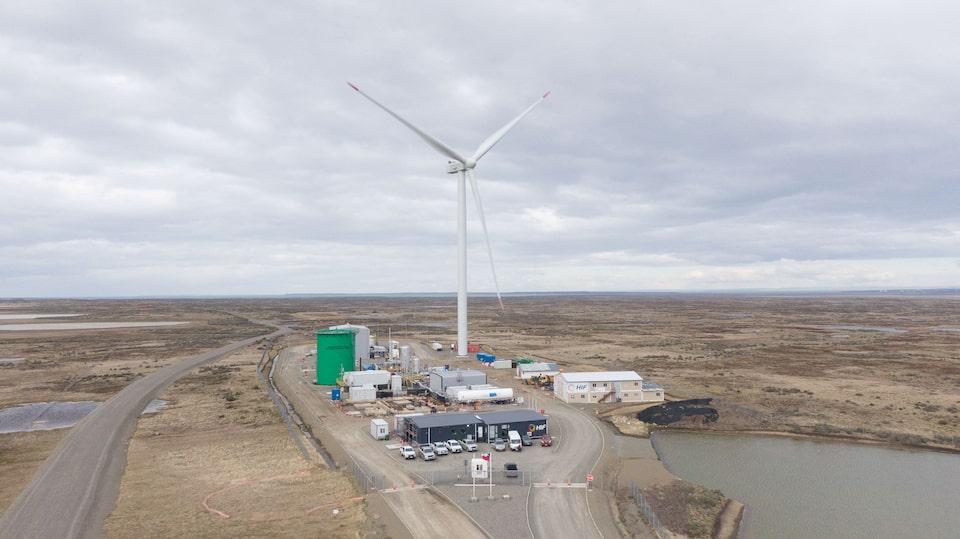
SAO PAULO, Feb 5 (Reuters) - HIF Global expects significantly lower costs for its green-hydrogen plant in Brazil and hopes to secure financing for the first of four planned modules in the middle of next year, the company's Latin America chief executive said on Thursday. The e-fuels maker had put a $4 billion price tag on the plant in Port of Acu, in Brazil's Rio de Janeiro state, but expects to reduce capital expenditure by installing the four planned modules to meet demand - rather than all at once - and optimizing installation in the process, Victor Turpaud said in an interview. Sign up here. "We have managed to significantly reduce capital expenditure," Turpaud said. "Today we are already below $1 billion (per module) and we continue to optimize to be well below $1 billion." Each module is expected to produce 220,000 metric tons of methanol a year by using electrolyzers to split hydrogen from water molecules and combining the gas with carbon captured from local industrial operations. Methanol can be synthesized into so-called e-fuels, which supporters say offer carbon-neutral alternatives to existing fossil fuels like gasoline. The site at Port of Acu has an environmental license for producing methanol, and a license for producing e-kerosene - also known as e-sustainable aviation fuel (eSAF) - is currently in the works, Turpaud said. While eSAF remains expensive to produce, costs are rapidly falling and Brazil has the potential to be a large producer and consumer of the fuel, he added. “If you want to decarbonize (air travel), for now at least, electricity is not an option," Turpaud said. "So the only real alternative for decarbonizing the aviation industry, which is very large, is through SAF." Uncertainty over rules and regulations for the decarbonization of transport sectors, including shipping, is slowing progress down globally, Turpaud added. "It's more difficult for an offtaker to be willing to enter into a long-term contract to buy fuel for decarbonization if they are not clear about what the requirements are from the other side," he said. For now, HIF Global is working to close supply agreements with electricity companies and other businesses that could supply the Port of Acu operation with carbon dioxide. "This year, our focus is on closing each of these contracts, so we can start a financing series by the middle of next year," Turpaud said. https://www.reuters.com/business/energy/hif-global-eyes-significant-capex-savings-4-billion-brazil-hydrogen-plant-2026-02-05/
2026-02-05 17:35
Feb 5 (Reuters) - ConocoPhillips (COP.N) , opens new tab CEO Ryan Lance said on Thursday the company's priority in Venezuela remains recovering money owed under existing legal judgements, as it engages cautiously with the U.S. administration and tracks policy developments affecting the process. Sign up here. https://www.reuters.com/business/energy/conocophillips-ceo-says-venezuela-focus-remains-recovering-money-owed-2026-02-05/

2026-02-05 17:35
LONDON, February 5 - Hedge funds posted positive returns in January thanks to ripples of market volatility stemming from U.S. military action in Venezuela, questions around the independence of the Federal Reserve and a cold snap that sent natural gas futures flying. Performance globally rose by 2.2% in January, according to a JPMorgan (JPM.N) , opens new tab client note dated Monday and seen by Reuters on Wednesday. That compares with returns of 2.5% last year, when hedge funds profited from crowded positions in U.S. equities and managed to avoid getting stung by a hefty selloff sparked by the rise of Chinese artificial intelligence model DeepSeek. Sign up here. Stock pickers trading long and short positions in global equities posted a gain of 2.7%, while hedge funds trading many different strategies under one roof returned between 1.6 and 3.2% and quantitative hedge funds were likely down around 1% in aggregate, the note said. The U.S. captured Venezuelan President Nicolas Maduro on January 3 after which the two countries reached a deal to export up to $2 billion worth of Venezuelan crude to the United States. Investors have ramped up bets on higher long‑dated Treasury yields and a steeper yield curve after incoming Federal Reserve Chair Kevin Warsh was announced as U.S. President Donald Trump's pick to lead the central bank. And separately, natural gas futures soared 140% between January 20 and 28 as extreme cold in the United States boosted heating demand to near-record highs. This gave hedge funds lots to trade. Some of the biggest multi-strategy funds like Balyasny, Citadel and Point72 returned between 1% and 3%. Citadel and Point72 declined to comment on the numbers. https://www.reuters.com/markets/wealth/hedge-funds-jump-into-volatile-january-reap-returns-2026-02-05/

2026-02-05 17:26
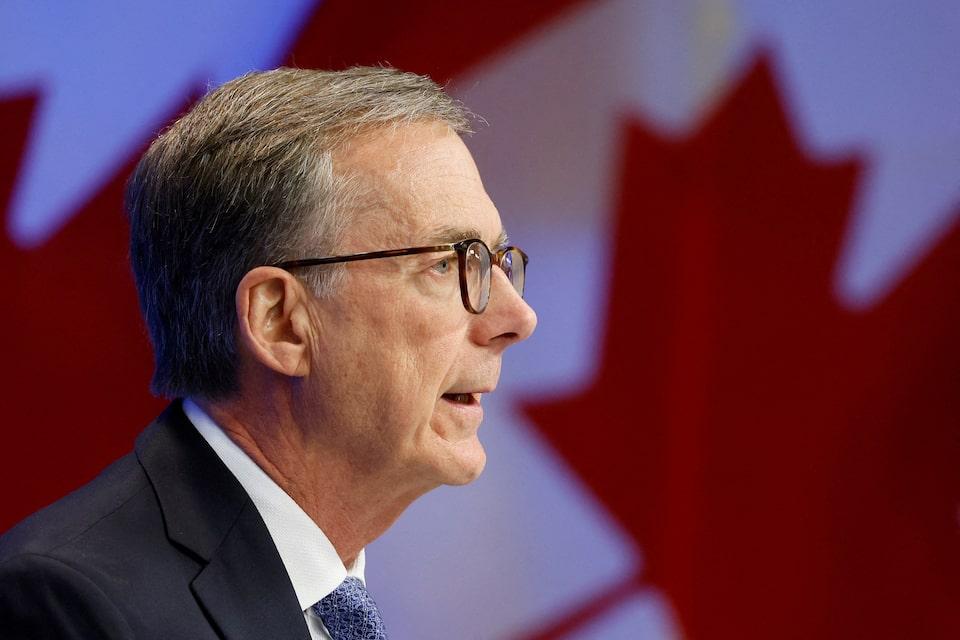
By David Ljunggren OTTAWA, Feb 5 (Reuters) - Restructuring the Canadian economy to cope with U.S. tariffs, slower population growth and the rise of artificial intelligence will take years, and could be very painful, Bank of Canada Governor Tiff Macklem said on Thursday. Sign up here. Macklem urged policy makers and businesses to do all they could to adjust to the new challenges, saying Canada could not afford to fail. "As the Canadian economy works through this transition, growth will be modest. In time, the economy restructures and productivity and potential output pick up, but this will be measured in years, not quarters," Macklem said. "The transition could be faster than we expect ... but it could also be more painful than we'd like - particularly if the trade situation darkens or other shocks disrupt the economy," he told the Empire Club in Toronto Last week the central bank held its key policy rate at 2.25% for the second time in a row and reiterated rates would stay put as long as the economy developed roughly in line with forecasts. The bank though has stressed that there is an unusually high level of uncertainty about its outlook. Macklem said it was hard for the bank to differentiate structural change from cyclical fluctuations, stressing the need not to misdiagnose economic weakness. Lowering rates when the economy is weak could stoke inflation if the weakness was due to lower productive capacity rather than a cyclical downturn in demand. And overstimulating demand when the problem was structural could delay needed change, he added. The bank's forecasts suggest the Canadian labor force will hardly grow over the next few years and Macklem said he was not expecting the jobless rate to trend higher. And while artificial intelligence has the potential to boost the economy and hit the labor market, adoption by companies was modest, and "it may be a while before we see a significant impact", he said. ((Reuters Ottawa bureau; [email protected] , opens new tab)) Keywords: CANADA CENBANK/ https://www.reuters.com/world/americas/bank-canada-says-restructuring-economy-will-take-years-2026-02-05/
2026-02-05 17:24
Feb 5 (Reuters) - The Trump administration on Thursday said it would hold a sale of oil and gas drilling rights across 5.5 million acres of Alaska's National Petroleum Reserve on March 9. WHY IT'S IMPORTANT The sale is the first of at least five mandated by President Donald Trump's One Big Beautiful Bill Act, which he signed into law last year. The U.S. has not offered tracts in the Alaska reserve, which is known as the NPR-A, since 2019. Sign up here. KEY QUOTE "The National Petroleum Reserve in Alaska plays a vital role in advancing America's energy independence, and Congress has repeatedly made clear their intent for timely leasing and responsible development in the region," Bill Groffy, acting director of the Interior Department's Bureau of Land Management, said in a statement. THE REPLY "Selling off our most sensitive public lands will only pad industry pockets at the expense of American communities and ecosystems," Jenny Rowland-Shea, director of public lands at the Center for American Progress, a liberal think tank, said in a statement. CONTEXT This sale is part of the administration's push to expand domestic oil and gas production and reverse Biden-era restrictions on drilling on millions of acres in the reserve. While supporters argue it bolsters energy independence, environmentalists warn of risks to one of America's largest natural ecosystems. BY THE NUMBERS The BLM will offer more than 600 tracts on about 5.5 million acres. Currently about 1.6 million acres of the 23-million-acre reserve are leased to oil and gas companies. WHAT'S NEXT The BLM will accept sealed bids until March 5, and the auction will be livestreamed on March 9. https://www.reuters.com/business/energy/us-auction-drilling-rights-alaska-reserve-march-9-2026-02-05/