2025-11-21 10:44
J.P. Morgan, StanChart scrap December rate cut forecast Citigroup, Wells Fargo, Deutsche Bank say their 25 bp rate cut view a 'close call' Nov 21 (Reuters) - Global brokerages are split over whether the U.S. Federal Reserve will cut interest rates in December or hold them, following conflicting signals on job growth and unemployment earlier in the week. Data on Thursday showed non-farm payrolls increased by 119,000 jobs in September after a downwardly revised 4,000 drop in August. Economists polled by Reuters had forecast 50,000 jobs would be added. Sign up here. However, the unemployment rate increased to a four-year high of 4.4% in September. J.P. Morgan and Standard Chartered joined Morgan Stanley in withdrawing their forecasts for a 25-basis-point rate cut next month. On the other hand, Deutsche Bank, Citigroup, Wells Fargo and BNP Paribas reiterated their forecast of a 25 bps cut, but acknowledged the probability of the Fed keeping rates steady had risen significantly. The divide comes as some analysts argued the rise in the jobless rate supported the case for another interest rate cut next month. "A December cut is admittedly a close call, but we think the steady rise in the unemployment rate to 4.44% will be enough to encourage 'open minded' officials to support a cut," Citi said. Other brokerages said the better-than-expected job growth suggested the U.S. central bank should stay pat, especially since policymakers would not get another employment report before the December 9-10 meeting. "The absence of November labor data may make it harder for doves to insist on the need for a cut," Standard Chartered added. Traders are betting on a 67.1% chance for the Fed to keep rates steady in December, as per the CME FedWatch tool. Nomura and BofA Global Research retained their expectations of no rate cut in December. "A December cut is still not our base case, but it's a closer call now," BofA added. https://www.reuters.com/business/finance/jp-morgan-drops-december-rate-cut-forecast-strong-us-jobs-report-2025-11-21/

2025-11-21 10:42
KYIV, Nov 21 (Reuters) - Ukraine will sharply increase gas imports via the southern Transbalkan route linking it with Greece on Friday as it battles to replace supplies lost due to Russian attacks, import data from transit operators showed. Drone and missile assaults on infrastructure have deprived Kyiv of at least half of its own gas production in recent months, forcing it to import an additional 4 billion cubic metres of gas over the winter heating season to make up the difference. Sign up here. The operator data showed that Ukraine expected to import 2.28 million cubic metres of gas via the route on Friday versus 1.28 million on Thursday. It did not give figures beyond that. Ukraine resumed gas imports via the Transbalkan route - which crosses Moldova, Romania and Bulgaria - in early November following a sharp increase in Russian assaults. The same operator data showed that Ukraine planned to import about 23 mcm of gas from other sources on Friday, including nearly 10 mcm from Hungary, about 9 mcm from Poland and about 4.8 mcm from Slovakia - all broadly in line with volumes recorded since October. Ukraine mainly uses gas for heating homes and generating electricity. More than 400,000 customers were without electricity as of midday Thursday, and Russia carried out more strikes on energy facilities in the east of the country overnight into Friday, national power grid operator Ukrenergo said. Ukraine's nuclear energy sector has been rocked this month by a that has led to the dismissal of the country's energy and justice ministers. https://www.reuters.com/business/energy/ukraine-boosts-gas-imports-via-transbalkan-route-russian-strikes-intensify-2025-11-21/

2025-11-21 10:08
Several data releases point to slowdown in economy Businesses and consumers show nervousness before budget Reeves is expected to raise taxes next week Borrowing data shows scale of public finance challenge LONDON, Nov 21 (Reuters) - Measures of Britain's businesses, consumers and public finances are all showing signs of deterioration in the run-up to next week's budget when finance minister Rachel Reeves is expected to raise taxes again. Data released on Friday suggested that worries about the budget are weighing on the world's sixth-biggest economy and underscored the scale of the challenge for Reeves as she tries to cut borrowing without further slowing already weak growth. Sign up here. The S&P Global Purchasing Managers' Index preliminary survey for November showed companies were pausing their plans while they waited to see if their taxes will go up for a second year running. Reeves is due to announce her budget on Wednesday next week. She is expected to raise tens of billions of pounds in taxes to avoid a selloff in the bond market, but possibly at the price of further upsetting voters who are already unhappy with Prime Minister Keir Starmer and his government. REAL CHANCE OF A DOWNTURN The PMI survey showed the services and manufacturing sectors barely grew in November and fared worse than all economists' forecasts in a Reuters poll, suggesting growth of just 0.1% in the economy in the last three months of 2025. "There's a real chance this pause may turn into a downturn ... largely linked to speculation that further demand-dampening measures will be introduced in the Budget," S&P Chief Business Economist Chris Williamson said. Official data from the Office for National Statistics showed consumers shopped less in October, the first month-on-month drop in retail sales volumes since May. The ONS also said government borrowing in the April-to-October period was the biggest in records going back more than 30 years, apart from during the height of the coronavirus pandemic. Reeves raised taxes by the most since 1993 in her first annual budget last year, with businesses bearing the brunt through higher payroll taxes. BUDGET MAY NEED TO RAISE 20-30 BILLION POUNDS This year, Reeves is expected to need to raise a further 20 billion-30 billion pounds ($26 billion-$39 billion) due to an expected growth downgrade from the government's budget watchdog, higher borrowing costs and an inability to pass planned welfare cuts through parliament. For much of the PMI survey period, Reeves indicated she was likely to break Labour's election promises and raise the main rate of income tax for the first time since the 1970s. Now she appears to favour a string of smaller measures. The survey showed private-sector employment fell at the fastest pace in four months and prices charged by businesses rose by the least since December 2020, likely boosting the chances the Bank of England will cut interest rates next month. Another data release on Friday showed consumers turned less confident in November. The GfK consumer confidence barometer, Britain's longest-running survey of household sentiment, dropped to -19 from -17. Neil Bellamy, consumer insights director at GfK, described the figures as "a bleak set of results as we head towards next week's budget" although the level remained within its range of the past six months. https://www.reuters.com/world/uk/uk-economy-stumbles-run-up-next-weeks-budget-2025-11-21/
2025-11-21 07:59
Nov 21 (Reuters) - Tullow Oil (TLW.L) , opens new tab said on Friday it is in talks with bondholders, commodity traders and other funding sources to refinance its capital, while projecting 2025 production at the lower end of its 40,000-45,000 barrels of oil equivalent per day (boepd) range. Tullow also said next year's output could fall to 34,000-42,000 boepd as it grapples with natural declines in its existing wells. Sign up here. The company, which operates in countries such as Ghana, Gabon, and Côte d’Ivoire, said it is exploring funding options with some of its creditors, given risks related to its business performance, market uncertainty and its May 2026 bond maturity. It added that it expects 2025 year-end net debt of about $1.2 billion, up from its earlier forecast of $1.1 billion. https://www.reuters.com/business/energy/uks-tullow-oil-refinancing-talks-expects-2025-output-at-lower-end-range-2025-11-21/
2025-11-21 07:49
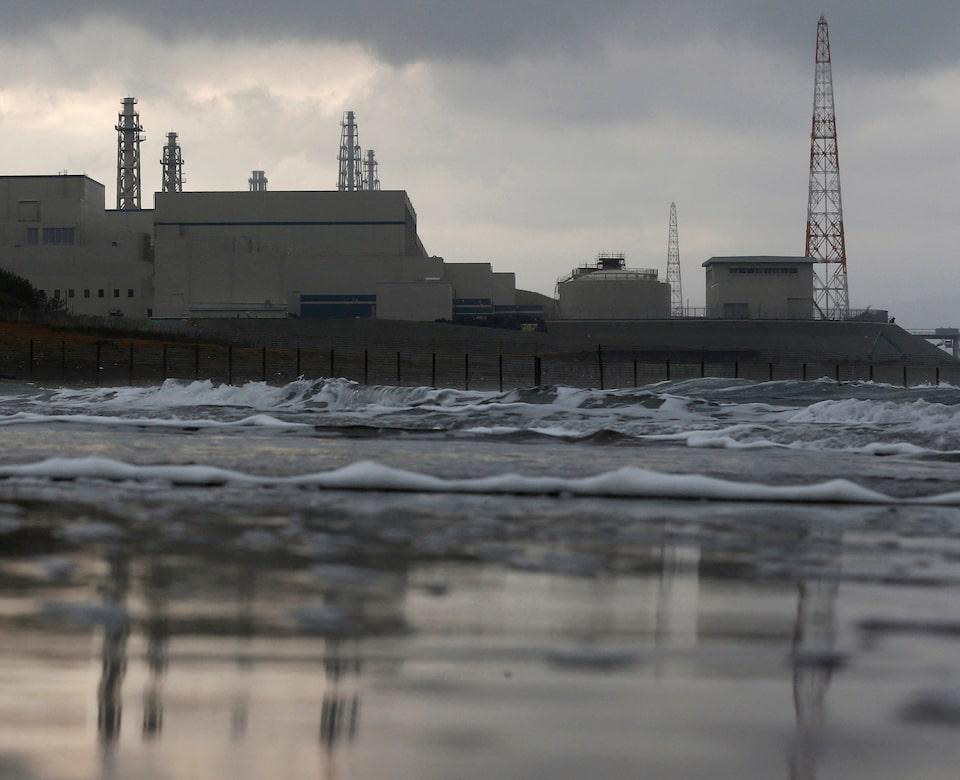
Niigata governor to approve partial restart of Kashiwazaki-Kariwa nuclear power plant TEPCO is planning to restart Units No. 6 and No. 7, two biggest at the plant Restart a major step for Japan to strengthen energy security, lower energy import costs PM Takaichi endorses more nuclear energy roll outs TOKYO, Nov 21 (Reuters) - A Japanese regional governor said on Friday he would allow a partial restart of the Kashiwazaki-Kariwa nuclear power plant, the world's biggest, as Japan tries to revive its nuclear sector and reduce fossil fuel imports. Approval by Niigata Prefecture Governor Hideyo Hanazumi will remove the last major hurdle for plant operator Tokyo Electric Power Co (TEPCO) (9501.T) , opens new tab to go ahead with plans to restart one or two of Kashiwazaki-Kariwa's biggest reactors. Sign up here. Hanazumi will still need to seek the prefectural assembly's vote of confidence on his decision during its regular session beginning on December 2. A restart would be the first for TEPCO since the March 2011 tsunami destroyed its Fukushima Daiichi power plant. It would also be a breakthrough for Japan, which after the disaster shut all 54 nuclear reactors in operation at the time, leaving it heavily reliant on fossil fuel imports vulnerable to production shocks and supply disruptions. Niigata residents remain divided between those supporting the restart and those opposing it, Hanazumi said, adding that providing accurate information about safety measures should help to raise awareness among those living in the area. Prime Minister Sanae Takaichi, who took office last month, has said she supports more nuclear relaunches to strengthen energy security and to address the cost of imported energy, which accounts for 60% to 70% of Japan's electricity generation. Japan spent 10.7 trillion yen ($68 billion) last year on imported liquefied natural gas and coal, a tenth of its total import costs. "The restart ... is extremely important from the perspective of reducing ... electricity prices, and securing decarbonized power sources," Chief Cabinet Secretary Minoru Kihara said on Friday. Of the 54 reactors in operation pre-Fukushima, Japan has restarted 14 of the 33 that remain operable. TEPCO is planning to bring online units No. 6 and No. 7, which together can produce 2,710 megawatts of electricity, or about a third of Kashiwazaki-Kariwa's total capacity of 8,212 MW. TEPCO has said it plans to decommission some of the other five units at the facility. In October, TEPCO finished checks at the No. 6 reactor after fuel loading, saying at the time that it had confirmed the main systems required for reactor startup were operating properly. Commodity analysts at Kpler have already lowered their estimates for LNG imports by Japan, the world's second-biggest buyer after China, by 3 million metric tons to 63 million tons for next year on potential nuclear restarts. In July, Kansai Electric Power (9503.T) , opens new tab, Japan's top nuclear power operator, said it would begin conducting surveys to investigate building a reactor in western Japan that would be the first new unit since the Fukushima disaster. TEPCO shares closed 1.9% down on Friday, paring losses after Japan's nuclear watchdog said on Thursday that confidential documents were mishandled at the plant. That was better than a 2.4% drop in the Nikkei index (.N225) , opens new tab. TEPCO continues to pay compensation for the Fukushima Daiichi disaster of 2011, the world's worst nuclear power accident since Chernobyl in 1986. ($1 = 157.1800 yen) https://www.reuters.com/business/energy/japans-biggest-nuclear-power-awaits-key-decision-regional-governor-2025-11-21/
2025-11-21 07:23
LONDON, Nov 21 (Reuters) - Millions of British households will see energy bills edge higher next year after regulator Ofgem said it would increase its domestic price cap by 0.2% from January due to higher policy costs. The rise, though small, will be a blow for the government which has pledged to reduce energy prices and is under pressure to next week unveil measures in the budget to help cut household bills. Sign up here. The rise is partly due to the addition of a nearly 1 pound per month cost added to bills to help pay for the new Sizewell C nuclear plant which is expected to cost some 38 billion pounds ($50 billion) and comes despite a 4% fall in wholesale energy costs. Wholesale gas and power prices are a major part of the formula Ofgem uses to calculate the price cap, but network and policy costs are becoming a larger part of the bill as the network is upgraded and more social and environmental levies are added to bills. The new cap of 1,758 pounds ($2,300) a year for average use of electricity and gas is up around 3 pounds from the previous cap for the period from October to the end of December. ($1 = 0.7639 pounds) https://www.reuters.com/sustainability/boards-policy-regulation/uk-energy-watchdog-ofgem-raises-price-cap-by-02-january-2025-11-21/