2025-11-20 19:41
CARACAS, Nov 20 (Reuters) - A large fire was extinguished on Thursday at a Venezuelan crude upgrader operated by PDVSA, the state-run company said, but operations remain halted while workers began inspections, according to three sources with knowledge of the incident. Incidents and outages are frequent within PDVSA's aging infrastructure, including oilfields, refineries and upgraders that are key to turning the country's extra heavy oil output into exportable crude grades. Sign up here. The fire, which erupted on Wednesday afternoon, damaged a distillation tower and nearby infrastructure, the sources said. PDVSA confirmed the incident in a press release on Thursday, adding that there were no injuries to workers or damage to nearby communities, and that the country's overall production is not expected to be affected as contingency plans were activated. "An investigation committee has been ordered to determine the causes of the incident," it said. https://www.reuters.com/business/energy/fire-extinguished-venezuelan-oil-upgrader-operations-halted-2025-11-20/

2025-11-20 19:32
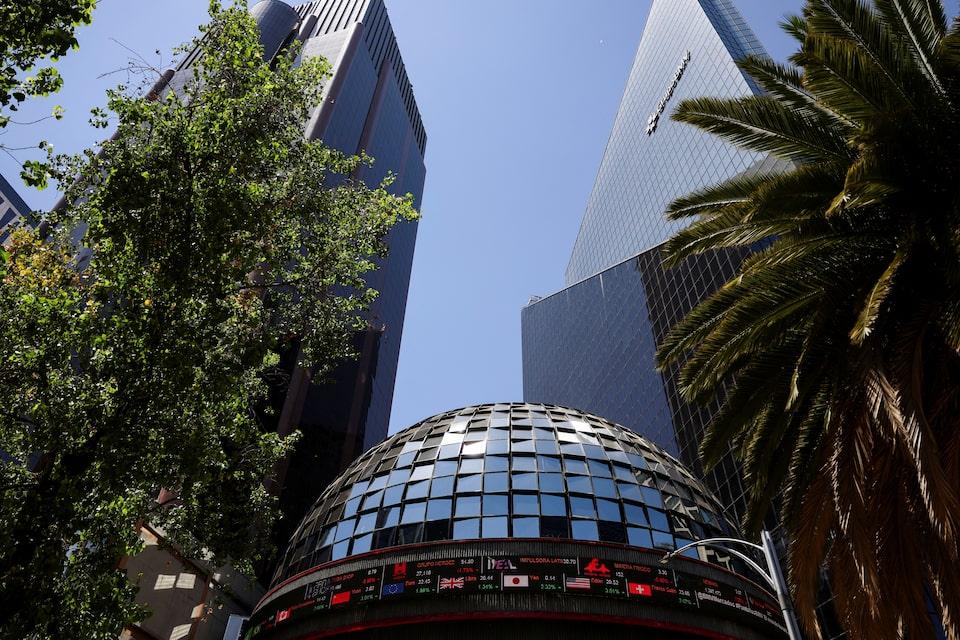
MEXICO CITY, Nov 20 (Reuters) - Mexico's Esentia Energy Development priced shares for its initial public offering at 45 pesos ($2.45), the company said on Thursday, below the previously indicated range of $2.70 to $3.90 per share. Shares of the Mexican energy company were trading around 50 pesos ($2.72) at midday, up more than 10% from the IPO price of their stock market debut. Sign up here. The offering included 224 million shares, of which 72.25 million were placed in the Mexican local market and 151.75 million in an international offer, Esentia said in a statement. Esentia, which focuses on the transport and commercialization of natural gas, had said that funds generated will be used to finance its expansion plans and to partially repay some debt. Of the total, the company sold 186 million new shares through the primary offering, while an anonymous shareholder sold 38 million shares in a secondary placement. BBVA Mexico, one of the global coordinators for the offering, said the IPO raised about 11.59 billion pesos ($631 million) after the full exercise of the over-allotment option. Investor demand reached around 1.5 times the size of the base deal, with roughly 41% of the shares allocated in Mexico and 59% internationally, the bank said in a statement. Esentia operates more than 2,000 kilometers (1,243 miles) of pipelines, known as the Waha or Wahalajara System, which transports low-cost natural gas from Waha, Texas, to major industrial centers in central-western Mexico. ($1 = 18.3724 Mexican pesos) https://www.reuters.com/business/energy/mexicos-esentia-prices-shares-45-pesos-per-share-ipo-2025-11-20/
2025-11-20 18:57
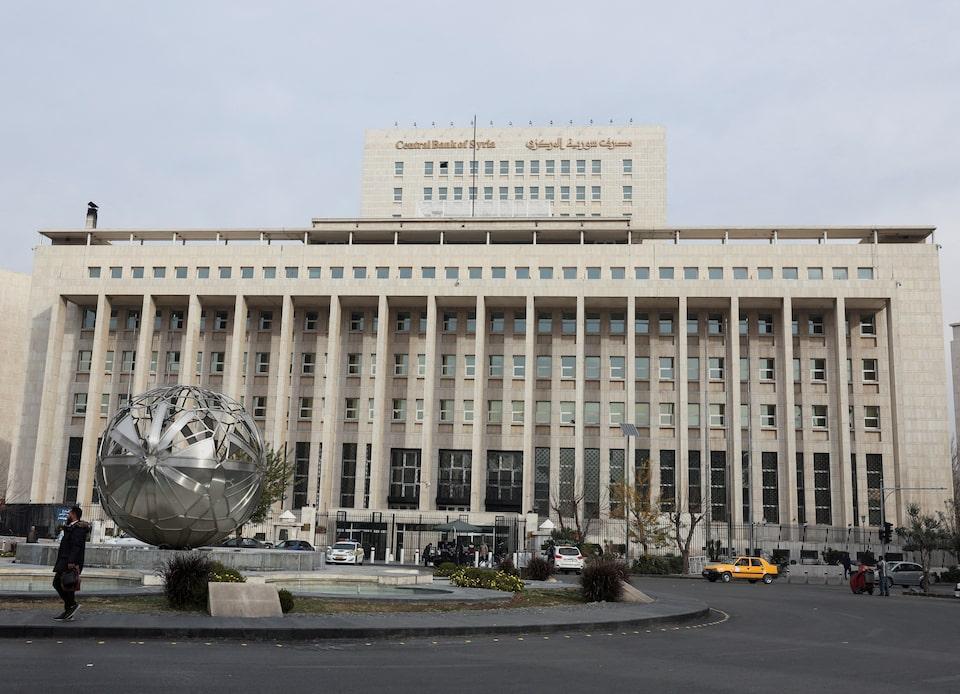
Nov 20 (Reuters) - The Syrian central bank on Thursday sent its first Swift message to the Federal Reserve Bank of New York, central bank Governor AbdulKader Husrieh told Reuters. "We sent (a) greeting message to all our international correspondent banks. We started with the Federal Reserve," Husrieh said. "We're telling them that ... we are back to the international financial system, and we are looking forward to long-term business relationships." Sign up here. Syria needs to make transfers with Western financial institutions in order to bring in huge sums for reconstruction and to kick-start a war-ravaged economy. https://www.reuters.com/world/middle-east/syria-sends-first-swift-message-new-york-fed-central-bank-governor-says-2025-11-20/
2025-11-20 18:41
Nov 20 (Reuters) - The UK's Serious Fraud Office said on Thursday it was investigating the collapse of a $28 million cryptocurrency scheme, urging investors to step forward after two men were arrested on suspicion of fraud and money laundering. In its first major crypto investigation, the SFO said Basis Markets had raised cash from two public fundraisers in late 2021 by selling non-fungible tokens and used the funds to create a crypto hedge fund. Sign up here. In June 2022, investors were told that the project was being scuppered by proposed new U.S. regulations, the SFO noted. The SFO was not immediately able to provide further details. SFO investigators and police officers arrested the men after launching two raids in London and West Yorkshire, northern England, earlier on Thursday. "With our expanding cryptocurrency capability and growing expertise in this area, we are determined to pursue anyone who would seek to use cryptocurrency to defraud investors," said SFO Director Nick Ephgrave. https://www.reuters.com/world/uk/uk-fraud-office-launches-crypto-investigation-tied-basis-markets-collapse-2025-11-20/

2025-11-20 18:25
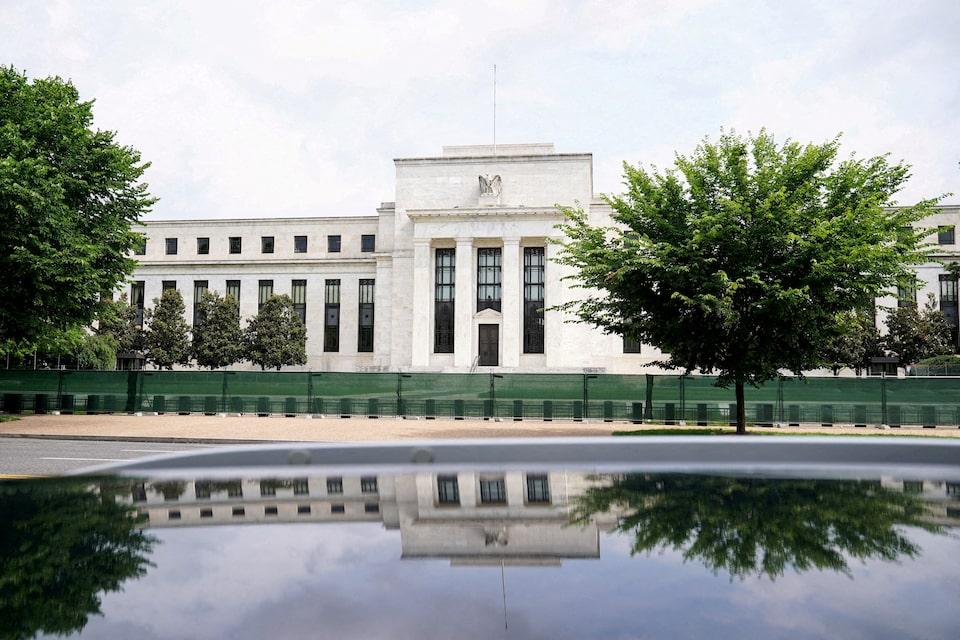
US reports gain of 119,000 jobs in September, higher unemployment rate Cleveland Fed president sees job market slowing, not deteriorating Analysts expect Fed rate-cut decisions to be affected by stronger economy in 2026 Nov 20 (Reuters) - The U.S. economy added more jobs than expected in September, but a rise in the unemployment rate and downward revisions to prior months still presented an ambiguous picture for Federal Reserve officials mulling whether further interest rate cuts are needed to bolster the labor market. Following the release of the data on Thursday by the Bureau of Labor Statistics, traders modestly boosted the odds of a quarter-percentage-point rate cut when the Fed holds its next policy meeting on December 9-10, to 33% from about 20%. Sign up here. Cleveland Fed President Beth Hammack, however, said the "stale" September data largely affirmed what policymakers expected - a job market that is slowing, but doesn't seem headed for a faster deterioration. In an interview with CNBC, Hammack said she "anticipated some further cooling and it appears that is what we are seeing," with the gain of 119,000 jobs in September beating economists' expectations, and the unemployment rate rising on a rounded basis from 4.3% to 4.4%, the highest level in nearly four years. Even that higher jobless rate contained some positive news, reflecting an additional 470,000 workers in the labor market. Wages rose 3.8% on a year-over-year basis. Rick Rieder, the chief investment officer of global fixed income at BlackRock and one of five people on the short list of possible candidates to replace Fed Chair Jerome Powell next year, said the report showed underlying job growth remained weak, and "leads to what we believe is a need for the Federal Reserve to continue reducing interest rates consistent with its full employment mandate," while adding it remained uncertain whether the central bank would make such a move next month. The September jobs report, the most significant so far in a series of catch-up data releases following the end of the recent U.S. government shutdown, means the Fed can keep its eye on inflation and "maintain a somewhat restrictive stance of policy ... Right now monetary policy is barely restrictive and we need to maintain that" to ensure inflation returns to the central bank's 2% target, Hammack said. Since the U.S. central bank cut rates in October, many Fed officials have signaled wariness about further reductions in borrowing costs this year with inflation still above the 2% target. Without stronger evidence the labor market is in need of urgent support, the more cautious members of the rate-setting Federal Open Market Committee may win the day next month, some analysts said. "In the face of so much FOMC hawkishness and without any further jobs reports ahead of the December FOMC meeting, today's jobs release is unlikely to tip the balance to a December cut," Seema Shah, chief global strategist at Principal Asset Management, wrote in a note. FISCAL STIMULUS IN 2026 COULD AFFECT RATE-CUT OUTLOOK Some analysts, however, are already pointing to expectations that the U.S. economy may strengthen next year as individual tax breaks, accelerated depreciation allowances, and other recent changes in federal law passed by the Republican-controlled Congress kick in, an outlook that could add further weight to arguments against cutting rates too much further. Policymakers will issue their own updated projections for the economy and monetary policy at the Fed's December meeting. The minutes of the October 28-29 meeting, released on Wednesday, showed Fed staff had upgraded their outlook for next year, "reflecting stronger expected potential output growth and greater projected support from financial conditions." That outlook also said the "unemployment rate was expected to decline gradually after this year before flattening out at a level slightly below the staff’s estimate of the natural rate of unemployment," the minutes showed. Unemployment below the "natural rate" is considered inflationary, though estimates of it are considered imprecise. John Roberts, a former deputy associate director of the Fed's research division and now a special advisor to Evercore ISI, said in a new analysis that the tax and other changes from what is known as the "One Big Beautiful Act" would lift economic growth by about four-tenths of a percentage point in early 2026, enough to push down the unemployment rate and likely dissuade the Fed from at least one rate cut that it would otherwise have made. https://www.reuters.com/business/traders-see-fed-track-skip-december-rate-cut-2025-11-20/
2025-11-20 18:18
Bitcoin 'puts' accumulating at $85,000 strike Volatility spikes over both short and long term Bitcoin put skew falls further, suggests bearish sentiment NEW YORK, Nov 20 (Reuters) - The likelihood of bitcoin ending the year below $90,000 has risen to 50%, according to online options platform Derive.xyz, as traders ramped up hedging against more declines in the world's largest cryptocurrency. On the other hand, the options market has assigned just a 30% chance of bitcoin finishing 2025 above $100,000. Sign up here. Bitcoin was last down 4.2% at $86,681.41 on Thursday, after earlier falling to a seven-month low. It rose to an all-time peak of $126,223.18 in early October. So far this year, bitcoin has fallen more than 7%, on track for an annual decline -- the first since 2022. Bitcoin has also dropped below its 50-day and 200-day moving averages and has fallen out of favor with trend-following investors, analysts said. "The BTC price is currently very tenuous and skewed to the downside," said Sean Dawson, head of research at Derive.xyz in Canberra, Australia. "Previous bull drivers like lowered rates ... have fizzled out, stalling upward price momentum. In other words, there's very little to be bullish about on the horizon." Dawson estimated that over the last 30 days, crypto liquidations in both long and short positions totaled $8.25 billion. SIZEABLE CONCENTRATION OF BITCOIN PUTS One of the main catalysts for the decline in bitcoin has been the less dovish stance of several Federal Reserve officials, who are advising caution on further interest rate cuts and citing still-too-high inflation. This has diminished expectations of a rate cut next month and has weighed on bitcoin and other risk assets such as stocks. He added that "a powderkeg of volatility in tech valuations" could see bitcoin sink to $75,000 before the end of the year, although prices should quickly rebound from that level. Derive.xyz also pointed to a sizeable concentration of bitcoin "puts," about 13,800 contracts, conferring the right to sell bitcoin at a strike price of $85,000 at the December 26 expiry. A put option gives the holder the right, but not the obligation, to sell bitcoin at a set strike price. The trade reflects demand for downside protection if bitcoin falls below $85,000. To be sure, some market participants believe a turnaround in bitcoin is not far behind. Sean Farrell, head of digital asset strategy at Fundstrat, wrote in his latest note that the "near-term risk/reward now looks more balanced." He said that even if this proves to be an unsustainable turn, conditions are ripe for a sharp bounce in bitcoin. Farrell said oversold signals are now starting to flash after bitcoin hit a seven-month low below $90,000, calling it a "potential value zone" that could attract buyers. He also said the latest selloff had cleared the market of last week's "forced and motivated sellers." OPTIONS VOLATILITY SPIKES ACROSS THE BOARD That said, other options indicators are flashing bearish signals. Bitcoin's so-called call-put "skew" has taken a beating. The call-put skew, which reflects market sentiment, refers to the difference in implied volatility between calls, which are options to buy, and puts, which are options to sell. This skew shows a preponderance of puts over calls. The 30-day put skew has further dropped from -2.9% to -5.3%, which means traders are increasingly paying up for downside insurance as prices continue to soften. Options volatility across the board has also spiked, according to Derive.xyz's Dawson. Thirty-day implied volatility has jumped from 41% to 49% in just two weeks and long-term volatility -- 180 days -- has increased to 49% from 46%. This surge in volatility underscores the uncertainty surrounding bitcoin's trajectory, a point that resonates with some bearish voices in the market. Jack Janasiewicz, portfolio manager and lead portfolio strategist at Natixis Investment Managers Solutions, said his bearish view rests on bitcoin's utility and mass adoption even as he acknowledged its increasing institutional acceptance. "Can you really buy coke with bitcoin down the street? Sure you can allocate 1% or 2% of your portfolio to bitcoin in case it goes to $1 million," he said. But if it goes to zero, an allocation of 1%-2% is not a big loss, he added. https://www.reuters.com/business/bitcoin-bears-dominate-odds-year-end-price-below-90000-rise-2025-11-20/