2025-11-20 12:03
US plan would require Kyiv to give up land, sources say Kyiv would also have to accept curbs on military, they say US army says Kiev agree to move quickly towards agreement White House says US working on plan for about a month French minister says peace cannot mean capitulation KYIV/WASHINGTON, Nov 20 (Reuters) - President Volodymyr Zelenskiy said after talks with a top U.S. Army official on Thursday he was ready to work with Washington on a plan to end the war in Ukraine, and he expects to discuss it with President Donald Trump in coming days. European countries are pushing back against the U.S.-backed plan, which sources said would require Kyiv to give up more land and partially disarm, conditions long seen by Ukraine's allies as tantamount to capitulation. Sign up here. But Zelenskiy, whose office said he had received a draft of the plan, said after meeting U.S. Army Secretary Daniel Driscoll in Kyiv that Ukraine and Washington would work together on elements of it. KYIV READY FOR 'CONSTRUCTIVE' WORK "Our teams - Ukraine and the USA - will work on the points of the plan to end the war," Zelenskiy wrote on Telegram. "We are ready for constructive, honest and prompt work." Zelenskiy's office did not comment directly on the content of the 28-point plan, which has not been published, but said he had "outlined the fundamental principles that matter to our people". "In the coming days, the President of Ukraine expects to discuss with President Trump the existing diplomatic opportunities and the key points required to achieve peace," it said. White House Press Secretary Karoline Leavitt told a news briefing that Secretary of State Marco Rubio and U.S. special envoy Steve Witkoff had been quietly working on the plan for about a month and Trump supports the plan. "It's a good plan for both Russia and Ukraine, and we believe that it should be acceptable to both sides," she said. She said the U.S. engaged equally with the Ukrainians and the Russians on the text. Zelenskiy's office said Driscoll had presented him with the plan only on Thursday, and several sources told Reuters and other media outlets that the plan was the fruit of backchannel conversations between Witkoff and Kirill Dmitriev, the special envoy of Russian President Vladimir Putin. In a message on X on Wednesday, Rubio said the U.S. "will continue to develop a list of potential ideas for ending this war based on input from both sides of this conflict" and that peace will require concessions from both Kyiv and Moscow. Zelenskiy, who met Driscoll alone then with the full U.S. delegation, agreed to move quickly towards agreement and signing of a plan, said Colonel Dave Butler, U.S. army chief of public affairs. The United States, he said, wanted to ensure that this is "a good plan for the Ukrainian people." The U.S. ambassador to Kyiv, Julie Davis, said the talks were "remarkably constructive." All participants "share President Trump’s vision to end this war" and wanted to move forward quickly, she said. The acceleration in U.S. diplomacy comes at an awkward time for Kyiv, with its troops on the back foot on the battlefield and Zelenskiy's government undermined by a corruption scandal. Parliament fired two cabinet ministers on Wednesday. GENERAL SAYS RUSSIA CONTROLS KUPIANSK Moscow played down any new U.S. initiative. "Consultations are not currently under way. There are contacts, of course, but there is no process that could be called consultations," Kremlin spokesman Dmitry Peskov said. He said Russia had nothing to add beyond the position Putin laid out at a summit with Trump in August, adding that any peace deal must address the "root causes of the conflict", a phrase Moscow has long used to refer to its demands. With another winter approaching in the nearly four-year-old war, Russian troops occupy almost one-fifth of Ukraine and are slowly advancing while bombarding Ukrainian energy supplies and cities as the cold winter sets in. The Kremlin said Putin had visited the command post of the Russian forces' "West" grouping on Thursday, where he met the chief of Russia's general staff, Valery Gerasimov, and other top military brass. Gerasimov told Putin Russian forces had taken control of the Ukrainian city of Kupiansk, a city Moscow sees as an important target in its westward push through central and eastern Ukraine. Ukraine’s military denied Russian claims it controls Kupiansk in northeastern Ukraine or 70% of the ruined railway hub of Pokrovsk in eastern Ukraine. Reuters could not independently verify either statement, although video released by Russia's defence ministry on Thursday showed its troops moving freely through the southern part of Pokrovsk, patrolling deserted streets lined with charred apartment blocks. 'PEACE CANNOT BE CAPITULATION,' SAYS FRANCE European Union foreign ministers meeting in Brussels did not comment in detail about the U.S. plan, but indicated they would not accept demands for Kyiv to make punishing concessions. "Ukrainians want peace - a just peace that respects everyone's sovereignty, a durable peace that can't be called into question by future aggression," said French Foreign Minister Jean-Noel Barrot. "But peace cannot be a capitulation." https://www.reuters.com/world/europe/europeans-push-back-us-plan-that-would-force-concessions-ukraine-2025-11-20/

2025-11-20 11:53
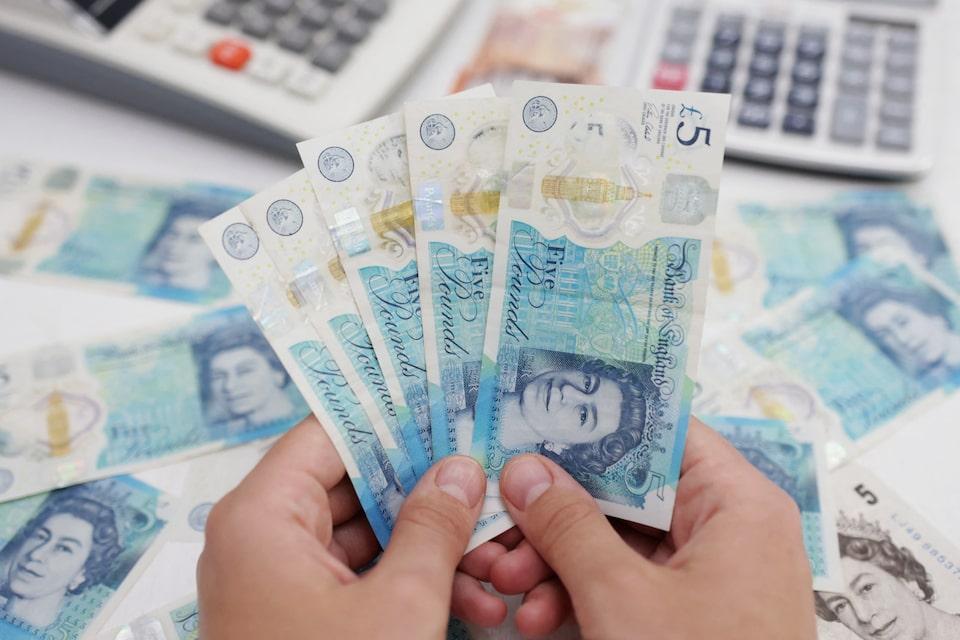
LONDON, Nov 20 (Reuters) - The pound nudged up from a two-week low on the dollar on Thursday as investors continued to process the previous day's inflation data and position for Britain's much-discussed upcoming budget. Sterling was last up 0.17% on the dollar at $1.3076 , on track for its strongest day in almost a week. Sign up here. It was also set for its biggest daily gain on the euro this month, with the euro down 0.3% at 88.11 pence, though both milestones were more a function of the pound's recovery from recent weakness than any particular excitement on Thursday. Data on Wednesday showed British consumer price inflation fell to 3.6% in October from September's 18-month high of 3.8%, as expected by the BoE and economists polled by Reuters. That reassurance caused markets to become more confident that the Bank of England will cut rates next month and weighed on the pound which hit its weakest in well over two years on the euro on Wednesday. Markets are now pricing in a roughly 80% chance of a 25-basis-point rate cut. However, Britain's annual autumn budget, which will be published on November 26, is one of the most significant events of the year for investors. British finance minister Rachel Reeves is expected to need to raise tens of billions of pounds to stay on track to meet her fiscal targets in the annual budget, and media reports last week that she would not raise taxes roiled British assets. "It's very difficult and I think there's quite a bit of bad news already priced in," said Kenneth Broux, head of corporate research FX and rates at Societe Generale, "but it doesn't mean that it can't get worse." "If the gilt market (British government bonds) have absolutely no trust in the new borrowing figures and whether the fiscal headroom can be delivered, then we will see a fair steepening of the gilt curve and that is going to result in a weaker sterling." One currency the pound has been gaining on is the Japanese yen. Sterling hit a 16-month top of 205.71 yen on Thursday, with the Japanese currency under pressure across the board. In contrast, the pound has been falling on the other traditional global safe-haven currency, the Swiss franc, hitting its lowest level last week since Britain's 2022 budget drama. "The trade into the budget next week is going to be still to be short Sterling/Swiss," Broux said in a note. https://www.reuters.com/world/uk/sterling-edges-up-britains-upcoming-budget-focus-2025-11-20/
2025-11-20 11:52
NEW DELHI, Nov 20 (Reuters) - India’s infrastructure output (ININFR=ECI) , opens new tab was unchanged in October from a year earlier, its weakest performance in 14 months, as declines in coal, crude oil and electricity production offset gains in steel and refinery products, government data showed on Thursday. The index, which tracks activity across eight sectors and makes up 40% of the country's industrial production, grew at a revised 3.3% in September. Sign up here. India’s infrastructure output contracted 1.5% year-on-year in August 2024. Excess rainfall impacted mining activity and power demand in October, while steel output decelerated sharply, said Aditi Nayar, an economist at ICRA. Given the contraction in the mining and electricity segments, the industrial output growth in October is expected to ease to 2.5%-3.5% from 4% in the previous month, she said. India's industrial output data will be released on November 28. KEY NUMBERS * Crude oil output fell 1.2% year-on-year in October against a drop of 1.3% in September. * Natural gas production declined 5% year-on-year in October as compared to a 3.8% fall in the previous month. * Cement output rose 5.3% year-on-year in October after a revised 5% increase in September. * Steel production grew 6.7% year-on-year in October after a revised increase of 14.4% in September. * Fertiliser production increased 7.4% year-on-year in October versus 1.6% rise in the previous month. * Coal production fell 8.5% year-on-year in October as compared to a drop of 1.2% in September. * Electricity generation declined 7.6% in October year-on-year versus a revised growth of 3.1% in September. * Refinery products output increased 4.6% in October year-on-year as compared to a decline of 3.7% in September. * Infrastructure output rose 2.5% year-on-year in April-October against a revised growth of 4.3% a year ago. https://www.reuters.com/world/india/indias-october-infrastructure-output-remains-flat-2025-11-20/

2025-11-20 11:47
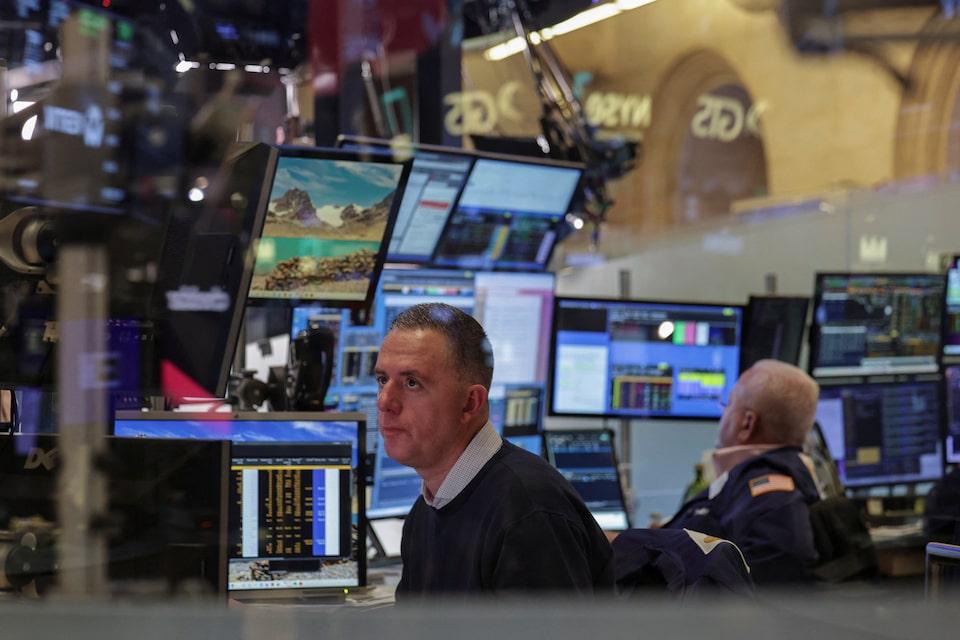
Nov 19 - What matters in U.S. and global markets today By Mike Dolan , opens new tab, Editor-At-Large, Finance and Markets Sign up here. As has often been the case over the past two years, Nvidia's forecast-beating results , opens new tab have helped calm a tech sector nervous about bubble-like AI valuations. Meanwhile, hopes of another U.S. interest rate cut this year have all but disappeared. Demand for Nvidia's chips was never the root of the AI bubble worries, which are mostly focussed on whether the gigantic AI infrastructure spend will eventually pay off in industry-wide returns now that debt is increasingly being used to fund it. Nvidia's business has become increasingly concentrated in its fiscal third quarter, with four customers accounting for 61% of sales. But shares in the world's most valuable company jumped more than 5% overnight after the results, with Nvidia's slowing but still-impressive revenue projections showing a re-acceleration in a year's time. And, needless to say, the AI bellwether doesn't see stock values as being in a bubble. The overnight stock move should add more than $200 billion in market cap at the open later on Thursday, and that's lifted S&P 500 and Nasdaq futures more than 1% out of hours. The S&P 500 had broken a four-day losing streak before the Nvidia release. Tech-heavy stock indexes in Tokyo, Seoul and Taipei surged 2-3% earlier today. And Wall Street's VIX "fear index" of implied volatility has fallen back about three points to 21. Digital token bitcoin remained under a cloud, however, and struggled to regain the $92,000 level overnight. The other big market development on Wednesday was the gradual disappearance of December Fed easing bets, with the Bureau of Labor Statistics saying it won't now publish an October employment report and the November release won't be published until December 16 - six days after the Fed meeting. Fed futures now see little more than a one-in-five chance of a cut next month - from a four-in-five chance earlier this month. September's long-awaited payrolls report is due out later today and expected to show a 50,000 jobs gain and unchanged unemployment rate of 4.3% - although it is likely to be too far out of date to materially affect Fed thinking. And as economic data releases return following a hiatus due to the 43-day government shutdown, the Atlanta Fed's "GDPNow" , opens new tab model shows overall U.S. growth tracking an annualized rate of 4.2%. Minutes of the central bank's October meeting were also released overnight and revealed a much more cautious stance from policymakers despite last month's decision to lower rates for the second time this year. Treasury yields and the dollar were higher early on Thursday, with the latter getting another lift from the ailing Japanese yen ahead of Friday's expected fiscal stimulus announcement. The yen hit its weakest since mid-January, just shy of 158 per dollar, and is now in the zone where many suspect Tokyo may intervene to support it. However, Japanese long-dated bonds continued to fall, with 30 and 40-year yields hitting new record highs and the 10-year at its highest since 2008 as Bank of Japan officials continue to signal a possible rate rise next month. In Europe, there was attention on reports of another initiative to end the Ukraine war - which saw European defence stocks fall sharply on Wednesday. These rebounded on Thursday however, as European countries pushed back on the U.S.-floated plan. The euro zone's biggest bank BNP Paribas, meantime, jumped almost 6% on new capital projections and a buyback clearance. Back on Wall Street, the tech focus slightly obscured downbeat readings from the big retailers. After Home Depot's miss earlier in the week, Target shares fell 3% on Wednesday on a large drop in sales as consumers cut back on discretionary spending. Walmart reports later today. In today's column, I take a look at the fix the Fed has found itself in. It's relying on evidence of a weakening labor market to justify further easing, but it may get few clear signals on that front any time soon , opens new tab. Today's Market Minute Chart of the day The market's view of the Fed's interest rate horizon over the next year has jumped back up about 25 basis points from where it was a month ago, with hawkish noises from regional Fed officials and the absence of a November employment report before the next policy meeting in December all but removing any hope of another rate cut this year. The Fed trajectory priced into the futures market has returned to where it was in August, before the Fed's last two rate cuts. Today's events to watch (all times EDT) * US September employment report (0830), weekly jobless claims (0830), Philadelphia Federal Reserve's November business survey (0830), October existing home sales (1000), Kansas City Fed's November business survey (1100), Canada October producer prices (0830) * Federal Reserve Board Governors Stephen Miran, Lisa Cook and Michael Barr all speak, Cleveland Fed President Beth Hammack and Chicago Fed President Austan Goolsbee both speak; Bank of England policymakers Swati Dhingra and Catherine Mann both speak * US corporate earnings: Walmart, Intuit, Copart, Jacobs Solutions, Ross Stores * US Treasury sells $19 billion of 10-year inflation-protected securities Want to receive the Morning Bid in your inbox every weekday morning? Sign up for the newsletter here. You can find ROI on the Reuters website , opens new tab, and you can follow us on LinkedIn , opens new tab and X. , opens new tab Opinions expressed are those of the author. They do not reflect the views of Reuters News, which, under the Trust Principles , opens new tab, is committed to integrity, independence, and freedom from bias. https://www.reuters.com/business/finance/global-markets-view-usa-2025-11-20/
2025-11-20 11:45
Nov 20 (Reuters) - China's state-owned iron ore buyer has ordered steel mills and traders to stop purchasing a certain type of BHP (BHP.AX) , opens new tab iron ore, sources said, adding to a separate ban already in place and escalating a dispute over a new contract. China Mineral Resources Group (CMRG), set up in 2022 to centralise iron ore purchasing and win better terms from miners, asked Chinese steel mills and traders this week not to buy new cargoes of Jinbao fines, a type of low-grade iron ore from the world's third-largest iron ore miner BHP, according to two sources familiar with the matter. Sign up here. "CMRG told mills that they are not allowed to take delivery of Jinbao fines from ports in three days ... so there might be a hustle and bustle at ports these few days," said one of the sources. Reuters could not determine how many iron ore traders and steel mills received the order from CMRG this week. The ban is the second after CMRG asked Chinese steel mills and traders in September to stop buying BHP's Jimblebar Blend Fines. The parties are locked in lengthy negotiations over an annual contract for 2026. BHP said in response to questions about the Jinbao ban that it does not comment on commercial negotiations. Earlier in the day the miner said it was still negotiating with CMRG. CMRG did not immediately respond to questions. SMALL TRADE VOLUMES CMRG may have chosen to target Jinbao fines instead of other BHP cargoes because trade in the lower-grade iron ore is very small and the ban would not drastically disrupt the market, said both sources and an analyst, who all spoke on condition of anonymity given the sensitivity of the matter. All three sources said the trade is so small they don't regularly track volumes. Tightening supplies of medium-grade iron ore like Pilbara Blend Fines at ports following the first ban have underpinned prices despite weakening demand for the key steelmaking ingredient. Iron ore prices hit a more than two-week high on Wednesday even as crude steel output in the world's largest producer of the metal slid to the lowest level since December 2023 as bad weather led some northern mills to cut production. https://www.reuters.com/world/asia-pacific/china-expands-bhp-iron-ore-ban-new-product-talks-drag-sources-say-2025-11-20/

2025-11-20 11:19
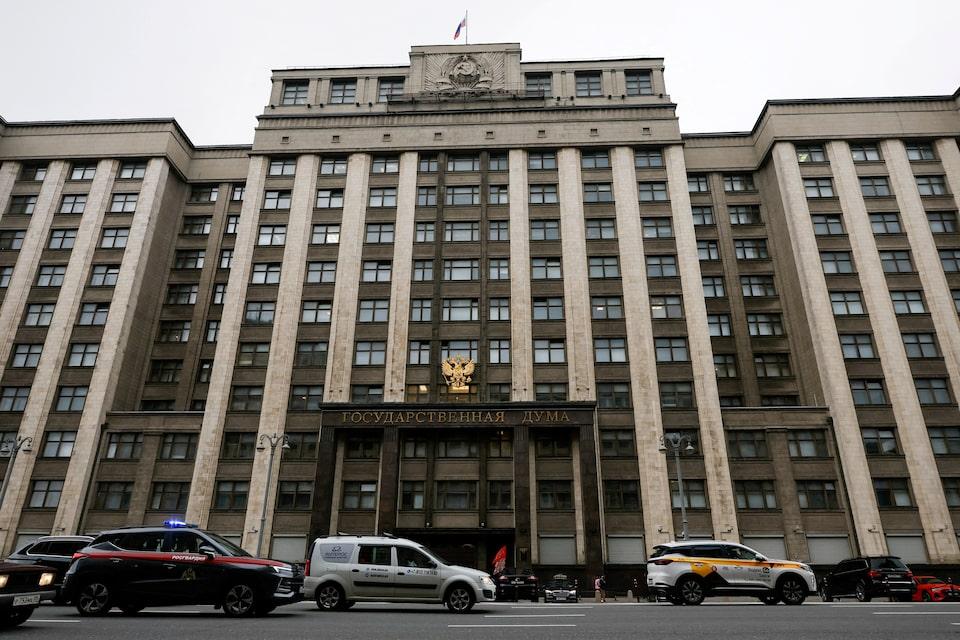
EU plan would use immobilised Russian assets for loan to Ukraine Duma sets out clearest warning yet on how Moscow would respond Assets of investors from 'unfriendly' states could be targeted MOSCOW, Nov 20 (Reuters) - Russia's parliament said on Thursday that any seizure of Russian assets by the European Union must be met by legal action against Belgium and securities house Euroclear, and Moscow could also take over the assets of investors from "unfriendly states". The Duma, parliament's lower house, passed a resolution setting out the most explicit warning yet on how Russia would retaliate against an EU plan to use its frozen assets to fund a 140 billion euro ($161 billion) loan to Ukraine. Sign up here. Lawmakers said the proposal "is effectively an illegal seizure of property, and therefore, if implemented, it can be regarded as outright theft." The resolution added: "Any attacks on Russian assets must be met with an appropriate legal response, beginning with claims for damages — with a demand for the seizure of assets as a security measure — against Euroclear and Belgium, where the bulk of the illegally frozen sovereign funds are held, in any jurisdiction. "Assets of non-residents from unfriendly states may also be used as a source of compensation." After Russia went to war in Ukraine in 2022, Western governments froze some $300 billion of its assets, mostly in Europe. Of that, 185 billion euros are held in Euroclear, a Belgium-based securities depository. The EU plan would be structured to avoid confiscating the assets outright - something that European authorities acknowledge could undermine investor confidence. It would involve issuing a loan to Ukraine using cash balances accrued from the frozen securities as they mature. The scheme envisages that Kyiv would only repay the loan once it receives war reparations from Russia in a peace agreement - something Moscow has ruled out. Ukraine has urged the EU to approve it quickly, saying it would use a significant portion of the funds to buy European weapons. But the plan has been delayed because of concerns by Belgium, which says it needs strong assurances that the scheme is legal and that other EU countries will share the risks involved. Belgian Prime Minister Bart De Wever called on all EU members at a summit last month to share the costs of any legal action pursued by Russia and to contribute financially if the money ever had to be paid back. He also said Russian frozen assets held by other countries should be part of the scheme. The Kremlin has repeatedly said that attempting to take Russia's assets will undermine confidence in the central banking system, in the euro as a currency, and in the perception of the safety of ownership and property rights in Europe. Since the start of the war, Russia has seized tens of billions of dollars' worth of assets held by foreigners there, including the Russian businesses of Western companies such as French food Danone and Danish brewer Carlsberg. Moscow has also diverted an undisclosed volume of foreign-owned funds in Russia to so-called type-C accounts, access to which is blocked unless it grants a waiver. ($1 = 0.8674 euros) https://www.reuters.com/business/russian-duma-says-any-asset-seizure-by-eu-must-be-met-by-action-against-belgium-2025-11-20/