2025-11-20 06:02
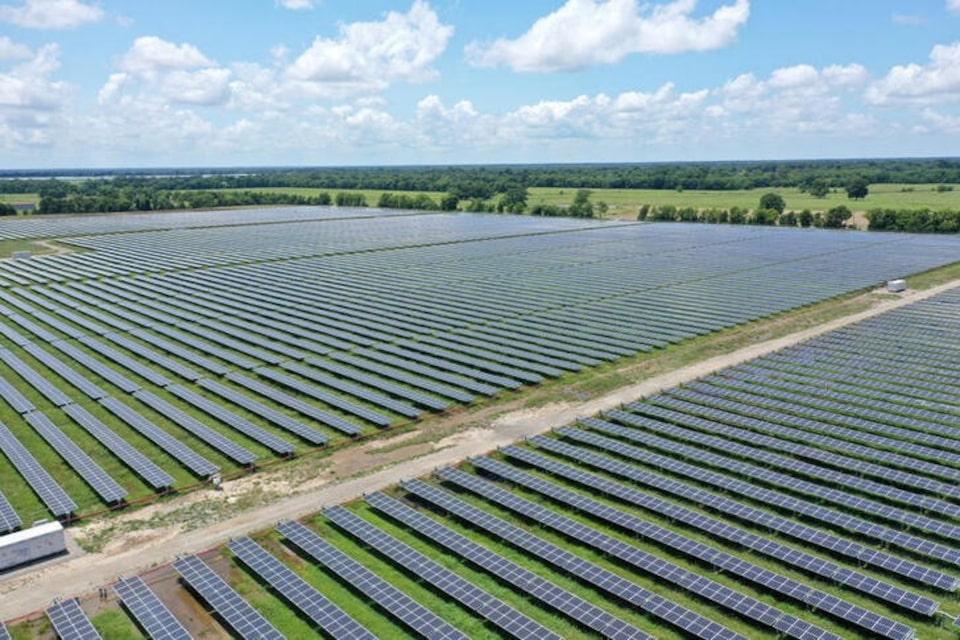
Investment in low-carbon energy to reach $2.2 trillion this year Global renewable power capacity is forecast to double by 2030 Trade tensions to nevertheless slow the energy transition LONDON, Nov 20 (Reuters) - Stalled climate negotiations at COP30 and stubbornly high fossil fuel demand reflect the growing market consensus that the energy transition has slowed. But the risk now is that investors lose faith in a green shift that is continuing to move in one direction. The two-week climate summit in Belem, Brazil, is coming to an end, and leaders have been struggling to hammer out a deal as huge gaps remain between countries on pretty important issues – like whether to move away from fossil fuels at all. Sign up here. Much has changed since 195 governments sealed the landmark Paris agreement to battle climate change ten years ago. The world’s shift away from fossil fuels was rattled by the energy price shock following the war in Ukraine, economic challenges in the wake of the Covid-19 pandemic, U.S. President Donald Trump's retreat from clean energy policies and political polarization globally. This does not mean the energy transition has not moved forward, but it is doing so in a more fractured manner than signers of the Paris agreement expected. This changing sentiment was on full display last week when the IEA unveiled a new outlook showing that oil and gas demand – which was previously expected to peak in the 2030s – may continue rising into the 2050s based on current government policies. The IEA’s Current Policies Scenario (CPS), which was produced following fierce criticism by Trump's pro-fossil fuel administration, assumes climate policies and regulations will either be frozen or, in some cases, reversed in the coming decades. Many of the CPS’s assumptions are highly questionable, such as the expectation of a sharp slowdown in global sales of electric vehicles and smaller gains in petrol car efficiencies. A far more realistic scenario may be found in the agency’s Stated Policies Scenario (STEPS), which takes into account existing policies as well as those not yet turned into law that are viable under current market and economic conditions. Under STEPS, coal consumption would peak before 2030, with oil demand rising by 2% between now and 2030 to 102 million barrels per day, before gently declining. Natural gas demand would level off after 2035. This assumes that EV sales rise from over 20% of total vehicle sales today to more than 50% by 2035, displacing 10 million bpd of oil consumption. At the same time, STEPS also assumes that renewables, which today account for one-third of electricity generation, will represent over half by 2035 and two-thirds by 2050. This would be achieved mostly from solar and wind penetration with the support of battery storage. SPENDING IS BOOMING So which scenario, CPS or STEPS, appears more likely? STEPS is certainly better aligned with current spending patterns. Spending on low-emissions power generation has almost doubled over the past five years. Out of a total of $3.3 trillion investments in energy in 2025, two-thirds are expected to go into renewables, nuclear, battery storage, low-carbon fuels and electrification, according to the IEA's recent World Energy Investment 2025 report. Solar remains the hottest renewable technology by far, with investment in utility-scale and rooftop solar panels expected to reach $450 billion in 2025, according to the IEA. Investments of this scale are rapidly changing the global energy mix. Global renewable power capacity is forecast to double between now and 2030, increasing by 4,600 gigawatts, roughly equivalent to the current combined power generation capacity of China, the European Union and Japan, according to the IEA's Renewables 2025 report. Unsurprisingly, some 70% of the increased spending is expected to come from countries that are net importers of fossil fuels, led by China and Europe. China has been leading the clean energy revolution for years, putting it miles ahead of the rest of the world in terms of investment and deployment of renewables and EVs. Beijing is set to invest an eye-watering $630 billion in clean energy in 2025 alone, doubling the level ten years ago. China also exports around $15 to $20 billion per month in clean energy equipment, 5% of its total exports and the equivalent, in dollar terms, of 12 million bpd of crude oil, according to Bernstein analysts. Of course, the story is very different in the world’s other superpower. The United States is expected to see a sharp deceleration in renewables investment growth now that Trump has junked most of his predecessor’s clean energy policies. Even if a more climate-friendly administration comes into office, investors may hold back on ploughing cash into renewables given the volatile political and regulatory environment. IGNORE THE NOISE But, ultimately, even if the energy transition has not kept up with the expectations set ten years ago, the direction of travel remains clear, with massive global investment in renewables, batteries and low-carbon technologies . While shifting to clean energy sources may require heavy spending to modernize grids and other infrastructure, clean energy sources have, in many cases, become more economical than incumbent fossil fuels, meaning the market may increasingly demand countries accelerate their adoption. Investors would thus be right to ignore the political noise today and follow the financial signals of where the energy system is heading. While many may have overestimated the speed of the energy transition in the past decade, the danger now is that they make the opposite mistake moving forward. Want to receive my column in your inbox every Monday and Thursday, along with additional energy insights and links to trending stories? Sign up for my Power Up newsletter here. Enjoying this column? Check out Reuters Open Interest (ROI), , opens new tabyour essential new source for global financial commentary. ROI delivers thought-provoking, data-driven analysis. Markets are moving faster than ever. ROI , opens new tab can help you keep up. Follow ROI on LinkedIn , opens new tab and X. , opens new tab https://www.reuters.com/markets/europe/investors-risk-being-hoodwinked-by-grim-energy-transition-vibes-bousso-2025-11-20/
2025-11-20 05:33
A look at the day ahead in European and global markets from Gregor Stuart Hunter: It's like Christmas came early for stock traders. Not only did Nvidia's earnings blow past Wall Street expectations - adding fresh impetus to a stock market rally that started on Wednesday - but the long-delayed September jobs report is also finally due for release. Sign up here. Nvidia's results sparked a relief rally in Asia markets, with Japan's Nikkei 225 (.N225) , opens new tab, stocks in Korea (.KS11) , opens new tab, and Taiwan (.TWII) , opens new tab all posting hefty gains as tech manufacturers in the AI supply chain soared. The rebound was given fresh impetus by a Reuters report that the U.S. might delay long-promised semiconductor tariffs to help ease tensions with China. Stock traders also lapped up news that the administration of Japan's Prime Minister Sanae Takaichi is reportedly preparing to pass a stimulus package that would be the country's biggest since the Covid-19 pandemic. The Japanese government bond market sold off sharply, with yields surging to record highs. The yen weakened 0.1% to a ten-month low of 157.48 against the dollar, while a gauge which tracks the greenback's strength against a basket of six major peers advanced close to a two-week high. Over in the U.S., the September jobs report will give investors a data point to try and make sense of the Fed's policy path, even though the six-week government shutdown had made the central bank's job that much harder. The Fed will still lack much of the data it usually relies on at the time of its next policy meeting on December 10, with the next jobs report now postponed until six days later to December 16. In fact, traders view the lack of economic data as potentially justifying a pause, with Fed funds futures pricing a 33% probability of a 25-basis-point cut next month, down from a 50% chance a day earlier, according to the CME Group's FedWatch tool. Even so, one more data point will allow for some clarity, and for investors a slightly easier calculation on where Fed policy is headed into Christmas and the New Year. Key developments that could influence markets on Thursday: Economic data: Germany: Producer Prices for October Euro Zone: Construction Output for September and Consumer Confidence Flash for November U.K.: CBI industrial trends - Orders for November Debt auctions: France: 3-year, 5-year, 6-year, 8-year, 11-year, 15-year and 28-year government debt Spain: 7-year, 10-year and 29-year government debt Switzerland: 1-month and 6-month government debt UK: 26-year government debt https://www.reuters.com/world/china/global-markets-view-europe-2025-11-20/

2025-11-20 04:59
Dollar holds strength vs yen US data show faster job growth, but rise in unemployment rate Cleveland Fed's Hammack reiterates opposition to further cuts Expectations for US cut in December at 39% NEW YORK, Nov 20 (Reuters) - The dollar firmed against most major currencies on Thursday, after losing some ground as signs of faster U.S. job growth in September suggest the Federal Reserve is likely to pause cutting interest rates in December. Long-awaited data released on Thursday showed that employers added more jobs than economists had expected, but the unemployment rate rose. Sign up here. Nonfarm payrolls increased by 119,000 jobs in September. Economists polled by Reuters had forecast 50,000 jobs would be added. The unemployment rate rose to 4.4%, from 4.3% in August. The data was delayed because of a government shutdown. "While higher-than-expected payrolls offer the Fed less justification to cut, markets are still operating in a data vacuum, with only stale September figures and no October report," said Uto Shinohara, senior investment strategist at Mesirow Currency Management. "An October release would have captured shutdown-related distortions, so the absence of that print removes the risk of an overreaction to a potentially weak headline. Markets now imply roughly 10bps of easing for December, reflecting continued skepticism that the Fed will cut at that meeting." The yen remained on the back foot, down 0.26% against the dollar at 157.59 yen. The dollar rose as high as 157.89 yen, its strongest since January, putting the Japanese currency on track for a fourth daily decline. JAPANESE STIMULUS PACKAGE Since Prime Minister Sanae Takaichi was elected leader of the ruling party last month, the yen has depreciated by around 6% despite rising Japanese bond yields, with markets uneasy about the scale of borrowing needed to fund her stimulus plans. Japan's new government is preparing a comprehensive economic stimulus package worth more than 20 trillion yen, the biggest since the COVID pandemic, that Takaichi is expected to unveil on Friday. Japanese Finance Minister Satsuki Katayama said on Tuesday the government was closely watching the market "with a high sense of urgency." "The consensus is of the view that the new PM will pressure the BoJ into a less hawkish course. This means that the market is fully focused on the JPY carry trade," said Jane Foley, head of FX strategy, Rabobank London. "There is, however, still scope for investors to be wrong-footed. After all, Takaichi is trying to strengthen relations with the U.S. and won’t want to be associated with a weak JPY policy." Traders now figure Japanese authorities may intervene somewhere around the 160 mark, as they did last July, or if there are any more sudden moves. Chief Cabinet Secretary Minoru Kihara said moves were sharp, one-sided and concerning on Thursday. FED MINUTES SUGGEST DECEMBER RATE CUT IS UNLIKELY Beyond Japan, the euro, the Swiss franc, the Australian dollar and sterling all fell against the dollar after minutes from October's Federal Reserve meeting showed "many" participants had already ruled out a December cut, while "several" others saw a December cut as likely. Cleveland Fed President Beth Hammack on Thursday reaffirmed her stance against further rate cuts, citing above-target inflation and already easy financial conditions. She also cautioned that while cuts could be seen as "insurance" for the labor market, they could heighten financial stability risks. Fed funds futures are pricing an implied 39% probability of a 25-basis-point cut at the December 10 meeting, according to the CME Group's FedWatch tool. The euro was last down 0.06% at $1.1533, after hitting a two-week low, while sterling was up 0.23% to $1.3087, but at its lowest since early this month. That left the dollar index , which tracks the U.S. currency against six others, up 0.1% at 100.18, testing a six-month high hit in early November. "I don’t think the U.S. economic data is that strong, and we think there is room for an insurance cut," said Steve Englander. "But we are not sure the FOMC agrees with us on that.” In cryptocurrencies, bitcoin hit a seven-month low and was last down 4.43% at $86,521.25. https://www.reuters.com/world/asia-pacific/yen-slumps-dollar-jumps-rate-cut-bets-recede-2025-11-20/
2025-11-20 04:56
Dollar firms near two-week high US non-farm payrolls report due at 1330 GMT UBS raises 2026 mid-year gold target price by $300 to $4,500/oz Nov 20 (Reuters) - Gold prices dropped more than 1% on Thursday, pressured by a firm dollar and fading expectations of a Federal Reserve rate cut in December, as investors waited for a delayed U.S. jobs report later in the day. Spot gold was down 0.6% at $4,055.20 per ounce at 1104 GMT, recovering some of its earlier 1% fall. U.S. gold futures for December delivery fell 0.7% to $4,053.80 per ounce. Sign up here. The dollar index (.DXY) , opens new tab firmed near a two-week high, making gold more expensive for holders of other currencies. "Dollar firmness is weighing on gold but the price choppiness is typical for this time of year where we have some good two-way trade with profit-taking and book-squaring meeting early investments ahead of the new year," said independent analyst Ross Norman. Minutes from the Fed's October meeting, released on Wednesday, showed it cut interest rates even as policymakers cautioned that doing so could risk entrenched inflation and a loss of public trust in the U.S. central bank. Traders are now focused on the September jobs report, delayed due to the government shutdown, for clues on the Fed's next move. September nonfarm payrolls likely increased by 50,000 jobs, more than double August's 22,000 gain, a Reuters survey showed. The Fed will still lack much of the data at its policy meeting on December 10, as the next jobs report has been delayed until December 16. Traders now see nearly a 34% chance for a rate cut next month, down from 49% on Wednesday, CME Group's FedWatch tool showed. Non-yielding gold tends to do well in a low-interest-rate environment and during times of economic uncertainty. UBS raised its 2026 mid-year gold target price by $300 to $4,500 per ounce, on expectations of Federal Reserve rate cuts, persistent geopolitical risks, and strong central bank and ETF demand. Spot silver fell 1.4% to $50.66 per ounce, platinum was down 0.5% at $1,538.85 and palladium rose 1.1% to $1,394.74. https://www.reuters.com/world/india/gold-eases-dollar-gains-traders-dial-back-us-rate-cut-bets-2025-11-20/

2025-11-20 04:55
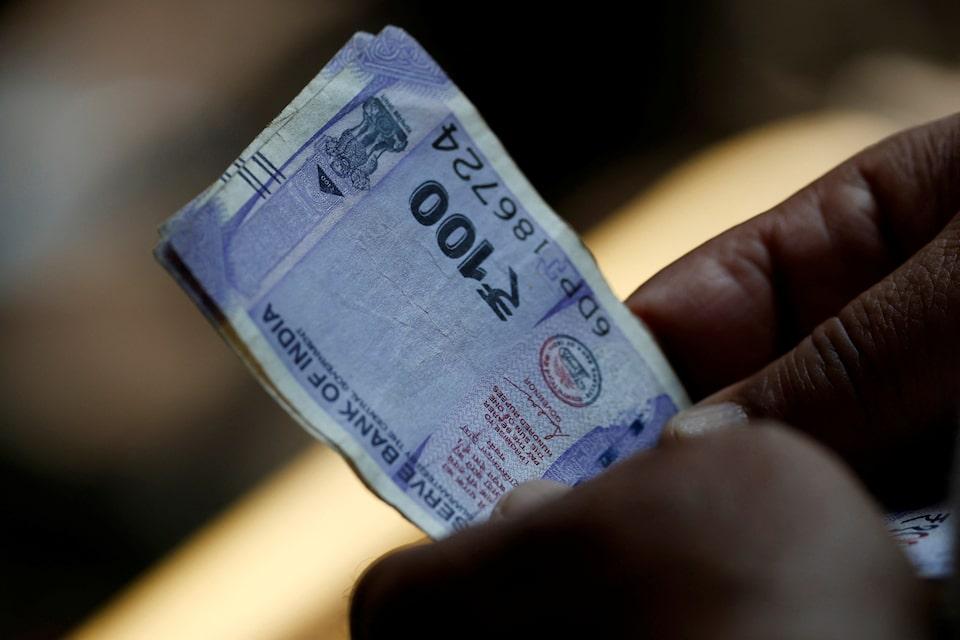
MUMBAI, Nov 20 (Reuters) - The Indian rupee closed slightly weaker on Thursday, pressured by broad-based strength in the dollar on a hawkish reassessment of policy easing by the Federal Reserve, while modest portfolio inflows helped limit the currency's decline. The rupee closed at 88.7050 against the U.S. dollar, down about 0.1% on the day. Sign up here. The dollar index held above the 100-handle, while Asian currencies were down between 0.1% and 0.3% as traders scaled back wagers on a U.S. rate cut next month. Minutes from the Fed's October policy meeting showed that many policymakers were opposed to a December rate cut, prompting a pullback in money market odds of a reduction to under 30% from 50% a week earlier. Even though the hawkish turn weighed on regional currencies, global equities found comfort in Nvidia's (NVDA.O) , opens new tab market-topping earnings, lifting the MSCI's gauge of Asian equities outside of Japan by 1%. India's benchmark equity indexes, the BSE Sensex (.BSESN) , opens new tab and Nifty 50 (.NSEI) , opens new tab, rose about 0.5% each as well, boosted by heavyweight Reliance Industries (RELI.NS) , opens new tab. Dollar sales from foreign banks picked up in the latter half of the trading session, signalling likely inflows, a trader at a state-run bank said. The indexes are within touching distance of their record highs hit in September last year, with HSBC expecting the Sensex to rise to 94,000 by the end of 2026, an upside of about 10% from current levels. Analysts reckon that a breakthrough in U.S.-India trade negotiations could spur inflows into local stocks and a rally in the rupee. Wall Street banks have recently been pitching option strategies on the rupee to position for the same. "The momentum is gradually shifting in favour of the rupee. Positive cues from U.S.–India trade developments, lower crude costs, and gains in domestic equities are gradually strengthening sentiment," Amit Pabari, managing director at FX advisory firm CR Forex, said. https://www.reuters.com/world/india/dollar-strength-set-challenge-rupees-tentative-recovery-hawkish-fed-outlook-2025-11-20/
2025-11-20 04:28
Brent and WTI benchmarks fall from earlier gains US crude stocks fall; gasoline and distillate inventories rise HOUSTON, Nov 20 (Reuters) - Oil prices fell on Thursday as the administration of U.S. President Donald Trump pushed for Ukraine's acceptance of a peace agreement with Russia to end a war that has gone on for more than three years. Brent crude futures settled at $63.38 a barrel, down 13 cents, or 0.2%. U.S. West Texas Intermediate crude futures finished at $59.14 a barrel, down 30 cents, or 0.5%. Sign up here. Both benchmarks rose earlier in Thursday's session on a larger-than-expected draw on U.S. crude supplies, reported on Wednesday by the U.S. Energy Information Administration. The U.S.-Russia peace proposal includes concessions of Ukrainian territory to Russia and reductions in Ukraine's armed forces, both of which Ukraine's President Volodymyr Zelenskiy has previously rejected. On Thursday, Zelenskiy said he would look over the proposal and confer with the United States about the peace plan. "A lot of people thought this new proposal would be dead on arrival with Zelenskiy, but he didn't dismiss it out of hand," said Phil Flynn, senior analyst with Price Futures Group. "Now the billion-dollar question is are the sanctions going to go into effect tomorrow? If they are close they might get lifted or delayed." U.S. sanctions on trading with Russian oil companies Rosneft (ROSN.MM) , opens new tab and Lukoil (LKOH.MM) , opens new tab come into effect on Friday, while Lukoil has until December 13 to sell its sprawling international portfolio. The bigger-than-expected draw in U.S. crude stockpiles reflected increased refining in response to strong margins and export demand for U.S. crude. Crude inventories fell by 3.4 million barrels to 424.2 million in the week ended November 14, the Energy Information Administration said, against a draw of 603,000 barrels projected by analysts in a Reuters poll. That said, analysts also noted that U.S. gasoline and distillate stockpiles increased for the first time in more than a month, suggesting slowing consumption. https://www.reuters.com/business/energy/oil-rebounds-deadline-us-sanctions-waiver-looms-2025-11-20/