2026-02-12 05:57
Feb 12 (Reuters) - India's Adani Power (ADAN.NS) , opens new tab said on Thursday it has formed an atomic energy-focussed unit, becoming one of the first privately-held utilities to disclose publicly their interest in the newly-opened nuclear sector. Adani Atomic Energy Ltd, will generate, transmit and distribute electric power derived from nuclear energy sources, the company said, without giving other details. Sign up here. The move comes as India opens its nuclear power sector to greater private participation to meet rising electricity demand and curb carbon emissions, with the government targeting a sharp increase in capacity over the coming decades as part of its clean energy push. So far, state-run Nuclear Power Corporation of India owns and operates the country's fleet of nuclear power plants that have a total capacity of 8.8 gigawatts. Tata Power's (TTPW.NS) , opens new tab CEO said last week on a post-earnings call that the company was evaluating three sites for nuclear projects. https://www.reuters.com/sustainability/climate-energy/adani-power-sets-up-nuclear-focussed-unit-after-india-moves-open-up-guarded-2026-02-12/
2026-02-12 05:48
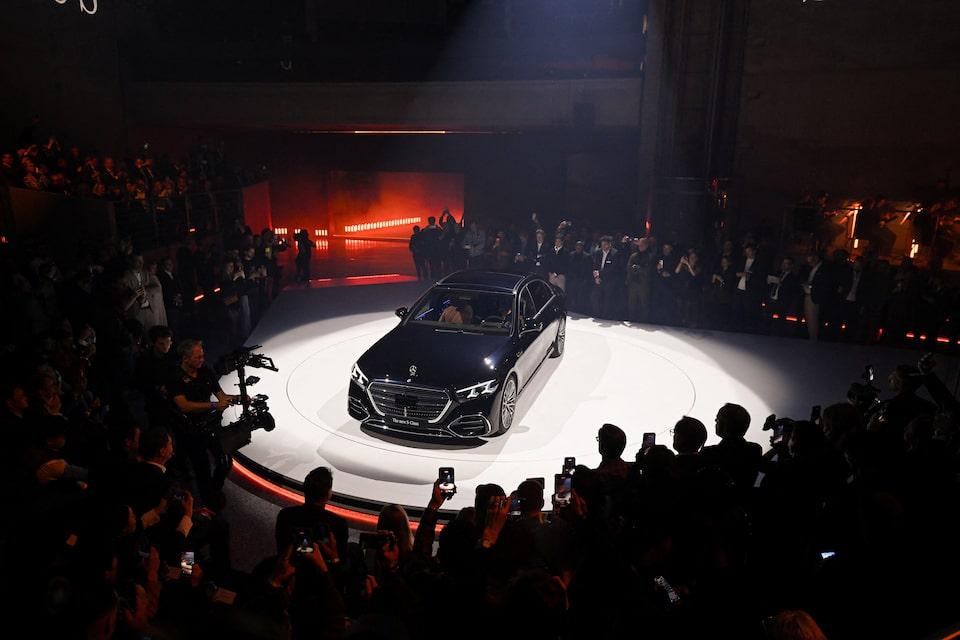
A look at the day ahead in European and global markets from Ankur Banerjee A slate of European earnings takes centre stage for investors on Thursday after a surprisingly strong U.S. jobs report firmed expectations the Federal Reserve will likely hold rates steady at least till the second half of the year. Sign up here. The outlook for policy will depend on upcoming labour market and consumer prices. For now, investors are cutting wagers of a near-term move by the Fed, with the spotlight shifting to Friday's inflation report. The U.S. jobs data offered a mixed picture. The higher-than-forecast headline figure hinted the labour market might be doing all right, but a deeper look showed job concentration and prior downward revisions revealing underlying weakness. Market pricing now suggests little to no chance of a rate cut in March, but possibly a move in June. The shift in Fed expectations helped the dollar firm up just a touch against most currencies except the yen, which has now risen 3% this week in the wake of Prime Minister Sanae Takaichi's resounding election victory over the weekend. The yen has been bolstered by reassuring noises from Takaichi regarding fiscal policies. Investors hope that her decisive win means the Takaichi government will be fiscally responsible and not need to bow down to opposition demands. The pan-European STOXX 600 index (.STOXX) , opens new tab closed at a record peak on Wednesday, and futures point to a higher open ahead of earnings from carmaker Mercedes (MBGn.DE) , opens new tab, the world's top brewer Anheuser-Busch InBev (ABI.BR) , opens new tab and luxury firm Hermes (HRMS.PA) , opens new tab. The outlook for European corporate health has improved, based on LSEG data, but companies in the region are still expected to report a drop in fourth-quarter earnings in what could be their worst performance in the past seven quarters. Key developments that could influence markets on Thursday: Economic events: UK GDP data for Q4 and 2025 Earnings: Mercedes Benz, Hermes, Anheuser-Busch Inbev and L'Oreal https://www.reuters.com/world/china/global-markets-view-europe-2026-02-12/
2026-02-12 05:44
Feb 12 (Reuters) - Four partners have left EY following potential breaches in its audit of Shell that resulted in the oil major dropping the accounting firm as its auditor, the Financial Times reported on Thursday. The partners left one of the world's "Big Four" leading accounting and consulting networks in December as it rushed to contain the fallout from the compliance failure, the report said citing public records and people familiar with the matter. Sign up here. The four who left included one partner who had been elevated to EY's top ranks just months earlier and Gary Donald who led the Shell audit, it added. Earlier this month, Shell (SHEL.L) , opens new tab said it had chosen PricewaterhouseCoopers (PWC) as its next auditor after a tender process, with PwC set to replace EY from 2027. Shell said in a July regulatory filing that EY had breached rules that require an accounting firm to change its lead audit partner every five to seven years. In December, Britain's Financial Reporting Council said it had opened an investigation into EY's audit of Shell's 2024 financial statements over potential breaches of audit partner rotation rules. Both EY and Shell were not immediately available for comment. https://www.reuters.com/sustainability/boards-policy-regulation/four-partners-leave-ey-after-potential-breaches-shell-audit-ft-reports-2026-02-12/
2026-02-12 05:31
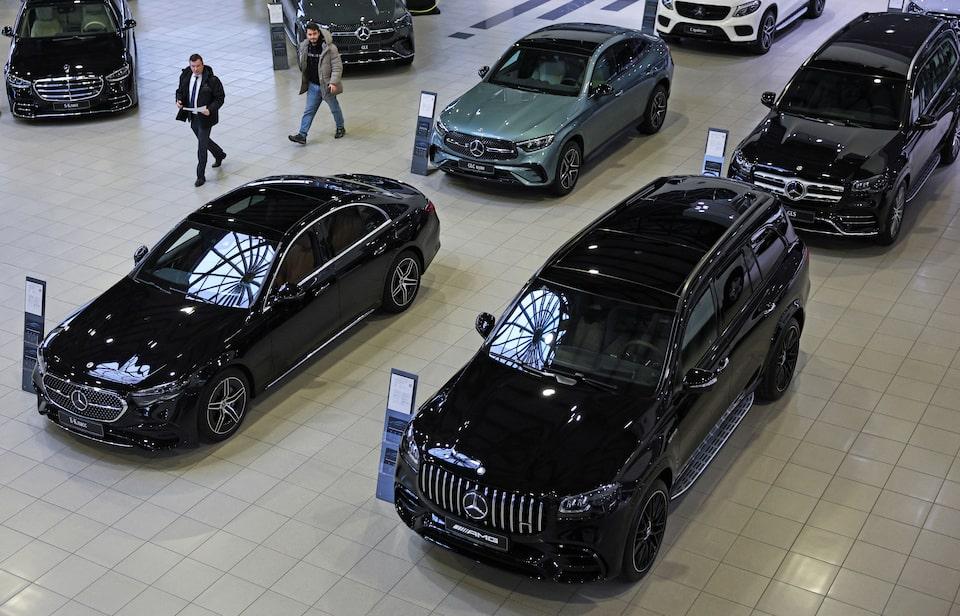
Chinese intermediaries enable Russian auto dealers to bypass sanctions Zero-mileage cars reclassified by traders as used to avoid automaker restrictions Automakers say they are doing their best to prevent unauthorized exports to Russia Feb 12 (Reuters) - Tens of thousands of cars are being exported from China to Russia under gray-market schemes that often circumvent Western and Asian government sanctions and automakers' commitments to exit the Russian market, according to registration data reviewed by Reuters and interviews with five people involved in the trade. The sanctions and company pledges came in reaction to Russia's 2022 invasion of Ukraine. But a thriving trade in these vehicles – from Toyotas (7203.T) , opens new tab and Mazdas (7261.T) , opens new tab to German luxury models – continues partly through informal networks enabling Russian dealers to order them through Chinese intermediaries, the interviews and data from Russian research firm Autostat show. Sign up here. Most are made in China - where many international brands build vehicles with local partners - or are shipped through there after being manufactured elsewhere, according to the data and sources. A growing number are zero-mileage "used" vehicles – new cars registered as sold in China by dealers or traders, who then reclassify them as used and export them. The practice, highlighted by Reuters last year, is a symptom of China's highly subsidized and hypercompetitive car market, allowing automakers and dealers to inflate sales figures, collect subsidies and export surplus vehicles. Traders moving European, Japanese and South Korean brand cars from China to Russia classify new cars as used to eliminate the need to get automaker approval for Russia sales, said Zhang Ai Jun, a former exporter at a Sichuan-based car trader. "This way is to export more easily," she said. Zero-mileage used cars are often heavily discounted in China. But in Russia, they fetch prices similar to never-registered new cars, according to a Russian dealer and vehicle-shipping documents reviewed by Reuters. Reuters is the first to report the Autostat data, China's emergence as the primary conduit for foreign vehicles to reach Russia and the practice of avoiding automakers' Russia-sales restrictions by classifying new cars as used. Dmitry Zazulin, sales director at Moscow dealership Panavto-Zapad, said many customers want to buy and drive cars exclusively from Western brands, such as Mercedes. "However, at present, we can only bring them in through parallel channels," he said. Mercedes-Benz (MBGn.DE) , opens new tab, BMW (BMWG.DE) , opens new tab, Volkswagen (VOWG.DE) , opens new tab and other automakers from regions imposing sanctions said they prohibit sales to Russia and are doing their best to prevent unauthorized exports, including through training and contractual clauses with dealers. But they highlighted the difficulty in investigating potential breaches: Such probes are "time-consuming and complex" and require third parties' assistance, Mercedes said in a statement. BMW said it has told its China retail operation to "strictly oppose any potential vehicle exports to Russia," adding that if cars nevertheless enter Russia as gray-market imports, "this happens outside our sphere of influence — and also expressly against our will." A Russian dealer, who spoke on condition of only being identified by his first name, Vladimir, told Reuters his dealership in Vladivostok doesn't stock restricted foreign cars but buys them one-by-one from Chinese traders to fill customer orders. "There are lots of middlemen: This one knows that one; that one knows another, and that one can reach the dealer," he said. DATA REVEALS SCALE OF TRADE The sales show up by the thousands in data collected by Autostat. The figures show imports from China represent an increasingly large share of all Western or Japanese brand vehicles registered in Russia, and sustained volumes of brands from South Korea. The number of such vehicles manufactured in China has more than doubled since 2023, the data shows. They now account for nearly half of the nearly 130,000 total vehicles sold in Russia in 2025 that are made by automakers from countries imposing sanctions, according to Autostat. Since Russia invaded Ukraine in early 2022, more than 700,000 vehicles from all such foreign brands have been sold in Russia. The Autostat data showed Russians bought more Toyotas last year than any foreign brand except Chinese ones. But the automaker said in a statement that it stopped sending cars there in 2022: "Toyota does not export new vehicles to Russia," the company said, without addressing the Autostat figures. Mazda, which also had significant sales, said the same and added that any new Mazdas sold in Russia "have been resold through third parties that are outside of Mazda's control." Sebastiaan Bennink, a sanctions expert at European law firm Bennink Dunin-Wasowicz, said restricted products still often trickle into Russia even when industry players do their best to block them. There are so many ways to skirt sanctions it's "almost impossible to prevent certain cars from ending up in Russia," Bennink said. While the Autostat statistics show China is the main avenue, Reuters couldn't determine all the pathways by which vehicles reach Russia. Germany's economy ministry said customs authorities regularly investigate sanctions violations and work with counterparts in other EU countries to implement the measures. Japan's Ministry of Economy Trade and Industry said automakers, exporters and dealers are bound by its sanction rules but declined to comment on the trade of Japanese cars between China and Russia. South Korea's trade ministry said it has been working to prevent circumvention of export controls and that the country has been cracking down on indirect exports of used cars to Russia. China's commerce ministry and Russia's industry and trade ministry didn't respond to requests for comment. Both countries have said they oppose unilateral sanctions and consider them illegal. RUSSIA SALES OF CHINA-MADE, FOREIGN-BRAND CARS SURGE The European Union, the United States, South Korea and Japan have all imposed similar automotive sanctions. They generally ban Russia sales of vehicles above a certain price or those with larger engines, along with all EVs and hybrids. Automakers from these regions also pledged to end or greatly restrict their Russia businesses. Overall, these efforts have slashed Russian sales of vehicles from regions imposing sanctions from more than one million in 2021 to about one-eighth of that, the Autostat data shows. But sales of Chinese-made German and Japanese cars are rising, the data shows, a trend some industry analysts attribute to growing exports of zero-mileage used cars. These vehicles don't show up in some industry data sets; research firm GlobalData, for instance, reported no official new-car sales of German brands in Russia this year. The Autostat data, however, captures these sales because it's based on new-car registrations in Russia, where imported vehicles with zero mileage are considered new regardless of whether they were previously registered in China. Nearly 30,000 Toyotas were purchased in Russia last year, the Autostat data showed. Almost 24,000 of them were made in China. Nearly 7,000 Mazdas sold during the same period, almost all China-made. Hybrids from brands including Toyota are among the most popular Japanese models in Russia, according to two China auto-retail sources. GERMAN LUXURY SUVS SLIP THROUGH GRAY-MARKET CHANNELS German cars are also prized. Autostat figures showed nearly 47,000 new BMW, Mercedes and Volkswagen Group vehicles, including brands Audi, Porsche and Skoda, were registered in Russia last year. More than 20,000 of those vehicles were manufactured in China, the data show. The rest were made in Europe but many likely passed through China on their way to Russia, according to industry analysts and one of the people involved in importing vehicles to Russia. Vladimir, the Russian car dealer, said most foreign cars are imported through China regardless of where they are built. One popular model among the Russian elite: The Mercedes G-class, a boxy off-road vehicle that can sell for about 120,000 euros, or about $142,700, and is only produced in Austria, said Felipe Munoz, an analyst who runs the Car Industry Analysis platform. Dozens of shipping documents reviewed by Reuters showed other examples of German luxury SUVs being imported to Russia from China, including the Mercedes GLC 300 and the BMW X1 xDrive25i. "Given the trade between Russia and China – which has grown significantly in recent years in terms of cars – it is obvious to conclude that many of those cars imported into China from Germany end up in Russia," Munoz said. https://www.reuters.com/business/autos-transportation/foreign-cars-flow-russia-through-china-skirting-ukraine-war-sanctions-2026-02-12/
2026-02-12 05:04
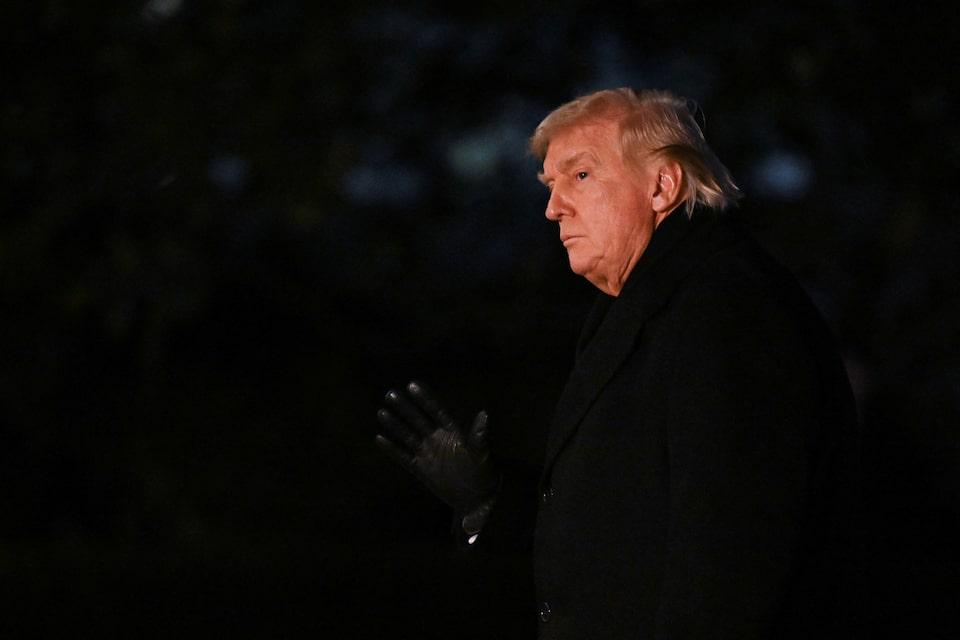
Fractured world order spurring "middle powers" to action Trade deals, pro-active policies seen boosting non-US stocks "Made in Europe" strategy impact could be limited - analysts LONDON, Feb 12 (Reuters) - The global order once championed by Washington across economics, trade and security is being upended by U.S. President Donald Trump, galvanising allies to action. Financial markets are taking note. For investors, signs of more pro-active policies and trade deals that extend beyond those made with the United States are an incentive to increase exposure to non-U.S. equity markets, energy stocks, and take a bullish view on the likes of the euro and Canadian dollar, they said. Sign up here. Canadian Prime Minister Mark Carney struck a chord with his January Davos speech, noting how "middle powers" might act together to avoid being victimised by American hegemony, while a European Central Bank plan to bolster the euro's international role is anticipated at this week's Munich Security Conference. "Trump has separated the U.S. from the rest of the world, but in doing so he has encouraged a strengthening of the rest of the global macro picture and investors are responding to that," said Seema Shah, chief global strategist at Principal Global Investors, which manages roughly $594 billion of assets. "This is not about sell the U.S., but about remembering that there are other opportunities outside the U.S.." Principal Global Investors' focus on international equities had become more concentrated, she said, adding that earnings momentum in Europe and Asia is good. Major equity markets and emerging markets are set for double-digit earnings growth in 2026 as a shift away from U.S. exceptionalism takes hold, said Madison Faller, global investment strategist at JPMorgan Private Bank. Of the 52 companies in Europe's STOXX 600 index (.STOXX) , opens new tab that have so far reported fourth-quarter earnings, over 73% have beaten expectations, according to LSEG I/B/E/S, compared with 54% in a typical quarter. London's internationally-focused FTSE 100 stock index (.FTSE) , opens new tab has crossed the 10,000 milestone for the first time and is up 5% this year, easily outperforming a 1.4% rise in the S&P 500 (.SPX) , opens new tab. BNP Paribas said its European Strategic Autonomy fund launched last May and worth 600 million euros ($713.3 million) invests in themes that include defence, industrial resilience, resource independence and technology, fuelled by Europe's massive investment plans. Still, U.S. trade will be hard to replace, and beyond the meaningful signalling effect, non-U.S. trade agreements, such as the EU's with India and the Mercosur bloc, and Canada and China's initial deal, will need time to have an impact. COME TOGETHER, RIGHT NOW The COVID crisis, Russia's war in Ukraine and the U.S. approach to ending it, and Trump's tariffs have driven cohesion by highlighting a vulnerability to global supply chains and economic dependency. Recent developments, notably the U.S. President's threats over Greenland, could hasten this shift, strengthening the case for more fiscal stimulus around the world and possibly more joint EU bond issuance. Defence stocks have been one winner, up 200% since February 2022. Britain is now considering joining a second possible multi-billion-euro EU fund for defence projects. Ross Hutchison, head of euro zone market strategy at Zurich Insurance Group, said that although long-term geopolitical structural changes were hard to trade, one area he saw gaining more traction in markets was energy production, given the focus on critical resources and the AI build out. "There is a big sense that there's a lot of this build out that's going to take place in lots of individual nations, from a resilience perspective," he said, noting rises in European energy stocks (.SXEP) , opens new tab, which are near their highest levels since 2008. Europe might also make a broader push for greater sovereignty in other sectors such as digital services and security and health, Allianz Global Investors chief economist Christian Schulz said. MADE IN EUROPE Europe needs to protect its own industries with a "Made in Europe" strategy, EU industry chief Stephane Sejourne said in a recent newspaper article co-signed by the CEOs of steelmaker ArcelorMittal (MT.LU) , opens new tab, drugmaker Novo Nordisk (NOVOb.CO) , opens new tab and tyre maker Continental (CONG.DE) , opens new tab, among others. The strategy would set minimum requirements for European content in locally manufactured goods, but has split EU countries. However, the long-term effort to bolster growth - whether via trade or increased spending - is a theme that is here to stay, analysts said. Canada's dollar, Japan's yen and the euro could benefit if deregulation, de-bureaucratisation, and pro-growth fiscal policies materialise, said Thierry Wizman, Global FX & Rates Strategist at Macquarie Group. "Middle powers are seizing strategic autonomy, forging partnerships that align with their interests and the demands of the moment," said JPMorgan Private Bank's Faller. ($1 = 0.8411 euros) https://www.reuters.com/business/finance/markets-sense-opportunity-erratic-us-spurs-middle-powers-into-action-2026-02-12/
2026-02-12 03:08
MUMBAI, Feb 12 (Reuters) - The Indian rupee ended a touch higher on Thursday, with corporate dollar demand eroding early gains linked to likely central bank intervention. Traders said the intervention dented appetite for short wagers on the currency. Sign up here. The rupee closed at 90.59 per dollar, up 0.1% from the previous session. The currency rallied to as high as 90.14 on the interbank order matching system soon after the intervention but later shed those gains. The Reserve Bank of India likely sold dollars before the local spot market opened, with traders pointing to aggressive sales from a large state-run lender. "It seems to be pre-emptive intervention to discourage a build up of shorts (on INR)," a trader at a Mumbai-based bank said. Another trader added that the intervention will likely dent expectations of the rupee falling past 91 in the near term. The RBI's intervention also limited the spillover from weakness in local equities. India's benchmark equity index, the Nifty 50 (.NSEI) , opens new tab fell 0.6%, dragged by a drop in information technology stocks (.NIFTYIT) , opens new tab. In global markets, the dollar was broadly on the backfoot. The Korean won rose 0.7%, while the euro and pound were firmer against the greenback as well. Investor focus this week is on a slew of U.S. economic reports. Data on Wednesday showed that job growth unexpectedly accelerated in January while the unemployment rate eased a touch, signalling labour market stability that could encourage the Federal Reserve to leave rates unchanged in the near term. "The report has helped to dampen downside risks for the U.S. dollar in the near-term but does not change our outlook for the U.S. dollar to weaken further in 2026," MUFG said in a note. https://www.reuters.com/world/india/rupee-bias-mildly-upside-after-limited-impact-us-payroll-surprise-2026-02-12/