2026-02-05 12:20
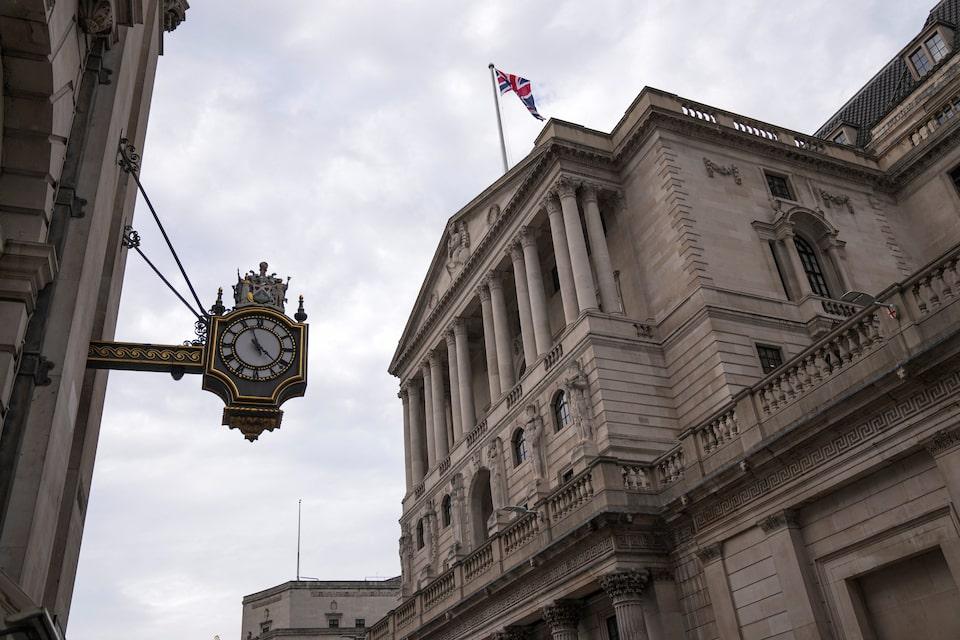
LONDON, Feb 5 (Reuters) - The Bank of England kept interest rates on hold on Thursday, but only after an unexpectedly narrow 5-4 vote, and it said it expected a future cut if a sharp fall in inflation due in the coming months proved not to be a blip. Sterling fell after the decision and was last trading down 0.6% on the day at $1.357 , while British government bond yields fell sharply , as traders ramped up rate-cut expectations. Sign up here. London's FTSE-100 stock index was down 0.4% (.FTSE) , opens new tab. COMMENTS: ELIAS HADDAD, SENIOR MARKETS STRATEGIST, BROWN BROTHERS HARRIMAN, LONDON “They have tweaked the cautious easing guidance by scrapping reference to a gradual downward path of the bank rate.” “The BoE has also slashed the inflation forecast and raised the unemployment projection, so also here pointing to more easing in the pipeline.” “UK yields could correct at the short end of the curve as expectations adjust to imply more rate cuts and that should lead to further weakness in the pound.” LUKE BARTHOLOMEW, DEPUTY CHIEF ECONOMIST, ABERDEEN, LONDON: "It was no surprise that the Bank of England opted to keep interest rates unchanged today. But the decision was much closer than expected, with a solid dovish minority that will likely continue to push for further rate cuts in months ahead. So Governor Bailey is set to remain the swing vote in determining the path of policy. "As long as inflation moderates further over coming months, we continue to expect he will swing behind further cuts in the not too distant future." TODD CUTTING, SENIOR PORTFOLIO MANAGER AT AVIVA INVESTORS, LONDON: "With the MPC decision now out, the initial market read will likely focus on how firmly the committee has chosen to lean against the recent softening in labour‑market data. Despite clearer signs of cooling in hiring and pay, today’s communication suggests that the bar for easing remains higher than the data alone might imply. The message is one of cautious discipline: acknowledging softness, but signalling that it is not yet soft enough to shift the policy stance." KIRSTINE KUNDBY-NIELSEN, ANALYST, DANSKE BANK, COPENHAGEN: "The vote split is a lot more dovish than expected. It's what markets are reacting to. They are signalling that on the basis of the current evidence, the bank rate is likely to be reduced further. It sounds very much like a question of when, not if. "I think it will be pretty tight whether it will be a March or April cut, but I think the point is that, prior to this it was priced that we would see only one more cut, but now two could definitely be in play." MADISON FALLER, GLOBAL INVESTMENT STRATEGIST J.P. MORGAN PRIVATE BANK: "With a 5-4 split, patience prevails at the Bank of England, despite a clear lean toward easing. Inflation is cooling, wage growth is losing steam, and while March remains a live option for a cut, the committee wants more evidence before making a move. Political uncertainty is adding to the tension, knocking the pound and pushing long-term gilt yields higher." LEE HARDMAN, SENIOR CURRENCY ANALYST, MUFG, LONDON: "The pound has sold off initially and that reflects the fact that the vote was obviously a lot closer than expected. "It certainly looks a lot more dovish from the headlines than we had been anticipating… It certainly looks like we could get a cut as early as the next policy meeting." JEREMY BATSTONE-CARR, EUROPEAN STRATEGIST, RAYMOND JAMES INVESTMENT SERVICES, FRANCE : "Having cut the UK base rate six times in the current cycle, rate setters on the Bank of England's Monetary Policy Committee were wary of opting for a seventh easing. However, with inflation widely expected to fall sharply from April and settle at lower levels, the door certainly remains open to cuts in the near future. "The key moment in the immediate future will be confirmation that regulatory and other price adjustments from April 2025 will drop out of annualised calculations this year. This should result in CPI inflation dipping below target sooner than the Bank anticipates, providing scope for easier policy in months to come." JEREMY STRETCH, HEAD OF G10 FX STRATEGY, CIBC CAPITAL MARKETS, LONDON: "We have another five-four split again. Clearly, that leaves Governor Bailey, once again, as the ultimate swing voter. He was the swing voter in December. One suspects that he may well prove to be the swing voter come March. "We've long assumed that March was a live meeting and was underpricing. "We've got twin problems for sterling today, obviously, with more rate cuts being priced and all the political risks. Normally, you would play certainly the political risk via cable, but I think ultimately, probably euro/sterling is the better way to play (the rate outlook)." PHILIP SHAW, CHIEF ECONOMIST, INVESTEC, LONDON: "The main feature of the meeting was that the result was closer than expected, with four members dissenting and voting for 25 basis points. We thought the would be a clear majority to keep policy on hold for the time being. A low inflation forecast has contributed towards easing some members’ concerns about inflation persistence, concluding that the degree of disinflation process is on track. Our forecast has been that the MPC would keep rates on hold until the end of April, but we wouldn’t be surprised if that cut is brought forward." https://www.reuters.com/world/uk/view-bank-england-leaves-rates-unchanged-sterling-falls-2026-02-05/
2026-02-05 12:19
LONDON, Feb 5 (Reuters) - The captain of a container ship that crashed into a U.S. tanker off Britain's east coast last year was jailed for six years on Thursday for causing the death of a crew member through gross negligence. Russian national Vladimir Motin, 59, was captain of the Portuguese-flagged Solong when it hit the Stena Immaculate tanker, which was anchored and carrying just over 220,000 barrels of high-grade aviation fuel, on March 10, 2025. Sign up here. The collision started a blaze on both ships and caused the death of Philippines national and Solong crew member Mark Pernia, 38, whose body has never been found. Motin's lawyer James Leonard said Motin unsuccessfully tried to take the Solong off autopilot and change course, arguing that while Motin was at fault he was not grossly negligent. But, after a trial at London's Old Bailey court, Motin was convicted on Monday and returned for sentencing on Thursday. Judge Andrew Baker described Motin, who had turned off the Solong's alarm systems, as an "accident waiting to happen" and told him that Pernia died "under your command ... and because of your gross negligence". Prosecutor Tom Little read out a statement from Pernia's wife, who lives in the Philippines and was seven months pregnant with their second child at the time of his death. "Our longing for him will remain forever," she said. https://www.reuters.com/business/finance/russian-captain-jailed-over-crew-members-death-us-tanker-crash-2026-02-05/

2026-02-05 12:16
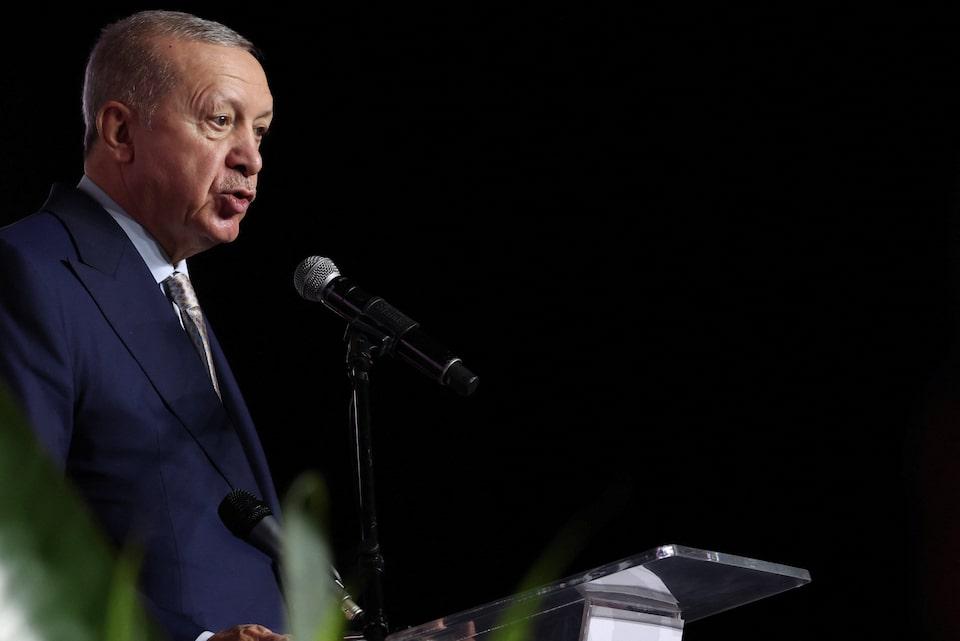
US, Iran at odds over topic of missiles ahead of Oman talks Trump says Khamenei 'should be very worried' US wants missiles, proxies, rights issues included Iran insists talks should be confined to nuclear dispute Fears grow that failed talks could spark wider war ISTANBUL/ DUBAI, Feb 5 (Reuters) - President Tayyip Erdogan said Turkey is working hard to prevent U.S.-Iran tensions from tipping the Middle East into a new conflict, as the two adversaries signal that disagreement over Tehran’s missile arsenal threatens to torpedo a deal. Speaking to reporters on a return flight from a visit to Egypt, Erdogan added that talks at the level of the U.S. and Iranian leadership would be helpful after lower-level nuclear negotiations due in Oman on Friday, according to a transcript of his comments shared by his office on Thursday. Sign up here. Turkey was doing its best to prevent an escalation, said Erdogan, who has spent years cultivating a close relationship with U.S. President Donald Trump while expanding Ankara's diplomatic influence across the Middle East and beyond. Iran and the U.S. remain at odds over Washington's insistence that negotiations include Tehran's missile arsenal and Iran's vow to discuss only its nuclear program, in a standoff that has led to mutual threats of airstrikes. The differences over the talks' scope and venue have raised doubts whether the meeting would take place, leaving open the possibility that Trump could carry out a threat to strike Iran. Asked on Wednesday whether Iran's Supreme Leader Ayatollah Ali Khamenei should be worried, Trump told NBC News: "I would say he should be very worried. Yeah, he should be." He added that "they're negotiating with us" but did not elaborate. After Trump spoke, U.S. and Iranian officials said the two sides had agreed to shift the talks' location to Muscat after initially accepting Istanbul. But there was no indication they had found common ground on the agenda. German Chancellor Friedrich Merz said on Thursday that worries about a further escalation in conflict with Iran characterised his talks during a trip to the Gulf region. He urged Iran to end what he called aggression and enter into talks, saying Germany would do everything it could to de-escalate the situation and work towards regional stability. "In all my conversations yesterday and today, great concern has been expressed about a further escalation in the conflict with Iran," he said during a press conference in Doha. Gulf Arab states fear that Iran will carry out its threat to target U.S. bases on their territory if the United States attacks the Islamic Republic. China meanwhile said it supported Iran's legitimate right to the peaceful use of nuclear energy and opposed the "threat of force and sanction pressure." China would continue to promote the proper resolution of the Iranian nuclear issue, Liu Bin, China's assistant foreign minister, told Iran's deputy foreign minister in Beijing, the Chinese ministry said. Tensions are high across the region as the U.S. builds up forces there, and regional players seek to avoid a military confrontation that many fear could escalate into a wider war. TRUMP WARNED OF 'BAD THINGS' IF NO IRAN DEAL AGREED Iran says the talks must be confined to its long-running nuclear dispute with Western powers, rejecting a U.S. demand to also discuss Tehran's missiles, and warning that pushing issues beyond the nuclear programme could jeopardise the talks. But U.S. Secretary of State Marco Rubio said on Wednesday that talks would have to include the range of Iran’s ballistic missiles, its support for armed proxy groups around the Middle East and its treatment of its own people, besides nuclear issues. Iranian sources say the U.S. is demanding Tehran limits the range of Iran's missiles to 500 km (310 miles). Tehran's regional sway has been weakened by Israel's attacks on its proxies - from Hamas in Gaza to Hezbollah in Lebanon, the Houthis in Yemen and militias in Iraq - and by the ousting of Iran's close ally, former Syrian President Bashar al-Assad. While the talks were originally set for Turkey, Iran wanted the meeting to take place in Oman as a continuation of previous talks held in the Gulf Arab country that had focused strictly on Tehran's nuclear programme, a regional official said. Iran says its nuclear activities are meant for peaceful, not military purposes, while the U.S. and Israel have accused it of past efforts to develop nuclear weapons. The diplomatic efforts follow Trump's threats of military action against Iran during its bloody crackdown on protesters last month and the deployment of more naval power to the Gulf. The U.S. has sent thousands of troops to the Middle East, as well as an aircraft carrier, other warships, fighter jets, spy planes and air refueling tankers. Trump has warned that "bad things" would probably happen if a deal could not be reached, ratcheting up pressure on the Islamic Republic. https://www.reuters.com/business/aerospace-defense/turkey-is-doing-its-best-prevent-us-iran-conflict-erdogan-says-2026-02-05/
2026-02-05 12:06
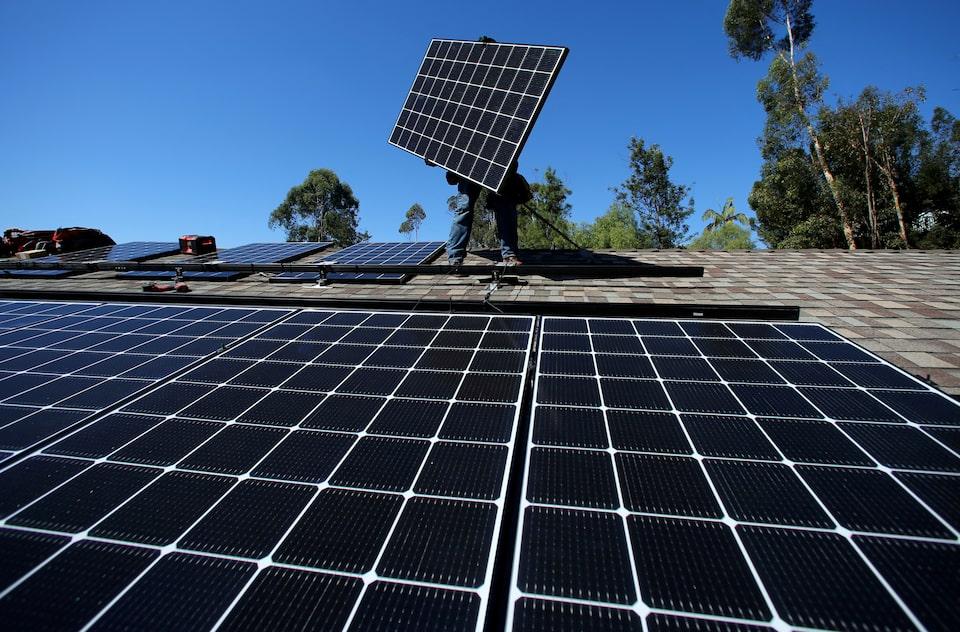
Expiration of 30% federal homeowner tax credit triggers downturn and layoffs in residential solar Installations forecast to drop sharply in 2026, delaying industry recovery Installers shifting to third-party ownership models that still qualify for federal incentives Feb 5 (Reuters) - U.S. residential solar companies are preparing for a steep drop in business this year after the expiration of a federal tax credit that helped drive more than a decade of rapid growth, prompting layoffs, restructurings and some company failures. The 30% federal income tax credit for homeowners who purchase rooftop systems expired at the end of 2025 under President Donald Trump’s tax overhaul. That has caused the most labor-intensive segment of the solar industry to contract sharply at a moment when it was already weakened by high interest rates and shrinking state-level incentives. Sign up here. "We're going to see, between now and July, a very meager market that is going to be struggling to sustain itself," said Chris Castro, chief sustainability officer at Climate First Bank, which offers solar loans. Enphase (ENPH.O) , opens new tab, which produces microinverters that turn solar energy into usable power, said last month it would cut 160 jobs, or 6% of its workforce, and reduce operating costs because of the policy change. Freedom Forever, the nation’s No. 2 residential installer behind Sunrun (RUN.O) , opens new tab, abandoned 10 of its 30 state markets and laid off about 20% of employees, policy director Ben Airth told Reuters. Other companies have gone bust. Purelight Power, an Oregon-based installer operating across a dozen states, filed for Chapter 11 bankruptcy protection on December 30, impacting about 200 workers. And Texas-based TriSMART Solar halted operations at the end of last year, according to employee posts on LinkedIn. Its CEO did not respond to requests for comment. Trump has enacted widespread cuts to clean energy subsidies since taking office last year, arguing solar and wind power are more expensive and less efficient than fossil fuels and dismissing concerns about climate change. DIRE PROJECTIONS FOR SOLAR INSTALLATIONS Solar analytics firm Ohm Analytics last year slashed its forecast for residential solar panel installations due to the loss of the tax credit. It now expects them to decline 20% in 2026, instead of rise 8%. Wood Mackenzie, meanwhile, predicts installations will fall to their lowest level since 2020 - when the COVID-19 pandemic froze the market – and will not recover until the end of the decade. That slump could make it harder for the United States to meet rising power demand driven by the proliferation of new datacenters, undermining a key policy goal of the administration, according to industry players. “This is the easiest and fastest way to support the increased demand,” said Emily Walker, director of content and insights at EnergySage, an online solar marketer which has now diversified into heat pumps and other home energy equipment. The company said the loss of the federal incentive has lengthened the typical payback period for rooftop systems to about 10 years from around seven and made systems roughly $8,000 more expensive for homeowners. THIRD-PARTY OWNERSHIP BECOMING MORE POPULAR One segment of the market, however, remains sheltered: companies like Sunrun that own rooftop systems and sell the electricity to homeowners under subscription-style contracts can still claim a separate federal tax credit and pass savings along to customers. As a result, many installers that previously catered to cash or loan buyers are now turning to financiers offering such third-party ownership (TPO) models. “People are looking to save, and that TPO product is the quickest route to do so,” said Zac Hare, vice president of residential sales at Lumina Solar, based in Maryland. Enphase and Freedom Forever have both launched third-party ownership financing products that allow customers to take ownership of a system after several years of leasing. Other installers are partnering with companies including IGS Energy and HDM Renewable Finance to offer similar structures. But some in the industry argue that leasing creates too many complications for homeowners, particularly when selling a property. “I don’t see the value in a lease to a homeowner,” said Tom Mills, director of technical sales at installer Alpenglow Energy in Park City, Utah. https://www.reuters.com/sustainability/climate-energy/us-rooftop-solar-installers-cut-jobs-restructure-homeowner-subsidy-expires-2026-02-05/
2026-02-05 12:05
Feb 5 (Reuters) - ConocoPhillips (COP.N) , opens new tab said on Thursday it aims to cut capital and operating costs by $1 billion in 2026, after the U.S. oil and gas producer missed Wall Street estimates for fourth-quarter profit due to weaker crude prices. Benchmark Brent crude prices averaged at $63.13 a barrel during the October-December quarter, 11.3% lower than a year earlier, as concerns about oversupply and tariffs outweighed geopolitical risks. Sign up here. ConocoPhillips' production for the reported quarter was 2.32 million barrels of oil equivalent per day (boepd), compared with 2.18 million boepd a year ago. Although the company achieved higher production levels and tighter cost controls following the $22.5 billion acquisition of Marathon Oil in 2024, it still faced challenges due to weaker energy prices. CEO Ryan Lance said the cost-reduction push builds on more than $1 billion in run-rate synergies captured in 2025 following the integration of Marathon Oil, as the company sharpens its focus on capital efficiency. A fall in oil prices has put ConocoPhillips and its rivals under pressure, forcing them to cut staff, curb capital spending, and reduce drilling. The company said last year it would cut 20%-25% of its workforce as part of a broad restructuring. Its average realized price was $42.46 per barrel of oil equivalent (boe) for the fourth quarter, 19% lower than the year earlier. ConocoPhillips forecast 2026 output to be between 2.33 million and 2.36 million boepd, and outlined annual capital spending of about $12 billion and adjusted operating costs of $10.2 billion. The largest U.S. independent oil and gas producer posted an adjusted profit of $1.02 per share for the quarter ended December 31, compared with analysts' average estimate of $1.11 per share, according to data compiled by LSEG. https://www.reuters.com/business/energy/conocophillips-misses-quarterly-profit-estimates-2026-02-05/
2026-02-05 12:04
LONDON, Feb 5 (Reuters) - The Bank of England left interest rates on hold at 3.75% in a surprisingly close 5-4 split vote, with Governor Andrew Bailey and external policymaker Catherine Mann saying they could join those pushing to cut borrowing costs at some point. Below are key excerpts from the individual comments from members of the Monetary Policy Committee in minutes for this month's decision. Sign up here. VOTED TO MAINTAIN BANK RATE AT 3.75% GOVERNOR ANDREW BAILEY "Overall the risks from inflation persistence appear to have continued to reduce." "I therefore see scope for some further easing of policy. This does not mean I expect to cut Bank Rate at any particular meeting. I will go into the coming meetings asking whether a cut is justified." DEPUTY GOVERNOR CLARE LOMBARDELLI "Overall the data continue broadly to show strength in wages and underlying inflation, weak activity and softening employment." "I am more concerned about the costs of cutting rates too quickly than too slowly, including the risks to credibility from any potential policy reversal that is not in response to a new shock." CHIEF ECONOMIST HUW PILL "I remain concerned that inflationary pressures stemming from an overly rapid withdrawal of policy restriction over the past two years still need to be contained and eliminated." "In that light, I continue to favour a cautious withdrawal of policy restriction, guided by longer-term trends rather than short-term news." EXTERNAL MPC MEMBER MEGAN GREENE "I continue to place more weight on the risk of inflation persistence, preferring to wait for clearer evidence that inflation will settle sustainably at the target before easing policy further." "I continue to think the monetary policy stance is not materially restrictive. Finally I believe the cost of a policy error is greater if Bank Rate follows the market path and we end up with inflation persistence versus weaker demand." EXTERNAL MPC MEMBER CATHERINE MANN "New analysis and current developments have moved the appropriate time for a cut in Bank Rate closer.... A cut now would overweight the importance of the near-term mechanical disinflation and risk higher term premia." VOTED TO REDUCE BANK RATE TO 3.5% DEPUTY GOVERNOR SARAH BREEDEN "I place greater weight on downside risks, particularly in the near term, including those from an elevated household saving rate and a weakening labour market." "I can see a case for taking out some insurance against these downside risks to inflation and think policy should be eased a little faster than implied by the current path." DEPUTY GOVERNOR DAVE RAMSDEN "I see risks to the latest central projection for inflation as now tilted to the downside...." "With my starting point for an estimate of the neutral rate of around 3%, I judge that policy should be less restrictive in order to meet the 2% target sustainably in the medium term." EXTERNAL MPC MEMBER SWATI DHINGRA "The market-implied path for Bank Rate looks too tight. The costs of making a policy mistake seem much higher on the downside, especially given weak labour demand. "And the reverse strategy of holding Bank Rate and then cutting aggressively would be no panacea were there to be a sharp downturn in activity and employment." EXTERNAL MPC MEMBER ALAN TAYLOR "I now place even more weight on the central and downside scenarios. If we expect to be at or below the target with significant slack emerging in about six months, a neutral rate of 3% should be in our sights now." https://www.reuters.com/world/uk/bank-england-holds-rates-375-surprisingly-close-vote-2026-02-05/