2025-11-19 05:38
KUALA LUMPUR, Nov 19 (Reuters) - Malaysia's national utility firm Tenaga Nasional Bhd (TNB) has incurred losses of more than $1 billion from illegal power usage by cryptocurrency miners between 2020 and August this year, the energy ministry said. TNB (TENA.KL) , opens new tab found that 13,827 premises had illegally used power to mine cryptocurrency over the period, the energy and water transformation ministry said in a written parliamentary reply dated Tuesday. Sign up here. The illegal use of electricity for cryptocurrency mining, particularly for bitcoin, has caused financial losses of 4.6 billion ringgit ($1.11 billion), the ministry said, adding that TNB is working with authorities to curb power theft. Though there are no specific laws governing cryptocurrency mining, tampering with meters or using connections to bypass the them are offences under the Electricity Supply Act. The ministry said TNB has been able to seize bitcoin mining machines at the premises involved following joint operations by the ministry, the police, the communications regulator, the anti-graft agency and other enforcement bodies. "In an effort to curb this issue, a database that stores complete records of owners and tenants of premises suspected of being involved in electricity theft related to bitcoin mining activities has been established by TNB," the ministry said. "This database plays an important role as an internal reference to identify and monitor suspicious premises and serves as the basis for operational inspection measures." Smart meters are also being installed at electricity distribution substations to monitor energy usage and detect any power manipulation in real time, the ministry added. ($1 = 4.1460 ringgit) https://www.reuters.com/sustainability/boards-policy-regulation/malaysias-tenaga-nasional-incurs-losses-more-than-1-billion-crypto-power-theft-2025-11-19/
2025-11-19 05:33
A look at the day ahead in European and global markets from Tom Westbrook Financial markets hit a holding pattern ahead of chipmaker Nvidia's (NVDA.O) , opens new tab earnings later on Wednesday. Sign up here. Nvidia's near 7% weighting in the S&P 500 ensures that where goes Nvidia, so goes the market. It reports after hours. Before the release, CPI data is due for Britain where it would take a big upside surprise to derail a rate cut that markets have priced in for December. Stocks, bonds and the currency market were all mostly steady through the Asia session, though gains were hard to come by as investors were holding their breath to see if Nvidia's outlook can match lofty expectations. Enormous AI spending commitments should guarantee good business for the chipmaker in the year ahead, but it's longer-term that doubts over the sustainability of returns are starting to make investors nervous. Analysts following the company have been getting more bullish about the company's future performance, with expectations for the company's fiscal 2027 revenue rising 15% since late May to about $285 billion, according to LSEG data. Minutes from the Federal Reserve's October meeting are due during the U.S. day, and will be parsed for a read on the dynamics of a divided Fed, where members are arguing for differing policy responses to inflation and labour data. In Japan, the yen held steady just above Tuesday's nine-month low while the central bank governor, finance and economic revitalisation ministers held a meeting. The last time the BOJ chief met with the finance and economic revitalisation ministers was in October last year, when they warned against excessive yen falls and agreed to carefully monitor market developments. Key developments that could influence markets on Wednesday: - UK, euro zone inflation - Federal Reserve minutes - Earnings for Nvidia, Target https://www.reuters.com/world/china/global-markets-view-europe-2025-11-19/

2025-11-19 05:22
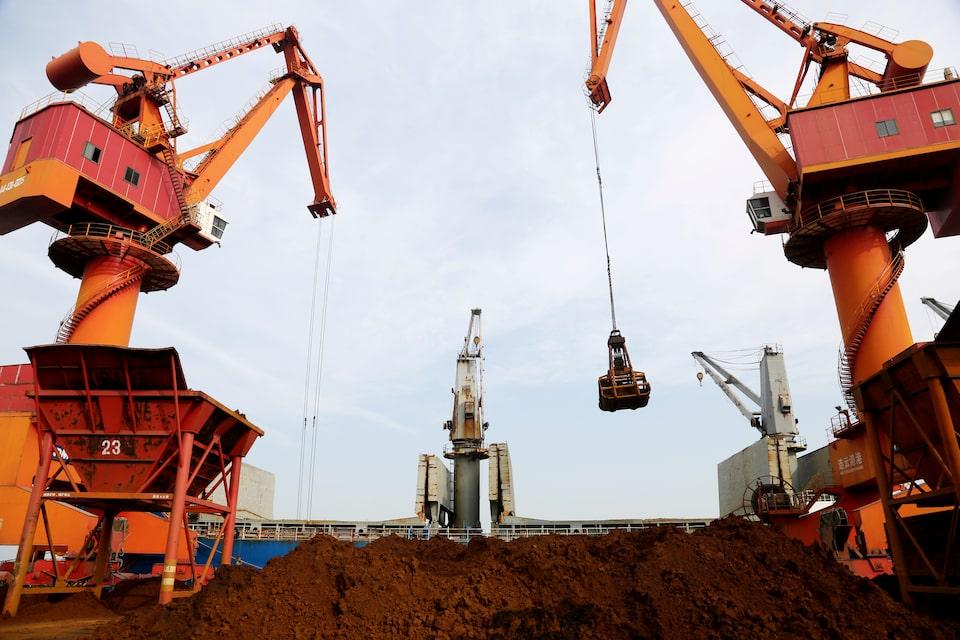
Reuters Open Interest (ROI) is your essential source for global financial commentary. LAUNCESTON, Australia, Nov 19 (Reuters) - China's steel production this year will drop below 1 billion metric tons for the first time since 2019, but iron ore imports may rise to a record high. While there are some fundamental factors that help explain the seeming contradiction between robust iron ore demand and softness in the product it is used to produce, the main difference is probably sentiment. Sign up here. Iron ore is being driven by the view among market participants that Beijing will continue to stimulate the world's second-largest economy, and ultimately that steel demand will recover. The decline in steel production comes as mills struggle to remain profitable amid higher input costs and muted demand from the key construction sector. China, which produces more than half of global steel, recorded output of 72.0 million tons in October, down 2% from September and 12.1% from the same month in 2024, according to data released on November 14. For the first 10 months of the year steel production was 817.87 million tons, down 3.9% from the same period last year. It also means that to achieve 1 billion tons of output this year, production in the last two months of the year would have to be 182.13 million tons, or about 91 million tons in both November and December. It is more likely that output will not exceed 75 million tons in each of the last two months of the year, meaning annual production is on track to be around 970 million tons. Steel production was last below 1 billion tons in 2019, when it was 996 million tons. However, iron ore imports are on track to eclipse last year's record high of 1.24 billion tons achieved in 2024. For the first 10 months of the year iron ore imports were 1.03 billion tons, meaning that if arrivals in the last two months of the year exceed 210 million tons, a new record will be set. November imports are already looking strong, with analysts at DBX Commodities estimating arrivals at 116.5 million tons, while Kpler is even more bullish with a forecast of 120.6 million tons. The question is why are iron ore imports so strong when the steel sector is so obviously struggling. INVENTORIES, PRICES One fundamental reason is that China has been rebuilding stockpiles, with port inventories monitored by consultants SteelHome rising for an eighth week to 139.6 million tons in the seven days to November 14. Inventories are now up 7.3% from the 18-month low of 130.1 million tons hit in early August, but they are still short of the 150.7 million tons from November last year. This implies that there is still scope for stockpiles to rise in coming weeks, especially if prices remain relatively steady. Benchmark Singapore iron ore futures ended at $104.60 a ton on Tuesday and have been in a narrow range between $100 and $108 since the beginning of August. While steady prices may support some buying momentum they are hardly a strong driver, especially when the widespread market view is that iron ore prices are likely to head lower in 2026 as the massive new Simandou mine in Guinea ramps up production. The fundamental case for strong iron ore imports is not convincing, which means the driver is more likely to be sentiment. An interview last week with Finance Minister Lan Foan is a case in point. Stronger fiscal policy using tools such as the budget, taxation, government bonds and transfer payments will be used to provide sustained support for economic and social development, Lan said. Iron ore is being driven by optimism that Beijing's efforts will bear fruit, while steel output is recognising that the stimulus has yet to make a substantial difference. Enjoying this column? Check out Reuters Open Interest (ROI), your essential new source for global financial commentary. ROI delivers thought-provoking, data-driven analysis of everything from swap rates to soybeans. Markets are moving faster than ever. ROI can help you keep up. Follow ROI on LinkedIn , opens new tab and X , opens new tab. The views expressed here are those of the author, a columnist for Reuters. https://www.reuters.com/markets/commodities/china-steel-output-slumps-iron-ore-imports-head-record-2025-11-19/
2025-11-19 05:12
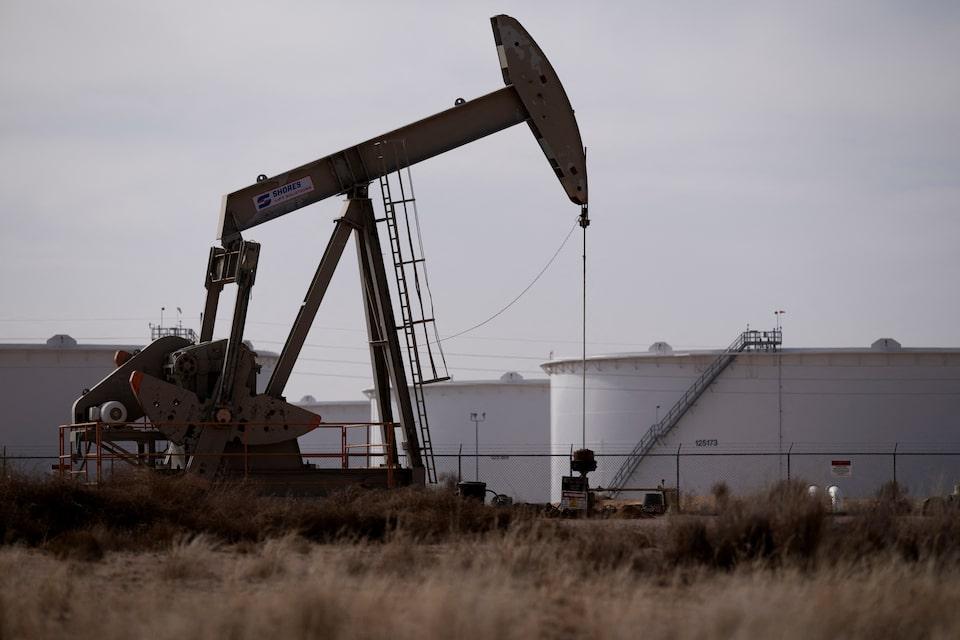
Oil settles down on US push to end Russia's war in Ukraine Peace talks would reduce oil supply risks, analysts say Larger-than-expected draw from US crude stocks limits oil's losses NEW YORK, Nov 19 (Reuters) - Oil prices fell on Wednesday after reports indicated the U.S. is renewing its push to end Russia's war in Ukraine and has drafted a framework for it. Brent crude futures fell $1.38, or 2.1%, to settle at $63.51 a barrel, while U.S. West Texas Intermediate crude futures closed down $1.30, or 2.1%, to $59.44. Sign up here. The U.S. has signaled to Ukraine President Volodymyr Zelenskiy that his side must accept a U.S.-drafted framework to end the war with Russia, which proposes Kyiv giving up territory and some weapons, two sources told Reuters. Zelenskiy said U.S. leadership had to remain effective in order to end the war which has lasted more than 3-1/2 years. The Ukrainian President said his Turkish counterpart Tayyip Erdogan had proposed different formats for talks. An end to the war in Ukraine might pave the way for higher Russian oil flows, adding to oversupply concerns, analysts said. "With the amount of oil on the water, in floating storage and what has been sanctioned, prices will probably end up in the low $50s as all of that oil that is sanctioned from Russia will probably come to market," said Scott Shelton, energy specialist at TP ICAP Group. Last month, the U.S. announced sanctions against Rosneft and Lukoil, setting a November 21 deadline for companies to wind down business with the Russian oil majors. The sanctions had already reduced Moscow's oil revenues and are likely to reduce the amount of oil it can sell in the long-term, the U.S. Treasury said on Monday. "There is maximum pressure right now as Friday's deadline is looming," said Rystad Energy oil analyst Janiv Shah, adding that a lower geopolitical risk premium would leave investors focusing more closely on weak market fundamentals. Russia's Deputy Prime Minister Alexander Novak denied that the sanctions were harming oil production, and said Russia will reach its OPEC+ production quota by the end of this year or early next year. Supporting oil prices, the U.S. Energy Information Administration reported a larger-than-expected draw from U.S. crude stockpiles last week on higher refinery runs and exports. The oil market is also suffering "headline fatigue" around Russia-Ukraine news, suggesting will likely stay rangebound in the short term as traders await firm agreements to end the war, said Ed Hayden-Briffett, an oil analyst at Onyx Capital Group. https://www.reuters.com/business/energy/oil-prices-fall-rising-us-inventories-reinforce-oversupply-concerns-2025-11-19/
2025-11-19 05:11
Nov 19 (Reuters) - The European Union plans to set up a central authority to coordinate buying and stockpiling of critical minerals to keep the U.S. from securing supplies "under our noses," industry chief Stéphane Séjourné said on Wednesday. In an interview, Séjourné told the Financial Times newspaper that the EU had become "collateral damage" in a U.S.-China dispute over rare earths, which are vital for defence and clean technologies. Sign up here. https://www.reuters.com/world/china/eu-plans-stockpile-critical-minerals-amid-us-china-tension-ft-says-2025-11-19/

2025-11-19 05:08
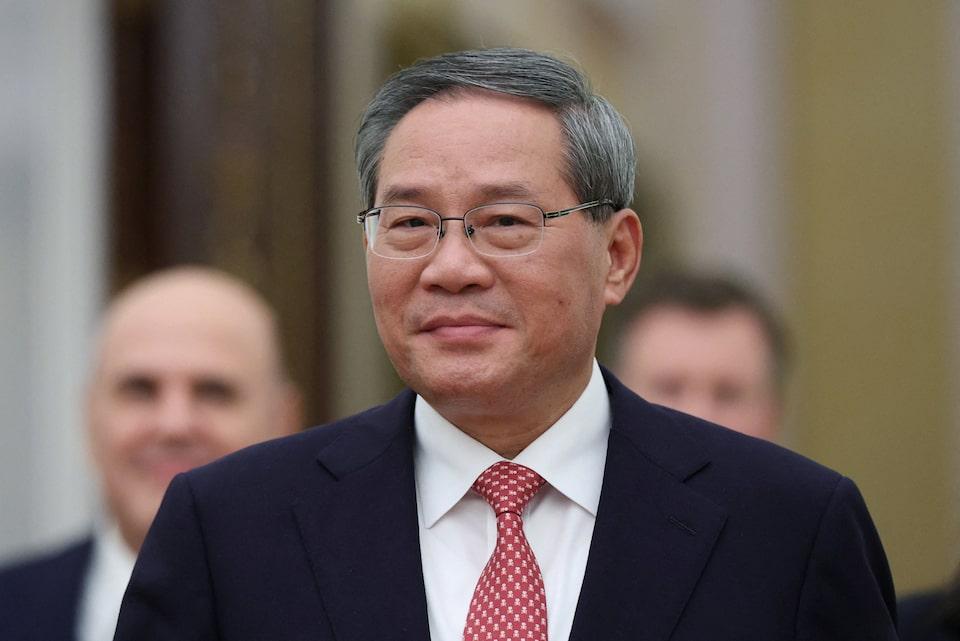
Zambia hosts first Chinese premier visit in 28 years China, West vie for influence after $13.4 bln debt restructure Beijing is Zambia's biggest creditor, owed $5.7 bln Copper-rich Zambia seeks investment pledges rather than loans BEIJING, Nov 19 (Reuters) - Zambia will host a Chinese premier for the first time in 28 years as the sub-Saharan state emerges from a financial crisis, with Beijing eager to access the country's commodities and develop a bigger market for its exporters. China is Zambia's largest official creditor with $5.7 billion owed and is eager to highlight countries that are model members of President Xi Jinping's flagship Belt and Road infrastructure initiative. China has said it would also like to show how African nations can recover from financial crises with its assistance. Sign up here. Premier Li Qiang's arrival in Lusaka on Wednesday is part of a push to deepen China's presence in the copper-rich country as Europe and the U.S. vie to become alternative benefactors now that Zambia's $13.4 billion in debt is on a more sustainable repayment plan. Industrialising Zambia needs fresh investment for its mining sector, infrastructure network and production capacity, while China wants to boost exports of tractors, electrical equipment and construction vehicles. The World Bank expects Zambia's economy to grow 6.5% next year, compared with an average of 5% over the past two decades. "Li is going to bolster China's presence in a strategically vital country where both the President (Hichilema) and Chinese mining companies need support," said Eric Olander, co-founder of the China-Global South Project, referencing a February acid spill at a Chinese-run copper plant that dumped 50,000 cubic metres of contaminated water into the Kafue River, a key supply for millions of people, which is now a major election issue. "China this year also approved a massive refurbishment of the Tazara Railway that is widely seen as a counter to the U.S./EU-backed Lobito Corridor." China financed the line in the 1970s to reach Zambia's vast copper deposits through Tanzania on Africa's east coast and is continuing to invest as the West builds up its route to the country via Angola and the Democratic Republic of the Congo. "The debt issue is largely seen as settled," he said. Han Jing, China's ambassador to Zambia, said Li's visit was expected to produce dozens of cooperation agreements, according to a statement on the embassy's Facebook page. "The impact of Chinese aid and Chinese investments can be felt across the country as an important force for economic transformation and the social progress of Zambia," Han said, encouraging Lusaka to "draw on China's technological and economic momentum to build capacity and develop greater resilience." INVESTMENT OVER LOANS After the COVID-19 pandemic forced many African countries to borrow heavily to pay for health responses, weakening their ability to repay creditors and pushing several into debt distress, governments across the continent shifted to seeking investment. One reason Zambia's debt restructuring dragged on for three-and-a-half years was that it had a large number of Chinese creditors, which made it difficult for the government to assert control over the process, analysts said. Chinese companies have invested around $6 billion in Zambia over the past 20 years, according to data from the American Enterprise Institute, almost all of which went into the metals sector. These companies now face increasing pressure from European and American firms. The European Union's top official for international cooperation and development visited earlier this month to unveil fresh investments in transport, energy, agriculture and critical raw materials along the Lobito Corridor. Donald Trump Jr., the eldest son of U.S. President Donald Trump, met Hichilema on Sunday, according to a post on the Zambian president's X account. https://www.reuters.com/world/china/china-premier-makes-landmark-zambia-trip-west-vies-investment-foothold-2025-11-19/