2025-11-19 04:58
Nvidia's earnings top estimates, stock up in extended trading FOMC minutes reveal policymaker divide Delayed employment data may affect Fed rate decision European stocks end flat NEW YORK, Nov 19 (Reuters) - U.S. stocks climbed on Wednesday, clawing back some ground lost during the recent selloff as investors positioned themselves ahead of Nvidia's (NVDA.O) , opens new tab much-anticipated quarterly results and crucial employment data that had been unavailable during the longest-ever U.S. government shutdown. All three major U.S. stock indexes closed in positive territory, with tech strength (.SPLCRT) , opens new tab putting the Nasdaq out front. Sign up here. Chipmaker Nvidia, which has come to represent the nascent artificial intelligence technology that has powered much of the stock market's rally in recent months, reported better-than-expected earnings and forecast fourth-quarter revenue above estimates. "The companies that are Nvidia's customers are expanding and continuing to grow their investment in AI infrastructure, so chip demand looks like it's set to increase," said Rob Haworth, senior investment strategist at U.S. Bank Wealth Management in Seattle. "It seems early to talk about an AI bubble because the growth has been driven by earnings, which have driven growth expectations fairly higher," Haworth added. "We’re early in this investment cycle; we’re moving from building these models to implementing them." Minutes from the Fed's October meeting showed policymakers were more divided than usual, lowering interest rates even as some members cautioned the move could quell efforts to cool inflation. Gold pared gains following the release of minutes from the U.S. Federal Reserve's October meeting, and crude prices slid on reports of a U.S.-proposed resolution to Russia's war on Ukraine. The recently ended government shutdown resulted in a backlog of official economic data, which is now beginning to flow. The Labor Department's September employment report is slated for release on Thursday. Should the report fall short of expectations, it could affect the U.S. Federal Reserve's interest rate decision at the conclusion of next month's monetary policy meeting. Even so, the Labor Department announced it would release a combined October/November employment report as the shutdown hindered critical data collection, so the Fed will have less information on the state of the labor market when it meets in December. NASDAQ LEADS THE WAY The Dow Jones Industrial Average (.DJI) , opens new tab rose 47.03 points, or 0.10%, to 46,138.77, the S&P 500 (.SPX) , opens new tab gained 24.87 points, or 0.38%, to 6,642.19 and the Nasdaq Composite (.IXIC) , opens new tab rose 131.38 points, or 0.59%, to 22,564.23. European shares ended nearly unchanged, drifting near one-month lows ahead of Nvidia's earnings. MSCI's gauge of stocks across the globe (.MIWD00000PUS) , opens new tab rose 0.73 points, or 0.07%, to 976.74. The pan-European STOXX 600 (.STOXX) , opens new tab index fell 0.03%, while Europe's broad FTSEurofirst 300 index (.FTEU3) , opens new tab fell 0.97 points, or 0.04% Emerging market stocks (.MSCIEF) , opens new tab fell 1.54 points, or 0.11%, to 1,360.21. MSCI's broadest index of Asia-Pacific shares outside Japan (.MIAPJ0000PUS) , opens new tab closed lower by 0.32%, to 697.91, while Japan's Nikkei (.N225) , opens new tab fell 165.28 points, or 0.34%, to 48,537.70. U.S. Treasury yields rose after the U.S. government said jobs data for October and November would not be released before the Fed's next policy meeting in December, dimming hopes for a third and final rate cut this year. The yield on benchmark U.S. 10-year notes rose 0.8 basis points to 4.129%, from 4.121% late on Tuesday. The 30-year bond yield added 0.8 basis points to 4.7487% from 4.741% late on Tuesday. The 2-year note yield, which typically moves in step with interest rate expectations for the Federal Reserve, rose 0.8 basis points to 3.589%, from 3.581% late on Tuesday. The dollar rose against the yen to its highest level since January as investors await the U.S. jobs report. The dollar index , which measures the greenback against a basket of currencies including the yen and the euro, rose 0.6% to 100.20, with the euro down 0.47% at $1.1525. Against the Japanese yen , the dollar strengthened 0.96% to 157 yen. Reports of a U.S. proposal to end the Russian war in Ukraine, along with ongoing oversupply concerns, sent crude oil prices sliding. U.S. crude fell 2.14% to $59.44 per barrel, while Brent settled at $63.51 per barrel, down 2.13%. Gold prices advanced as investors sought safe-haven assets and girded themselves for the delayed employment data, but pared their gains after the Fed minutes were published. Spot gold rose 0.13% to $4,073.01 an ounce. U.S. gold futures rose 0.26% to $4,072.00 an ounce. https://www.reuters.com/world/china/global-markets-global-markets-2025-11-19/

2025-11-19 04:17
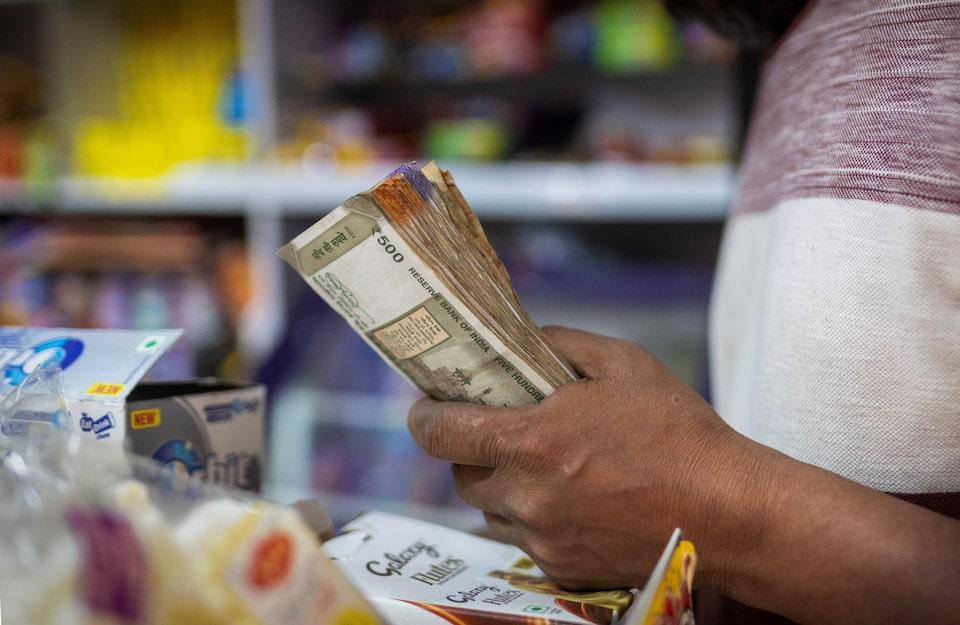
MUMBAI, Nov 19 (Reuters) - The rupee closed nearly unchanged on Wednesday, easing off a two-week high as importer dollar demand ate into gains spurred by a pick up in exporter flows and a mildly bullish bias among interbank traders. The rupee ended the session at 88.5875 against the U.S. dollar, up marginally from its close of 88.6050 in the previous session. Sign up here. The currency climbed to a peak of 88.4250 in early trading, but shed much of its gains in the latter half of the session. A trader at a private bank cited dollar demand from importers and modest portfolio outflows as key contributors to the pressure. Offshore market participants, meanwhile, have opted to use options to position for a potential rally in the Indian rupee, encouraged by Wall Street banks promoting strategies built on the prospect of a U.S-India trade deal. Both New Delhi and Washington have indicated that an agreement is close. Analysts reckon that a breakthrough in negotiations could spark a rebound in the rupee and spur inflows into local stocks. A dip in most Asian currencies also weighed on the local unit on Wednesday. The dollar swung between gains and losses against major peers as investors awaited key U.S. economic data and commentary from Federal Reserve officials to gauge the U.S. monetary policy path. Analysts at MUFG said in a note that the dollar's sensitivity to intra-day moves in U.S. equity markets has increased, which could heighten the impact of quarterly earnings from chip titan Nvidia (NVDA.O) , opens new tab, due later in the day. "Given the current positive correlation between equities and the dollar (which reflects perhaps the renewed concerns over a tech/AI-specific correction hitting the broader US economy) a bad earnings report this evening could drive the dollar weaker," the firm said. https://www.reuters.com/world/india/rupee-set-ignore-weaker-asian-peers-eyes-us-india-trade-deal-cues-2025-11-19/
2025-11-19 00:54
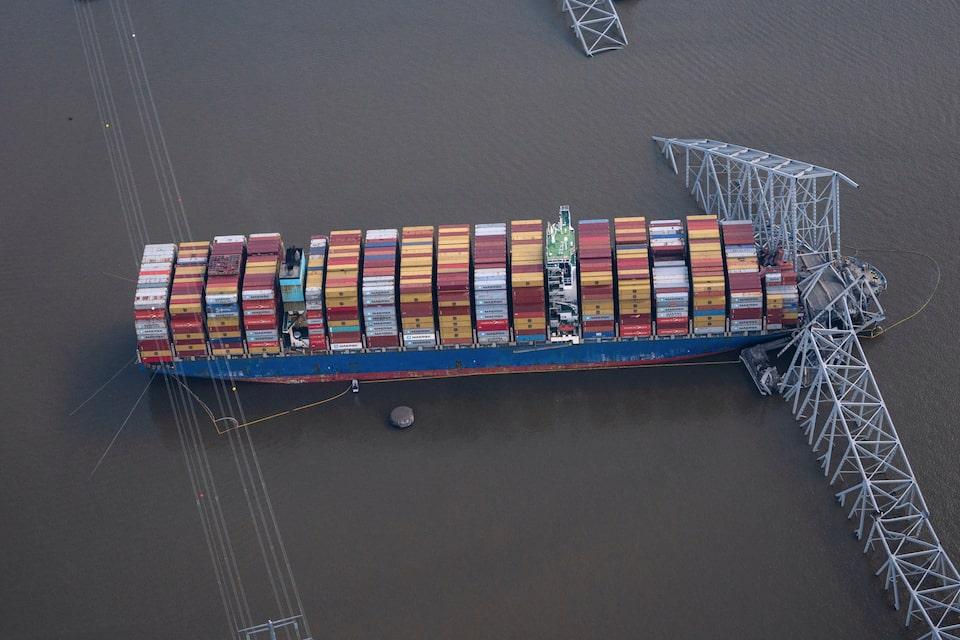
Crash killed construction workers in March 2024 Maryland says bridge will now cost twice as much to build and take until 2030 to complete Board made series of recommendations to prevent future incidents WASHINGTON, Nov 18 (Reuters) - The NTSB said on Tuesday a loose wire caused a power failure on the 984-foot cargo ship Dali, leading to its March 2024 collision with Baltimore’s Francis Scott Key Bridge that killed six construction workers and destroyed the span. The investigation found a single loose wire in the electrical system caused a breaker to unexpectedly open, launching a sequence of events that led to two vessel blackouts and a loss of propulsion and steering. Sign up here. The NTSB found wire-label banding prevented the wire from being fully inserted, causing an inadequate connection. NTSB Chair Jennifer Homendy compared the painstaking search for the wire to finding a single loose rivet on the Eiffel Tower. The NTSB and the ship's manufacturer HD Hyundai Heavy (329180.KS) , opens new tab had to test thousands of wires to find the problem, she added. "It's like finding a needle in the haystack." The board also said contributing to the collapse was the lack of countermeasures to reduce the bridge’s vulnerability from impacts by ocean-going vessels, which could have been implemented if a vulnerability assessment had been conducted by the Maryland Transportation Authority. A replacement bridge was initially estimated to cost $1.7 billion to $1.9 billion and be completed by late 2028. On Monday, state officials said they now expect the bridge will cost $4.3 billion to $5.2 billion and open to traffic only in late 2030. They cited a new pier protection system and a new longer, higher design as reasons for the increased costs. The board staff said they recommended operators complete periodic inspections of high-voltage switchboards and proposed changes that would allow ships to more quickly recover from a loss of power. The NTSB has said previously the Dali lost electrical power several times before the crash into the Key Bridge, including experiencing a blackout during in-port maintenance and shortly before the crash. Power outages happen at sea and the NTSB made numerous new recommendations to prevent catastrophic collisions, including to the U.S. Coast Guard. It also called on Hyundai Heavy to incorporate "proper wire-label banding installation methods." The Key Bridge, like many other bridges, was not equipped with a warning system to prevent motorists from driving onto the bridge in the event of a hazard. ASSESSING BRIDGE SAFETY In March the board called for urgent safety assessments of 68 bridges in 19 states including crossings like the Golden Gate Bridge, Chesapeake Bay Bridge, Brooklyn Bridge and George Washington Bridge. The NTSB recommended major bridge owners consider adopting motorist warning systems capable of activating when a threat is identified to immediately stop motorists from entering onto the bridge in an emergency. The review focused on bridges built before 1991 and frequented by ocean-going vessels that have not undergone vulnerability assessments. The NTSB said last year the Dali lost power about four minutes before the crash when electrical breakers unexpectedly tripped, causing a loss of power to all shipboard lighting and most equipment when it was 0.6 mile (1 km) from the bridge. The FBI is conducting a criminal probe into the collapse. Homendy said some of the ship personnel are still in the United States. https://www.reuters.com/world/us/us-board-determine-cause-fatal-maryland-bridge-collapse-2025-11-18/
2025-11-19 00:28
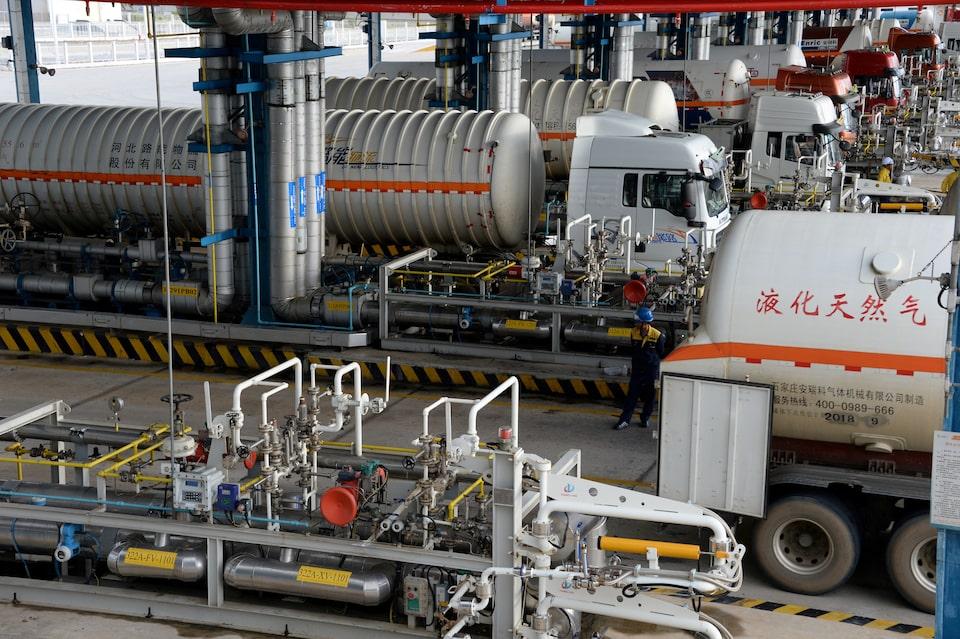
Novatek sells cargoes at 30%-40% discounts, sources say Sales end commercial limbo of sanctioned Arctic LNG 2 gas plant Beihai LNG Terminal becomes dedicated entry point for Russian gas LONDON/SINGAPORE, Nov 19 (Reuters) - Russian liquefied natural gas producer Novatek (NVTK.MM) , opens new tab has slashed the prices of its cargoes by 30% to 40% since August to entice Chinese buyers to purchase sanctioned gas from its Arctic LNG 2 project, sources familiar with the matter told Reuters. The purchases have ended the commercial limbo for the $21-billion project, which is subject to some of the harshest sanctions the U.S. and Europe have imposed on Russia. Sign up here. Washington is seeking to block the flow of oil and gas revenue to Kremlin coffers as U.S. President Donald Trump ratchets up pressure on Moscow to end its war in Ukraine. The White House has also threatened action against countries that continue to buy Russian energy exports. But China, a longtime ally of Russian President Vladimir Putin, opposes Western sanctions. Cracking down on Chinese entities flouting them could prove tricky. Washington only last month struck a delicate truce in its trade war with Beijing, and one senior industry source said enforcing the measures could jeopardise U.S. ambitions of doing its own LNG deals with China. DEEP DISCOUNTS DRAW CHINESE BUYERS TO PUTIN-LINKED PROJECT Novatek, which is co-owned by some of Putin's closest allies, started producing LNG at the plant in December 2023. But it failed to sell a single cargo until August this year, when it slashed prices for Chinese buyers. The gas producer sold its first cargo, which was delivered on August 28, at a discount of $3 to $4 to the Asian benchmark LNG price of around $11 per mmBtu, according to an industry source familiar with the deal. For subsequent deliveries - there have been 14 in total since August – Chinese buyers continued to receive steep discounts of around 30% to 40%, a second source familiar with the deals said. That means cargoes are selling at $28 million to $32 million, well below their market value of over $44 million. The prices of the cargoes have not been previously reported. Reuters has been unable to ascertain the names of the Chinese companies that bought them. Novatek did not respond to a Reuters request for comment. WASHINGTON NOT ENFORCING ITS SANCTIONS Much of Moscow's oil and gas is not directly subject to Western sanctions. And China is the world's biggest buyer of its energy exports. Trump's predecessor President Joe Biden, however, imposed specific sanctions on Arctic LNG 2 as well as related entities and vessels soon after it began operations in December 2023. French partner TotalEnergies (TTEF.PA) , opens new tab subsequently walked away from the project, though two of China's largest energy firms - China National Petroleum Corp and China National Offshore Oil Corporation (600938.SS) , opens new tab - remained, each with a 10% stake. The sanctions have also derailed Russian hopes of acquiring a fleet of Arc7 ice-class tankers to make year-round deliveries. Until August, without a buyer, cargoes from the project floated at sea or were transferred to storage units, costing Novatek millions of dollars, according to traders. Trump has made ending the war in Ukraine a foreign policy priority. And to pressure Moscow to negotiate, he has broadened U.S. sanctions targeting Russian energy, pressed allies to do the same, and threatened countries buying Russian exports, including India, with steep tariffs. So far, however, Washington has not moved to punish Chinese entities involved in the Arctic LNG 2 purchases. "They are pressuring their allies to stop importing Russian gas or LNG. But they are not implementing their own sanctions on Arctic LNG 2," said Anne-Sophie Corbeau, a researcher at Columbia University's Center on Global Energy Policy. The White House did not respond to a Reuters request for comment, asking if the administration was concerned by the LNG purchases and if there were any efforts under way to discourage or prevent the transactions. China's government has approved the purchases, said the two Beijing-based senior industry sources. And the Chinese business registration portal shows the Beihai LNG Terminal in southern China, to which the cargoes are being delivered, is run by state-owned energy infrastructure monopoly PipeChina. When asked if the government gave guidance over the imports or if it was concerned Washington might impose sanctions on PipeChina, which runs most of the country's oil and gas infrastructure, the office of the foreign ministry spokesperson did not directly comment but reiterated China's opposition to unilateral sanctions and "long-arm jurisdiction". "Energy cooperation between China and Russia is normal economic and trade cooperation beneficial to both countries' people," the spokesperson's office said. BEIHAI BECOMES CHINA'S DEDICATED RUSSIAN LNG IMPORT TERMINAL Prior to August, Beihai, a mid-sized terminal, had been used to import gas from various sources and companies, including eight U.S. LNG cargoes in 2024. But since August, PipeChina has refused to grant other companies access to Beihai, which has effectively become a dedicated entry point for Russian gas, said a third Chinese source, a trader with direct knowledge of the matter. The UK government imposed sanctions on Beihai in October. PipeChina did not respond to requests for comment. Complicating matters, Trump, who has repeatedly integrated American energy exports into trade deals with partners seeking to reduce U.S. tariff burdens, has voiced his desire to sell more LNG to China. The United States would find it difficult to sanction PipeChina as that would also block U.S. gas sales, a Western energy executive, who sells gas into China, told Reuters. China has not imported any U.S. LNG since February due to tariffs imposed during the trade war between the world's two largest economies. https://www.reuters.com/business/energy/russias-novatek-gives-deep-discounts-sell-sanctioned-lng-chinese-buyers-sources-2025-11-19/
2025-11-18 23:55
Nov 18 (Reuters) - Vulcan Elements, a North Carolina-based rare earth magnet producer, said on Tuesday it will build a $1 billion manufacturing facility in its home state to supply U.S. electronics and military customers. The facility, which is being funded in part by the Pentagon, is slated for Benson, roughly 30 miles (48 km) southeast of Raleigh. Sign up here. It would boost U.S. access to magnets that turn power into motion for electric vehicles, cell phones, fighter jets and thousands of other products. Those magnets are at the center of global trade conflict as China uses them as leverage in negotiations with the Trump administration. The company chose North Carolina over other states due to its engineering-focused workforce and economic incentives, said CEO John Maslin. The plant site is located inside North Carolina's so-called "Research Triangle," near prominent universities, laboratories and military complexes. "The most important thing for us was workforce. It was finding the PhDs, the engineers and the technicians from complementary industries," Maslin said. While the U.S. had been the world's largest magnet manufacturer, it let that skill lapse in the 20th century. Vulcan's magnet technology was developed by a co-founder and the company does not foresee any patent issues, Maslin said. North Carolina estimates the facility will boost the state's economy by $2.6 billion. If that happens, Vulcan will be eligible for $17.6 million in state grants. Vulcan in August signed a rare earth oxides supply deal with ReElement Technologies. The oxide would need to be turned into a metal before it is turned by Vulcan into magnets. Maslin said that the metallization step will be done in the Benson facility, but he declined to say if Vulcan or a third party would conduct that step. Vulcan's goal is to produce 10,000 metric tons per year of magnets, with a "significant" amount of that production online by 2027. That is roughly the same volume planned by MP Materials (MP.N) , opens new tab for its Texas magnet facility. https://www.reuters.com/business/rare-earth-magnet-startup-vulcan-elements-build-1-billion-north-carolina-plant-2025-11-18/

2025-11-18 23:50
Home Depot falls after cutting FY profit forecast Nvidia due to report this week US September jobs report also due this week Indexes: Dow down 1.1%, S&P 500 down 0.8%, Nasdaq down 1.2% NEW YORK, Nov 18 (Reuters) - U.S. stocks ended lower on Tuesday, with the S&P 500 putting in a fourth straight session of losses as valuation worries hit big technology-related shares and a disappointing forecast pressured Home Depot. The four-day drop was the benchmark's longest losing streak in three months. Sign up here. Adding to caution, quarterly results from artificial intelligence and market leader Nvidia (NVDA.O) , opens new tab are due after the bell on Wednesday. The U.S. earnings season is near its end, but Nvidia's results will be closely watched by investors worried about market gains tied to AI exuberance. Nvidia's shares were 2.8% lower on the day. The September U.S. jobs report is set to be released on Thursday after being delayed because of the long government shutdown. Earlier private market surveys have pointed to a cooling labor market. Data Tuesday showed the number of Americans on jobless benefits surged between mid-September and mid-October. Shares of Home Depot (HD.N) , opens new tab dropped 6% after the home improvement chain gave a forecast for full-year profit that disappointed and missed quarterly earnings estimates. "You're having this massive sentiment correction during a period where earnings is delivering maybe above bull expectations, and, yet, there's so much fear circulating in the market," said Marta Norton, chief investment strategist at retirement and wealth services provider Empower. The Dow Jones Industrial Average (.DJI) , opens new tab fell 498.50 points, or 1.07%, to 46,091.74, the S&P 500 (.SPX) , opens new tab lost 55.09 points, or 0.83%, to 6,617.32 and the Nasdaq Composite (.IXIC) , opens new tab lost 275.23 points, or 1.21%, to 22,432.85. Home Depot aside, earnings for this reporting period have been much stronger than expected. Year-over-year earnings growth for the S&P 500 is now at 16.9%, well above the 8.8% estimated at the start of October, according to the most recent LSEG data. Indexes pared losses by midday before falling again. Some equities traders viewed the recent selloff as overdone, with traders at Jefferies, for instance, writing in a note that the market could be setting up for a bounceback. They noted that while megacaps are selling off sharply, "action under the hood is more mixed/slightly encouraging." Six of the 11 major S&P 500 sectors ended higher on the day, and the Russell 2000 small-cap index (.RUT) , opens new tab gained 0.3%. Among other megacaps that ended sharply lower, Amazon.com (AMZN.O) , opens new tab was down 4.4%. Concerns over high valuations and dwindling expectations of a December interest rate cut have led to a pullback in U.S. stocks, with the S&P 500 down about 4% from its October peak. The S&P 500 and the Nasdaq both closed below their 50-day moving averages on Monday, an important technical threshold, for the first time since late April. On the Nasdaq, 2,353 stocks rose and 2,350 fell as advancing issues outnumbered decliners by a 1-to-1 ratio. Volume on U.S. exchanges was 18.66 billion shares, compared with the 20.2 billion average for the full session over the last 20 trading days. https://www.reuters.com/business/us-stock-futures-slip-rate-cut-hopes-fade-valuation-worries-persist-2025-11-18/