2025-11-18 23:36
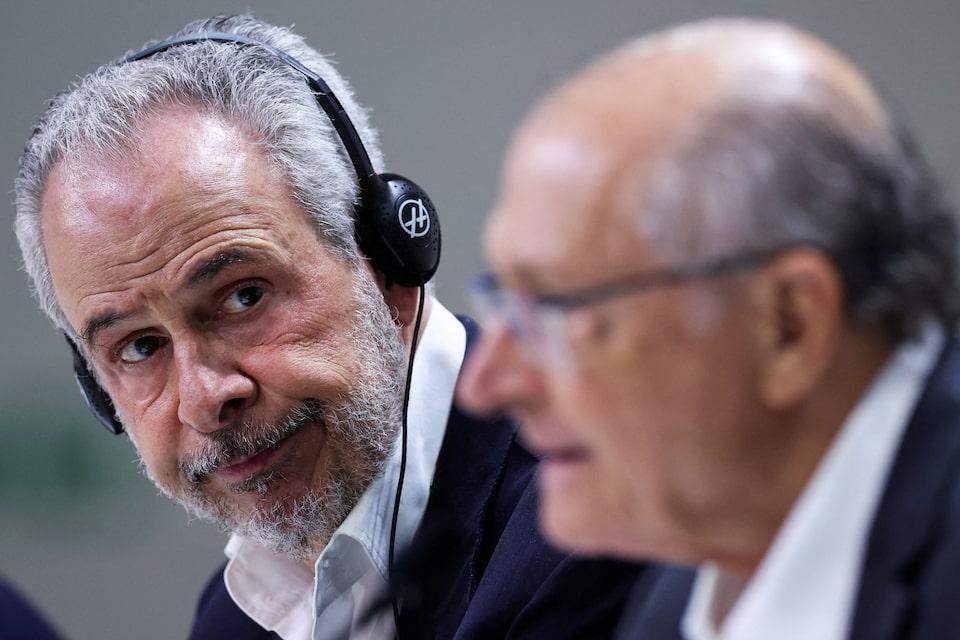
Brazil proposes two-stage deal to expedite COP30 negotiations Disagreements persist on finance and emissions cuts Group of countries call for roadmap to ditch fossil fuels New draft text expected Wednesday after late night talks BELEM, Brazil, Nov 18 (Reuters) - Brazil said on Tuesday it still expects to land a deal on some of the most contentious issues at the COP30 climate summit ahead of schedule, but conceded there were still wide gaps between countries on issues like fossil fuels. The two-week summit in the Amazon city of Belem has brought together governments from across the world to strengthen the complex U.N. framework underpinning global action to halt rising greenhouse gas emissions and cope with the damage caused by warming temperatures. Sign up here. Host nation Brazil wants a deal agreed in two stages: one package on Wednesday, including subjects like cutting fossil fuel use and delivering promised climate finance that were a week ago deemed too thorny to even include on the formal agenda, and another wrapping up any outstanding issues by Friday. Confirming that negotiators would work late into the night for the second day in a row, COP30 President Andre Correa do Lago said he still expected the first deal to be approved on Wednesday, but that it could be "very late". Any such deal would confound expectations set by recent COP summits - all of which have run way past their scheduled end. The conference is due to end at 2100 GMT on Friday. Brazilian President Luiz Inácio Lula da Silva will attend the conference on Wednesday to give fresh political impetus to the negotiations. He will meet U.N. Secretary-General Antonio Guterres. Lula said the meeting was designed to "strengthen climate governance and multilateralism." FRESH DEAL TEXT EXPECTED WEDNESDAY Earlier, the COP30 presidency, invoking the Brazilian Portuguese concept of "mutirão" - a spirit of collective effort - released a first draft of a possible summit deal titled "Global Mutirão: uniting humanity in a global mobilization against climate change". After a day of country-by-country consultations, a new version of the text is expected to be drawn up overnight and presented on Wednesday for further feedback. The toughest topics include pinning down how rich countries will provide finance to poorer countries to switch to clean energy, and what must be done about a gap between promised emissions cuts and those needed to stop temperatures rising. Some nations, including Brazil, also want a roadmap to help countries implement an agreement reached at COP28 in 2023 to transition away from fossil fuels, though the draft deal only listed this as an optional inclusion. "The current reference in the text is weak and it's presented as an option. It must be strengthened and it must be adopted," said Tina Stege, Climate Envoy for the Marshall Islands, at a press conference alongside representatives from more than a dozen supportive countries. However, underscoring the task ahead for the presidency, not everyone agreed. Correa do Lago later indicated that one of the options put forward in the first draft, which would see countries submit plans to reduce their fossil fuel use, had already been rejected by a number of other countries as too onerous. "Most of the countries are either very favorable or it's a red line," he said. https://www.reuters.com/sustainability/cop/brazils-cop30-slow-shuffle-climate-negotiation-turns-into-sprint-2025-11-18/
2025-11-18 23:29
Nov 18 (Reuters) - The Sierra Club said on Tuesday it was challenging a U.S. federal energy regulator's decision to fast-track connecting fossil fuel power plants to major electric grids at the expense of renewable energy. The environmental group filed a petition with the D.C. Circuit Court of Appeals to review the Federal Energy Regulatory Commission's (FERC's) decision to let the Southwest Power Pool (SPP) speed up the interconnection of mostly fossil fuel generation. Sign up here. The SPP, known for its abundance of wind energy, spans 14 states, stretching from North Dakota to Louisiana. But the grid operator says it needs more electricity to meet surging demand from data centers powered by artificial intelligence. Last year, wind was the SPP's top energy producer at 38%, followed by natural gas at 28%, according to the grid operator. The Sierra Club challenged SPP's proposal before FERC, but the agency denied it. FERC also denied the Sierra Club's rehearing request in September. The Sierra Club said it also filed a lawsuit challenging a similar fast-track plan that FERC approved for the Midcontinent Independent System Operator (MISO), an electric grid operator in the Midwest. "FERC's approval of SPP and MISO's line-cutting proposals will only add to the disruption that has prevented hundreds of gigawatts of clean energy from coming online to serve projected resource needs," Greg Wannier, a senior attorney with the Sierra Club, said in a statement. https://www.reuters.com/business/energy/sierra-club-challenges-fossil-fuel-advantage-wind-heavy-us-electric-grid-2025-11-18/

2025-11-18 22:59
Japan holdings of Treasuries hit highest since August 2022 China's stash of Treasuries dip Foreign investors buy $132.9 billion in US stocks NEW YORK, Nov 18 (Reuters) - Foreign holdings of U.S. Treasuries slipped in September, data from the Treasury Department showed on Tuesday, declining for the first time in six months. The Treasury finally released capital flows data after the federal government's 43-day shutdown. Data for October will be released on December 18, the Treasury said. Sign up here. Holdings of U.S. Treasuries edged lower to $9.249 trillion in September, slightly down from $9.262 trillion in August. But compared with a year earlier, Treasuries owned by foreigners were up 5.5%. Japan remained the largest non-U.S. holder of Treasuries with $1.189 trillion in September, its biggest holdings since August 2022, when their stash of U.S. government debt hit $1.196 trillion. Japan's holdings have increased for nine straight months. China's holdings of Treasuries, on the other hand, dipped to $700.5 billion in September from $701 billion in August. In July, its cache of Treasuries had fallen to $696.9 billion, the lowest since October 2008 when holdings tumbled to $684.1 billion. The world's second-largest economy is the third-largest holder of U.S. Treasuries, behind the United Kingdom. It has been a gradual reduction of U.S. Treasury holdings for China over the past decade, which reflects both strategic and market-driven considerations, analysts said. Strategically, Beijing has sought to lessen its dependence on the U.S. dollar for reserves, trade settlement, and investment purposes. China has also been trimming its Treasury portfolio to support the yuan. Analysts noted that a slowing economy, lingering post-COVID challenges, and rising trade barriers have curbed export inflows, adding pressure on Beijing to shore up its currency. UK investors, meanwhile, also reduced their load of Treasuries to $865 billion in September, down from $904.3 billion in August. On a transaction basis, foreign purchases of Treasuries fell to $25.5 billion in September, down from $48.5 billion in August, and $44.6 billion in July. In May, there were foreign inflows of $147.4 billion in Treasuries, the largest since August 2022. Foreign investors, meanwhile, snapped up $132.9 billion in U.S. equities in September, up from $89.4 billion, and a massive improvement from outflows of $16.2 billion seen in July. Data also showed that the net capital inflow into the United States totaled $190.1 billion, higher than the $187.1 billion in August. In July, there was a net capital outflow of $6.6 billion. https://www.reuters.com/world/china/foreign-demand-us-treasuries-slips-september-japan-steps-up-buying-2025-11-18/
2025-11-18 22:17
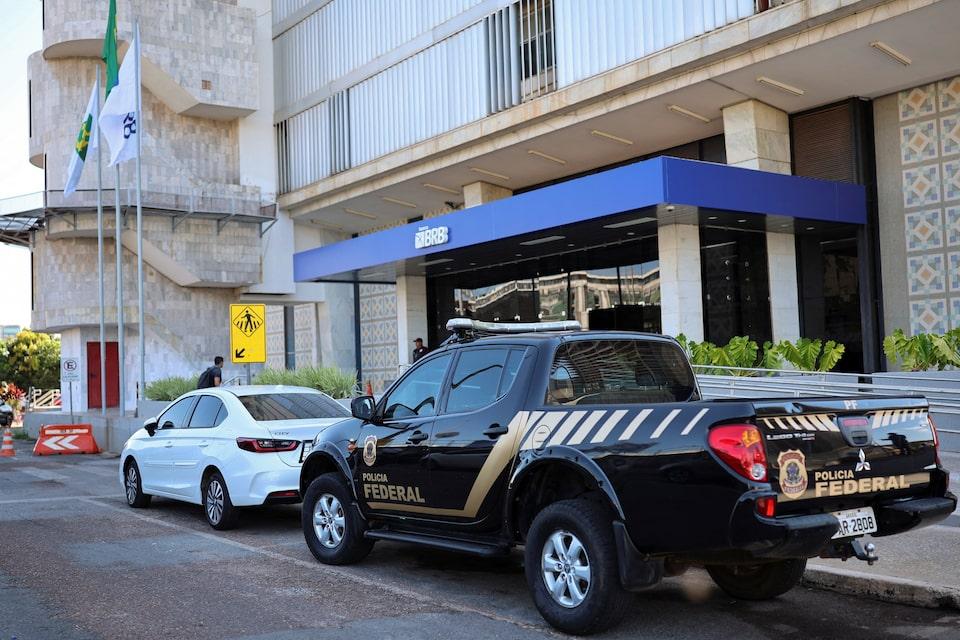
Central bank orders extrajudicial liquidation of Banco Master Master controlling shareholder Vorcaro is arrested Police investigation targets lender BRB, CEO suspended BRASILIA, Nov 18 (Reuters) - Brazil's central bank on Tuesday effectively halted operations of mid-sized lender Banco Master, which had struggled in recent months with mounting liquidity pressures, as police arrested its controlling shareholder. The regulator named a liquidator to handle creditor claims and sell assets, closing a turbulent chapter for Master, which had grown rapidly through an aggressive strategy built on high-yield debt sold through investment platforms. Sign up here. Brazil's central bank said in a statement later on Tuesday that it acted in response to a "severe liquidity crisis" at the Master conglomerate, a "sharp deterioration" in its finances, and "serious violations" of financial-system rules. PRIVATE GUARANTEE FUND FGC TO TAKE HIT Although the regulator stressed Master's limited size - 0.57% of Brazil's banking assets and 0.55% of funding - its liquidation is expected to hit hard the private guarantee fund FGC, financed by bank contributions and used to cover investor losses up to a limit. FGC said 1.6 million creditors have deposits and investments eligible for its guarantee, totaling about 41 billion reais ($7.71 billion) - a third of the liquid resources it had in cash as of September. "This event only increases confidence in the FGC. Everyone who meets the criteria will be fully reimbursed," Daniel Lima, the fund's president, told Reuters, adding payments could begin in an average time of 30 days. Separately on Tuesday, Brazil's federal police said they had launched an operation against "the issuance of fraudulent credit securities by financial institutions." Police did not name the targets of the raid, which sought to freeze 12.2 billion reais ($2.28 billion), but two sources with direct knowledge of the situation said Master's controlling shareholder, Daniel Vorcaro, was arrested. His arrest was later confirmed by his lawyer, Roberto Podval. Podval told Reuters he would file a legal request for Vorcaro's release, questioning the Brazilian authorities' decision to arrest him. "If they already liquidated the bank and froze operations, what is the point of the arrest?” he said. According to Podval, Vorcaro was found at the Guarulhos airport, in Sao Paulo state, ahead of a trip to Dubai to negotiate the sale of Master. He denied that Vorcaro had any intention of fleeing the country. Master did not respond to requests for comment. BRB CEO REMOVED FROM OFFICE The police investigation involves the sale of assets of Master's loan portfolio to BRB (BSLI3.SA) , opens new tab since last year, a third source with direct knowledge said. The state-run bank had planned to acquire Master, but the deal was blocked by the central bank in September. Brazil's federal police said they launched an investigation in 2024 at the request of federal prosecutors into alleged fabrication of nonviable credit portfolios by a financial institution. The portfolios were reportedly sold to another bank and later replaced with other assets without proper technical evaluation, it added in a statement. BRB said in a statement that a local court had ordered the suspension of its CEO Paulo Henrique Costa from his position for 60 days. Costa did not immediately respond to a request for comment. A fourth source said that the federal police had served search and seizure warrants at BRB's headquarters. "BRB emphasizes that it has always acted within transparency and compliance standards. ... The bank continues to operate normally," BRB added. Federal District Governor Ibaneis Rocha tapped Celso Eloi, a superintendent at state-run lender Caixa, to replace Costa. Shares in BRB opened down 5%, but later pared losses. The central bank's order of an extrajudicial liquidation came just hours after a consortium led by Brazilian investment group Fictor and unnamed investors from the United Arab Emirates said they had agreed to buy Master. Fictor said on Tuesday that the proposed deal for Vorcaro's stake in Master, which included an immediate injection of 3 billion reais but required approval from the central bank and antitrust regulator CADE, had now been suspended. "We reaffirm our absolute respect for the central bank and other regulatory bodies, as well as our commitment to integrity, transparency and the stability of the Brazilian financial system," Fictor said in a statement. MASTER'S LIQUIDITY ISSUES Master's high-yield debt was marketed as being covered by the FGC deposit insurance fund, which guarantees up to 250,000 reais ($46,926) per investor in the event of a bank's failure. Faced with liquidity pressures, Master needed fresh capital to meet upcoming maturities on the debt. With Master in liquidation, a central bank-appointed administrator will now take over its management and assemble a detailed list of the bank's debt holders. IMPACTS ON BUSINESSES, PENSION FUNDS Shares of medical group Oncoclinicas (ONCO3.SA) , opens new tab, a well-known Master creditor, fell as much as 13%. The company said in a filing its book exposure was 216 million reais, after it had provisioned roughly the same amount following a downgrade of the bank's credit rating. Rioprevidencia, the pension fund for retired servants in Rio de Janeiro state, said in October it had invested about 960 million reais in financial bills issued by Banco Master, a type of security not covered by the FGC. Amprev, a pension fund for retired servants from the state of Amapa, also disclosed in its latest report a 426 million real investment in Master's financial bills. Rioprevidencia and Amprev did not immediately respond to requests for comment. ($1 = 5.3211 reais) https://www.reuters.com/business/brazils-central-bank-orders-extrajudicial-liquidation-banco-master-2025-11-18/
2025-11-18 22:04
ORLANDO, Florida, Nov 18 (Reuters) - The tech-induced selloff across global stocks accelerated on Tuesday and soft U.S. labor market indicators also weighed on Wall Street, while fiscal worries in Japan helped drag Japanese stocks, bonds and the yen lower. More on that below. In my column today I look at what helped trigger this swoon - a plain, old-fashioned shift in the U.S. interest rate outlook. This suggests that although many economic norms have been thrown out the window this year, some fundamentals still matter for markets. Sign up here. If you have more time to read, here are a few articles I recommend to help you make sense of what happened in markets today. Today's Key Market Moves Today's Talking Points * AI leverage, private credit concerns deepen Concerns over the huge sums needed for Big Tech and AI capex, and worries about liquidity and transparency in private credit, are growing in tandem. The result? Deepening unease around leverage just as the Fed seems set to pause rate cuts. Amazon is raising $15 billion in its first bond issue in three years, Boaz Weinstein's Saba Capital Management has sold credit derivatives to lenders seeking protection on names like Oracle and Microsoft, and alternative asset manager Blue Owl - involved with Meta in the financing of a huge Louisiana data center - has moved to limit withdrawals from one of its funds. * Technical breakdown? For those who view technical analysis as an important part of their investment or trading tool kit, these are interesting times. Even those who dismiss it out of hand may have to respect its potential impact on markets right now. The selloff gathering pace has pushed many asset classes and indices below key technical levels, signaling further downside ahead - the Nasdaq closed below its 50-day moving average on Monday for the first time since May, the Russell 2000 on Tuesday closed below its 100-DMA for the first time since June, and bitcoin on Friday closed below its 50-week moving average for the first time since March 2023. * A bad day for Japanese assets Tuesday was a bleak day for Japanese markets. The Nikkei 225 stock index lost 3%, its biggest fall since April; the yen slid to a nine-month low against the dollar and record low against the euro; long-dated JGB yields spiked to their highest on record. The equity move is less concerning - benchmark indices are only coming off record highs. But the fiscal fear-driven bond and currency selloff is more eye-opening. At some point, they will be cheap enough to lure domestic if not foreign investors. If that doesn't materialize soon, Tokyo might have to step in with official buying. Wall Street wobble shows fundamentals still matter Warnings about Wall Street's excessive optimism, concentration risk, and frothy valuations have fallen on deaf ears for most of this year, leaving market-watchers wondering what, if anything, will cool the tech and artificial intelligence frenzy. It turns out that it could end up being a plain old-fashioned shift in the interest rate outlook. The S&P 500 and Nasdaq, buoyed by strong earnings and AI capex investment, have notched dozens of record highs this year, a remarkable feat given the uncertainty and poor visibility that have characterized the economic and policy landscape in 2025. But both indices peaked on October 29, the day the Federal Reserve cut interest rates for a second consecutive meeting. Crucially, however, Chair Jerome Powell said afterwards that a third cut in December was not the "foregone conclusion" markets had seemingly thought it would be. "Far from it," he emphasized. In the three weeks since, the line of Fed officials expressing their reluctance to ease policy again next month has lengthened. The resulting shift in market-based rate expectations has been dramatic. The probability of a December rate cut fell as low as 40% on Monday, according to rates futures markets, compared with over 90% before the Fed's October 28-29 policy meeting. The next quarter-point rate cut isn't fully priced in until March. Many risk assets have responded in kind. While the benchmark S&P 500 may only be down 3% since October 29, a lot of tech and AI bellwethers have been hit harder, with the Philadelphia Semiconductor Index's losses approaching 10%. Bitcoin, a reasonable proxy for wider risk appetite and speculative investment activity, is down 20%. ALL EYES ON NVIDIA There's often no obvious trigger for market corrections or reversals, and they are typically long in the making. For example, former Fed Chair Alan Greenspan's famous "irrational exuberance" comment about the 1990s dotcom euphoria was in December 1996, but the bubble didn't burst until March 2000. There's no suggestion that a repeat of the dotcom bust is unfolding now, but it does look like some air is coming out of today's inflated markets. And the Fed's hawkish steer seems to be a major catalyst, with many of the rate-sensitive AI and tech names that powered the boom earlier in the year now leading this mini swoon. That's in line with long-held market thinking. When firms are expected to generate strong cash flows in the future – whether they be well-established megacaps or smaller startups – a sudden swerve in the path for monetary policy can alter perceptions of their current stock valuations quite substantially. Look no further than chipmaker Nvidia, which recently became the world's first $5 trillion company - on October 29, no less - but has since seen its share price fall 10%. Some of Wall Street's largest hedge funds have recently reduced exposure to this AI leader and other U.S. megacaps. Japan's Softbank said last week it had sold all its Nvidia shares for $5.8 billion, and tech billionaire Peter Thiel's hedge fund also disposed of its entire Nvidia stake in the third quarter. The AI poster child releases its latest quarterly earnings after the market close on Wednesday. With the Fed seemingly about to put rate cuts on pause, the bar for another Nvidia results-led market jump may be high. That's a reminder that even though many accepted market and economic rules have been thrown into doubt this year, the standard playbook hasn't been ripped up completely. What could move markets tomorrow? Want to receive Trading Day in your inbox every weekday morning? Sign up for my newsletter here. Opinions expressed are those of the author. They do not reflect the views of Reuters News, which, under the Trust Principles , opens new tab, is committed to integrity, independence, and freedom from bias. https://www.reuters.com/world/china/global-markets-trading-day-graphic-2025-11-18/
2025-11-18 21:44
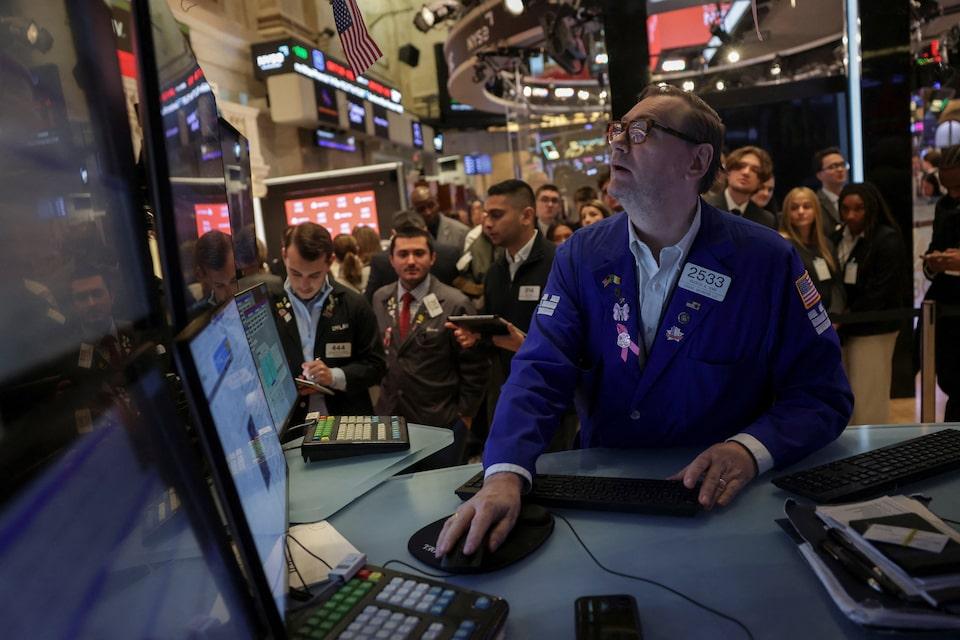
Nov 18 (Reuters) - Crypto exchange Kraken said on Tuesday it was valued at $20 billion in its latest fundraise, a 33% increase in under two months, as digital market firms continue to attract investor interest. The $800 million dual-tranche funding round follows a crypto-friendly regulatory tone under U.S. President Trump, encouraging digital asset firms to expand in the U.S. with promises of clearer rules. Sign up here. Peers such as Gemini (GEMI.O) , opens new tab and Coinbase (COIN.O) , opens new tab, as well as crypto firm Ripple, have benefited from eased oversight under Trump, who, along with family, has been an active player in the still nascent slice of finance. Kraken's primary tranche of the funding round was led by institutional investors such as Jane Street, HSG, Oppenheimer Alternative Investment Management and Tribe Capital, co-founded by Kraken's co-CEO Arjun Sethi. Citadel Securities contributed $200 million in a strategic investment as the second tranche. The financing values Kraken well above recently listed public peers Bullish (BLSH.N) , opens new tab and Gemini, both of which have faltered since their stellar day-one showings on U.S. bourses, reflecting persistent challenges faced by crypto firms under public market scrutiny as the sector seeks mainstream acceptance. The announcement also coincides with a wobble in crypto prices after a long rally, led by bitcoin, amid doubts about future U.S. interest rate cuts and a risk-averse market mood. Kraken has been actively investing capital to expand into various asset classes and grow its user base. Last month, it said it had bought futures exchange Small Exchange from IG Group for $100 million, paving the way to launch a fully U.S.-based derivatives suite. The funding round follows a September fundraise at a $15 billion valuation. https://www.reuters.com/business/kraken-valued-20-billion-latest-funding-round-2025-11-18/