2025-11-17 06:17
JAKARTA, Nov 17 (Reuters) - Rain-triggered landslides in two regions in Indonesia's Central Java province last week have led to the deaths of at least 18 people, authorities said on Monday, with search operations ongoing. A landslide in the city of Cilacap last week buried a dozen houses in Cibeunying village, the disaster mitigation agency said. Search and rescue efforts were challenging as people were buried 3 to 8 metres (10 to 25 feet) deep, it said. Sign up here. The Cilacap landslide has killed at least 16 people, with 7 missing, said M Abdullah, chief of the search and rescue agency's local division. Excavators were deployed to dig through dirt in Cilacap, footage from news channel KompasTV showed on Monday. Separately, two people died and 27 were missing after a landslide on Saturday in the region of Banjarnegara in Central Java, the disaster mitigation agency said on Monday. As many as 30 houses as well as farms were damaged, it said. The Southeast Asian country's wet season started in September and is likely to last until April, bringing a high risk of extreme rainfall and flooding, the weather agency said. https://www.reuters.com/business/environment/landslides-indonesias-central-java-kill-least-18-dozens-missing-2025-11-17/

2025-11-17 05:32
A look at the day ahead in European and global markets from Tom Westbrook U.S. economic data starts flowing again on Monday, with construction spending figures for August. September jobs data is due on Thursday. Sign up here. More up-to-date labour and price figures are not due until next month and concern over the data's quality as well as hawkish policymaker comments has expectations for a rate cut in December fading. The main event for markets this week is likely Nvidia (NVDA.O) , opens new tab earnings after the close on Wednesday, which are shaping as a test for the artificial-intelligence bull run. Analysts on average expect the company to post a 53.8% year-over-year rise in fiscal third-quarter earnings per share, according to LSEG, and they have been getting more optimistic about future revenue - leaving the company with a lot to beat. In Asia on Monday, markets struck a cautious tone, sending the dollar up a little bit, while the deepening diplomatic disagreement between China and Japan hit stocks in Tokyo. Shares in Muji parent Ryohin Keikaku (7453.T) , opens new tab, department store operator Isetan Mitsukoshi (3099.T) , opens new tab and Shiseido (4911.T) , opens new tab notched losses of around 10% each after China's warning to its citizens against travel to Japan. A row erupted after Japan's Prime Minister Sanae Takaichi told lawmakers a Chinese attack on Taiwan could threaten Japan's survival and potentially trigger a military response. A senior Japanese diplomat will head to China on Monday to try to calm things down, Japanese media reported. A separate Japanese news report on plans for a $110 billion government-spending stimulus package put pressure on Japanese bonds. Key developments that could influence markets on Monday: - Canada inflation data - Delayed U.S. construction data; November Empire State manufacturing survey - Fed's Williams, Jefferson, Kashkari and Waller https://www.reuters.com/world/china/global-markets-view-europe-2025-11-17/

2025-11-17 05:17
JAKARTA, Nov 17 (Reuters) - Indonesia will charge taxes on exports of gold of between 7.5% and 15% in a plan that will be implemented sometime next year, a senior finance ministry official said on Monday. The tax policy, currently being finalised, is being designed so that lower rates are applied to processed goods to help encourage domestic processing, Febrio Kacaribu, the ministry's director general of fiscal strategy, told a parliamentary hearing. Sign up here. For example, a higher rate for gold dore - bars or ingots with impurities - and a lower rate for minted bars would be charged, he said. Global gold prices will also be a factor in determining the taxes, he said, noting that higher rates are likely to be applied when prices are at or above $3,200 per troy ounce to capture miners' windfall profits. Spot gold has been trading above $4,000 per ounce since early November. It is up more than 50% so far this year. The bull run has helped Indonesia's gold exports hit $1.64 billion for the first nine months of 2025, much higher than the $1.1 billion shipments for all of last year. Singapore, Switzerland and Hong Kong are the top buyers. Resource-rich Indonesia has the world's fourth-largest unmined gold reserves, including in the Grasberg mine in the country's east, operated by a local unit of Freeport-McMoRan. However, many domestic investors have found it difficult to find gold bars to buy amid the boom in gold investment, Febrio said. "We want production in Indonesia, as well as liquidity in and ample circulation of gold in Indonesia. And we want as much value added as possible so that gold can be enjoyed by Indonesians," Febrio said. The government's plan to impose a tax on coal exports is still under discussion, he said. https://www.reuters.com/world/asia-pacific/indonesia-plans-impose-tax-gold-exports-2026-official-says-2025-11-17/

2025-11-17 04:59
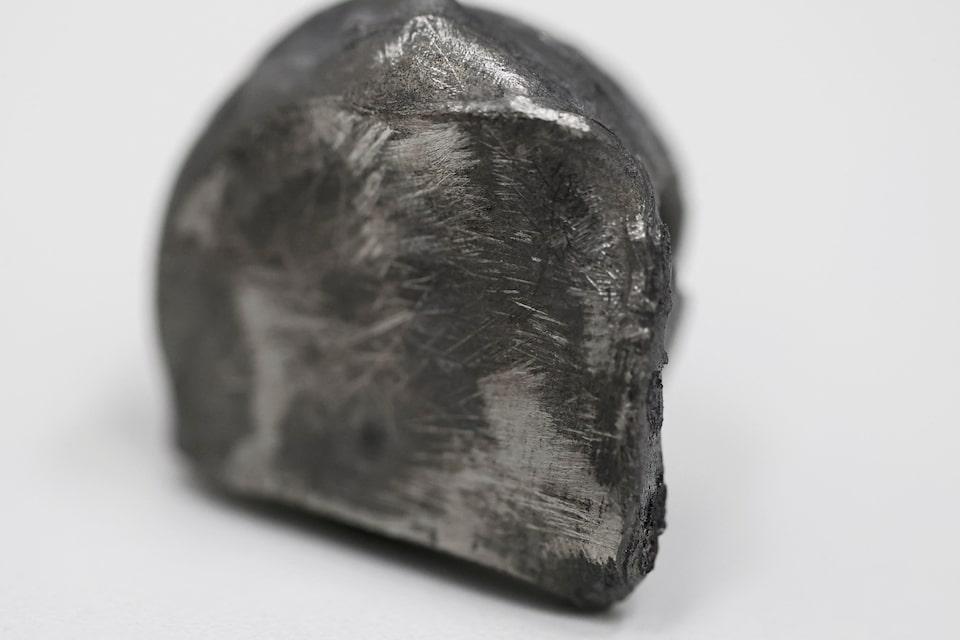
China's export controls on rare earth yttrium throttling supply International prices have rocketed, stocks running low for some Shortages pose risks for aerospace, energy, chipmaking BEIJING/MONTREAL/SINGAPORE/HOUSTON, Nov 17 (Reuters) - Global supplies of the rare earth element yttrium are running low due to Chinese export restrictions, sparking fears of shortages and surging costs that could hit aerospace, energy and semiconductor production. China, the main source of the element used in speciality alloys found in engines as well as coatings to shield against high temperatures, restricted exports along with six other rare earths in April in retaliation for U.S. tariffs. Sign up here. While a high-stakes meeting last month between U.S. President Donald Trump and Chinese President Xi Jinping had raised industry hopes for a more reliable flow of critical materials, the dispute has not been fully resolved. So while China has since paused some of its rare earth restrictions, its April controls remain in place, raising questions about access for U.S. industry in the absence of a comprehensive deal between Washington and Beijing. The controls, which require exporters to obtain licences from Beijing, have made it hard to get yttrium out of China, according to four rare earth traders and Argus analyst Ellie Saklatvla. The licences issued thus far have been for small shipments and there are still long delays getting material delivered, Saklatvla said. 'SCRAMBLE FOR YTTRIUM' "China’s export controls have undoubtedly prompted a scramble for yttrium that continues several months on," Saklatvla said. European prices for yttrium oxide, used to make heat-shield coatings, are up 4,400% since January at $270 a kilogram, Argus data showed. Chinese prices, around $7 per kilogram, are 16% higher over the period but falling, according to the data. U.S. trade group Aerospace Industries Association said yttrium was essential to the world's most advanced jet engines and it was working with Washington to expand domestic supply. "At present, our supply chain depends heavily on imports from China — a reliance that has contributed to rising costs amid growing shortages," said Dak Hardwick, AIA’s vice president, international affairs. Shortages are also a major concern for the semiconductor industry, where yttrium is used as a protective coating and insulator, two industry sources said. One described it as a "9 out of 10" in severity. Richard Thurston, CEO of Great Lakes Semiconductor, said yttrium shortages would lengthen production times, raise costs and make equipment less efficient, though immediate shutdowns were unlikely. Problems are likely to be worse for the larger producers, he added. "Shortages will increasingly become a real chokepoint," he said. In addition to aircraft engines and semiconductors, yttrium coatings are used in gas plants to protect turbine blades from high temperatures. Major producer Mitsubishi Heavy (7011.T) , opens new tab said its gas turbine business faced no issues at present from China's expanded rare earth export controls. Siemens Energy (ENR1n.DE) , opens new tab CEO Christian Bruch said the company was working to diversify itself away from Chinese rare earths in general but it would take time to do so. "So far, we have not seen any direct impact on our supply chains. We are monitoring the situation with concern, but it is still manageable for us at the moment." GE Vernova (GEV.N) , opens new tab did not respond to questions. STOCKS OUTSIDE CHINA China's yttrium exports to the U.S. began slowing early this year before stopping altogether after the April controls, customs data through September showed. Exports to the rest of the world are down about 30% over the same period, but supplies are unlikely to flow to the U.S. because companies or traders are concerned China could restrict their own shipments in retaliation, said a yttrium trader. The yttrium market is opaque and information about stocks outside China varies. Six industry sources gave estimates ranging from one to 12 months of consumption. Several said reserves likely varied widely by company. A rare earth trader, declining to be named due to the sensitivity of the matter, told Reuters that their stocks had fallen to 5 tons from 200 tons. Another said they were out of stock. Two aerospace industry sources said yttrium prices were rising, but the shortfall had not disrupted production. Mark Burns, president of U.S. Gulfstream Aerospace, told Reuters that the business jet maker had limited exposure to yttrium. "I have heard the discussion, but only on the perimeter. Nothing that impacts our deliveries at this point," he said. ALTERNATIVES The U.S. imports all of its yttrium, with 93% coming directly from China and the remainder made from material that was first processed in China, the U.S. Geological Survey said in a January report. That could soon change thanks to ReElement Technologies, based in Indiana, which plans to start producing yttrium oxide at a rate of 200 tons per year, or about 16 tons a month, by December, before rising to 400 tons per year by March, CEO Ryan Jensen told Reuters. The U.S. imported an estimated 470 tons of yttrium products in 2024, according to the USGS. https://www.reuters.com/business/aerospace-defense/new-rare-earth-crisis-is-brewing-yttrium-shortages-spread-2025-11-14/
2025-11-17 01:46
US data dump begins this week, September payrolls due Thursday Currency traders on guard, US dollar firms Sterling under pressure in run-up to UK budget Japan's economy contracts for first time in six quarters NEW YORK, Nov 17 (Reuters) - The dollar strengthened against the euro and the yen on Monday as traders exercised caution ahead of what could be a busy week with the long-awaited return of U.S. economic data. Market reaction to U.S. President Donald Trump's tariff U-turn on more than 200 food products was muted, with some analysts saying the move was not a surprise due to the cost-of-living issues caused by the levies. Sign up here. A flood of data that was delayed during the federal government shutdown is due to be released starting this week, and it is expected to provide clues on the health of the world's largest economy, with the closely watched September nonfarm payrolls report due on Thursday. "With the government shutdown behind us for now, markets are turning to the upcoming Fed minutes and labor data for clues on the December decision. Pricing for a December cut has essentially become a coin flip," said Uto Shinohara, senior investment strategist at Mesirow Currency Management. "Inflation still feels sticky despite the lack of fresh data, while the labor picture appears to be softening. Thursday’s release will help, but it reflects September conditions, making it both stale and potentially emotionally charged if the headline number is large." Despite signs of further weakness in the U.S. economy from recent private-sector data, investors have trimmed expectations of a Fed cut next month, betting that gaps in economic data will delay or even derail further easing. Markets are now pricing in less than a 40% chance of a 25-basis-point rate cut in December, down from more than 60% earlier this month. Meanwhile, Federal Reserve Vice Chair Philip Jefferson said on Monday, the U.S. central bank needs to "proceed slowly" with further rate cuts, denting expectations for a decrease next month. Goldman Sachs currency analysts cautioned in their week-ahead note that the delayed data coming out soon will be of limited value, and the upcoming payrolls data is unlikely to settle debates about the outlook. In the medium term however, the analysts think economic data will "show enough downside risks to the labor market to settle the swirling debate within the FOMC," the Fed's rate-setting committee, something that will be negative for the dollar. Joseph Trevisani, senior analyst, FX Street, said the market needed meaningful new information to chart direction. "Until we get something like that, I don’t think you’re going to get a lot of movement." For now the market remains range-bound. The euro was down 0.31% on the dollar at $1.1585, while the yen fell 0.44% to 155.2 to the U.S. currency. YEN WATCH The yen hardly reacted to data on Monday that showed Japan's economy shrank an annualized 1.8% in the three months through September, as a drop in exports in the face of U.S. tariffs resulted in the first contraction in six quarters. The Japanese currency remained near a nine-month low against the dollar, leaving traders alert to the threat of intervention from Japanese authorities to stem the yen's decline. Japan last intervened in the currency market in July 2024 when the yen fell to a 38-year low of around 161.96 to the dollar, as currency weakness stoked sharp food and fuel price inflation. The dollar index , which measures the greenback against a basket of currencies, was last up 0.25% on the day at 99.57. Meanwhile, sterling slipped 0.19% on the dollar to $1.3150. British assets saw a whirlwind Friday session as speculation swirled around the UK government's highly anticipated November 26 budget. This speculation is likely to continue, though the pound will also be influenced by British economic data this week, most notably monthly inflation data. The safe-haven Swiss franc pulled back from a one-month high and last stood at 0.7962 per dollar, having found support last week from jitters over an ugly selloff in global stock markets. https://www.reuters.com/world/asia-pacific/dollar-steady-investors-eye-release-us-data-backlog-2025-11-17/

2025-11-17 01:31
MUMBAI, Nov 17 (Reuters) - The Indian rupee is expected to face continued pressure in the coming week, and traders will take cues from how forcefully the Reserve Bank of India defends the currency near its all-time low. Bond yields will also track further RBI moves after bond purchases early this month, they said. Sign up here. The rupee closed at 88.7425 against the U.S. dollar on Friday, slightly down on the week as a persistently unfavorable skew in merchant and portfolio dollar flows was blunted by the central bank's frequent market interventions. In the near-term, traders expect the currency to hover between 88.40 and 88.80, with a slight bias towards depreciation. "As of now, USD/INR remains a sell on upticks. However, if 88.80 breaks, we could see the next leg of the upmove, which could result in the USD/INR range shifting higher," FX advisory firm IFA Global said in a note. Meanwhile, a hawkish repricing of wagers on the U.S. Federal Reserve's policy easing path may dampen global risk appetite, creating yet another headwind for the rupee. Some policymakers at the Fed have signaled a preference towards keeping rates unchanged at the central bank's policy meeting next month. Money markets are currently pricing in a less than 50% chance of a rate cut next month, down from over 60% last week. The resumption of key U.S. economic data releases will be in focus this week alongside the minutes of the Fed's October policy meeting due on Wednesday. In the local market, India's 10-year benchmark 6.33% 2035 bond yield settled at 6.5265% on Friday, marginally down week-on-week, giving up most of the declines that it witnessed during the week. Traders expect the benchmark yield to stay in the 6.50% to 6.56% band this week, with eyes on the central bank's next set of moves to support the market. The RBI resumed purchase of government bonds after a gap of six months, and net bought bonds worth 124.70 billion rupees ($1.4 billion) in the week ending November 7. Market participants had speculated on the RBI's presence after data showed an investment category that includes the central bank buying a net 205 billion rupees of bonds in the week ended November 7. "With the RBI engaging in on-screen purchases (indirect OMOs), there is a growing perception that current yield levels may be elevated, should macro conditions stabilize and the rate cut cycle resume, gilt funds could regain investor interest," said Kruti Chheta, fund manager and fixed income analyst at Mirae Asset Investment Managers (India). Meanwhile, a record low inflation could not convince swap market traders to expect a rate cut next month. The RBI policy decision is due on December 5 and even though many economists are batting for a rate cut, the OIS market has completely priced out any such move in December. Foreign inflows into Indian bonds will also be under the radar, as they continued rising this month, after a large jump in October. These investors have net bought bonds worth 49.7 billion rupees in the first two weeks of November after $1 billion purchases in October. KEY EVENTS: ** India November HSBC manufacturing, services and composite Flash PMI - November 21, Friday (10:30 a.m. IST) U.S. ** Initial weekly jobless claims for week to November 10 - November 20, Thursday (6:00 p.m. IST) ** November Philly Fed Business index - November 20, Thursday (7:00 p.m. IST) ** October existing home sales - November 20, Thursday (8:30 p.m. IST) ** November S&P Global manufacturing, services and composite Flash PMI - November 21, Friday (7:15 p.m. IST) ** November U-Mich sentiment - November 21, Friday (7:30 p.m. IST) https://www.reuters.com/world/india/rupees-rough-patch-likely-persist-bond-yields-eye-further-central-bank-action-2025-11-17/




