2025-11-14 00:30
ORLANDO, Florida, Nov 13 (Reuters) - The United States and Japan are both employing a novel inflation-fighting tool: fiscal stimulus. U.S. President Donald Trump and Japan's Prime Minister Sanae Takaichi are looking to placate angry electorates squeezed by cost-of-living issues. But offering lavish fiscal giveaways to cool inflation is a bit like trying to bring a breaking fire under control by dousing it with gasoline. Sign up here. Earlier this month, Trump's Republican Party suffered key gubernatorial and mayoral election defeats, where concerns about the high cost of living played a major role. The White House appears to have heard the electorate loud and clear. The president now seems set on sending a $2,000 check to most U.S. households, a 'tariff dividend' funded via money raised by the cranked-up duties on U.S. imports. "It's in discussion," Treasury Secretary Scott Bessent said on Wednesday. But wait, weren't the hundreds of billions of dollars of tariff revenues meant to help cut the budget deficit? Evidently, that's no longer the priority, something that became clear earlier this year when Trump pushed through his 'One Big Beautiful Bill Act'. The package is jammed full of tax cuts that are expected to add $2.4 trillion to the federal budget deficit over the next decade, according to the non-partisan Congressional Budget Office. The Trump administration's key priority is clearly growth, meaning it will run the economy hot, even if the price for that is above-target inflation. While White House officials have never said this publicly, they appear to accept that having inflation closer to 3% than the Fed's 2% target may be worth it to prop up nominal growth. FISCAL HOUSE DISORDER It looks like Japan's new prime minister is taking a similar approach. Rising living costs in Japan were a key factor behind the ruling Liberal Democratic Party's historic election defeat in the summer that led to Takaichi's surprise sweep to power last month. But instead of seeking to tighten policy to stamp out inflation, Takaichi, like Trump, is advocating loosening the fiscal taps. Her newly-formed government is preparing an economic stimulus package that will likely exceed last year's $92 billion package. One of its three main aims is to mitigate the impact of rising prices. She is also filling key government economic panels with advocates of expansionary fiscal policy, and this week indicated that she is willing to water down long-term commitments to getting the country's fiscal house in order. Meanwhile, both Takaichi and Trump have made it clear to their respective central banks that they would like to keep monetary policy on the stimulative side too – something many rate-setters might disagree with. In other words, both leaders appear to be intent on countering the effects of inflation with actions that could very well make inflation worse. INFLATION DOOM LOOP Of course, fiscal stimulus can be a powerful and useful tool, especially when directed towards lower-income consumers who will almost always spend the cash they get. Both the 2007-09 Global Financial Crisis and the pandemic in 2020 showed that fiscal largesse is essential during times of crisis when the economy is in a liquidity trap, demand has collapsed, and deflation is the dragon to be slayed. But neither the U.S. nor Japan is facing anything approaching economic catastrophe. At an aggregate level, growth in both countries is on the soft side but steady, unemployment is historically low, and inflation is a full percentage point or more above target. It is also unclear how much this fiscal splurge will boost growth. There is no universally agreed measure of the 'fiscal multiplier', how much economic growth is increased by additional government spending or tax cuts. But economists do agree that it is higher in recessions than in expansions, when debt-to-GDP ratios are on the small side, and when monetary policy is less "activist", as a San Francisco Fed paper from 2020 put it. In short, in an environment completely different from the ones present in both countries today. Populist fiscal splurges may be politically appealing to Washington and Tokyo right now, but in the context of bringing down inflation it is an unorthodox approach that could make that struggle harder. (The opinions expressed here are those of the author, a columnist for Reuters) Enjoying this column? Check out Reuters Open Interest (ROI), your essential source for global financial commentary. ROI delivers thought-provoking, data-driven analysis of everything from swap rates to soybeans. Markets are moving faster than ever. ROI can help you keep up. Follow ROI on LinkedIn , opens new tab and X , opens new tab. https://www.reuters.com/markets/us-japan-share-unorthodox-anti-inflation-tool-fiscal-stimulus-2025-11-13/
2025-11-13 23:46
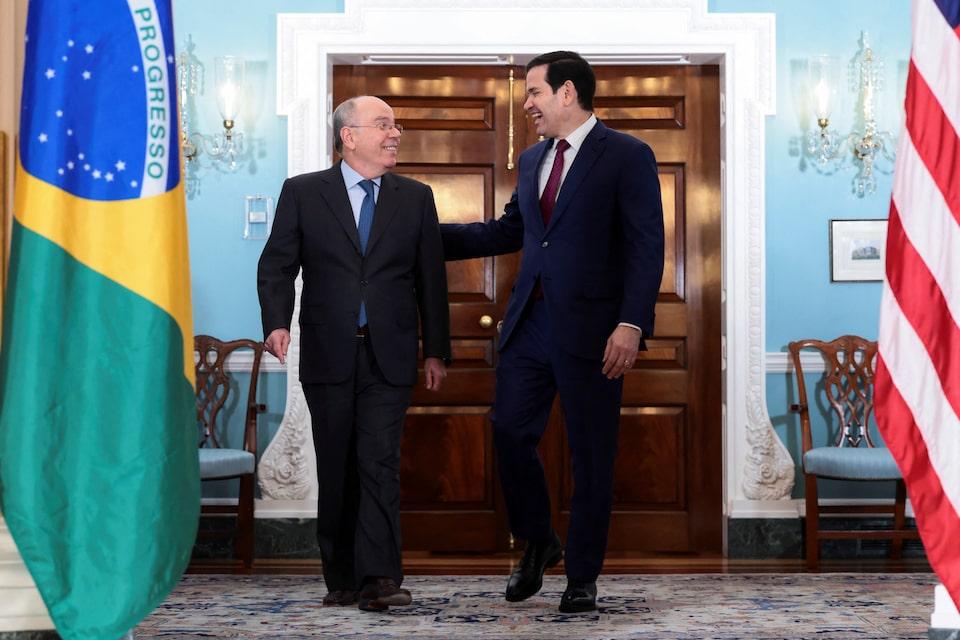
SAO PAULO, Nov 13 (Reuters) - The United States is analyzing the negotiation proposal sent by Brazil regarding tariffs and a response is expected soon, the Brazilian foreign minister said on Thursday, citing the U.S. Secretary of State Marco Rubio who he had met earlier in the day. "The Secretary of State said that they are analyzing the bilateral issues with Brazil with all due attention and time, that they want to resolve them quickly, and that an answer will come very soon, tomorrow or next week," Foreign Minister Mauro Vieira told reporters in Washington after meeting Rubio. Sign up here. The details of the proposal have not been disclosed. The U.S. increased tariffs on its imports of Brazilian goods to 50% from 10% in August. https://www.reuters.com/world/americas/brazil-expects-us-answer-proposal-regarding-tariffs-possibly-soon-friday-2025-11-13/
2025-11-13 23:39
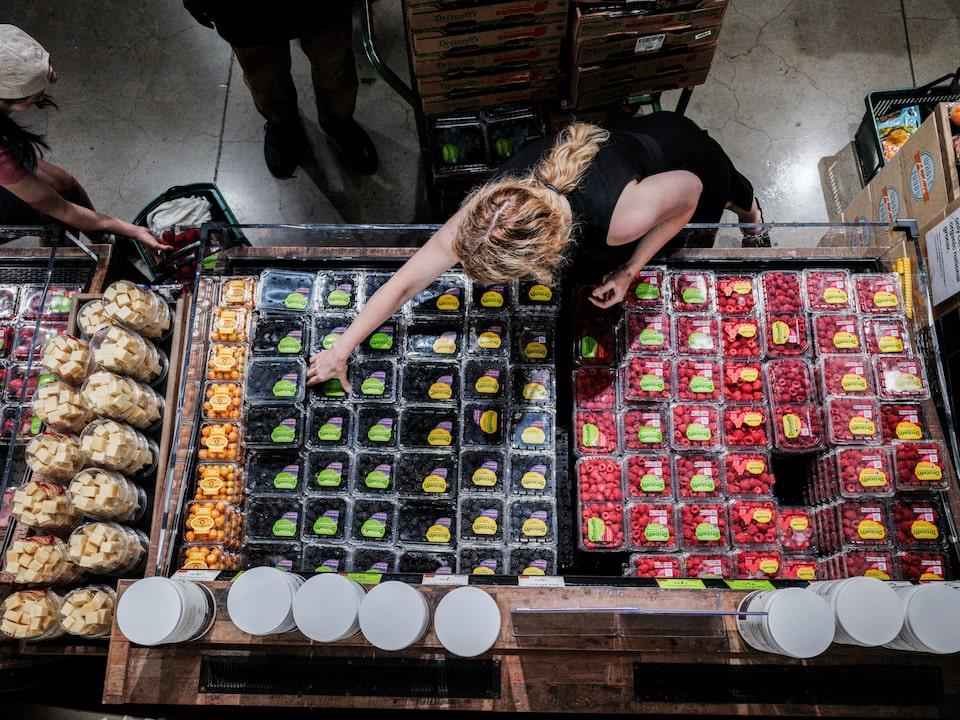
Framework trade deals to be finalized in coming weeks, US official says Deals remove tariffs on goods not grown, mined or produced in US Countries agreed to lower non-tariff barriers for US goods WASHINGTON, Nov 13 (Reuters) - The United States said on Thursday it will remove tariffs on some foods and other imports from Argentina, Ecuador, Guatemala and El Salvador under framework agreements that will give U.S. firms greater access to those markets. The agreements are expected to help lower prices for coffee, bananas and other foodstuffs, a senior Trump administration official told reporters, adding the administration expected U.S. retailers to pass on the positive effects to American consumers. Sign up here. The framework deals with most of the four countries should be finalized within the next two weeks, the official said, with additional agreements seen as possible before the end of the year. U.S. Treasury Secretary Scott Bessent on Wednesday said the U.S. planned some "substantial" announcements in coming days that would lead to lower prices on coffee, bananas and other fruits, as part of a push by the Trump administration to drive down the cost of living for Americans. Secretary of State Marco Rubio and Brazil's Foreign Minister Mauro Vieira discussed a framework for a U.S.-Brazil trade relationship in a meeting this week, the U.S. State Department said on Thursday. Brazil is the world's largest coffee producer and exporter but its exports to the U.S. face crushing 50% duties imposed by U.S. President Donald Trump. Trump has focused intensely on the issue of affordability after a string of defeats for Republican candidates in last week's elections, while insisting that any higher costs were triggered by policies enacted by former President Joe Biden, and not his own sweeping tariffs. Democratic wins in New Jersey, New York and Virginia, driven in part by cost-of-living concerns, revealed growing angst among voters over high prices, which economists say has been fueled in part by import tariffs imposed by Trump on nearly every country. The New York Times on Thursday reported the Trump administration was considering further tariff exemptions on imported food products such as beef and citrus to ease prices, including from countries that have not reached trade agreements with the U.S. A White House spokesperson did not immediately respond to a request for comment on the story. U.S. officials were having "quite constructive" talks with other Central and South American countries, and could conclude more trade deals before the end of the year, the official said, adding that trade talks with Switzerland and Taiwan on Thursday had also been quite positive. Officials in Argentina, El Salvador, Guatemala and Ecuador welcomed the deals. The framework agreements announced on Thursday would maintain 10% tariffs on most goods from El Salvador, Guatemala and Argentina, where the U.S. had modest trade surpluses, and 15% for imports from Ecuador, where the U.S. had a trade deficit. But they will result in the removal of U.S. tariffs on a number of items that are not grown, mined or produced in the United States, the official said, listing as examples bananas and coffee from Ecuador. The deals, similar to those announced with Asian countries in October, included commitments to refrain from digital services taxes on U.S. companies, along with the removal of tariffs on U.S. agricultural and industrial goods, the official said. "With all of these deals, the ones in Asia, the ones we're announcing today, we maintain the tariffs, we give some tariff relief on certain products or goods, but at the same time, we open up foreign markets in ways that they have not been open before," the official said. Argentine Foreign Minister Pablo Quirno said the deal framework would "create the conditions" to boost U.S. investment in Argentina, thanking Argentina's libertarian President Javier Milei for his "conviction" around the agreement. El Salvador President Nayib Bukele, another outspoken Trump ally, shared the announcement on X, captioning it "friends." His ambassador in Washington, Milena Mayorga, celebrated the decision, adding that the two "sister nations" have "rebuilt their relations on the basis of trust and self-determination." Bukele's Guatemalan counterpart, Bernardo Arevalo, said the deal was good news for Guatemala's economy. The agreement "places us as an even more competitive and more attractive country for investment," Arevalo said in a video on social media. The government of Ecuadorean President Daniel Noboa, who has allied himself closely with the Trump administration on anti-narcotics and migration efforts, also cheered the deal, saying in a statement on social media that it would boost the country's export sector. Ecuador is a major exporter of bananas and shrimp, as well as oil. https://www.reuters.com/world/us/us-remove-tariffs-some-products-ecuador-argentina-guatemala-el-salvador-2025-11-13/

2025-11-13 23:33
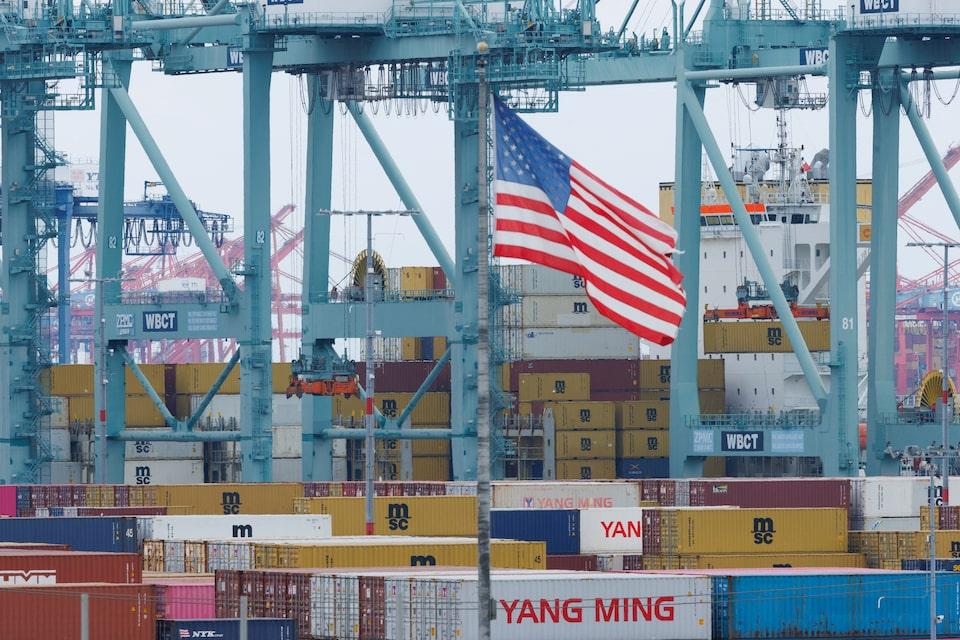
Nov 13 (Reuters) - U.S. President Donald Trump's administration is preparing broad exemptions to certain tariffs in an effort to ease elevated food prices, the New York Times reported on Thursday, citing three people briefed on the actions. The change would apply to certain reciprocal tariffs Trump announced in April, including on products coming from countries that have not struck trade deals with the administration, according to the Times. Sign up here. https://www.reuters.com/world/us/trump-administration-prepares-tariff-exemptions-bid-lower-food-prices-nyt-2025-11-13/
2025-11-13 23:32
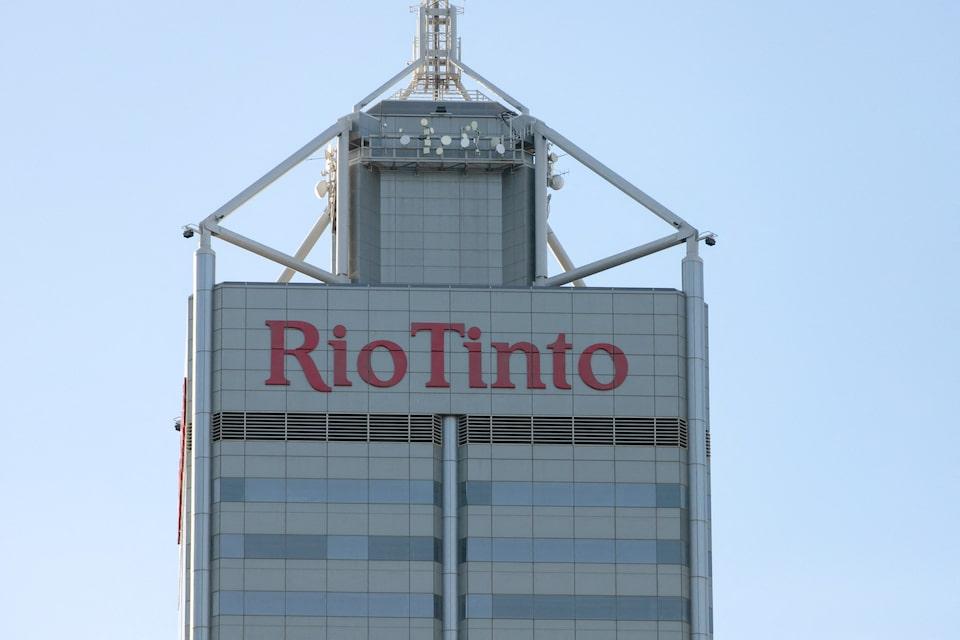
Nov 14 (Reuters) - Rio Tinto (RIO.AX) , opens new tab said on Friday its Kennecott operation in Utah, U.S., has signed a 15-year virtual power purchase agreement with TerraGen to source renewable energy from a new wind farm in Texas. Under the deal, Rio Tinto will buy 78.5 megawatts (MW) of power from TerraGen's 238.5 MW Monte Cristo I Windpower project, which began commercial operations this week. Sign up here. The agreement comes after the Trump administration added copper to the U.S. critical minerals list, and as Washington and Canberra work to stabilize ties following a recent trade deal to deepen cooperation on critical minerals and clean energy supply chains. Rio Tinto's Kennecott smelter is one of two copper smelters still operating in the United States, a strategically important asset for domestic supply of copper used in power grids, EVs and renewable infrastructure. The Anglo-Australian miner has pledged to cut its Scope 1 and 2 emissions by 2030 and reach net zero by 2050, the company said. About 78% of the electricity Rio Tinto uses globally comes from renewable sources, and the company aims to lift that share to about 90% by the end of the decade. The renewable power purchase adds to decarbonization efforts at Kennecott, which installed a 5 MW solar plant in 2023 and is nearing completion of a second 25 MW solar facility. https://www.reuters.com/sustainability/climate-energy/rio-tinto-signs-15-year-renewable-power-deal-with-us-based-terragen-2025-11-13/
2025-11-13 23:24
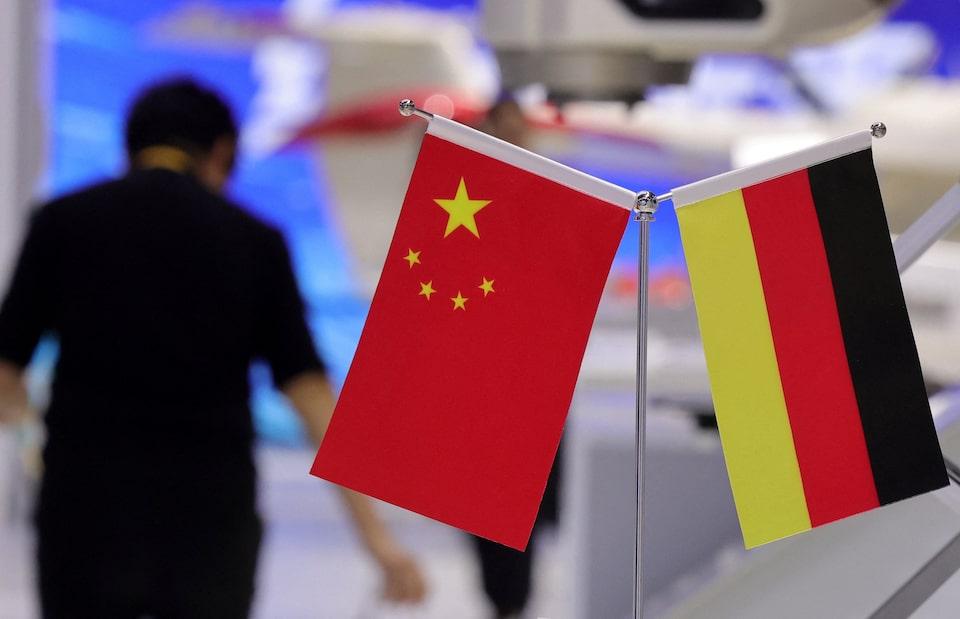
Germany's expert commission to rethink China trade policy Rare earth export curbs expose Germany's vulnerabilities Germany's dependency on China remains despite 2023 strategy BERLIN, Nov 13 (Reuters) - Germany's parliament appointed an expert commission on Thursday to rethink trade policy towards China, accelerating a policy of "de-risking" after Beijing's curbs on rare earths exports exposed how quickly German industry could be throttled. While a 2023 China strategy paper, which was commissioned by the previous government, contained only general recommendations, this time the committee of industry associations, labour representatives and think tanks will send actionable recommendations to the government for drafting legislation. Sign up here. The commission will examine energy, raw material imports and Chinese investment in critical infrastructure, and its creation comes days before Finance Minister Lars Klingbeil travels to China to press the European Union's case on a raft of issues. Germany has felt particularly vulnerable towards its largest trading partner this year, caught between U.S. President Donald Trump roiling global trade with swingeing tariffs and China flexing its own muscle with export curbs. "China can and will turn off the tap in critical areas; we remain far too vulnerable — so the pressure to act is now much higher," said Juergen Matthes, head of international economic policy at the German Economic Institute IW. Klingbeil will be the first minister of the new coalition to visit China as Foreign Minister Johann Wadephul postponed his trip, which was planned for the end of October, after Beijing confirmed only one of his requested meetings. A small delegation of representatives of German banks and insurance companies will travel to China next week with Klingbeil, a source familiar with the matter told Reuters. "Risk management will play a larger role in the future China strategy. The question is: where are the levers China could use to exert political pressure, and how do we avoid them?" said Juergen Hardt, spokesperson for foreign policy of the ruling conservatives. RARE EARTHS SHOCK WAS A WAKE-UP CALL Europe's manufacturing export powerhouse Germany for years reaped the benefits of selling goods to China's vast and growing market. But in a strategy on China agreed in 2023, the previous government urged the "de-risking" of the two countries' economic relationship, calling Beijing a "partner, competitor and systemic rival". The 61-page document urged German firms to reduce their dependence on China but was light on any binding targets. A study by the German Economic Institute IW showed that in 2024, Germany’s potentially critical import dependency on China had hardly changed, compared with the previous year in which the China strategy was adopted. "Since the 2023 China strategy, I see no real progress on de-risking in my empirical research — what should have set off alarm bells just didn't," said Matthes, author of the study. According to this analysis of over 14,300 product groups, only about 200 currently rely on China for at least 50% of their product import needs, indicating that while import dependency is concentrated in a small number of product areas, these could still have significant economic impacts. "The elephant in the room is the dependency," said Jens Eisenschmidt, Chief Europe Economist at Morgan Stanley. "Decoupling is just impossible." German Chancellor Friedrich Merz took office in May promising to revive growth in Europe's largest economy following two years of contraction. "I don't think there has been a major effort in the government to rethink China as yet. It is simply a capacity issue," said Eisenschmidt, noting that government bandwidth had focused on domestic reforms. Merz initially seemed focused on getting to a good working relationship with the Trump administration and pushing for peace in Ukraine and the Middle East. But when China imposed restrictions on rare earth exports, it made Germany's vulnerability clear, as it imports about 80% of its supply from China. German companies were again left reeling after a row between the Netherlands and China over chipmaker Nexperia, which makes billions of chips for cars and other electronics, triggered a global supply chain crisis. https://www.reuters.com/world/china/germany-rethinks-china-policy-trade-squeeze-exposes-vulnerabilities-2025-11-13/