2025-11-13 21:21
White House meets refiners and biofuel producers over waiver disputes Talks include year-round E15 and waiver reforms Biofuel groups push for waived gallons to be made up Nov 13 (Reuters) - The White House this week held separate meetings with oil refiners and biofuel producers as it seeks to resolve a long-running dispute over billions of gallons of U.S. biofuel-blending requirements that were waived for small refineries, according to four sources familiar with the discussions. The discussions signal the Trump administration is nearing a decision on whether larger refiners must make up for any of the waived gallons, a decision originally expected by the end of October but delayed by the government shutdown. Sign up here. The outreach underscores the administration’s effort to balance the competing demands of two politically powerful constituencies — the oil industry, which says federal blending mandates threaten refinery jobs, and the farm belt, which argues the waivers have eroded demand for corn-based ethanol and other biofuels. The outcome could influence fuel prices, farm incomes and broader energy politics heading into next year. The meetings, which included trade groups representing the largest U.S. refiners and biofuel companies, also touched on ways to make gasoline containing 15% ethanol, known as E15, available year-round. The administration could package that move with reforms to the small refinery waiver program to win support from both industries, the sources said. The White House did not immediately respond to a request for comment. Under the U.S. Renewable Fuel Standard, refiners must blend billions of gallons of biofuels into the nation’s fuel supply each year or buy compliance credits, known as RINs, from others that do. The law allows small refiners to apply for waivers, known as small refinery exemptions, if they can demonstrate economic hardship. The Environmental Protection Agency has cleared a backlog of more than 180 small refinery exemption requests dating back to 2016 — a sweeping move that required the agency to propose a method to account for waived obligations. The EPA proposal said the agency will have waived blending obligations worth 2.18 billion RINs from 2023 through 2025. Biofuel groups want non-exempt refiners to make up for the full 2.18 billion RINs to prevent reduced demand for renewable fuels, while refiners oppose reallocation, saying it would raise regulatory costs. “We appreciate the administration’s leadership in bringing stakeholders together to advance a practical solution on E15 and small refinery exemption reform,” a spokesperson for the American Petroleum Institute said. https://www.reuters.com/business/energy/white-house-hosts-oil-biofuel-talks-trump-administration-nears-decision-refinery-2025-11-13/
2025-11-13 21:00
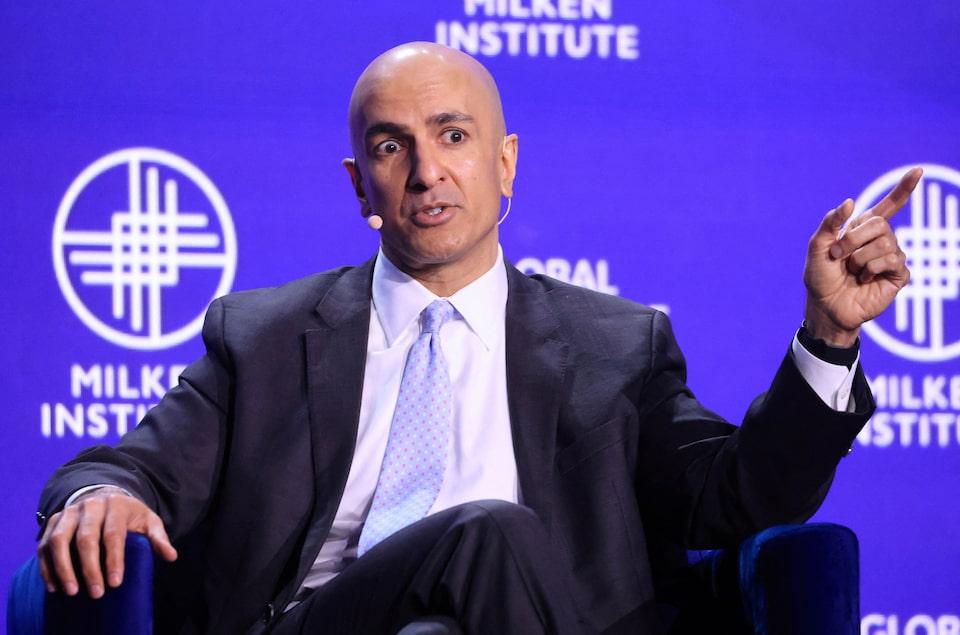
Nov 13 (Reuters) - Minneapolis Federal Reserve President Neel Kashkari told Bloomberg News in an interview on Thursday that he did not support the Fed's interest-rate cut in October given the economy's resilience, and said he was undecided on what to do for the Fed's meeting next month. "I can make a case depending on how the data goes to cut, I can make a case to hold, and we’ll have to see," Kashkari told Bloomberg News. Sign up here. https://www.reuters.com/markets/us/feds-kashkari-wanted-rate-cut-pause-october-reports-bloomberg-news-2025-11-13/
2025-11-13 21:00
Cisco Systems gains after annual revenue forecast hike Disney warns of long distribution dispute with YouTube TV Traders see December rate cut chance as coin flip S&P 500 -1.66%, Nasdaq -2.29%, Dow -1.65% Nov 13 (Reuters) - Wall Street ended sharply lower on Thursday, with steep losses in Nvidia and other AI heavyweights, as investors scaled back expectations of interest rate cuts due to inflation worries and divisions among central bankers about the U.S. economy's health. All three major U.S. stock indexes posted their steepest daily percentage declines in over a month. Sign up here. The U.S. government reopened after a record 43-day shutdown that had worried investors and disrupted the flow of economic data. A growing number of Federal Reserve policymakers in recent days have signaled hesitation about further interest rate cuts, pushing financial market-based odds of a reduction in borrowing costs in December to near even. Fed officials who spoke recently cited worries about inflation and signs of relative stability in the labor market after two U.S. interest rate cuts this year. "The fundamental question is, is tariff inflation transitory and a one-time deal? And whether it is or isn't, that's why some of the Fed governors don't want to cut," said Jake Dollarhide, chief executive officer of Longbow Asset Management in Tulsa, Oklahoma. "It's a risky bet either way, whether they cut or don't cut." Shares fell for some of the U.S. stock market's strongest performers in recent years, as investors fretted about high valuations fueled by optimism about artificial intelligence. Nvidia (NVDA.O) , opens new tab, the world's most valuable company, dropped 3.6%, Tesla (TSLA.O) , opens new tab fell 6.6% and Broadcom (AVGO.O) , opens new tab declined 4.3%. "There's a lot of uncertainties about the state of the economy. ... What we're going through is a little bit of a correction in the market in the AI sector and we're seeing market rotation," said Peter Cardillo, chief market economist at Spartan Capital Securities in New York. The S&P 500 declined 1.66% to end the session at 6,737.49 points. The Nasdaq fell 2.29% to 22,870.36 points, while the Dow Jones Industrial Average declined 1.65% to 47,457.22 points. Nine of the 11 S&P 500 sector indexes declined, led lower by consumer discretionary (.SPLRCD) , opens new tab, down 2.73%, followed by a 2.37% loss in information technology (.SPLRCT) , opens new tab. Reflecting Wall Street's rotation away from tech stocks, the S&P 500 value index (.IVX) , opens new tab has gained about 1% so far this week, while the growth index (.IGX) , opens new tab has dipped 0.6%. Walt Disney (DIS.N) , opens new tab tumbled 7.8% after the media giant signaled it was preparing for a potentially prolonged fight with YouTube TV over distribution of its cable channels. Cisco Systems (CSCO.O) , opens new tab rallied 4.6% after raising full-year profit and revenue forecasts, betting on demand for its networking equipment. On Tuesday and Wednesday, the Dow (.DJI) , opens new tab notched record high closes, benefiting from investors selling technology stocks and moving money into the health care sector. Recently, data from payroll processor ADP showed private employers shed over 11,000 jobs a week through late October. Indeed Hiring Lab slides showed a 16% drop in retail-related job postings in October from a year ago, pointing to continued weakness in the labor market. Traders are pricing in about a 47% chance of a 25-basis-point rate cut in December, lower than last week's 70% probability, according to CME Group's FedWatch tool. APA Corp gained 3.3% after a report that Spain's Repsol (REP.MC) , opens new tab is considering a reverse merger of its upstream unit with potential partners, including the energy producer. Memory device maker Western Digital (WDC.O) , opens new tab fell 5.4%, Seagate (STX.O) , opens new tab lost over 7% and SanDisk (SNDK.O) , opens new tab dropped almost 14% after Japanese memory manufacturer Kioxia Holdings reported lower sales and profits. Declining stocks outnumbered rising ones within the S&P 500 (.AD.SPX) , opens new tab by a 2.8-to-one ratio. The S&P 500 posted 17 new highs and seven new lows; the Nasdaq recorded 56 new highs and 230 new lows. Volume on U.S. exchanges was relatively heavy, with 20.8 billion shares traded, compared to an average of 20.3 billion shares over the previous 20 sessions. https://www.reuters.com/business/us-futures-muted-traders-await-data-after-federal-reopen-2025-11-13/

2025-11-13 20:49
Subsidised electricity price set at 5 euro cents per kWh until 2028 EU approval needed for state aid compliance Gas power plant capacity to increase by 8 gigawatts BERLIN, Nov 13 (Reuters) - Germany's ruling parties have agreed to introduce a subsidised power price for energy-intensive industries until 2028 to reduce costs and boost Europe's largest economy, Chancellor Friedrich Merz said on Thursday. German companies, including automakers and steelmakers, have long complained that high energy prices put them at a competitive disadvantage. Sign up here. Conservative leader Merz said the subsidised electricity price for industry will be set at 5 euro cents per kilowatt hour until 2028, following coalition talks with his Social Democrat coalition partners. "The aim is to significantly relieve the burden on our economy and reduce production costs," Merz said. The EU must agree to the scheme under rules regulating state aid. "Discussions with the EU Commission are largely complete, and we expect to receive approval for this," Merz said. The VCI association representing the chemicals industry called the measure useful but said the government needed to do more to make Germany competitive for industry. "We now need relief across the board - in energy, taxes and bureaucracy," VCI head Wolfgang Große Entrup said in a statement, warning that the situation for companies was "becoming more acute every day". German voters elected Merz in February on a promise to boost German industry during a prolonged economic malaise. The chancellor and his coalition partners also agreed on Thursday to tender 8 gigawatts of capacity for gas power plant construction and to reduce air traffic control fees — saving the aviation sector 350 million euros ($408 million). ($1 = 0.8575 euros) https://www.reuters.com/business/energy/german-coalition-agrees-subsidised-power-price-industry-2025-11-13/
2025-11-13 20:12
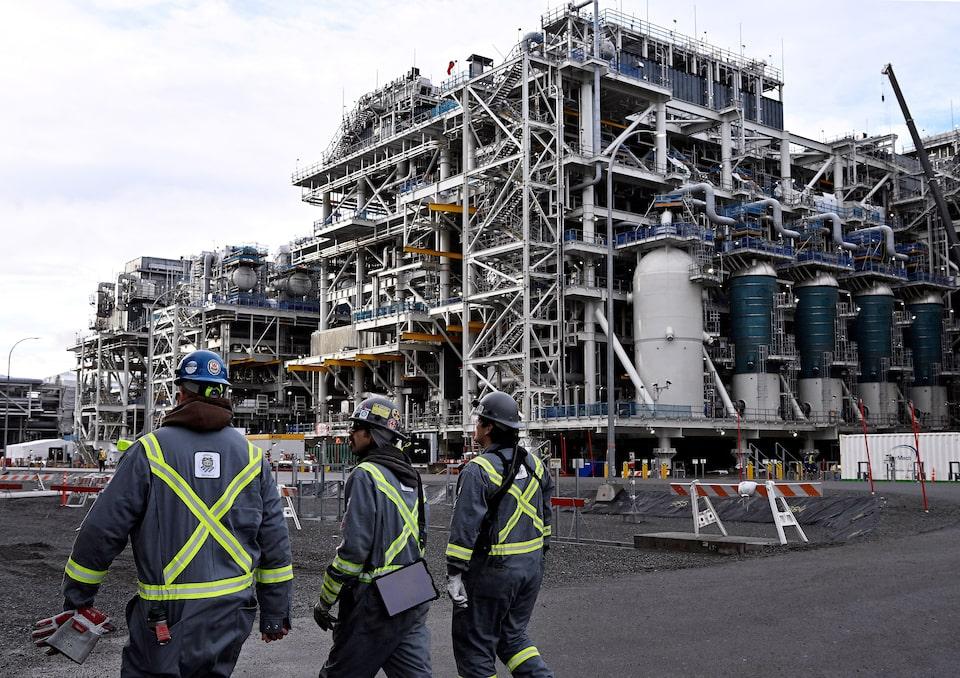
Ksi Lisims LNG capacity planned at 12 million tonnes annually Shell and Total Energies have signed 20-year LNG purchase agreements Company CEO says final investment decision expected in early 2026 CALGARY, Nov 13 (Reuters) - Canada said on Thursday it will add the proposed Ksi Lisims LNG facility to its major projects list for fast-tracking, a designation the company behind the project said makes it more likely to proceed. Prime Minister Mark Carney made the announcement in Prince Rupert, British Columbia, where the facility would be located with direct shipping access to Asia. Ksi Lisims has a planned capacity of 12 million metric tons per year, which would make it Canada's second-largest liquefied natural gas export terminal after Shell-led LNG Canada, which began operations this year. Sign up here. Carney is aiming to speed up natural resource project construction to boost the economy that has been damaged by U.S. tariffs. The government created this year a major projects office tasked with streamlining approvals and helping to coordinate financing for large-scale infrastructure projects deemed in the national interest. INVESTMENT DECISION EXPECTED NEXT YEAR The proponents of Ksi Lisims — Houston-based Western LNG; a consortium of Canadian natural gas producers called Rockies LNG; and the Nisga'a First Nation, who own the land for the project — have not made a final investment decision to proceed. But Western LNG CEO Davis Thames told Reuters inclusion on Canada's major projects list brings Ksi Lisims closer to fruition, adding the proponents expect to decide whether to proceed early next year. "It's pretty obvious that the different constituents of the project will see this (designation) as being favorable," Thames said, adding expedited permitting times would decrease the likelihood of construction delays once Ksi Lisims is under way. "Time is money, and when you have to stop construction because you didn't get a permit in time, that's what just kills budgets," he said. Shell (SHEL.L) , opens new tab and TotalEnergies (TTEF.PA) , opens new tab have signed 20-year LNG purchase agreements with Ksi Lisims. The company is working to finalize other commercial agreements with LNG purchasers before committing to a final investment decision, Thames said. Construction is already under way on the 900-km (560-mile) Prince Rupert Gas Transmission pipeline, which will transport natural gas from northeast B.C. to Ksi Lisims and was also on the government's list. Canada's major projects office has also been tasked with collaborating with affected Indigenous groups to help fast-track infrastructure development. Having the backing of the major projects office increases the odds of the project going ahead, but is not a guarantee that a positive final investment decision will be reached, said RBN Energy analyst Martin King. "Locking up the needed financing is also something that needs to be finalized," King said. Carney's government said fast-tracking the latest round of projects will spur private investment worth C$56 billion ($39.93 billion). Other projects announced on Thursday for inclusion on the fast-track list include the North Coast Transmission line - an estimated C$6 billion electrification project by BC Hydro that is expected to provide clean energy to the province's LNG and mining industries - and the Crawford Nickel project, an open-pit nickel and cobalt mine in Ontario by Canada Nickel Company. ($1 = 1.4024 Canadian dollars) https://www.reuters.com/business/energy/canada-names-proposed-ksi-lisims-lng-project-fast-tracking-2025-11-13/
2025-11-13 19:46
MILAN, Nov 13 (Reuters) - Italy's biggest utility Enel (ENEI.MI) , opens new tab on Thursday improved its guidance on full-year net income after reporting nine-month earnings marginally above market expectations. Ordinary earnings before interest, taxes, depreciation and amortisation (EBITDA) came in at 17.26 billion euros ($20 billion) in the January-September period, compared to an average estimate by analysts of 17.17 billion euros. Sign up here. Ordinary net income was 5.7 billion euros, also slightly above analyst expectations, and up 4.5% on the same period of last year, net of the effect of assets disposals. In 2025, ordinary net ordinary income is expected to rise slightly above the high end a previous 6.7-6.9-billion-euro guidance range, the company said. Ordinary EBITDA is expected to be in line with the previous guidance range of 22.9 billion to 23.1 billion euros. Spanish unit Endesa (ELE.MC) , opens new tab and Enel's activities in Latin America were among the engines of growth. Enel's Italian business dragged on results due to a fall in hydroelectric power generation and lower selling prices applied to retain retail customers, the group said. Its top managers said in a post-result conference call that hydroelectric production in Italy was not expected to return to the exceptional levels of 2024. SEVERAL POTENTIAL SITES FOR DATA CENTRE Enel, which will present its updated medium-term strategy at a capital market day in February, is aiming to grab business opportunities from the development of data centres in its home country. "We are finalising the first preliminary agreement in Italy, where we have several potential sites in our pipeline," said Chief Financial Officer Stefano De Angelis. The group will offer data centre operators a package including authorized industrial sites, energy network connections and facility services on top of long-term electricity supply agreements priced at a premium over standard wholesale rates, he said. Enel introduced a share buy-back programme this year worth 1 billion euros that will run until year-end. The improvement in investor reward boosted the stock, which rose to a record high earlier this month. ($1 = 0.8575 euros) https://www.reuters.com/sustainability/climate-energy/italys-enel-ups-guidance-full-year-net-income-2025-11-13/