2025-11-13 06:58
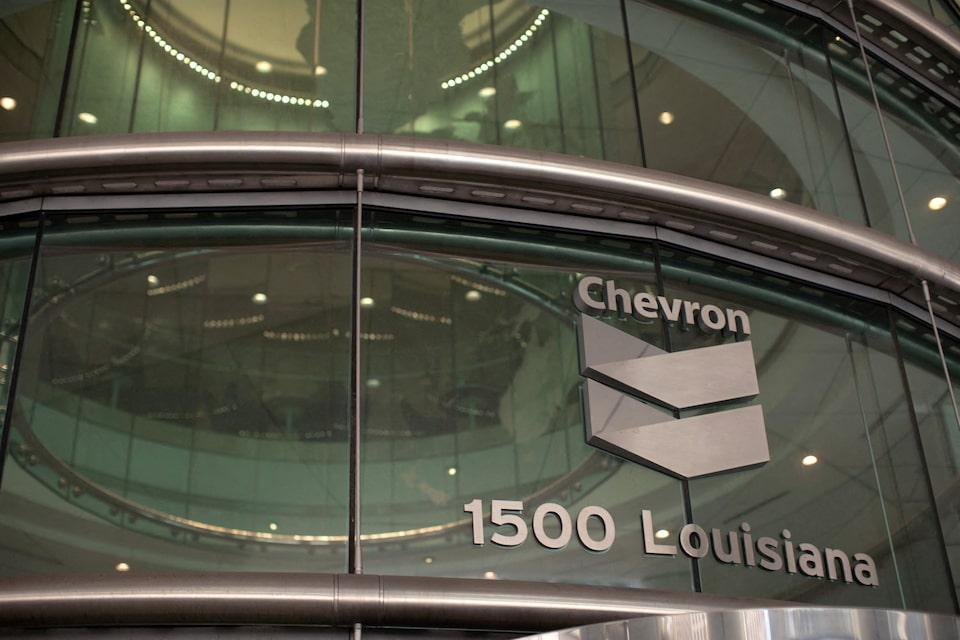
Chevron makes modest spending cuts of $1 bln per year US company plans to grow production by 2% to 3% per year It's also investing heavily in exploration, a long-term activity LONDON, Nov 13 (Reuters) - When warnings abound about an imminent collapse in oil prices, one would not expect the CEO of a major oil company to boast that he has never been more confident. Yet that was precisely the message conveyed in Chevron's (CVX.N) , opens new tab updated strategy, unveiled by CEO Mike Wirth on Wednesday. He shrugged off concerns about oversupply in the near term and exuded confidence in the sector’s long-term outlook, brushing aside doubts that hovered over the industry only a few years ago as momentum built for the transition away from fossil fuels toward low-carbon energy. Sign up here. It appears that U.S. President Donald Trump's strong support of the fossil fuel industry and his "energy dominance" agenda have provided Chevron - like its Big Oil peers - with a meaningful tailwind. “Never in my career have I seen a higher confidence outlook," Wirth told investors. "The best is yet to come." Such confidence is striking when the U.S. Energy Information Administration expects oil prices to average $55 a barrel next year, down from $69 this year. NEAR-TERM RETRENCHMENT What a company says is one thing, though. What it does is far more important. Oil and gas companies' spending plans are a strong gauge for their near- and long-term risk appetite as many energy projects such as offshore oilfields or liquefied natural gas (LNG) plants require billions of dollars and years to develop, and many more years to generate returns. It is therefore notable that Chevron is paring back its capital expenditures by $1 billion from previous guidance to a range of $18 billion to $21 billion per year into 2030. The U.S.’s second-largest oil company also appears to be retrenching - albeit modestly - in the face of significant uncertainty over the supply and demand balance in the global oil market. The International Energy Agency is currently forecasting a huge oversupply next year of 4 million barrels per day, around 4% of global supply, which, if accurate, could cause oil prices to crater. Chevron’s minor pullback, however, suggests its thinking may be more aligned with OPEC analysts, who expect supply to roughly match demand next year, or others who believe any oversupply will be modest and short-lived. LONG-TERM BOOM Further out, Chevron’s actions seem to more closely match its messaging, as the company is clearly betting on continued growth in oil demand and a race to offset shrinking supplies. Chevron plans to grow oil and gas production by 2% to 3% per year through 2030. It currently produces around 4 million barrels of oil equivalent per day. "There is need for significant investment to close the oil supply gap, equivalent to five Saudi Arabias" over the next decade, Wirth said. Crucially, Chevron noted it plans to keep production in the U.S. Permian shale basin stable at 1 million bpd through 2040 while also reducing investment to around $3.5 billion per year from $4.5 billion to $5 billion currently. Chevron argues that improved drilling techniques will enable it to maintain production without having to drill new wells at the current pace - a fairly bold forecast given standard practices for shale oil drilling, also known as fracking. Chevron is not the only big shale producer to indicate that it can profitably sustain and even grow shale production for many more years. Both ExxonMobil (XOM.N) , opens new tab and ConocoPhillips (COP.N) , opens new tab suggest they can do the same, another indication of the industry’s growing confidence. EXPLORATION BET What perhaps best highlights Chevron's long-term bullishness is its increasing investments in oil and gas exploration. This high-risk, high-reward business requires heavy investment, and it often takes over a decade or more to move from first drilling to the start of production. In recent months, Chevron expanded its exploration activity in several basins including Namibia, Egypt and South America. The company plans to increase its annual exploration budget by 50% over the next few years. What’s more, it poached TotalEnergies’ (TTEF.PA) , opens new tab exploration chief, Kevin McLachlan, in October to lead its exploration programme. Does this mean we should expect a repeat of the start of this century, when huge, almost unimpeded investments in new oil and gas resources led to massive overspending and poor returns? Probably not, as Big Oil companies are now hyper-focused on profitability and have instituted cost-saving practices that can allow them to generate profit even if oil prices hit $50 or below. Chevron aims to reduce structural costs by $3 billion to $4 billion by the end of 2026, including by laying off over 15% of its global workforce. This spending discipline should enable Chevron and its peers to continue investing with greater confidence through peaks and troughs in the market over the coming years. That, in turn, also indicates that the market is apt to remain well supplied for the foreseeable future. What is missing from all of this is a serious consideration of the energy transition. It is perhaps fitting that Chevron’s strategy update came on the day the IEA published a new long-term outlook that suggests oil demand may continue rising into 2050, having previously suggested it would begin to plateau in 2030. This may be music to Big Oil’s ears, but if the energy transition picks up steam again - as many expect it will - Chevron and the rest of the industry could be in for a harsh reality check. Want to receive my column in your inbox every Monday and Thursday, along with additional energy insights and links to trending stories? Sign up for my Power Up newsletter here. Enjoying this column? Check out Reuters Open Interest (ROI) , opens new tab, your essential new source for global financial commentary. ROI delivers thought-provoking, data-driven analysis. Markets are moving faster than ever. ROI , opens new tab can help you keep up. Follow ROI on LinkedIn , opens new tab and X. , opens new tab https://www.reuters.com/markets/commodities/confident-chevron-brushes-off-oversupply-energy-transition-fears-2025-11-13/
2025-11-13 06:56
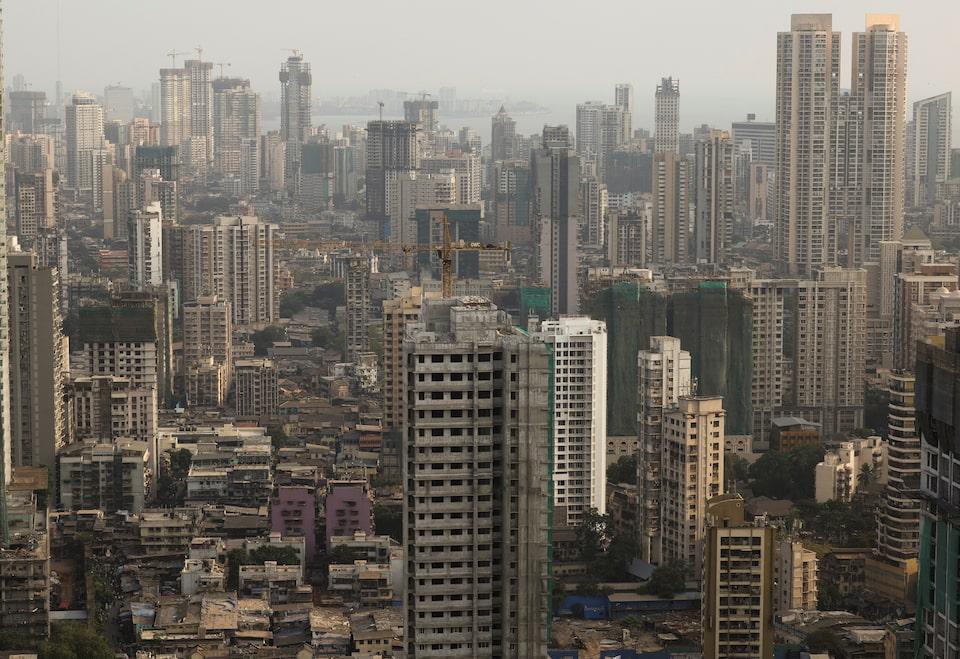
NEW DELHI, Nov 13 (Reuters) - Moody's Ratings expects India's economy to grow at 6.5% through 2027, the ratings agency said in a statement dated Wednesday. "India's economic growth is supported by robust infrastructure spending and solid consumption, although the private sector remains cautious about business capital spending," the agency added. Sign up here. https://www.reuters.com/world/india/moodys-expects-indias-economy-grow-65-through-2027-2025-11-13/
2025-11-13 06:56
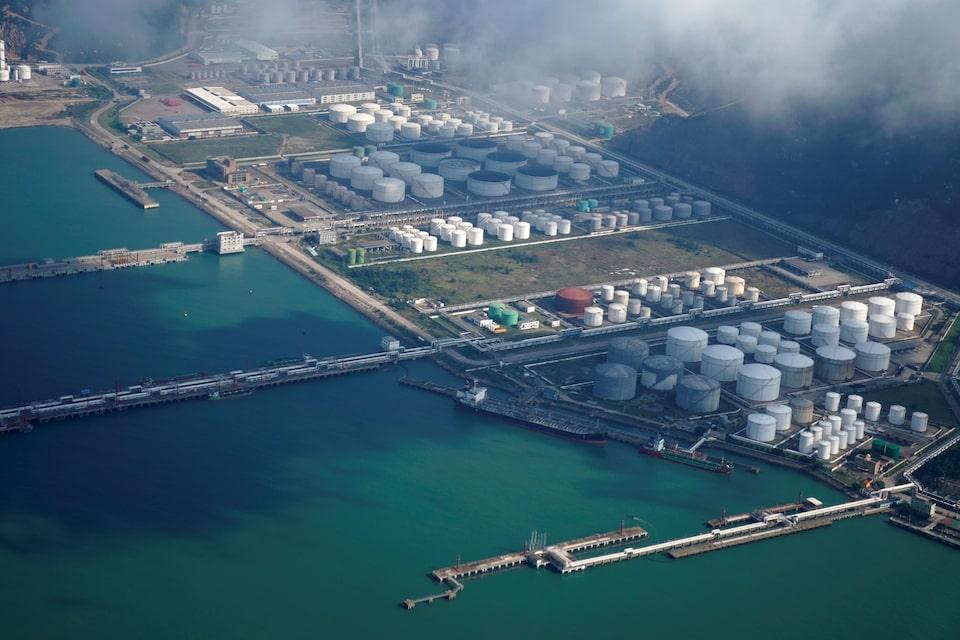
EIA shows much larger-than-expected rise in weekly US crude stocks OPEC report implies oil supply will slightly exceed demand in 2026 IEA says oil, natural gas demand to grow through 2050 HOUSTON, Nov 13 (Reuters) - Oil prices held largely steady on Thursday after declining around 4% in the previous session as investors weighed concerns about global oversupply with looming sanctions against Russia's Lukoil. Brent crude futures rose 30 cents, or 0.5%, to $63.01 a barrel. U.S. West Texas Intermediate crude increased 20 cents, or 0.3%, to $58.69 a barrel, after a decline of 4.2% on Wednesday. Sign up here. "There should be considerable support to oil prices around $60/bbl, especially given there could be short-term disruption to Russian export flows once stricter sanctions kick in," said Suvro Sarkar, DBS Bank's energy sector team lead. The U.S. has hit Lukoil with sanctions as part of its efforts to bring the Kremlin to peace talks over Ukraine. The sanctions prohibit transactions with the Russian company after November 21. Price gains were held back as a report from the Energy Information Administration showed a larger-than-expected rise in U.S. crude stocks, while gasoline and distillate inventories fell less than expected last week. Crude inventories rose by 6.4 million barrels to 427.6 million barrels in the week ended November 7, the EIA said, compared with analysts' expectations in a Reuters poll for a 1.96-million-barrel rise. The American Petroleum Institute said on Wednesday that U.S. crude stockpiles rose by 1.3 million barrels in the week ended November 7, according to market sources. Prices fell more than $2 a barrel on Wednesday after an Organization of the Petroleum Exporting Countries report which implied global oil supplies would slightly exceed demand in 2026, according to a Reuters calculation based on the report, a further shift from the group's earlier projections of a deficit. "Recent (price) weakness seems to be driven by OPEC’s revision of supply-demand balance in 2026 in its monthly report, which confirms the group is now acknowledging the possibility of a supply glut in 2026, in contrast to its more bullish stance all along," DBS's Sarkar said. OPEC's report implied a supply surplus next year if OPEC+ output remains at October's level, according to a Reuters calculation, after OPEC+ production increases and higher supply from other producers. OPEC+ groups the OPEC members and allies like Russia. The International Energy Agency raised its global oil supply growth forecasts for this year and next in its monthly oil market report on Thursday, signaling a bigger surplus in 2026. The U.S. EIA also said in its Short-Term Energy Outlook on Wednesday that U.S. oil production is expected to set a larger record this year than previously forecast. Global oil inventories will grow through 2026 as production increases faster than demand for petroleum fuels, adding to pressure on oil prices, the EIA added. The U.S. government is due to lumber back to life on Thursday after the longest shutdown in U.S. history snarled air traffic, cut food assistance to low-income Americans and forced more than 1 million workers to go unpaid for more than a month. "The return of the government is going to help support demand in the near term. We should be looking for better demand from those returning to work, holiday travel expectations back on track and of course, holiday shopping season ready to kick off," said Carl Larry, a manager of sales for trading and risk at Enverus. https://www.reuters.com/business/energy/oil-extends-losses-us-inventory-build-opec-forecast-shift-2025-11-13/
2025-11-13 06:48
Tests will also be carried out on trains, ships, machinery Government pledges transparent review of B50 implementation Considering exemption for non-public service sectors amid supply concerns NUSA DUA, Indonesia, Nov 13 (Reuters) - Indonesia will start road testing vehicles using biodiesel with palm oil content of 50% in early December as the government considers whether to implement the "B50" mandate only in certain sectors, energy ministry official Eniya Listiani Dewi said on Thursday. The government aims to introduce the B50 standard in the second half of next year, raising palm oil content from 40% this year in an effort to reduce its reliance on imported fuel. Sign up here. The tests will also be carried out on train engines, ships, mining equipment and generators, she said on the sidelines of an industry conference held on the resort island of Bali. Eniya said the government will carefully review all aspects of B50 implementation, including technical issues, pricing and the availability of supply for the palm oil-based fuel, and will be transparent about its findings. The government is considering whether to only implement B50 in so-called public service obligation sectors (PSO) such as public transport as well as some logistics facilities, due to concerns about Indonesia's limited biodiesel production capacity. "We had discussions on the possibility of increasing the blending to 50% for the PSO and reducing it for non-PSO sectors - we'll examine that," Eniya said. "The challenge is in the upstream sector. We can't implement simultaneously at 50%," she added. https://www.reuters.com/sustainability/climate-energy/indonesia-start-road-tests-b50-biodiesel-next-month-considering-selective-2025-11-13/

2025-11-13 06:46
Trump signs deal to end US government shutdown Private surveys indicate job market weakness Nov 13 (Reuters) - Gold prices fell 1% on Thursday, pulling back from a three-week high earlier in the session amid a broad market sell-off following the reopening of the U.S. government. Spot gold lost 1.1% to $4,151.86 per ounce as of 02:16 p.m. EST (1916 GMT). Elsewhere, spot silver fell 2.3% to $52.18 after rising to its highest level since October 17 earlier in the session. Sign up here. U.S. gold futures for December delivery settled 0.5% lower at $4,194.50. The U.S. government will resume operations after a record 43-day shutdown, under an agreement that funds federal operations through January 30. "Precious metals are caught in a widespread selloff, where stocks, bonds, the dollar, and crypto are all under pressure and in the red," said Tai Wong, an independent metals trader. "It's a classic buy-the-rumor, sell-it-all after the U.S. government re-opens." Earlier in the session, spot gold hit a session high of $4,244.94, the highest level since October 21. Initially, gold and silver markets rallied on the expectation that economic data released after the end of the shutdown will reveal U.S. labor market weakness and push the Fed toward at least one December rate cut, said Jim Wyckoff, senior analyst at Kitco Metals. However, citing worries about inflation and signs of relative stability in the labor market after two U.S. interest rate cuts this year, a growing number of Federal Reserve policymakers are signaling reticence on further easing. Private surveys have indicated job market weakness. While the U.S. central bank reduced rates last month, Fed Chair Jerome Powell cautioned that further easing this year was not guaranteed, partly due to a lack of data. Lower interest rates typically benefit gold, which offers no yield and is often seen as a safe-haven asset during periods of economic uncertainty. Platinum was down 2.8% at $1,569.65 and palladium fell 3.7% to $1,419.75. https://www.reuters.com/world/india/gold-extends-rise-trump-signs-deal-lift-shutdown-2025-11-13/

2025-11-13 06:14
SYDNEY, Nov 13 (Reuters) - Australia’s conservative Liberal Party on Thursday walked away from its policy to achieve net zero emissions by 2050 and pledged instead to prioritise bringing down energy prices if elected. The announcement settles months of public infighting between moderate and right-wing faction members over the party’s climate policy, and aligns the Liberals with the National Party, their rural-based coalition partner. Sign up here. Opposition Leader Sussan Ley said the Liberal party would dismantle the centre-left Labor government’s environment and energy policies if elected, scrapping targets on reducing emissions and renewable energy generation. But it would not withdraw from the Paris climate agreement, she added. "Today the Liberal Party has decided to put affordable energy first," Ley told reporters at a news conference. "Net zero would be welcome if we can get there with technology, with choice and voluntary markets." The Liberal Party’s plan would also involve preventing early coal plant closures, lifting Australia's ban on nuclear energy and increasing investment in new gas supply and infrastructure. Ley said while the party would no longer pursue net zero, emissions would still be reduced "in line with comparable countries" and "as fast as technology allows". The decision came after a five-hour party meeting on Wednesday where a majority of members voted to abandon the target. It puts the Liberal Party in line with the Nationals, who voted earlier this month to abandon its commitment to reach net-zero emissions. But Julia Dehm, an associate law professor at La Trobe University, said the plan was not in line with the Paris agreement, which requires emission reduction commitments that "represent a progression beyond previous commitments". "Australia risks international reputational damage and potential international legal actions if there isn't bi-partisan commitment to take ambitious action to prevent dangerous global heating in line with our international obligations," she said in a statement. While the Liberal Party committed to net-zero by 2050 under former Prime Minister Scott Morrison in 2021, the dispute reignited after a resounding national election defeat to the centre-left Labor Party in May. The Labor government aims to cut emissions by 62%-70% from 2005 levels by 2035, and reach net-zero emissions by 2050. In September, it announced A$5 billion ($3.3 billion) in funding to help industrial facilities decarbonise. ($1 = 1.5389 Australian dollars) https://www.reuters.com/sustainability/cop/australias-conservative-liberal-party-abandons-net-zero-policy-2025-11-13/