2025-11-13 06:14
NEW DELHI, Nov 13 (Reuters) - India's credit guarantee support for exporters will require a budget allocation of 20 billion rupees ($227.54 million) for the fiscal year 2026, a government source told reporters on Thursday. On Wednesday, the country's cabinet approved spending 450.6 billion rupees towards providing support to exporters, including 200 billion rupees in credit guarantees on bank loans. Sign up here. ($1 = 87.8950 Indian rupees) https://www.reuters.com/world/india/india-allocate-2275-million-exporters-credit-guarantee-fy26-source-says-2025-11-13/
2025-11-13 06:08
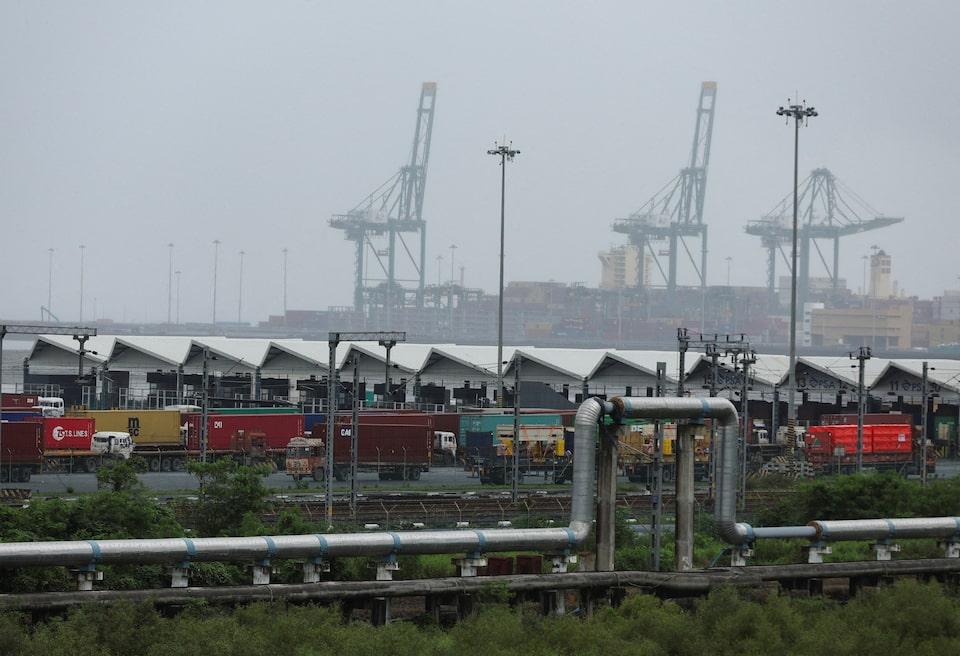
Reuters Open Interest (ROI) is your essential source for global financial commentary SYDNEY, Nov 13 (Reuters) - The liquefied natural gas market is bracing for a surge in supply next year, largely from top exporter the United States, but what is less certain is just how low spot prices will have to drop to clear the additional volumes. Global supply of the super-chilled fuel is expected to rise to 475 million metric tons in 2026, according to data from commodity analysts at Kpler, a 10.2% gain over the 431 million tons forecast for 2025. Sign up here. To put this figure in context, the expected increase in supply is equivalent to the total annual demand of South Korea, the world's third-biggest LNG importer behind China and Japan. The bulk of the increase in LNG supply comes from the United States, with Kpler's principal LNG analyst Go Katayama telling a seminar in Sydney on Thursday that U.S. capacity will rise to 130 million tons next year. This is up from 90 million tons in 2024 and an expected 110 million this year. Such a jump in supply is likely to weigh on prices, with Kpler forecasting that benchmark Asian spot prices will average $10 per million British thermal units (mmBtu) in 2026, down from about $12 in 2025. That doesn't seem overly bearish, but within an average price forecast for a calendar year there can be quite some movement on a week-by-week basis. For instance, it's likely that demand during the upcoming northern winter will keep the spot price around its current $11.10 per mmBtu, with the risk that a colder-than-usual season will push the price higher. This means the spot price will start 2026 well above the $10 average forecast for the whole year, giving it scope to drop throughout the year. If all 44 million tons of forecast new LNG supply does eventuate and hit the market, much of it will come in the second half of 2026. This makes it likely that spot prices will be weaker in the second half as the market struggles to absorb additional supply. WHO BUYS? The question is who is likely to buy the new LNG, much of which is uncontracted and thus available for spot transactions. China's weak LNG imports this year may well reverse amid stronger residential and trucking demand, with Kpler expecting imports to rise 8 million tons to 75 million in 2026. Other potential bright spots for LNG demand are India and Southeast Asian nations such as Thailand and the Philippines. However, these countries can largely be described as price-sensitive buyers, and it would likely take a drop to below $8 per mmBtu to drive them to take significant volumes. Europe's LNG demand may also increase as the continent continues to walk away from Russian pipeline natural gas, but growth may be more modest as renewables increase their share of the region's energy mix. Whether the new volume of LNG hitting the market in 2026 will be enough to drive the spot price as low as $8 is debatable, but a further wave of supply in 2027 could be enough to rout prices. Qatar, which vies with Australia as the second-biggest LNG producer, is advancing work to boost its output from 77 million tons to 126 million by 2027. QatarEnergy CEO Saad al-Kaabi said last week the Middle East producer is on track to start up new production from its massive North Field by the middle of next year, with the fourth quarter being the latest it would commence. The LNG market is heading for a situation where supply additions are running ahead of demand growth. This is leading to a market consensus that spot prices are likely to drop on a sustained basis, which will help boost demand in Asia. But for any lift in demand to be sustained, prices will have to remain depressed, a situation that is likely to curb future investment in new LNG capacity. Enjoying this column? Check out Reuters Open Interest (ROI), your essential new source for global financial commentary. ROI delivers thought-provoking, data-driven analysis of everything from swap rates to soybeans. Markets are moving faster than ever. ROI can help you keep up. Follow ROI on LinkedIn , opens new tab and X , opens new tab. The views expressed here are those of the author, a columnist for Reuters. https://www.reuters.com/markets/commodities/lng-prices-will-drop-2026-absorb-supply-surge-how-much-2025-11-13/

2025-11-13 06:04
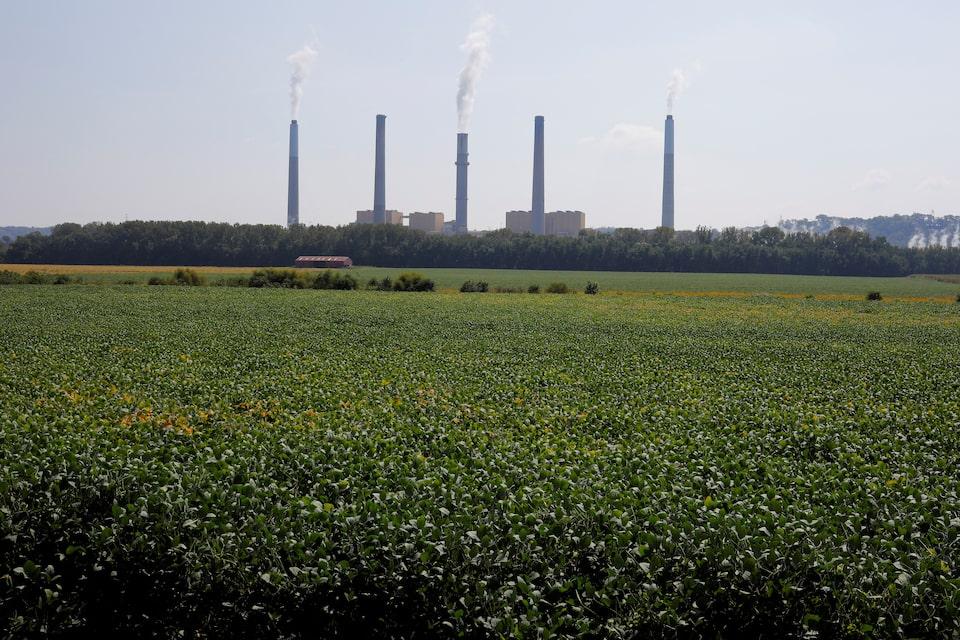
LITTLETON, Colorado, Nov 13 (Reuters) - A jump in natural gas costs has spurred several U.S. utilities to lift coal power output and cut back on gas-fired generation so far this year, reversing a years-long trend of lower coal use and emissions in the country. While the trend has been a national phenomenon, six states - Arkansas, Indiana, Michigan, Ohio, South Carolina and Wisconsin - will play a more prominent role in determining the future trajectory of U.S. coal use if natural gas prices keep climbing. Sign up here. That's because these six key states have roughly equal-sized generation shares from coal and gas within their electricity mixes, and so have the capability to replace one fuel with the other whenever market conditions dictate. With U.S. wholesale natural gas prices up 44% from a year ago and close to testing multi-year highs, additional coal-for-gas switching is likely in areas where utilities are under pressure to keep power bills in check even as demand rises. GAS PRICE INFLATION Benchmark U.S. natural gas futures have averaged around $3.57 per million British thermal units (mmBtu) so far in 2025, according to data from LSEG. That compares to a $2.47/mmBtu average in 2024, and means that heavy gas consumers have been hit with a steep jump in commodity costs in 2025 even as lowering prices has become a major focus of nearly all U.S. authorities. To cut costs, several utilities have opted to burn more coal instead of gas, as U.S. coal prices this year have averaged around 20% less than gas prices and have risen only 7% from 2024's average, data from LSEG shows. Total U.S. coal-fired electricity production through the opening seven months of the year increased by around 16% from the year before, Ember data shows, reflecting the broadly higher coal use across the country. Over the same period, U.S. gas-fired generation declined by around 4%, in response to some of the cost-saving efforts underway at several utilities. THE "KEY 6" STATES There have been several states that have both increased their coal use and decreased their gas consumption by far more than the U.S. average, and so have had an outsized impact on national coal and gas consumption trends this year. Combined coal-fired generation across Arkansas, Indiana, Michigan, Ohio, South Carolina and Wisconsin - the "Key 6" states - increased by 26% so far in 2025, while their collective gas use has dropped by 9%, Ember data shows. Coal use in these states was particularly strong during the opening months of 2025, when gas prices underwent a steep year-over-year climb and spurred those utilities with both coal and gas generation assets to tilt output in favor of coal. Arkansas, Michigan and Wisconsin all slashed their year-over-year gas-fired generation totals by well over twice the national average, while also sharply boosting coal-fired output to multi-year highs. With gas prices already close to their highest levels since 2023 and rising due to higher use for heating and strong demand from LNG exporters, cost-sensitive utilities are likely to step up coal-for-gas switching in the months ahead. EMISSIONS TOLL Higher coal burning within utility generation mixes will lead to a fresh swell in overall U.S. power sector emissions. Coal-fired generation in the U.S. emits roughly 950,000 metric tons of CO2 per terawatt hour (TWh), compared to around 550,000 tons per TWh from gas-fired generation, Ember data shows. Despite this, the pressure to keep costs in check will likely sustain the trend of cutting back on gas use when gas prices climb, while plugging any resulting generation shortages with increased coal-fired production. The heightened federal support for coal-fired power and coal mining will also maintain the momentum in favor of coal and provide utilities with some political cover against consumer pushback against a coal revival - at least over the near term. Over the longer run, sustained increases in coal pollution alongside the retirements of decades-old coal plants will force utilities to cut coal power output again, especially as the scale of renewables generation and battery storage expands. But for the coming months at least, coal-fired output across the Key 6 states - and more broadly - looks set to keep growing. The opinions expressed here are those of the author, a columnist for Reuters. Enjoying this column? Check out Reuters Open Interest (ROI), your essential new source for global financial commentary. ROI delivers thought-provoking, data-driven analysis of everything from swap rates to soybeans. Markets are moving faster than ever. ROI can help you keep up. Follow ROI on LinkedIn , opens new tab and X , opens new tab. https://www.reuters.com/markets/commodities/six-us-states-watch-rising-gas-prices-drive-coal-comeback-2025-11-13/
2025-11-13 06:02
Wall Street stocks post biggest drop in a month Bond yields rise as rate cut prospects fade US dollar slips; Crude settles modestly higher Gold pulls back from 3-week high NEW YORK/LONDON, Nov 13 (Reuters) - Wall Street indexes suffered their biggest one-day decline in a month on Thursday, pushing down MSCI's global equities gauge while U.S. Treasury yields rose as investor bets for a December rate cut took a dive after hawkish comments by Federal Reserve officials. In currencies, the dollar fell despite the prospects for slower rate cuts, in the first trading day after the House of Representatives voted late on Wednesday to reopen the U.S. government from its longest shutdown in history and President Donald Trump signed the bill. Sign up here. Investors had been pouring into equities in recent sessions in anticipation of an end to the shutdown, which disrupted food benefits for millions, left hundreds of thousands of federal workers unpaid, and snarled air traffic while putting a pause on crucial economic data releases. However, Trump administration officials dashed hopes for a clearer view of the U.S. economy any time soon. The White House indicated that the U.S. unemployment rate for October may never be available, since it is dependent on a household survey that was not conducted during the shutdown. And pointing to worries about high inflation after two U.S. interest rate cuts this year, a growing number of signaled caution about further rate cuts. Alberto Musalem, who runs the St Louis Federal Reserve Bank, reiterated his view that there was limited room to ease further without becoming overly accommodative. Federal Reserve Bank of Cleveland President Beth Hammack said interest rate policy should remain restrictive in order to put downward pressure on still concerning levels of inflation. Minneapolis Federal Reserve President Neel Kashkari said inflation was too high while parts of the labor market "look like they're under pressure." Earlier, San Francisco Federal Reserve President Mary Daly said the risks to the Fed's two goals are now balanced after two rate cuts already this year. Trader bets for a December rate cut were last showing a 51.9% probability, down from 62.9% on Wednesday, according to CME Group's FedWatch , opens new tab tool. "Markets were counting on a cut, and we may not get it," said Bob Doll, chief executive and chief investment officer at Crossmark, pointing to cautious Fed comments on the prospects for a December easing of rates. "Most of them are putting up warning signs that it's not a 'gimme', just like the Fed Chair told us when he did this presser after the last Fed meeting. In some sense, it's not new, but people didn't believe it." Anthony Saglimbene, chief market strategist at Ameriprise, said investors are looking at high valuations in heavyweight technology and artificial intelligence-linked stocks, adding to their worries about a continued lack of clarity around the U.S. economy. So, he said, it was not surprising to "see investors take a step back from risk, sell down the winners and go into the defensive areas of the market." EQUITIES MARK BIGGEST DROP IN A MONTH On Wall Street, the technology-heavy Nasdaq Composite (.IXIC) , opens new tab led losses, closing down 536.10 points, or 2.29%, at 22,870.36. The Dow Jones Industrial Average (.DJI) , opens new tab fell 797.60 points, or 1.65%, to 47,457.22, while the S&P 500 (.SPX) , opens new tab fell 113.43 points, or 1.66%, to 6,737.49. All three indexes registered their biggest daily declines since October 10. MSCI's gauge of stocks across the globe (.MIWD00000PUS) , opens new tab was down 12.07 points, or 1.19%, at 999.71, which would also be its biggest daily drop since October 10. Earlier in the day, the pan-European STOXX 600 (.STOXX) , opens new tab index closed down 0.61% while Europe's broad FTSEurofirst 300 index (.FTEU3) , opens new tab finished off 0.66%. Both had hit record highs during their trading day. In U.S. Treasuries, prices retreated, driving yields higher, as investors scaled back expectations for imminent rate cuts amid lingering uncertainty over the inflation outlook and stark divisions among Fed policymakers on the trajectory of the U.S. economy and monetary policy. The yield on benchmark U.S. 10-year notes rose 4.4 basis points to 4.123%, from 4.079% late on Wednesday while the 30-year bond yield rose 5.4 basis points to 4.7162%. The 2-year note yield, which typically moves in step with interest rate expectations for the Federal Reserve, rose 3.1 basis points to 3.597%. DOLLAR FALLS AGAINST EURO, YEN In currencies, the U.S. dollar dipped as the government reopened, leaving traders grappling with the long-term impact of the shutdown on trust in the U.S. currency while investors waited for data on the health of the economy. Meanwhile, European financial stability officials were debating whether to create an alternative to Federal Reserve funding backstops by pooling dollars held by non-U.S. central banks, aiming to reduce their reliance on the U.S. under the Trump administration, five officials familiar with the matter told Reuters. "The shutdown is over, but how soon are we going to go back to normal? How soon are we going to have numbers? How soon am I going to be able to do real, accurate analysis based on trusted American statistics from September and October? That's in doubt," said Juan Perez, director of trading at Monex USA in Washington. The dollar index , which measures the greenback against a basket of currencies including the yen and the euro, fell 0.29% to 99.19, with the euro up 0.34% at $1.1631. Against the Japanese yen , the dollar weakened 0.12% to154.58. In cryptocurrencies, bitcoin was down 3.24% at $98,578.10, after falling to its lowest level since May. In energy markets, oil futures settled slightly higher after selling off sharply in the previous session, as investors weighed concerns about global oversupply against looming sanctions against Russia's Lukoil. U.S. crude settled up 0.34%, or 20 cents, at $58.69 a barrel while Brent settled at $63.01 per barrel, up 0.48%, or 30 cents, on the day. Gold prices pulled back after hitting a three-week high earlier in the session, amid the broad market selloff that followed the reopening of the U.S. government. Spot gold fell 0.51% to $4,177.21 an ounce. U.S. gold futures fell 0.96% to $4,164.10 an ounce. https://www.reuters.com/world/china/global-markets-global-markets-2025-11-13/

2025-11-13 05:56
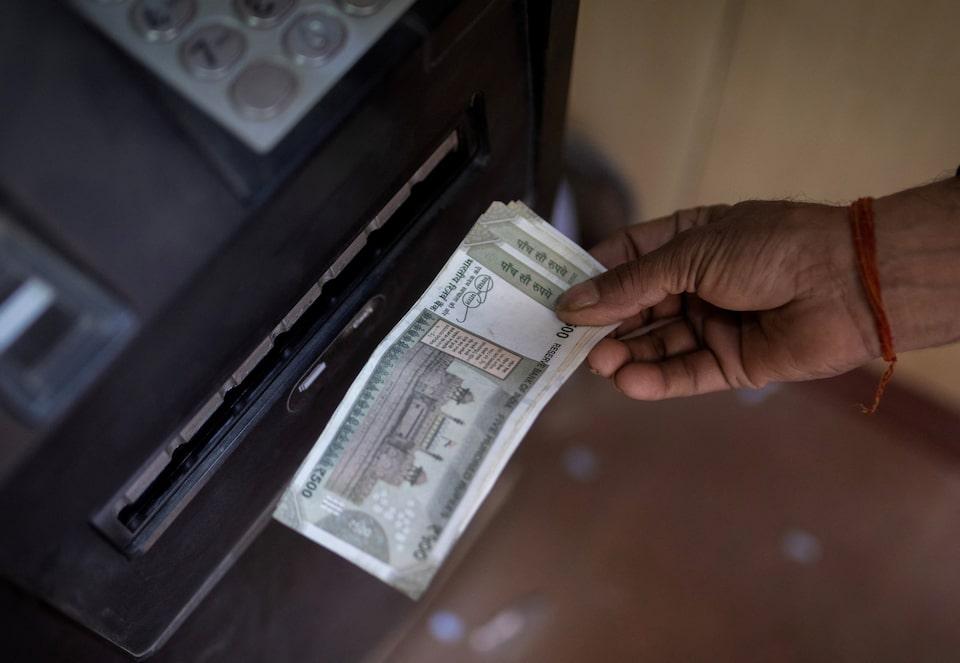
MUMBAI, Nov 13 (Reuters) - The Indian rupee closed marginally lower on Thursday as outflows and dollar demand spurred by persistent hedging from importers eclipsed the positive impulse from a broadly weaker dollar. The rupee closed at 88.6650 against the U.S. dollar, down slightly from its close at 88.63 in the previous session. Sign up here. Portfolio outflows from local stocks and persistent dollar demand from local companies have become sore points for the South Asian currency, increasing its reliance on central bank interventions to hold above its all-time low of 88.80 per dollar. On Thursday too, state-run banks were spotted offering dollars which helped the rupee hold its ground. The dollar sales were "intermittent and measured," a trader at a private bank said. "The line on the sand appears to have (been) drawn at 88.80, ahead of 89.00 and psychologically key level of 90.00. Intervention presence has been relatively aggressive at the spot as well as forwards/NDF space," DBS said in a note. Foreign investors have net sold over $850 million of Indian stocks in November so far. Foreign portfolio investors' ownership in companies listed on India's National Stock Exchange has declined to just under 17%, the lowest in over 15 years, per a note from the exchange on Thursday. Meanwhile, the dollar index fell 0.2% to 99.1, its lowest level in nearly two weeks, after U.S. President Donald Trump approved a deal to reopen the U.S. government, removing a major source of uncertainty. Asian currencies were up between 0.2% to 0.4% while global equities advanced as well. India's benchmark equity indexes, the BSE Sensex (.BSESN) , opens new tab and Nifty 50 (.NSEI) , opens new tab ended flat on the day. Later in the day the focus will be on remarks from U.S. Federal Reserve policymakers for cues on the trajectory of the central bank's benchmark interest rates. https://www.reuters.com/world/india/rupee-hold-narrow-range-flows-pressure-rbi-barrier-2025-11-13/
2025-11-13 05:33
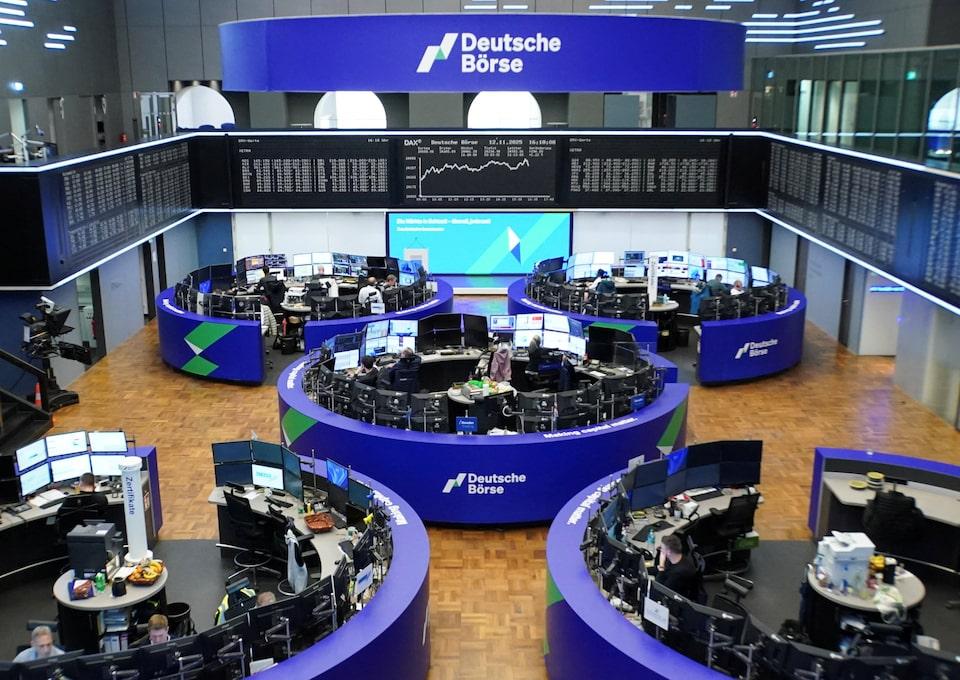
A look at the day ahead in European and global markets from Tom Westbrook U.S. President Donald Trump signed a bill ending the longest U.S. government shutdown on record with a late-night ceremony at the Oval Office, following a planned dinner with Jamie Dimon and top Wall Street executives. Sign up here. It's unclear just how quickly full government services and operations will resume. Data publication is top of the agenda in markets, with September's jobs report likely to be one of the first catch-up indicators released and investors anticipating it might support a rate cut, following soft figures in recent private surveys. Some data gaps are likely to be permanent, however, with the White House saying October's employment and Consumer Price Index reports might never be released. Stocks took a breather in Asia, with broad indexes drifting higher and Japan's Topix (.TOPX) , opens new tab hitting a record - following records for the Dow (.DJI) , opens new tab, FTSE (.FTSE) , opens new tab and pan-European STOXX 600 (.STOXX) , opens new tab - an indication of a small rotation from AI. Rising gold prices also took a pause. Japan's yen , meanwhile, has been sliding close to intervention territory. A brief blip above 155 per dollar on Wednesday drew a finance ministry reminder that authorities were watching closely. It kept on the strong side of that level in Asia trade, though it did sag to a record low of 179.49 per euro. Prime Minister Sanae Takaichi wants rates to stay low and has asked for close coordination with the Bank of Japan. On Thursday, BOJ Governor Kazuo Ueda signalled his goals aligned with the government's focus on reflating growth, telling parliament he was aiming for moderate inflation accompanied by wage rises. In Australia, a surprise surge in October employment has markets dialling back rate cut bets, while an ex-dividend fall in ANZ Bank (ANZ.AX) , opens new tab shares dragged down the index. A slew of earnings is due from the close of trade in Asia onwards, with Tencent (0700.HK) , opens new tab offering a possible read on China's consumers and updates from China's SMIC (0981.HK) , opens new tab watched for an insight into U.S.-China technology tensions. Results at German industrial giant Siemens (SIEGn.DE) , opens new tab will show how it has been navigating tariffs and a patchy global economy. Key developments that could influence markets on Thursday: https://www.reuters.com/world/china/global-markets-view-europe-2025-11-13/