2025-11-13 03:15
Underlying inflation accelerating toward 2%, BOJ's Ueda says BOJ aims to achieve moderate inflation driven by wages, growth Finance minister says inflation yet to durably hit BOJ target Yen, bonds sold on expectation of big spending, slow rate hike Weak yen exposes contradiction of Takaichi policy, analyst says TOKYO, Nov 13 (Reuters) - Bank of Japan Governor Kazuo Ueda said the central bank is aiming for moderate inflation accompanied by wage rises and economic improvement, signalling that its goal aligns with Prime Minister Sanae Takaichi's focus on reviving growth. Moreover, giving voice to the Takaichi administration's view that it was premature for the central bank to raise interest rates, Finance Minister Satsuki Katayama said inflation has yet to sustainably hit the BOJ's 2% target. Sign up here. "The government hopes the BOJ conducts monetary policy so that inflation stably and sustainably moves around 2%. We haven't seen this happen yet," Katayama told parliament on Thursday, adding that Japan did not need to worry much about the risk of too-high inflation. The remarks highlight the political barrier the BOJ will face in proceeding with a rate hike the governor had signalled could happen as soon as December. Speaking in the same parliament session, Ueda said domestic consumption is resilient with a tight job market pushing up pay, and sustaining a moderate cycle of rising wages and inflation. While rising raw material costs were lifting food prices, a gradual economic recovery was leading to price rises for other goods and services, Ueda said. "When we look at underlying inflation that strips away temporary factors, it is gradually accelerating toward our 2% target," Ueda said, suggesting that Japan was making progress in meeting the conditions for raising interest rates. "The BOJ is aiming to achieve moderate inflation accompanied by rising wages, with improvements in the economy increasing consumption and capital expenditure," Ueda said. TAKAICHI'S POLICY PREFERENCES COMPLICATE BOJ'S TASK The BOJ last year ended a decade-long, massive stimulus deployed under former governor Haruhiko Kuroda that was part of deceased premier Shinzo Abe's "Abenomics" stimulus package. It then raised short-term rates twice to 0.5% by January, but has kept borrowing costs steady since then to assess the economic impact of higher U.S. tariffs. The BOJ's efforts to bring rates closer to levels neutral to the economy, which analysts estimate to be between 1% and 1.5%, have been complicated by the inauguration of premier Takaichi, an advocate of expansionary fiscal and monetary policy. Her administration has pledged to roll out a big spending package to cushion the economic blow from rising living costs. She also filled seats in key government panels with reflationists who favour looser fiscal policy backed by low rates such as former BOJ deputy governor Masazumi Wakatabe. Yield on Japan's super-long government bonds rose to a near one-month high on Wednesday on market concerns over Takaichi's spending plans. The yen also fell against the dollar and euro on expectations the BOJ will go slow on future rate hikes. The Japanese currency was little changed at 179.32 per euro in Asia on Thursday, having dipped to a record low of 179.47 overnight. It was steady at 154.82 per dollar after sliding to a nine-month low of 155.05 on Wednesday. A weak yen pushes up import costs and accelerates the very inflation Takaichi is trying to contain. Verbal warnings by the finance minister on Wednesday failed to keep yen falls in check. The new administration's big spending plan is also inflationary as it works to boost demand, some analysts say. "Market fears Takaichi's aggressive spending would worsen Japan's finances are pushing down the yen, which in turn accelerates inflation and hurts households," said former BOJ board member Takahide Kiuchi. "This is a big contradiction and weakness of the Takaichi administration's fiscal policy." https://www.reuters.com/markets/us/boj-targetting-moderate-inflation-backed-by-wage-gains-ueda-says-2025-11-13/
2025-11-13 01:49
Jobless rate falls to 4.3%, vs 4.5% in Sept The economy adds 42,200 jobs, driven by full time roles Markets virtually price out chance of policy easing next year SYDNEY, Nov 13 (Reuters) - Australian employment surged in October as firms took on more full-time workers, pulling the jobless rate down from a four-year high and bolstering a growing view that the current easing cycle may have run its course. The strong report sent the Australian dollar up 0.3% to a ten-day high of $0.6560, while three-year government bond futures tumbled 11 ticks to 96.17, the lowest in over seven months. Sign up here. Markets were quick to sharply scale back the chance of any more policy easing from the Reserve Bank of Australia next year, with the probability for a May cut collapsing to 25%, down from nearly 70% before the data. "Today's print is both a blessing and a curse for the RBA," said Harry Murphy Cruise, head of economic research for Oxford Economics Australia. "Renewed strength in the labour market risks putting upward pressure on prices at a time when inflation is already rising." Figures from the Australian Bureau of Statistics on Thursday showed net employment rose 42,200 in October from September, when it increased 12,700. That was far above market forecasts of a 20,000 gain, and underpinned by a 55,300 surge in full-time roles. The participation rate held steady at 67%, while hours worked rose another solid 0.5%. Most crucially, the jobless rate eased back to 4.3% from 4.5%, which had been the highest reading since November 2021. INFLATION PRESSURES KEEP RBA CAUTIOUS The RBA held interest rates at 3.6% this month after three rate cuts this year, saying it was cautious about easing further given higher inflation, firmer consumer demand and a revival in the housing market. A surprisingly high third-quarter inflation reading meant the central bank now saw inflation stuck above the 2-3% target band until mid-2026 and settling at 2.6%, above the 2.5% mid-point of its target range. It has judged the labour market to be on the tight side, but does not expect much loosening from here, with the jobless rate forecast to hover at 4.4% for the foreseeable future. The robust jobs added to a slew of upbeat data suggesting there was little urgency for the RBA to cut rates anytime soon as policymakers debate whether the monetary policy is restrictive. Business surveys are generally upbeat and the consumer mood turned optimistic for the very first time in nearly four years as lower borrowing costs and past tax cuts feed through to incomes. "The Reserve Bank has highlighted that the economy may be close to its supply capacity, which means it cannot cut the cash rate much further, if at all, without generating inflation," said Cherelle Murphy, chief economist at EY. "A surprise uptick in underlying inflation and a continuation of the tight jobs market means there may be no more interest rate cuts in the foreseeable future." https://www.reuters.com/business/world-at-work/australia-employment-rises-42200-october-jobless-rate-falls-43-2025-11-13/

2025-11-13 00:54
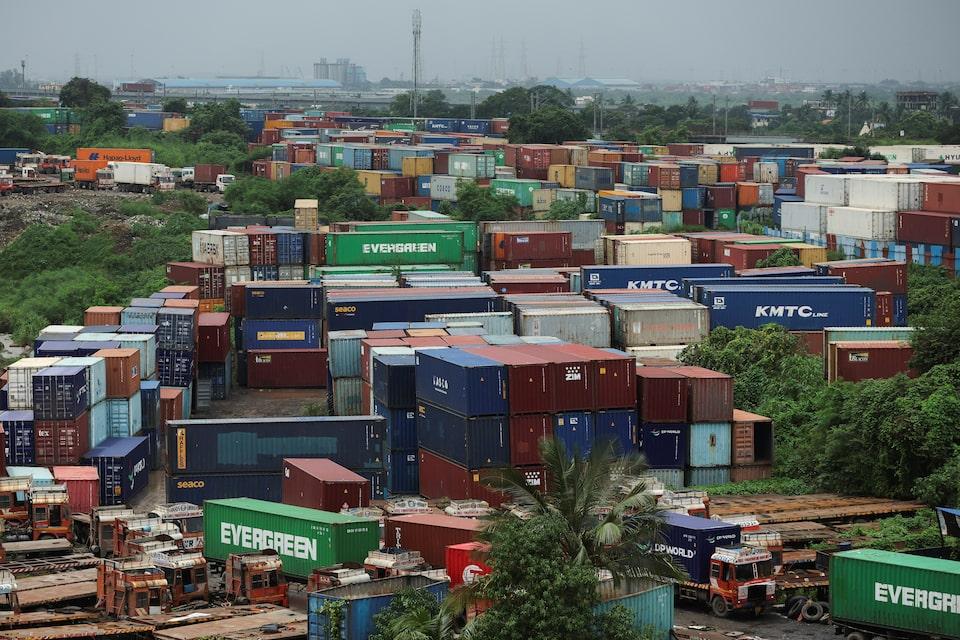
LONDON, Nov 13 (Reuters) - Most big emerging economies, including China, Brazil and India, can weather U.S. tariffs without excessive pain, a study by risk consultancy Verisk Maplecroft showed, raising doubt about the clout of President Donald Trump's trade tools. The firm analysed the resilience of 20 of the biggest emerging markets using measures from debt levels to export-revenue reliance to gauge their ability to handle trade volatility and rapidly shifting geopolitical alliances. Sign up here. "Most manufacturing hubs globally are in a better position in their current baseline than you would think or give them credit for to weather this tariff storm specifically coming out of the U.S., even if it comes to full capacity," said Reema Bhattacharya, head of Asia research who co-authored the report. Mexico and Vietnam are among the most exposed to U.S. trade dependence, the paper showed, but progressive economic policies, improving infrastructure and political stability meant they were among the more resilient economies. Brazil and South Africa, it said, are effectively building links with other trade partners that could shield them in coming years. "Almost every emerging market or global market understands that we need to do business with the U.S. and China, but we can't over-rely on either. So we need a third market," Bhattacharya said, adding that trade between members of the BRICS group of developing nations was rising. The Maplecroft paper did not examine BRICS member Russia. China, though particularly exposed to geopolitical tensions with the United States, "is so entrenched it's actually almost impossible to replicate it elsewhere", she added, citing Beijing's diversified export base and its human capital. A manufacturing juggernaut, China is in the crosshairs of Trump's efforts to reshape global trade policy. Data out earlier this week showed that in October, China exports suffered their worst downturn since February, shortly after Trump returned to the White House. Bhattacharya also pointed to China's years-long effort to expand use of the renminbi in trade settlements as "a pragmatic push for economic resilience and geopolitical risk diversification". Brazil, Argentina and Chile have signed local-currency settlement arrangements with China's central bank, while Chinese state-owned enterprises and investors are financing lithium and copper projects in Chile, Bolivia and Peru. https://www.reuters.com/world/china/most-emerging-nations-can-realign-trade-weather-us-tariffs-report-finds-2025-11-13/
2025-11-13 00:22
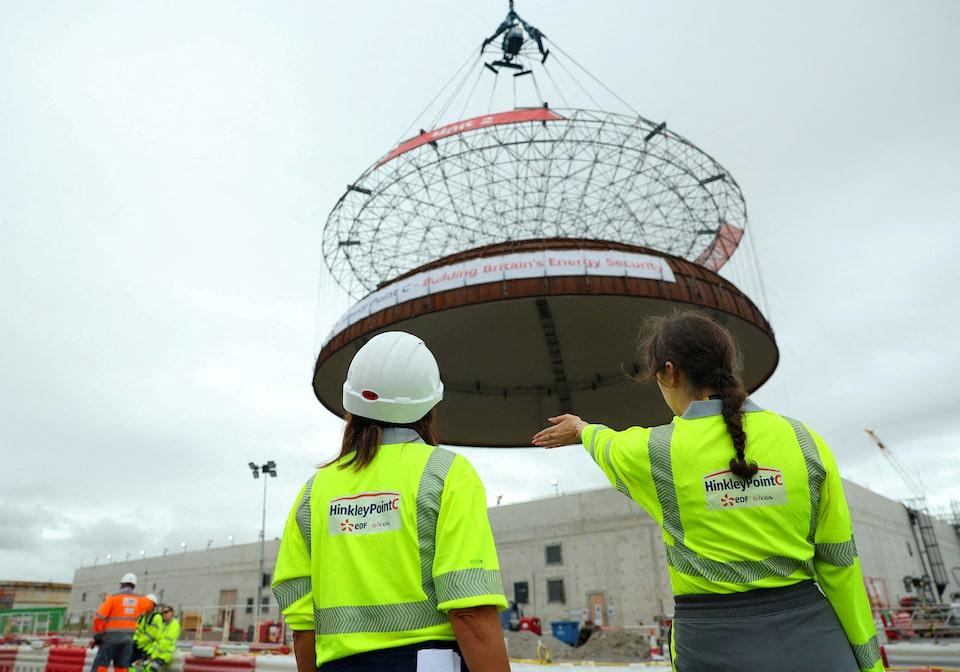
LONDON, Nov 13 (Reuters) - Britain on Thursday named a site in North Wales for the location of its first small modular reactor (SMR) nuclear power station, as it pushes ahead with plans to expand the country's nuclear energy infrastructure amid criticism from the United States. The government said in June it would spend 2.5 billion pounds ($3.36 billion) on SMRs, which are cheaper and quicker to build than large-scale nuclear power plants, aiming to increase energy security and helping to meet climate targets. Sign up here. Britain's decision to choose Wylfa on Anglesey, an island in North Wales, as the location for the first SMR was criticised by the U.S. ambassador in an unusually strongly-worded statement on the eve of the announcement. The United States had been pushing for a large-scale project in Wylfa, which is the site of an old nuclear power station that closed down in 2015. The UK government said its nuclear expansion could also include building a new large-scale plant, adding that it had tasked state-owned GB Energy-Nuclear with finding a suitable large-scale site by autumn 2026. The government selected a Rolls-Royce (RR.L) , opens new tab design for the SMRs in June. The new mini-reactors there will deliver power for the equivalent of 3 million homes, and will support up to 3,000 jobs in the local community during construction, with a plan to connect them to the grid in the 2030s. There are two large-scale nuclear power plants currently under construction in Britain, one at Hinkley Point C in western England, and one at Sizewell C in eastern England. ($1 = 0.7451 pound) https://www.reuters.com/business/energy/uk-selects-north-wales-site-first-mini-nuclear-power-station-2025-11-13/
2025-11-13 00:08
Collins sees high bar for further easing due to inflation concerns Fed divisions highlighted by differing views on rate cuts Collins views short-term borrowing costs as mildly restrictive Nov 12 (Reuters) - Boston Federal Reserve President Susan Collins, who voted for both of the Fed's policy-rate reductions this year, said on Wednesday she sees a "relatively high bar" for additional easing in the near term, citing worries about elevated inflation. "Absent evidence of a notable labor market deterioration, I would be hesitant to ease policy further, especially given the limited information on inflation due to the government shutdown," Collins said in remarks prepared for delivery to a bankers conference in Boston. Sign up here. "It will likely be appropriate to keep policy rates at the current level for some time to balance the inflation and employment risks in this highly uncertain environment." Her remarks underscore the deepening divisions at the Fed and the lack of consensus around another rate cut, challenges Fed Chair Jerome Powell flagged two weeks ago. Despite "solid" support for the most recent interest-rate cut, Powell said, another reduction at the Fed's December meeting was "not a foregone conclusion, far from it." Collins "has never dissented and has always been aligned with the center of the Committee so this seems significant," wrote III Capital Management's chief economist, Karim Basta. "January may well be more likely than December for the next move as it gives them time to look at more data." The U.S. House on Wednesday was poised to vote to end the record-long shutdown, which has delayed the release of key economic data. The White House on Wednesday said October jobs and inflation reports might never be released. October's quarter of a percentage point reduction in the policy rate range to 3.75%-4.00% drew two dissents, one from Kansas City Fed chief Jeffrey Schmid, who wanted to leave rates unchanged, and the other from Fed Governor Stephen Miran, who wanted a bigger half-point cut because he feels inflation is falling faster than is widely appreciated. Since then a few others of the Fed's 12 voting rate-setters, like Collins on Wednesday, have signaled growing caution on rate cuts. They include St. Louis Fed President Alberto Musalem who worried about policy becoming too easy, and Fed Vice Chair Philip Jefferson who said proceeding slowly is particularly prudent given the lack of official data during the U.S. government shutdown. Non-voting rate-setters including Atlanta Fed President Raphael Bostic have also expressed a preference for holding rates steady, given inflation risks, while others such as San Francisco Fed President Mary Daly call for being open-minded. On Wednesday, Collins said she views short-term borrowing costs as "mildly restrictive" amid financial conditions that are a tailwind for economic growth. The labor market has clearly softened, she said, but downside risks have not worsened since the summer. And while tariffs have pushed up inflation less than expected and their effect may abate in early 2026, she said, she is worried inflation that has run above the Fed's 2% target for nearly five years could remain elevated. "It seems prudent to ensure that inflation is durably on a trajectory back to 2% before making any further adjustments to our policy stance," Collins said. https://www.reuters.com/business/feds-collins-says-likely-appropriate-keep-policy-rate-hold-2025-11-12/

2025-11-12 23:35
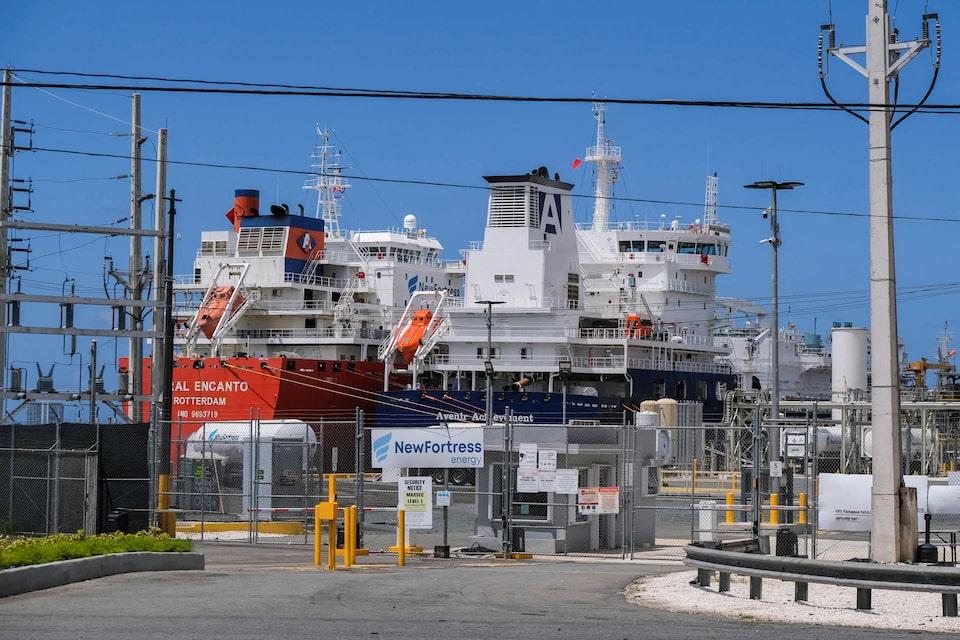
Nov 12 (Reuters) - New Fortress Energy (NFE.O) , opens new tab has sought more time to file its third-quarter results, the U.S. liquefied natural gas company said on Wednesday, as it negotiates a debt restructuring amid an upcoming interest payment. The company, which has delayed its quarterly filings throughout this year, said the outcome of the talks could affect what it discloses in its financial statements for the three months ended September 30. Sign up here. New Fortress said it would assess how potential defaults under its debt agreements could affect its cash position if the extension is not granted. Long-term debt stood at $7.8 billion, as of June 30. The company has struggled to secure long-term LNG supply for power plants in Latin America because it lacks an investment-grade credit rating, forcing it to buy fuel at higher prices. The vast majority of the company's revenue is generated outside the United States, primarily from Latin America and the broader Caribbean region. Last year, New Fortress began exploring options such as bringing in strategic partners or selling assets after deferring shareholder dividends to preserve cash and working out a deal with bondholders to push back maturities. https://www.reuters.com/business/energy/new-fortress-energy-seeks-delay-quarterly-filing-amid-debt-restructuring-talks-2025-11-12/