2025-11-12 06:04
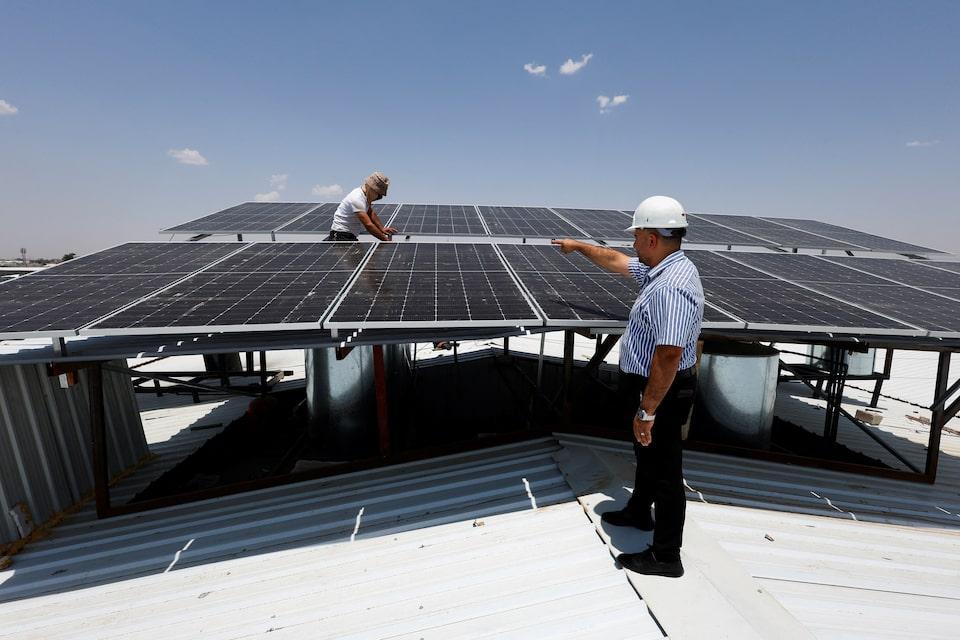
LITTLETON, Colorado, Nov 12 (Reuters) - Global power generation capacity is on track to expand by just over 25% once projects that are currently under construction are completed and steer power onto generation systems and electricity grids. Around 1,450 gigawatts (GW) of new power capacity is currently under construction globally, which when complete will lift the world's power capacity footprint from 8,000 GW to nearly 9,500 GW, data from Global Energy Monitor (GEM) shows. Sign up here. Two-thirds of current projects are from clean energy sources such as solar and wind farms, while coal-fired plants make up the majority of the fossil fuel capacity pipeline. Regionally, Asia accounts for a vast majority of nearly all planned capacity additions, while the Americas are the location for the second-largest amount of capacity construction currently underway. Below is a breakdown of the power pipeline currently being built in terms of power source and geography, and how the final power generation mix will be impacted once new projects come online. CLEAN BREAK Of the roughly 950 GW of clean power capacity being built, solar farms account for the largest share, with around 345 GW of new solar capacity currently under construction. Hydropower capacity is the next largest clean power technology being built, with around 267 GW under construction, followed by wind farms with around 251 GW. In addition, around 82 GW of new nuclear, 7.5 GW of new bioenergy and 1.8 GW of new geothermal capacity is also in the construction phase. Currently, clean power sources account for around 46% of total power capacity in operation, but following the completion of the clean-heavy construction pipeline, clean power sources will account for 49% total power capacity, GEM data shows. FOSSIL FUEL MOMENTUM While clean power sources account for 66% of the power capacity under construction, a third of the global power pipeline being built will be powered by fossil fuels. Indeed, coal-fired power is the second-largest generation source globally being built behind solar, with around 275 GW currently under construction. An additional 215 GW of gas-fired power capacity is also being built, which will result in total fossil fuel generation capacity climbing from around 4,326 GW currently to around 4,815 GW when projects are complete. The fossil fuel share of global generation capacity - which is currently around 54% - will decline to 51% after all clean and fossil fuel capacity construction is complete. ASIA-DRIVEN Asian nations are the main builders of new power capacity, with roughly 84% of all new power projects currently under construction located in the region. Asia is home to around 83% of all clean energy projects and 85% of all fossil fuel projects being built, which is a testament to the scale of China's mammoth energy needs and its manufacturing heft in energy components. When it comes to coal-fired power capacity, Asia's share jumps to 99% of the global pipeline, while 68% of all new gas-fired capacity being built is also in Asia. Once projects that are currently under construction are complete, Asia's share of global power capacity will rise from around 53% currently to 58%, GEM data shows. Around 65% of all new power capacity in Asia will be powered by clean energy, and when complete will lift Asia's power capacity mix from around 37% clean, 63% fossil fuels currently to 44% clean, 56% fossil fuels. The Americas, which currently account for 23% of power capacity in operation, will see its share decline to 21% when projects are complete. The Americas power capacity mix, which is currently split fairly evenly between clean and fossil fuel sources, will shift to 51% clean, 49% fossil fuels once current construction work is finished. Europe's share of global power capacity will fall from 19% to 17% once all global construction work is complete, while the continent's clean share of total power capacity will remain largely flat at around 68%. Africa and Oceania will continue to have a roughly 4% share of global power generation capacity after current work is complete. Africa's clean-fossil fuel capacity breakdown will shift from 28% clean, 72% fossil fuels currently to 33% clean, 67% fossil fuels once construction is complete. Oceania's generation mix will move from a fairly even clean-fossil fuel mix currently to 54% clean, 46% fossil fuels mix once current construction projects are wrapped up. The opinions expressed here are those of the author, a columnist for Reuters. Enjoying this column? Check out Reuters Open Interest (ROI), your essential new source for global financial commentary. ROI delivers thought-provoking, data-driven analysis of everything from swap rates to soybeans. Markets are moving faster than ever. ROI can help you keep up. Follow ROI on LinkedIn , opens new tab and X , opens new tab. https://www.reuters.com/markets/commodities/gigawatt-growth-how-global-power-pipeline-is-taking-shape-2025-11-12/
2025-11-12 06:04
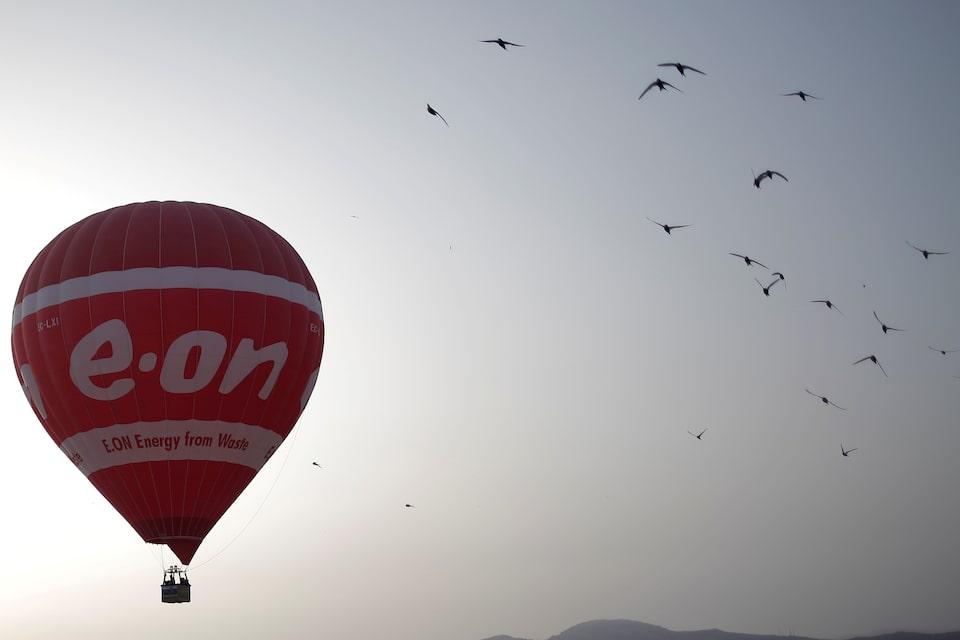
FRANKFURT, Nov 12 (Reuters) - E.ON (EONGn.DE) , opens new tab, Europe's largest energy network operator, on Wednesday said it was concerned that new regulations on how much German power grid operators can earn on investments will not adequately reward their financing. E.ON finance chief Nadia Jakobi, speaking to investors after presenting nine-month results, said uncertainty around the regulation, which sets power grid returns for the five years from 2029, was "greater than we had expected by now". Sign up here. Germany's grid regulator is currently in the process of finalising a reform proposal in which caps are set on grid companies' earnings to balance the need to keep down consumer bills against incentives for investors. "The current draft of the framework does not fairly reflect grid operators' financing cost," Jakobi said, adding it was possible that E.ON would assess legal options if the final proposal was too far off the company's expectations. REGULATOR SETS RETURNS E.ON shares fell to their lowest in more than two months and were down 4.5% at 1226 GMT. Grid operators, including E.ON, say they need higher earnings caps to pay for the expansion of power grids that is needed to provide infrastructure for AI-driven data centres. The wording of the regulator's current recommendations on the grid funding reform is not publicly available. Jakobi said the regulator had indicated that the current version of the regulations was "close to final", and added that "proposals as a whole must be sufficiently attractive to promote investments." Bernstein analysts said it was unclear whether E.ON would have sufficient clarity by February 2026 to take a decision to upgrade investments in its German networks. Earlier, E.ON said its investments rose 8% in the first nine months of the year and also confirmed its outlook for 2025. ($1 = 0.8575 euros) https://www.reuters.com/business/energy/eon-raises-investments-keeps-2025-outlook-2025-11-12/
2025-11-12 06:04
NAIROBI, Nov 12 (Reuters) - A European Union naval mission has taken control of an Iranian-flagged dhow used by pirates last week to attack an oil products tanker off the coast of Somalia and later abandoned. A recent spate of attacks on vessels off the Horn of Africa, including the first in a year by suspected Somali pirates, has rekindled concerns over the security of shipping lanes carrying critical energy and goods to global markets. Sign up here. The crew of the dhow are safe and in good condition, said the EU naval force, known as Operation Atalanta, adding that it was working with Somali authorities to track down the pirates. "The dhow, abandoned by the alleged pirates on the northwestern coast of Somalia, was closely tracked and monitored by the operation's flagship ... and an Indian Navy warship," it said in a statement on Tuesday. "The pirate ... group operating in the area has been definitely disrupted." The pirates had seized the dhow, a fishing vessel, early this month and used it days later to board the Maltese-flagged tanker, the Hellas Aphrodite, carrying gasoline to South Africa from India. The EU naval force secured the tanker on Friday. https://www.reuters.com/world/africa/eu-naval-force-takes-charge-dhow-used-somalia-pirate-attack-2025-11-12/

2025-11-12 05:58
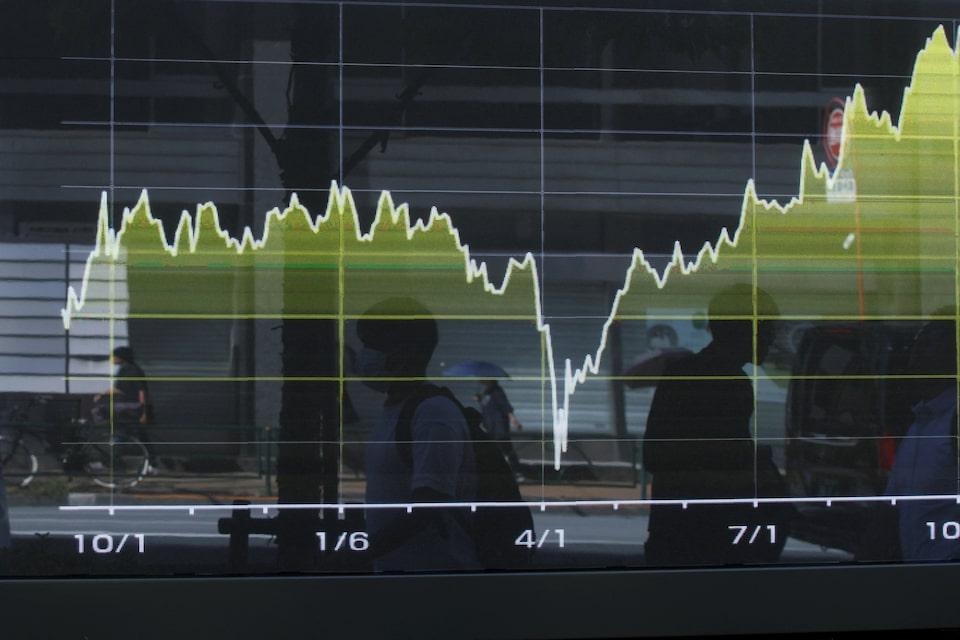
Nov 12 (Reuters) - Asian equities witnessed steep cross-border outflows in the first week of November as investors booked profits on caution over lofty tech valuations and uncertainty about the sustainability of an extended market rally. Foreigners divested approximately $10.18 billion worth of stocks in Taiwan, South Korea, India, Thailand, Indonesia, Vietnam and the Philippines for the week ended November 7 in a turnaround from $2.28 billion worth of net purchase in October, data compiled by LSEG showed. Sign up here. South Korean stocks witnessed roughly $5.05 billion net foreign outflows last week, reversing $4.21 billion inflows for the prior month. Taiwan stocks saw $3.86 billion net cross-border sales, exceeding $3.21 billion outflows for October. "Foreign outflows in Korea and Taiwan equities are primarily driven by the weakness in leading AI-related companies, which is consistent with the global headwinds across other markets such as Japan and the US," said Jason Lui, the head of APAC equity and derivative strategy at BNP Paribas. The MSCI's Asia ex-Japan information technology sector index (.MIAX0IT00PUS) , opens new tab lost 4.23% last week after registering 62.5% gains in the six-month period through October. The MSCI's global information technology sector index (.MIWD0IT00PUS) , opens new tab shed 4.38% in the previous week. "Renewed worries over elevated tech valuations have triggered volatility, but solid fundamentals suggest current levels are justified," said Mark Haefele, chief investment officer, UBS Global Wealth Management. "We forecast an earnings growth of 15% for global tech this year, followed by a solid 12.5% increase in 2026." LSEG data showed that the MSCI Asia Pacific ex-Japan index (.MIAPJ0000PUS) , opens new tab had a 12-month forward PE ratio of 15.81, as of end-October, the highest since June 2021. Indian equities, meanwhile, saw a net $1.42 billion foreign outflows last week after securing $1.66 billion in inflows in October. "India is now the biggest underweight in GEM portfolios and only a quarter of funds we track are overweight India vs their benchmark," according to an HSBC report last Friday. "We see India as a good AI hedge and provides diversification for those who feel uncomfortable with the AI rally. India will be an outsized beneficiary of any additional money coming into the EM region," the report said. Vietnam and Thai stocks also saw foreign outflows of $95 million and $40 million, respectively, while Indonesia and the Philippines attracted inflows of $207 million and $77 million, respectively, in the previous week. https://www.reuters.com/world/asia-pacific/asian-equities-witness-over-10-billion-foreign-outflows-november-ai-rally-stalls-2025-11-12/
2025-11-12 05:53
SYDNEY, Nov 12 (Reuters) - A top Australian central banker said on Wednesday that there was increasing debate about whether the current cash rate of 3.6% is restrictive enough to keep inflation in check, adding that the question is critical for the policy outlook. In an interview with Reuters in Sydney, Reserve Bank of Australia (RBA) Deputy Governor Andrew Hauser said the current judgment that monetary policy is mildly restrictive is central to the expectations that inflation would still slow in the economy. Sign up here. "I think our best guess is that policy is still marginally restrictive, but that judgment is an increasingly important part of the policy challenge," said Hauser. "If it turns out that the judgment is we are no longer mildly restrictive, that has important implications for our future policy stance." The RBA held interest rates steady this month after three rate cuts this year, saying it was cautious about easing further given higher inflation, firmer consumer demand and a revival in the housing market. It noted for the first time that there were uncertainties regarding the assessment that monetary policy remains a little restrictive. A shockingly high third-quarter inflation reading meant the central bank now sees inflation stuck above the 2-3% target band until mid-2026 and settling at 2.6%, above the 2.5% mid-point, based on the assumption of one more rate cut next year. Three-year government bond futures came off earlier highs to be flat at 96.285, just a touch above a seven-month low of 96.26. Swaps pared back the amount of easing expected next year to just 17 basis points from about 20 bps before. A growing number of economists, including the Commonwealth Bank of Australia and Citi, have called for an end of the current easing cycle. Adding to signs that financial conditions might not be that restrictive, data on Wednesday showed a large lift in new housing loans in the third quarter, driven by a nearly 18% jump in investor lending. A surge in consumer sentiment on Tuesday has raised the risk of an upside surprise on household consumption, but Hauser cautioned that it seems a bit of an "erratic" reading and the central bank wants to spend time to see if it persisted before giving it too much weight. The central case is still for a modest and gradual recovery in consumer spending, he added. When asked if markets are in an artificial intelligence bubble, the deputy governor said he does not know and an imminent market crash is not his central case. "We need to be alert to the fact that some of these financial measures are at historic extremes, and that might be telling us something about the outlook or it might be telling us we are genuinely in the middle of a new paradigm." He also noted that the Australian dollar has remained a natural hedge for pension funds investing overseas, while there have been substantial shifts in behaviours for the yen and euro. "None of those worries have yet come to pass. The Aussie dollar remains as an effective natural hedge today as it did a year ago. It's stunning, actually," said Hauser. https://www.reuters.com/sustainability/sustainable-finance-reporting/australias-central-bank-debates-if-monetary-policy-is-restrictive-deputy-2025-11-12/
2025-11-12 05:36
TOKYO, Nov 12 (Reuters) - Japanese Finance Minister Satsuki Katayama said on Wednesday she would not deny that the negative aspects of the weak yen on the economy have become more pronounced than the positive ones. "Recently, we have been seeing one-sided and rapid movements in the foreign exchange market," Katayama told parliament. The government is closely monitoring developments with a strong sense of vigilance against excessive volatility or disorderly fluctuations, she said. Sign up here. "Exchange rate movements have both positive and negative effects on the economy, and I do not deny that the negative aspects have become more pronounced in some respects," Katayama said. https://www.reuters.com/world/asia-pacific/japan-finance-minister-says-weak-yens-disadvantages-more-pronounced-than-2025-11-12/