2025-11-11 18:50
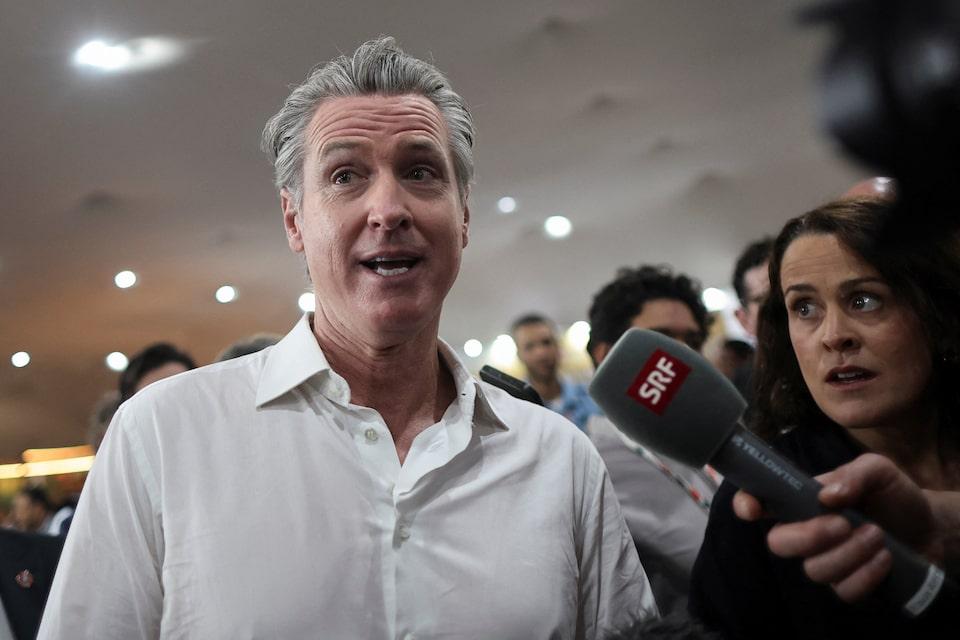
Trump allowing China to 'dominate' clean energy, Newsom says Newsom says politicians need to change climate messaging California has the world's No. 4 economy BELEM, Brazil, Nov 11 (Reuters) - California Governor Gavin Newsom assured an audience at the COP30 climate summit in Brazil that his state would continue to prioritize green technology, while blasting U.S. President Donald Trump's "dumb" decision to reverse the federal government's course on climate action. Newsom, widely considered a leading candidate for the Democratic presidential nomination in 2028, also sounded alarm bells at the Republican Trump's policies, calling them threats to rule of law and democracy. Sign up here. Making several appearances at the annual climate summit on Tuesday in the Amazonian city of Belem, Newsom took every opportunity to slam Trump's attacks on the fast-growing clean energy economy. He said Republicans were ceding the fast-growth market to China, which "will dominate in the next great global industry." "The United States of America is as dumb as we want to be on this topic, but the state of California is not. And so we are going to assert ourselves, we're going to lean in, and we are going to compete in this space." A strident political foe of Trump, Newsom has for months been teasing a run for the White House in 2028. Escorted by UN police around the sprawling venue, Newsom was swarmed by conference attendees and cheered for representing the U.S. at COP. He declined to answer questions about a possible run for president, saying he was more concerned about the upcoming mid-term U.S. congressional elections. "I don't worry about 2028. I worry about fair and free elections. I'm more worried about 2026 and taking back the House of Representatives and getting the speakership," he told reporters on the sidelines of COP30. He said he was alarmed that eight of his fellow Democrats in the U.S. Senate "rolled over" to vote to support an end to the U.S. government shutdown. But he did not say whether he supported calls by some Democrats to replace Senator Chuck Schumer as the party's Senate leader. CALIFORNIA VS. WASHINGTON California is just one of 50 U.S. states, but its economy is the world's fourth-largest, making it a key player in influencing markets and energy policy. Dressed casually in a white business shirt in the sweltering tropical heat, Newsom made a point of listing climate actions made by two Republican presidents from California, Ronald Reagan and Richard Nixon. While Democrats have long made climate change a central part of their policy priorities, Newsom said the messaging needs to change so average citizens can connect with the issue on factors such as economics and cost, making them less vulnerable to climate skeptics like Trump. "Climate change seems abstract. We need to talk in terms that people understand," Newsom said. Trump has falsely dismissed the issue of climate change as a "hoax" and battled to boost global use of polluting fossil fuels. Washington has conspicuously snubbed the COP30 summit. California, in contrast, has among the world's most ambitious climate change policies, including a goal to decarbonize its economy by 2045 and ban the sale of new gasoline-powered cars by 2035. Newsom said California's partnership on the issue was secure. "But we can't do that without all of you ... So we're here with an open hand, not a closed fist." On Monday, Newsom spoke with investors at a conference in the Brazilian financial hub of Sao Paulo, telling them the vacuum in U.S. climate leadership was "jaw-dropping." Newsom has touted California's embrace of green tech, highlighting that the state has seven times more renewable energy jobs than fossil fuel jobs and reminding people that electric vehicle giant Tesla (TSLA.O) , opens new tab was founded in California. He blasted an expected Trump administration order to open up drilling in federal waters off the coast of California, calling it "dead on arrival." Some diplomats worried that Trump's administration might try to disrupt the summit from afar. Last month, Newsom said he was mulling a presidential run in 2028. He has started to Last week, California voters backed his proposal to redraw the state's voting districts to offset redistricting in other states aimed at boosting the number of congressional seats held by Republicans. On Tuesday, Newsom noted that Trump's tenure was set to end in January 2029, even as Trump occasionally teases that he wants to seek a third term. "He's the most unpopular president in U.S. history. That's why he's trying to rig the election," Newsom told reporters. "Trump is temporary. He's reckless. He's chaotic," Newsom added. "People need to stand up. You need to stand up to a bully." https://www.reuters.com/sustainability/cop/newsom-brazils-cop30-summit-assure-that-california-is-reliable-partner-climate-2025-11-11/
2025-11-11 18:32
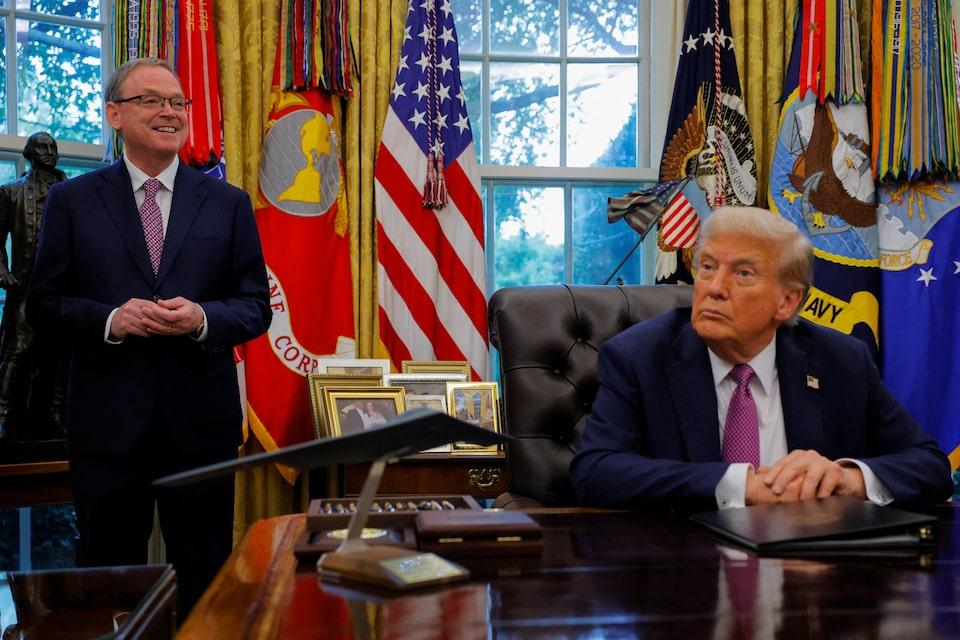
Hassett says Trump administration focused on affordability One-time dividend and 50-year mortgage could help Americans, Hassett says inflation trajectory looks good despite seasonal fluctuations WASHINGTON, Nov 11 (Reuters) - The U.S. economy should return to growth of 3% to 4% by the first quarter of 2026, White House economic adviser Kevin Hassett said on Tuesday. Hassett cited economists' estimates that the government shutdown would knock about 1 percentage point to 1.5 percentage points off growth rates that had reached close to 4% during the past year. Sign up here. "The question is, when does it all come back. And I think that some of the stuff is lost forever, and some of it isn't. But I would guess that by the first quarter of next year, we'll be back at the 3% or 4% growth pace," Hassett said in an interview with CNBC. Economists have warned that weaker growth in consumption and global trade, along with slow job growth, higher unemployment and stickier inflation are marring the U.S. economic outlook, although surging business investment could provide a key offset. A survey by the National Association for Business Economics released in mid-October said more than 60% of the 40 economists in its poll expected President Donald Trump's sweeping tariffs to knock up to half a percentage point from economic growth. None saw tariffs boosting growth. Their median projection was for the economy to grow 1.8% in 2025, compared to 1.3% projected in the June survey. Hassett said the Trump administration was working to address persistent affordability issues and boost people's purchasing power, which he said fell by about $3,400 during the Biden administration but had increased by $1,200 since Trump took office in January. He said the overall trajectory for inflation was "really, really good" despite ups and downs that he said were seasonally related. A deficit reduction this year would help reduce macroeconomic pressure on prices, he said. The Trump administration was also focusing on housing and how to make people's lives more affordable, Hassett said, acknowledging that the prices of milk and hamburgers were still "way higher" than during Trump's first term. Hassett said Trump's plan to pay lower- and middle-income Americans a dividend of about $2,000 and introduce a 50-year mortgage were both "really good ideas." Higher tax revenues of about $200 billion this year made room for a dividend payment, he said, adding that a longer mortgage term could help first-time home buyers by reducing monthly payments. https://www.reuters.com/markets/us/white-house-eyes-return-growth-3-4-by-early-2026-after-shutdown-knock-2025-11-11/
2025-11-11 18:21
Nov 11 (Reuters) - Ukrainian authorities have dismissed the supervisory board of the nuclear energy agency Energoatom after a corruption investigation was launched into alleged corrupt activity, Prime Minister Yulia Svyrydenko said on Tuesday. Svyrydenko, writing on Telegram, also said a new audit of the company would be conducted. Sign up here. https://www.reuters.com/world/europe/ukraine-dismisses-energoatom-supervisory-board-after-graft-probe-pm-says-2025-11-11/

2025-11-11 18:04
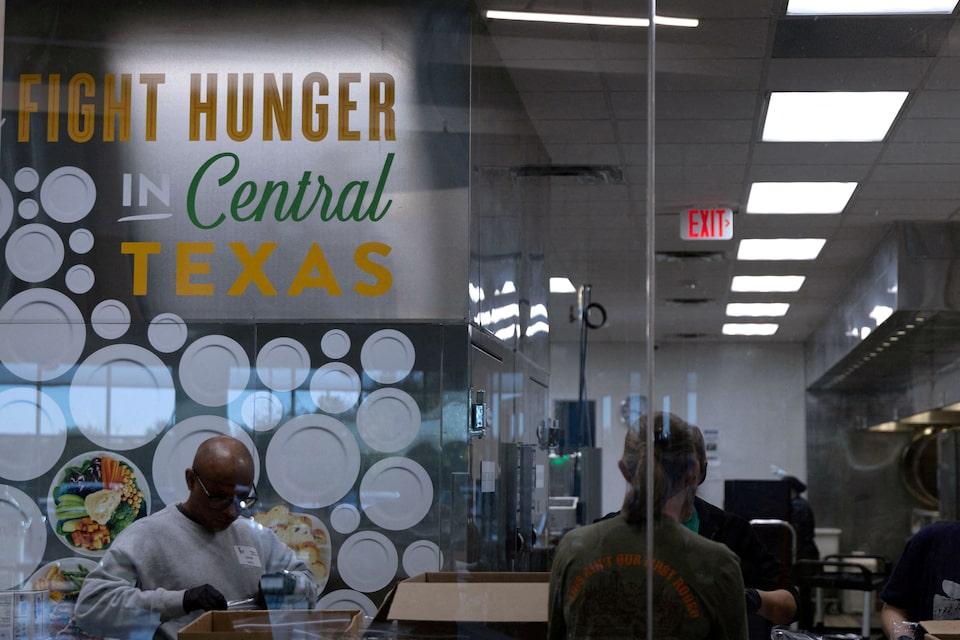
Food bank donations rise, restaurants offer free meals during SNAP lapse SNAP benefit distribution varies by state as legal battle unfolds Nearly 42 million Americans use food stamp benefits LONGMONT, Colorado, Nov 11 (Reuters) - For Anthony DeSousa, the owner of two pizza shops in Estes Park and Longmont, Colorado, feeding the hungry is personal. He grew up in poverty in New York and his dad was in jail for most of his life, leaving his mother to raise him and his two brothers. "I know what it’s like to be a kid and starving, to check every cabinet in the house 15 times looking for food and never finding any," DeSousa said. Sign up here. Since the beginning of November, he has served about 300 free pizzas, hundreds of chicken and pasta dinners and distributed over 600 pounds of beans and rice to those who show their Supplemental Nutrition Assistance Program benefits card or a federal worker ID during the record-long federal government shutdown. DeSousa is part of an uptick in charitable donations and activities from businesses and individuals this month as a historic lapse in SNAP, also known as food stamps, has strained low-income households. Some states have issued monthly benefits in full, some in part and some not at all while a dizzying legal battle plays out over whether the administration of President Donald Trump must fully fund November SNAP benefits. The U.S. Supreme Court on Tuesday allowed the Trump administration for now to continue withholding about $4 billion from SNAP. The extended pause is set to expire Thursday. Meanwhile, the key action is in the legislative branch. The U.S. Senate on Monday voted to advance a funding bill that would end the shutdown and fully fund SNAP benefits, with the House expected to take it as soon as Wednesday. Meanwhile, the country's nearly 42 million SNAP recipients have faced confusion and anxiety and made sacrifices like forgoing medication to make ends meet. Stacy Smith, an eligibility technician with the Rhode Island Department of Human Services and president of the American Federation of State, County and Municipal Employees Local 2882, said her office has had lines around the block as SNAP recipients seek information about benefits. "It’s been very stressful and disheartening and scary for families," Smith said. The U.S. Department of Agriculture did not respond to a request for comment. The agency has repeatedly blamed Democrats for the shutdown and resulting disruptions to SNAP. Democratic-led states have fought the administration in court to try to get it to issue full benefits. UPTICK IN CHARITY Many food banks have seen an uptick in donations as communities rally to support pantries already strained by a multi-year rise in hunger rates and food price inflation. Cyndi Kirkhart, executive director at Facing Hunger Food Bank in West Virginia, said donations have increased at least 50% this month. Between those donations and emergency state funds for food banks, the organization has been able to meet the doubled or tripled demand at their pantries, Kirkhart said. More than a dozen restaurants and coffee shops in Albuquerque, New Mexico, are offering free meals to children during the shutdown, among them The Burrow Cafe co-owned by Billy Nguyen, who has served 15 to 20 free kids' meals per day to families impacted by the SNAP lapse. Nguyen came to the United States as a refugee from central Vietnam and as a child knew what it was like to rely on food stamps. His wife Amanda Nguyen, 35, also relied on SNAP when she was a single mother. "She knows what it's like to go hungry," he said. "Feeding kids is not political." CONFUSION ABOUT BENEFITS Some states like Massachusetts issued full benefits to SNAP recipients last Friday after the USDA told states it was working toward complying with a court order that the administration fully fund November benefits. Others like North Carolina started issuing benefits on Friday but stopped when a Supreme Court order later that day allowed a lower court more time to consider the administration's appeal aimed at issuing less food aid. The administration has said it would only partially fund SNAP benefits during the shutdown because it said the funds required to make up the difference were earmarked for other nutrition programs. Florida is working to calculate reduced benefits in keeping with an earlier court ruling that required the administration to partially fund SNAP using a $5 billion agency emergency fund. SNAP benefits cost about $8 billion to 9 billion each month. Adding to the confusion, the USDA told states late on Saturday to "undo" any actions they had taken to fully fund benefits or risk financial penalties. A federal judge on Monday temporarily blocked the USDA from carrying out that directive. https://www.reuters.com/world/us/communities-donate-meals-funds-us-food-aid-remains-limbo-2025-11-11/
2025-11-11 18:04
CHISINAU, Nov 11 (Reuters) - Talks are underway between Moldova's government and Russia's Lukoil (LKOH.MM) , opens new tab on buying the energy company's infrastructure at Chisinau airport as part of a bid to implement U.S. sanctions imposed last month, the airport's director said on Tuesday. Serdgiu Spoiala said he saw no risks of the airport being left without aviation fuel after the government on Monday proposed buying Lukoil's facilities there. Sign up here. Lukoil, along with Rosneft, was targeted by U.S. sanctions linked to the more than 3 1/2-year-old war in Ukraine. It is currently the sole supplier of fuel at Eugen Doga airport. "We have issued a proposal in the name of the airport and talks are now underway," Spoiala told reporters. "We are looking at several scenarios and I believe things are going well. Matters are at an advanced stage, but it is too early to say anything. I think we will have results over the next three days." Lukoil-Moldova declined to comment. Moldova's pro-European government said on Monday that it had proposed buying Lukoil's airport infrastructure, including a storage facility, to ensure supplies of aviation fuel in the country lying between Ukraine and Romania. The Energy Ministry said it was seeking a deal of maximum benefit to the ex-Soviet state. Energy Minister Dorin Junghietu last week said the company would have to stop its operations in the country as of November 21 in accordance with the U.S. sanctions. He said the country is aligning itself with the sanctions but had requested a temporary exemption to ensure minimal disruptions for its citizens. The Lukoil-Moldova company operates a network of 110 filling stations that provide petrol and diesel in addition to its facilities for servicing aircraft. https://www.reuters.com/business/energy/talks-underway-moldova-airport-proposal-russias-lukoil-2025-11-11/

2025-11-11 16:04
Solana ETF attracts $420 million in first week, LSEG data shows First-mover advantage cited as key reason to push forward NYSE proceeded with ETF launches despite SEC shutdown risks Nov 11 (Reuters) - Crypto firm Bitwise Asset Management's successful push to launch the first U.S. spot Solana ETF while the Securities and Exchange Commission was shut down has upended the regulatory playbook and forced competitors to rethink their product plans, said industry executives. On October 28, Bitwise launched Solana Staking ETF (BSOL.P) , opens new tab which tracks the spot price of the sixth largest cryptocurrency, using an untested process that does not require a formal SEC sign-off. That gave Bitwise the first-mover advantage in what analysts see as the next biggest market for single crypto ETFs, angering competitors who took a more cautious approach and are now scrambling to catch up, said half a dozen industry sources. Sign up here. The product has already attracted $420 million in its first week, LSEG data shows. Such "altcoin" ETFs could attract $14 billion during their first six months, of which $6 billion could flow into Solana products, JPMorgan has predicted. "We do like firsts at Bitwise," said Matt Hougan, the firm's chief investment officer, adding: "We are following the rules." An SEC spokesperson did not respond to a request for comment amid the ongoing U.S. government shutdown. 'STAKES ARE HIGH' Bitwise's maneuver has overturned the playbook for multiple other issuers waiting to launch altcoin ETFs, said the sources. Grayscale Investments the next day converted its existing private fund to an ETF via the same route. Others including VanEck, Fidelity and Invesco have recently adjusted their registration statements to follow Bitwise's lead. They and other firms have also filed to launch ETFs tied to Ripple's XRP, public filings show. Multiple other issuers, meanwhile, are evaluating whether they want to take the same risks, the people said. Competition to grab investor attention by launching first is particularly intense when launching products that have few other differentiating factors, say analysts. They point to ProShares Bitcoin ETF (BITO.P) , opens new tab which won SEC approval in 2021 only days ahead of rivals. The bitcoin futures ETF has never relinquished its dominance, with $2.8 billion in assets compared to only $40 million for its closest rival. "The stakes are high for anyone who can seize first-mover advantage," said Ben Slavin, global head of ETFs at BNY, the custodian for many asset managers. "Even a day's advantage" can determine who captures millions of dollars of fees, he said. SHUTDOWN PROBLEMS In mid-September, the SEC allowed exchanges to adopt generic listing standards for crypto ETFs, expediting what had been a lengthy review. That opened the door for dozens of ETFs waiting in the wings to launch without an official SEC nod. Many issuers, though, still wanted the customary SEC blessing and were hesitant to test the new process with the looming government shutdown threatening to shutter the agency, sources said. The day before that happened on October 1, the SEC said issuers could launch a product while it was shut down provided they amended their filing to warn investors that it would automatically become effective after 20 days. Still, it cautioned to "consider carefully" the risks. These could include the agency intervening to suspend or pull the product if it found problems, ETF issuers and lawyers said. That left the final decision to issuers and exchanges. Cboe Global Markets (CBOE.Z) , opens new tab advised issuers to await the SEC's nod, according to four of the sources granted anonymity to discuss regulatory matters. The New York Stock Exchange, meanwhile, was willing to go ahead. On October 23, Bitwise said in filings it had shifted its proposed ETF from CBOE to NYSE and it began trading five days later. A spokesperson for Bitwise said "it was important to bring BSOL to the world’s largest and most experienced ETP listing venue for a product this unique." Using the same process, Canary Capital also that day launched the first new ETFs tied to spot litecoin and hedera, two much smaller altcoins, on the Nasdaq Stock Market. "A very unique constellation of events left us at this point where some issuers felt comfortable moving forward," said Thomas Erdosi, head of product at CF Benchmarks, which provides indices for investors in crypto, including other crypto ETFs. NYSE declined to comment. Cboe did not respond to requests for comment. Craig Salm, Grayscale's chief legal officer, said its engagement with the SEC at the point the firm converted its fund was "essentially complete." The staggered altcoin launches are a departure from the previous blanket approvals the SEC granted bitcoin and ether ETFs - an approach many issuers expected it to adopt for altcoins. Some issuers privately complained the Solana process was unfair and disorderly, although others said Bitwise simply followed the rules. "If you don't move, you lose the opportunity to win," said one. https://www.reuters.com/sustainability/boards-policy-regulation/bitwise-sparks-industry-scramble-with-solana-etf-launch-2025-11-11/