2025-11-10 11:40
Agency alleges $100 million scheme at state nuclear firm Current and former officials accused of corruption Power grid significantly damaged in Russian strikes Fighting corruption is a key EU accession requirement for Kyiv KYIV, Nov 10 (Reuters) - Ukraine's anti-corruption bureau said it was investigating the country's energy sector on Monday, alleging a $100 million kickback scheme involving the state nuclear power company. The state agency, which operates independently of the Ukrainian government, announced the investigation as Ukraine braces for winter with its power sector under frequent fire from Russia and facing regular outages. Sign up here. It alleged in a statement published on social media that a "high-level criminal organisation" was behind the scheme which it said was led by a businessman and included a former adviser to the energy minister, nuclear power operator Energoatom's head of security and four "back office" workers. "In total, approximately 100 million USD passed through this so-called laundromat," the agency said in the statement, which did not name any of the individuals. Energoatom currently operates three nuclear plants that supply Ukraine with more than half of its electricity. Ukraine's President Volodymyr Zelenskiy said in his evening address that officials needed to work with the anti-corruption bureau to root out graft. Four months ago, Zelenskiy sought unsuccessfully to restrict the bureau's independence, before being forced into a U-turn by protests. "Everyone who has been involved in corruption schemes must receive a clear legal response. There must be criminal verdicts," Zelenskiy said on Monday. Prime Minister Yulia Svyrydenko said her government was waiting for the outcome of the investigation and offered any help anti-corruption bodies might need. "Acting against corruption is one of the government's key priorities," she said. "There must be sentences and the inevitability of punishment for unlawful activity." The opposition European Solidarity party, led by ex-President Petro Poroshenko, said on Monday evening it was initiating a parliamentary procedure to oust the entire cabinet of ministers in response to the allegations. A lawmaker from another opposition party tabled a separate motion to dismiss the energy and justice ministers. For now, the moves are unlikely to succeed in a chamber where Zelenskiy's allies command a de facto majority, but are a sign of growing political challenges to the president's once-unrivalled wartime authority. ENERGOATOM SAYS OFFICIALS SEARCHING ITS OFFICES Energoatom said in a statement on social media that anti-corruption officials were conducting searches in its offices on Monday, and it was cooperating with the investigation. Ukraine's energy minister Svitlana Hrynchuk said at a press conference on Monday evening that although she was unfamiliar with the details of the case, she was committed to ensuring a transparent investigation and that those found responsible should be held accountable. "I hope that the transparency of the investigation will reassure our international partners," she said. Ukraine's power system has been significantly damaged by a campaign of Russian bombardment this autumn, causing power cuts across the country as Moscow presses on with its war against its smaller neighbour. Russia has not hit nuclear plants, but has hit substations connected to them, Ukrainian authorities say. The NABU anti-corruption bureau published photographs of thick bundles of Ukraine's hryvnia currency, U.S. dollars and euros stuffed into bags and stacked on a table. It did not specify who they belonged to. "The minister's adviser and the director of security at Energoatom took control of all the company's purchases and created conditions under which all Energoatom's contractors had to pay illegal benefits," said NABU's chief detective, Oleksandr Abakumov. He alleged that those involved in the scheme had discussed raising the kickback rate to 15% in October during the construction of protective structures at the Khmelnytskyi nuclear power plant. KICKBACK PAYMENTS According to investigators, Energoatom's counterparties were forced to pay kickbacks of 10%-15% to avoid having payments for services or goods blocked, or losing their supplier status. "A strategic enterprise with an annual income of over 200 billion hryvnias ($4.79 billion) was managed not by the proper officials, but by third parties who had no formal authority," the statement said. The anti-corruption bureau said it had conducted 70 searches and all its detectives had been involved in an investigation that has lasted 15 months and gathered 1,000 hours of audio recordings. In July 2025, large protests and international criticism forced the president to reverse course and restore the independence of Ukraine's two main anti-corruption agencies. Eradicating graft and shoring up the rule of law are key requirements for Kyiv to join the European Union, which Ukrainians see as critical to their future as they fend off a Russian invasion. ($1 = 41.7754 hryvnias) https://www.reuters.com/business/energy/ukraines-anti-corruption-bureau-says-large-scale-operation-underway-energy-2025-11-10/

2025-11-10 11:37
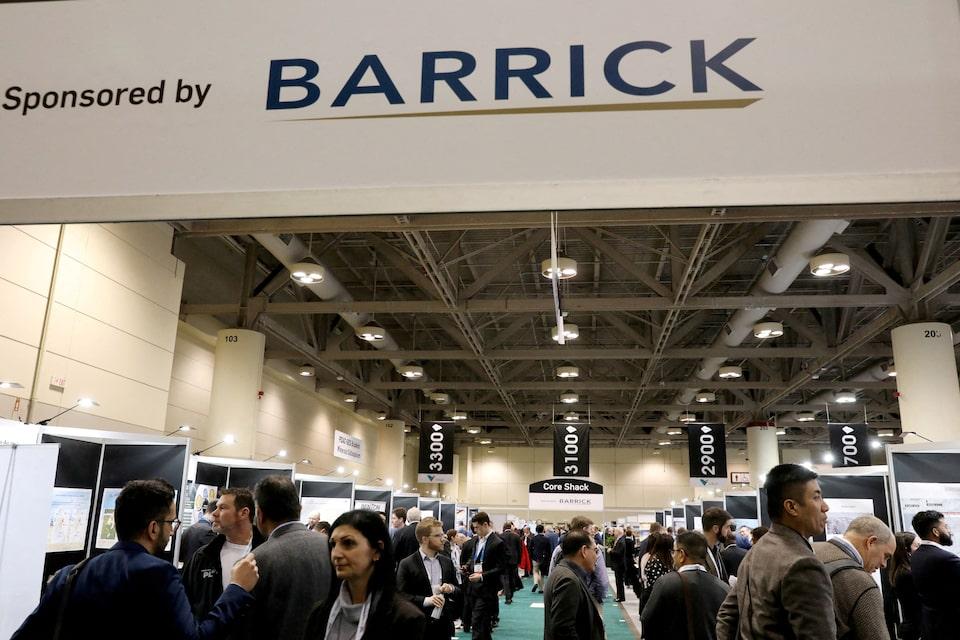
Nov 10 (Reuters) - Barrick Mining (ABX.TO) , opens new tab on Monday raised its dividend and expanded its share buyback program, after beating quarterly adjusted profit estimates as stronger gold prices helped offset a decline in production. U.S.-listed shares of the Canadian company rose nearly 4% in premarket trading following the results. Sign up here. Gold prices, which are sensitive to uncertainty, averaged at $3,574.95 per ounce in the third quarter, more than 16% higher than the preceding quarter and over 43% above the levels seen a year earlier. Prices of the precious metal were buoyed by safe-haven demand as uncertainty over U.S. President Donald Trump's tariff plans and geopolitical tensions stoked inflation concerns. Barrick said its average realized gold price rose to $3,457 per ounce during the third quarter from $2,494 per ounce a year earlier. Its quarterly production decreased to 829,000 ounces from 943,000 ounces last year. Barrick has been locked in a long-running standoff with Mali's military-led government since it was forced to suspend operations in mid-January. This was after the government had blocked its exports for two months, detained some of its executives and seized three tons of bullion. The company's all-in sustaining costs for gold, an industry metric reflecting total expenses, rose to $1,538 per ounce from $1,507 per ounce during the third quarter. Barrick declared a 25% rise in its quarterly dividend to 125 cents per share and added that the board has approved a $500 million increase to the existing share repurchase program. The company earned 58 cents per share on an adjusted basis in the third quarter, compared with analysts' average expectation of 57 cents per share, according to data compiled by LSEG. https://www.reuters.com/business/barrick-mining-beats-estimates-third-quarter-profit-2025-11-10/
2025-11-10 11:37
NEW DELHI, Nov 10 (Reuters) - Indian refiner HPCL-Mittal Energy Ltd has issued a rare spot tender seeking two cargoes of naphtha for November delivery after its Russian supplies of the petrochemical feedstock were hit, three trade sources said on Monday. The tender, which was scheduled to close on Friday, has been extended until November 12, one of the sources said. Sign up here. HMEL is seeking naphtha with a minimum 60% paraffin content and a maximum sulphur content of 500 ppm for delivery at Mundra port in Western India during November 9-12 and November 13-18, two of the three sources added. The company meets part of the naphtha requirement for its cracker from its 226,000 barrel-per-day refinery in the northern state of Punjab. The refinery and the cracker are located in the same complex. The refinery will undergo a 40-day maintenance shutdown from the second half of this month. The cracker, however, will remain functional during that period, one of the three sources said. The company did not immediately respond to a Reuters request for comment. HMEL's Russian naphtha imports have been hit after Adani Group, which operates Mundra port, tightened scrutiny and barred berthing of sanctioned vessels at its facilities. The move follows a discharge of feedstock from a sanctioned vessel despite Adani's order in September, a separate source with knowledge of the matter said. Adani Group also did not immediately respond to Reuters' request for comment. The vessel Autan carrying 35,000 tonnes of naphtha arrived at Mundra on November 5 but has yet to berth, according to LSEG trade flows. Autan is sanctioned by the European Union and the United Kingdom. https://www.reuters.com/business/energy/indias-hmel-issues-prompt-tender-naphtha-supplies-russian-flows-hit-sources-say-2025-11-10/

2025-11-10 11:12
LONDON, Nov 10 (Reuters) - Sterling held steady on Monday as traders brushed off news of a possible end to the U.S. federal government shutdown and instead awaited important economic data this week to see what it might mean for the Bank of England. The pound was last up 0.08% at $1.3175 and was a whisker firmer against the euro at 87.83 pence to the common currency. Sign up here. It also finished last week little changed. While the Bank of England held interest rates steady on Thursday, voting was tight enough - five policymakers voted to hold and four to cut - to outweigh any sterling-positive impulse as the market's focus immediately shifted to December's meeting. That means this week's economic numbers will be important. "Data evolution remains key for (Monetary Policy Committee) pricing, particularly as Governor Bailey's swing vote was explicitly data dependent," said analysts at Barclays in a note. "This week's employment report (Tuesday) and flash Q3 GDP release (Thursday) are key in that regard." Current market pricing sees a 25-basis-point cut in December as more likely than not, though not a done deal. Traders are also looking ahead to late November's UK budget. Analysts expect that finance minister Rachel Reeves will raise taxes, though the precise changes remain to be seen, amid broad speculation in British media. Signs U.S. lawmakers were close to reopening the federal government gave support to equity and bond markets on Monday, but moves in currency markets were limited to the safe-haven Japanese yen and risk-sensitive Australian dollar. The pound shed 0.4% on the Aussie and gained 0.5% on the yen, , in line with similar moves by the dollar and euro. https://www.reuters.com/business/sterling-looks-past-us-shutdown-news-awaits-british-data-2025-11-10/
2025-11-10 10:02
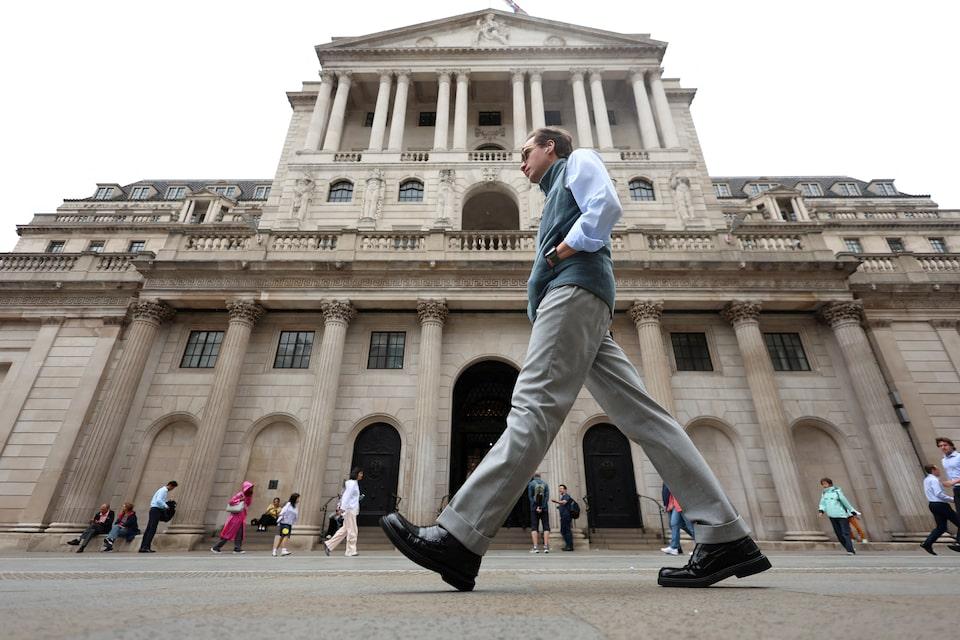
BoE proposes up to 60% of stablecoin assets may be invested in short-term government debt Crypto industry had criticised bank for tougher stance than other countries Central bank sticks with caps on stablecoin holdings LONDON, Nov 10 (Reuters) - The Bank of England on Monday proposed that issuers of widely used stablecoins be allowed to invest up to 60% of the assets backing them in government debt, part of a raft of new rules that suggest a softening in its approach to the sector. In its latest proposal for rules expected next year, the central bank however stuck to plans to cap the amount of stablecoins that individuals and businesses can hold, a move that sets it apart from European Union and U.S. regulators. Sign up here. Stablecoins are digital tokens designed to keep a constant value that are often pegged to fiat currency and backed by traditional assets such as government debt. The sector is booming, aided by the U.S. agreeing federal rules earlier this year. The crypto industry had sharply criticised a 2023 BoE proposal to force issuers to hold all of their assets in non interest-bearing accounts with the central bank. The move, it said, would effectively preclude widespread UK adoption of stablecoins, which typically generate profits by investing assets. The BoE has now instead suggested 40% of the assets would need to be held with it. 'WE'VE LISTENED CAREFULLY TO FEEDBACK' "Today's proposals mark a pivotal step towards implementing the UK's stablecoin regime next year," said Sarah Breeden, the BoE's deputy governor for financial stability. "We've listened carefully to feedback and amended our proposals for achieving this, including on how stablecoin issuers interact with the Bank of England." The BoE, which plans to oversee only stablecoins deemed capable of becoming widely used for payments, also outlined a temporary regime for issuers previously under the Financial Conduct Authority, allowing them initially to invest up to 95% of backing assets. The central bank has however retained plans that are unpopular with the crypto sector to cap stablecoin holdings, proposing limits of 20,000 pounds ($26,842) for individuals and 10 million pounds for businesses. Larger businesses, such as supermarkets or trading platforms, could apply for exemptions, the BoE said. The BoE has stressed that these caps are intended to be temporary and will be lifted once any financial stability worries have eased. In a new proposal, the BoE said it was also considering offering central bank liquidity facilities to systemic stablecoin issuers during periods of market stress, providing a backstop if they are unable to sell their reserve assets in the private market. Stablecoins used as assets for non-systemic purposes, such as buying and selling crypto tokens, would fall outside the BoE’s regime and instead be overseen by the FCA. The consultation runs until February 10. MORE CLARITY STILL NEEDED, CRYPTO EXECUTIVE SAYS While regulatory clarity was welcomed by the crypto sector, some said the BoE could have gone further. Tom Duff Gordon, vice president of international policy at cryptocurrency exchange Coinbase, said the bank could have allowed up to 80% of assets to be invested in high-quality liquid assets like government bonds. "The industry (also) needs more clarity on when, and on what basis, these caps could be lifted," he added. ($1 = 0.7451 pounds) https://www.reuters.com/sustainability/boards-policy-regulation/bank-england-proposes-new-rules-stablecoins-2025-11-10/
2025-11-10 07:38
Nov 10 (Reuters) - Sibanye Stillwater (SSWJ.J) , opens new tab and Appian Capital Advisory have agreed a $215 million settlement over the South African miner's termination of a $1.2 billion deal to buy the investment firm's Brazilian nickel and copper mines, the companies said on Monday. London's High Court ordered Sibanye in October 2024 to compensate Appian for the failed deal. Sign up here. The agreement was announced a day before court proceedings to determine the monetary award, the companies said in a joint statement. "We are pleased with the commercial settlement agreed, which precludes further legal processes and related costs being incurred, and provides certainty for the group and its stakeholders," Sibanye CEO Richard Stewart said in the statement. London-headquartered Appian lodged its compensation case against Sibanye after the Johannesburg-based precious metals producer cancelled a deal to buy the Santa Rita and Serrote mines in Brazil in January 2022. https://www.reuters.com/world/africa/sibanye-agrees-215-million-settlement-over-cancelled-brazil-mines-deal-2025-11-10/