2025-11-07 07:43
Russian wine sales surge to 60% of market share Pprices of imported wines up by about 30-40% Western countries have imposed more than 25,000 sanctions on Russia ANAPA, Russia, Nov 7 (Reuters) - Once dominated by French Burgundy and Italian Barolo wines, Russia's supermarket shelves are now stocked with an array of domestic vintages as Western sanctions linked to the war in Ukraine push consumers toward local vineyards. Sanctions imposed after President Vladimir Putin sent troops into Ukraine in early 2022 have reshaped Russia's consumer habits, driving up prices of foreign wines and narrowing brand availability of imports. Sign up here. Russian wine sales have surged to make up around 60% of the market, up from about 25% 10 years ago. "Russian wine has gained a very high share of the Russian market," said Yury Yudich, the head of the Federation of Restaurateurs and Hoteliers' committee on Russian winemaking, citing higher taxes on "unfriendly countries." "Gradually the market began to change, and wine prices began to rise. Imported wines have probably increased (in price) by 30-40%," he said, though Yudich added that consumers were still "getting used to" local wine flavors. RUSSIAN WINE SALES 'ARE STILL INCREASING' In Moscow supermarkets, Russian, Georgian and Armenian wines dominate where previously French, Italian and South American brands took pride of place. Western countries have imposed more than 25,000 different sanctions on Russia since Moscow annexed Crimea in 2014, with the lion's share coming after the Ukraine invasion in 2022. Grapes have been grown around the Black Sea for thousands of years but the travails of revolution, civil war and later Soviet anti-alcohol campaigns, particularly under Mikhail Gorbachev in 1985, destroyed many Russian vineyards. But as the economy emerged from the decade of chaos that followed the 1991 fall of the Soviet Union, some pioneering investors began to buy up land in southern Russia and bring back top-level vintners from France and Italy. At the Côte Rocheuse winery, nestled near the Black Sea, the shift in Russia's wine market is clear. "We began selling wines in 2022, and that same year we opened to tourists. Since then, we have been increasing production volumes every year, and sales are still increasing," said chief vintner and production director Irina Yakovenko. "However, we have a limit on both vineyards and winemaking capacity - 500,000 bottles per year." 'OUR WINES ARE THE BEST' The Côte Rocheuse winery cultivates classic European grape varieties - Merlot, Cabernet Sauvignon, Pinot Noir, Chardonnay - as well as Krasnostop Zolotovsky, a native Russian grape from the Rostov region. Despite relying on mostly French and Italian equipment, the wines are distinctly local, shaped by Russian soil and climate. Putin has repeatedly touted Russia's economic endurance under so many sanctions and has urged companies and officials to find a way to evade sanctions - which he casts as illegal and unjustified. "I want other people, mainly our children, to see this, so they don't buy Italian or German wines, but ours," Galina Romanova, a tourist at the winery, told Reuters. "Our wines are the best." https://www.reuters.com/business/western-sanctions-force-russians-turn-domestic-wines-2025-11-06/

2025-11-07 07:37
BRUSSELS, Nov 7 (Reuters) - Belgium's Liege airport has resumed flights after a temporary halt due to a drone sighting, the country's air traffic control service said on Friday in the second such incident this week. The Skeyes air traffic control service said it received a report of a drone being spotted over the airport around 06:30 GMT, leading to a closure of the airport for about 30 minutes. Sign up here. "We have to take every report seriously", Kurt Verwilligen, a spokesperson for the service said. He added flights had resumed. Drones spotted flying over airports in the capital Brussels and in Liege, in the country's east, forced on Tuesday the diversion of many incoming planes and the grounding of some due to depart. Sightings of drones over airports and military bases have become a constant problem in Belgium in recent days, and have caused major disruptions across Europe in recent months. They have forced temporary closures of airports in several countries including Sweden on Thursday. Some officials have blamed the incidents on "hybrid warfare" by Russia. Moscow has denied any connection with the incidents. The Belgian government called an emergency meeting of key government ministers and security chiefs on Thursday to address what the defence minister called a coordinated attack. https://www.reuters.com/world/europe/belgiums-liege-airport-temporarily-halted-again-due-drone-sighting-belga-says-2025-11-07/

2025-11-07 07:32
GABORONE, Nov 7 (Reuters) - The mining ministers of Botswana and Angola held talks in Botswana's capital on Friday on cooperation in the diamond sector, as the two Southern African countries seek to take control of Anglo American (AAL.L) , opens new tab diamond unit De Beers. Botswana, which owns 15% of De Beers and contributes 70% of its annual rough diamond production, considers the company a strategic national asset, despite a slump in global diamond prices that has hurt its economy. Sign up here. Angola initially sought a minority stake in De Beers but later submitted a bid for a majority stake, setting up a potential bidding war with its neighbour. Botswana's mines minister Bogolo Joy Kenewendo and Angolan minister Diamantino Pedro Azevedo discussed collaboration in the diamond industry, as well as energy and logistics at a meeting briefly opened to reporters. Before that, they held a closed-door meeting which lasted about 40 minutes. "At the top of everyone's minds this year is the performance of the diamond industry and our collaborative efforts in bringing back the spark and the shine to the industry," Kenewendo said. "As some of the largest producers of diamonds by quantity and value in the world, it is only right that we meet and join hands in discussing how to get the most out of this natural resource," she added. The two ministers did not make any reference to Botswana and Angola's competing interests in controlling De Beers, nor did they take any questions as they headed to another meeting with Botswana's President Duma Boko. Anglo put De Beers, one of the world's leading diamond companies, up for sale to focus on other parts of its business and valued it at $4.9 billion. https://www.reuters.com/world/africa/botswana-angola-set-talks-both-seek-control-de-beers-2025-11-07/

2025-11-07 07:31
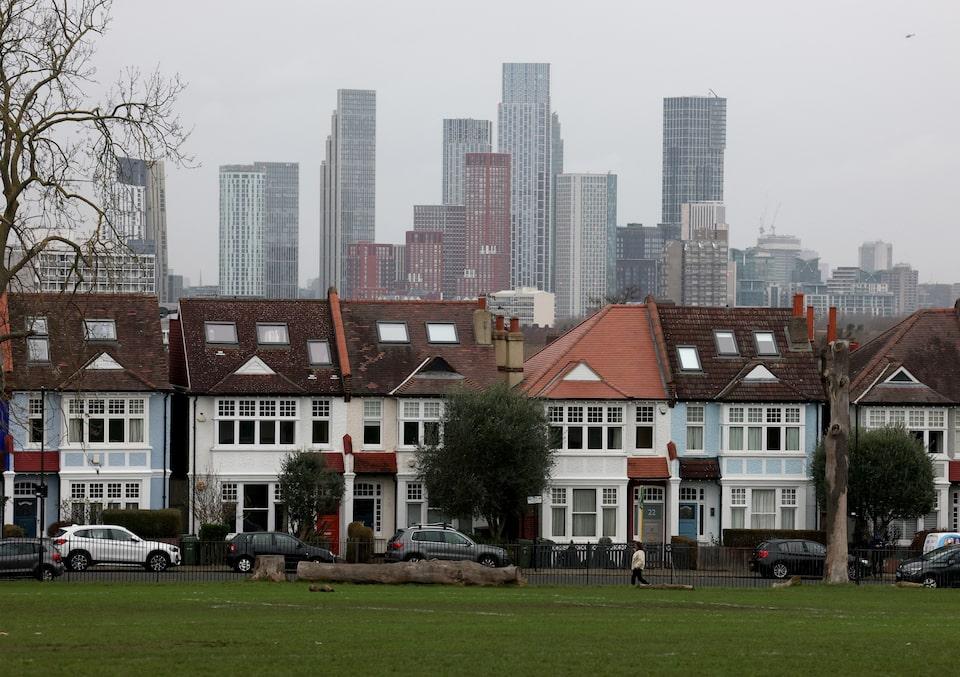
LONDON, Nov 7 (Reuters) - British house prices last month rose at the fastest pace since January, data from mortgage lender Halifax showed on Friday, adding to signs of demand in the property sector ahead of finance minister Rachel Reeves' budget on November 26. House prices increased by 0.6% in monthly terms in October after a 0.3% fall in September to reach a new record of 299,862 pounds ($402,444.79) - well above a 0.1% rise predicted by economists in a Reuters poll and the biggest rise since January. Sign up here. Halifax said house prices were 1.9% higher than a year earlier, above the 1.5% forecast in the poll, and compared with an annual increase of 1.3% in September. But, Amanda Bryden, head of mortgages at Halifax, warned that affordability challenges for buyers remain. "Demand from buyers has held up well coming into autumn, despite a degree of uncertainty in the market, with the number of new mortgages being approved recently hitting its highest level so far this year," Bryden said. "There is no doubt that affordability remains a challenge for many." The increase in British property prices has been slower this year than in the second half of 2024 as concerns about the economy and the prospect of additional taxes on homes as Reeves readies her budget. "This provides further encouragement that the housing market has weathered the prospect of tax rises in the budget better than it first appeared. What's more, house prices may get a further boost from lower mortgage rates in the coming months," Ashley Webb, UK economist at Capital Economics, said. On Thursday, the Bank of England kept interest rates at 4%, but a close vote and signs that Governor Andrew Bailey might soon join those seeking a rate cut boosted the prospect of a cut in December. Halifax said house prices in London fell by 0.3% from 12 months earlier while the strongest growth was reported in Northern Ireland where prices rose by 8%, Halifax said. Data from rival mortgage lender Nationwide published last week showed that prices rose by 0.3% in October, pushing annual house price inflation up to 2.4%. ($1 = 0.7451 pounds) https://www.reuters.com/world/uk/uk-house-prices-rose-06-october-halifax-says-2025-11-07/
2025-11-07 06:59
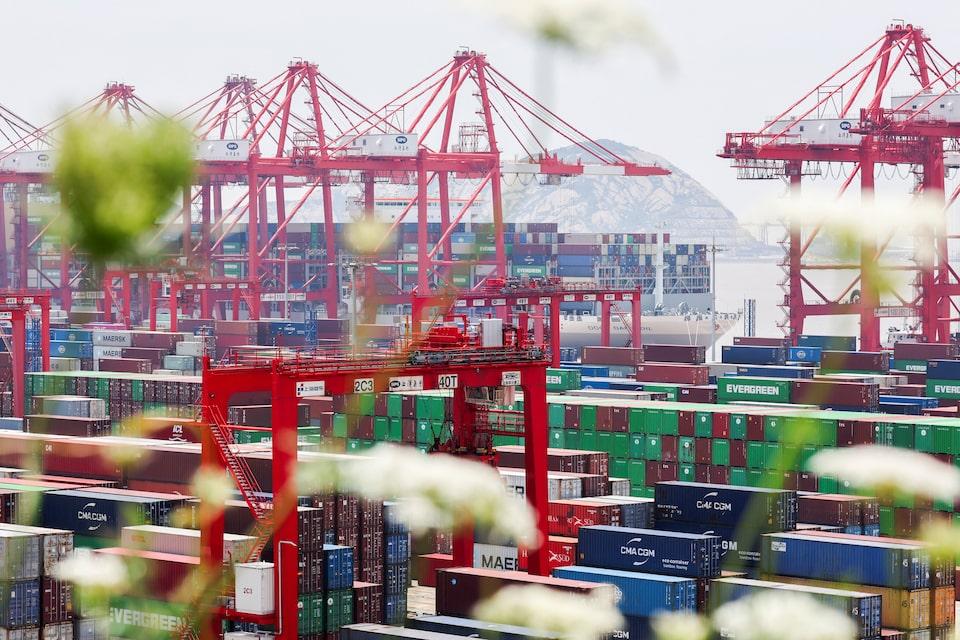
Exports slide, worst outcome since Feb, as front-loading effect fades Import growth slowest in 5 months, highlights soft domestic demand Data underline rising pressure on economy as US tariffs shake up global trade BEIJING, Nov 7 (Reuters) - Chinese exports unexpectedly fell in October after months of front-loading U.S. orders to beat President Donald Trump's tariffs, in a stark reminder of the manufacturing juggernaut's reliance on American consumers even as it woos buyers elsewhere. The world's second-largest economy has pushed hard to diversify its export markets since Trump won last November's presidential election, bracing for a resumption of the trade war that dominated his first term in office, and seeking closer trade ties with Southeast Asia and the European Union. Sign up here. But no other country comes close to matching China's annual sales of more than $400 billion in goods to the U.S., a loss economists estimate has cut China's export growth by around 2 percentage points, or roughly 0.3% of GDP. The October customs data on Friday underlined that point, as China's exports shrank 1.1%, the worst performance since February, reversing from an 8.3% rise in September, and missing a forecast for 3.0% growth in a Reuters poll. "It appears the rush to ship goods to the U.S. ahead of tariff hikes subsided in October," said Zhang Zhiwei, chief economist at Baoyin Capital Management. "With export momentum now waning, China may need to rely more heavily on domestic demand." Chinese shipments to the U.S. tumbled 25.17% year-on-year, the data showed, while those to the European Union and Southeast Asian economies - big trading partners with whom policymakers have sought to bolster ties amid tariff tensions with Washington - grew by just 0.9% and 11.0%, respectively. Most analysts largely agree Chinese manufacturers have pushed as many goods into the world as possible for now. "I think the PMI was already warning us that Chinese exports cannot continue to grow forever, and it's not only because of the U.S. but because the global economy is slowing," said Alicia Garcia-Herrero, chief economist for the Asia-Pacific at Natixis. "Exports through Vietnam to the U.S. will decelerate once the front-loading is over, and we're there. So I think it's going to be much tougher for China in the fourth quarter, which means it's going to be tougher in the first half of 2026 as well," she added. China's yuan edged lower against the dollar following the data's release, registering its first weekly decline in a month. TENTATIVE TARIFF TRUCE Traders and investors on both sides of the Pacific breathed a sigh of relief last week after Trump and Chinese President Xi Jinping agreed to trim their tariffs and pause a raft of other measures for one year, easing concerns the two leaders might abandon their highly-anticipated meeting after a renewed spike in tensions in early October. But U.S.-bound Chinese goods will still face an average tariff rate around 45%, above the 35% level that some economists say wipes out Chinese manufacturers' profit margins. Woei Chen Ho, economist at UOB Singapore, said the U.S.-China trade truce struck by the two leaders last month would stabilise the outlook in the near-term, but forecast that "both countries will try to reduce their interdependence and we're going to see the U.S. share of China trade, especially exports, drop. China's trade surplus with the U.S. came in at $24.76 billion in October, rising from $22.82 billion a month prior. In line with its push to broaden its trade ties, Beijing on Thursday flagged fresh prospects for a trade or investment deal with the European Union, the world's third-largest economy. Last month, China posted a trade surplus of $21.9 billion with the 27-strong bloc. WEAK DOMESTIC DEMAND Insufficient domestic demand remains a hurdle to driving growth, too. That was underlined by the imports data, which expanded at their slowest pace in five months, up 1.0% compared to 7.4% growth in September and a 3.2% forecast rise. Officials said last month China will aim to raise the percentage of household consumption of GDP "significantly" over the next five years, after a key conclave of the ruling Communist Party's Central Committee mapped out economic and policy goals for 2026-2030. China's imports of soybeans, crude oil, and iron ore rose in October from a year earlier, with record soybean purchases from South America attributed to crushers rushing to buy before potential price spikes in Brazil caused by missed China–U.S. shipments, while energy imports were supported by competitive prices. But copper purchases, key to the construction sector, dropped as consumers shied away from restocking due to high prices for the metal and as a prolonged property downturn continues to crimp demand. "With intensifying growth headwinds from a slew of demand shocks, especially on retail sales and exports, we believe Beijing's policy focus might once again shift to ensuring short-term stability," Nomura analysts said in a note. "Fiscal expansion will likely be the key focus of Beijing’s policy agenda." ($1 = 7.1230 Chinese yuan) https://www.reuters.com/world/china/china-exports-unexpectedly-slide-worst-since-feb-global-trade-pressure-mounts-2025-11-07/
2025-11-07 06:49
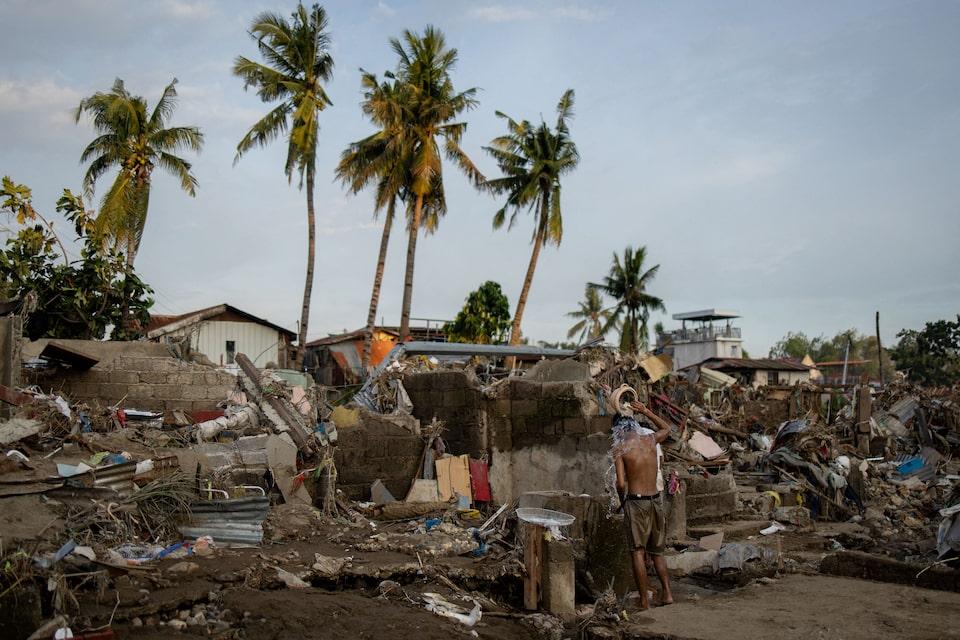
Kalmaegi's destruction coincides with global climate talks in Brazil Warmer sea temperatures linked to stronger typhoons, scientists say Back-to-back storms increase damage potential, warn researchers SINGAPORE, Nov 7 (Reuters) - As the year's deadliest typhoon sweeps into Vietnam after wreaking havoc in the Philippines earlier this week, scientists warn such extreme events can only become more frequent as global temperatures rise. Typhoon Kalmaegi killed at least 188 people across the Philippines and caused untold damage to infrastructure and farmland across the archipelago. The storm then destroyed homes and uprooted trees after landing in central Vietnam late on Thursday, killing at least five people. Sign up here. Kalmaegi's path of destruction coincides with a meeting of delegates from more than 190 countries in the rainforest city of Belem in Brazil for the latest round of climate talks. Researchers say the failure of world leaders to control greenhouse gas emissions has led to increasingly violent storms. "The sea surface temperatures in both the western North Pacific and over the South China Sea are both exceptionally warm," said Ben Clarke, an extreme weather researcher at London's Grantham Institute on Climate Change and Environment. "Kalmaegi will be more powerful and wetter because of these elevated temperatures, and this trend in sea surface temperatures is extremely clearly linked to human-caused global warming." WARMER WATERS PACK "FUEL" INTO CYCLONES While it is not straightforward to attribute a single weather event to climate change, scientists say that in principle, warmer sea surface temperatures speed up the evaporation process and pack more "fuel" into tropical cyclones. "Climate change enhances typhoon intensity primarily by warming ocean surface temperatures and increasing atmospheric moisture content," said Gianmarco Mengaldo, a researcher at the National University of Singapore. "Although this does not imply that every typhoon will become stronger, the likelihood of powerful storms exhibiting greater intensity, with heavier precipitation and stronger winds, rises in a warmer climate," he added. MORE INTENSE BUT NOT YET MORE FREQUENT While the data does not indicate that tropical storms are becoming more frequent, the number of intense storms has increased, said Mengaldo, who co-authored a study on the role of climate change in September's Typhoon Ragasa. "The total number of typhoons occurring each year has not shown a clear long-term increase," he said. "Yet, the frequency of the most intense events and rapid intensification episodes has risen, likely driven by warmer oceans and greater atmospheric instability associated with climate change." Last year, the Philippines was hit by six deadly typhoons in the space of a month, and in a rare occurrence in November, saw four tropical cyclones develop at the same time, suggesting that the storms might now be happening over shorter timeframes. "Even if total cyclone numbers don't rise dramatically annually, their seasonal proximity and impact potential could increase," said Drubajyoti Samanta, a climate scientist at Singapore's Nanyang Technological University. "Kalmaegi is a stark reminder of that emerging risk pattern," he added. BACK-TO-BACK STORMS CAUSING MORE DAMAGE While Typhoon Kalmaegi is not technically the most powerful storm to hit Southeast Asia this year, it has added to the accumulated impact of months of extreme weather in the region, said Feng Xiangbo, a tropical storm researcher at Britain's University of Reading. "Back-to-back storms can cause more damage than the sum of individual ones," he said. "This is because soils are already saturated, rivers are full, and infrastructure is weakened. At this critical time, even a weak storm arriving can act as a tipping point for catastrophic damage." Both Feng and Mengaldo also warned that more regions could be at risk as storms form in new areas, follow different trajectories and become more intense. "Our recent studies have shown that coastal regions affected by tropical storms are expanding significantly, due to the growing footprint of storm surges and ocean waves," said Feng. "This, together with mean sea level rise, poses a severe threat to low-lying areas, particularly in the Philippines and along Vietnam's shallow coastal shelves." https://www.reuters.com/sustainability/cop/typhoon-kalmaegi-wreaks-havoc-southeast-asia-scientists-say-rising-temperatures-2025-11-07/