2025-11-07 06:41
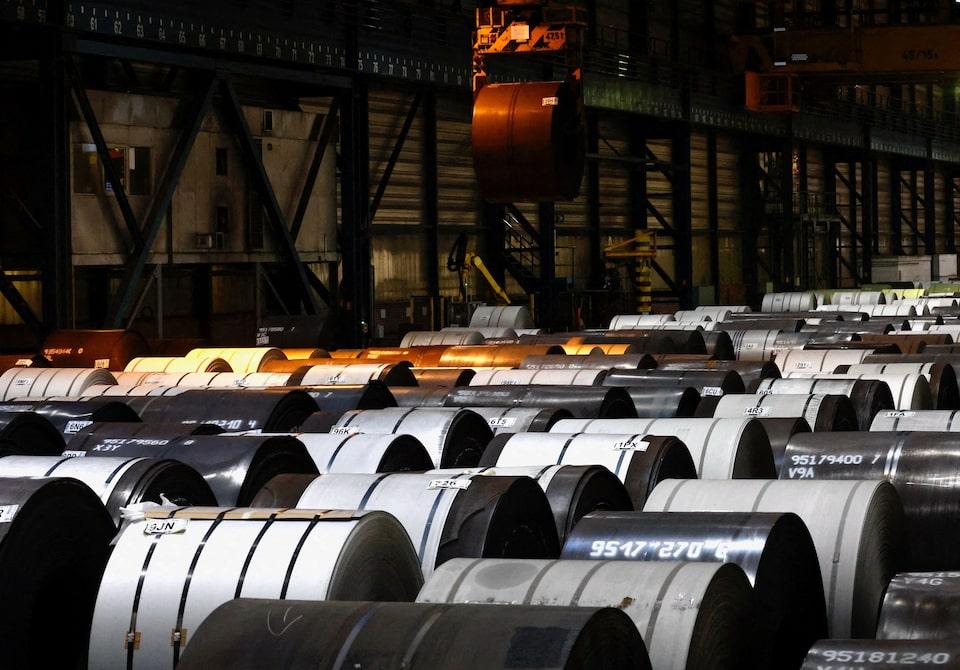
Nov 7 (Reuters) - European stainless steel producer Aperam (APAM.AS) , opens new tab reported weaker than expected core earnings for the third quarter on Friday, weighed down by lower volumes and growing price pressure on its home continent. Adjusted earnings before interest, taxes, depreciation and amortization fell around 25% from a year earlier to 74 million euros ($86 million), while analysts polled by the company had forecast 76 million euros on average. Sign up here. “ Major drivers were lower seasonal volumes in Europe, intensifying price pressure in Europe and temporary soft Alloys contribution, ” the group said in a statement. Average steel selling price fell by around 10% quarter-on-quarter to 2,040 euros per ton, company data showed. The group had reaffirmed its third-quarter outlook last month, anticipating a seasonal dip in shipments due to reduced summer demand in Europe. Aperam expects its core profit to also decrease in the final quarter of 2025 compared to the previous three months. However, strong cash generation allowed the company to lift its deleveraging outlook, as it now expects to cut its net debt by more than 200 million euros by the end of the year, compared to the third quarter. It had previously expected this decrease to be around 200 million. ($1 = 0.8575 euros) https://www.reuters.com/business/aperam-lags-earnings-estimates-steel-prices-decline-europe-2025-11-07/
2025-11-07 06:09
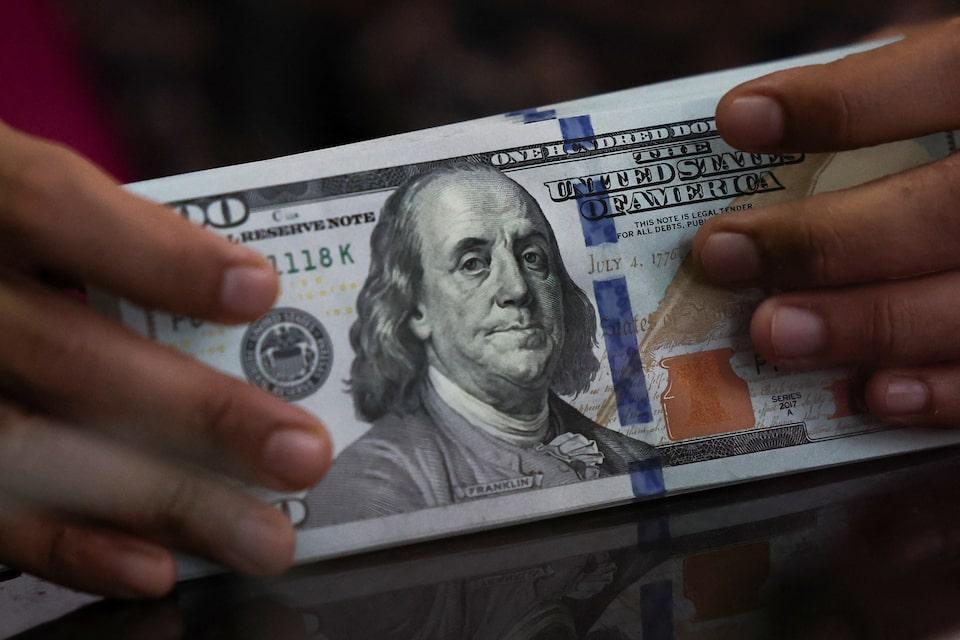
Dollar set for weekly loss against euro and yen Markets overreacting to labor market hints, Jefferies says Weak Chinese trade data may spell trouble for the euro zone Yen still seen as the leading defensive hedge NEW YORK, Nov 7 (Reuters) - The U.S. dollar fell against major currencies including the euro and Swiss franc on Friday as investors sought to balance the Federal Reserve's hawkish tilt against lingering concerns over the U.S. economy. U.S. Treasury yields were slightly lower amid the extended government shutdown in Washington. The Labor Department did not release an October jobs report as scheduled on Friday because of the shutdown. Such reports are normally closely watched. Sign up here. The yield on benchmark U.S. 10-year notes fell 0.2 basis point to 4.091%. Investors were assessing the fallout from data that sounded an alarm bell for the global economic outlook: Chinese exports unexpectedly fell in October, recording their steepest drop since February, after months of frontloading U.S. orders to dodge tariffs. The euro rose 0.15% against the dollar to $1.15564. It was on track to gain 0.26% for the week, recovering from two consecutive weeks of losses. The euro is drawing support from expectations of a steady policy rate, while both the U.S. and the UK are expected to cut rates further in 2026. The greenback started a five-day winning streak last week after U.S. Federal Reserve Chair Jerome Powell acknowledged the risky nature of further easing moves, but it dropped sharply on Thursday on soft labor data. “With the December Fed meeting more or less a coin toss which crucially depends on the labor market picture, the market is overreacting to any hints about the (U.S.) labor market,” said Mohit Kumar, an economist at Jefferies, noting the lack of economic data as the government shutdown continues. “Our view remains that Powell's comments from the last FOMC meeting suggest that the bar for a December cut is high,” he added. However, Chinese data suggests Beijing may have struggled to diversify exports away from the U.S., a trend that could stoke fears of mounting Chinese pressure on European markets. With the shutdown postponing the release of the monthly non-farm payrolls report, traders have turned to private sector data which showed the economy shed jobs in October in the government and retail sectors. Cost-cutting and the adoption of artificial intelligence also led to a surge in layoffs. Barclays forecast earlier this week a 60% chance that the U.S. government shutdown - the longest in U.S. history - would end between November 11 and 21, while assigning a 15% probability that it could extend into December. The dollar index , which measures the currency's strength against a basket of six peers, was down 0.12% at 99.56. It was set to fall 0.15%, ending two straight weeks of gains. "We have been calling for a dollar bounce for a while now and are still looking for some gains in the near term, as U.S. growth momentum remains strong while dollar sentiment is relatively weak," said TS Lombard analysts led by Andrea Cicione in an investor note. A rush into safe-haven assets earlier this week supported the U.S. dollar, which has regained some of its safe-haven appeal, analysts said, even as the Japanese yen emerged as the market’s preferred defensive play. The dollar rose 0.25% against the yen to 153.44, but it was on track to fall 0.39% this week - snapping two straight weeks of gains. https://www.reuters.com/world/asia-pacific/dollar-defensive-data-show-cracks-us-jobs-market-2025-11-07/
2025-11-07 06:01
Orban warns of consequences to Hungarian people, economy without Russian oil Trump says US is looking at the issue IMF figures show Hungary relied on Russia for 74% of its gas and 86% of its oil in 2024 WASHINGTON, Nov 7 (Reuters) - The United States has granted Hungary a one-year exemption from U.S. sanctions for using Russian oil and gas, a White House official said on Friday, after Hungarian Prime Minister Viktor Orban pressed his case for a reprieve during a friendly meeting with President Donald Trump in Washington. Last month, Trump imposed Ukraine-related sanctions on Russian oil companies Lukoil and Rosneft that carried the threat of further sanctions on entities in countries that buy oil from those firms. Sign up here. Orban, a long-time Trump ally, met with Trump at the White House on Friday for their first bilateral meeting since the Republican returned to power and explained why his country needed to use Russian oil at a time when Trump has been pressing Europe to stop doing so. Orban said the issue was vital for Hungary, which is a European country, and pledged to lay out "the consequences for the Hungarian people, and for the Hungarian economy, not to get oil and gas from Russia." Trump, aiming to put pressure on Moscow to end its war with Ukraine, appeared sympathetic to Orban's position. "We're looking at it, because it's very different for him to get the oil and gas from other areas," Trump said. "As you know, they don't have ... the advantage of having sea. It's a great country, it's a big country, but they don't have sea. They don't have the ports." "But many European countries are buying oil and gas from Russia, and they have been for years," Trump added. "And I said, 'What's that all about?'" The White House official noted that, in addition to the sanctions exemption, Hungary had committed to buying U.S. liquefied natural gas with contracts valued at some $600 million. Hungary has maintained its reliance on Russian energy since the start of the 2022 conflict in Ukraine, prompting criticism from several European Union and NATO allies. International Monetary Fund figures show Hungary relied on Russia for 74% of its gas and 86% of its oil in 2024, warning that an EU-wide cutoff of Russian natural gas alone could force output losses in Hungary exceeding 4% of GDP. The two men also discussed Russia's war with Ukraine. Trump said last month that he would meet Russian President Vladimir Putin in the Hungarian capital, but the meeting was put on hold after Russia rejected a ceasefire. Trump on Friday said Russia simply did not want to stop fighting. "The basic dispute is they just don't want to stop yet. And I think they will," he said. The president asked Orban if he thought Ukraine could win the war. A "miracle can happen," Orban responded. ECONOMIC COOPERATION Greater economic cooperation between the U.S. and Hungary was also on the agenda. Orban predicted a "golden age" between the two nations and made a point of criticizing President Joe Biden's administration, a sure way to garner favor with Trump, who continues to use Biden as a frequent foil. The Hungarian leader, who faces an election in 2026, has cultivated a strong personal rapport with Trump over the years, including on their shared hard-line immigration policies. Trump on Friday gave Orban his support for the election. "He has not made a mistake on immigration. So he's respected by everybody, he's liked by some ... I like and respect him, I'm a double," Trump said. "And that's the way Hungary is being led. They're being led properly, and that's why he's going to be very successful in his upcoming election." The EU's top court ruled last year that Hungary must pay a 200-million-euro ($216 million) fine for not implementing changes to its policy of handling migrants and asylum seekers at its border. It must also pay a daily fine of one million euros until it fully implements the measures. Orban referenced the fine during his meeting with Trump but said Hungary would handle its intra-EU disputes on its own. A tangible sign of Hungary's improved ties with the U.S. under the Trump administration came last month when the U.S. fully restored Hungary's status in its visa waiver program. Hungary has pushed back against plans by the European Commission to phase out the EU's imports of all Russian gas and LNG by the end of 2027, deepening a rift with Brussels over relations with Moscow. Ratings agency S&P noted that Hungary has one of the most energy-intensive economies in Europe – and that its domestic refineries are built to process Russian Urals crude oil. While it said gas supplies from Azerbaijan and Qatar could help replace Russian supply, it warned that Hungary's fiscal and external accounts remain vulnerable to an energy shock. https://www.reuters.com/world/trump-meet-hungarys-orban-discuss-russian-oil-economic-cooperation-2025-11-07/

2025-11-07 05:49
US private jobs data indicates weak labour market Traders see 66% chance of US interest rate cut in December China starts work on easing rare earth export rules Nov 7 (Reuters) - Gold prices rose on Friday as the dollar softened and uncertainty around the U.S. government shutdown added to safe-haven demand, while Wall Street indexes were set for sharp weekly declines. Spot gold was up 0.7% at $4,005.21 per ounce, as of 3:15 p.m. ET (2015 GMT). U.S. gold futures for December delivery gained 0.5% to settle at $4,009.80 per ounce. Sign up here. Tech-heavy stock markets remained poised for their biggest weekly fall in seven months on Friday, as investors fretted over the sustainability of a rally in artificial intelligence stocks. The U.S. dollar (.DXY) , opens new tab eased, making greenback-priced bullion cheaper for other currency holders. "The recent price action technically suggests we may be putting in a floor underneath gold and silver prices," said Jim Wyckoff, senior analyst at Kitco Metals. Gold is considered a hedge during uncertainty, and as a non-yielding asset, tends to benefit in low-interest rate environments. With the U.S. government shutdown delaying the release of the monthly non-farm payrolls report, traders turned to private sector data, which showed job losses in October, to gauge the likelihood of another Federal Reserve interest rate cut this year. Markets now see a 66% chance of a 25-basis-point rate cut in December, according to CME Group's FedWatch tool. Meanwhile, China has started designing a new rare earth licensing regime that could speed up shipments, though it is unlikely to fully lift restrictions as Washington had hoped, industry insiders said. "Even though the waves in trade policy have calmed down somewhat, the conflicts are by no means resolved. Gold is therefore likely to remain in demand as a safe haven," Commerzbank said in a note. Meanwhile, India's physical gold demand remained subdued as volatile prices deterred buyers and prompted dealers to offer steep discounts. Elsewhere, spot silver climbed 0.9% to $48.41 per ounce. Platinum rose 0.1% to $1,543.00, and palladium was up 1.5% at $1,395.49. All three logged weekly losses. https://www.reuters.com/world/india/gold-gains-dollar-weakens-us-rate-cut-bets-grow-2025-11-07/

2025-11-07 05:35
A look at the day ahead in European and global markets from Tom Westbrook Tech stocks headed for a wobbly finish to what is shaping as the sharpest market drawdown since the turbulence around U.S. tariffs seven months ago. Sign up here. Shares of Softbank Group (9984.T) , opens new tab, the Japanese investment conglomerate famous for high-risk, high-reward tech bets are down around 20% this week - the biggest one-week drop since the pandemic. The Nasdaq (.IXIC) , opens new tab is down more than 2% this week and futures were under pressure in the Asia session. Tech-heavy markets in Japan (.N225) , opens new tab and South Korea (.KS11) , opens new tab fell. To be sure, these are modest drops in markets that have run hard for months. The Nasdaq is up 50% from April lows. But one unsettling feature of the pullback is that there has been no obvious trigger or reason for AI shares to break their stride, which raises the prospect that investors - en masse - are starting to have second thoughts about the rally. More than half of the fund managers surveyed by BofA in October reckon we are in an AI equity bubble. There may have been some signal in markets' sharply negative reactions to AI spending plans at Meta (META.O) , opens new tab and outwardly very strong results at Palantir Technologies (PLTR.O) , opens new tab. Herald van der Linde, HSBC's chief Asia equity strategist with several decades following the markets, recalled how the top of the dotcom bubble came with no fanfare or stunning news, just a collective realisation that valuations had run much too far. "The problem with high valuations is that it's like blue sky," he told Reuters. "The moment there's one small black cloud, it is not a blue sky anymore. So if you have very high valuations, small news, shifts in sentiment, can actually cause markets to come down a lot."The U.S. government shutdown means there will be no U.S. jobs data later in the day, leaving investors to pick their own way through the market's shifting mood. In Asia, Chinese trade figures came in surprisingly soft, with a 1.1% fall in dollar-denominated exports in October, though the outlook is expected to stabilise since the trade truce agreed with the U.S. last week. Focus will be on how equities trade to the weekend, while bond markets have taken private data showing a surge in U.S. layoffs as raising the likelihood of interest rate cuts. Safe assets such as the yen, gold and Swiss franc were catching a bid in the Asia session. Key developments that could influence markets on Friday: - German trade data - Canadian jobs figures - U.S. equities session https://www.reuters.com/world/china/global-markets-view-europe-2025-11-07/

2025-11-07 05:27
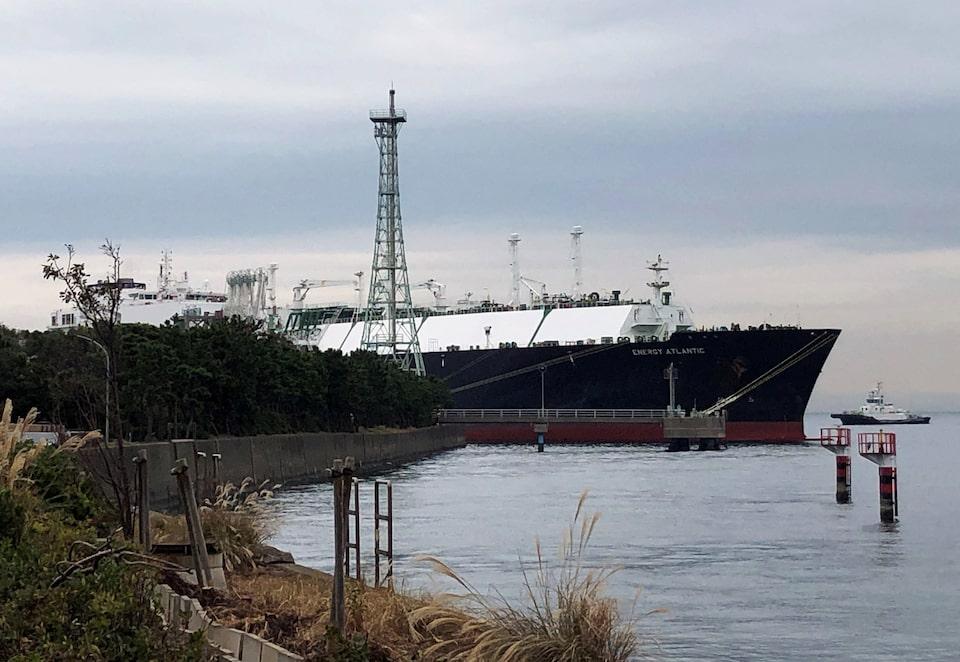
JERA will buy at least one cargo per month for Japan reserve from January JERA can use or resell cargoes if emergency supply is not needed TOKYO, Nov 7 (Reuters) - Japan, the world's No.2 LNG importer, plans to buy liquefied natural gas for emergency reserves on a monthly basis from January, instead of buying only during peak demand periods, to guard against supply shocks, two industry ministry sources said. The reinforcement of the country's Strategic Buffer LNG (SBL) program, run by the Ministry of Economy, Trade and Industry (METI), will ensure at least one LNG cargo - about 70,000 metric tons - is secured each month to mitigate supply risks. Sign up here. For the year, that means Japan will buy at least 12 cargoes, or 840,000 tons of LNG, for its emergency reserve, up from about 210,000 tons in each of the past two years. If there is no emergency, SBL cargoes may be used or resold. JERA holds SBL cargoes until 18 days before port arrival. Any resale losses are covered by the government, while profits must be returned to the government. Japan is expanding its role as an LNG trader as domestic demand declines, selling excess cargoes abroad during periods of weak local consumption. Since December 2023, JERA, Japan's top LNG buyer and a certified SBL supplier, has bought one cargo for each of the three winter months over the past two winters to add to the reserve, although it was never activated. From 2026, JERA will buy at least one SBL cargo for every month, from January to December, one ministry source said on Wednesday. The utility will also secure one cargo for December this year, according to the source. METI said last year it was considering stepping up purchases from the mid- to late-2020s. Japanese power utilities have called for an expansion of the strategic buffer, which allows JERA to supply a cargo to a utility facing an urgent shortfall, hedging against disruptions from conflicts or nuclear reactor outages, among other issues. JERA confirmed it has secured one cargo for each of the three winter months over the past two winters, but declined to comment on future plans. Last month, the United States urged Japan to stop imports of Russian energy as part of efforts to pressure Moscow to end its war in Ukraine. Japan's long-term contracts with Russia's Sakhalin-2 LNG project cover about 9% of its LNG imports. "Shifting to a monthly basis is not directly related to Russian energy issues, but it enables us to respond to any emergency situation," another METI source said on Friday. The two METI sources declined to be named because of the sensitivity of the issue. Japan has no underground gas storage but has LNG storage capacity of around 12 billion cubic meters, or about 9 million tons, which would be just over a month's consumption, at its receiving terminals, according to the International Energy Agency. https://www.reuters.com/sustainability/boards-policy-regulation/japan-step-up-lng-purchases-emergency-reserve-january-industry-ministry-sources-2025-11-07/