2025-11-07 00:43
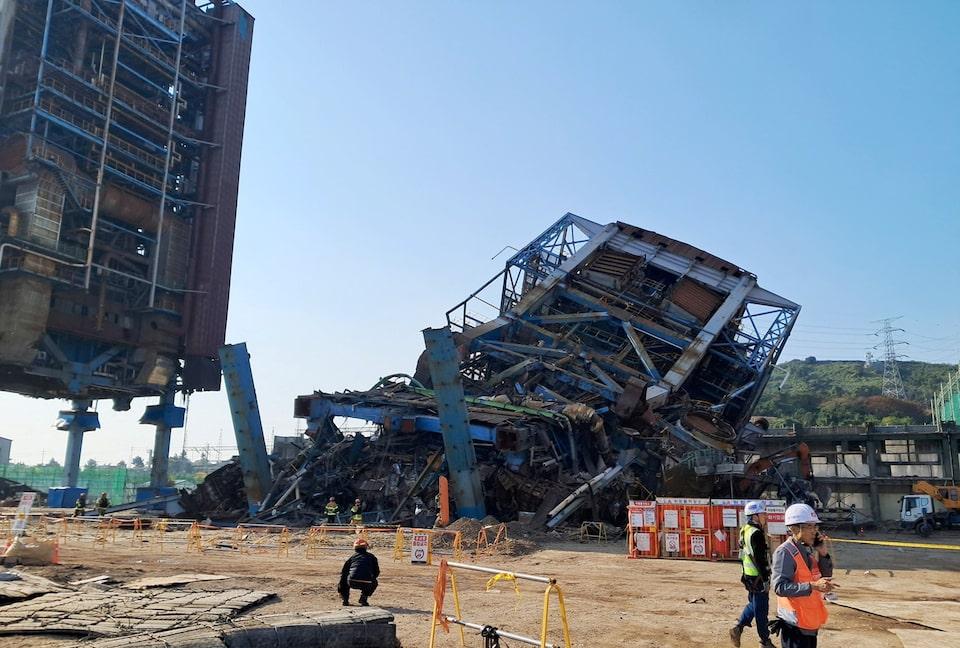
SEOUL, Nov 7 (Reuters) - A worker has died and six remain trapped on Friday after the collapse of a large structure at a power station in South Korea that was being prepared for demolition, fire and rescue officials said. Workers were in the process of taking down parts of the massive steel structure, a decommissioned heating facility, when it collapsed on Thursday afternoon. Sign up here. Footage from the scene showed the structure mangled and toppled over, surrounded by similar structures. Two people were quickly rescued and then two others were later spotted under the rubble, fire official Kim Jung-shik told reporters. One worker was confirmed dead early on Friday and the condition of another remained unclear, he said. Rescuers had deployed heat sensors, remote scopes and search dogs to assist the rescue operation and locate the other trapped workers, though their efforts have been hampered by the risk of a further collapse of the structure, he said. South Korean President Lee Jae Myung, who has made it a priority to improve workplace safety, has ordered an all-out effort to save the workers who remain trapped. https://www.reuters.com/world/asia-pacific/one-dead-south-korea-power-plant-collapse-safety-fears-hamper-rescue-2025-11-07/
2025-11-07 00:22
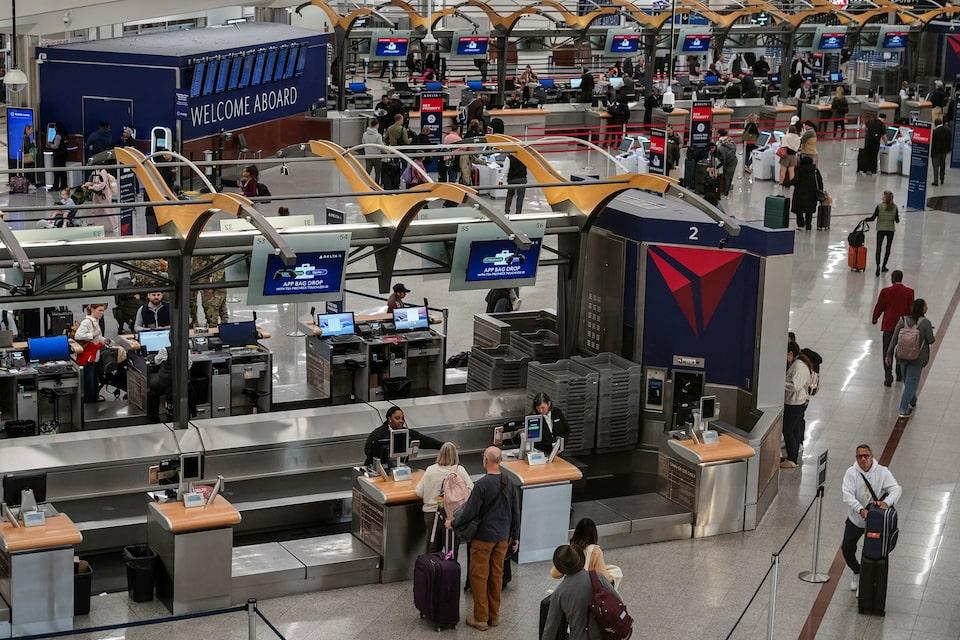
Nov 6 (Reuters) - The Federal Aviation Administration told airlines on Thursday to cut 4% of flights at 40 high-traffic airports starting Friday, according to a document seen by Reuters. The level then increases by two percentage points each on Tuesday and next Thursday, reaching 10% on November 14. Sign up here. The cuts, expected to impact hundreds of thousands of travelers, seek to address safety concerns due to a shortage of air traffic controllers during a record-setting U.S. government shutdown. AIRPORTS AFFECTED CUTS BY THE NUMBERS https://www.reuters.com/world/us/which-airports-are-affected-by-forced-us-flight-reductions-2025-11-07/
2025-11-07 00:07
Nov 7 (Reuters) - Australia's Alliance Nickel (AXN.AX) , opens new tab said on Friday carmaker Stellantis (STLAM.MI) , opens new tab will terminate their supply deal for battery-grade nickel and cobalt from the NiWest project, effective December 3, citing missed milestone deadlines. The company attributed the delays to challenging conditions in the global nickel market, which have limited opportunities to secure financing. Alliance is the latest Australian producer forced to renegotiate supply agreements with automakers. Sign up here. The miner said nickel prices have remained under sustained pressure over the past two years, making it difficult to fund new projects. Alliance said weaker prices have hit its financial position, prompting it to defer other commitments while it works to secure adequate financing for the NiWest project in Western Australia. Stellantis, the maker of Jeep, Fiat and Chrysler, had expressed willingness to renegotiate the offtake terms, according to Alliance. "We recognise that this presents a good opportunity for both sides to negotiate on a new agreement that is more reflective of the revised project development timeline and forward strategy," Alliance Managing Director Paul Kopejtka said. Shares of Alliance fell as much as 6.4% in early trade. In 2023, the two companies signed an agreement to supply 170,000 tons of nickel sulphate and 12,000 tons of cobalt sulphate over an initial five-year period, representing about 40% of NiWest's forecast annual output. At the time, the deal underscored Australia's growing role as a key supplier of battery materials critical to electric vehicle production. The 2023 agreement had also led to the Italian-French group acquiring an 11.5% stake in the Australian firm. This was the second supply deal with an Australian company that Stellantis, formed in 2021 through the merger of Fiat Chrysler and Peugeot maker PSA, had scrapped. Earlier, this week, Stellantis dropped out of a supply agreement with Australian battery materials supplier, Novonix(NVX.AX) , opens new tab, citing an inability to agree on product specifications. https://www.reuters.com/business/autos-transportation/carmaker-stellantis-pulls-plug-supply-deal-with-australias-alliance-nickel-2025-11-07/
2025-11-06 23:57
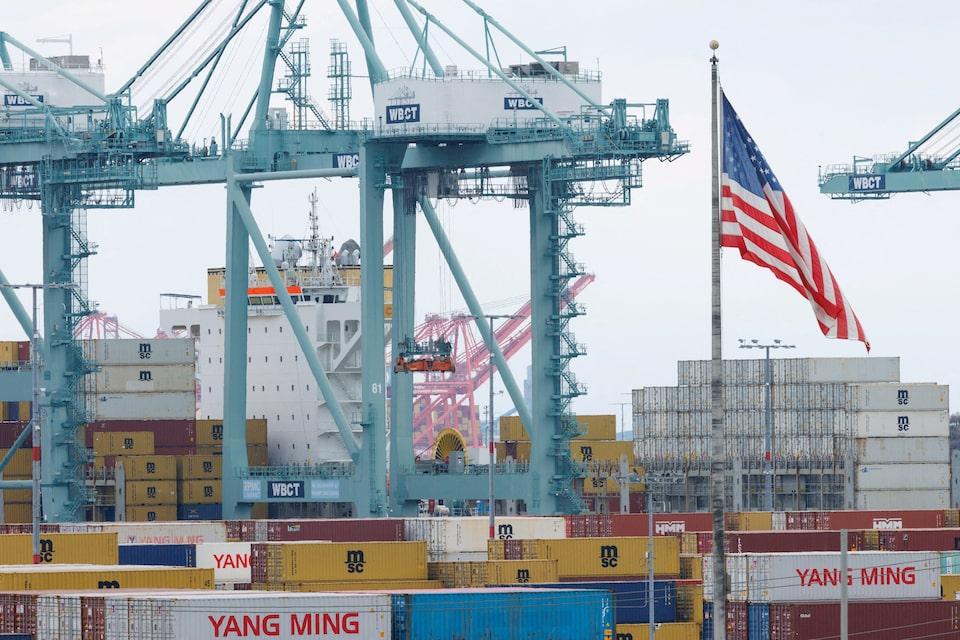
US to pause port fees, crane tariffs for one year under Trump-Xi deal USTR notice says US, China to negotiate over Section 301 trade complaints US will work build up domestic shipbuilding capacity with help from allies WASHINGTON, Nov 6 (Reuters) - The Trump administration said on Thursday it would pursue negotiations with China over its dominance of shipbuilding and ocean logistics as it formalized plans for a one-year pause on U.S. port fees on China-linked vessels as part of a broader deal to reduce trade tensions. The U.S. Trade Representative's office said in a Federal Register notice , opens new tab that it would pause for a year starting November 10 all punitive actions against China resulting from its "Section 301" unfair trade practices investigation. USTR added that it would accept public comments on the matter on November 6 and November 7. Sign up here. The 12-month reprieve on an estimated $3.2 billion annually in U.S. fees for large Chinese-built vessels sailing to U.S. ports was among the agreements reached in South Korea by U.S. President Donald Trump and Chinese President Xi Jinping in late October. Also paused were 100% tariffs on ship-to-shore cranes and container intermodal chassis for trucks. "Pursuant to this deal, the United States would suspend for one year, beginning on November 10, 2025, the responsive actions taken in this investigation," USTR said in the notice. "The United States also would negotiate with China pursuant to Section 301 regarding the issues raised in this investigation." The notice gave no details about how the negotiations would begin, or what the objectives would be. It said that the U.S. would continue its own efforts to revitalize domestic shipbuilding, including through discussions with key allies and partners. A USTR spokesperson could not immediately be reached for further comment. China's embassy in Washington also did not immediately respond to a Reuters query. China also had agreed to pause its own retaliatory fees on U.S.-linked ships as part of the Trump-Xi de-escalation agreement. Hawaii-based ocean shipping company Matson (MATX.N) , opens new tab said on Tuesday that it had paid $6.4 million in port fees to China since they were implemented on October 14. State-owned container line COSCO (600428.SS) , opens new tab is the Chinese shipper most exposed to U.S. port fees, which analysts said could add up to $1.5 billion annually. https://www.reuters.com/world/us/trump-administration-seeks-negotiate-with-china-shipping-it-pauses-port-fees-2025-11-06/
2025-11-06 23:26
RIO DE JANEIRO, Nov 6 (Reuters) - Brazilian oil firm Petrobras reported on Thursday a slight increase in its third-quarter net profit from a year earlier, alongside a 12.2-billion-real ($2.25 billion) dividend payout. Petrobras posted a net profit of 32.7 billion reais ($6.05 billion) for the July-to-September quarter, a 0.5% increase. In dollars, net profit came up 2.7%. Sign up here. Revenues fell 1.3% to 127.9 billion reais, under the 130 billion reais expected by analysts in an LSEG poll. "We were able to offset this impact on revenue by increasing our oil production to over 2.5 million barrels per day, setting several operational records," said the state-run firm's Chief Financial Officer Fernando Melgarejo in a statement. Adjusted earnings before interest, taxes, depreciation and amortization (EBITDA) ticked up 0.4% in the period to 63.9 billion reais, above analysts' expectations of 62.1 billion reais. Capital expenditures totaled $5.5 billion in the quarter, up 23.7% from the same period of last year. ($1 = 5.4039 reais) https://www.reuters.com/business/energy/brazils-petrobras-posts-27-increase-third-quarter-net-profit-2025-11-06/
2025-11-06 23:19
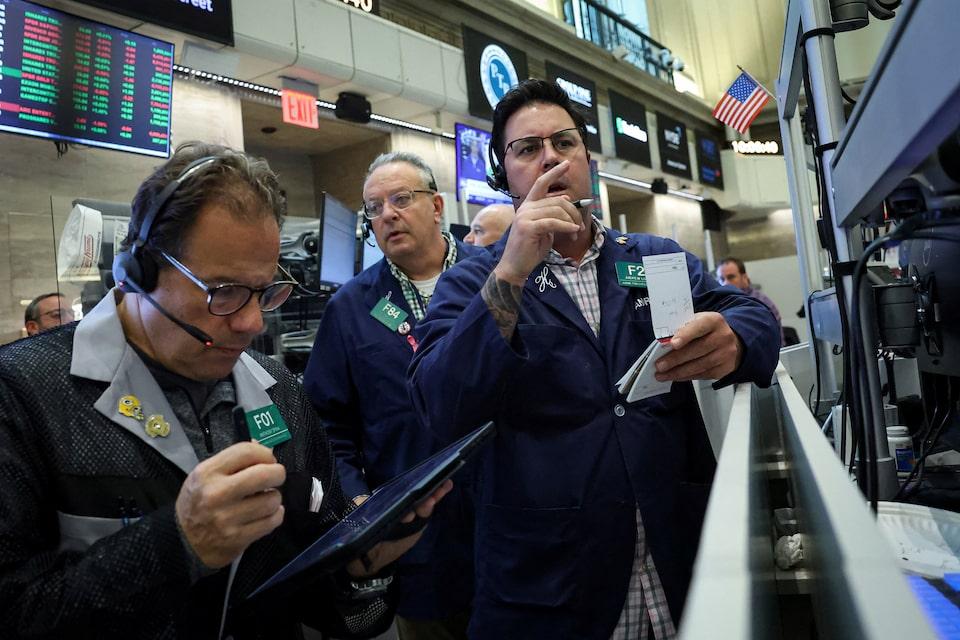
ORLANDO, Florida, Nov 6 (Reuters) - U.S. stocks, bond yields and the dollar all fell on Thursday, dragged down by renewed fears of an AI bubble and worries over the strength of the U.S. labor market. More on that below. In my column today I look at life for markets after the global rate-cutting cycle, which appears to be turning. Will it signal a bullish period for earnings growth and stocks, or a tightening of liquidity and greater risk aversion? Sign up here. If you have more time to read, here are a few articles I recommend to help you make sense of what happened in markets today. Today's Key Market Moves Today's Talking Points * Navigating the U.S. jobs fog Normally, investors now would be gearing up for the October U.S. non-farm payrolls report scheduled for release on Friday. But the record-long U.S. government shutdown means there will be no data. Some numbers have come out this week though, and it's very much a mixed bag. ADP private sector job growth numbers for October were stronger than expected, but Challenger layoffs nearly tripled, and the Chicago Fed said the unemployment rate has ticked up a notch to 4.4%. Cost-cutting and AI are dark clouds over the labor market, which is already foggy enough. * U.S. money market tightness There was some respite on Thursday as Fed rate cut expectations ticked up, but worries around U.S. interbank and money market liquidity continue to swirl. Of course, the Fed is watching this like a hawk - no pun intended - and will surely step in if they have to. But as TS Lombard puts it, things are "uncomfortably tight" - a government shutdown, a Treasury General Account build draining funds from the system, high front-end rates, and the SOFR-IORB spread widening. Add in ongoing QT for now and seasonal balance-sheet constraints, "and the ingredients for a funding-market flare-up are all there." * Trump's tariff travails The legality of U.S. President Donald Trump's tariffs - his flagship economic policy - is in doubt as U.S. Supreme Court justices decide whether the 1977 International Emergency Economic Powers Act (IEEPA), which Trump has invoked, covers tariffs. Trump on Thursday for the first time acknowledged that U.S. consumers "might be paying something" when it comes to tariffs. That "something" has been pretty low so far this year, but is now rising - economists reckon consumers will be eating around two-thirds of the total tariff bill by next year. Markets brace for life after global easing cycle The global interest-rate cutting cycle has likely peaked. The question now is when, or if, today's high-flying markets will start to feel the pinch. Remarkably, there have been more rate cuts around the world in the last two years than during the 2007-09 Global Financial Crisis, according to Bank of America. Although that's the number of cuts and not the magnitude of easing, it reflects the scale of the historic inflation-fighting rate hikes in 2022-23. But the cycle now appears to have turned. This doesn't mean global easing has stopped. Central banks – most notably the U.S. Federal Reserve – are still expected to cut further. Rather, the number of cumulative cuts will decline moving forward. On the face of it, the end of super-easy monetary policy should mean less accommodative financial conditions ahead. But, perhaps counterintuitively, history suggests otherwise. Peaks in the last three major global easing cycles were followed by a broadening of the earnings cycle and solid equity market gains. Are we about to see this again? Maybe, but given the frothy valuations in many of today's markets, it's not a given this time around. LESS CONCENTRATION, MORE ROTATION The peak of the easing cycle could be a bullish signal for Wall Street, say analysts at Societe Generale, who argue that it is a sign that earnings growth is going to broaden out and accelerate. Manish Kabra, head of U.S. equity strategy at SocGen, says the cycle peak is a "powerful signal" to diversify into other areas of the market like small caps and less levered stocks. He notes that reducing equity exposure would typically come later when investors start pricing in the start of the hiking cycle. "When the easing cycle peaks, it's traditionally a sign of market conviction that earnings growth is going to accelerate," Manish says, pointing to previous "peaks" in August 2020 and September 2009 - which were both followed by strong equity performance. Of course, there's a big difference between now and these episodes, namely today's stock prices and valuations. Wall Street was only beginning to emerge from historic crashes in September 2009 and August 2020, whereas now it has never been higher. This might suggest that a more defensive risk profile may be warranted today. Kabra downplays talk of bubbles, however. S&P 500 earnings growth this year is running at around 12%, but if you exclude 'AI boom' stocks, that falls to only 4%. IT ALL COMES BACK TO LIQUIDITY Almost every major asset class has risen this year, apart from oil, the dollar and some long-dated bonds. Even unloved and much-maligned U.S. Treasuries have gotten a bounce. But globally, these rallies have had many different drivers. In equities, the AI boom has been rocket fuel for Wall Street, bets on a defense spending splurge have boosted European stocks, and the prospect of significant fiscal easing has lifted stock prices in Japan and China. However, the unifying force that has lifted all these boats, according to Standard Chartered, is liquidity. And plenty of it. Eric Robertsen, the bank's global head of research and chief strategist, says the broad rally from the April lows, impacting stocks, bonds, commodities and cryptocurrencies, can be deemed a 'financial conditions trade'. How else can nearly every asset class rise together in a world of extreme economic and geopolitical uncertainty? Of course, 'liquidity' is not solely or even primarily a function of monetary policy. Bank reserves, the availability of and demand for private sector credit, and general risk appetite are key factors that contribute to the rather amorphous concept that is 'liquidity'. But if interest rate changes can be viewed as a loose proxy for liquidity or at least a directional signal, then we are at an inflection point. Robertsen posits that the "abundant" liquidity from well over 150 rate cuts in the last 12 months has more than offset investors' concerns over growth. Their risk appetite may be put to the test if the liquidity taps are being turned off, even if only gradually. "Can markets thrive at this altitude without additional oxygen?" Robertsen asks. We may be about to find out. What could move markets tomorrow? Want to receive Trading Day in your inbox every weekday morning? Sign up for my newsletter here. Opinions expressed are those of the author. They do not reflect the views of Reuters News, which, under the Trust Principles , opens new tab, is committed to integrity, independence, and freedom from bias. https://www.reuters.com/world/china/global-markets-trading-day-graphic-2025-11-06/