2026-02-12 01:45
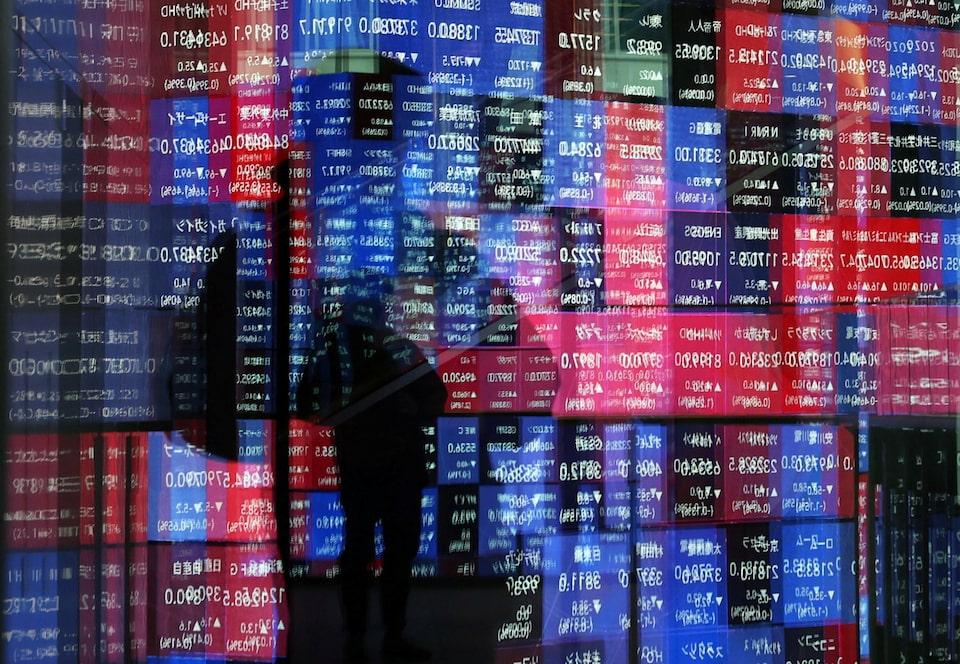
Stocks near record highs after US jobs data Dollar rally peters out Focus now on US inflation data on Friday Yen gains on investor bets on fiscally responsible Takaichi LONDON, Feb 12 (Reuters) - Global stocks traded around record highs on Thursday after a surprisingly strong U.S. jobs report eroded near-term rate cut expectations, while caution ahead of inflation data at the end of the week dented the dollar. The U.S. economy created almost twice as many jobs in January as expected, Wednesday's report showed, allaying some concern over a softening labour market. Sign up here. While the data caused traders to push back expectations for Federal Reserve rate cuts in the next few months, revisions showing payroll growth all but stalled last year helped keep alive expectations for easing later in the year. MSCI's All-World index (.MIWD00000PUS) , opens new tab, which has gained nearly 4.5% this year, was up for a fifth day and nudging at Wednesday's record high. Europe's STOXX 600 (.STOXX) , opens new tab was up 0.4%, also at all-time highs, after positive earnings from luxury retailer Hermes (HRMS.PA) , opens new tab and French digital building infrastructure group Legrand (LEGD.PA) , opens new tab. This month, investor confidence has been shaken by a series of selloffs in sectors including asset managers, insurers and hardware and software makers, on concern over AI's potential to disrupt those industries. RETURN TO MACRO BASICS A RELIEF A return to macroeconomic basics delivered some much-needed relief for financial market participants. Market expectations for a Fed rate cut of at least 25 basis points in March had risen to about 20% before the jobs data, but retreated to about 5%, according to CME's FedWatch Tool. Thomas Mathews, head of markets for Asia-Pacific at Capital Economics, said the big picture was that labour market conditions may be tightening. "If so, investors may be overestimating the case for further easing, and Treasuries could be in for a bit more pain." Two-year U.S. Treasury yields , which typically track Fed rate expectations, were steady at 3.506% after jumping nearly 6 basis points on Wednesday, the biggest daily increase since October. Higher yields helped keep the dollar steady. Still, analysts said uncertainties over Fed independence and policy risks suggested the currency would need more such positive surprises in data to sustain the rebound. 'GOOD AND BAD NEWS' FOR THE DOLLAR "There is good and bad news for the dollar after yesterday’s payrolls , opens new tab. The good one is intuitive: job numbers were good," ING strategist Francesco Pesole said. The bad news, he said, was that the dollar should have rallied more strongly on the back of those numbers, not least because of the pickup in short-term yields. "We instead read that as a sign markets remain minded to sell dollar rallies on the back of longer-term considerations. This means the bar for a dollar recovery is higher: more good data is needed, for a start," he said. The dollar rose as much as 0.4% against a basket of currencies following the payrolls numbers, only to end the day virtually unchanged. It also erased early gains on Thursday to trade broadly flat. U.S. inflation data is due on Friday and will be the next test of market views on interest rate cuts. FISCALLY RESPONSIBLE GOVERNMENT BOOSTS YEN The yen held on to most of this week's 2.7% rise, as investors warm to the view that the new government will be fiscally responsible and Japan's finances may be favourable in the long run. It was last a touch lower on the day, leaving the dollar up 0.1% at 153.44 yen, but below Monday's peak at 157.95. "Yen shorts are collectively reassessing positions, although at this stage the bearish trend in JPY that started in early 2025 looks more like a reversion to the mean than the start of a structural bull market," said Chris Weston, head of research at Pepperstone. "That said, traders need to stay open-minded as the macro picture evolves." The euro edged up, to $1.1881, as did the pound, which traded at $1.365, shrugging off data on Thursday that showed the UK economy barely grew in the final quarter of 2025. Gold was down 0.35% at $5,060 an ounce, after rising more than 1% in the previous session. https://www.reuters.com/world/china/global-markets-wrapup-1-2026-02-12/
2026-02-12 01:35
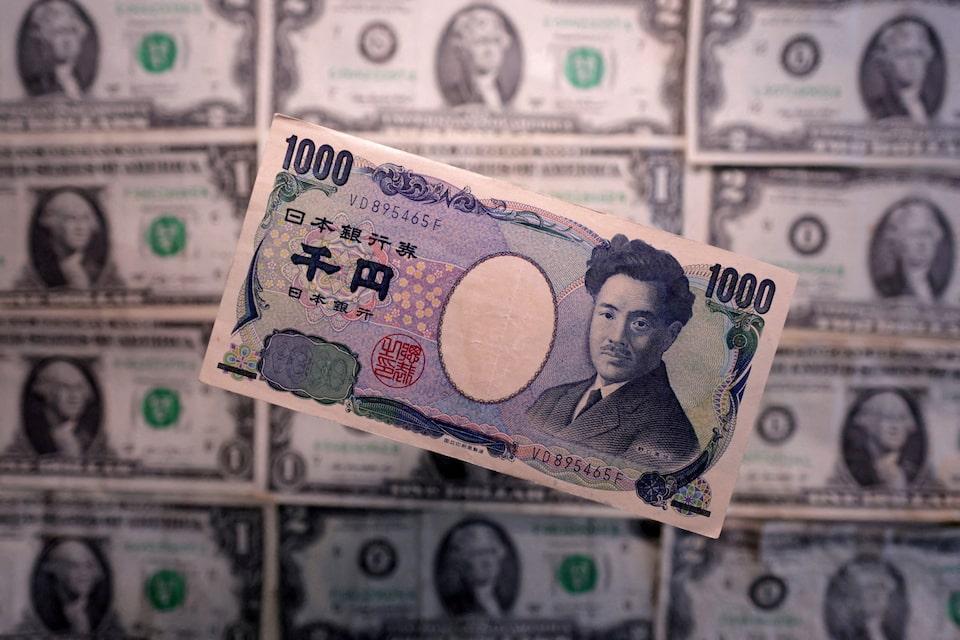
Yen surges since Takaichi wins landslide poll victory Analysts say mood may be shifting on Japan Aussie hits 3-year high on hawkish RBA; yuan on weekly streak SINGAPORE, Feb 12 (Reuters) - A resurgent yen rode towards its biggest weekly gain in more than a year on Thursday, throwing the dollar under pressure and suggesting a shift in mood may be afoot in the currency market. The yen is up 2.6% on the dollar since Prime Minister Sanae Takaichi's Liberal Democratic Party swept to a landslide victory at Sunday's election, and if that holds through to Friday it would be the largest weekly rise since November 2024. Sign up here. A fourth straight session of gains pushed it as strong as 152.28 per dollar, before it settled back to 154. A break below resistance at 152.05 would signal a change in momentum for a currency that has spent years sliding in response to low interest rates and budget worries. "It's Japan buying," said Naka Matsuzawa, chief strategist at Nomura Securities in Tokyo, with the yen - rather than the euro - turning into the favoured avenue for bets on a falling dollar and to back Takaichi's plans to revitalise the economy. That's a change from pre-election selling on nerves about how her government plans to fund its pro-growth policies. "Foreigners are buying both stocks and bonds," Matsuzawa said. "With a stronger government, the market hopes for higher growth ... If you look over the next 12 months, it might be we see a stronger yen together with stocks higher." The yen has also made significant headway against crosses, rising 2% on the euro in three sessions and breaking to the strong side of a 50-day moving average. Positioning data showed that as of last week, speculators had a modest net short yen position, so recent gains have probably been boosted by some of those bets being unwound. The threat of intervention around 160 to the dollar also has markets expecting that downside yen risks are protected. "In our view, the yen is likely to appreciate slightly in the short term, supported by continued fears of potential government intervention and by current market positioning," said Vincenzo Vedda, chief investment officer at DWS in Frankfurt. "We do not expect the yen to return to what we would consider a fundamentally fair level in the 130s against the dollar." YUAN'S WINNING STREAK Moves elsewhere in the currency market were pretty modest but extended recent trends. Traders have been inclined to take strong pieces of U.S. economic data as a cue to expect a broader brightening in global growth and as a positive for non-dollar currencies - so the dollar got little boost from surprisingly strong U.S. labour data. The Australian dollar has been on a tear as the central bank has hiked rates and flagged the possibility of more to come as it combats inflation, with momentum and income attracting buyers. It touched a three-year peak at $0.7146 on Thursday before pulling back a bit. The kiwi stayed just shy of recent highs at $0.6046. The euro eased below $1.19 to $1.1863 and sterling was steady at $1.3625. China's yuan continued a remarkably steady rise that has it on track for its longest streak of weekly gains since 2012. Lunar New Year demand for cash pushed it to a nearly three-year high of 6.8998 per dollar. Later on Thursday British GDP data is due along with U.S. jobless claims, with U.S. January inflation figures due on Friday. Markets have priced about 54 basis points of rate cuts for the U.S. this year. https://www.reuters.com/world/asia-pacific/breakaway-yen-keeps-dollar-under-cosh-2026-02-12/
2026-02-12 01:14
TOKYO, Feb 12 (Reuters) - Japan has not eased its vigilance over exchange-rate movements, its top currency diplomat Atsushi Mimura said on Thursday, issuing a fresh warning against currency volatility after the yen surged against the dollar. "There has been various speculation on whether we conducted rate checks after the release of U.S. employment data, to which I have no intention to comment," Mimura told reporters. Sign up here. "But our policy remains unchanged. We will continue to closely monitor markets with a high sense of urgency and maintain close communication with markets. We have not lowered our guard at all," he said. Mimura, vice finance minister for currency affairs, also said that Tokyo has been maintaining close contact with U.S. authorities. The yen , last trading at 153.02 per dollar, has rebounded sharply from near the psychologically significant 160 mark that analysts say could trigger intervention by Japanese policymakers. The currency briefly weakened following the release of U.S. nonfarm payrolls data on Wednesday before spiking, sparking speculation of Tokyo conducting rate checks - often seen as a precursor to intervention. The yen has surged nearly 3% since Prime Minister Sanae Takaichi's election victory on Sunday as investors believe her sweeping mandate could pave the way for fiscal discipline as it eliminates the need for negotiations with opposition parties. A weak yen has posed a challenge for Japanese policymakers as it pushes up import costs and broader inflation. The currency spiked on three occasions last month, with the sharpest moves occurring after reports of unusual rate checks by the New York Federal Reserve, fuelling speculation about the possibility of the first joint U.S.-Japan intervention in 15 years. https://www.reuters.com/world/asia-pacific/japan-not-lowering-guard-against-fx-moves-top-currency-diplomat-says-2026-02-12/

2026-02-12 00:39
BEIJING, Feb 12 (Reuters) - Chinese artificial intelligence startup Zhipu on Thursday said it was raising prices for subscriptions to its GLM coding plan to accommodate a rapid increase in users tapping its AI models for coding support. The hike of at least 30%, effective immediately, does not apply to existing subscribers, Zhipu said in a statement on its WeChat account. Sign up here. https://www.reuters.com/technology/chinese-ai-startup-zhipu-hikes-prices-coding-plan-demand-rises-2026-02-12/

2026-02-11 23:25
Feb 11 (Reuters) - Utility company Ameren Corp (AEE.N) , opens new tab narrowly beat Wall Street estimates for fourth-quarter profit on Wednesday, helped by higher electricity rates and stronger retail sales in its Missouri unit. Utilities aim to shift higher grid-modernization costs to customers by lifting power rates, as extreme weather and surging demand from industry electrification and expanding data‑center buildouts pressure the nation's power networks. Sign up here. U.S. electricity use reached record highs in 2025 and is expected to continue rising this year, driven by the expansion of AI as well as the transition of homes and businesses from fossil fuels to electric heat and vehicles. The company said Ameren Missouri has received approval from the Missouri Public Service Commission to proceed with its Big Hollow Energy Center, a new hybrid facility expected to begin serving customers in 2028. The approval covers construction of an 800‑megawatt (MW) simple‑cycle natural gas plant paired with a large‑scale battery storage facility at a single site in Jefferson County. Ameren said it plans to add 1,000 MW of battery storage by 2030 and expand that to 1,800 MW across multiple sites by 2042. The company reaffirmed its 2026 profit forecast of $5.25 to $5.45 per share. Ameren Missouri, its largest segment by profit, reported electric sales of 8,405 million kilowatt hours, compared to 7,806 million last year. The utility also reported fourth-quarter revenue of $1.78 billion, beating analysts' estimate of $1.67 billion, according to data compiled by LSEG. Revenue from its gas segment rose to $337 million, from $321 million a year earlier. The St. Louis, Missouri‑based company reported a profit of 78 cents per share for the quarter ended December 31, narrowly beating analysts' estimates of 77 cents per share. The utility company serves 2.5 million electric customers and more than 900,000 natural gas customers in a 64,000-square-mile area through its Ameren Missouri and Ameren Illinois rate-regulated utility subsidiaries. https://www.reuters.com/business/energy/ameren-beats-quarterly-profit-estimates-higher-electricity-rates-2026-02-11/

2026-02-11 23:03
Plan ends system where businesses subsidised household bills Analysts estimate middle-class household may pay 50% more Industrial groups say high prices erode export competitiveness KARACHI/SINGAPORE, Feb 12 (Reuters) - Pakistan's new power price proposals will increase inflation and shift the International Monetary Fund-mandated (IMF) subsidy cuts onto middle-class households while easing pain for industries, analysts say. The plan, ending a system where businesses subsidised household energy bills, could trigger a 1.1 percentage point jump in inflation over 12 months, Optimus Capital Management said. Sign up here. Analysts say the plan, which only needs formal approval to come into effect, will cause industrial prices to fall between 13% and 15% and remove 102 billion ($365 million) rupees in subsidies. That means middle-class households will have to pay roughly 50% more for power, the analysts estimated. INFLATION BACKDROP Pakistan endured one of Asia's highest inflation spikes in 2023, nearing 40%, driven by a weakening rupee, rising fuel costs and price hikes linked to IMF-backed reforms. Although inflation has since slowed to 5.8%, analysts warn the changes to power prices could add inflationary pressure. Pakistan's power ministry and the IMF did not respond to a request for comment. Ahtasam Ahmad, Energy Finance Program Lead at consultancy Renewables First, said that because purchasing power for the average household had significantly declined, the change "adds to the compounding effect of inflation which we have experienced post-2022." The pricing overhaul underscores tensions within Pakistan's IMF programme, which has mandated steep utility price hikes since 2023 to support struggling state power firms. Industrial groups say high prices erode export competitiveness in textiles and manufacturing. Consumers using between 100 and 300 units of power monthly - representing a majority of paying residential users - will face rate increases of up to 76% due to new fixed charges under the pricing overhaul, according to Arzachel, a Karachi-based energy consultancy. The lowest-income households using 1-100 units monthly will see fixed charges jump to PKR 400 from zero, the National Electric Power Regulatory Authority (NEPRA) said on Monday. SOLAR PRICING IN QUESTION The regulator has also cut the rate paid to rooftop solar users exporting power to the grid, replacing a system that previously valued supplied and purchased electricity equally. A record surge in solar installations has cut emissions and lowered bills for some households but squeezed revenues at debt-laden utilities as demand for grid power declines. Prime Minister Shehbaz Sharif on Wednesday ordered a review of NEPRA's solar changes, directing officials to prevent a transfer of costs from 466,000 solar users to 37.6 million grid consumers. "Excessively high fixed charges risk driving consumers toward full grid defection, undermining long-term system stability," Arzachel said in a note on Tuesday. ($1 = 279.4500 Pakistani rupees) https://www.reuters.com/sustainability/boards-policy-regulation/pakistans-proposed-power-prices-lift-inflation-help-industry-analysts-say-2026-02-11/