2025-11-05 06:15
PERTH, Nov 5 (Reuters) - Australia's Woodside Energy (WDS.AX) , opens new tab expects its sales of oil and gas to climb by 50% by 2032 to meet rising demand for energy, particularly in Asian markets, company CEO Meg O'Neill said on Wednesday. Over the next seven years, sales should rise to 300 million barrels of oil equivalent per year, from 203.5 million boe a year in 2024, O'Neill said in a presentation during the company's Capital Markets Day. Sign up here. That is a 6% increase annually in sales, the presentation showed. It aims for $9 billion of free cash flow by 2032. O'Neill said despite forecasts suggesting LNG export overcapacity for the rest of the decade Woodside had signed export contracts each year to 2030 and "we do think the market is very elastic and there is quite significant capacity for the market to absorb incremental supply coming online". "If those customers thought the market was going to be awash in LNG they would not be signing up for long term offtake agreements," she said. She pointed to Woodside's Louisiana LNG site, which will add 16.5 million metric tons a year of export capacity by 2029, and the Scarborough gas field start up in 2026 as key projects, along with the Trion oil field in Mexico. Woodside's presentation forecast total Chinese natural gas demand by 2040 to be over 60 billion cubic feet per day. “We would fully expect that as LNG remains attractive for them and when pricing is within the range that their buyers want to pay, that China will be able to absorb quite a bit of LNG into the market place,” O'Neill said. In terms of expected economic returns, Louisiana LNG is considered Woodside's best investment prospect, according to O’Neill. The first phase was approved earlier this year. A second phase will take export capacity to 27.5 million tons per year. Over 90% of its production in the 2030s will be fossil fuels as Woodside has scaled back clean energy projects thanks to lack of commerciality and changes under the new U.S. administration, leaving only one clean ammonia project that will initially be emissions intensive. https://www.reuters.com/business/energy/woodside-energy-forecasts-sales-rise-by-50-by-2032-2025-11-05/
2025-11-05 06:08
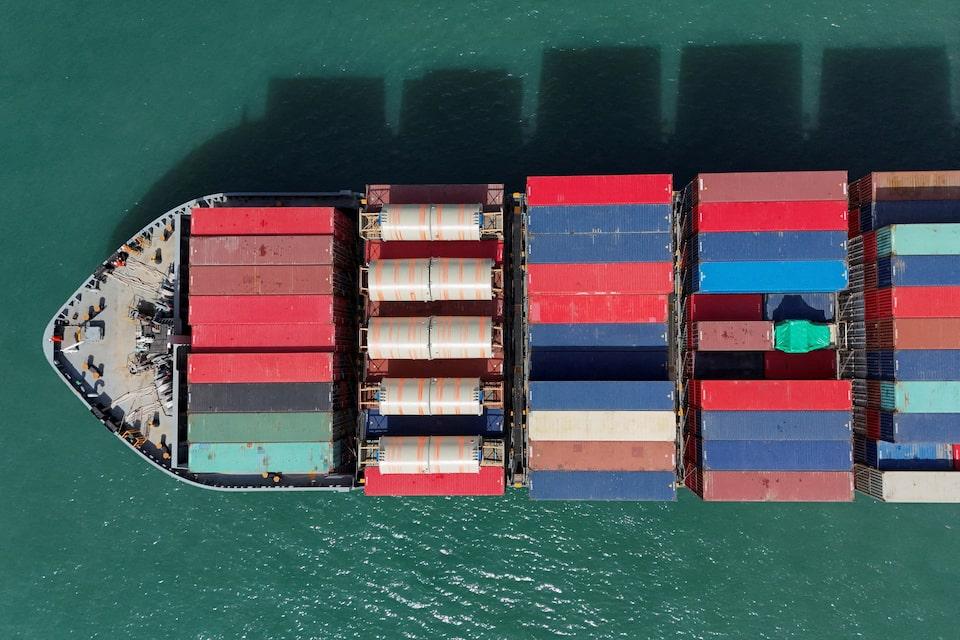
China ends retaliatory tariffs on US agricultural products China keeps 10% tariffs on all US goods China diversifies soybean imports, cuts US reliance US soy futures hit June 2024 high on hopes for sales BEIJING, Nov 5 (Reuters) - China will suspend retaliatory tariffs on U.S. imports, including duties on farm goods, after last week's meeting of the two countries' leaders, Beijing confirmed on Wednesday, but imports of U.S. soybeans still face a 13% tariff. The tariff commission of the State Council, or cabinet, will scrap duties of up to 15% imposed on some U.S. agricultural goods from November 10, while keeping levies of 10% introduced in response to President Donald Trump's "Liberation Day" duties. Sign up here. Investors on both sides of the Pacific were relieved when Trump met Chinese leader Xi Jinping in South Korea, easing fears that the world's two largest economies might abandon talks to resolve a tariff war that has disrupted global supply chains. Trump and the White House were quick to issue their take on the meeting, but the Chinese side did not immediately give a detailed summary of what it had agreed. "Broadly, it's a great sign that the two sides are making rapid progress in putting the deal into effect," said Even Rogers Pay, a director at Beijing-based Trivium China. "It shows they're aligned and that the agreement is likely to hold up." U.S. soybean futures reached their highest level since June 2024 on hopes for Chinese buying. However, Beijing's decision to leave its 13% tariff on soybeans keeps U.S. shipments to China too expensive for commercial buyers, compared to Brazilian alternatives, analysts said. "We don't expect any demand from China to return to the U.S. market with this change," said one trader at an international trading company. "Brazil is cheaper than the United States and even non-Chinese buyers are taking Brazilian cargoes." After the meeting, the White House said China would purchase at least 12 million metric tons of U.S. soybeans in the last two months of 2025 and at least 25 million tons in each of the next three years. Beijing has yet to confirm those figures, and traders are watching closely for signs of large-scale purchases. The White House and U.S. Department of Agriculture did not immediately respond to requests for comment on Wednesday. CHEAPER BRAZILIAN BEANS Chinese importers recently bought 20 cargoes of cheaper Brazilian soybeans as South American prices eased on expectations of a resumption of U.S. sales to the world's largest soybean importer. With China's tariff in place, U.S. soybeans are well over a dollar per bushel more expensive than Brazilian old-crop supplies, said Arlan Suderman, chief commodities economist for commodity firm StoneX. Unless Beijing waives the retaliatory duty, China's state grain buyer Sinograin will need to bear the burden of meeting the obligation of purchasing 12 million tons of U.S. soybeans by the end of the year, Suderman said. Sinograin is essentially immune to the tariff and makes purchases for China's soybean reserve, he said. "That would be an optimistic outlook for Sinograin to buy that quantity in such a short time," he said. Brazilian soybeans for December shipment were quoted at a premium of $2.25 to $2.30 over the January Chicago contract , compared with $2.40 a bushel being offered for U.S. beans shipped from the U.S. Gulf Coast, traders said. Before last week's meeting, state trader COFCO made China's first purchases from this year's U.S. harvest, an act analysts saw as a goodwill gesture. In 2024, China bought roughly 20% of its soybeans from the United States, down from 41% in 2016, the year before Trump's first presidential term, customs data showed. This year, China has largely shunned U.S. crops from the autumn harvest due to high tariffs, costing American farmers billions of dollars in lost exports. In a meeting with a U.S. agricultural trade delegation on Tuesday, China's senior trade negotiator Li Chenggang attributed "fluctuations" in agricultural trade between the two countries to U.S. tariffs, a summary of the meeting issued by China's commerce ministry showed. China and the United States are "important agricultural trade partners", Li said, adding that he hoped Washington could work with Beijing to create favourable conditions for cooperation. China's cabinet said it would also suspend for one year the 24% additional tariffs it imposed on U.S. goods in April. China will also remove or suspend for a year some non-tariff retaliatory measures, including export control measures announced in March and April against some U.S. entities, the commerce ministry said on Wednesday. https://www.reuters.com/world/china/china-confirms-suspension-24-tariff-us-goods-retains-10-levy-2025-11-05/
2025-11-05 06:05
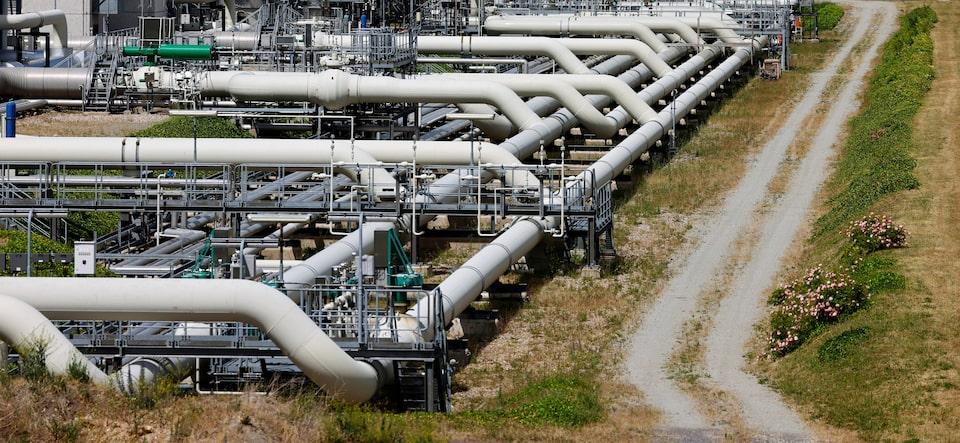
LITTLETON, Colorado, Nov 5 (Reuters) - Germany's highest gas-fired power generation levels since 2021 are scuppering regional efforts to replenish natural gas stockpiles ahead of the peak season for gas-fired power demand. Below-normal European natural gas inventories - which are usually at their annual peaks by this point in the year - leave the region exposed to power price volatility heading into winter when power demand across the continent is highest. Sign up here. An enduring slump in power generation from wind farms and hydropower plants is the main driver behind the jump in Germany's gas use, which has climbed by around 15% over the first 10 months of 2025 from the year before, LSEG data shows. Continued sub-par wind power output heading into winter may force German utilities to sustain their recent higher levels of gas-fired generation, and could trigger a tightening in regional gas supplies and higher power prices for consumers. GASSED UP Over the first 10 months of 2025, Germany's gas-fired power generation was 41.6 gigawatt hours (GWh), data from LSEG shows, which is the highest for that period since before Russia's invasion of Ukraine in 2022 snarled regional gas markets. Germany was previously the top destination for Russian pipelined gas supplies, but was a key driver of European efforts to cut purchases of Russian energy exports in response to the attacks on Ukraine. In the immediate wake of the cuts to Russian gas flows, Germany's power system dialed down gas use to multi-year lows, with gas-fired plants accounting for just under 15% of utility electricity supplies in 2022 compared to over 17% in 2021. However, the country has struggled to adapt its energy systems to the sudden dearth of gas supplies, and has replaced much of the lost Russian volumes with imports from other suppliers, including in the form of much-pricier LNG. The rebound in overall gas supplies has triggered a steady recovery in Germany's gas use, and so far in 2025 gas accounted for 19% of electricity supplies, which is the highest for the January to October period since at least 2015, Ember data shows. CLEAN CUTS A lengthy stretch of sub-par generation from wind farms and hydro dams has also forced utilities to burn more gas. During January to October, combined power generation from wind and hydro assets dropped by 7% from the same months in 2024, to the lowest for that period since 2022, LSEG data shows. Combined wind and hydro output accounted for 34% of Germany's total power generation in the first 10 months of 2024, but so far in 2025 accounted for just under 31%. To offset that drop in clean power, German utilities have been forced to raise generation from all fossil fuels, with coal-fired output up by around 4% from the year before and total fossil fuel output up 6%, according to LSEG. TAKING STOCK The sustained higher levels of gas-fired generation this year have resulted in a slower replenishment of both Germany's and Europe's gas storage levels, which offer critical buffers against global gas market gyrations during high demand periods. Roughly 25% of Europe's total gas storage capacity is in Germany, which is the most of any country on the continent and means that the pace of German stock building has an impact on gas stockpile levels across the region. Germany's gas storage system is currently around 86% full, but storage tanks are usually full to the brim by this point of the year due to the expected need for higher gas generation during the winter. Indeed, LSEG data shows that Germany's gas storage tanks have averaged 108% of nameplate capacity as of the end of October for the past three years, indicating that current inventories remain sharply below normal. Lower gas stocks in Germany are also being reflected in Europe's overall gas storage system, which is only around 83% full compared to an average of 96.5% full at this point in the year since 2022, data from LSEG shows. WIND WATCH German wind farms will have a key say over whether Germany's gas stockpiles will be sufficient to meet the country's power needs heading into 2026. So far in 2025, total wind power output in Germany is down around 4% from the year before due to below-normal wind speeds at turbine level for much of the year so far, LSEG data shows. However, the winter months typically lead to breezier conditions which usually lift wind generation levels sharply heading into the new year. The latest short-term LSEG forecasts for German wind output call for generation to remain well below average through the middle of this month, which raises the chance of continued high levels of gas-fired power output over the near term. Longer-range forecasts through next spring still call for wind generation to come in close to the long-term average, which if correct should help cap the need for gas-fired output over the coming winter. If Germany's wind farms remain prone to lengthy stretches of sub-par output, however, further spells of elevated gas power generation may result, which could trigger further draws on gas stockpiles and fresh increases in regional gas prices. The opinions expressed here are those of the author, a columnist for Reuters. Enjoying this column? Check out Reuters Open Interest (ROI), your essential new source for global financial commentary. ROI delivers thought-provoking, data-driven analysis of everything from swap rates to soybeans. Markets are moving faster than ever. ROI can help you keep up. Follow ROI on LinkedIn , opens new tab and X , opens new tab. https://www.reuters.com/markets/commodities/germanys-higher-gas-use-hampers-europes-stockpiling-drive-2025-11-05/
2025-11-05 05:55
Nov 5 (Reuters) - Iran must "seriously improve" cooperation with the United Nations inspectors to avoid heightening tensions with the West, the Financial Times reported on Wednesday, citing International Atomic Energy Agency chief Rafael Grossi. Grossi told the FT that while the IAEA has carried out about a dozen inspections in Iran since hostilities with Israel in June, it had not been given access to nuclear facilities such as Fordow, Natanz and Isfahan, which were bombed by the United States. Sign up here. Grossi said in October that movement had been detected near Iran's enriched uranium stockpile but that it did "not imply that there is activity on enrichment". Iranian Foreign Ministry spokesperson Esmaeil Baghaei subsequently said that Grossi was "fully aware of the peaceful nature" of Iran's nuclear programme and should not express "unfounded opinions" on it. Iranian officials have blamed the IAEA for providing a justification for Israel's bombing, which began the day after the IAEA board voted to declare Iran in violation of obligations under the Nuclear Non-Proliferation Treaty. Grossi told the FT that while the agency was trying to approach the "bumpy" relations with Iran with understanding, the country still needed to comply. "You cannot say, 'I remain within the non-proliferation of nuclear weapons treaty’, and then not comply with obligations," Grossi said. "You cannot expect the IAEA to say, 'OK, since there was a war you are in a different category' . . . Otherwise what I will have to do is report that I have lost all visibility of this material", he said. https://www.reuters.com/world/middle-east/iaea-says-iran-must-seriously-improve-nuclear-cooperation-ft-reports-2025-11-05/
2025-11-05 05:54
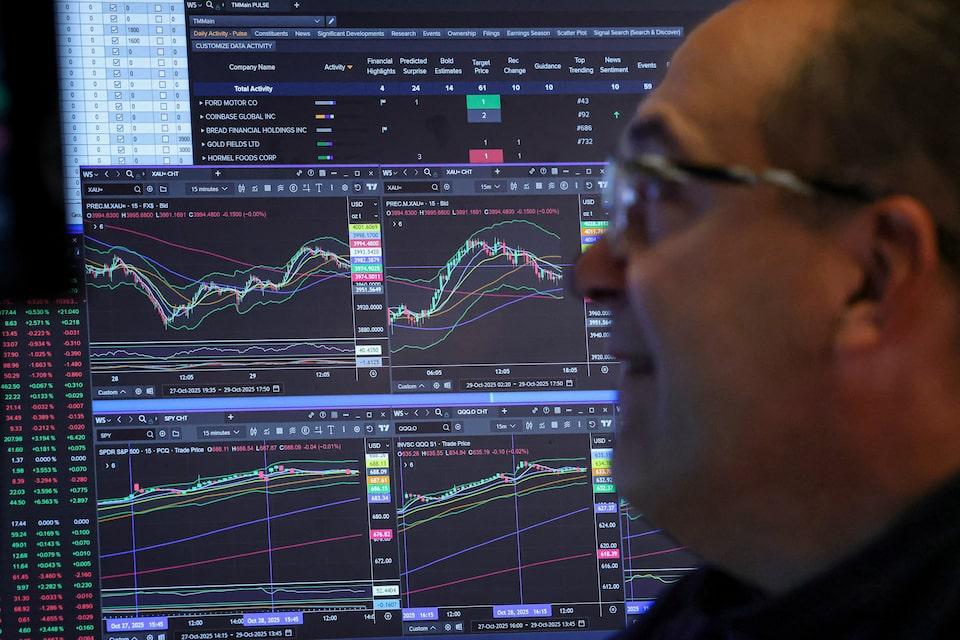
US October private payrolls rise by 42,000 Equities down on concerns of stretched valuation Traders see 63% chance of US interest rate cut in December Nov 5 (Reuters) - Gold prices rose over 1% on Wednesday as investors avoided riskier assets despite stronger-than-expected private U.S. payrolls data. Spot gold was up 1.3% at $3,983.89 per ounce as of 2:30 p.m. ET (1930 GMT). U.S. gold futures for December delivery rose 0.8% to settle at $3,992.90 per ounce. Sign up here. "Gold and silver are modestly higher despite a stronger-than-expected ADP private payrolls report, which is the best broad jobs indicator given the shutdown. This should give comfort to bulls who were surprised that metals fell along with risky assets yesterday," said Tai Wong, an independent metals trader. U.S. private employment increased by 42,000 jobs last month, above Reuters' estimate of a 28,000 rise, the ADP employment report showed on Wednesday. A strong jobs market typically makes interest rate cuts less likely and can keep rates higher for longer. Stocks fell on Wednesday from record highs on fears that equity markets might have become overstretched. "Some safe-haven demand has surfaced at mid-week as the global stock markets are still a bit shaky amid ideas U.S. stocks are overvalued and that there is an AI (artificial intelligence) stock bubble," said Jim Wyckoff, senior analyst at Kitco Metals, in a note. Meanwhile, the Federal Reserve cut U.S. interest rates last week, with Chair Jerome Powell indicating it could be the final reduction this year. Traders see a 63% chance of another rate cut in December, down from over 90% last week. Non-yielding gold tends to do well in a low-interest-rate environment and during times of economic uncertainty. Eyes will also be on a U.S. Supreme Court hearing later on Wednesday on the legality of President Donald Trump's tariffs, after a lower court ruled the administration had overstepped its authority by imposing levies under an emergency law. Elsewhere, spot silver gained 2.2% at $48.13 per ounce, platinum rose 1.7% to $1,561.65, and palladium climbed 2.4% to $1,424.22. https://www.reuters.com/world/india/gold-rebounds-near-1-week-low-bargain-hunting-ahead-us-jobs-data-2025-11-05/

2025-11-05 05:36
A look at the day ahead in European and global markets by Gregor Stuart Hunter A fuse lit on Wall Street turned explosive a day later in Asia, sparking the biggest losses for stocks in Japan and South Korea since April's "Liberation Day" tariff announcement. Sign up here. The Nikkei 225 (.N225) , opens new tab tumbled on Wednesday, almost 7% below a record high set the day before, while South Korea's KOSPI slumped as much as 6.2% at one point before recovering, as many high-flying tech sector stocks cratered. On the bonfire was Softbank Group (9984.T) , opens new tab, plunging as much as 14.4%, as one of Asia's biggest tech investors digested a 2% decline for the Nasdaq Composite overnight, while Samsung Electronics (005930.KS) , opens new tab fell as much as 7.8% and SK Hynix (000660.KS) , opens new tab dropped as much as 9.2%. European stocks looked set to join the selloff in early trading, with pan-region futures down 0.7%, German DAX futures falling 0.6% and FTSE futures off 0.3%. Bitcoin rebounded 1.8% to $102,104 after falling below the $100,000 mark for the first time since June, while gold was last up 0.8% at $3,962 per ounce. U.S. e-mini futures slid 0.1% after a 1.2% drop for the S&P 500 (.SPX) , opens new tab overnight on fears equity markets may have become overstretched after the CEOs of Wall Street heavyweights Morgan Stanley (MS.N) , opens new tab and Goldman Sachs (GS.N) , opens new tab questioned whether sky-high valuations can be sustained. Despite the volatility in equity markets, FX remained mostly unbothered, with the U.S. dollar index grazing a five-month high of 100.25. The yield on benchmark 10-year Treasury notes fell to a low of 4.0542% compared with its U.S. close of 4.091% on Tuesday, but has since edged upwards. Aside from markets, fireworks of a different kind were set off by Democrats in the U.S., who swept major elections in Virginia, New Jersey and New York City in the first electoral test of U.S. President Trump's latest administration. Democratic socialist Zohran Mamdani was triumphant in the race to become mayor of New York City, the first Muslim to hold the office in America's biggest city. Key developments that could influence markets on Wednesday: Earnings: Marks and Spencer Group, BMW, Novo Nordisk, Enel, Telecom Italia Economic data: Germany: Industrial Orders for September, Manufacturing O/P for September, Consumer Goods SA for September, HCOB Services and Composite PMI for October France: Industrial Output for September, HCOB Services and Composite PMI for October UK: New Passenger Cars Registration for October S&P Global Service and Composite PMI for October, Reserve Assets Total for October Debt auctions: Germany: 16-year and 19-year government debt https://www.reuters.com/world/china/global-markets-view-europe-2025-11-05/